


 Скачать презентацию Supply and Demand Markets A market
02ec38596b777dd0c80b210a08fe6e0c.ppt
- Количество слайдов: 32
 Supply and Demand
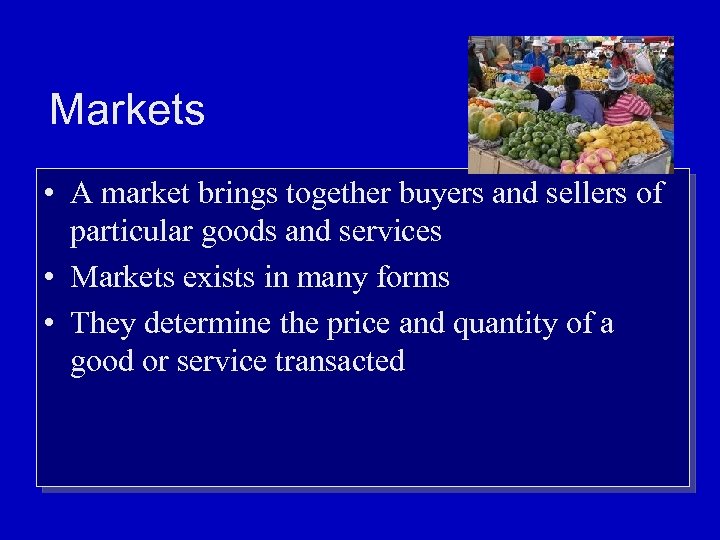 Markets • A market brings together buyers and sellers of particular goods and services • Markets exists in many forms • They determine the price and quantity of a good or service transacted
 Supply, Demand, Price and the Consumer Video
 A Lesson on Demand
 Introduction to Demand ® In the United States, the forces of supply and demand work together to set prices. ® Demand is the desire, willingness, and ability to buy a good or service.
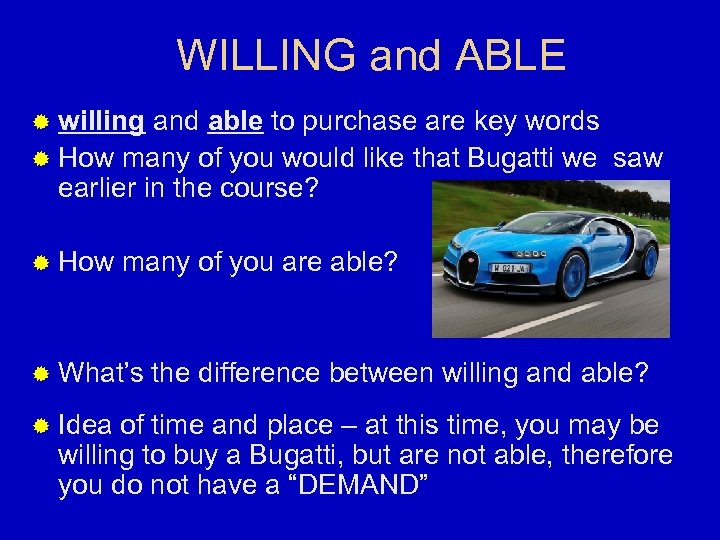 WILLING and ABLE ® willing and able to purchase are key words ® How many of you would like that Bugatti we saw earlier in the course? ® How many of you are able? ® What’s ® Idea the difference between willing and able? of time and place – at this time, you may be willing to buy a Bugatti, but are not able, therefore you do not have a “DEMAND”
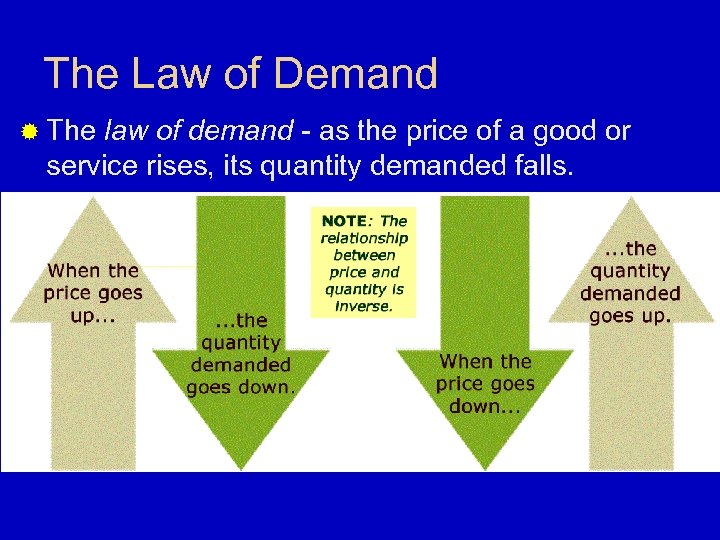 The Law of Demand ® The law of demand - as the price of a good or service rises, its quantity demanded falls. ® The reverse is also true: as the price of a ® good or service falls, its quantity demanded increases.
 Law of Demand (cont. ) Based on: 1. Income effect • At a lower price, consumers can buy more of a product without giving up other goods (increased the purchasing power) 2. Substitution effect • Consumers have the incentive to substitute the cheaper good for similar goods that are now relatively more expensive 3. Diminishing marginal utility • States that successive units of a given product yield less and less extra satisfaction. Therefore, consumers will only buy more of a good if its price is reduced
 • Demand is demonstrated by demand schedule and demand curve
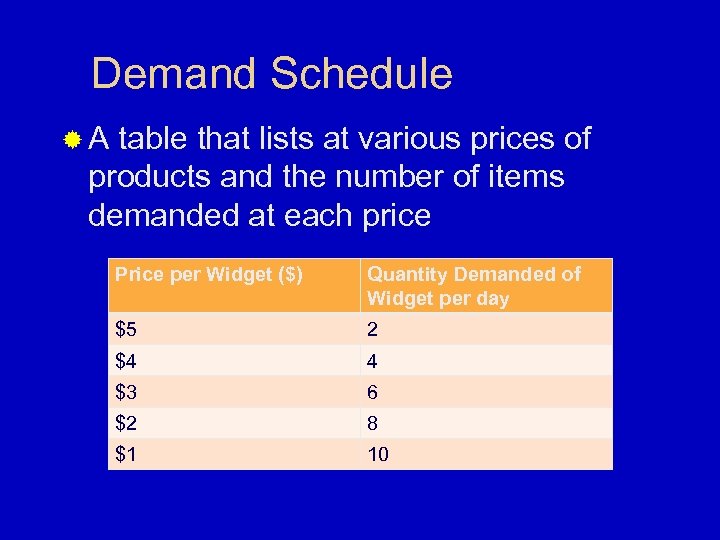 Demand Schedule ®A table that lists at various prices of products and the number of items demanded at each price Price per Widget ($) Quantity Demanded of Widget per day $5 2 $4 4 $3 6 $2 8 $1 10
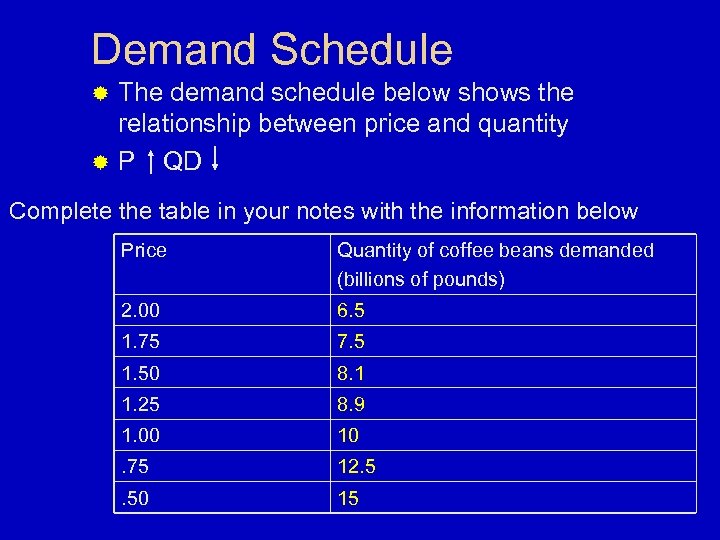 Demand Schedule The demand schedule below shows the relationship between price and quantity ® P QD ® Complete the table in your notes with the information below Price Quantity of coffee beans demanded (billions of pounds) 2. 00 6. 5 1. 75 7. 5 1. 50 8. 1 1. 25 8. 9 1. 00 10 . 75 12. 5 . 50 15
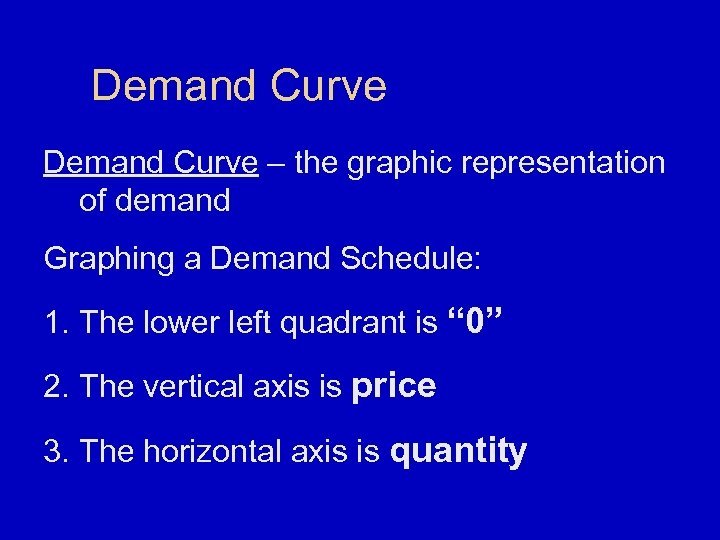 Demand Curve – the graphic representation of demand Graphing a Demand Schedule: 1. The lower left quadrant is “ 0” 2. The vertical axis is price 3. The horizontal axis is quantity
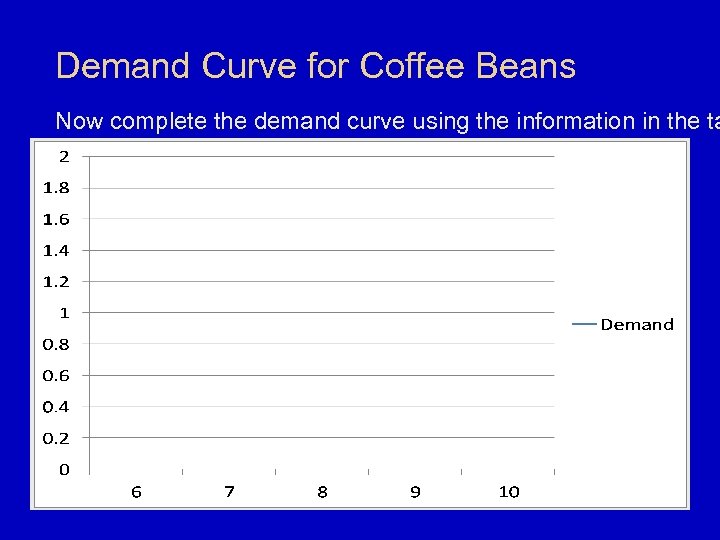 Demand Curve for Coffee Beans Now complete the demand curve using the information in the ta
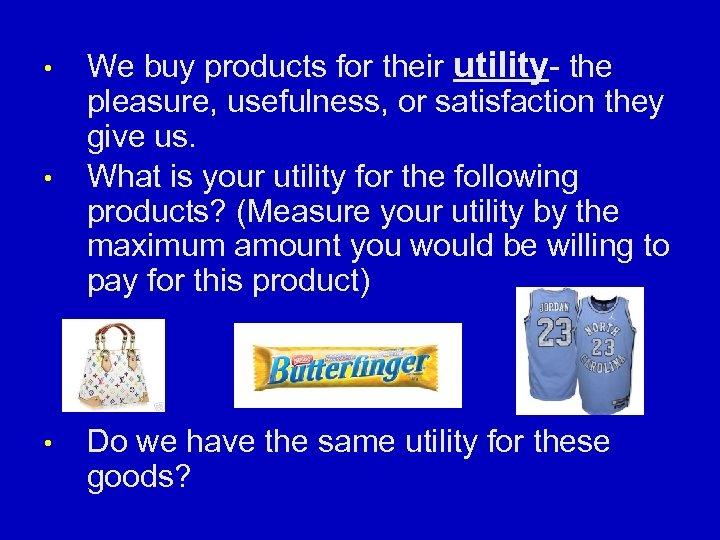 • • • We buy products for their utility- the pleasure, usefulness, or satisfaction they give us. What is your utility for the following products? (Measure your utility by the maximum amount you would be willing to pay for this product) Do we have the same utility for these goods?
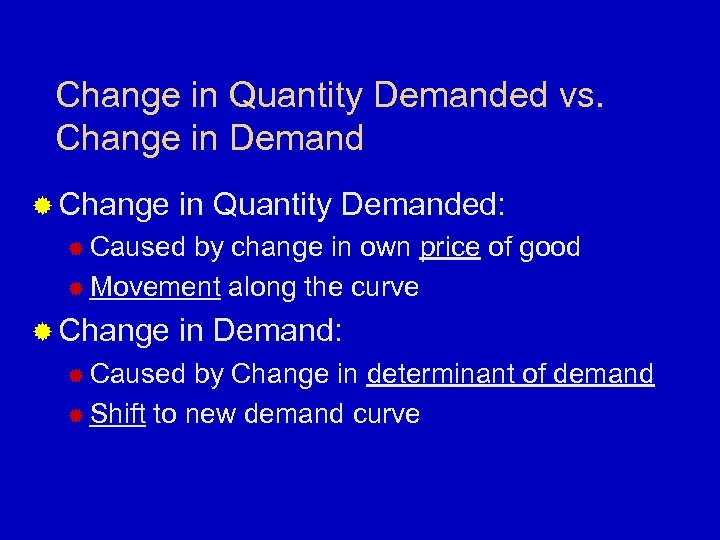 Change in Quantity Demanded vs. Change in Demand ® Change in Quantity Demanded: ® Caused by change in own price of good ® Movement along the curve ® Change in Demand: ® Caused by Change in determinant of demand ® Shift to new demand curve
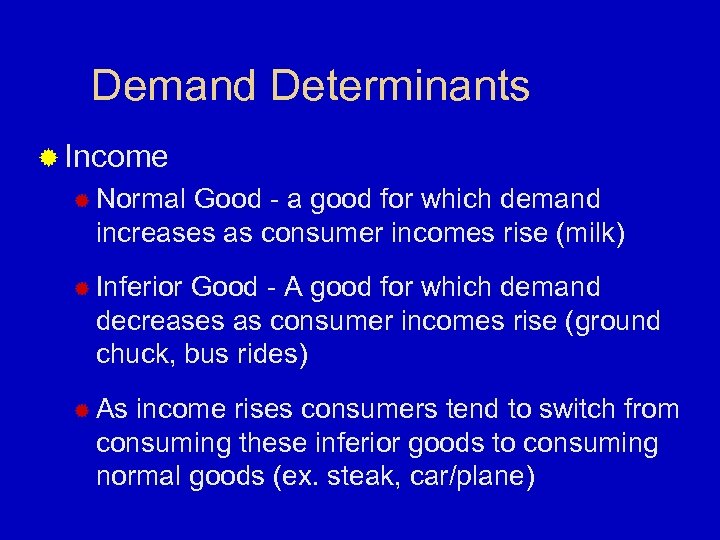 Demand Determinants ® Income ® Normal Good - a good for which demand increases as consumer incomes rise (milk) ® Inferior Good - A good for which demand decreases as consumer incomes rise (ground chuck, bus rides) ® As income rises consumers tend to switch from consuming these inferior goods to consuming normal goods (ex. steak, car/plane)
 Determinants con’t ® Preference/Taste ® Likes and dislikes in consumption ® Consumer Expectations ® Change in future price of goods ® Change in future income ® Population ® As Change the number of consumers in a market changes the demand will change
 Determinants con’t ® Consumer ® Change Expectations in future price of goods ® Change in future income
 Determinants con’t ® Population ® As Change the number of consumers in a market changes the demand will change
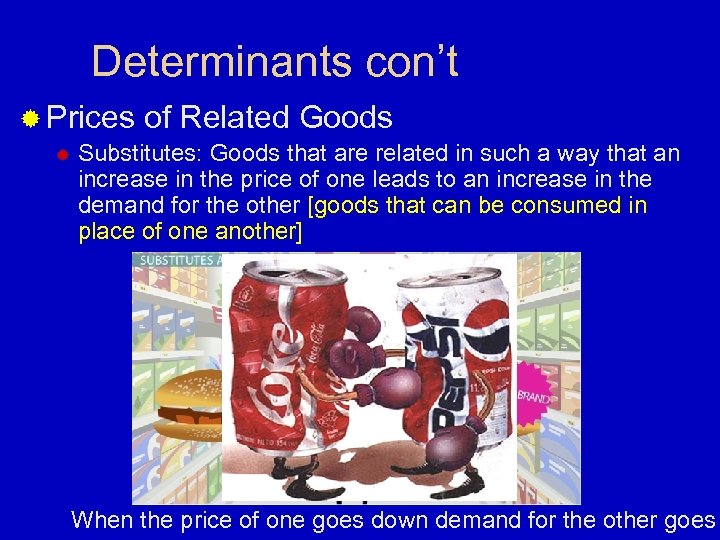 Determinants con’t ® Prices ® of Related Goods Substitutes: Goods that are related in such a way that an increase in the price of one leads to an increase in the demand for the other [goods that can be consumed in place of one another] When the price of one goes down demand for the other goes
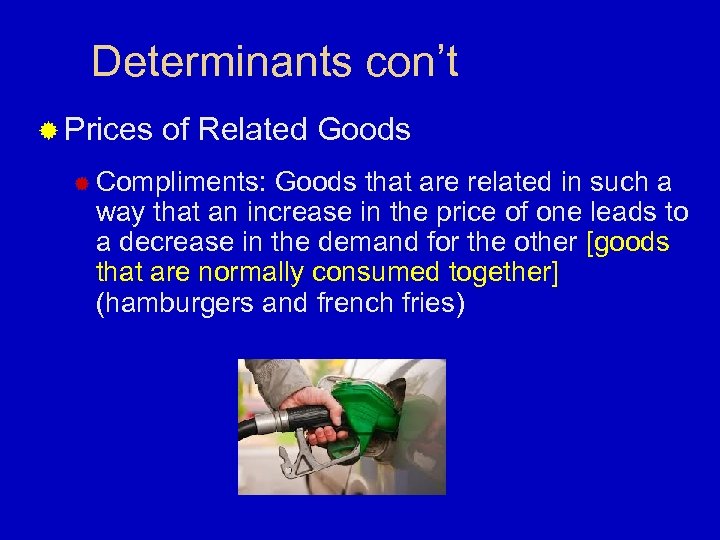 Determinants con’t ® Prices of Related Goods ® Compliments: Goods that are related in such a way that an increase in the price of one leads to a decrease in the demand for the other [goods that are normally consumed together] (hamburgers and french fries)
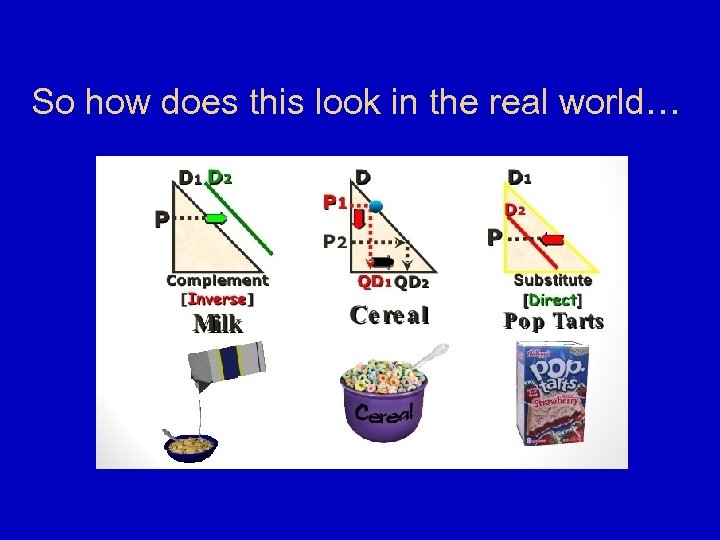 So how does this look in the real world…
 Law of Supply What Makes A Producer Provide the Quantity of Goods & Services?
 What is Supply? ® Supply indicates how much a good producers are willing and able to offer for sale period at each possible price, other things constant.
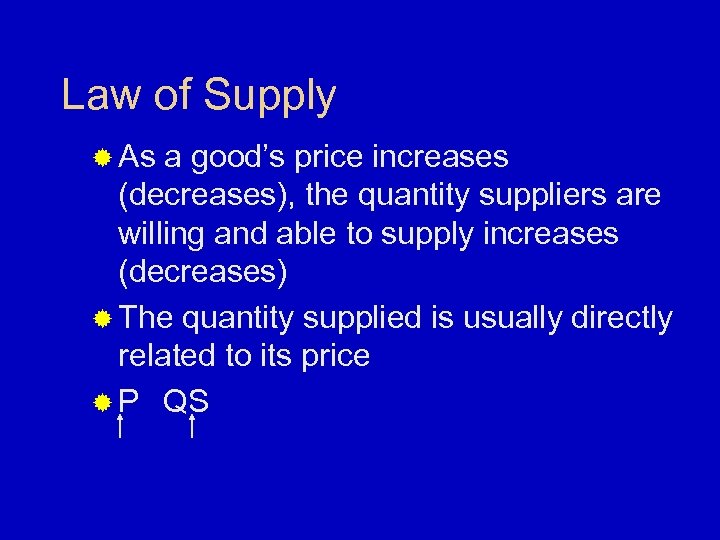 Law of Supply ® As a good’s price increases (decreases), the quantity suppliers are willing and able to supply increases (decreases) ® The quantity supplied is usually directly related to its price ® P QS
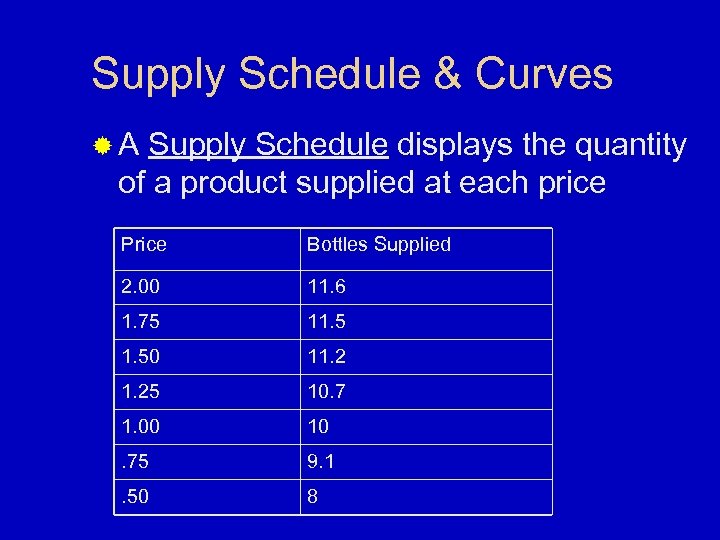 Supply Schedule & Curves ®A Supply Schedule displays the quantity of a product supplied at each price Price Bottles Supplied 2. 00 11. 6 1. 75 11. 50 11. 25 10. 7 1. 00 10 . 75 9. 1 . 50 8
 ®A Supply Curve shows a graphic representation of the quantities of a good supplied at various prices ® Graph the Supply curves using the Supply Schedule
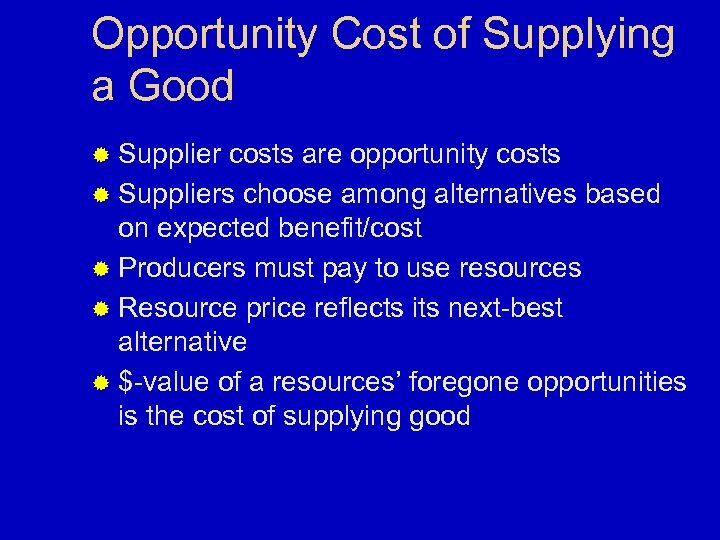 Opportunity Cost of Supplying a Good ® Supplier costs are opportunity costs ® Suppliers choose among alternatives based on expected benefit/cost ® Producers must pay to use resources ® Resource price reflects its next-best alternative ® $-value of a resources’ foregone opportunities is the cost of supplying good
 Changes in Supply vs. Change in Quantity Supplied ® Change in a good’s own price causes change in quantity supplied ® Movement along the supply curve ® Change in supply caused by change in determinant of supply ® Shifts supply curve
 Determinants of Supply ® Technology ® If more efficient technology is discovered production costs will fall ® So suppliers will be more willing and able to supply more of the good at each price ® Price of Relevant Resources ® Those resources employed in the production of a good.
 Determinants con’t ® Prices of Alternative Goods ® Price of good that use some of the same resources as used to produce the good in question ® Producer ® Shift production according to future prices ® Number ®# Expectations of Producers of Prod. Increases # of supply ® Government ® Taxes, Restrictions quotas, licenses, etc.
 END
END