


 Скачать презентацию Sunday work Co Commerce sector in Europe
ecb3baa7e72b5b0e2862e4a8a8b69f3e.ppt
- Количество слайдов: 12
 Sunday work & Co. Commerce sector in Europe Fabrice Warneck UNI Europa commerce
 Commerce in Europe • 33 million workers in E. U. • Retail and wholesale • Very high competition (SMEs) but low competion rules • Multinational companies: Carrefour (500. 000), Tesco (500. 000), Metro (Makro, Mediamarkt 300 000), IKEA (130. 000), H&M (100. 000), …
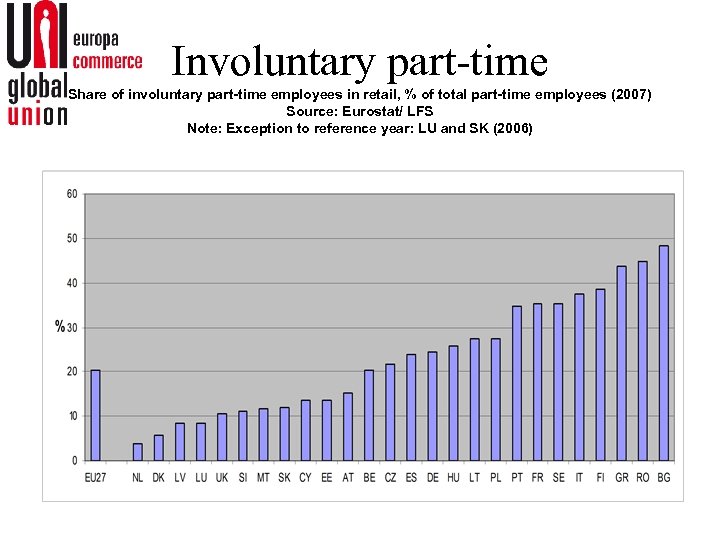 Involuntary part-time Share of involuntary part-time employees in retail, % of total part-time employees (2007) Source: Eurostat/ LFS Note: Exception to reference year: LU and SK (2006)
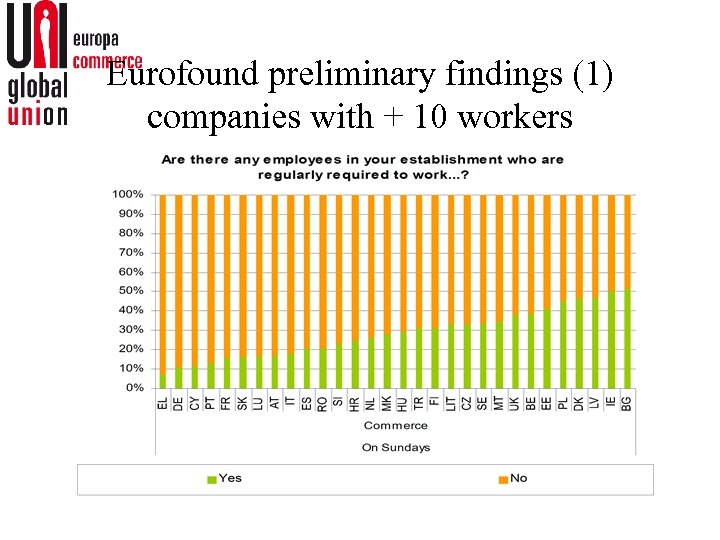 Eurofound preliminary findings (1) companies with + 10 workers
 All sectors Year 2007/( Eurofound « working time in the E. U. and other global economies » ) • up to 50% of employees work at least one Saturday a month • some 25% work at least one Sunday a month • about 25% of employees work on Saturdays but never on Sundays, • 23% work at least one Saturday and one Sunday a month. • four times a month : 15% of workers are usually at the workplace on Saturdays, some 5% report working regularly on
 Year 2007/ ( Eurofound « working time in the E. U. and other global economies » ) • In the US, the share of employees who do not work on weekends is higher than in the EU: almost two-thirds of all wage and salary workers only usually work on weekdays. • In the EU, in hotels and restaurants, where employees who work on Saturdays represent 80% of the total workforce (65% on Sundays), wholesale and retail trade 60% Saturdays (20 % on Sundays), as well as transport and communication, Saturdays is 60% (35% on Sundays respectively).
 Why opening longer hours ? • Late evening opening and Sunday opening of shops = good for consumers ? For the economy ? • Who takes care of children ? Impact on family life. • What impact on health ? Stress, overload. • What compensation ? Rest, money, none. • What impact on environment ? (air conditioning, light, refrigiration). • What kind of society do we want ? Leisure or consumerism ? • What impact on other sectors (childcare, public transport, cleaning, security, logistics)
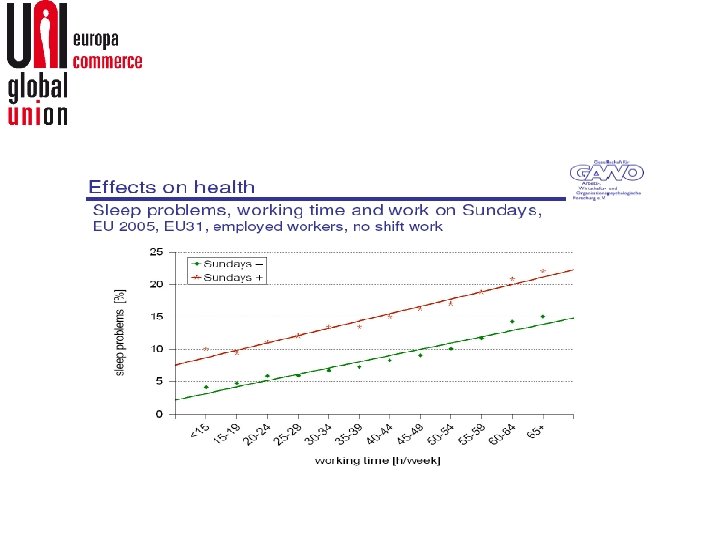
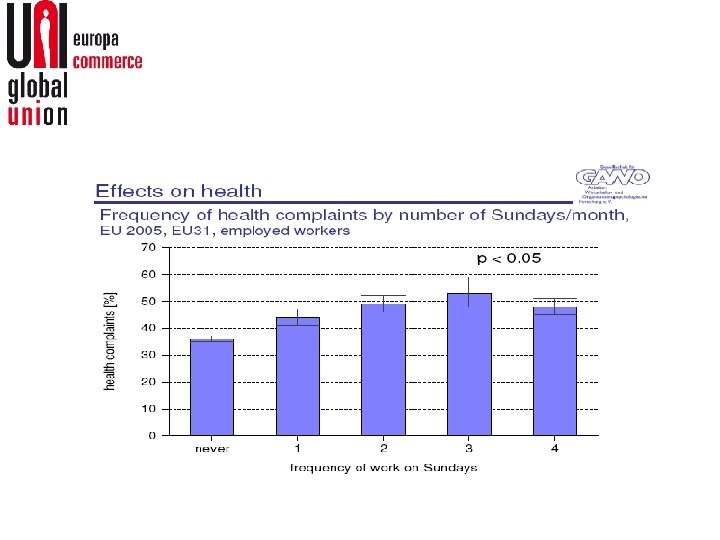
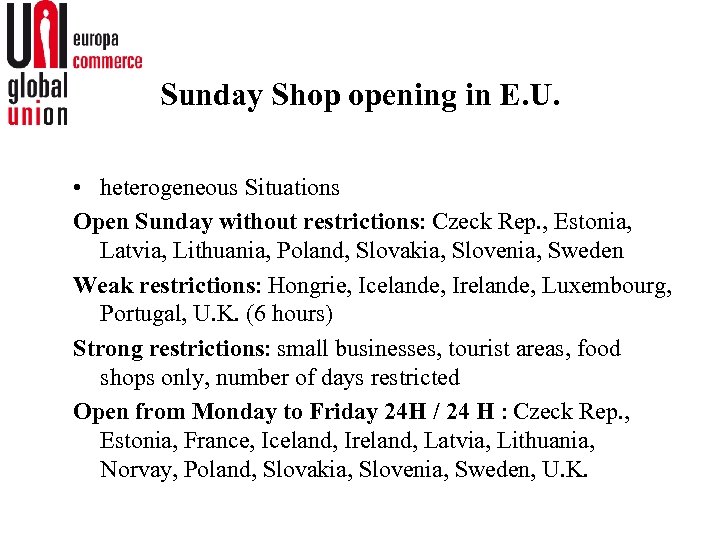 Sunday Shop opening in E. U. • heterogeneous Situations Open Sunday without restrictions: Czeck Rep. , Estonia, Latvia, Lithuania, Poland, Slovakia, Slovenia, Sweden Weak restrictions: Hongrie, Icelande, Irelande, Luxembourg, Portugal, U. K. (6 hours) Strong restrictions: small businesses, tourist areas, food shops only, number of days restricted Open from Monday to Friday 24 H / 24 H : Czeck Rep. , Estonia, France, Iceland, Ireland, Latvia, Lithuania, Norvay, Poland, Slovakia, Slovenia, Sweden, U. K.
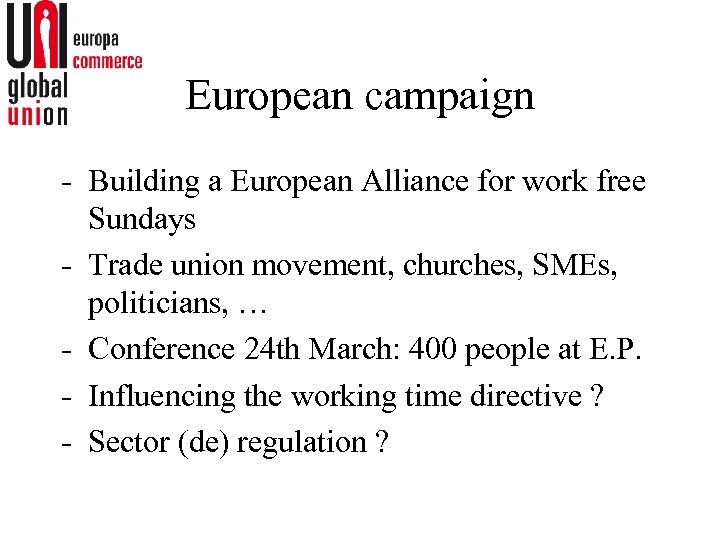 European campaign - Building a European Alliance for work free Sundays - Trade union movement, churches, SMEs, politicians, … - Conference 24 th March: 400 people at E. P. - Influencing the working time directive ? - Sector (de) regulation ?