


 Скачать презентацию Summary of Chapter 6 Copyright 2010 Pearson Education
561ebd47a4bbae26c59584658a3b44a3.ppt
- Количество слайдов: 65
 Summary of Chapter 6 Copyright 2010 Pearson Education, Inc. Publishing as 1 Chapter Two Slide

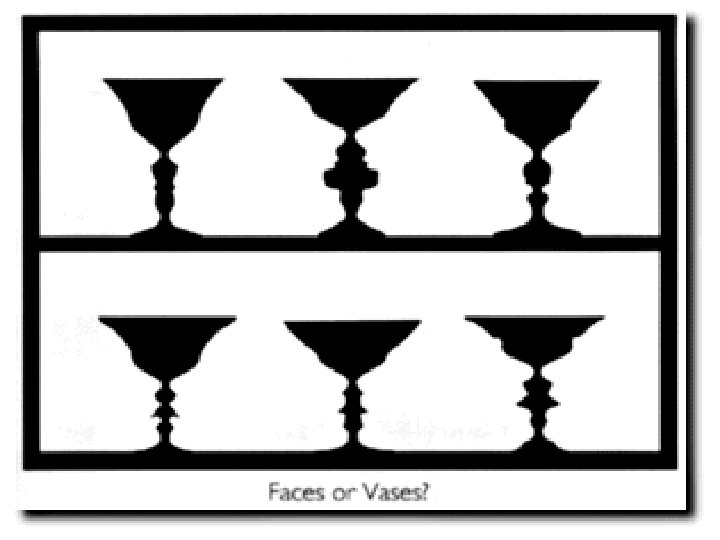 3 Chapter-5
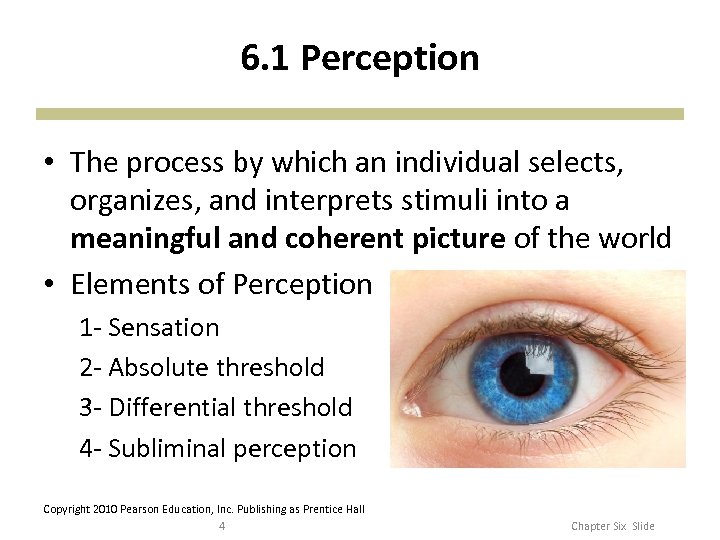 6. 1 Perception • The process by which an individual selects, organizes, and interprets stimuli into a meaningful and coherent picture of the world • Elements of Perception 1 - Sensation 2 - Absolute threshold 3 - Differential threshold 4 - Subliminal perception Copyright 2010 Pearson Education, Inc. Publishing as Prentice Hall 4 Chapter Six Slide
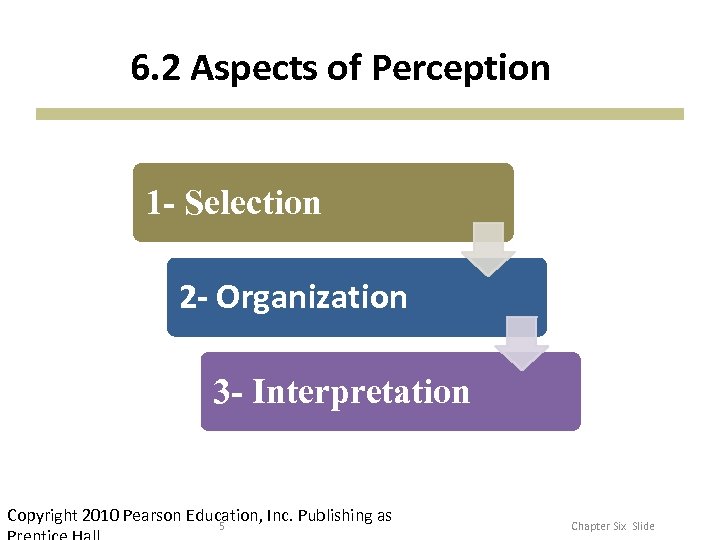 6. 2 Aspects of Perception 1 - Selection 2 - Organization 3 - Interpretation Copyright 2010 Pearson Education, Inc. Publishing as 5 Chapter Six Slide
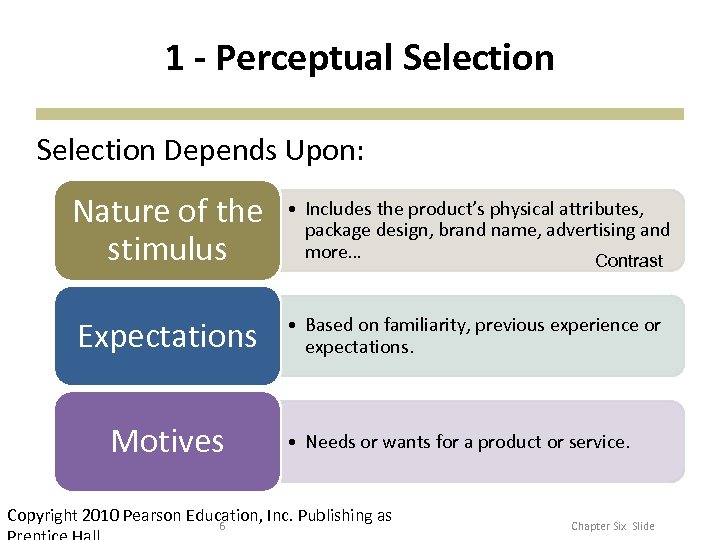 1 - Perceptual Selection Depends Upon: Nature of the stimulus • Includes the product’s physical attributes, package design, brand name, advertising and more… Contrast Expectations • Based on familiarity, previous experience or expectations. Motives • Needs or wants for a product or service. Copyright 2010 Pearson Education, Inc. Publishing as 6 Chapter Six Slide
 2 - Organization Principles • Figure and ground • Grouping • Closure Copyright 2010 Pearson Education, Inc. Publishing as Prentice Hall Chapter Six Slide 7
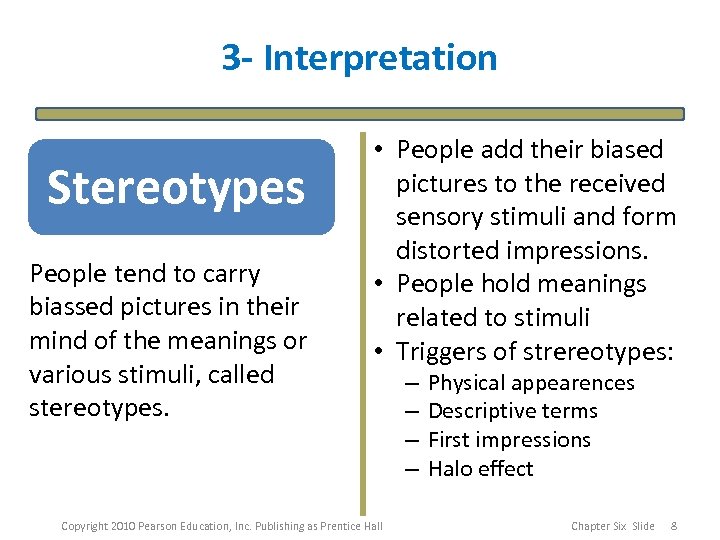 3 - Interpretation Stereotypes People tend to carry biassed pictures in their mind of the meanings or various stimuli, called stereotypes. • People add their biased pictures to the received sensory stimuli and form distorted impressions. • People hold meanings related to stimuli • Triggers of strereotypes: Copyright 2010 Pearson Education, Inc. Publishing as Prentice Hall – – Physical appearences Descriptive terms First impressions Halo effect Chapter Six Slide 8
 Perceived Risk • The degree of uncertainty perceived by the consumer as to the consequences (outcome) of a specific purchase decision • Types – – – Functional Risk Physical Risk Financial Risk Social Risk Psychological Risk Time Risk Copyright 2010 Pearson Education, Inc. Publishing as 9 Chapter Six Slide
 How Consumers Handle Risk • • • Seek Information Stay Brand Loyal Select by Brand Image Rely on Store Image Buy the Most Expensive Model Seek Reassurance Copyright 2010 Pearson Education, Inc. Publishing as 10 Chapter Six Slide
 Homework Dead Line: 2 May 2016, after the course Style: Printed hand out. Max 10 slides Subject: Write and discuss Hofstede’s Cultural Dimensions Copyright 2010 Pearson Education, Inc. Publishing as 11 Chapter Six Slide
 CHAPTER SEVEN Consumer Learning
 Learning Objectives 1. To Understand the Process and Four Elements of Consumer Learning. 2. To Study Behavioral Learning and Understand Its Applications to Consumption Behavior. 3. To Study Information Processing and Cognitive Learning and Understand Their Strategic Applications to Consumer Behavior. Copyright 2010 Pearson Education, Inc. Publishing as Prentice Hall Chapter Seven Slide 13
 Learning Objectives (continued) 4. To Study Consumer Involvement and Passive Learning and Understand Their Strategic Affects on Consumer Behavior. 5. To Understand How Consumer Learning and Its Results Are Measured. Copyright 2010 Pearson Education, Inc. Publishing as Prentice Hall Chapter Seven Slide 14
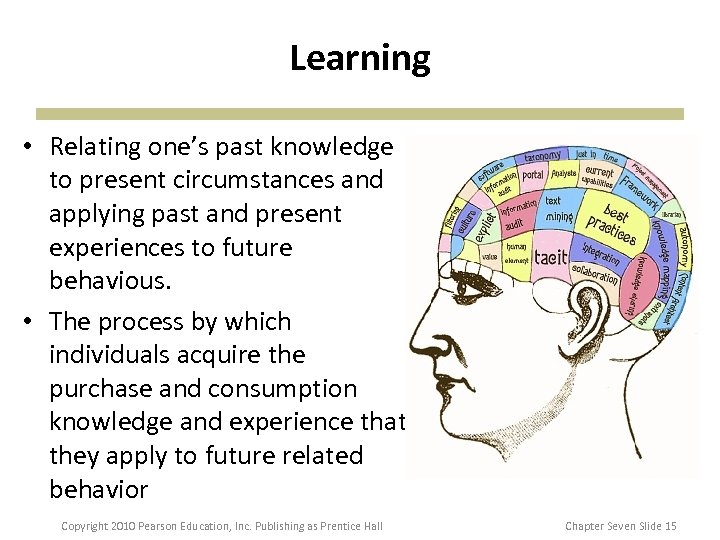 Learning • Relating one’s past knowledge to present circumstances and applying past and present experiences to future behavious. • The process by which individuals acquire the purchase and consumption knowledge and experience that they apply to future related behavior Copyright 2010 Pearson Education, Inc. Publishing as Prentice Hall Chapter Seven Slide 15
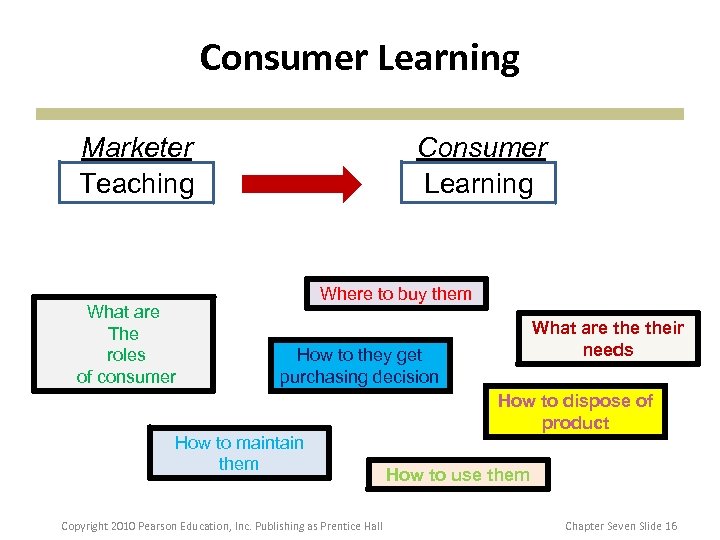 Consumer Learning Marketer Teaching What are The roles of consumer Consumer Learning Where to buy them What are their needs How to they get purchasing decision How to maintain them Copyright 2010 Pearson Education, Inc. Publishing as Prentice Hall How to dispose of product How to use them Chapter Seven Slide 16
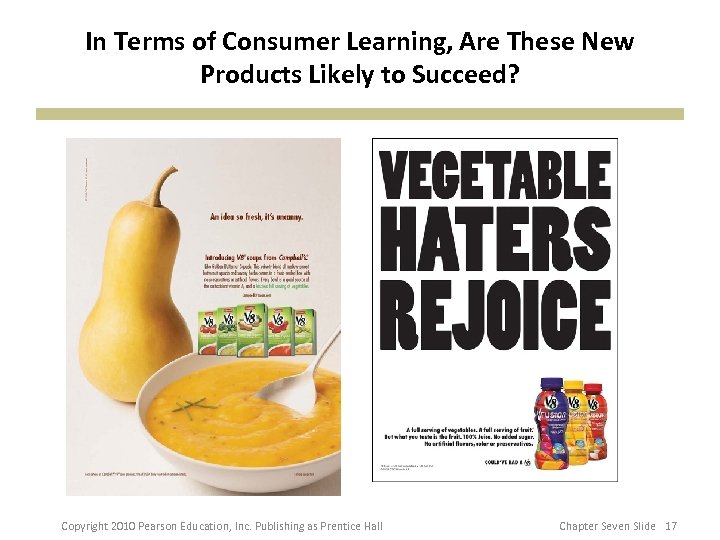 In Terms of Consumer Learning, Are These New Products Likely to Succeed? Copyright 2010 Pearson Education, Inc. Publishing as Prentice Hall Chapter Seven Slide 17
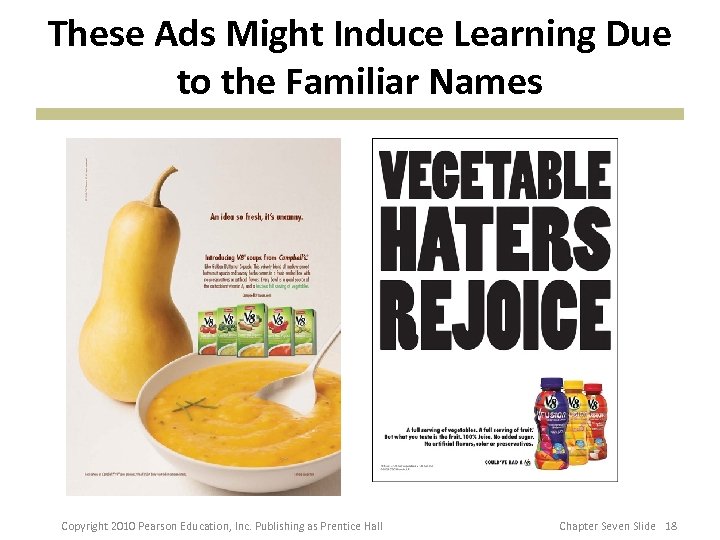 These Ads Might Induce Learning Due to the Familiar Names Copyright 2010 Pearson Education, Inc. Publishing as Prentice Hall Chapter Seven Slide 18
 Learning üConsumer learning; is a process continually evolves, change as a result of knowledge or from actual experience üLearning can be; i. Intentional: acquired by searching ii. Incidental: acquired by accidental üConsumer learning can be; i. Simple almost reflexive responces ii. Abstract concepts iii. Complex problem solving Copyright 2010 Pearson Education, Inc. Publishing as Prentice Hall Chapter Seven Slide 19
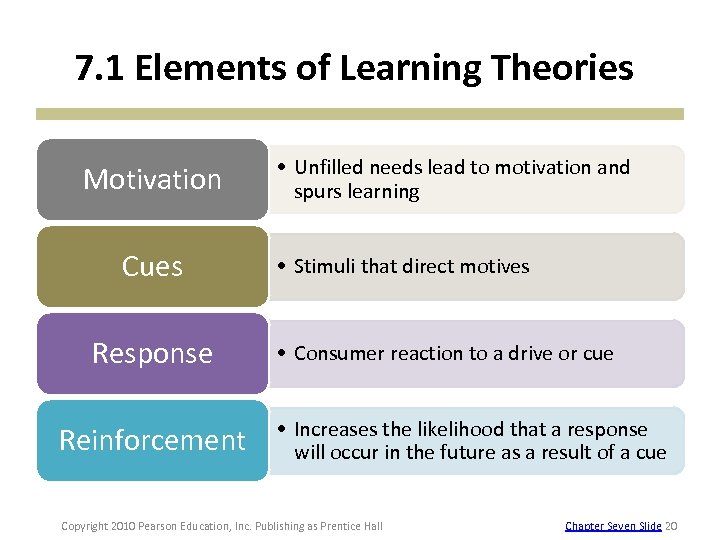 7. 1 Elements of Learning Theories Motivation Cues Response Reinforcement • Unfilled needs lead to motivation and spurs learning • Stimuli that direct motives • Consumer reaction to a drive or cue • Increases the likelihood that a response will occur in the future as a result of a cue Copyright 2010 Pearson Education, Inc. Publishing as Prentice Hall Chapter Seven Slide 20
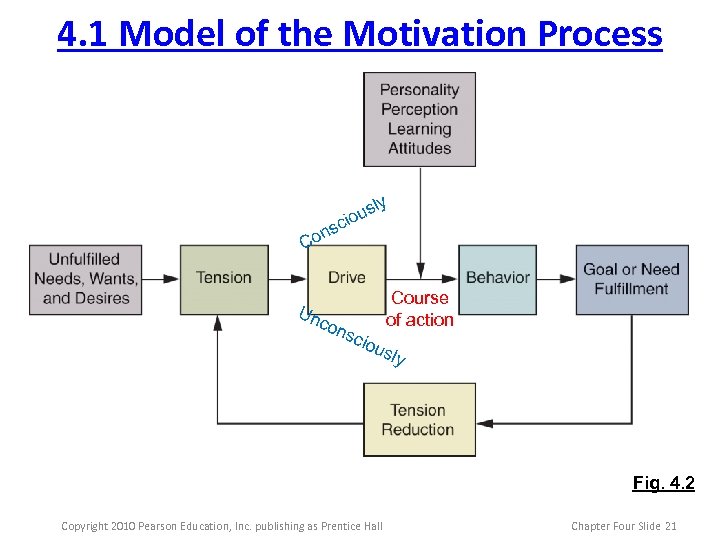 4. 1 Model of the Motivation Process n Co y usl o sci Un con Course of action sci ous ly Fig. 4. 2 Copyright 2010 Pearson Education, Inc. publishing as Prentice Hall Chapter Four Slide 21
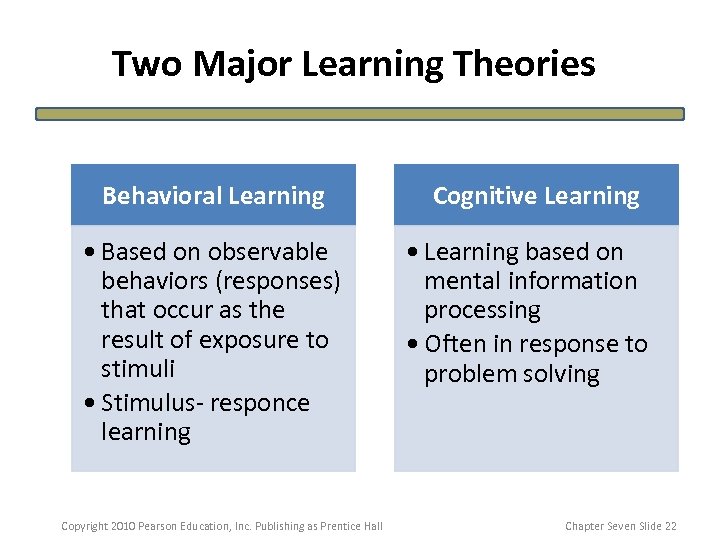 Two Major Learning Theories Behavioral Learning • Based on observable behaviors (responses) that occur as the result of exposure to stimuli • Stimulus- responce learning Copyright 2010 Pearson Education, Inc. Publishing as Prentice Hall Cognitive Learning • Learning based on mental information processing • Often in response to problem solving Chapter Seven Slide 22
 7. 2 Behavioral Learning 1. Classical Conditioning: Automatic responce to a situation built up through repeated exposure. 2. Instrumental (Operant) Conditioning: Learning occurs through trial and error process, with habits formed as a result of received reward from trial. Copyright 2010 Pearson Education, Inc. Publishing as Prentice Hall Chapter Seven Slide 23
 1 - Classical Conditioning • A behavioral learning theory according to which a stimulus is paired with another stimulus that elicits a known response that serves to produce the same response when used alone. Copyright 2010 Pearson Education, Inc. Publishing as Prentice Hall Chapter Seven Slide 24
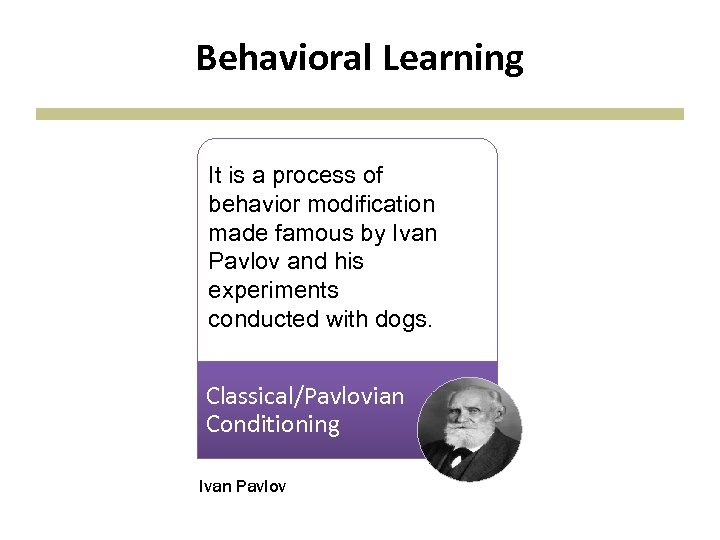 Behavioral Learning It is a process of behavior modification made famous by Ivan Pavlov and his experiments conducted with dogs. Classical/Pavlovian Conditioning Ivan Pavlov
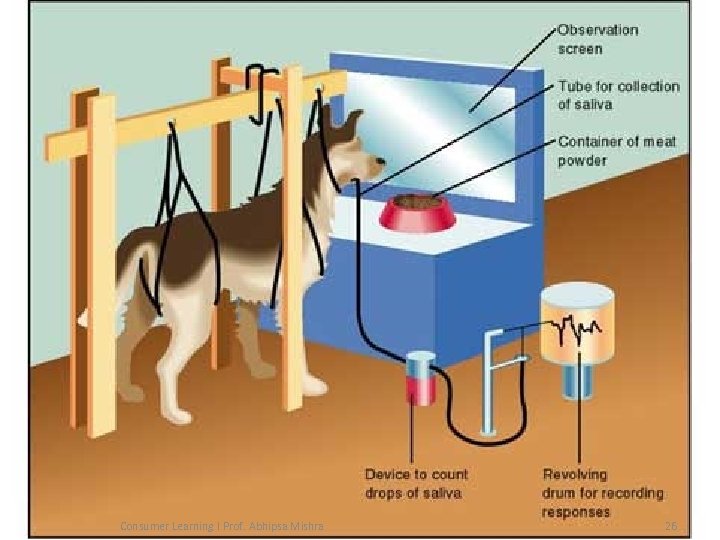 Consumer Learning I Prof. Abhipsa Mishra 26
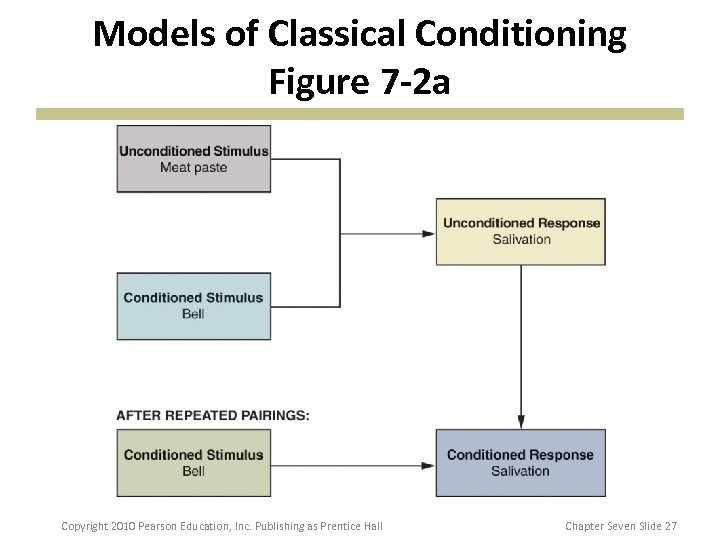 Models of Classical Conditioning Figure 7 -2 a Copyright 2010 Pearson Education, Inc. Publishing as Prentice Hall Chapter Seven Slide 27
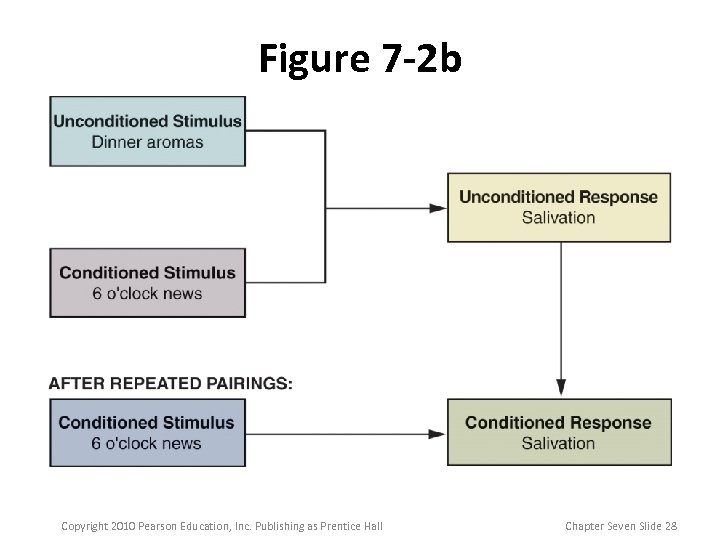 Figure 7 -2 b Copyright 2010 Pearson Education, Inc. Publishing as Prentice Hall Chapter Seven Slide 28
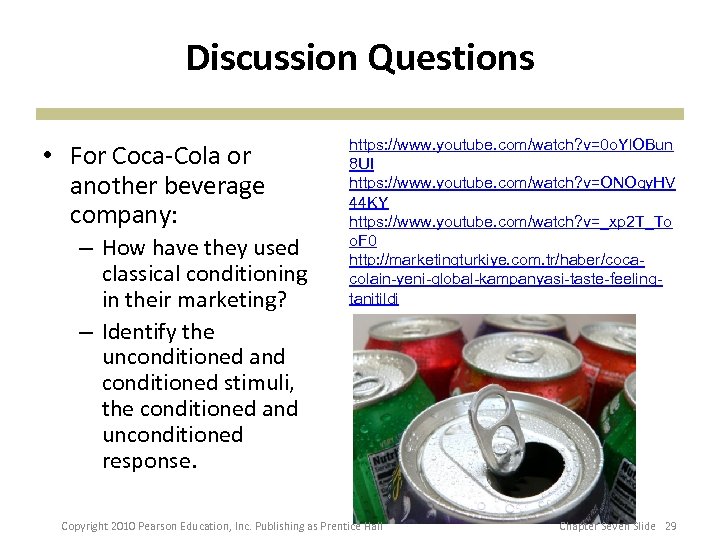 Discussion Questions • For Coca-Cola or another beverage company: – How have they used classical conditioning in their marketing? – Identify the unconditioned and conditioned stimuli, the conditioned and unconditioned response. https: //www. youtube. com/watch? v=0 o. Yl. OBun 8 UI https: //www. youtube. com/watch? v=ONOqy. HV 44 KY https: //www. youtube. com/watch? v=_xp 2 T_To o. F 0 http: //marketingturkiye. com. tr/haber/cocacolain-yeni-global-kampanyasi-taste-feelingtanitildi Copyright 2010 Pearson Education, Inc. Publishing as Prentice Hall Chapter Seven Slide 29
 Strategic Applications of Classical Conditioning Basic Concepts • Repetition • Stimulus generalization • Stimulus discrimination • Increases the association between the conditioned and unconditioned stimulus • Slows the process of forgetting • Advertising wearout is a problem (optimum level of advertising) Copyright 2010 Pearson Education, Inc. Publishing as Prentice Hall Chapter Seven Slide 30
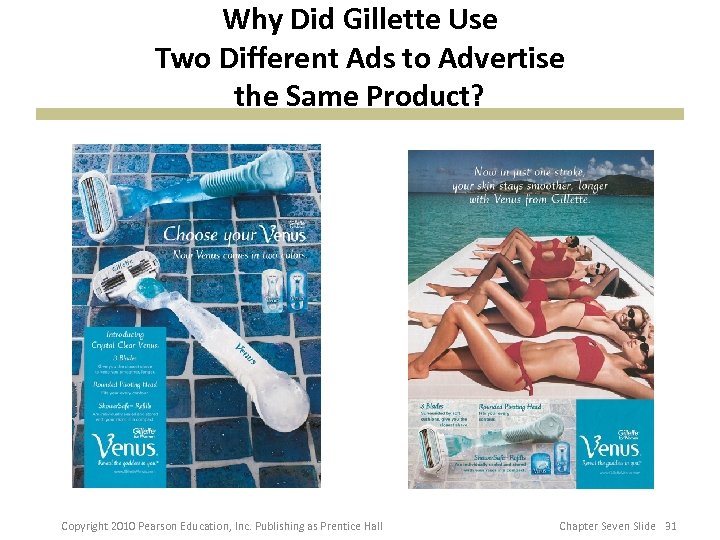 Why Did Gillette Use Two Different Ads to Advertise the Same Product? Copyright 2010 Pearson Education, Inc. Publishing as Prentice Hall Chapter Seven Slide 31
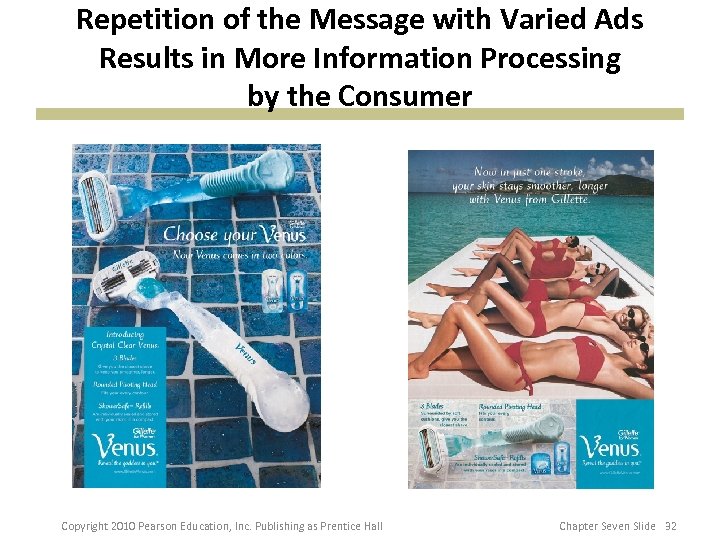 Repetition of the Message with Varied Ads Results in More Information Processing by the Consumer Copyright 2010 Pearson Education, Inc. Publishing as Prentice Hall Chapter Seven Slide 32
 Strategic Applications of Classical Conditioning Basic Concepts • Repetition • Stimulus generalization • Stimulus discrimination • Having the same response to slightly different stimuli • Helps “me-too” products to succeed • Useful in: Copyright 2010 Pearson Education, Inc. Publishing as Prentice Hall – product extensions – family branding – licensing Chapter Seven Slide 33
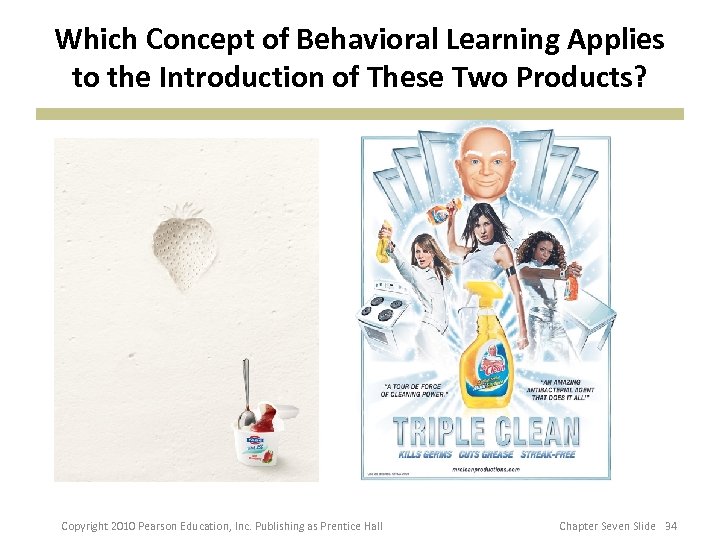 Which Concept of Behavioral Learning Applies to the Introduction of These Two Products? Copyright 2010 Pearson Education, Inc. Publishing as Prentice Hall Chapter Seven Slide 34
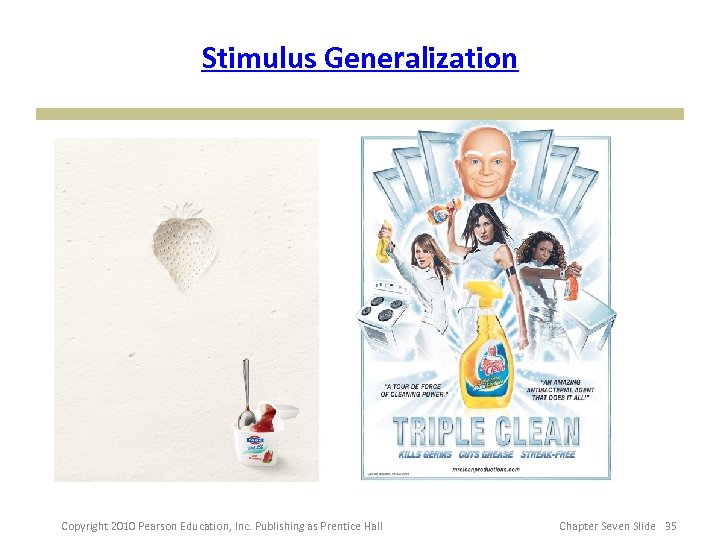 Stimulus Generalization Copyright 2010 Pearson Education, Inc. Publishing as Prentice Hall Chapter Seven Slide 35
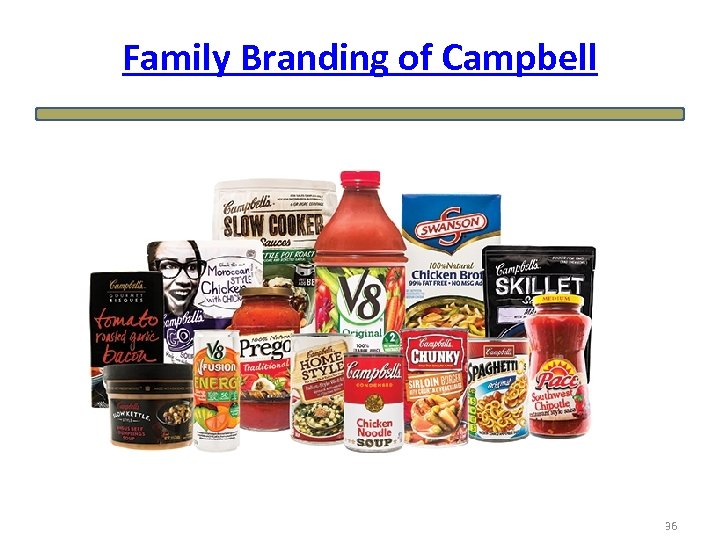 Family Branding of Campbell 36
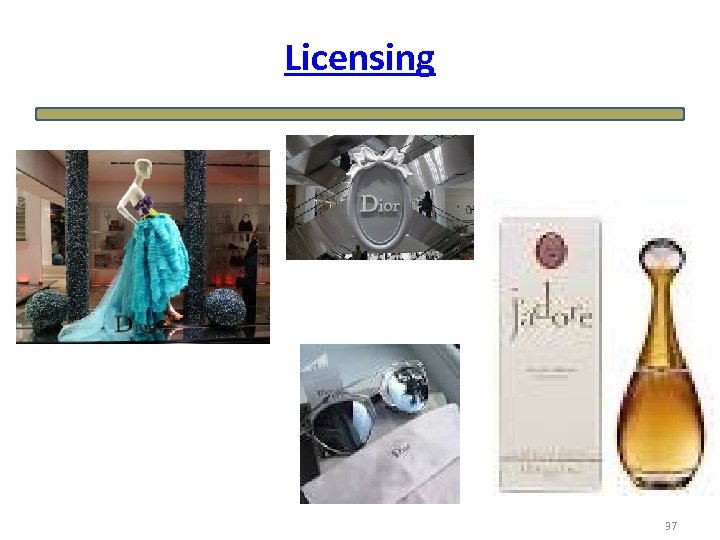 Licensing 37
 Strategic Applications of Classical Conditioning Basic Concepts • Repetition • Stimulus generalization • Stimulus discrimination • Opposite of stimulus generalization • Selection of a specific stimulus from similar stimuli • This discrimination is the basis of positioning which looks for unique ways to fill needs Copyright 2010 Pearson Education, Inc. Publishing as Prentice Hall Chapter Seven Slide 38
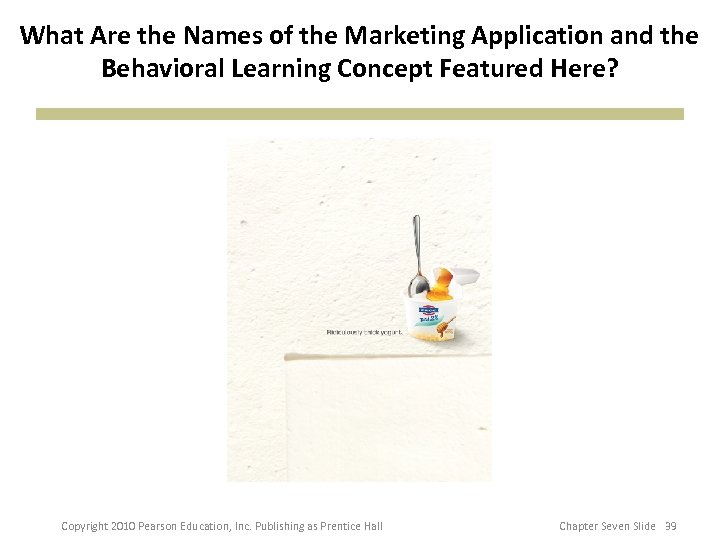 What Are the Names of the Marketing Application and the Behavioral Learning Concept Featured Here? Copyright 2010 Pearson Education, Inc. Publishing as Prentice Hall Chapter Seven Slide 39
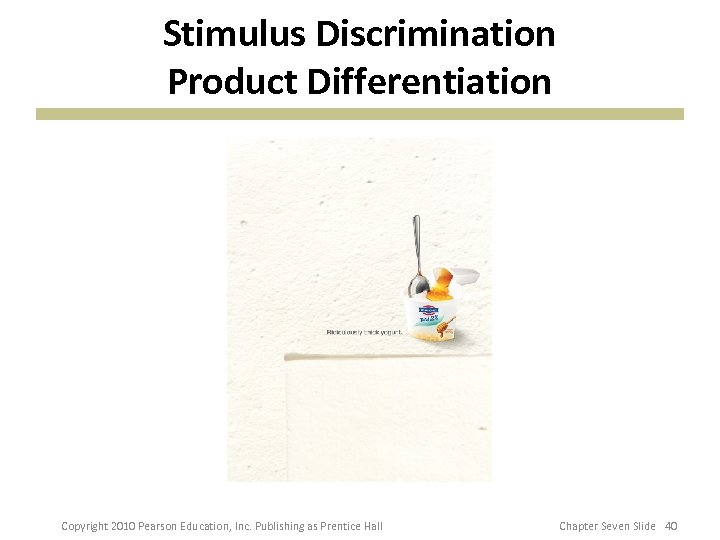 Stimulus Discrimination Product Differentiation Copyright 2010 Pearson Education, Inc. Publishing as Prentice Hall Chapter Seven Slide 40
 2 - Instrumental (Operant) Conditioning • A behavioral theory of learning based on a trial-and-error process, with habits forced as the result of positive experiences (reinforcement) resulting from certain responses or behaviors. Copyright 2010 Pearson Education, Inc. Publishing as Prentice Hall Chapter Seven Slide 41
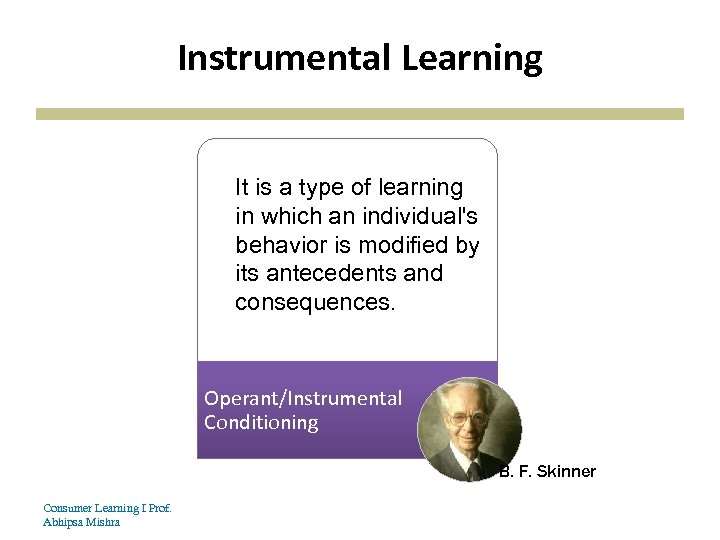 Instrumental Learning It is a type of learning in which an individual's behavior is modified by its antecedents and consequences. Operant/Instrumental Conditioning B. F. Skinner Consumer Learning I Prof. Abhipsa Mishra
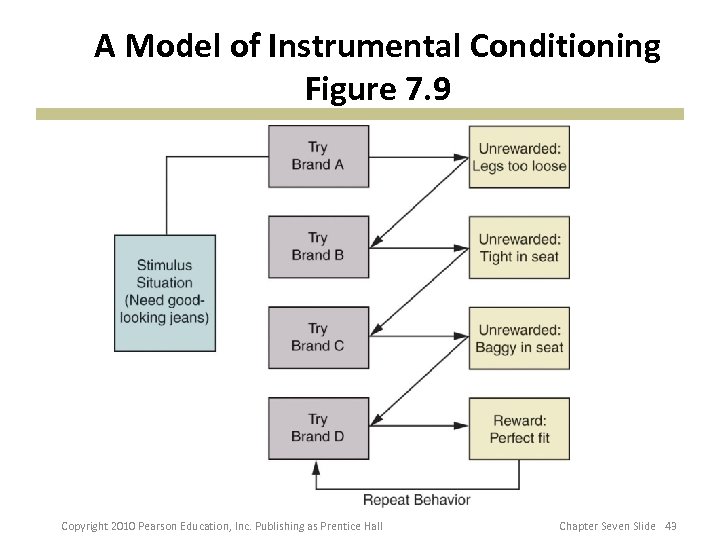 A Model of Instrumental Conditioning Figure 7. 9 Copyright 2010 Pearson Education, Inc. Publishing as Prentice Hall Chapter Seven Slide 43
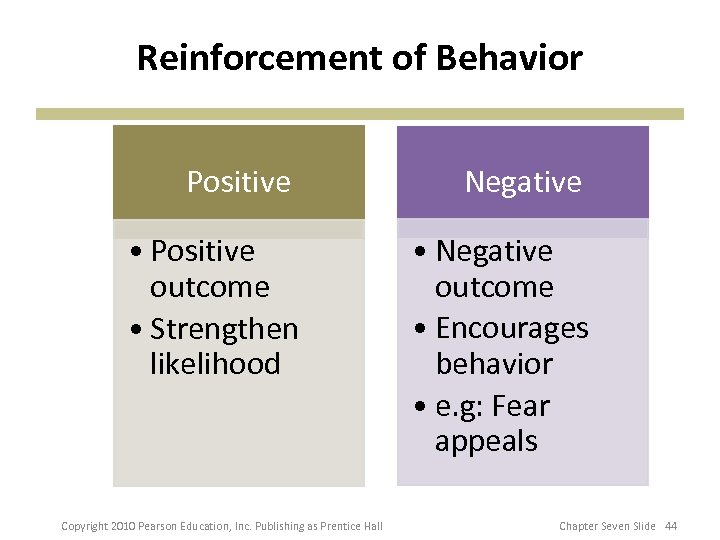 Reinforcement of Behavior Positive Negative • Positive outcome • Strengthen likelihood • Negative outcome • Encourages behavior • e. g: Fear appeals Copyright 2010 Pearson Education, Inc. Publishing as Prentice Hall Chapter Seven Slide 44
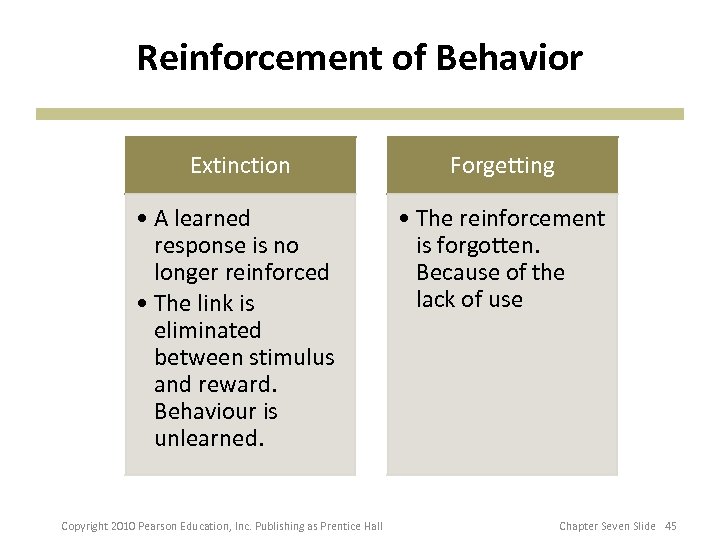 Reinforcement of Behavior Extinction Forgetting • A learned response is no longer reinforced • The link is eliminated between stimulus and reward. Behaviour is unlearned. • The reinforcement is forgotten. Because of the lack of use Copyright 2010 Pearson Education, Inc. Publishing as Prentice Hall Chapter Seven Slide 45
 Strategic Applications of Instrumental Conditioning • • Customer Satisfaction (Reinforcement) Reinforcement Schedules Shaping e. g: test drive Massed versus Distributed Learning Copyright 2010 Pearson Education, Inc. Publishing as Prentice Hall Chapter Seven Slide 46
 Observational Learning (modeling or vicarious learning) • A process by which individuals learn behavior by observing the behavior of others and the consequences of such behavior Copyright 2010 Pearson Education, Inc. Publishing as Prentice Hall Chapter Seven Slide 47
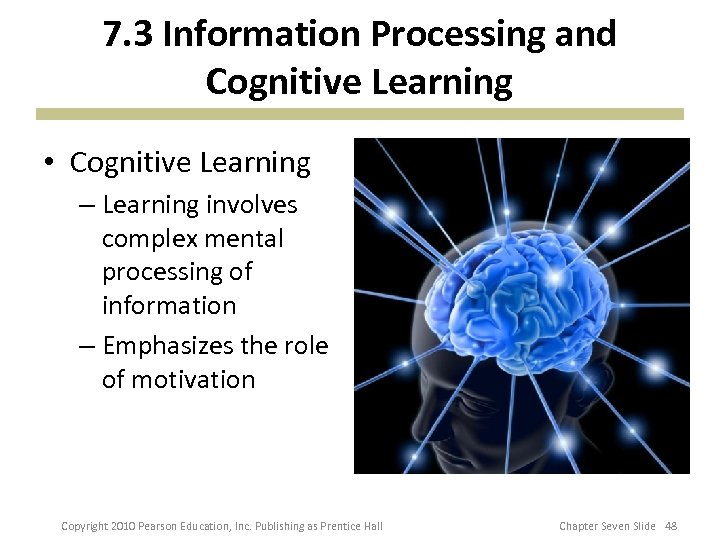 7. 3 Information Processing and Cognitive Learning • Cognitive Learning – Learning involves complex mental processing of information – Emphasizes the role of motivation Copyright 2010 Pearson Education, Inc. Publishing as Prentice Hall Chapter Seven Slide 48
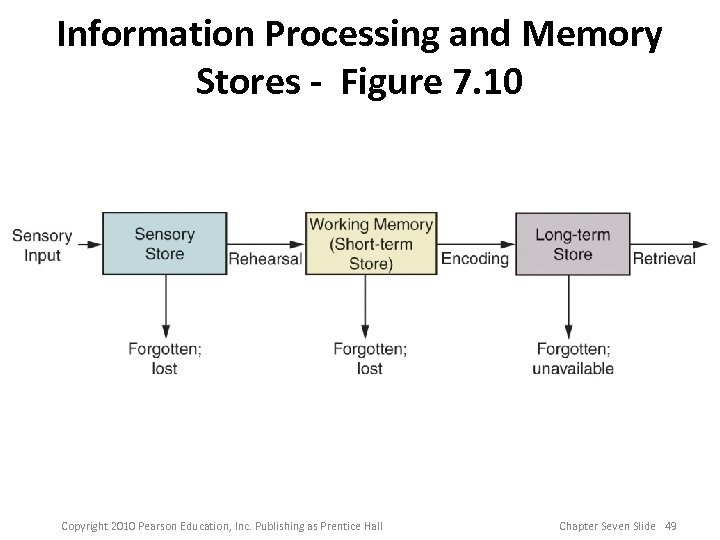 Information Processing and Memory Stores - Figure 7. 10 Copyright 2010 Pearson Education, Inc. Publishing as Prentice Hall Chapter Seven Slide 49
 Discussion Questions • How do advertisers drive consumers to rehearse information? • When does this work against the advertiser? • Can you think of examples of advertisements which drive you to rehearse? Copyright 2010 Pearson Education, Inc. Publishing as Prentice Hall Chapter Seven Slide 50
 Involvement and Passive Learning Topics • • Definitions and Measures of Involvement Marketing Applications of Involvement Central and Peripheral Routes to Persuasion Hemispheral Lateralization and Passive Learning Copyright 2010 Pearson Education, Inc. Publishing as Prentice Hall Chapter Seven Slide 51
 Involvement • Degree of personal relevance that the product or purchase holds for that customer. • High involvement purchases are very important to the consumer (in terms of perceived risk). Complex, goal oriented purchases • Low-involvement hold little relevance, have little perceived risk, and provoke limited information processing Copyright 2010 Pearson Education, Inc. Publishing as Prentice Hall Chapter Seven Slide 52
 Measuring Involvement with an Advertisement - Table 7. 3 Subjects respond to the following statements on a 7 -point Likert scale ranging from “Strongly Agree” to “Strongly Disagree. ” The message in the slogan was important to me The slogan didn’t have anything to do with my needs The slogan made me think about joining the military The slogan made me want to join the military While reading the slogan, I thought about how the military might be useful for me The slogan did not show me anything that would make me join the military I have a more favorable view of the military after seeing the slogan The slogan showed me the military has certain advantages The slogan was meaningful to me The slogan was worth remembering Copyright 2010 Pearson Education, Inc. Publishing as Prentice Hall Chapter Seven Slide 53
 Marketing Applications of Involvement • Ads in video games • Avatars • Sensory appeals in ads to get more attention • Forging bonds and relationships with consumers Copyright 2010 Pearson Education, Inc. Publishing as Prentice Hall Chapter Seven Slide 54
 Central and Peripheral Routes to Persuasion Central route to persuasion • For high involvement purchases • Requires cognitive processing Peripheral route to persuasion • Low involvement • Consumer less motivated to think • Learning through repetition, passive processing of visual cues, and holistic perception Copyright 2010 Pearson Education, Inc. Publishing as Prentice Hall Chapter Seven Slide 55
 Hemispheral Lateralization and Passive Learning • Hemispheral lateralization – Also called split-brain theory • Left Brain – Rational – Active – Realistic • Right Brain – – Emotional Metaphoric Impulsive Intuitive Copyright 2010 Pearson Education, Inc. Publishing as Prentice Hall Chapter Seven Slide 56
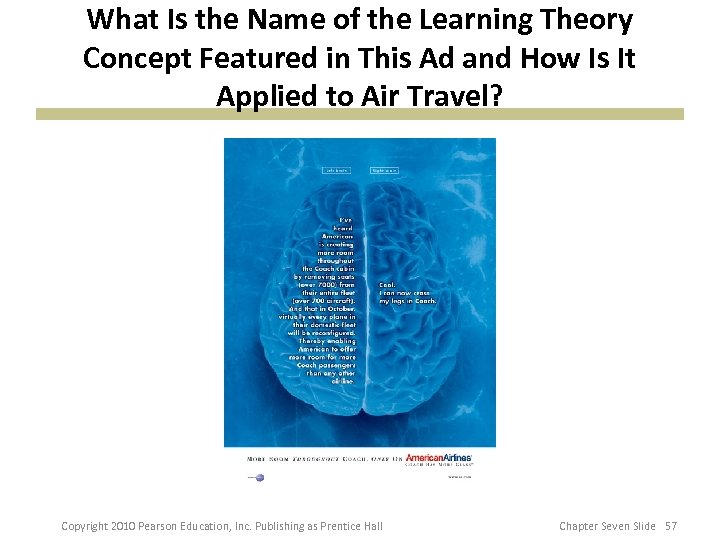 What Is the Name of the Learning Theory Concept Featured in This Ad and How Is It Applied to Air Travel? Copyright 2010 Pearson Education, Inc. Publishing as Prentice Hall Chapter Seven Slide 57
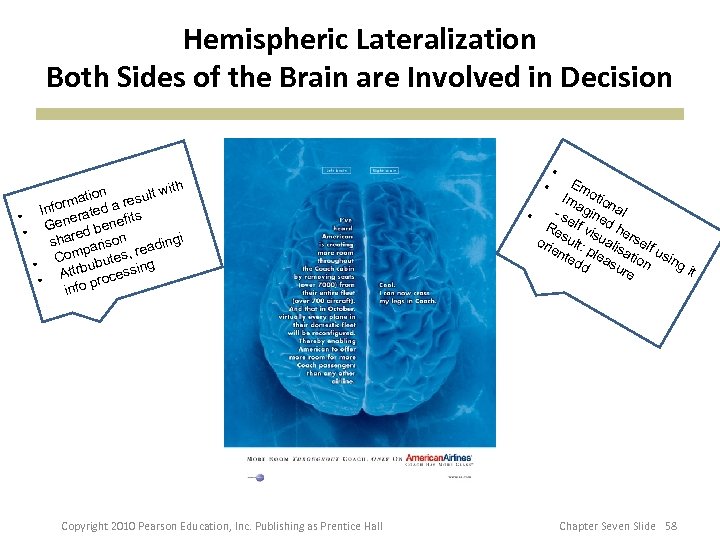 Hemispheric Lateralization Both Sides of the Brain are Involved in Decision with ation result m Infor rated a s • it e Gen d benef • e shar arison adingi p re Com butes, g • u Attrb rocessin • p info Copyright 2010 Pearson Education, Inc. Publishing as Prentice Hall • Em Im otio n - s agine al • elf dh Re su visua erse ori en lt: ple lisa lf us ti ted ing d asure on it • Chapter Seven Slide 58
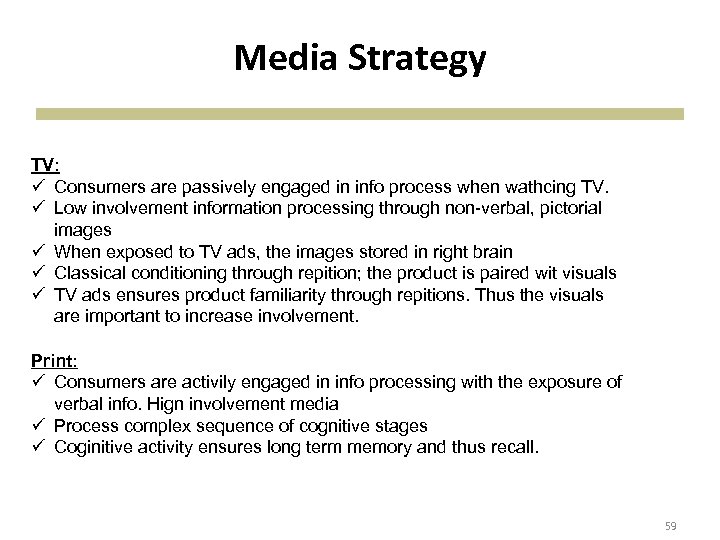 Media Strategy TV: ü Consumers are passively engaged in info process when wathcing TV. ü Low involvement information processing through non-verbal, pictorial images ü When exposed to TV ads, the images stored in right brain ü Classical conditioning through repition; the product is paired wit visuals ü TV ads ensures product familiarity through repitions. Thus the visuals are important to increase involvement. Print: ü Consumers are activily engaged in info processing with the exposure of verbal info. Hign involvement media ü Process complex sequence of cognitive stages ü Coginitive activity ensures long term memory and thus recall. 59
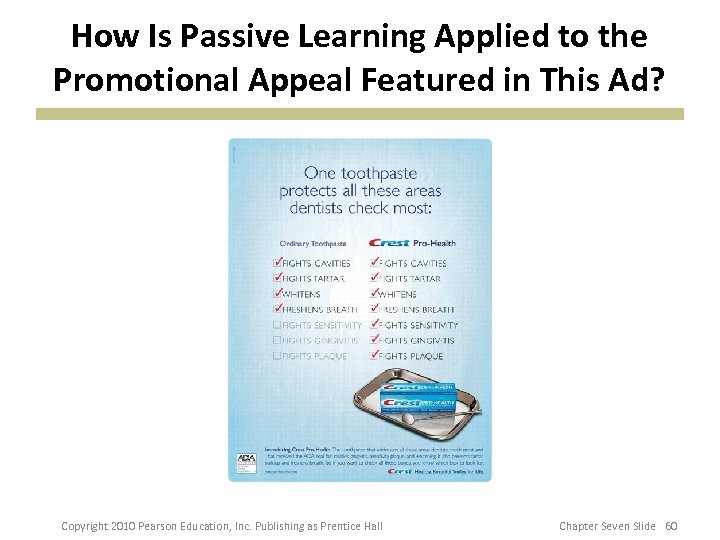 How Is Passive Learning Applied to the Promotional Appeal Featured in This Ad? Copyright 2010 Pearson Education, Inc. Publishing as Prentice Hall Chapter Seven Slide 60
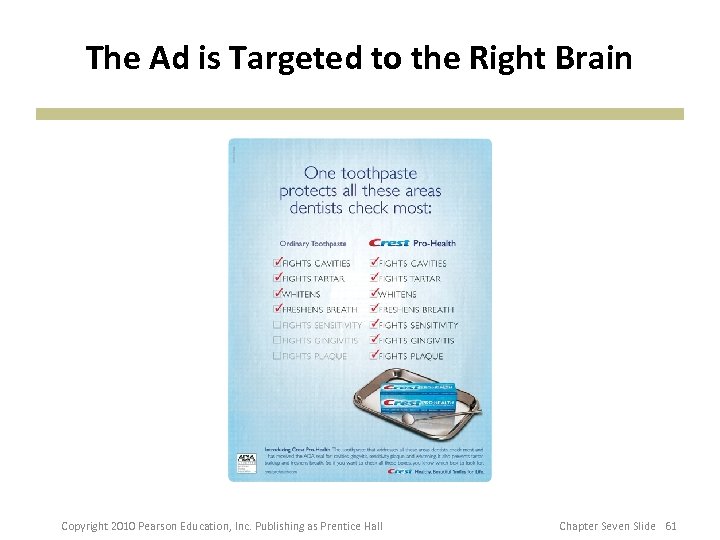 The Ad is Targeted to the Right Brain Copyright 2010 Pearson Education, Inc. Publishing as Prentice Hall Chapter Seven Slide 61
 Measures of Consumer Learning Brand Loyalty • Recognition and Recall Measures • Brand Loyalty Copyright 2010 Pearson Education, Inc. Publishing as Prentice Hall Chapter Seven Slide 62
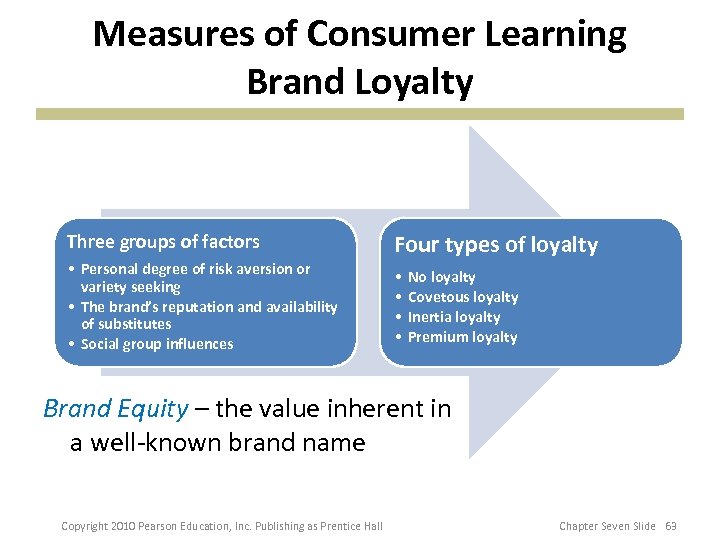 Measures of Consumer Learning Brand Loyalty Three groups of factors • Personal degree of risk aversion or variety seeking • The brand’s reputation and availability of substitutes • Social group influences Four types of loyalty • • No loyalty Covetous loyalty Inertia loyalty Premium loyalty Brand Equity – the value inherent in a well-known brand name Copyright 2010 Pearson Education, Inc. Publishing as Prentice Hall Chapter Seven Slide 63
 THANKS YOU
 All rights reserved. No part of this publication may be reproduced, stored in a retrieval system, or transmitted, in any form or by any means, electronic, mechanical, photocopying, recording, or otherwise, without the prior written permission of the publisher. Printed in the United States of America. Copyright © 2010 Pearson Education, Inc. Publishing as Prentice Hall Copyright 2010 Pearson Education, Inc. Publishing as Prentice Hall Chapter Seven Slide 65