


 Скачать презентацию Summary Automated Demand Response in Large Facilities Mary
355090a3869864cf60033b6ed0531b0d.ppt
- Количество слайдов: 15
 Summary: Automated Demand Response in Large Facilities Mary Ann Piette, Dave Watson, Naoya Motegi, Building Technologies Dept. , LBNL Osman Sezgen, Energy Analysis Dept. , LBNL Christine Shockman, Shockman Consulting Ron Hofmann, Project Manager Sponsored by the California Energy Commission January 23, 2004
 Presentation Overview n n Goal & Motivation Methodology Results Summary and Next Steps Page 2
 Goal, Motivation, & Method n Primary Goal ¨ n Evaluate the technological performance of automated DR hardware and software systems in large buildings Motivations for Demand Response Improve grid reliability ¨ Flatter system load shape ¨ Lower wholesale and retail electricity costs ¨ n Method Provide fictitious dynamic XML-based electric prices with 15 -minute notification ¨ Program building EMCS & EIS to receive signals & respond ¨ Document building shed using EMCS & metered data ¨ Page 3
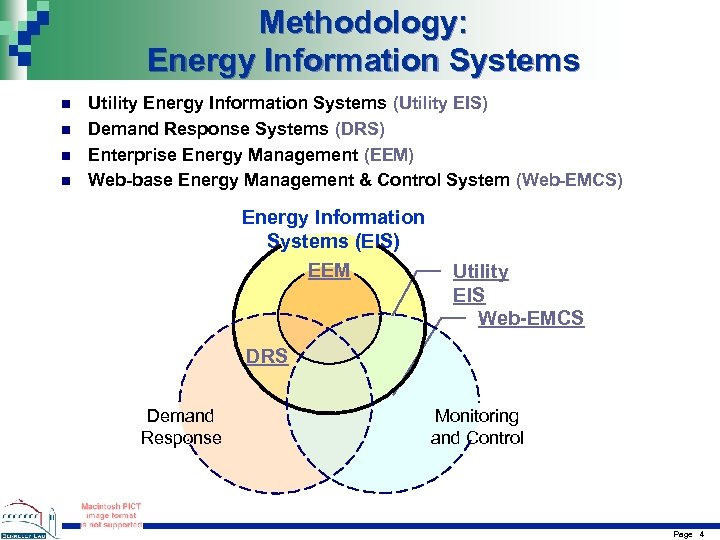 Methodology: Energy Information Systems n n Utility Energy Information Systems (Utility EIS) Demand Response Systems (DRS) Enterprise Energy Management (EEM) Web-base Energy Management & Control System (Web-EMCS) Energy Information Systems (EIS) EEM Utility EIS Web-EMCS DRS Demand Response Monitoring and Control Page 4
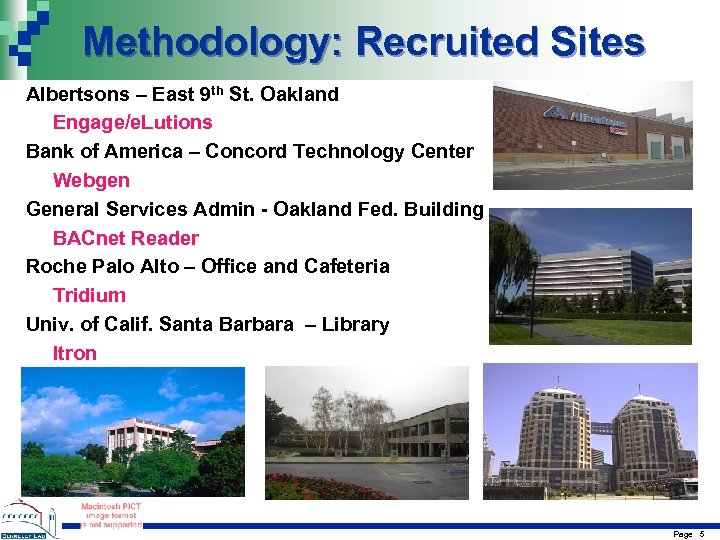 Methodology: Recruited Sites Albertsons – East 9 th St. Oakland Engage/e. Lutions Bank of America – Concord Technology Center Webgen General Services Admin - Oakland Fed. Building BACnet Reader Roche Palo Alto – Office and Cafeteria Tridium Univ. of Calif. Santa Barbara – Library Itron Page 5
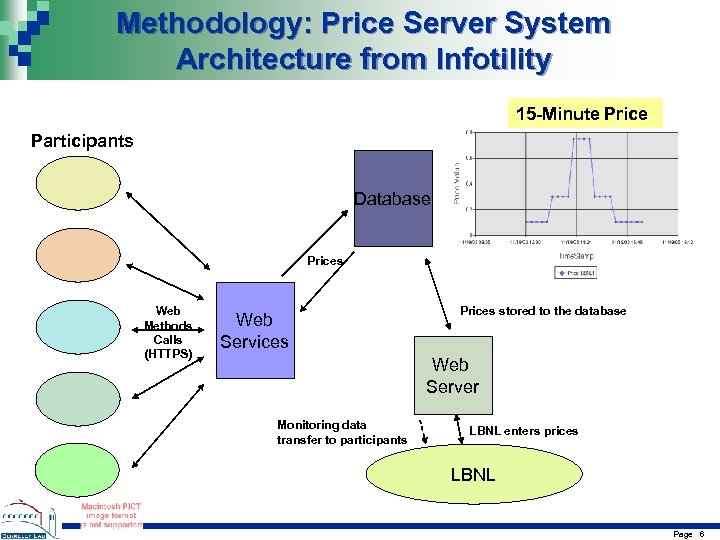 Methodology: Price Server System Architecture from Infotility 15 -Minute Price Participants Database Prices Web Methods Calls (HTTPS) Web Services Prices stored to the database Web Server Monitoring data transfer to participants LBNL enters prices LBNL Page 6
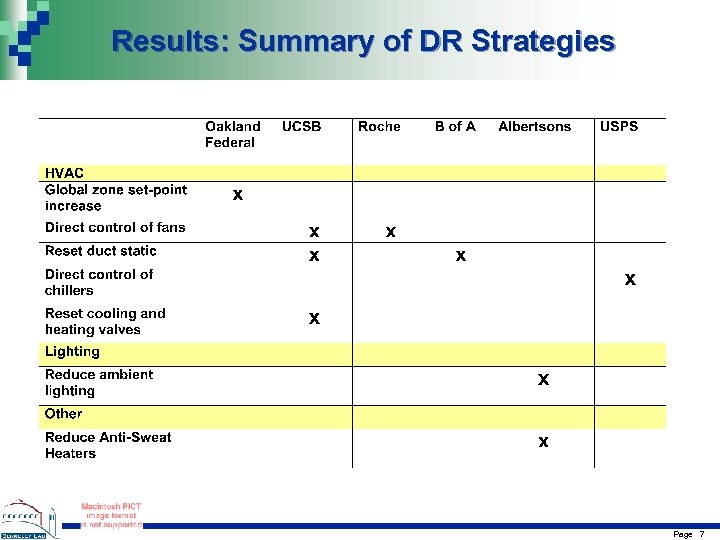 Results: Summary of DR Strategies Page 7
 Results: Day-2 Test, November 19 Bottom Up Savings Estimate Page 8
![Whole Building Power [k. W] Results: Day-2 Test UCSB Roche GSA Oakland Bof. A](https://present5.com/presentation/355090a3869864cf60033b6ed0531b0d/image-9.jpg "Whole Building Power [k. W] Results: Day-2 Test UCSB Roche GSA Oakland Bof. A") Whole Building Power [k. W] Results: Day-2 Test UCSB Roche GSA Oakland Bof. A Albertsons Page 9
Whole Building Power [k. W] Results: Day-2 Test UCSB Roche GSA Oakland Bof. A Albertsons Page 9
 Results: Albertsons Saving Estimation Method ¨ Sales Lightings - Activation: $0. 30/k. W n ¨ Baseline - Previous days average Anti-Sweat Door Heaters - Activation: $0. 75/k. W n Baseline Previous 15 -minute load Whole Building Power [k. W] n DR Savings Page 10
![Results: Albertsons Sales Lightings, Anti-Sweat Heater Sales Lightings Power [k. W] n Anti-Sweat Heater](https://present5.com/presentation/355090a3869864cf60033b6ed0531b0d/image-11.jpg "Results: Albertsons Sales Lightings, Anti-Sweat Heater Sales Lightings Power [k. W] n Anti-Sweat Heater") Results: Albertsons Sales Lightings, Anti-Sweat Heater Sales Lightings Power [k. W] n Anti-Sweat Heater Page 11
Results: Albertsons Sales Lightings, Anti-Sweat Heater Sales Lightings Power [k. W] n Anti-Sweat Heater Page 11
![Results: GSA Oakland n Component Analysis: Fans Power [k. W] Regression Model Actual Page](https://present5.com/presentation/355090a3869864cf60033b6ed0531b0d/image-12.jpg "Results: GSA Oakland n Component Analysis: Fans Power [k. W] Regression Model Actual Page") Results: GSA Oakland n Component Analysis: Fans Power [k. W] Regression Model Actual Page 12
Results: GSA Oakland n Component Analysis: Fans Power [k. W] Regression Model Actual Page 12
 Results: 3 Dimensions of DR Capability n Automation Reduces Costs of DR Response time ¨ Cost of initiating & running DR event ¨ Customer constraints that involve the timing, pattern and frequency of DR ¨ n Automated DR facilitates participation in more ISO markets Day-ahead electricity ¨ Emergency ¨ Ancillary services ¨ Balancing markets ¨ Page 13
 Summary & Next Steps n Findings (forthcoming report: dr. lbl. gov) Demonstrated feasibility of fully automated shedding ¨ XML and related technology effective ¨ Minimal shedding during initial test/Minimal loss of service ¨ n Next Steps: Performance of Current Test Sites In hot weather ¨ Participation in DR programs ¨ Annual benefits at each site & through enterprise ¨ n Beyond Test Sites ¨ ¨ ¨ What other strategies offer k. W savings & minimal impact? How could automation be scaled up? What are costs for such technology? What is statewide savings potential? What is value of fully automated vs manual DR? Page 14
 Future Directions: Dynamic Building Technology n Underlying technology to support DR Shell & Lights: Dimmable ballasts & Electro-chromic windows ¨ HVAC: Real-time-models for optimization and diagnostics ¨ System: Connectivity to grid & cost minimization models ¨ Page 15