Скачать презентацию Suicide classification-clues and their use A study of
3a78fdb35d98dfe357e5af1a5b51c13c.ppt
- Количество слайдов: 16
 Suicide classification-clues and their use A study of 122 cases of suicide and undetermined manner of death P. Lindqvist, L. Gustafsson / Forensic Science International 128 (2002) 136– 14 Yuthapaisan
 Objective The purpose of this study is to analyse which clues that appear most determinant forensic pathologists in certifying suicide. Guidelines to support the police investigation as well as the medico-legal examination can probably reduce the number of
 fication of manner of death is imp -next-of-kins -insurance issues -research and public health policies
 Classification in Sweden -natural -self-intended -intentionally caused by another -accidental or
 Factors of study - age and gender - previous suicide attempts - mental disorder alcohol-dependency - suicidal communication suicide intent - - blood (BAC) and urine-alcohol concentrations toxicological
 Group of study - autopsied at the Institute of Forensic Medicine in Umea° from September 1983 through December 1985 - residing in Va¨sterbottens County (245, 181 inhabitants in 1984) - who’s death was certified as suicide (n
 The term alcohol-dependency - the forensic pathologist used the term ‘‘chronic alcoholism’’ in the death certificate. - the deceased was diagnosed or described as an alcoholic in medical records and/or police reports. - hepatic cirrhosis and/or steatosis was found and no other
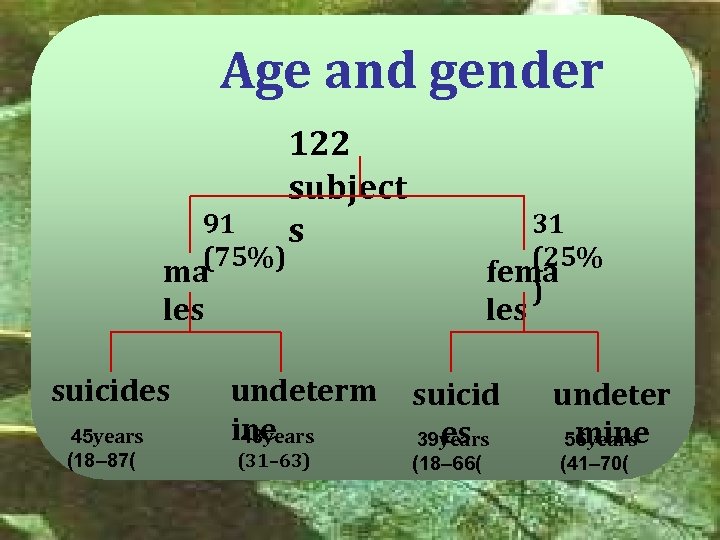 Age and gender 91 (75%) 122 subject s 31 (25% fema ) ma les suicides 45 years (18– 87( les undeterm ine 48 years (31– 63) suicid es 39 years (18– 66( undeter mine 56 years (41– 70(
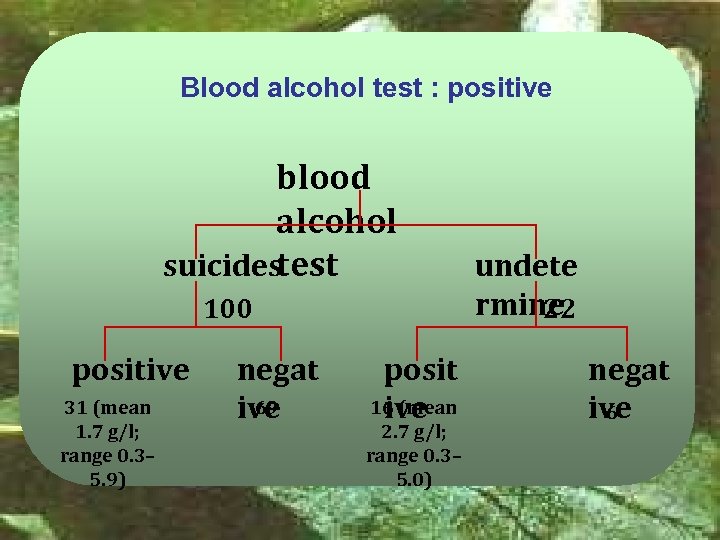 Blood alcohol test : positive blood alcohol suicidestest 100 positive 31 (mean 1. 7 g/l; range 0. 3– 5. 9) negat 69 ive posit 16 (mean ive 2. 7 g/l; range 0. 3– 5. 0) undete rmine 22 negat ive 6
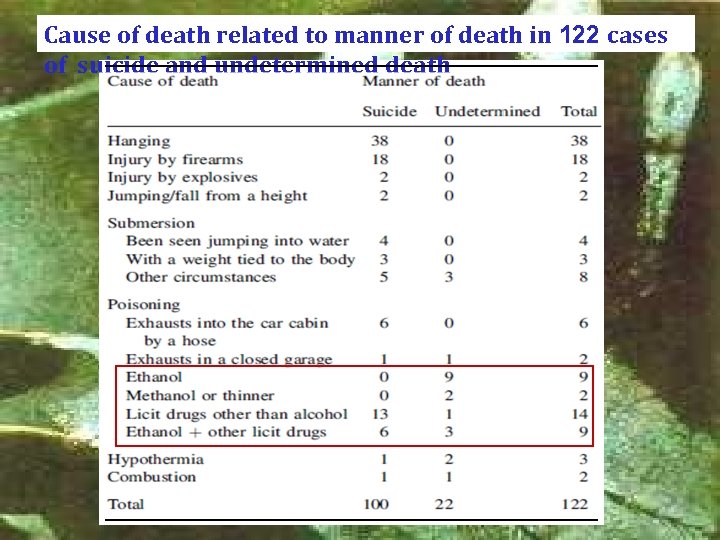 Cause of death related to manner of death in 122 cases of suicide and undetermined death
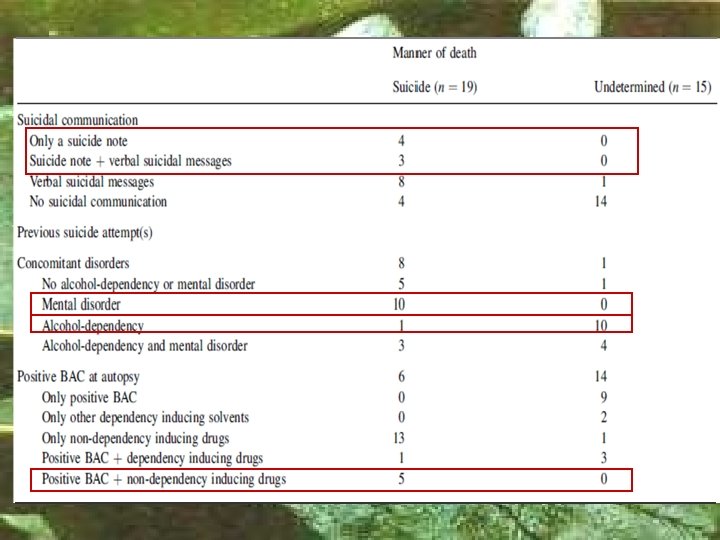
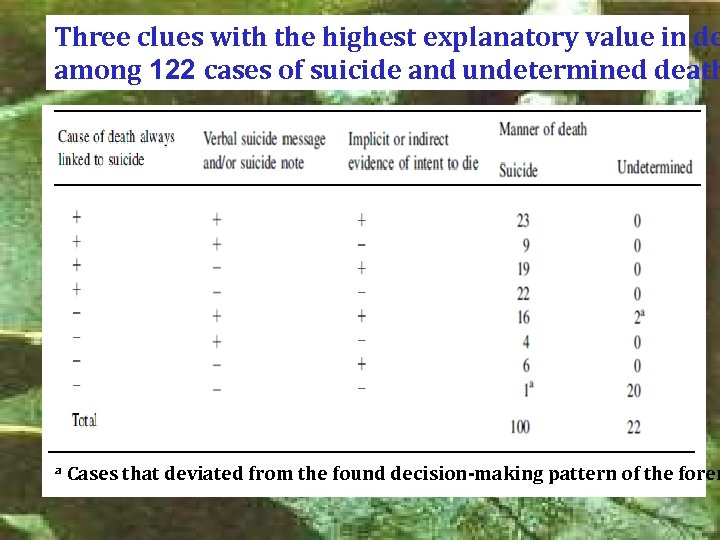 Three clues with the highest explanatory value in de among 122 cases of suicide and undetermined death a Cases that deviated from the found decision-making pattern of the foren
 Greater uniformity, consistency and transparency in the classification of suicide is thus desirable and we support the efforts to construct internationally applicable guidelines for certifying suicide. A good teamwork between the police and forensic pathologists is thus of crucial importance not only to reduce the number of undetermined cases but also to secure that the subsequent specified classification of manner of death is correct
 Vali dity • autopsied at the Institute of Forensic Medicine in Umea° from September 1983 through December 1985 • the problems of death by poisoning with illegal drugs have increased, especially in urban areas. • the pathologists used an indirect method in order to understand
 Conclu The difficulties in determining sion manner of death in possible suicides are linked to certain causes of death, in particular poisoning. Operational criteria for designating a death ‘‘suicide’’ can be helpful given that the quality of the primary data collection is good.