 Скачать презентацию Suggested Taxonomy of Contrastive Studies by Tomas Krzeszowski
Suggested taxonomy of CS K.pptx
- Количество слайдов: 16



Suggested Taxonomy of Contrastive Studies by Tomas Krzeszowski Katya Yaremchuk INP- 51 m
• This classification of contrastive studies is based on distinguishing various kinds of equivalence and hence tertium comparationis. • It is based on the assumption that various kinds of contrastive studies can be distinguished in a strict relation to various tertia comparationis adopted and, consequently, to various kinds of equivalence.
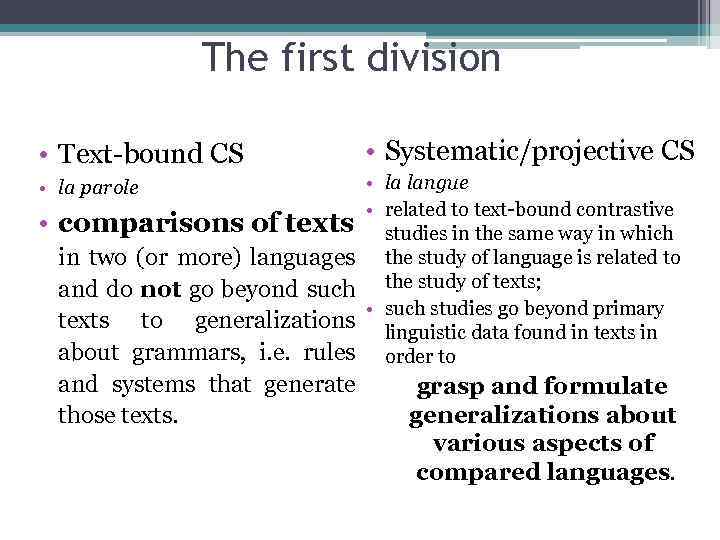
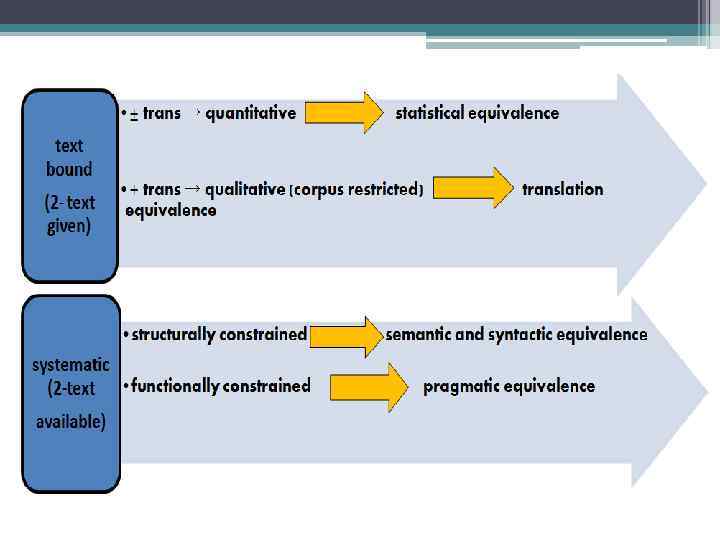
The first division • Text-bound CS • Systematic/projective CS • la parole • la langue • related to text-bound contrastive studies in the same way in which the study of language is related to the study of texts; • such studies go beyond primary linguistic data found in texts in order to • comparisons of texts in two (or more) languages and do not go beyond such texts to generalizations about grammars, i. e. rules and systems that generate those texts. grasp and formulate generalizations about various aspects of compared languages.
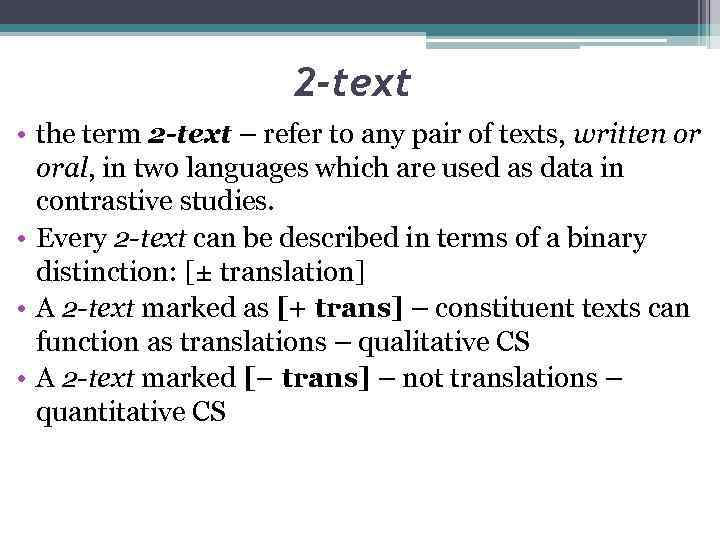
2 -text • the term 2 -text – refer to any pair of texts, written or oral, in two languages which are used as data in contrastive studies. • Every 2 -text can be described in terms of a binary distinction: [± translation] • A 2 -text marked as [+ trans] – constituent texts can function as translations – qualitative CS • A 2 -text marked [− trans] – not translations – quantitative CS
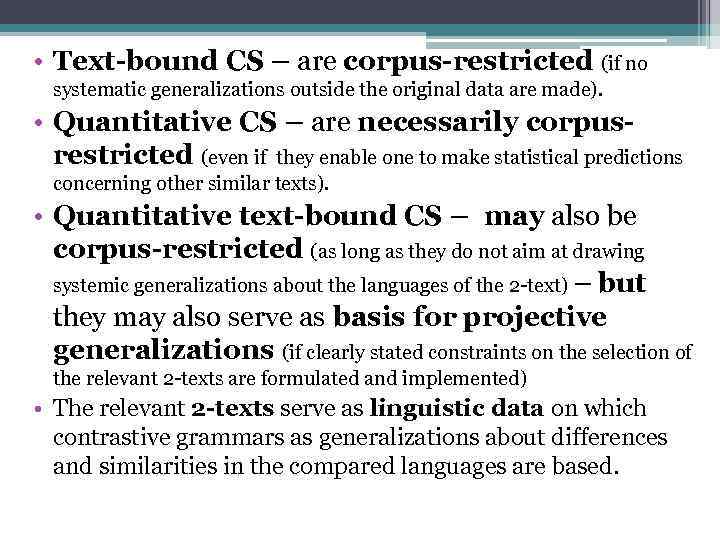
• Text-bound CS – are corpus-restricted (if no systematic generalizations outside the original data are made). • Quantitative CS – are necessarily corpusrestricted (even if they enable one to make statistical predictions concerning other similar texts). • Quantitative text-bound CS – may also be corpus-restricted (as long as they do not aim at drawing systemic generalizations about the languages of the 2 -text) – but they may also serve as basis for projective generalizations (if clearly stated constraints on the selection of the relevant 2 -texts are formulated and implemented) • The relevant 2 -texts serve as linguistic data on which contrastive grammars as generalizations about differences and similarities in the compared languages are based.
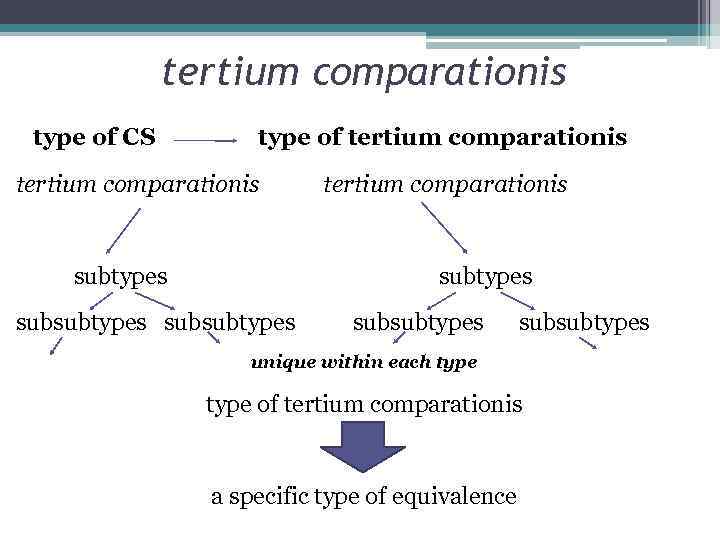
tertium comparationis type of CS type of tertium comparationis subtypes subsubtypes unique within each type of tertium comparationis a specific type of equivalence
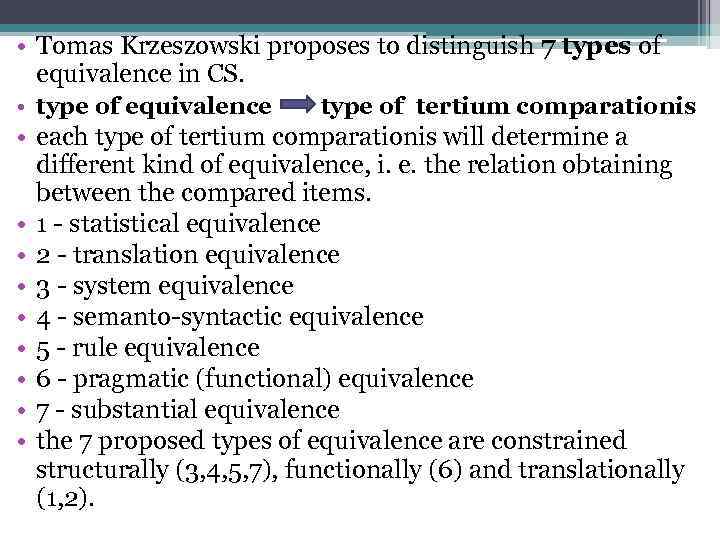
• Tomas Krzeszowski proposes to distinguish 7 types of equivalence in CS. • type of equivalence type of tertium comparationis • each type of tertium comparationis will determine a different kind of equivalence, i. e. the relation obtaining between the compared items. • 1 - statistical equivalence • 2 - translation equivalence • 3 - system equivalence • 4 - semanto-syntactic equivalence • 5 - rule equivalence • 6 - pragmatic (functional) equivalence • 7 - substantial equivalence • the 7 proposed types of equivalence are constrained structurally (3, 4, 5, 7), functionally (6) and translationally (1, 2).
![• Text-bound CS may involve statistical CS 2 -text need not be [+trans]](https://present5.com/presentation/23704016_437122934/image-8.jpg "• Text-bound CS may involve statistical CS 2 -text need not be [+trans]")
• Text-bound CS may involve statistical CS 2 -text need not be [+trans] • to prevent comparisons of incomparables - establish a tertium comparationis equivalence • The tertium comparationis will restrict the class of texts written in the same register, topic or literary genre • „samenessˮ will determine the tertium comparationis • translations no additional requirements are necessary
![• (1)statistical equivalence can be established on 2 texts which are either [+trans]](https://present5.com/presentation/23704016_437122934/image-10.jpg "• (1)statistical equivalence can be established on 2 texts which are either [+trans]")
• (1)statistical equivalence can be established on 2 texts which are either [+trans] or [− trans] - but in the [− trans] the extra requirements (referred to above) must be met • statistical equivalence refers to various systematically equivalent items which appear in 2 texts and which have maximally similar frequencies of occurrence. • (1) I saw Peter entering the house The semantic-syntactic equivalent of (1) in Polish is • (2)Widzialem Piotra wchodzącego do domu • * Бачив Петра входившого до будинку Noun phrase 1 + Verb + Noun phrase 2 + ingverb + X
generalization: • two linguistic items across languages are statistically equivalent if they occur as the most frequent translations of each other and/or if, in comparison with other synonymous constructions, they have maximally similar frequency of occurrence in the relevant texts.
![• (2 ) translation equivalence • 2 -texts [+trans] • translations need not](https://present5.com/presentation/23704016_437122934/image-12.jpg "• (2 ) translation equivalence • 2 -texts [+trans] • translations need not")
• (2 ) translation equivalence • 2 -texts [+trans] • translations need not be "correct" or "acceptable“ • often display considerable deviations from other kind of equivalence • such deviations are not necessarily due to errors in translation, BUT often have their source in various pragmatic considerations
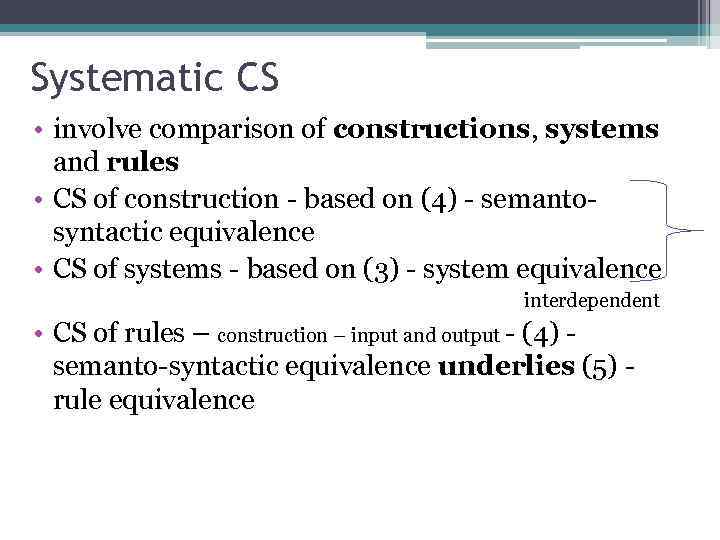
Systematic CS • involve comparison of constructions, systems and rules • CS of construction - based on (4) - semantosyntactic equivalence • CS of systems - based on (3) - system equivalence interdependent • CS of rules – construction – input and output - (4) semanto-syntactic equivalence underlies (5) rule equivalence
• Phonological and lexical CS - based on the (7) substantial equivalence (as it is connected with material substance outside language) • Stylistic and sociolinguistic CS - based on the (6) pragmatic (functional) equivalence (a relation that holds between constituent texts of 2 -texts selected in such a way that they evoke maximally similar cognitive reactions in the users of these texts)
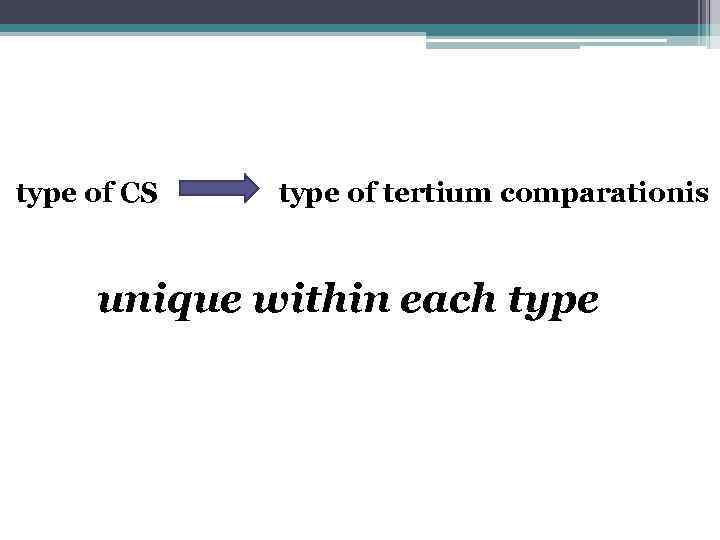
type of CS type of tertium comparationis unique within each type

Thank you for attention! P. S. Here a picture of cute cat^^
Скачать презентацию Suggested Taxonomy of Contrastive Studies by Tomas Krzeszowski
Suggested taxonomy of CS K.pptx