 Скачать презентацию Suburban Lifestyles Photo of a typical 1950 -ish
0b87ef39fd069ebaba95ac15f3b454b9.ppt
- Количество слайдов: 20



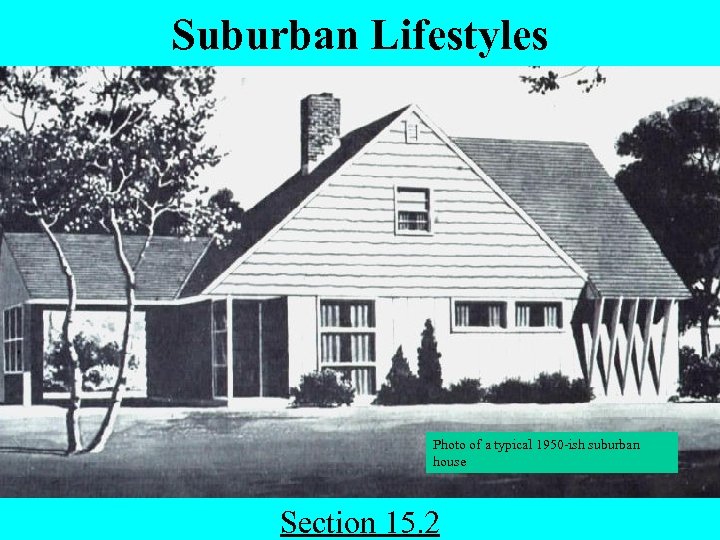
Suburban Lifestyles Photo of a typical 1950 -ish suburban house Section 15. 2
How and why did housing patterns change during the 1950 s? • 20% of population moved – Many to the West • 85% of new homes constructed in suburbia • Population Change 1950 -60: – In suburbs= +50% – In Cities= +10% • Why? – Escape crime, congestion, pollution • Promise of fresh air, trees • More open, country-feeling – Prejudice against minorities (white flight) – Automobile/highways allowed for easy travel – Affordable (GI Bill)
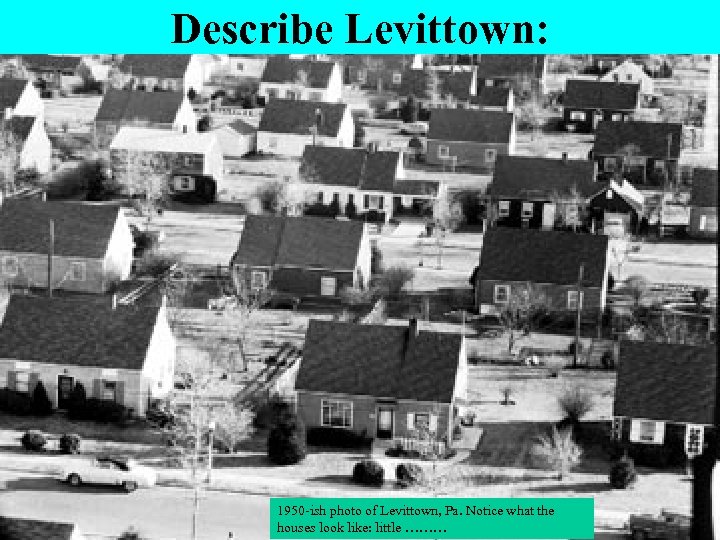
Describe Levittown: 1950 -ish photo of Levittown, Pa. Notice what the houses look like: little ………
Describe Levittown: • Returning GI s & families created huge demand for housing • A ‘planned’ community • First Levittown (outskirts of NYC on Long Island) – Streets curved at same angle – Trees planted every 28 ft. – Included parks, playgrounds, etc. – Cost kept down to <$8 thousand • What was the target group of customers? – Created one home every 15 minutes • A mixture of city & country life – Community & open space • To White Americans it was a symbol of the American Dream (Remember the Depression-era billboard? )
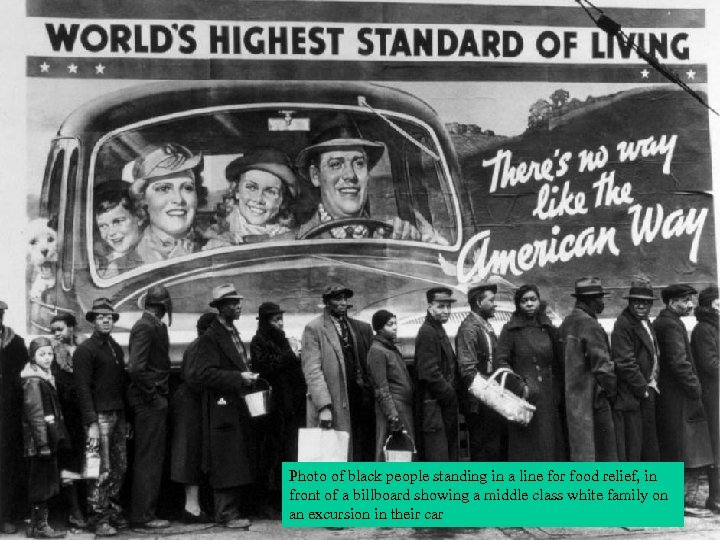
Photo of black people standing in a line for food relief, in front of a billboard showing a middle class white family on an excursion in their car
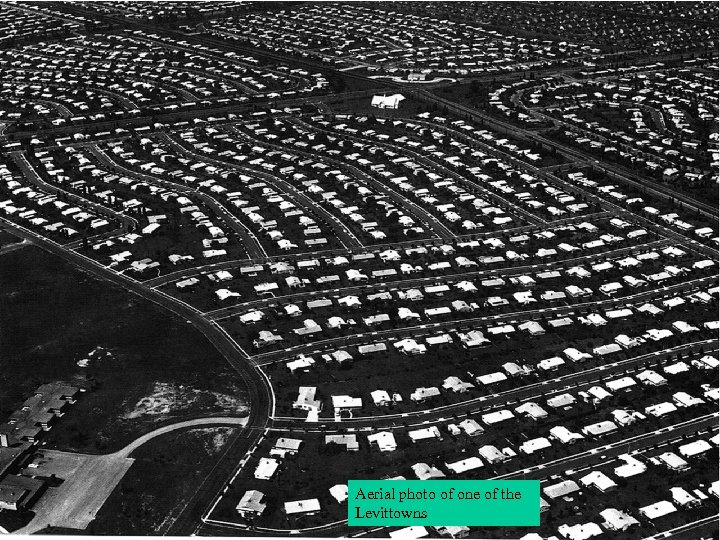
Aerial photo of one of the Levittowns
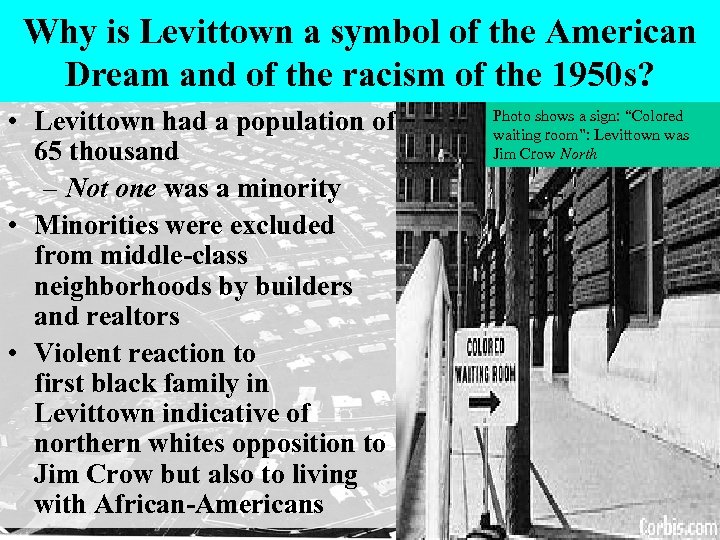
Why is Levittown a symbol of the American Dream and of the racism of the 1950 s? • Levittown had a population of 65 thousand – Not one was a minority • Minorities were excluded from middle-class neighborhoods by builders and realtors • Violent reaction to first black family in Levittown indicative of northern whites opposition to Jim Crow but also to living with African-Americans Photo shows a sign: “Colored waiting room”: Levittown was Jim Crow North
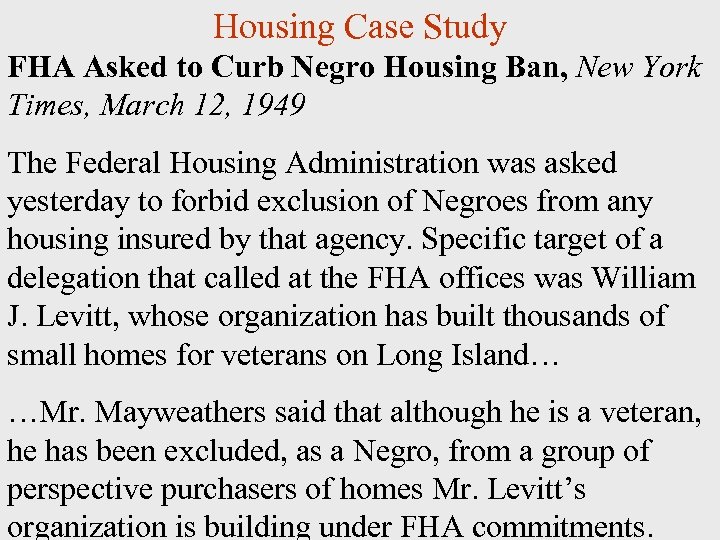
Housing Case Study FHA Asked to Curb Negro Housing Ban, New York Times, March 12, 1949 The Federal Housing Administration was asked yesterday to forbid exclusion of Negroes from any housing insured by that agency. Specific target of a delegation that called at the FHA offices was William J. Levitt, whose organization has built thousands of small homes for veterans on Long Island… …Mr. Mayweathers said that although he is a veteran, he has been excluded, as a Negro, from a group of perspective purchasers of homes Mr. Levitt’s organization is building under FHA commitments.
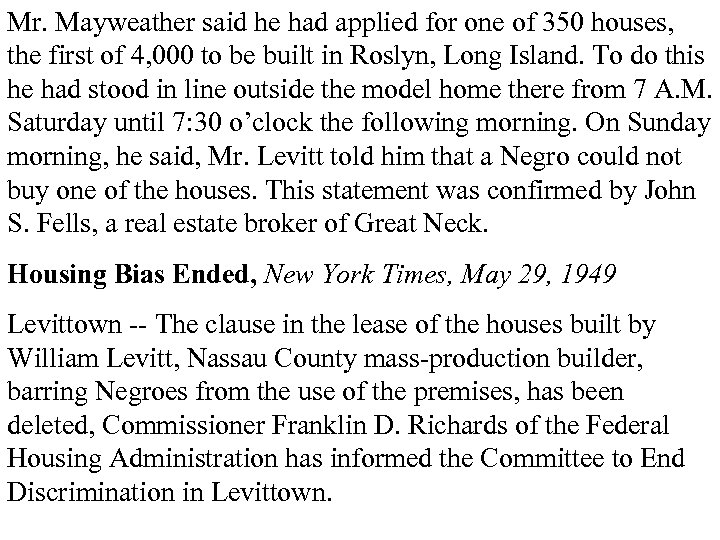
Mr. Mayweather said he had applied for one of 350 houses, the first of 4, 000 to be built in Roslyn, Long Island. To do this he had stood in line outside the model home there from 7 A. M. Saturday until 7: 30 o’clock the following morning. On Sunday morning, he said, Mr. Levitt told him that a Negro could not buy one of the houses. This statement was confirmed by John S. Fells, a real estate broker of Great Neck. Housing Bias Ended, New York Times, May 29, 1949 Levittown -- The clause in the lease of the houses built by William Levitt, Nassau County mass-production builder, barring Negroes from the use of the premises, has been deleted, Commissioner Franklin D. Richards of the Federal Housing Administration has informed the Committee to End Discrimination in Levittown.
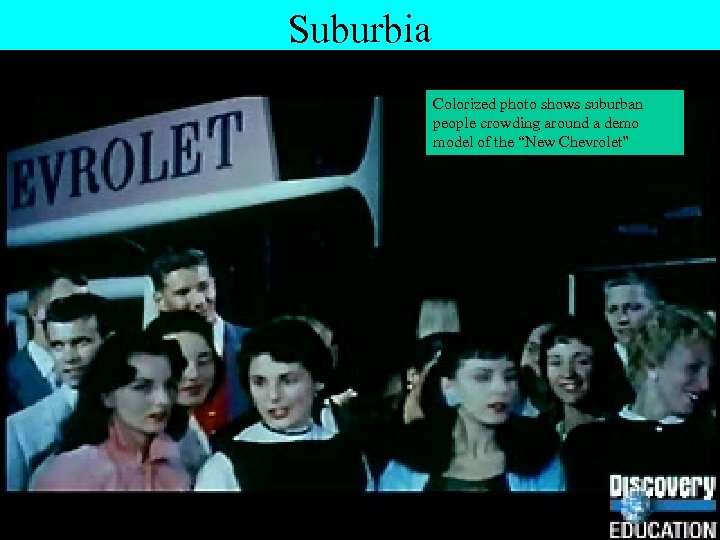
Suburbia Colorized photo shows suburban people crowding around a demo model of the “New Chevrolet”
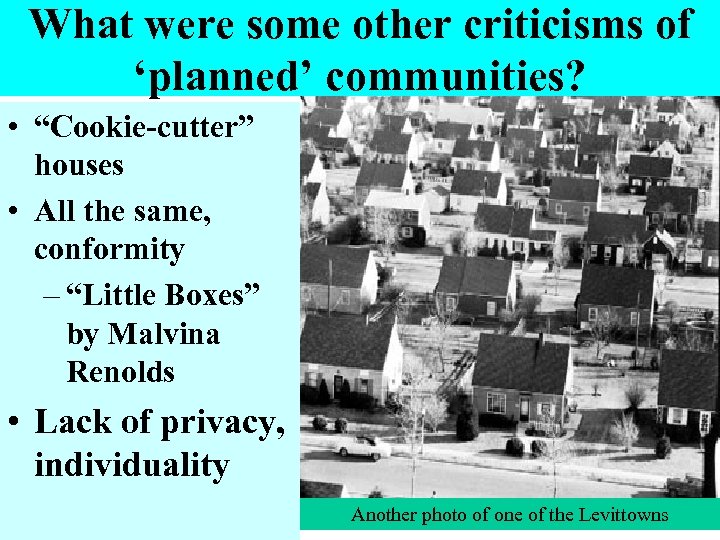
What were some other criticisms of ‘planned’ communities? • “Cookie-cutter” houses • All the same, conformity – “Little Boxes” by Malvina Renolds • Lack of privacy, individuality Another photo of one of the Levittowns
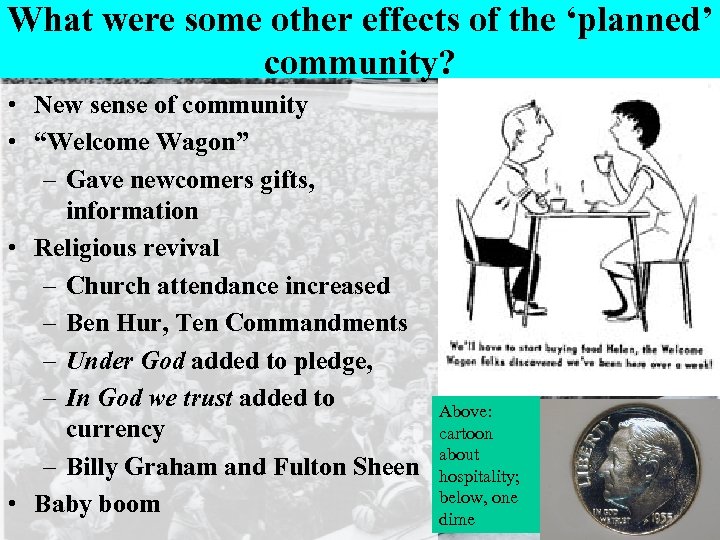
What were some other effects of the ‘planned’ community? • New sense of community • “Welcome Wagon” – Gave newcomers gifts, information • Religious revival – Church attendance increased – Ben Hur, Ten Commandments – Under God added to pledge, – In God we trust added to currency – Billy Graham and Fulton Sheen • Baby boom Above: cartoon about hospitality; below, one dime
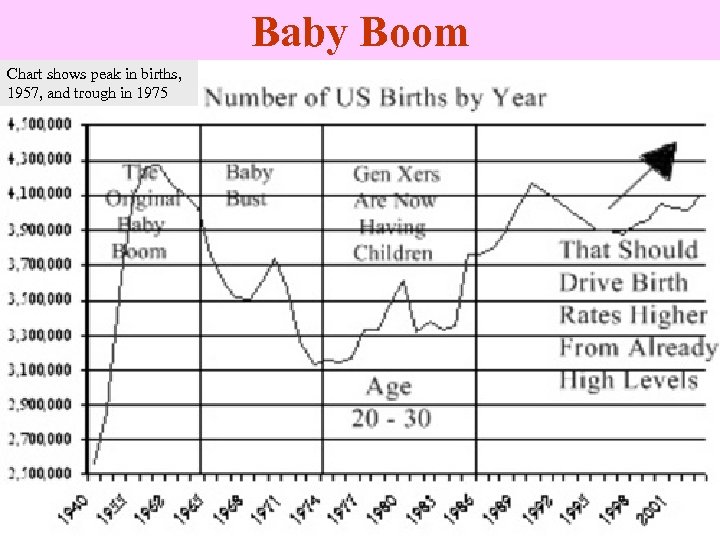
Baby Boom Chart shows peak in births, 1957, and trough in 1975
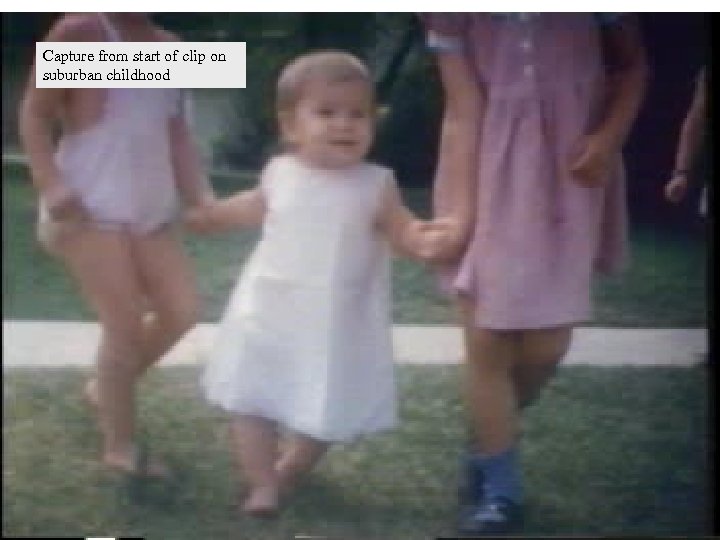
Capture from start of clip on suburban childhood
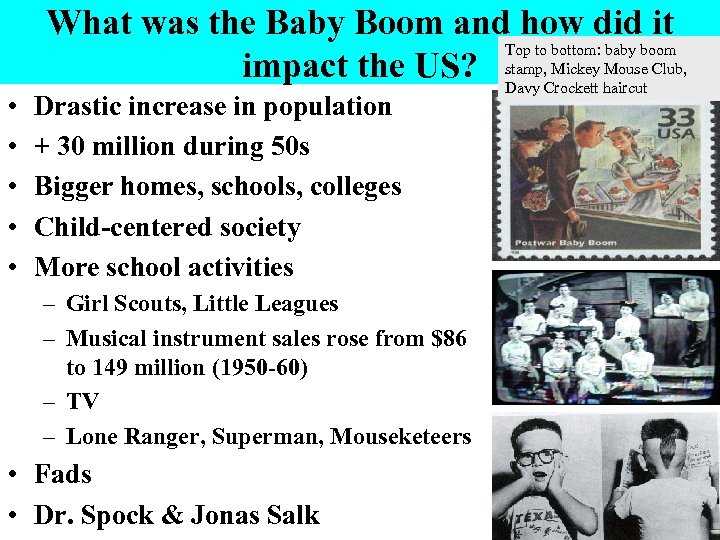
• • • What was the Baby Boom and how did it Top to bottom: baby boom Mickey Mouse impact the US? stamp, Crockett haircut Club, Davy Drastic increase in population + 30 million during 50 s Bigger homes, schools, colleges Child-centered society More school activities – Girl Scouts, Little Leagues – Musical instrument sales rose from $86 to 149 million (1950 -60) – TV – Lone Ranger, Superman, Mouseketeers • Fads • Dr. Spock & Jonas Salk
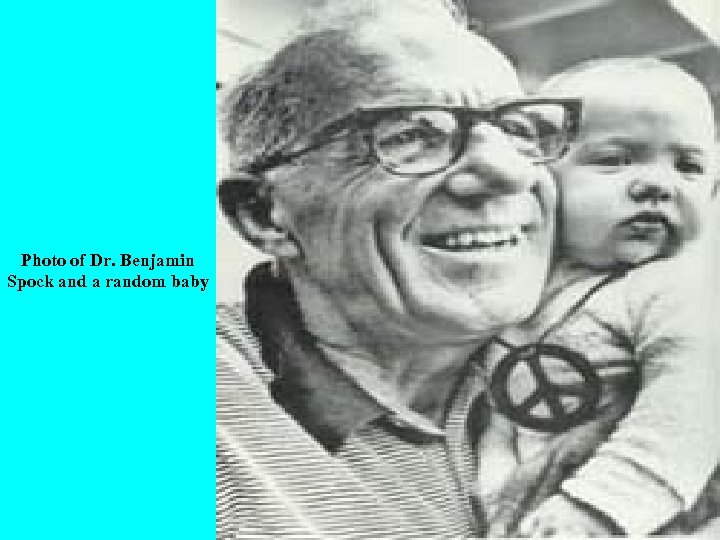
Photo of Dr. Benjamin Spock and a random baby
Baby Boom Years Capture from a clip on the baby boom years
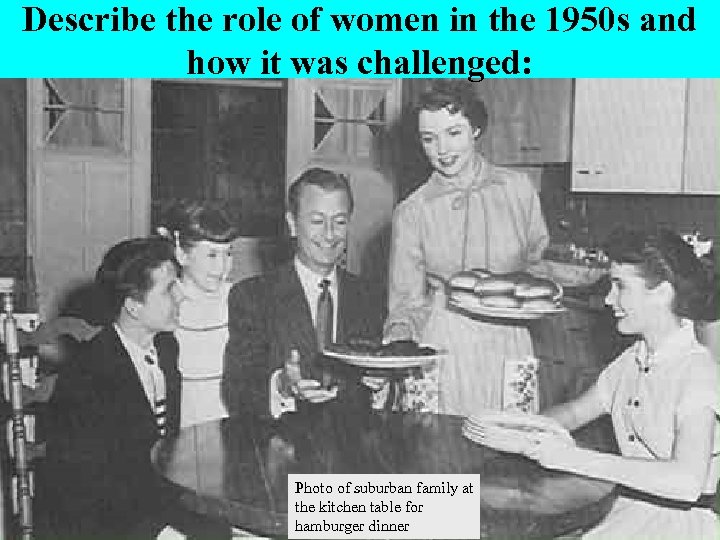
Describe the role of women in the 1950 s and how it was challenged: Photo of suburban family at the kitchen table for hamburger dinner
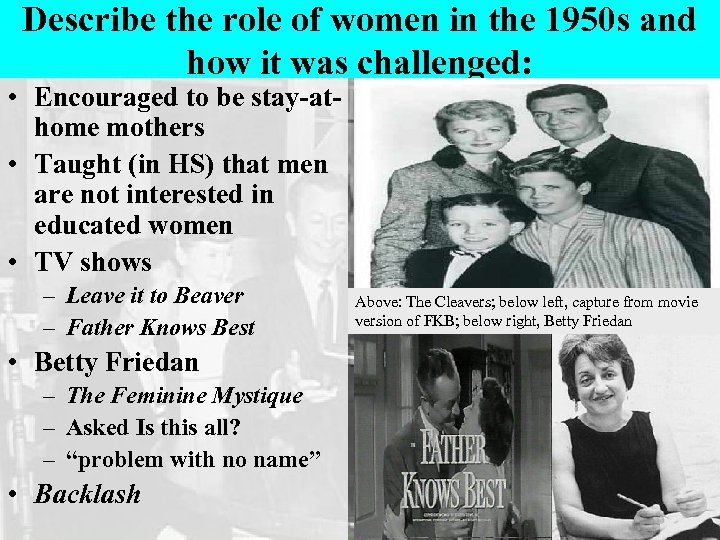
Describe the role of women in the 1950 s and how it was challenged: • Encouraged to be stay-athome mothers • Taught (in HS) that men are not interested in educated women • TV shows – Leave it to Beaver – Father Knows Best • Betty Friedan – The Feminine Mystique – Asked Is this all? – “problem with no name” • Backlash Above: The Cleavers; below left, capture from movie version of FKB; below right, Betty Friedan
Women’s Place Capture from clip on “The Woman’s Place”
Скачать презентацию Suburban Lifestyles Photo of a typical 1950 -ish
0b87ef39fd069ebaba95ac15f3b454b9.ppt