 Скачать презентацию Subject Name MANAGEMENT INFORMATION SYSTEM Subject Code 10
c8ed0443dc48c4837eed1b1fcd2047cc.ppt
- Количество слайдов: 33



Subject Name: MANAGEMENT INFORMATION SYSTEM Subject Code: 10 IS 72 Prepared By: HARKIRANPREET Department: ISE Date: 28 SEPTEMBER, 2014 28/9/2014
UNIT 4 ENTERPRISE BUSINESS SYSTEM 28/9/2014
CONTENTS 1. Software Requirements 2. Functional and Non-functional Requirement 3. Types of Requirements 4. Interface specification 5. Software requirement document 6. Feasibility study 7. Requirement elicitation and analysis 8. Requirement validation and management. 28/9/2014
CUSTOMER RELATIONSHIP MANAGEMENT A customer-centric focus Customer relationships have become a company’s most valued asset Every company’s strategy should be to find and retain the most profitable customers possible Managing the full range of the customer relationship involves • Providing customer-facing employees with a single, complete view of every customer at every touch point and across all channels • Providing the customer with a single, complete view of the company and its extended channels. CRM uses IT to create a cross-functional enterprise system that integrates and automates many of the customer-serving processes 28/9/2014
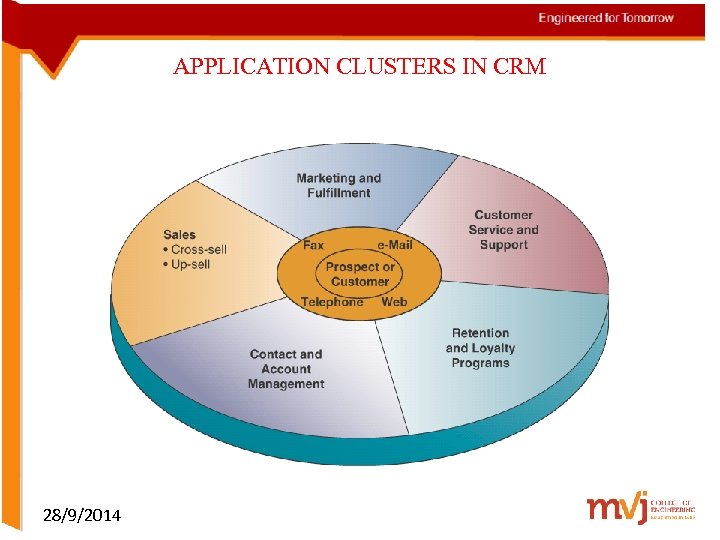
APPLICATION CLUSTERS IN CRM 28/9/2014
CONTACT AND ACCOUNT MANAGEMENT CRM helps sales, marketing, and service professionals capture and track relevant data about Every past and planned contact with prospects and customers. Other business and life cycle events of customers. Data are captured through customer touch points Telephone, fax, e-mail Websites, retail stores, kiosks Personal contact SALES A CRM system provides sales reps with the tools and data resources they need to Support and manage their sales activities, Optimize cross- and up-selling. CRM also provides the means to check on a customer’s account status and history before scheduling a sales call 28/9/2014
MARKETING AND FULFILLMENT CRM systems help with direct marketing campaigns by automatic such tasks as Ø Qualifying leads for targeted marketing Ø Scheduling and tracking mailings Ø Capturing and managing responses Ø Analyzing the business value of the campaign Ø Fulfilling responses and requests 28/9/2014
CUSTOMER SERVICE AND SUPPORT ØA CRM system gives service reps real-time access to the same database used by sales and marketing q Requests for service are created, assigned, and managed q Call center software routes calls to agents q Help desk software provides service data and suggestions for solving problems ØWeb-based self-service enables customers to access personalized support information 28/9/2014
RETENTION AND LOYALTY PROGRAMS ØIt costs 6 times more to sell to a new customer ØAn unhappy customer will tell 8 -10 others ØBoosting customer retention by 5 percent can boost profits by 85 percent ØThe odds of selling to an existing customer are 50 percent; a new one 15 percent ØAbout 70 percent of customers will do business with the company again if a problem is quickly taken care of ØEnhancing and optimizing customer retention and loyalty is a primary objective of CRM Ø Identify, reward, and market to the most loyal and profitable customers Ø Evaluate targeted marketing and relationship programs 28/9/2014
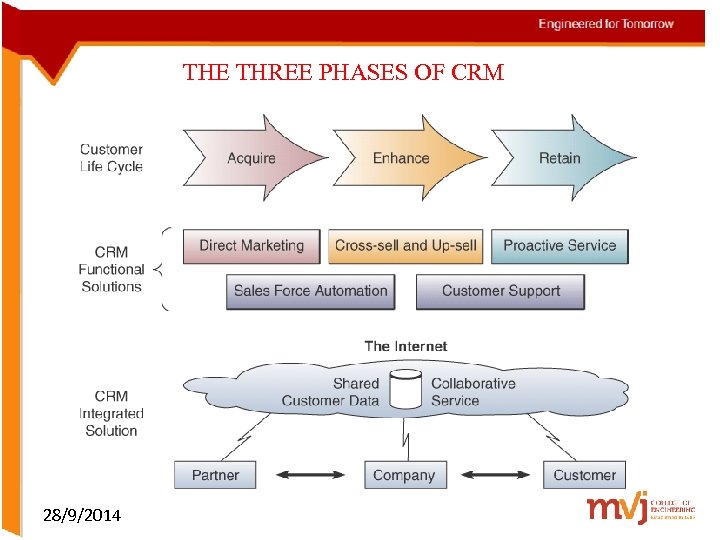
THE THREE PHASES OF CRM 28/9/2014
BENEFITS OF CRM Benefits of CRM q. Identify and target the best customers q. Real-time customization and personalization of products and services q. Track when and how a customer contacts the company q. Provide a consistent customer experience q. Provide superior service and support across all customer contact points 28/9/2014
CRM FAILURES • Business benefits of CRM are not guaranteed • 50 percent of CRM projects did not produce promised results • 20 percent damaged customer relationships • Reasons for failure • Lack of understanding and preparation • Not solving business process problems first • No participation on part of business stakeholders involved 28/9/2014
TRENDS IN CRM ØOperational CRM Ø Supports customer interaction with greater convenience through a variety of channels. Ø Synchronizes customer interactions consistently across all channels. Ø Makes the company easier to do business with. ØAnalytical CRM Ø Extracts in-depth customer history, preferences, and profitability from databases. Ø Allows prediction of customer value and behavior. Ø Allows forecast of demand. Ø Helps tailor information and offers to customer needs. 28/9/2014
ØCollaborative CRM Ø Easy collaboration with customers, suppliers, and partners Ø Improves efficiency and integration throughout supply chain Ø Greater responsiveness to customer needs through outside sourcing of products and services ØPortal-based CRM Ø Provides users with tools and information that fit their needs Ø Empowers employees to respond to customer demands more quickly Ø Helps reps become truly customer-faced Ø Provides instant access to all internal and external customer information 28/9/2014
ERP: THE BUSINESS BACKBONE ØERP is a cross-functional enterprise backbone that integrates and automates processes within Ø Manufacturing Ø Logistics Ø Distribution Ø Accounting Ø Finance Ø Human resources ØEnterprise resource planning is a cross-functional enterprise system q An integrated suite of software modules q Supports basic internal business processes q Facilitates business, supplier, and customer information flows 28/9/2014
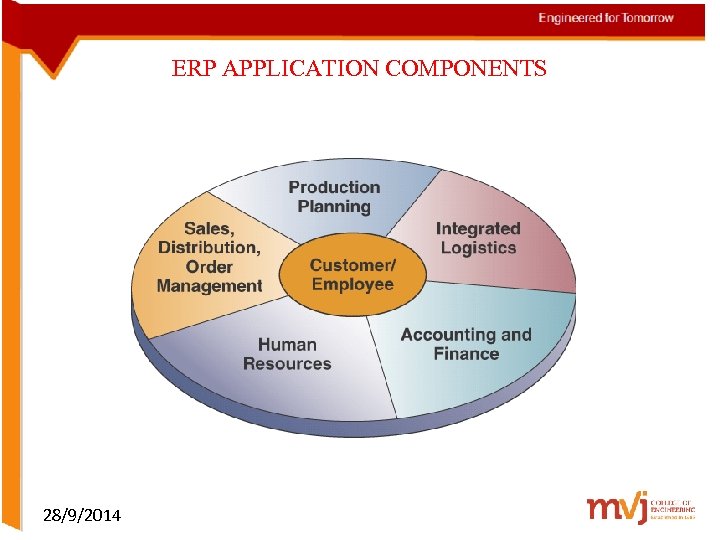
ERP APPLICATION COMPONENTS 28/9/2014
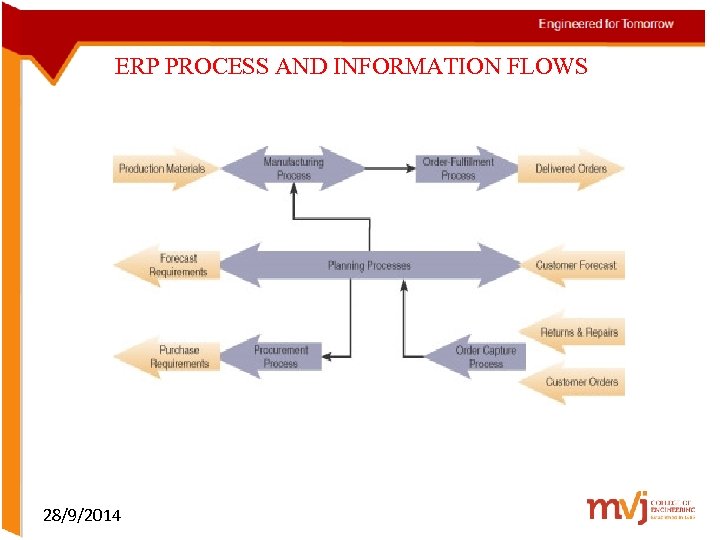
ERP PROCESS AND INFORMATION FLOWS 28/9/2014
BENEFITS AND CHALLENGES OF ERP Business Benefits • Quality and efficiency • Decreased costs • Decision support • Enterprise agility ERP Costs • Risks and costs are considerable • Hardware and software a small part of total costs • Failure can cripple or kill a business 28/9/2014
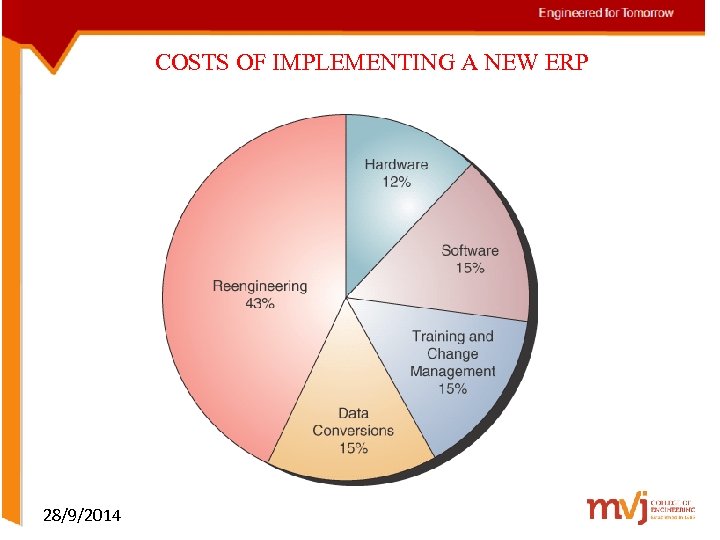
COSTS OF IMPLEMENTING A NEW ERP 28/9/2014
CAUSES OF ERP FAILURES Most common causes of ERP failure Ø Under-estimating the complexity of planning, development, training Ø Failure to involve affected employees in planning and development Ø Trying to do too much too fast Ø Insufficient training Ø Insufficient data conversion and testing Ø Over-reliance on ERP vendor or consultants 28/9/2014
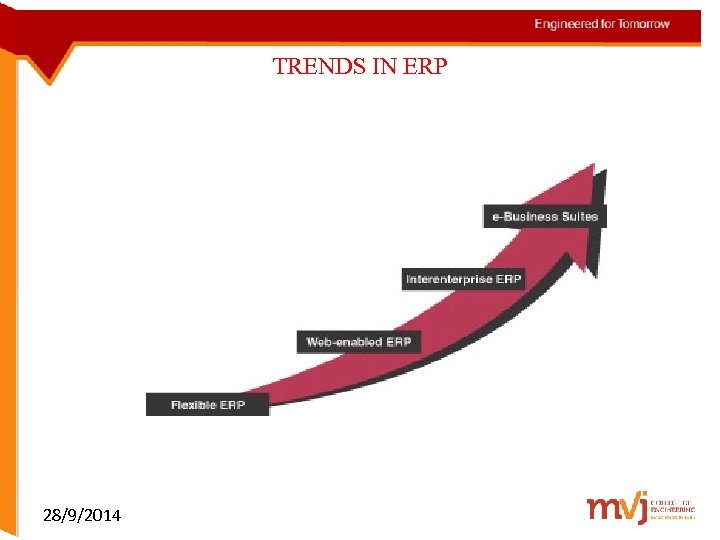
TRENDS IN ERP 28/9/2014
SUPPLY CHAIN MANAGEMENT (SCM) Fundamentally, supply chain management helps a company q Get the right products q To the right place q At the right time q In the proper quantity q At an acceptable cost GOALS OF SCM The goal of SCM is to efficiently q Forecast demand q Control inventory q Enhance relationships with customers, suppliers, distributors, and others q Receive feedback on the status of every link in the supply chain 28/9/2014
WHAT IS A SUPPLY CHAIN? ØThe interrelationships q. With suppliers, customers, distributors, and other businesses q. Needed to design, build, and sell a product ØEach supply chain process should add value to the products or services a company produces q. Frequently called a value chain 28/9/2014
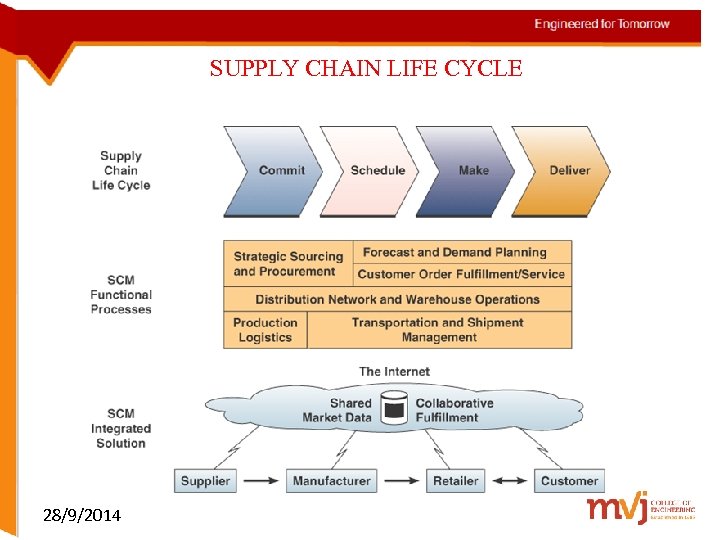
SUPPLY CHAIN LIFE CYCLE 28/9/2014
ELECTRONIC DATA INTERCHANGE q. One of the earliest uses of information technology for supply chain management q. The electronic exchange of business transaction documents between supply chain trading partners q. The almost complete automation of an e-commerce supply chain process q. Many transactions occur over the Internet, using secure virtual private networks 28/9/2014
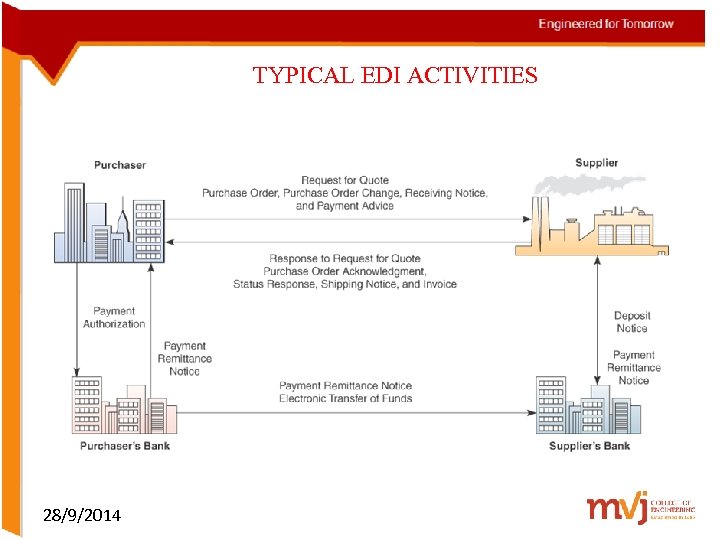
TYPICAL EDI ACTIVITIES 28/9/2014
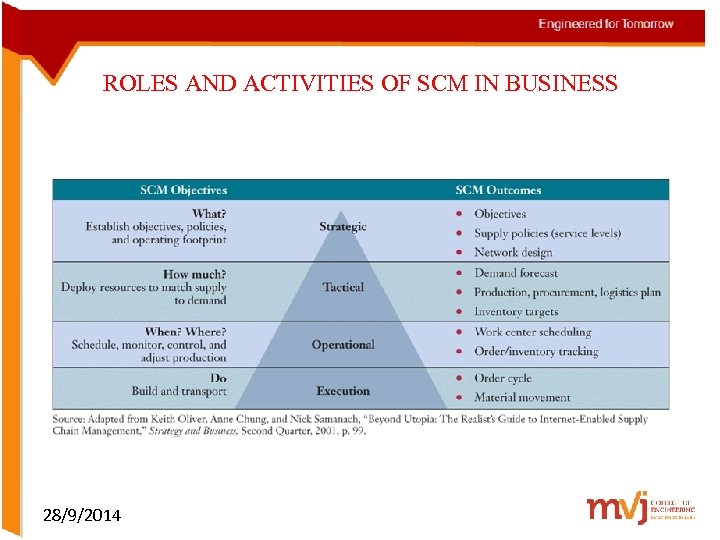
ROLES AND ACTIVITIES OF SCM IN BUSINESS 28/9/2014
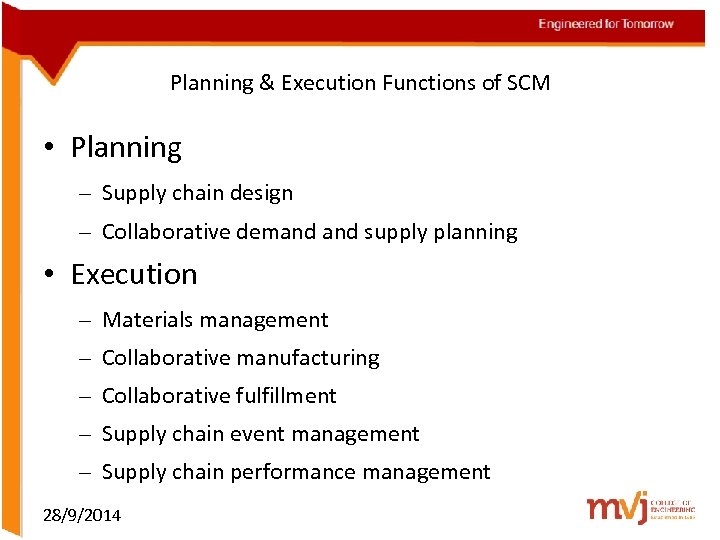
Planning & Execution Functions of SCM • Planning – Supply chain design – Collaborative demand supply planning • Execution – Materials management – Collaborative manufacturing – Collaborative fulfillment – Supply chain event management – Supply chain performance management 28/9/2014
BENEFITS AND CHALLENGES OF SCM • Key Benefits – Faster, more accurate order processing – Reductions in inventory levels – Quicker times to market – Lower transaction and materials costs – Strategic relationships with supplier 28/9/2014
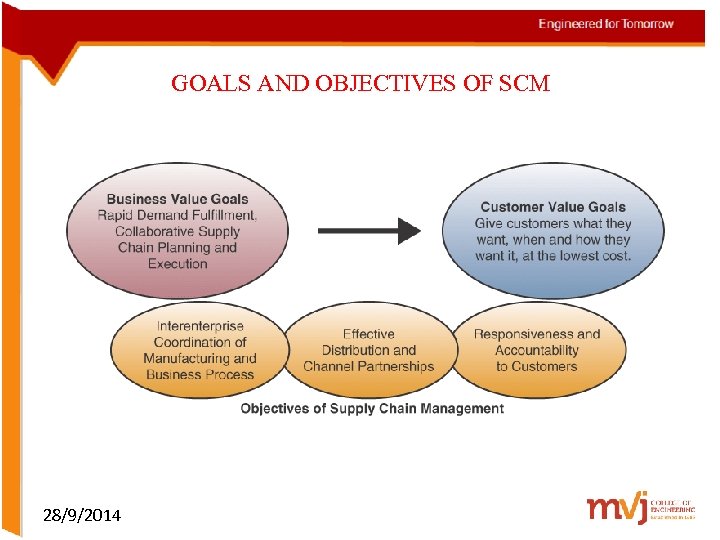
GOALS AND OBJECTIVES OF SCM 28/9/2014
BENEFITS AND CHALLENGES OF SCM • KEY CHALLENGES – Lack of demand guidelines planning knowledge, tools, – Inaccurate data provided by other information systems – Lack of collaboration among marketing, production, and inventory management – SCM tools are hard to implement 28/9/2014 immature, incomplete, and
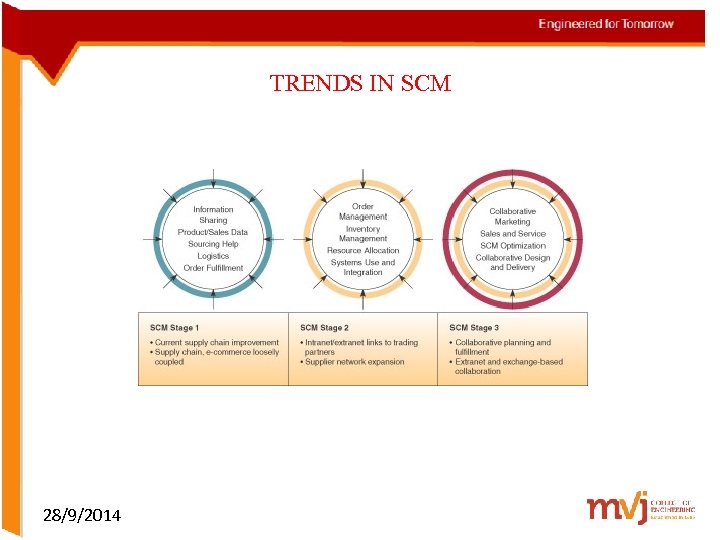
TRENDS IN SCM 28/9/2014
Thank You. . 28/9/2014
Скачать презентацию Subject Name MANAGEMENT INFORMATION SYSTEM Subject Code 10
c8ed0443dc48c4837eed1b1fcd2047cc.ppt