 Скачать презентацию Subject Mechanisms of formation of temporary communications Types
15 -ВНД -врем. связь, торможение.ppt
- Количество слайдов: 118



Subject: Mechanisms of formation of temporary communications. Types of cortical braking
At the heart of formation of a conditioned reflex temporary communication lies. Temporary communication is a functional association of two or several centers of bark and subcrustal structures which provide implementation of reactions to conditional and unconditional irritants. This communication depending on conditions of finding of an organism can be fixed or disappear.
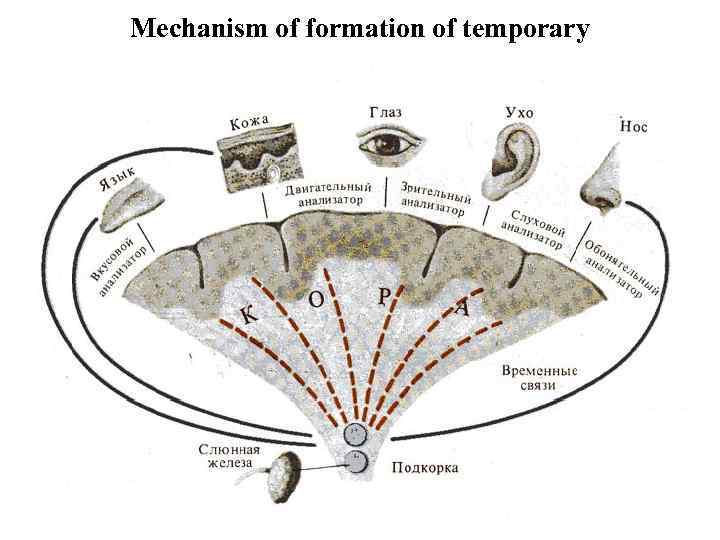
Mechanism of formation of temporary communications
Mechanisms of formation of temporary communication in a cerebral cortex. 1. Prepotent excitement of the unconditional center. 2. Excitement irradiation. 3. Protoreniye of a way. 4. Convergence by the principle of the general final way.
Mechanisms of formation of temporary communication in a cerebral cortex. 5. Morphological changes in synapses. 6. Biochemical changes in synapses. 7. Neyrogiya participation. 8. Bark – a subcortex – bark (Asratyan E. A. ).
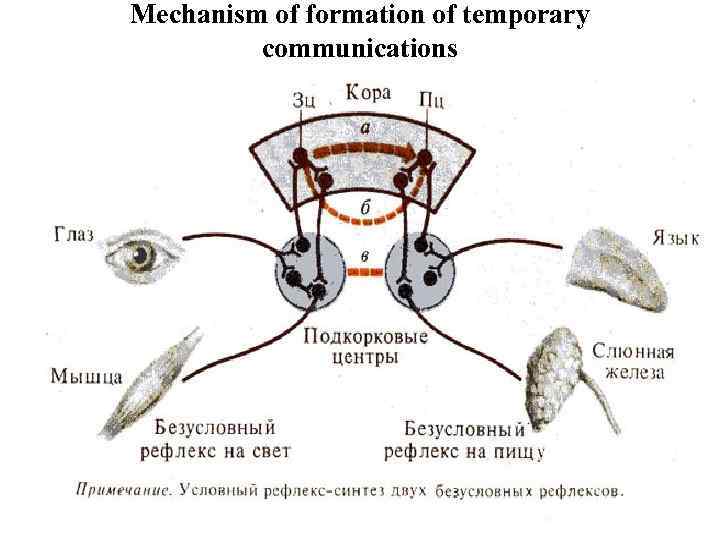
Mechanism of formation of temporary communications
VND - morphologically connected with bark of big cerebral hemispheres is the most important stage of knowledge and represents a difficult stage a complex of the phenomena of perception of processing and creation of new information.
Difficult forms of integrative activity of a brain of the person are reduced to the continuous analysis of elements of external world around and the subsequent synthesis in the form of complete education.
On the basis of analitiko-synthetic activity the adaptive behavior is carried out, ability to processing of knowledge and information transfer from one to another, development of certain skills is provided.
Uslovnoreflektorny reaction can be considered, how base of individual experience of the person which allows to predict future situations.
Studying conditioned reflexes, Nominative Pavlov came to a conclusion that all activity of a brain is under construction of two processes: - excitement; - braking. Rasprostreniye of excitement can provide the generalized reactions covering a number of bodies and systems. Concentration of process can provide narrowing of reflex reaction, its focus. Braking can be generalized and concentrated. There are some types of cortical braking during which implementation conditioned reflexes are oppressed.
Types of braking External (unconditional) braking arises: 1. At action of a new irritant; 2. When giving a strong irritant (ultraboundary).
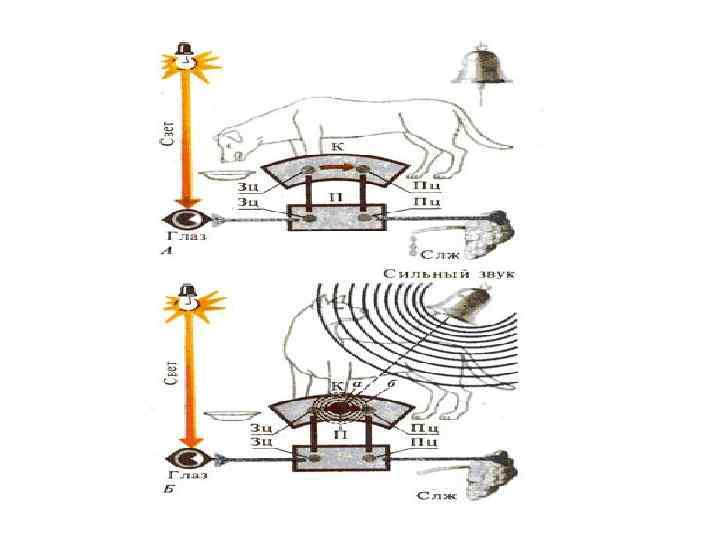
The first type of external braking arises right after giving a postorenny irritant, i. e. doesn't demand development. In some cases it can be characterized as approximate reaction. There is a reflex: "what the such? ". Previous reflex activity thus stops.
The second type of unconditional braking received the name - "ULTRABOUNDARY BRAKING". It arises at excessive increase in force and duration of action of a conditional irritant. I. e. force of an irritant exceeds operability of cortical cages. This braking has guarding value.
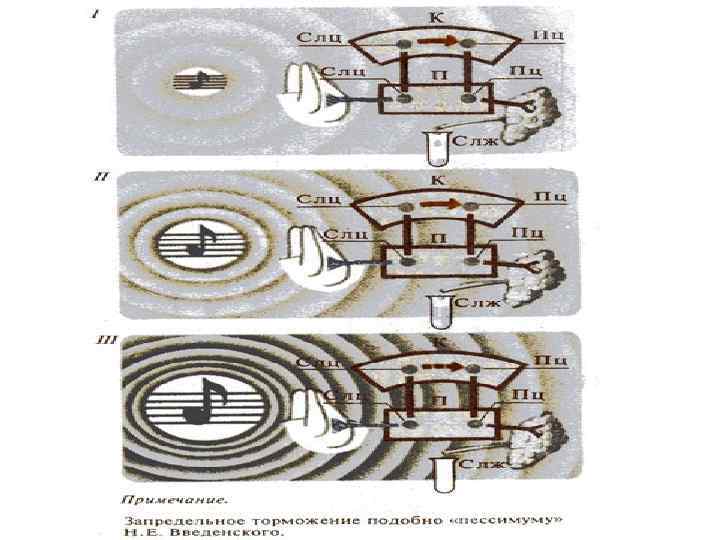
Internal braking Internal (conditional) braking demands special development. The biological sense of internal braking consists that new environmental conditions demand change of conditioned -reflex activity.
There are four types of internal (conditional) cortical braking: ugasatelny differentsirovochny the late conditional brake.
Ugasatelnoye - braking develops if not to support the developed reflex with an unconditional irritant. Thus the conditional irritant loses value of a signal and reaction to it is slowed down, but the conditioned reflex doesn't disappear and can be restored if again to support it with an unconditional irritant.
Differentsirovochnoye braking arises at development of a differentsirovochny conditioned reflex. For example, if not to support one sound, on it reaction, and other sound disappears to support that on it there is a conditioned reflex.
Late braking arises when the reinforcement of a prearranged signal is carried out by an unconditional irritant with delay (2 -3 min. ).
The conditional brake arises in those cases when to a conditional irritant on which the reflex is developed, to add new and a complex not to support. That a reflex to be braked as new irritant to become a conditional brake.
Dynamics of the main cortical processes (excitement and braking). Irradiation - excitement distribution from the central center on a surrounding zone. Concentration - opposite process reduction of a zone of the center of excitement.
Induction – targeting of opposite process (excitement and braking). Happens the following types: The simultaneous The consecutive The positive The negative.
In the course of formation of new conditioned reflexes, in the course of their fading there is a gradual change of process of excitement with braking. By Pavlov's works and his employees it is shown that change though quickly happens, but not instantly, and gradually.
Transitional phases from excitement to braking. • I. The leveling. When the conditional irritant of various force causes one effect • II. Paradoxical. The size of conditioned reflexes decreases by strong irritation and increases by the weak. • III. Ultraparadoxical. It is characterized by that a positive conditional irritant gives brake effect, and negative on the contrary causes positive reaction. All these supervision allowed Pavlov I. P. to develop a technique of experimental neurosises. • IV. Brake. When there is no reaction to any irritation.
Subject: " The VND types, the doctrine of Nominative of Pavlov about I and II alarm systems" 1. The doctrine of Nominative of Pavlov about a conditioned reflex. 2. 2. Characteristic of conditioned reflexes. 3. 3. Technique of development of conditioned reflexes. 4. 4. Difference of conditioned reflexes from the unconditional. 5. 5. Types of conditioned reflexes, dynamic stereotype. 6. 6. Temporary communication – a basis of a conditioned reflex, 7. education mechanisms. 8. 7. Analitiko-sintetichesky activity of bark 9. brain.
Doctors, the scientists who are simply conceiving of people always features of behavior of the person interested. Now there is a large number of classifications of types of nervous activity at the heart of which the various principles lie. We will stop on main of them. It should be noted that it is possible to define the VND type of any person only in the most general terms.
Modern ideas of the VND types are substantially identified with four types of human temperament allocated still with Ancient Greek doctor Hippocrates (ІV in B. C. ) on the basis of supervision over behavior of people. The choleric; The melancholic; The Flegmatichesky; The sanguine.
Nominative Pavlov, studying development and fixing of conditioned reflexes at dogs, I defined that an important role in formation like nervous activity is played by properties of cortical processes: FORCE, STEADINESS, MOBILITY. Force is degree of expressiveness of processes of excitement and braking. Steadiness – a ratio of processes of excitement and braking in total amount of biological reactions. Mobility – the speed of emergence and speed of change of processes of excitement and braking. Taking into account these properties of Nominative Pavlov allocated four VND types.
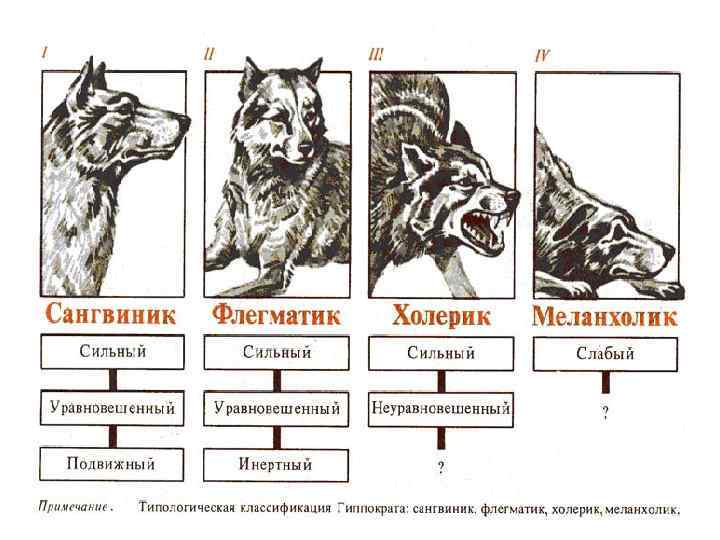
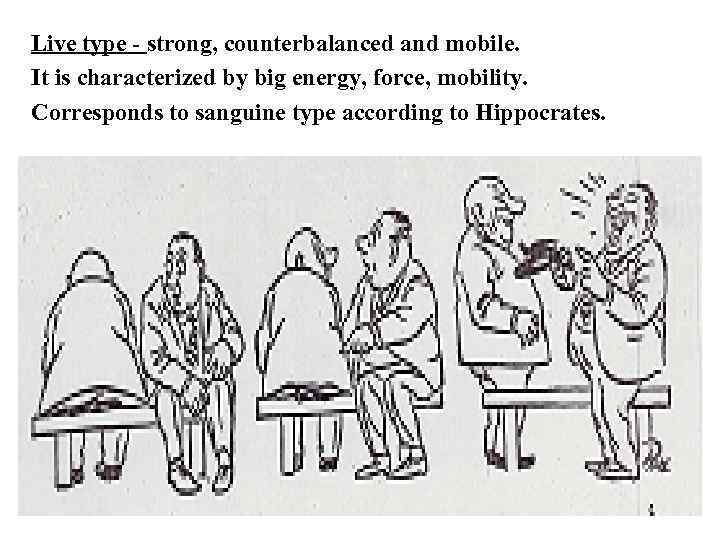
Live type - strong, counterbalanced and mobile. It is characterized by big energy, force, mobility. Corresponds to sanguine type according to Hippocrates.
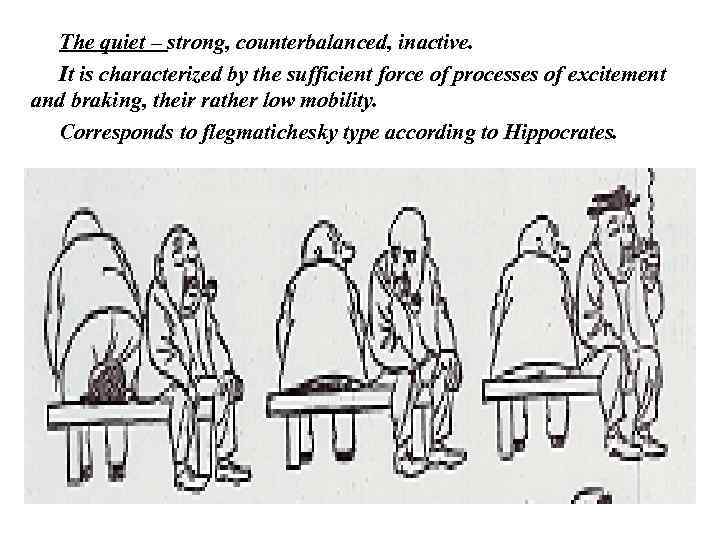
The quiet – strong, counterbalanced, inactive. It is characterized by the sufficient force of processes of excitement and braking, their rather low mobility. Corresponds to flegmatichesky type according to Hippocrates.
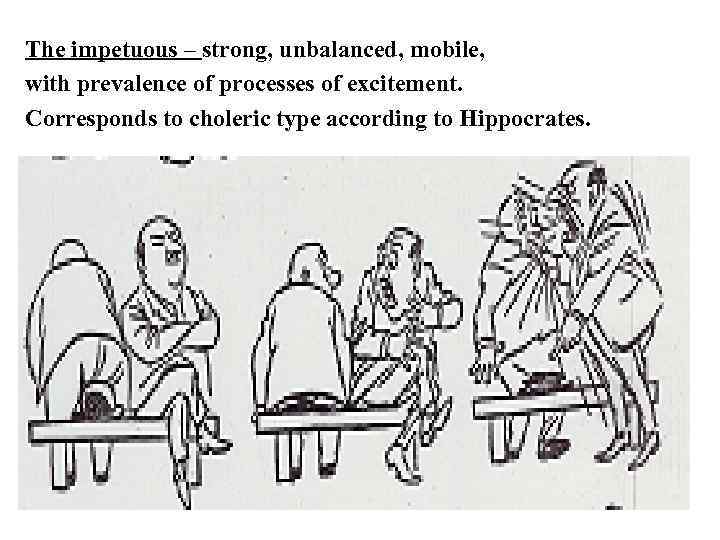
The impetuous – strong, unbalanced, mobile, with prevalence of processes of excitement. Corresponds to choleric type according to Hippocrates.
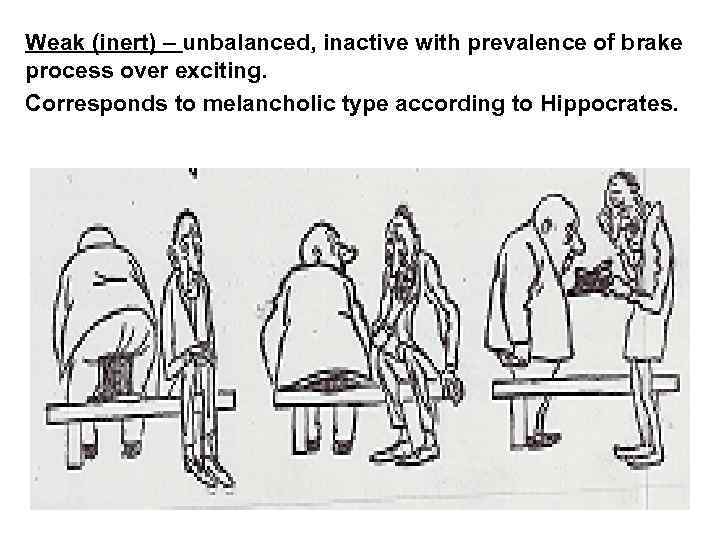
Weak (inert) – unbalanced, inactive with prevalence of brake process over exciting. Corresponds to melancholic type according to Hippocrates.
The VND types are formed on a basis as genotype, and phenotype, i. e. on genetically put features of nervous system all variety of influences of education, conditions of environment, situations in which there is an organism is imposed.
Nominative Pavlov created the doctrine about the first and second alarm systems. - The first alarm system is visual, acoustical and other sensual signals which proceed from world around and the internal environment of an organism. It is the general for the person and animals. - The second alarm system – verbal, inherent only to the person. As its signals words said, heard, read serve. By means of the word transition from a sensual image of the first alarm system to representations of the second alarm system is carried out.
Speech functions: The word – "a signal of signals" Means of social communication Educational tool and self-expression Sposobstuyet to thinking The information Participation in memory mechanisms The physiology of speech function includes rechevospriyaty and a rechereproduktion.
At children by first year of life opportunity to react to words which replace various signals intensively develops. The word becomes ekivalenty the signals perceived by sense organs. The word becomes a signal of signals.
The word does the person by the member of society. The person becomes a being social. The word played a huge role in development of labor activity, accumulation of experience and knowledge in process of human society.
In the left temporal share there is a center of heard speech and the center touch speeches (the center to Vernika). At destruction of this zone of people hears, but doesn't understand value of that hears.
In a frontal lobe of the left hemisphere is the motor center (Brock). At its destruction of people loses ability to speak, but understands when to it address orally or in writing. In an occipital share there is a center of visible speech (reading the letter)
Speech violations: Motor aphasia (Brock's frontal aphasia) – can't say the word, but understands speech Touch aphasia (temporal aphasia to Vernika) – frustration of perception of speech, i. e. doesn't understand the word Alex – loss of ability to read silently and aloud Amuziya – frustration of musical perception Amnestichesky (parietal) aphasia – a zabyvaniye of separate words, is more often than nouns. Akalkuliya – account frustration Agraphia (the bottom frontal crinkle of the left hemisphere and sites of parietal bark is struck) – loss of ability to write
Pavlov allocated with nominative the VND specific types inherent in the person in connection with existence of speech (ІІ-y alarm system), its cogitative and creative activity.
The first type – art. People with a pronounced visual and acoustical susceptibility of environment, i. e. prevalence І - oh alarm system, the concrete, figurative thinking (in the most part it is artists and musicians) is expressed.
The second type – cogitative. Differs tendency to logical and abstaktny thinking, prevalence ІІoh alarm system (scientists, philosophers, mathematics).
The third type - mixed. Properties of perception of environment and thinking are expressed to the same extent.
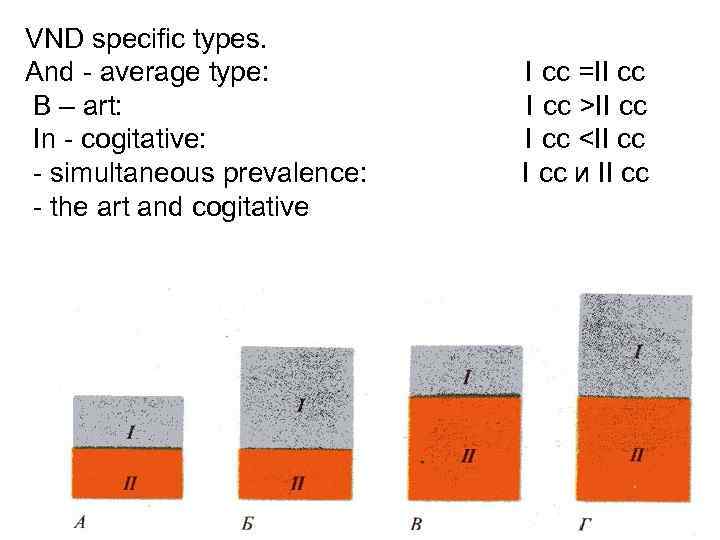
VND specific types. And - average type: B – art: In - cogitative: - simultaneous prevalence: - the art and cogitative I сс =II сс >II сс <II сс и II сс
To speak about the special mental abilities connected with the VND separate types it isn't necessary since talented people meet manifestation of characteristics of all VND types. On the other hand, it is possible to speak about individual predisposition of each person to one of the VND types.
Functional asymmetry of a brain The left and right hemispheres отвечают for different functions, i. e. there is a mezhpolusharny asymmetry.
The left hemisphere (partially dominating): -Verbal perception (verbal); -Temporary relations; -Analysis of incentives; -Consecutive perception; -Easily distinguishable subjects; -Familiar subjects; -Similarity establishment; -The abstract thinking, the generalized recognition;
Right hemisphere: -Nonverbal perception (visual); -Spatial relations; -Synthetic activity. -Simultaneous perception; -Concrete thinking; -Difficult distinguishable subjects; -Unfamiliar subjects; -Distinction establishment; -Complete perception.
Memory – this all-biological property accumulation, storages, processings and information vosprozvedeniye. Memory consists of 4 processes: -Storing; -Storage; -Recognition; -Reproduction.
As a result of process of learning there are physical, chemical and morphological changes in nervous structures which remain some time and have essential impact on reflex reactions carried out by an organism.
Set of structurally functional changes in nervous educations as a result of learning process, is called ENGRAMMA (trace) of operating irritants.
Types of memory: 1. Specific is the information which has been saved up as a result of evolution throughout the millennia. These are unconditional reflex instincts. 2. Individual - information acquired in individual life and being realized in conditioned reflexes.
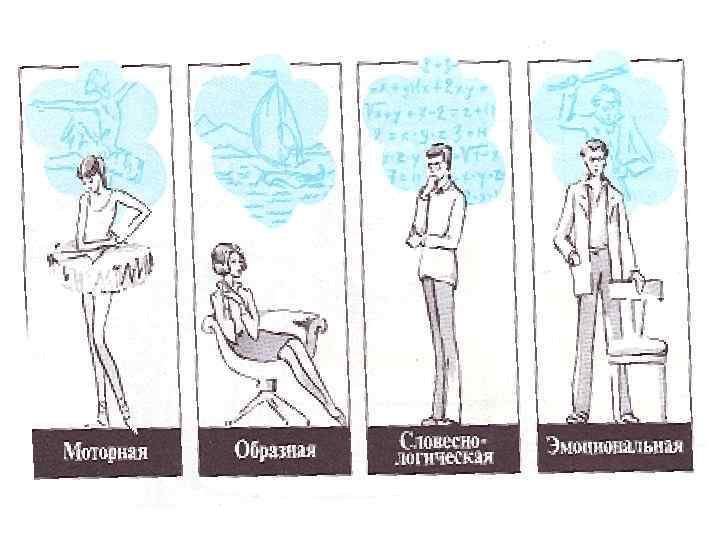
In a manifestation form The figurative Emotional (storing of the endured feelings, inspiration, pleasure, fear) Logical or verbal The touch visual (at artists) acoustical (at musicians) tactile (at blind) 5. Mechanical or motor (at athletes, ballerinas)
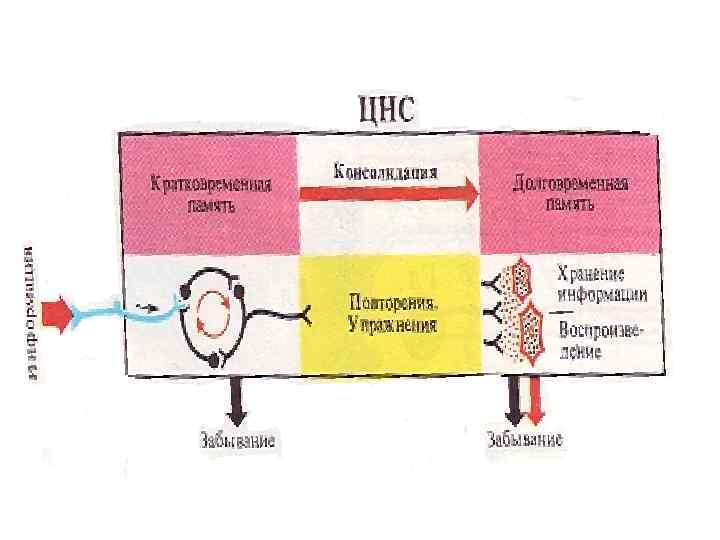
Types of memory: According to the temporary characteristic or duration Instant (ikonichesky) - is stored no more 100150 ms Consists in formation of an instant print, a trace of operating incentive in receptor structure. Biological value – recognition of images and touch signals analizatorny structures of a brain.
2. Short-term (quick) - provides performance of the current behavioural and cogitative operations. In a basis reverberation processes lie. Remains from several seconds to several minutes
3. Long-term - it is stored for life Process of transformation of short-term memory in the long-term – memory consolidation. The mechanism - approach of permanent changes of synoptic conductivity as result of repeated excitement of nervous cages and allocation by glial cages of the substances improving synoptic transfer.
Memory depends : • • • from age health interest trenirovannost motivations
Physiological mechanisms of memory How the person the imprinted events are reproduced it is possible to define level and force of manifestation of memory. Distinguish three levels of memory: • 1. the highest level – reproducing memory, literal reproduction. • 2. level – identifying memory, identifies earlier seen, a subject, the text, a picture. • 3. level – facilitating memory. Independently doesn't remember, but at new studying less time is required.
Memory theories The conditioned-reflex - at the heart of memory lies education and the subsequent preservation of temporary communications. The theory neural models - the Physical point of view. Neural models represent as group of nervous cages, communications their steady in time information on memory bear electronic signals. When these signals repeatedly approach to the same synapses, change their electric and mechanical characteristic that facilitates formation of conditioned reflexes. Nervous electronic impulses being grouped in time and space form dynamic neural models.
Memory theories 3. Associative - psychological (will be coordinated with theory of neural models). Remembered events, concepts are connected so that "revival" of one conducts to "revival" of others. This theory says that memoirs are reproduced in the same sequence in which they arose for the first time. It is connected with theory of neural models (those neurons which are more closely to each other located are quicker raised, activated, is closer on arising representations). Associations are very important at reminiscence.
Memory theories 4. Chemical – it is considered that storing process is influenced positively by RNA, strengthening a proteinaceous exchange and increasing excitement processes in neurons, than formation of temporary communication in a cerebral cortex is facilitated. Specific proteins N-peptides are received.
Disorders of memory. • • • Violation of storing (fixing) Storages – retention Reproduction – a reproduction Amnesia – impossibility of reproduction of the past, skills. Gipermneziya – reminiscence flows (an initial stage of intoxication) Gipomneziya – easing of memory of a retention, a reproduction first of all names, dates. Anterogradny amnesia – inability to assimilation of new information (Karsakov's syndrome), is lost ability to information transfer from primary and in secondary memory Retrograde amnesia – loss of ability to extraction of information saved up (concussion, a stroke, an electroshock) under hypnosis comes back to memories. Hysterical amnesia – total loss of memory – purely functional – it is frequent after stresses.
Subject: " Dream, dreams. Emotions. Motivations". Plan: 1. Dream, types of a dream. 2. Dream mechanisms. 3. Emotions. Classification of emotions. 4. Theories of emotions. 5. Motivations. 6. Architecture of the complete behavioural act.
Dream – a condition of an organism which is characterized by considerable decrease in all functions of an organism, partial shutdown of consciousness. Types of a dream: 1. Physiological dream: - polyphase dream at children; - monophase dream at adults; - seasonal dream; 2. Hypnotic dream. 3. Electrodream, electroanaesthesia 4. Pathological dream: - narcotic dream; - somnambolizm (sleepwalking); - lethargical sleep.
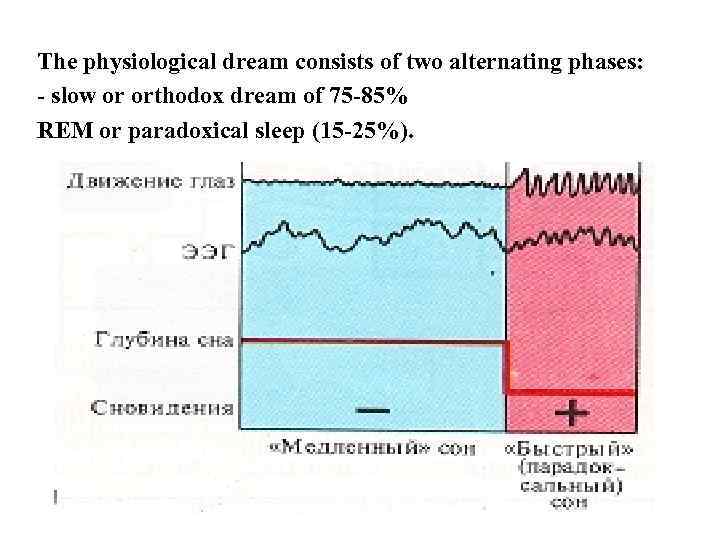
The physiological dream consists of two alternating phases: - slow or orthodox dream of 75 -85% REM or paradoxical sleep (15 -25%).
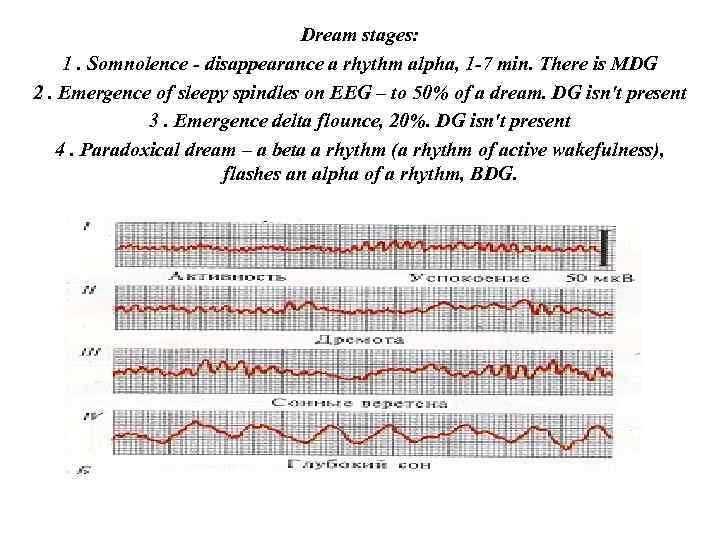
Dream stages: 1. Somnolence - disappearance a rhythm alpha, 1 -7 min. There is MDG 2. Emergence of sleepy spindles on EEG – to 50% of a dream. DG isn't present 3. Emergence delta flounce, 20%. DG isn't present 4. Paradoxical dream – a beta a rhythm (a rhythm of active wakefulness), flashes an alpha of a rhythm, BDG.
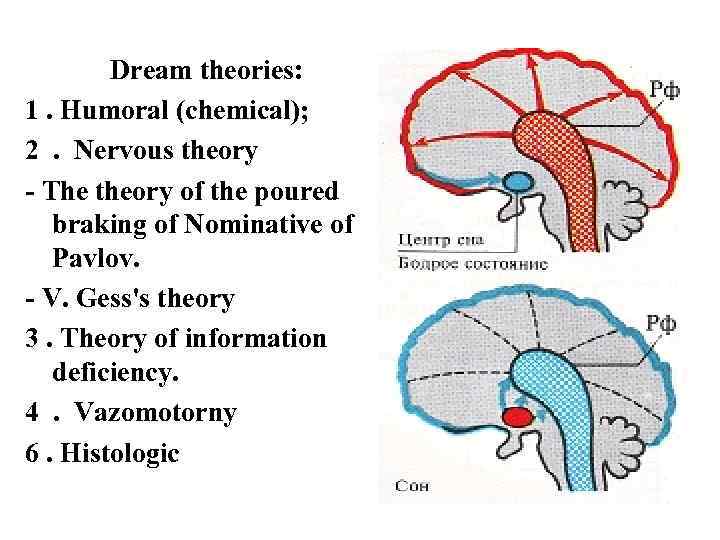
Dream theories: 1. Humoral (chemical); 2. Nervous theory - The theory of the poured braking of Nominative of Pavlov. - V. Gess's theory 3. Theory of information deficiency. 4. Vazomotorny 6. Histologic
Humoral theory of a dream 1. Accumulation of products of a metabolism in time of the period of wakefulness. 2. Availability of chemicals гипнотоксинов, causing a dream серотонин, GAMK
Nervous theory 1. Nominative theory the Pavlova-poured cortical braking, i. e. the internal braking irradiating on bark and extending on underlying departments of Ts. NS 2. V. Gess's theory - excitement of a ventromedial kernel hypothalamus
Theory of information deficiency restriction of touch inflow of information. The Vazomotorny theory connects dream emergence with changes brain blood supplies The histologic theory believes that emergence of a dream depends from reduction of a synoptic crack and shortenings of dendrites
Biological value of a phase of a slow dream (orthodox phase): - sensitivity fall to external irritants Vegetative shifts decrease in Ch. SS and HELL, breath delay
Biological value of a phase of a REM sleep (paradoxical phase): - processing and information adjournment in long-term memory, - restoration of mental processes Vegetative shifts - "a vegetative storm" Arrhythmic pulse, Arrhythmic breath, Increase HELL, Increase in Ch. SS, BDG – fast movements of eyeballs
Dreams – always accompany a dream and are more often connected with a phase of a paradoxical dream. Dreams are explained by that in bark remain less braked (awake, sentry) the centers being in a condition of a dominant. I. M. Setchenov characterized them as "unknown combinations of skilled impressions".

Emotion (I induce, I excite) – a physiological condition having pronounced subjective coloring. Emotions is a component of motivations.
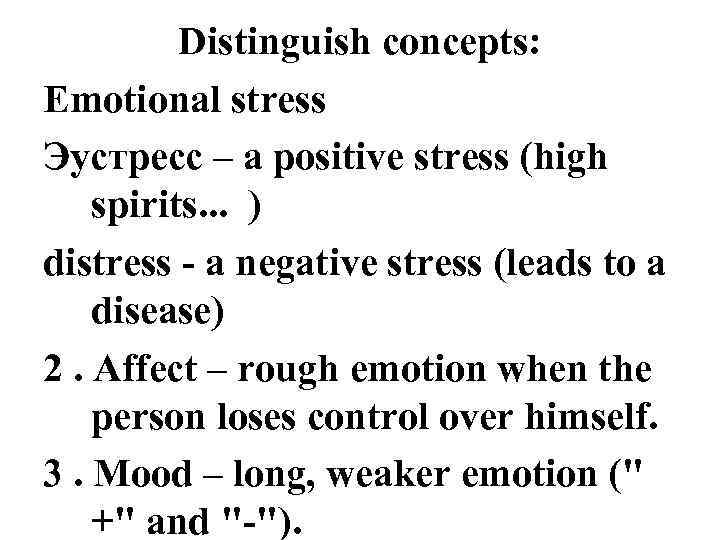
Distinguish concepts: Emotional stress Эустресс – a positive stress (high spirits. . . ) distress - a negative stress (leads to a disease) 2. Affect – rough emotion when the person loses control over himself. 3. Mood – long, weaker emotion (" +" and "-").
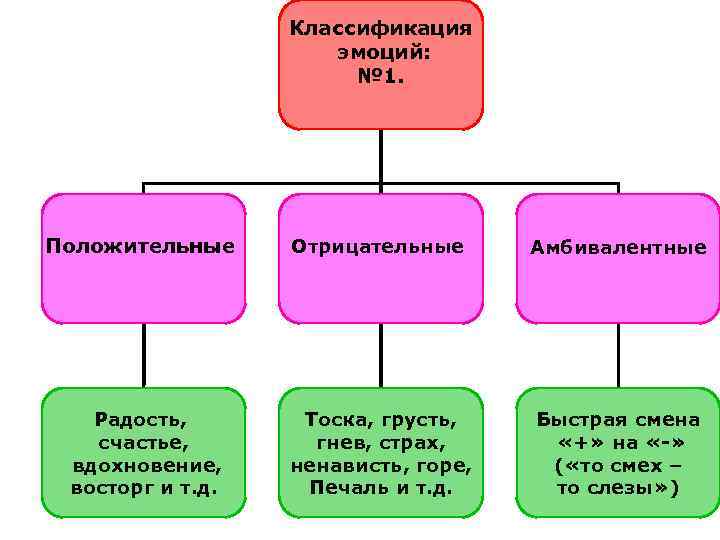
Классификация эмоций: № 1. Положительные Радость, счастье, вдохновение, восторг и т. д. Отрицательные Амбивалентные Тоска, грусть, гнев, страх, ненависть, горе, Печаль и т. д. Быстрая смена «+» на «-» ( «то смех – то слезы» )
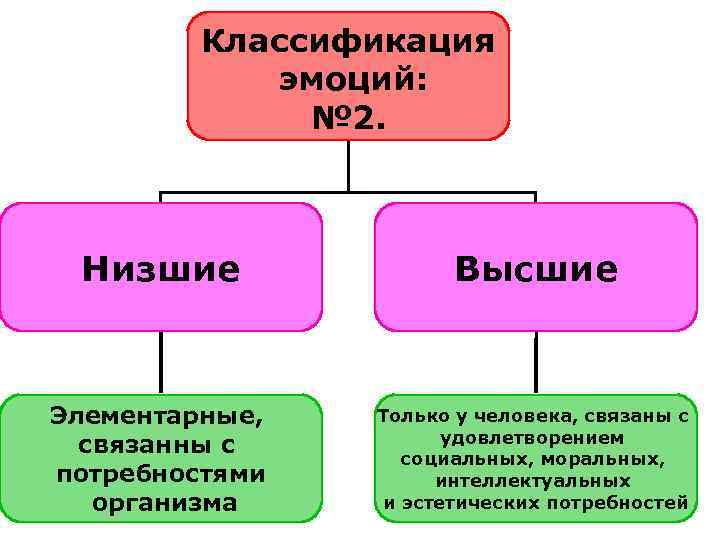
Классификация эмоций: № 2. Низшие Высшие Элементарные, связанны с потребностями организма Только у человека, связаны с удовлетворением социальных, моральных, интеллектуальных и эстетических потребностей
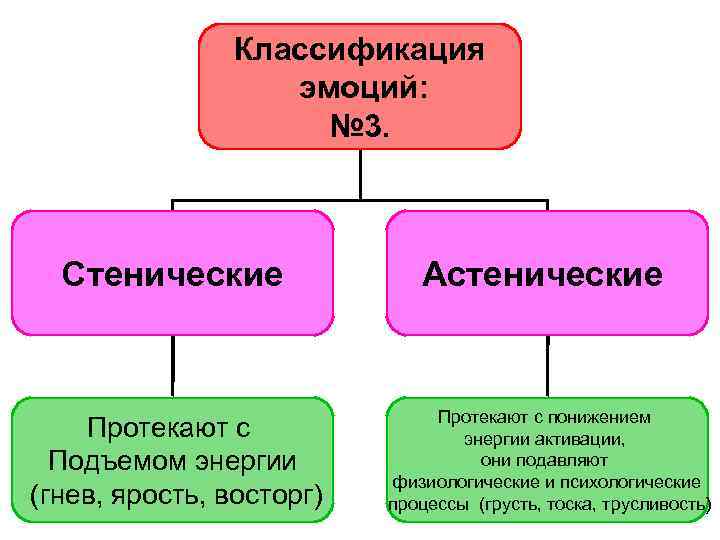
Классификация эмоций: № 3. Стенические Протекают с Подъемом энергии (гнев, ярость, восторг) Астенические Протекают с понижением энергии активации, они подавляют физиологические и психологические процессы (грусть, тоска, трусливость)
Theories of emotions: C. Darvina's theory (instinctive action) Emotions, as рудимет expedient instinctive actions 2. P. K. Anokhin's biological theory Emotions, as the product of long evolution directed on the adaptation of an organism to life situations. Emergence of requirements is accompanied "-" emotion, and their satisfaction – "+" by emotion.
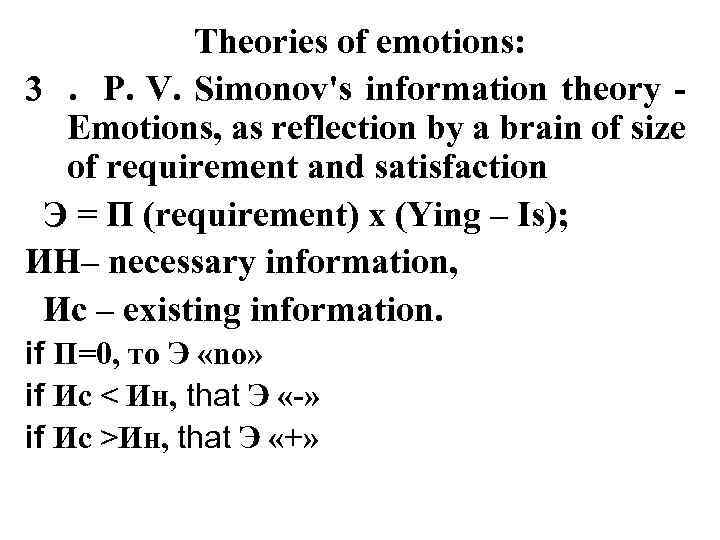
Theories of emotions: 3. P. V. Simonov's information theory Emotions, as reflection by a brain of size of requirement and satisfaction Э = П (requirement) x (Ying – Is); ИН– necessary information, Ис – existing information. if П=0, то Э «no» if Ис < Ин, that Э «-» if Ис >Ин, that Э «+»
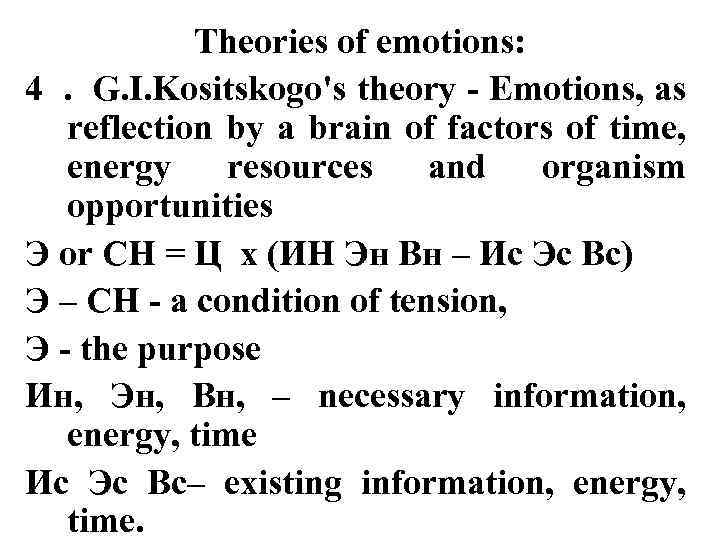
Theories of emotions: 4. G. I. Kositskogo's theory - Emotions, as reflection by a brain of factors of time, energy resources and organism opportunities Э or СН = Ц х (ИН Эн Вн – Ис Эс Вс) Э – СН - a condition of tension, Э - the purpose Ин, Эн, Вн, – necessary information, energy, time Ис Эс Вс– existing information, energy, time.
Stages of emotions or tension degree according to G. I. Kositskomu SN-I (condition of tension) - reflects a condition of attention, mobilization of activity, working capacity increase. It is very useful to an organism. CH-II (sthenic negative emotion) - is characterized maximum increase in energy resources of an organism and limit tension of bodies and systems (anger, indignation)
Stages of emotions or tension degree according to G. I. Kositskomu CH-III (asthenic negative emotion) - is characterized by exhaustion of energy resources of an organism (horror, melancholy, decrease in intelligence, a panic …) CH-IV (neurosis) - represents a disease, VND failure, "breakage" of a number of regulatory mechanisms of an organism
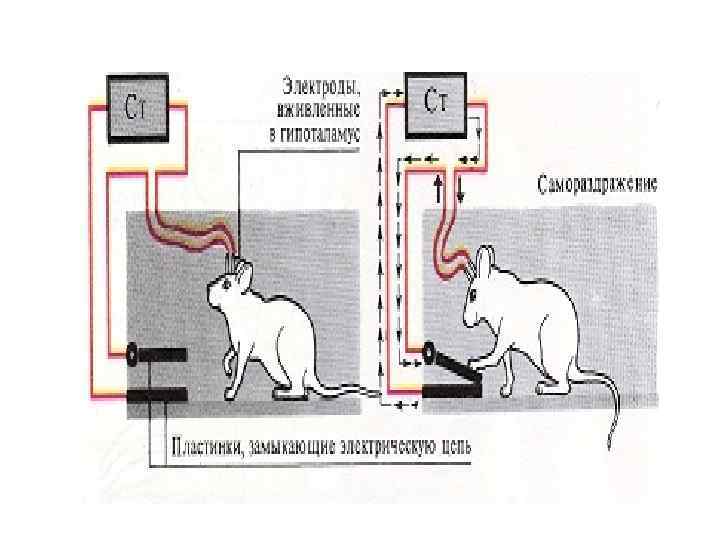
Theories of emotions: 5. Central theories. Opens neurophysiological bases, concrete mechanisms of emotions, theories, connecting anatomic structures brain with emotions. For example: Bekhterev - таламус. Олдс – a lobby commissure, an olfactory brain with gipotalamusy
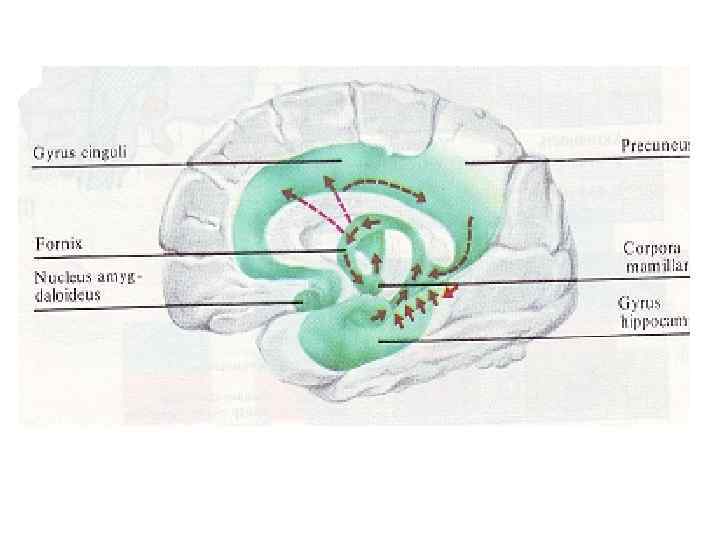
Theories of emotions: 6. Korkovo – the subcrustal theory The Russian Federation – hypothalamus – гипокамп – bark of big hemispheres Peypets entered concept about an emotional circle - a circle to Peypetsa – гипокамп – hypothalamus – the Russian Federation – гипокамп – a zone crinkle.
• Cortical departments of the left ("logical") hemisphere more influence formation of positive emotions • Cortical departments of the right ("art") hemisphere more influence formation of negative emotions
Motivations – active conditions of the brain structures, inducing to make the actions directed on satisfaction of internal requirements organism. The main reason of emergence of biological motivations are shifts of constants of the internal environment of an organism Motivations are caused thanking to excitement of the hypothalamic centers.
Motivations leads to purposeful search behavior. Types of motivations: 1. The lowest (all types of congenital biological inclinations belong to food, water, air, etc. ). 2. The highest (are got as a result of individual life and are under construction on the basis of the lowest motivations and the saved up experience) - the social - aspiration to creativity, study, call of duty, patriotism. . .
INTEGRATIVE ACTIVITY BRAIN AND FORMATION BEHAVIOURAL ACT
Integrative activity of nervous system – generalizing activity which underlies the behavioural act. The main and specific manifestation of activity of Ts. NS is the reflex.
According to the classical theory, the reflex comes to an end with action. Nominative Pavlov, then P. K. Anokhin showed that the reflex act doesn't come to the end with reciprocal action, and there is an analysis of results of action by nervous system and comparison of the valid result to the desirable.
Information on result of action arrives in Ts. NS on feedback therefore the concept about a reflex ring is entered. The behavior of an organism is defined by result of perfect action.
According to modern representations the reflex is a difficult dynamic system with feedback. Basis of physiological structure of any behavioural act is the functional system.
Functional systems are morfofunktsionalny devices of selfcontrol in an organism. The doctrine about functional system was developed by P. K. Anokhin (1935).
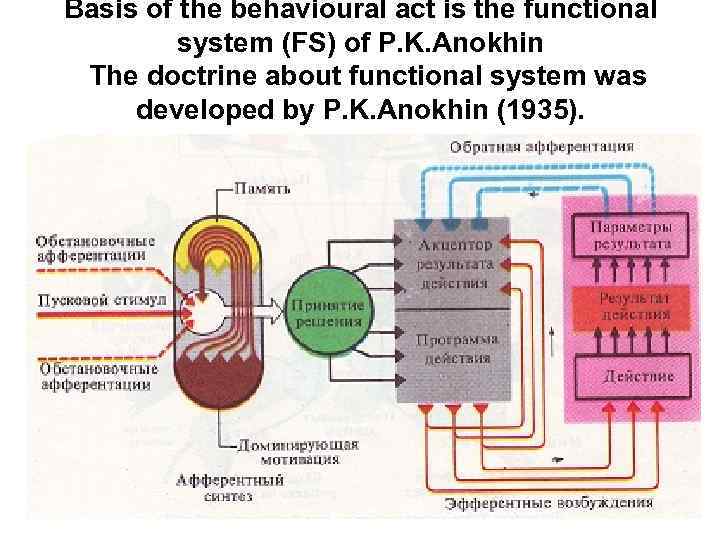
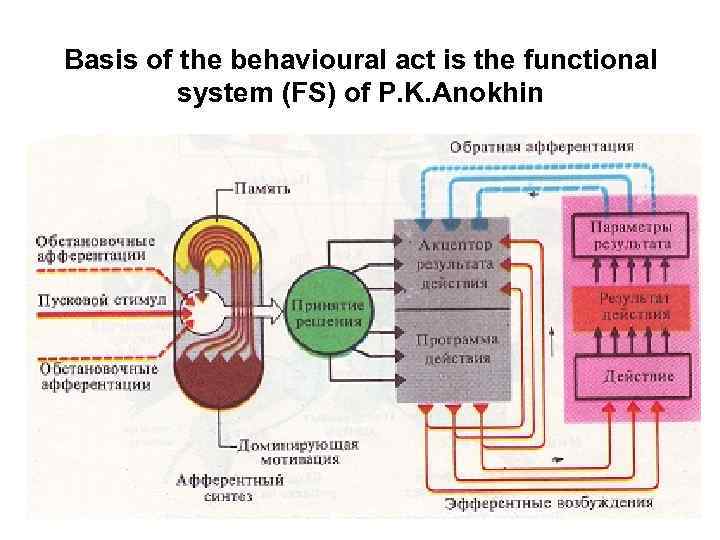
Basis of the behavioural act is the functional system (FS) of P. K. Anokhin The doctrine about functional system was developed by P. K. Anokhin (1935).
Formation of the behavioural act proceeds in some stages: afferentny synthesis; making decision on the functioning purpose; formation of the program of action and action acceptor; Result of action and return afferentation.
The initial, nodal mechanism of the behavioural act is afferentny synthesis – the EXPERT The EXPERT – processing, comparison, synthesis of received information is the most responsible moment of integrative activity of a brain which defines highlights of the behavioural act – "what to do? how to do? when to work? ".
Into structure the EXPERT enter: Dominating motivation - the dominating requirement connected with a condition of an organism at present, evolved internal requirement. (What to do? ) The starting afferentation – is caused by direct action of an irritant. (When to do? ) Obstanovochny afferentation – caused by action of a certain situation. (It is possible to do? ) Memory. (How to do? ) Approximate and research reaction (SHOUTING. ).
Thus the behavioural act is caused not only incentive, irritation as it was approved by the classical reflex theory, and other components, from the most important role is played by dominating motivation. In the absence of motivation there is no behavioural act, the organism doesn't react to incentive. The behavior has to be motivated.
In the solution of a question how to make action a significant role play memory mechanisms. First of all, it is genetic memory to which congenital biological motivations are constantly addressed. Isn't less significant and individually acquired memory. Thus at a stage the EXPERT the issues "what to do" (on the basis of external and internal irritations), "when to do" (on the basis of special starting factors) are resolved.
Neurophysiological mechanisms of afferentny synthesis • Ascending activating influences of subcrustal educations on a cerebral cortex. • Descending influences of bark on subcrustal educations. • Reverberation of vozbuzhdeniye between bark and subcrustal educations. • Mechanisms of convergence of vozbuzhdeniye of various touch and biological quality on cerebral cortex neurons.
Role of various departments of a brain • Processes of afferentny synthesis happen in various departments of Ts. NS. However the leading role in EXPERTS mechanisms belongs to KGM, and first of all – to her frontal lobes. • The stage the EXPERT is a stage of dynamic search of information, some kind of "a stage of doubts". The EXPERT comes to an end with a decision-making stage.
Decision-making • At a stage of acceptance of the decision the dominating line of conduct is developed. • After a stage of acceptance of the decision the stage of efferent synthesis begins.
Efferent synthesis – effector part of the behavioural act consists from: Action programs Action Acceptor (AA) Thus on a phase of decision-making the model on which the result of action will be checked is under construction.
For execution of action of Ts. NS sends to executive body of team to action. At the same time on коллатералям axons "copies" of teams to special neurons of the action acceptor (AA) are transferred The HELL is the device perceiving, comparing, approving results of the action, comparing results of action with "copy".
Action Behavioural action is always directed on achievement of potrebny result, on active interaction of living beings with environment factors.
Signals of results of action on feedback arrive in the HELL and are compared to "copy". If they coincide, action comes to an end if isn't present, it leads to creation of new teams of action, afferentny synthesis (AS) mobilization
Basis of the behavioural act is the functional system (FS) of P. K. Anokhin
 Скачать презентацию Subject Mechanisms of formation of temporary communications Types
15 -ВНД -врем. связь, торможение.ppt