 Скачать презентацию Subject Choice Information For Parents and Guardians 2017
16e5e0b490638093d6a4e9a873f201f1.ppt
- Количество слайдов: 51



Subject Choice Information For Parents and Guardians 2017
www. stbrendanscsbirr. ie
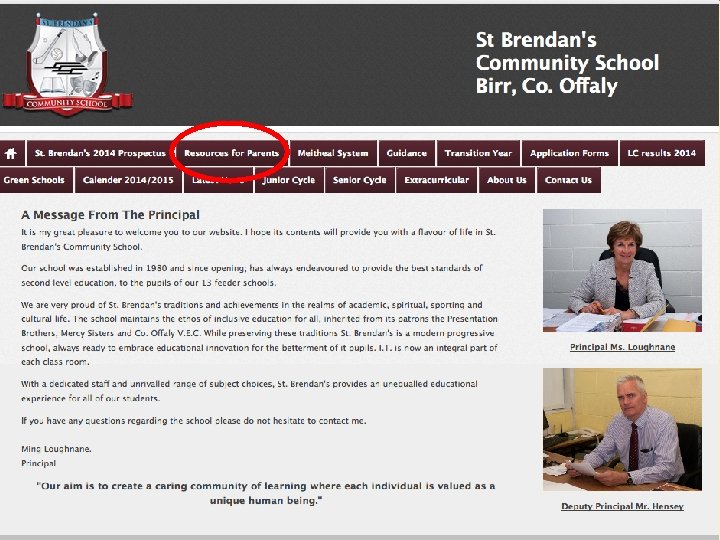
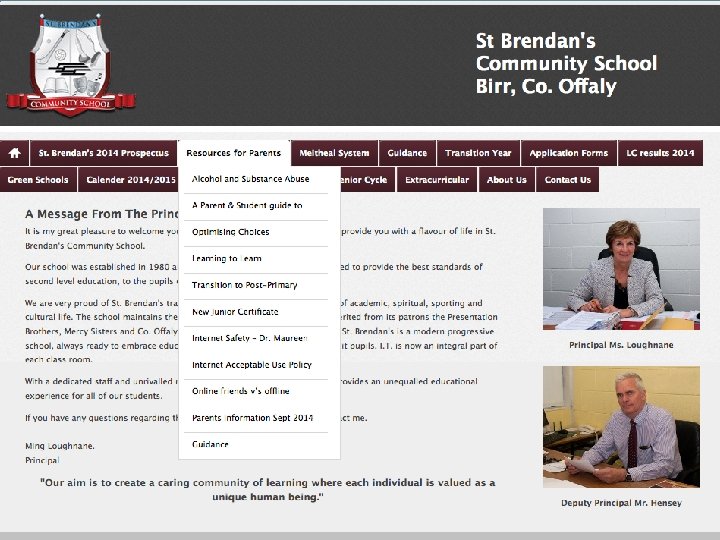
CONTENTS • Introduction • Advice To Aid Transition (Primary to Secondary) • Internet Safety • Subject Choice • Third Level Requirement • JCT • Study Skills
The Role of the Guidance Counsellor
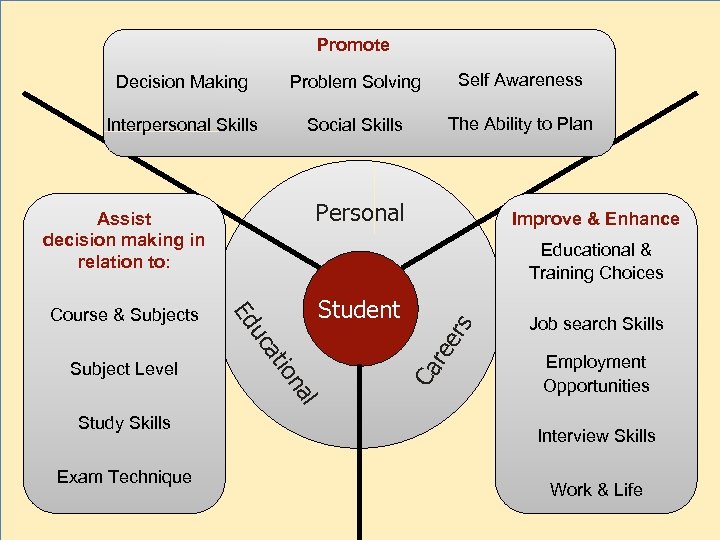
Promote Decision Making Problem Solving Self Awareness Interpersonal Skills Social Skills The Ability to Plan Personal Assist decision making in relation to: Educational & Training Choices al Exam Technique Ca ion at Study Skills re er uc Subject Level s Student Ed Course & Subjects Improve & Enhance Job search Skills Employment Opportunities Interview Skills Work & Life
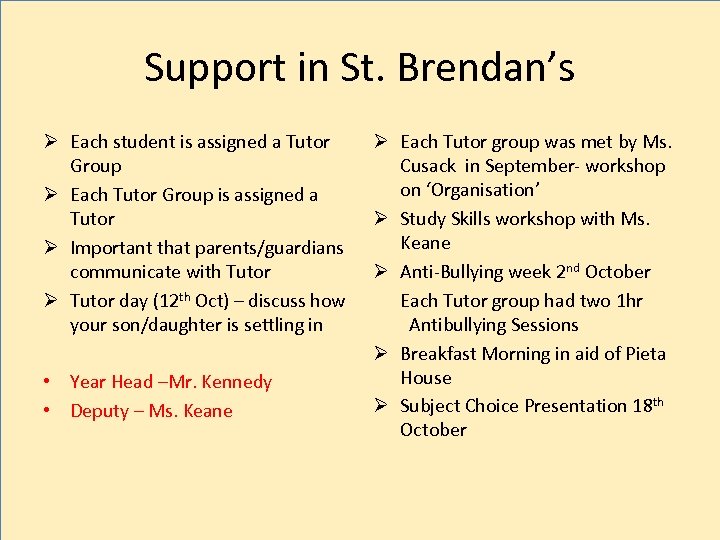
Support in St. Brendan’s Ø Each student is assigned a Tutor Group Ø Each Tutor Group is assigned a Tutor Ø Important that parents/guardians communicate with Tutor Ø Tutor day (12 th Oct) – discuss how your son/daughter is settling in • Year Head –Mr. Kennedy • Deputy – Ms. Keane Ø Each Tutor group was met by Ms. Cusack in September- workshop on ‘Organisation’ Ø Study Skills workshop with Ms. Keane Ø Anti-Bullying week 2 nd October Each Tutor group had two 1 hr Antibullying Sessions Ø Breakfast Morning in aid of Pieta House Ø Subject Choice Presentation 18 th October
Transition Primary to Secondary

Internet Safety @ St. Brendan’s.
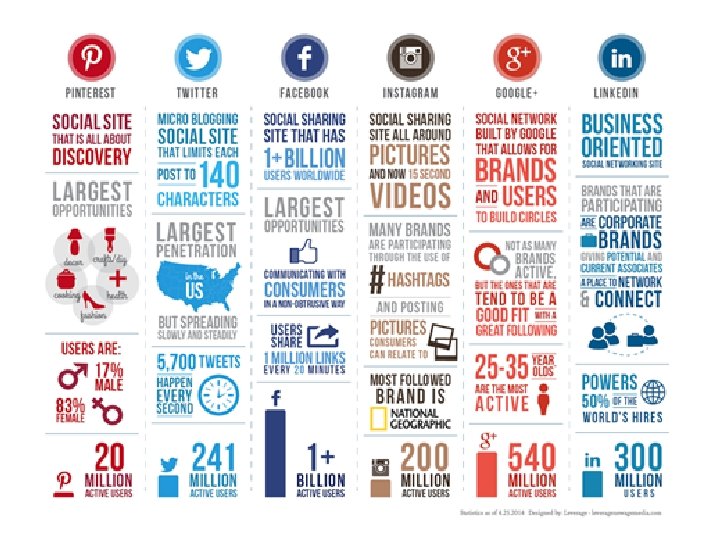
9 / 10 kids have a social network profile
Cyber. Safe. Ireland Study 2016/2017 Cyber. Safe. Ireland has spoken directly to 4, 893 children aged between 8 and 13 and 885 parents across Leinster • Despite age restrictions of 13 and older on many social media services, 40% of children under 13 that we have met already had a significant online presence. • Snapchat and Instagram remained the most popular instant messaging and social media apps • 16% of the children surveyed spent in excess of 4 hours online a day.
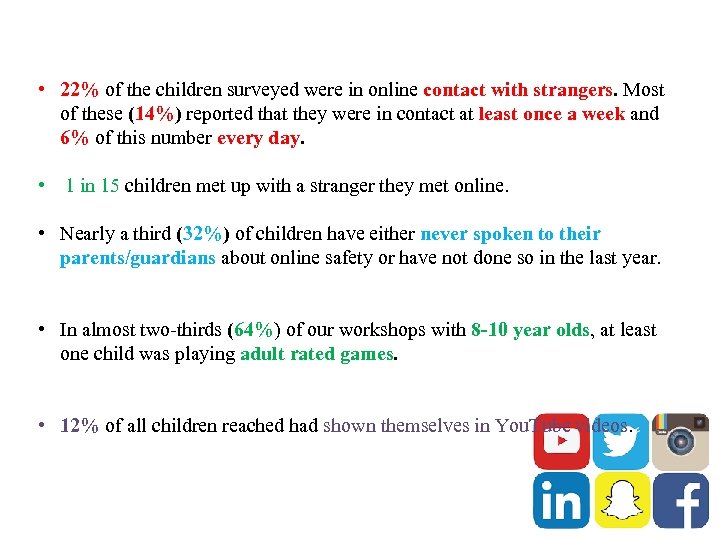
• 22% of the children surveyed were in online contact with strangers. Most of these (14%) reported that they were in contact at least once a week and 6% of this number every day. • 1 in 15 children met up with a stranger they met online. • Nearly a third (32%) of children have either never spoken to their parents/guardians about online safety or have not done so in the last year. • In almost two-thirds (64%) of our workshops with 8 -10 year olds, at least one child was playing adult rated games. • 12% of all children reached had shown themselves in You. Tube videos.
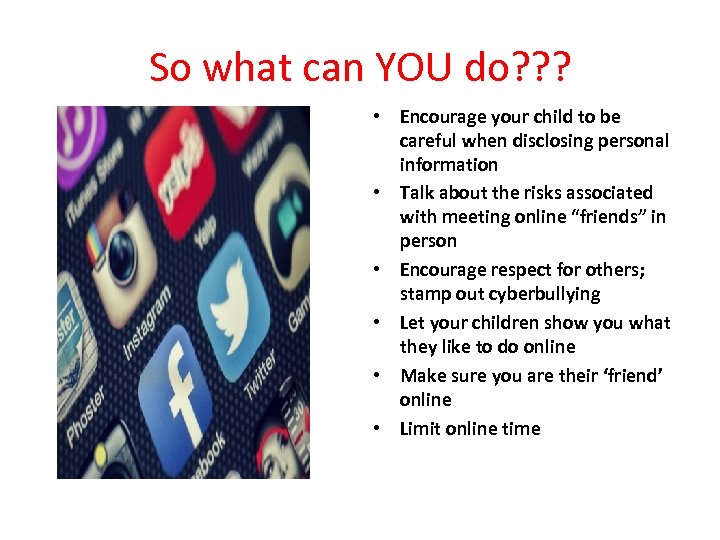
So what can YOU do? ? ? • Encourage your child to be careful when disclosing personal information • Talk about the risks associated with meeting online “friends” in person • Encourage respect for others; stamp out cyberbullying • Let your children show you what they like to do online • Make sure you are their ‘friend’ online • Limit online time

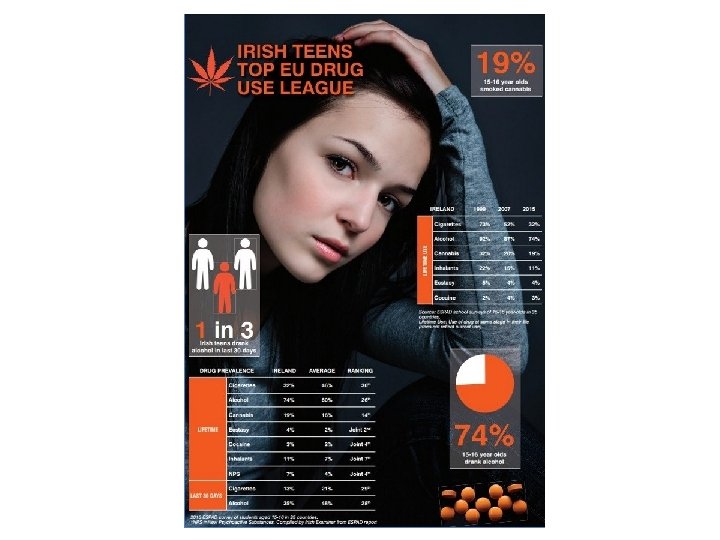
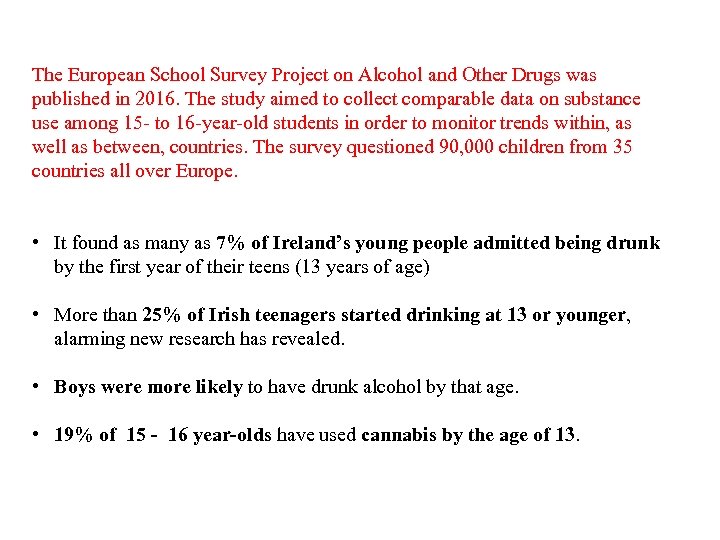
The European School Survey Project on Alcohol and Other Drugs was published in 2016. The study aimed to collect comparable data on substance use among 15 - to 16 -year-old students in order to monitor trends within, as well as between, countries. The survey questioned 90, 000 children from 35 countries all over Europe. • It found as many as 7% of Ireland’s young people admitted being drunk by the first year of their teens (13 years of age) • More than 25% of Irish teenagers started drinking at 13 or younger, alarming new research has revealed. • Boys were more likely to have drunk alcohol by that age. • 19% of 15 - 16 year-olds have used cannabis by the age of 13.
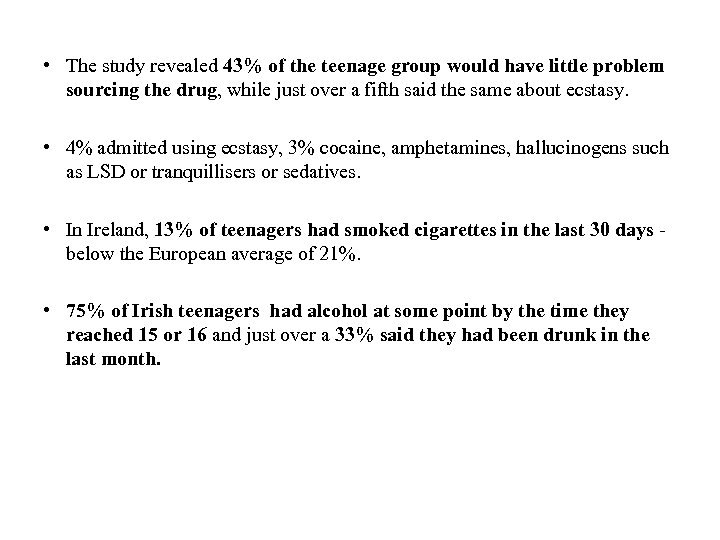
• The study revealed 43% of the teenage group would have little problem sourcing the drug, while just over a fifth said the same about ecstasy. • 4% admitted using ecstasy, 3% cocaine, amphetamines, hallucinogens such as LSD or tranquillisers or sedatives. • In Ireland, 13% of teenagers had smoked cigarettes in the last 30 days below the European average of 21%. • 75% of Irish teenagers had alcohol at some point by the time they reached 15 or 16 and just over a 33% said they had been drunk in the last month.
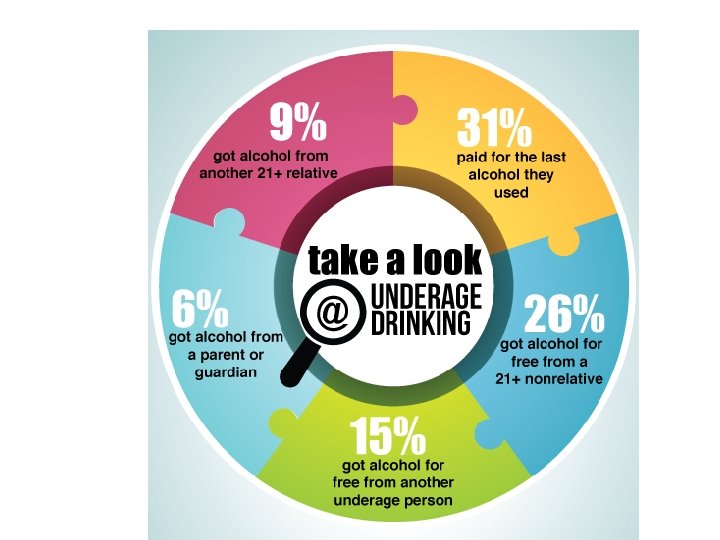
Advice…. . • Communicate…… • Educate…. . • Get to know their friends…. • Set up a ‘Whatsapp’ group with parents of their friends….
Junior Certificate Subjects
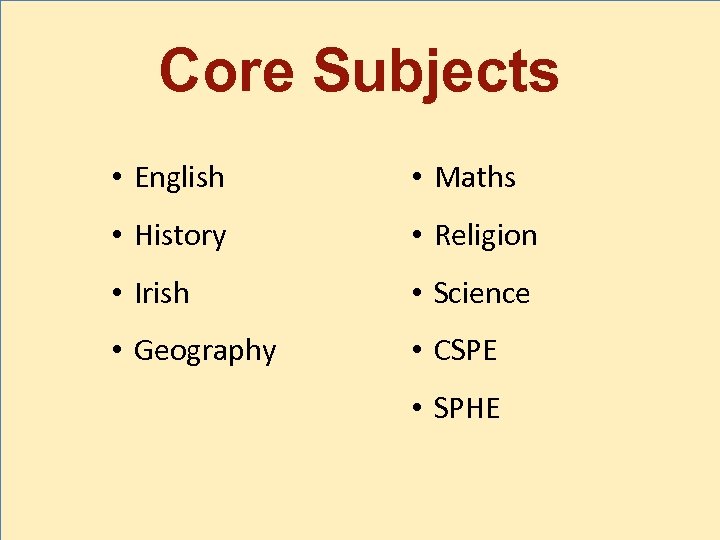
Core Subjects • English • Maths • History • Religion • Irish • Science • Geography • CSPE • SPHE
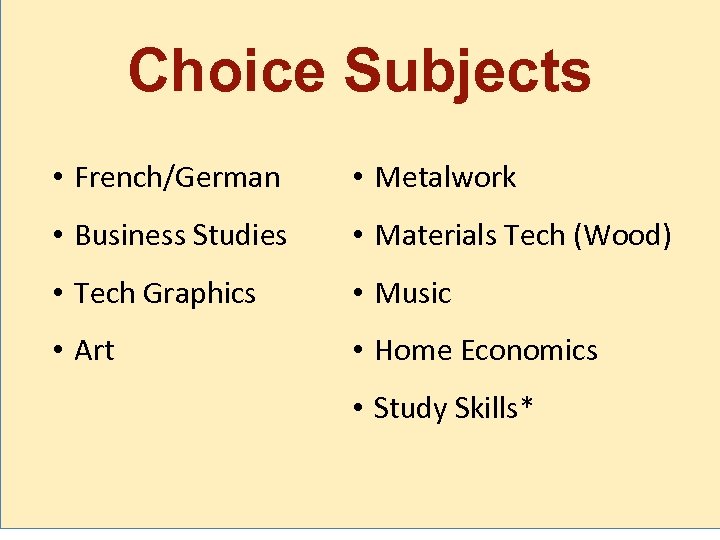
Choice Subjects • French/German • Metalwork • Business Studies • Materials Tech (Wood) • Tech Graphics • Music • Art • Home Economics • Study Skills*
Subject Benefits Even though there are many benefits to each subject it is important that the students’ interests and how they learn are taken into consideration when making these choices.
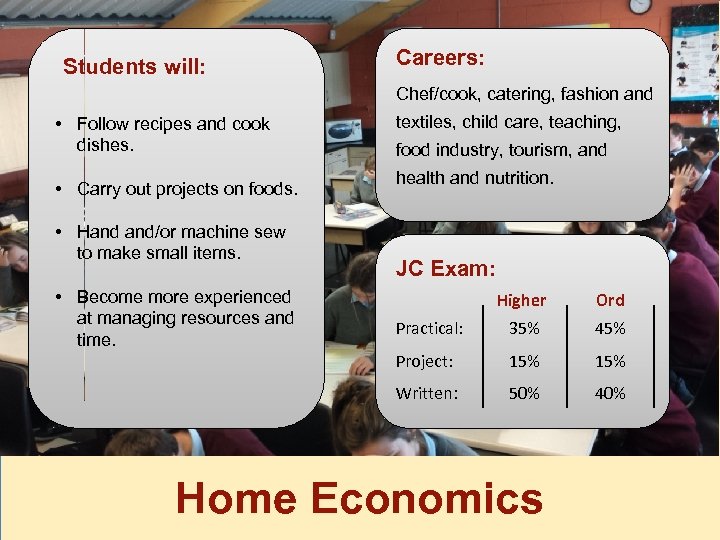
Students will: Careers: Chef/cook, catering, fashion and • Follow recipes and cook dishes. • Carry out projects on foods. • Hand and/or machine sew to make small items. • Become more experienced at managing resources and time. textiles, child care, teaching, food industry, tourism, and health and nutrition. JC Exam: Higher Ord Practical: 35% 45% Project: 15% Written: 50% 40% Home Economics
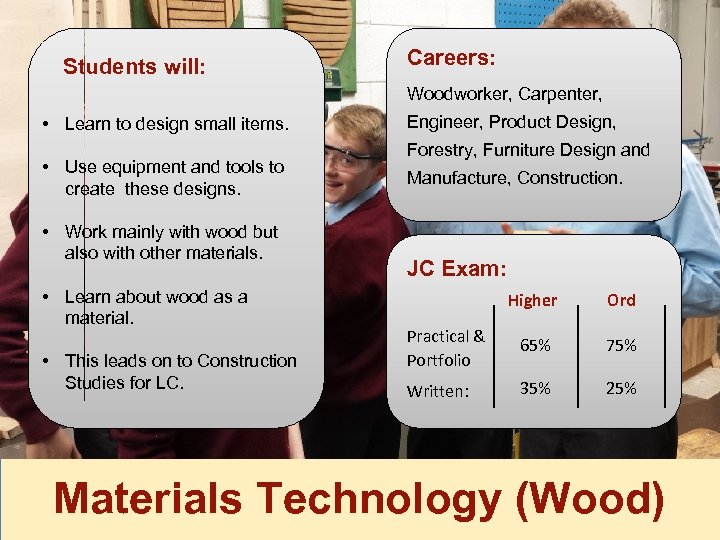
Students will: Careers: Woodworker, Carpenter, • Learn to design small items. • Use equipment and tools to create these designs. • Work mainly with wood but also with other materials. • Learn about wood as a material. • This leads on to Construction Studies for LC. Engineer, Product Design, Forestry, Furniture Design and Manufacture, Construction. JC Exam: Higher Ord Practical & Portfolio 65% 75% Written: 35% 25% Materials Technology (Wood)
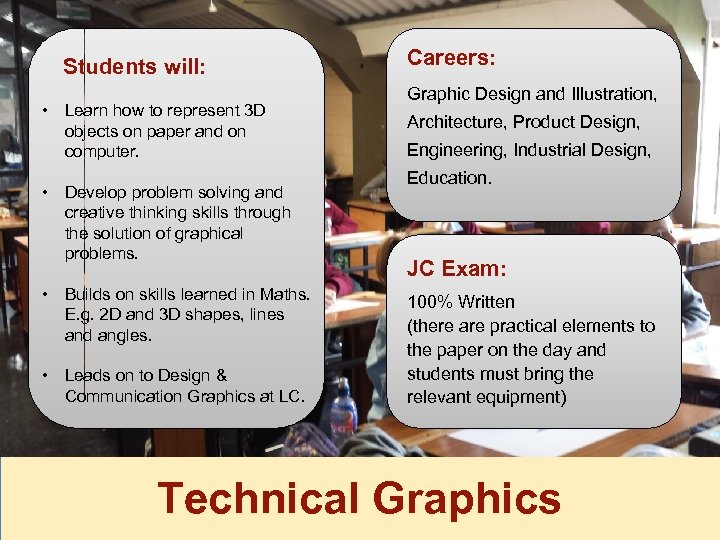
Students will: • Learn how to represent 3 D objects on paper and on computer. • Develop problem solving and creative thinking skills through the solution of graphical problems. • Builds on skills learned in Maths. E. g. 2 D and 3 D shapes, lines and angles. • Leads on to Design & Communication Graphics at LC. Careers: Graphic Design and Illustration, Architecture, Product Design, Engineering, Industrial Design, Education. JC Exam: 100% Written (there are practical elements to the paper on the day and students must bring the relevant equipment) Technical Graphics
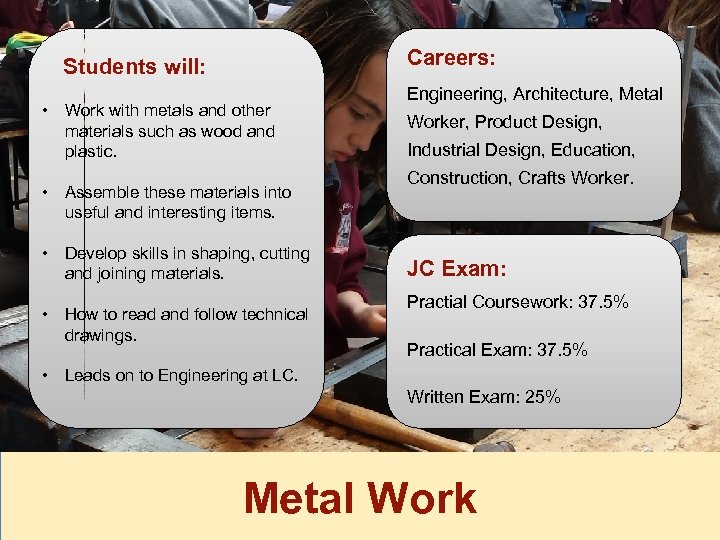
Careers: Students will: • Work with metals and other materials such as wood and plastic. • Assemble these materials into useful and interesting items. • Develop skills in shaping, cutting and joining materials. • How to read and follow technical drawings. Engineering, Architecture, Metal Worker, Product Design, Industrial Design, Education, Construction, Crafts Worker. JC Exam: Practial Coursework: 37. 5% Practical Exam: 37. 5% • Leads on to Engineering at LC. Written Exam: 25% Metal Work
Note on Cross Curricular Links • Some topics in Metalwork overlap with Materials Technology Wood. • Many of the practical skills learned in Metalwork are similar to those learned in Wood. • Technical Graphics will help you to understand drawings and diagrams that you will be using in Metalwork.
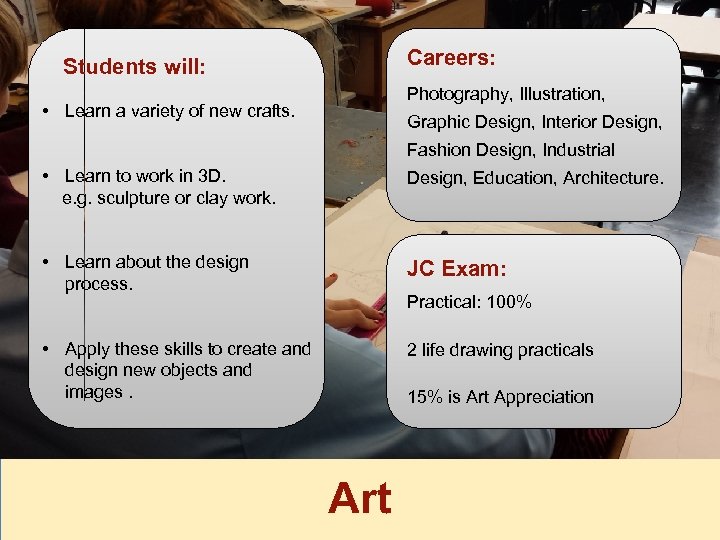
Careers: Students will: Photography, Illustration, • Learn a variety of new crafts. Graphic Design, Interior Design, Fashion Design, Industrial • Learn to work in 3 D. e. g. sculpture or clay work. Design, Education, Architecture. • Learn about the design process. JC Exam: • Apply these skills to create and design new objects and images. 2 life drawing practicals Practical: 100% 15% is Art Appreciation Art
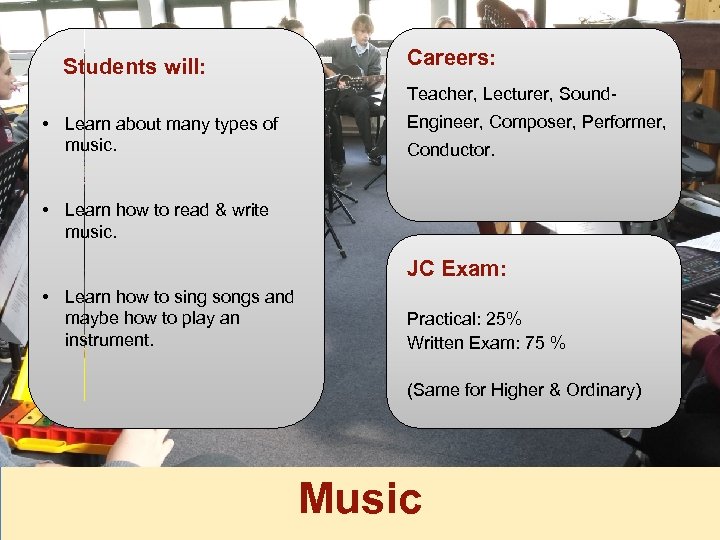
Students will: Careers: Teacher, Lecturer, Sound- • Learn about many types of music. Engineer, Composer, Performer, Conductor. • Learn how to read & write music. JC Exam: • Learn how to sing songs and maybe how to play an instrument. Practical: 25% Written Exam: 75 % (Same for Higher & Ordinary) Music
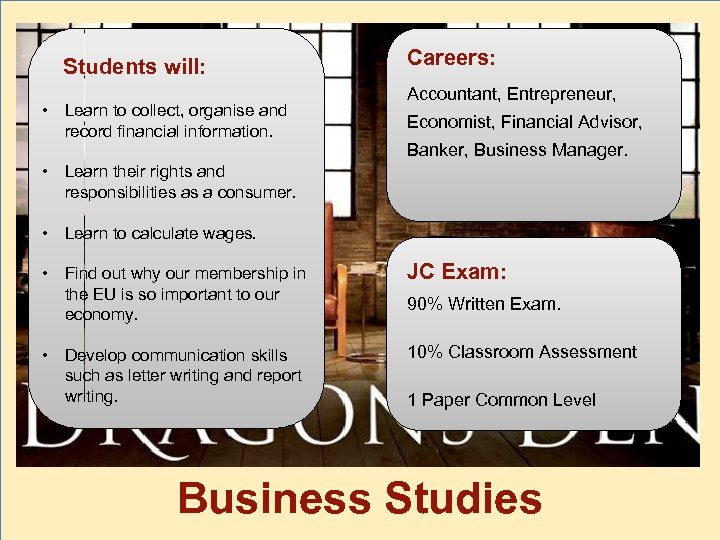
Students will: • Learn to collect, organise and record financial information. Careers: Accountant, Entrepreneur, Economist, Financial Advisor, Banker, Business Manager. • Learn their rights and responsibilities as a consumer. • Learn to calculate wages. • Find out why our membership in the EU is so important to our economy. JC Exam: • Develop communication skills such as letter writing and report writing. 10% Classroom Assessment 90% Written Exam. 1 Paper Common Level Business Studies
Study Skills • This is offered to students who may find it difficult to cope with three choice subjects. • This focuses on text heavy core subjects. • It is on the same band as the Languages, hence it is not possible to do a Language and Study Skills.
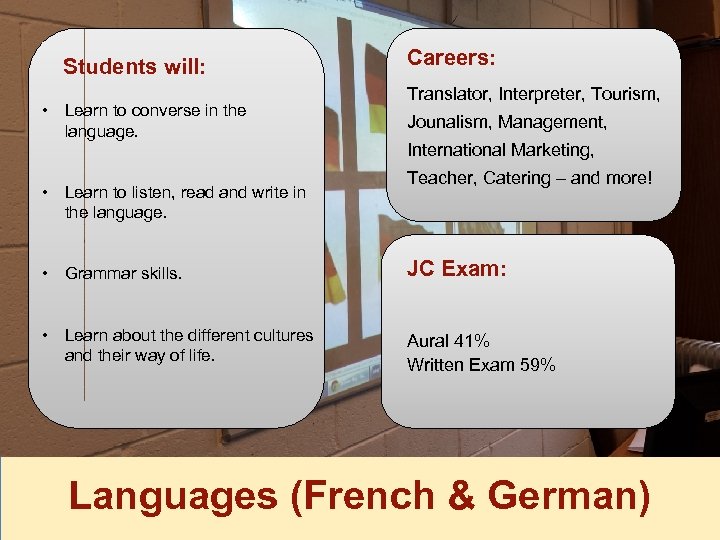
Students will: • Learn to converse in the language. • Learn to listen, read and write in the language. Careers: Translator, Interpreter, Tourism, Jounalism, Management, International Marketing, Teacher, Catering – and more! • Grammar skills. JC Exam: • Learn about the different cultures and their way of life. Aural 41% Written Exam 59% Languages (French & German)
Third Language Requirement Some colleges require that students have a third language to gain entry. (English & Irish are the first two) Other colleges do not, however if a language is part of your chosen degree then that language will be a requirement to gain entry to that course. For Example: Trinity College Dublin does not require a third language, however, if you choose to study French and Law you must have taken French for your Leaving Cert.
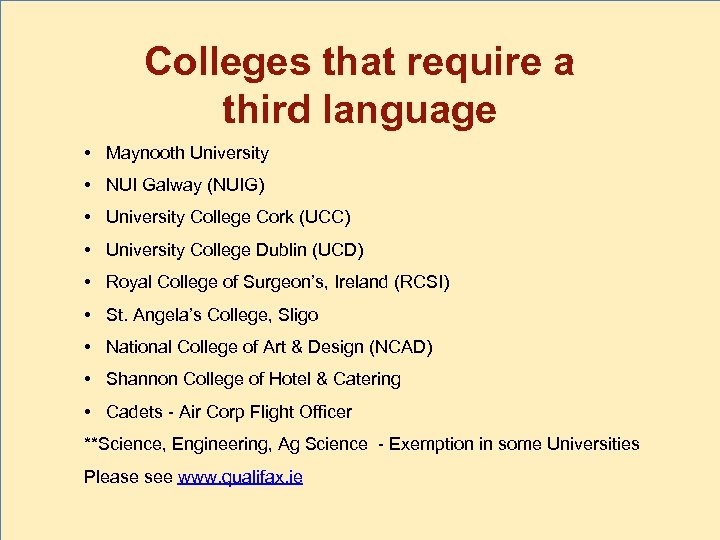
Colleges that require a third language • Maynooth University • NUI Galway (NUIG) • University College Cork (UCC) • University College Dublin (UCD) • Royal College of Surgeon’s, Ireland (RCSI) • St. Angela’s College, Sligo • National College of Art & Design (NCAD) • Shannon College of Hotel & Catering • Cadets - Air Corp Flight Officer **Science, Engineering, Ag Science - Exemption in some Universities Please see www. qualifax. ie
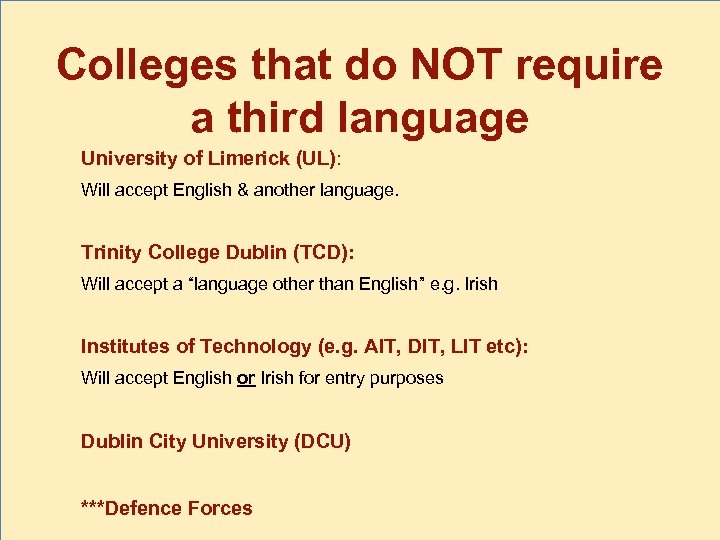
Colleges that do NOT require a third language University of Limerick (UL): Will accept English & another language. Trinity College Dublin (TCD): Will accept a “language other than English” e. g. Irish Institutes of Technology (e. g. AIT, DIT, LIT etc): Will accept English or Irish for entry purposes Dublin City University (DCU) ***Defence Forces
www. qualifax. ie
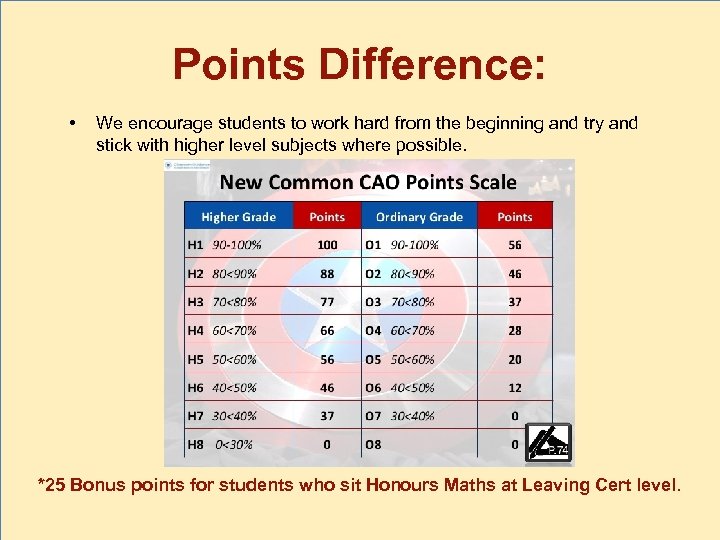
Points Difference: • We encourage students to work hard from the beginning and try and stick with higher level subjects where possible. *25 Bonus points for students who sit Honours Maths at Leaving Cert level.
So, how do you choose? Research, Discuss & Reflect
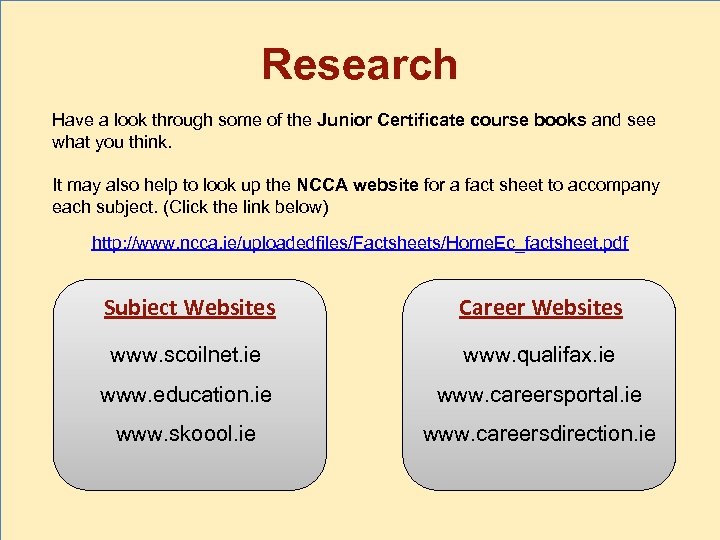
Research Have a look through some of the Junior Certificate course books and see what you think. It may also help to look up the NCCA website for a fact sheet to accompany each subject. (Click the link below) http: //www. ncca. ie/uploadedfiles/Factsheets/Home. Ec_factsheet. pdf Subject Websites Career Websites www. scoilnet. ie www. qualifax. ie www. education. ie www. careersportal. ie www. skoool. ie www. careersdirection. ie
Discuss your thoughts with: • Subject Teachers • Guidance Counsellors • Current Pupils • Parents/Guardians, Older Siblings
Reflect Think about your Son/Daughter’s interests and how they learn. Have them ask themselves the following questions: • Do I like this subject? • Am I good at it? • How have I performed up to now? • Is there a chance I might need it for further study/career? • Am I keeping my options open?
Supports Partnership between home and school is vital. An open honest dialogue with ‘the school’ is essential. If there any difficulties please let us know. You can speak to: Senior Management Year Head Guidance Counsellor Tutor
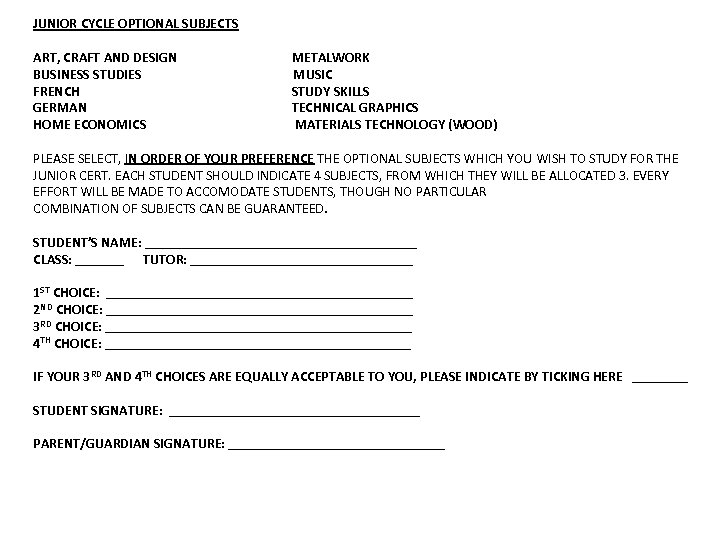
JUNIOR CYCLE OPTIONAL SUBJECTS ART, CRAFT AND DESIGN METALWORK BUSINESS STUDIES MUSIC FRENCH STUDY SKILLS GERMAN TECHNICAL GRAPHICS HOME ECONOMICS MATERIALS TECHNOLOGY (WOOD) PLEASE SELECT, IN ORDER OF YOUR PREFERENCE THE OPTIONAL SUBJECTS WHICH YOU WISH TO STUDY FOR THE JUNIOR CERT. EACH STUDENT SHOULD INDICATE 4 SUBJECTS, FROM WHICH THEY WILL BE ALLOCATED 3. EVERY EFFORT WILL BE MADE TO ACCOMODATE STUDENTS, THOUGH NO PARTICULAR COMBINATION OF SUBJECTS CAN BE GUARANTEED. STUDENT’S NAME: ____________________ CLASS: _______ TUTOR: ________________ 1 ST CHOICE: ______________________ 2 ND CHOICE: ______________________ 3 RD CHOICE: ______________________ 4 TH CHOICE: ______________________ IF YOUR 3 RD AND 4 TH CHOICES ARE EQUALLY ACCEPTABLE TO YOU, PLEASE INDICATE BY TICKING HERE ____ STUDENT SIGNATURE: __________________ PARENT/GUARDIAN SIGNATURE: ________________
Subject Choice Form: Order of Preference • Your son/daughter must list their subject choices in order of preference. • The one they would like/want to do the most must be put down as Number 1. • 4 subjects are chosen from the list and each student will be assigned to 3 of those subjects. • Students have the option to tick a box to indicate whether or not they are flexible around their 3 rd/4 th preference. If students are flexible it is important that they tick this box to ensure that we can accommodate all students to the best of our ability.
Subject Choice Restrictions Subjects are grouped differently on the timetable and as a result some subjects may clash at certain times. For this reason the following limitations must be placed to prevent timetable clashes. • Only ONE language may be chosen. Students must choose either French OR German.
 Скачать презентацию Subject Choice Information For Parents and Guardians 2017
16e5e0b490638093d6a4e9a873f201f1.ppt