 Скачать презентацию Subject Choice Evening 28 th February 2017 St
b9f94ce6917f3ff92c114ddcce5d0c20.ppt
- Количество слайдов: 51




Subject Choice Evening 28 th February 2017 St Vincent’s Secondary School Guidance Department
Agenda n Leaving Certificate Applied n Traditional Leaving Certificate n Subject Choice - What’s on offer n Guidance in 5 th and 6 th Year n Third Level Entry
Subject Choice: n n Most important to get it right first time Should not be left to chance Should not choose alone or unaided Needs careful planning, research & consideration
Leaving Certificate Applied
Who would benefit most? n Students who choose not to opt the traditional Leaving Certificate n Students who are not adequately catered for by other Leaving Certificate programmes as it contains many practical elements
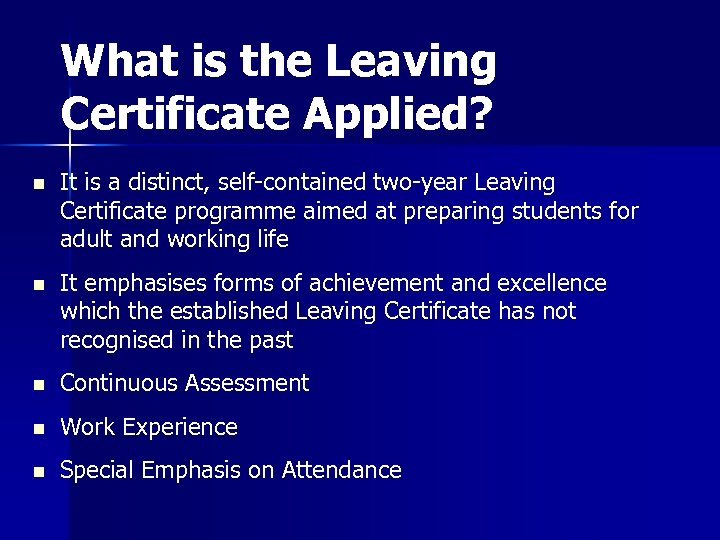
What is the Leaving Certificate Applied? n It is a distinct, self-contained two-year Leaving Certificate programme aimed at preparing students for adult and working life n It emphasises forms of achievement and excellence which the established Leaving Certificate has not recognised in the past n Continuous Assessment n Work Experience n Special Emphasis on Attendance
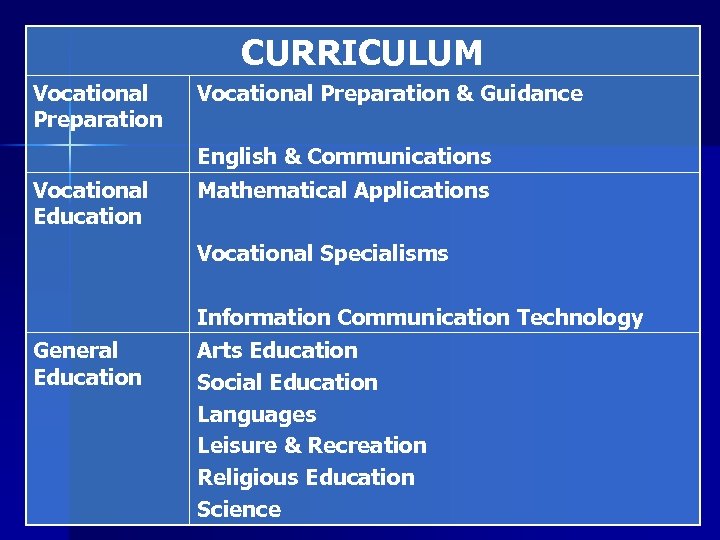
CURRICULUM Vocational Preparation & Guidance English & Communications Vocational Education Mathematical Applications Vocational Specialisms Information Communication Technology General Education Arts Education Social Education Languages Leisure & Recreation Religious Education Science
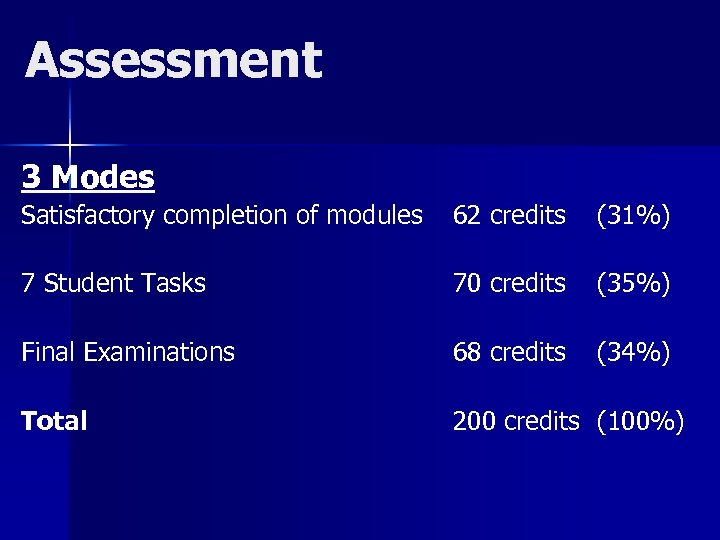
Assessment 3 Modes Satisfactory completion of modules 62 credits (31%) 7 Student Tasks 70 credits (35%) Final Examinations 68 credits (34%) Total 200 credits (100%)
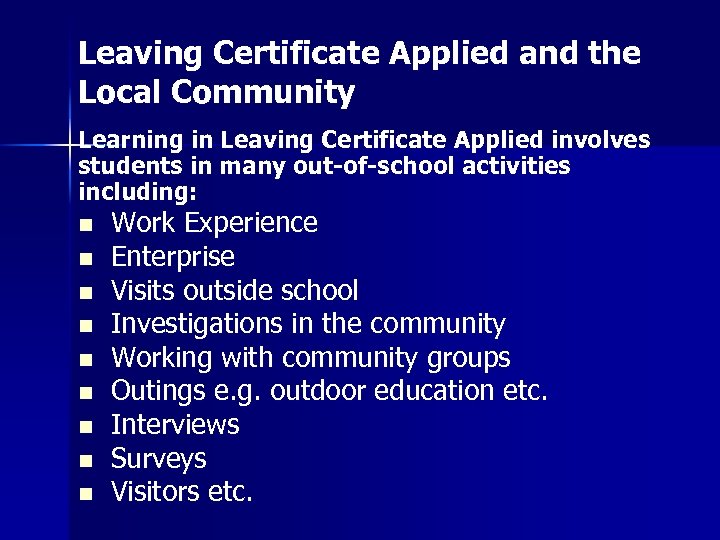
Leaving Certificate Applied and the Local Community Learning in Leaving Certificate Applied involves students in many out-of-school activities including: n Work Experience n Enterprise n Visits outside school n Investigations in the community n Working with community groups n Outings e. g. outdoor education etc. n Interviews n Surveys n Visitors etc.
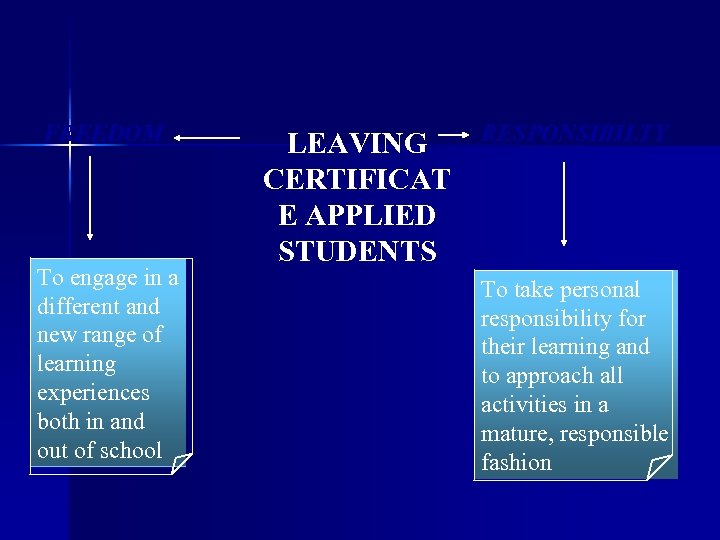
FREEDOM To engage in a different and new range of learning experiences both in and out of school LEAVING CERTIFICAT E APPLIED STUDENTS RESPONSIBILTY To take personal responsibility for their learning and to approach all activities in a mature, responsible fashion
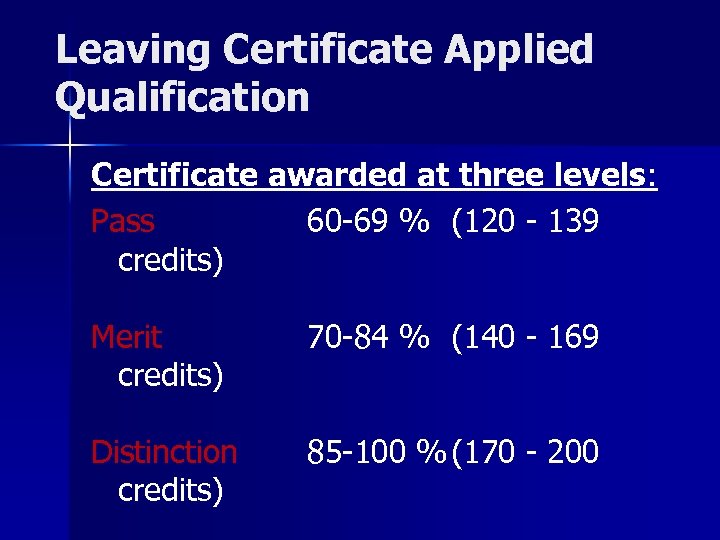
Leaving Certificate Applied Qualification Certificate awarded at three levels: Pass 60 -69 % (120 - 139 credits) Merit credits) 70 -84 % (140 - 169 Distinction credits) 85 -100 % (170 - 200
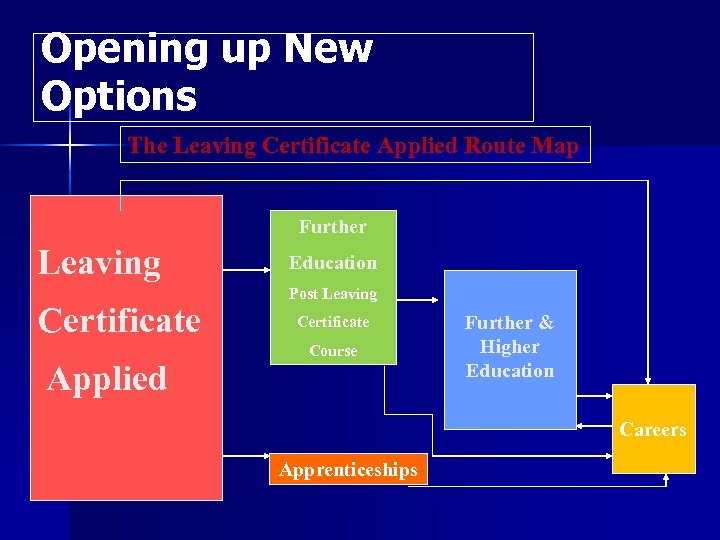
Opening up New Options The Leaving Certificate Applied Route Map Further Leaving Certificate Applied Education Post Leaving Certificate Course Further & Higher Education Careers Apprenticeships
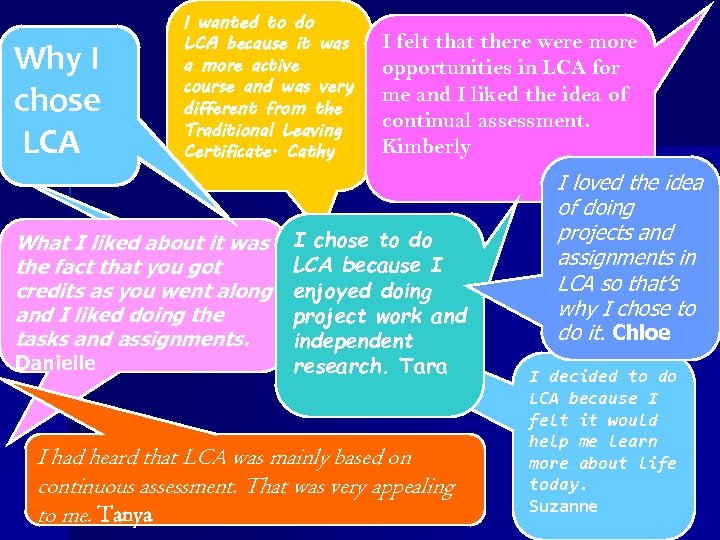
Why I chose LCA I wanted to do LCA because it was a more active course and was very different from the Traditional Leaving Certificate. Cathy What I liked about it was the fact that you got credits as you went along and I liked doing the tasks and assignments. Danielle I felt that there were more opportunities in LCA for me and I liked the idea of continual assessment. Kimberly I chose to do LCA because I enjoyed doing project work and independent research. Tara I had heard that LCA was mainly based on continuous assessment. That was very appealing to me. Tanya I loved the idea of doing projects and assignments in LCA so that’s why I chose to do it. Chloe I decided to do LCA because I felt it would help me learn more about life today. Suzanne
Traditional L Cert Considerations to follow: Subjects I need n Those I am good at and can get high points in n Those I like best n Avoid subjects I find difficult and am likely to fail n Be realistic - play to strengths n Follow advice of teacher n
What Choice of Subjects are available to me? n Compulsory subjects - (the core subjects): n Non-Exam Subjects: n Irish n Computers n English n P. E. n Maths n Guidance n Religion
What Choice of Subjects are available to me? n n n Third Language: French The Laboratory Sciences: Physics, Chemistry, Biology, Agricultural Science Applied Mathematics The Business Subjects: Accounting, Economics, Business The Arts / Humanities Subject Choice: History, Geography, Art, Music, Religious Education, Home Economics
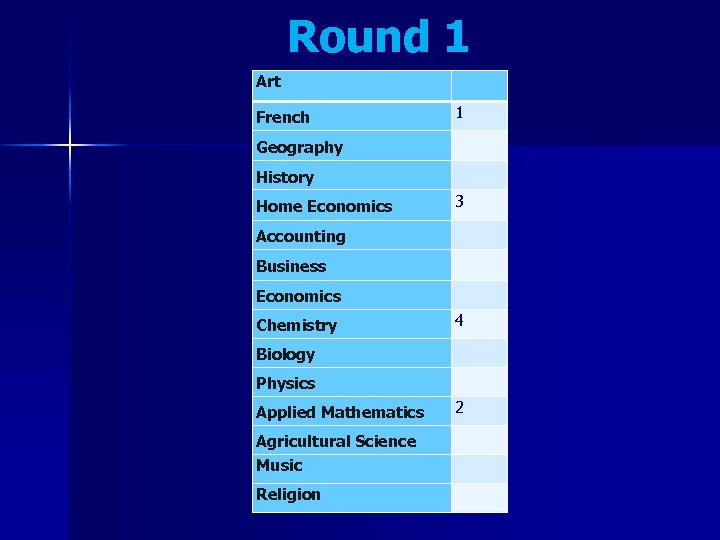
Round 1 Art French 1 Geography History Home Economics 3 Accounting Business Economics Chemistry 4 Biology Physics Applied Mathematics 2 Agricultural Science Music Religion
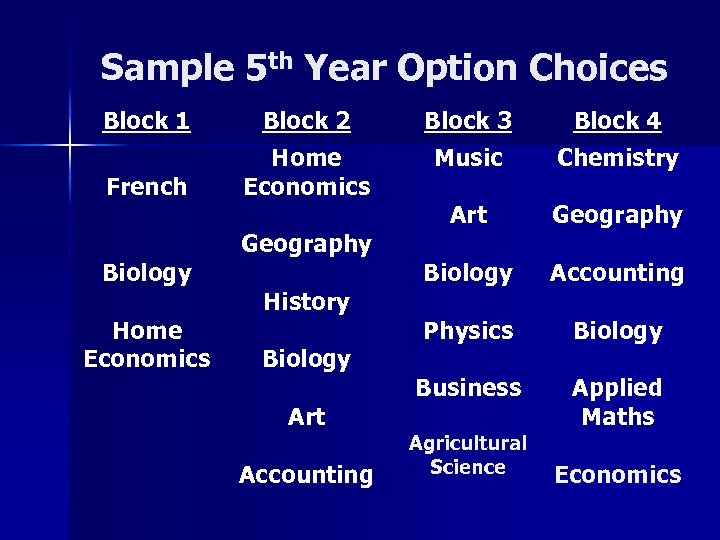
Sample 5 th Year Option Choices Block 1 Block 2 Block 3 Block 4 French Home Economics Music Chemistry Art Geography Biology Accounting Physics Biology Business Applied Maths Biology Home Economics Geography History Biology Art Accounting Agricultural Science Economics
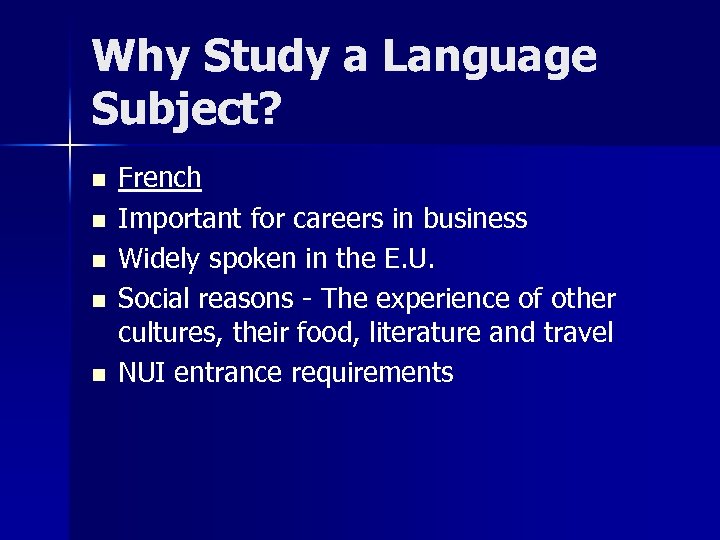
Why Study a Language Subject? n n n French Important for careers in business Widely spoken in the E. U. Social reasons - The experience of other cultures, their food, literature and travel NUI entrance requirements
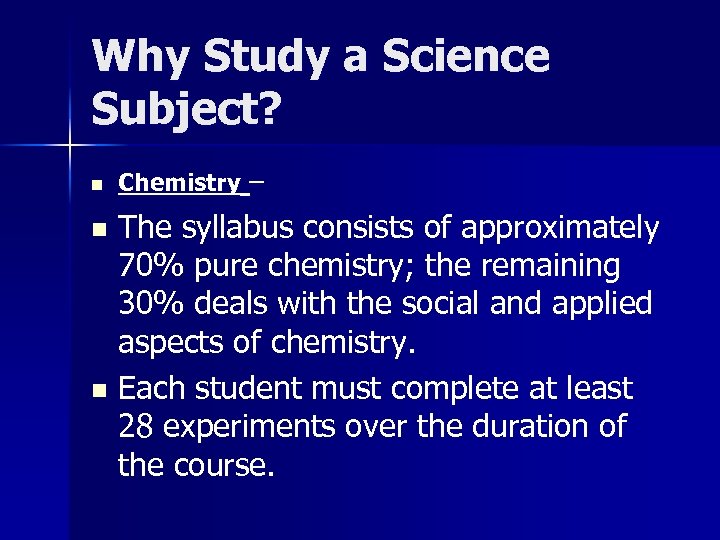
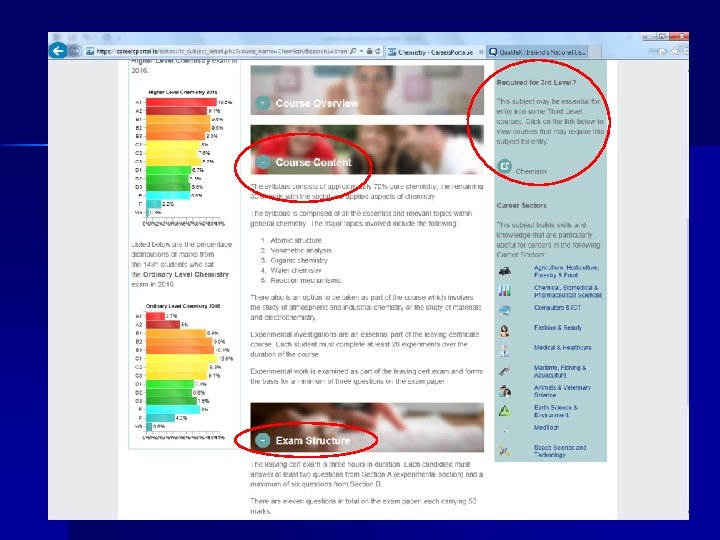
Why Study a Science Subject? n n n Chemistry – The syllabus consists of approximately 70% pure chemistry; the remaining 30% deals with the social and applied aspects of chemistry. Each student must complete at least 28 experiments over the duration of the course.
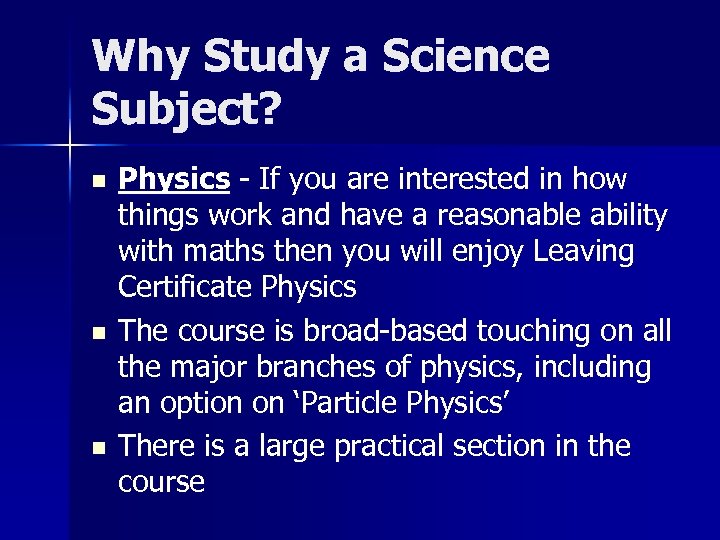
Why Study a Science Subject? n n n Physics - If you are interested in how things work and have a reasonable ability with maths then you will enjoy Leaving Certificate Physics The course is broad-based touching on all the major branches of physics, including an option on ‘Particle Physics’ There is a large practical section in the course
Why Study a Science Subject? n n n Biology - If you are intending to study medical or paramedical course at third level you should take Biology places a great emphasis on practical work which gives a much better understanding of the subject Topics such as asthma, heart disease and other areas are covered in the syllabus making it relevant to everyday life
Agricultural Science ■ Written Paper 75% – Plant science – Farm crops (barley, maize, potatoes etc) – Grassland – Tree and shelter – Genetics – Animal Science – Soil, soil structure and fertilizers – Cows, sheep, pigs and poultry. ■ Oral exam/ Project/Experiments 25% – Farm building – Farm house environment – Identification of plants and animals – Practical experience with crops, livestock and farmland layout. – Experiments.
Applied Mathematics n n What is Applied Maths? It is the solving of real-life problems using mathematics. It overlaps the higher level maths and physics courses. If you are interested in a Career that requires logical thought and analysis e. g Science, Engineering, Medicine, Forensic Science, Design, Environmental Studies etc Applied Maths would be of great benefit. Topics covered in Applied Maths: – Uniform Acceleration – Ballistics – Simple machines – Collisions/Momentum – Relative Velocity – Simple Harmonic Motion If you want to know the Mathematics/ Mechanics behind how things work Applied Maths could be for you.
Science Essential for the following Career areas l SCIENCE l ARCHITECTURE l ENGINEERING l OCCUP. THERAPY l MEDICINE l SPEECH THERAPY l DENTISTRY l SPORTS SCIENCE l VETERINARY l MED LAB SCIENCE l PHARMACY l DIETETICS l PHYSIOTHERAPY l OPTOMETRY l RADIOGRAPHY l NURSING l HUMAN NUTRITION
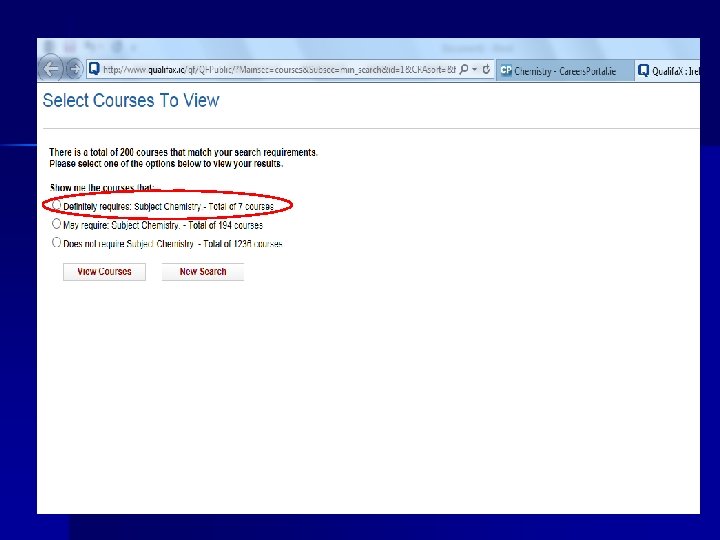
Chemistry l PHARMACY l VETERINARY l MEDICINE l DENTISTRY l HUMAN NUTRITION
Why Study a Business Subject? n n n Business - Because you have a real interest in pursuing a career in this area Broad ranging subject Part of everyday life Interest in management and enterprise Practical Element: Setting up and running a business
Why Study a Business Subject? Accounting - Study Accounting if you have: Good numerical skills and good powers of analysis n Good logical mind an ability to manipulate figures n Practical subject n Enjoyed accounts in Junior Cycle such as Budgets, Cashbooks etc. n
Why Study a Business Subject? n n Economics - We are exposed to the world of economics everyday Leaving Certificate Economics deal with two main areas: Macro Economics and Micro Economics The course provides a general view of national and international economies, how they work and how they inter-relate Economics at third level appears in a lot of courses, Arts, Management, Engineering etc.
Why Study an Arts/Humanities Subject? n v v Home Economics (Scientific and Social) Food and Nutrition Resource Management and Consumer Studies Social Studies Journal – 20% of overall marks Completed in 5 th year
Why Study an Arts/Humanities Subject? n n n History – The updated syllabus is now in it’s 5 th year Helps students develop skills of research, note taking, in-depth reading, report writing - useful in many careers Document-based questions develop skills of comprehension, comparison and contextualising the sources
Why Study an Arts/Humanities Subject? Art – Key areas include: Drawing/ Print, Painting/ Graphics, Art History and Sculpture n Appreciation of visual and creative arts n Self-development – personal and artistic development through practical work n Many career options in the art area n
Why Study an Arts/Humanities Subject? n n n Religious Studies - More in-depth study of Junior Certificate topics Challenging, engaging and diverse Variety of disciplines - Theology, Philosophy and Scripture Course work project 20% of final mark! Equal recognition with other Leaving Certificate subjects for third level
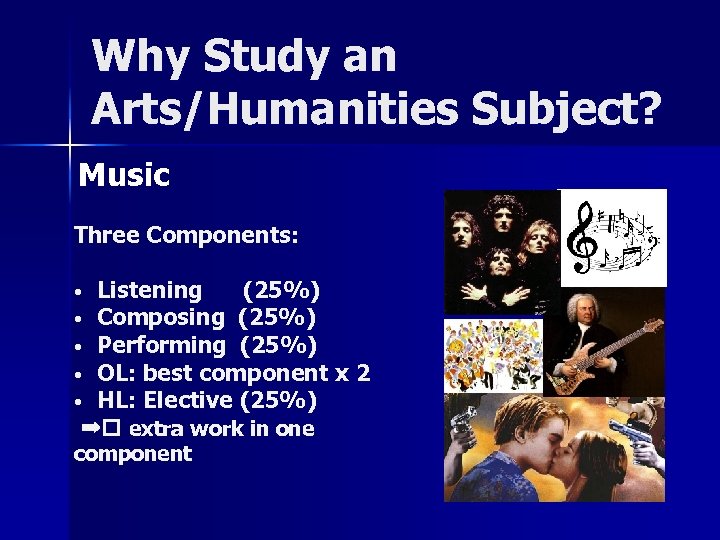
Why Study an Arts/Humanities Subject? Music Three Components: • • • Listening (25%) Composing (25%) Performing (25%) OL: best component x 2 HL: Elective (25%) ➡ extra work in one component
Why Study an Arts/Humanities Subject? Geography n It engages students in the issues of their local environment and extends them in an understanding of a wider complex world n It encourages students to question, evaluate and investigate n It encourages positive attitudes towards cultural diversity n Field work project 20% of the final mark
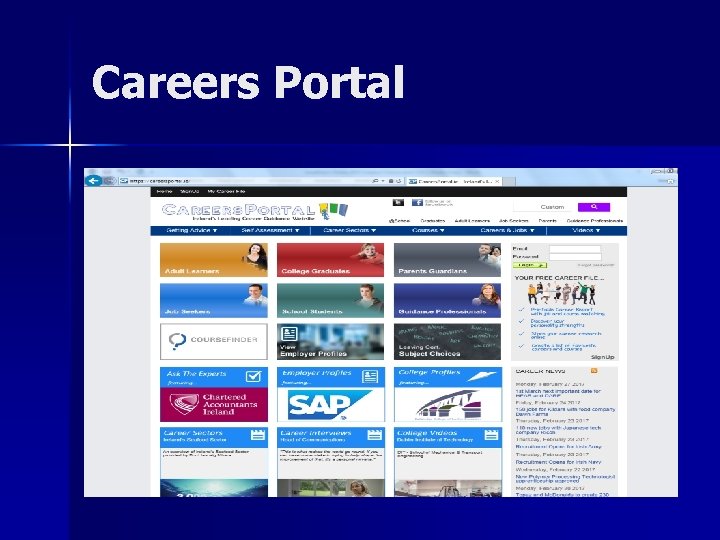
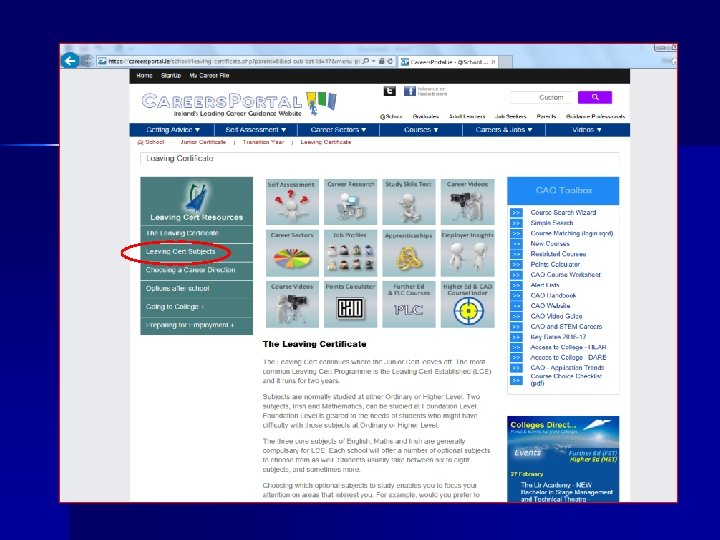
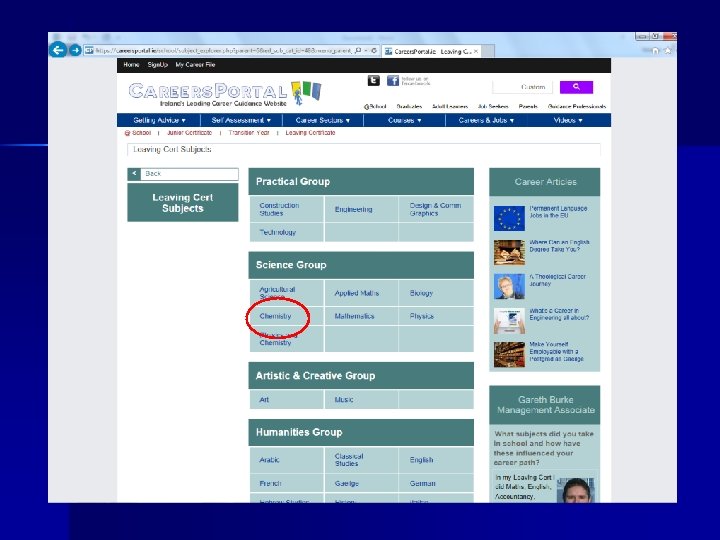
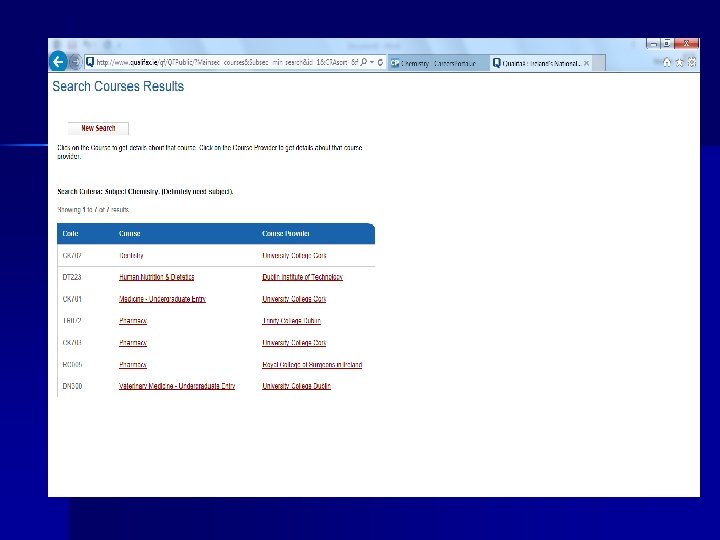
Careers Portal
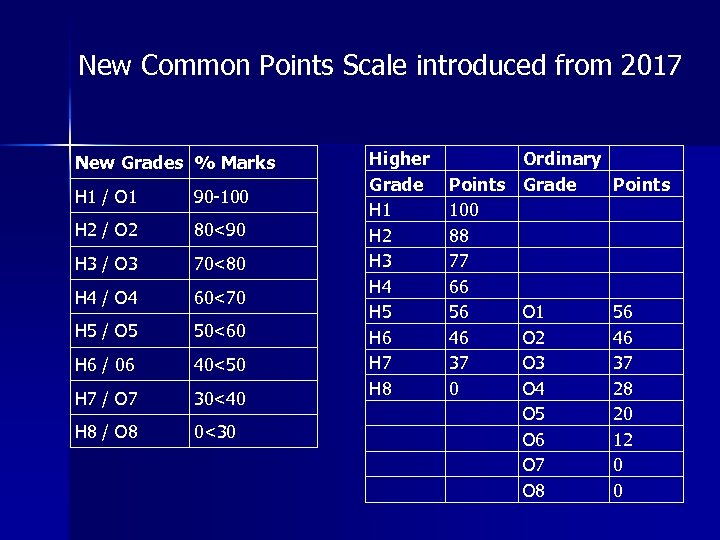
New Common Points Scale introduced from 2017 New Grades % Marks H 1 / O 1 90 -100 H 2 / O 2 80<90 H 3 / O 3 70<80 H 4 / O 4 60<70 H 5 / O 5 50<60 H 6 / 06 40<50 H 7 / O 7 30<40 H 8 / O 8 0<30 Higher Grade H 1 H 2 H 3 H 4 H 5 H 6 H 7 H 8 Points 100 88 77 66 56 46 37 0 Ordinary Grade O 1 O 2 O 3 O 4 O 5 O 6 O 7 O 8 Points 56 46 37 28 20 12 0 0
Senior Cycle Guidance 1 Class per week in 5 th Year n 1 Class per week in 6 th Year n Individual Career Counselling (on request) n Computer Room Access - On-line Applications n
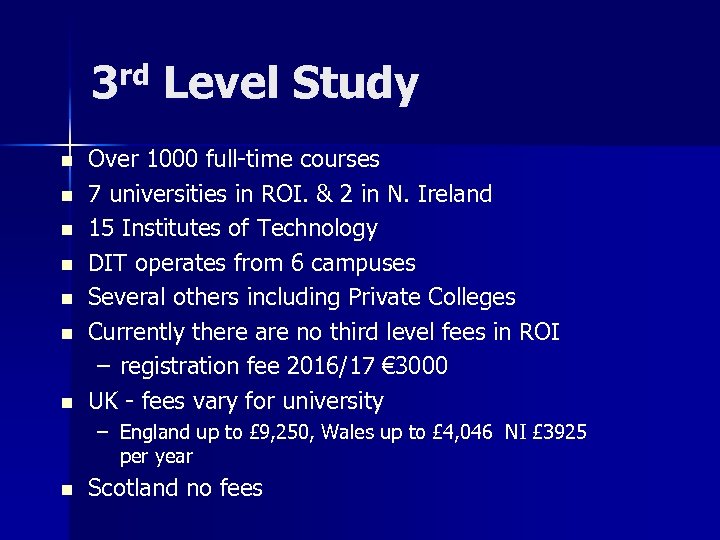
3 rd Level Study n n n n Over 1000 full-time courses 7 universities in ROI. & 2 in N. Ireland 15 Institutes of Technology DIT operates from 6 campuses Several others including Private Colleges Currently there are no third level fees in ROI – registration fee 2016/17 € 3000 UK - fees vary for university – England up to £ 9, 250, Wales up to £ 4, 046 NI £ 3925 per year n Scotland no fees
Admission Requirements Age - 17 yrs by the 1 st January of year following entry n Residential status / Education n Specific Subjects & Grades n Points n Entry requirements n

CAT Verbal Reasoning - thinking with words Leaving Cert Subjects that benefit most from high scores in this area are: English, History, Geography and Languages. Quantitative (Numerical) Ability - thinking with numbers Leaving Cert Subjects that benefit most from high scores: Maths, Physics, Chemistry, Applied Maths, Accounting.
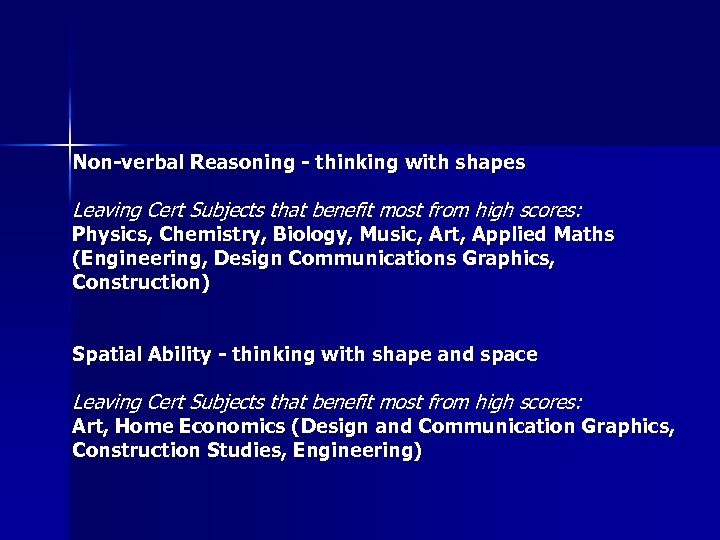
Non-verbal Reasoning - thinking with shapes Leaving Cert Subjects that benefit most from high scores: Physics, Chemistry, Biology, Music, Art, Applied Maths (Engineering, Design Communications Graphics, Construction) Spatial Ability - thinking with shape and space Leaving Cert Subjects that benefit most from high scores: Art, Home Economics (Design and Communication Graphics, Construction Studies, Engineering)
Remember to focus on the subjects: The subjects I need n The subjects I am good at and can get high points in n The subjects I like best n Avoid subjects I find difficult and am likely to fail n Be realistic - play to strengths n Follow advice of Teacher n
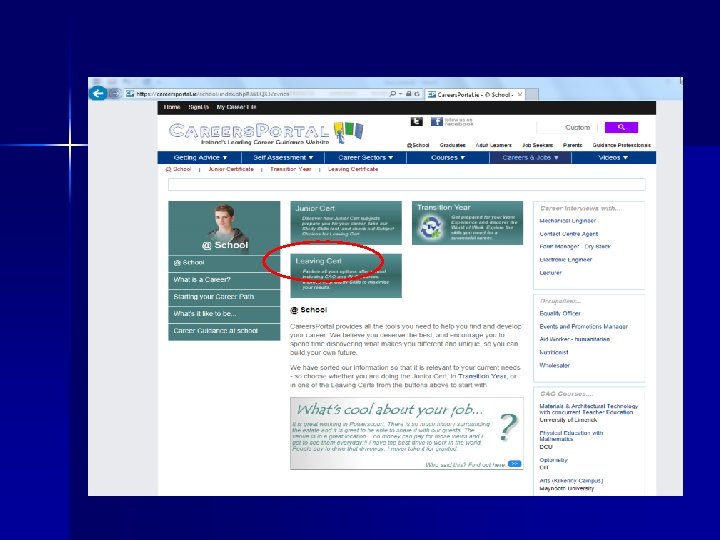
Contacting us and useful web addresses. Ms Cora Rice/ Ms Lorraine Moran/ Ms Kathleen Riley 9332790 extension 211 CR and 212 LM n www. cao. ie n www. ucas. com n www. qualifax. ie n www. careersportal. ie n www. des. ie n
Скачать презентацию Subject Choice Evening 28 th February 2017 St
b9f94ce6917f3ff92c114ddcce5d0c20.ppt