 Скачать презентацию Subgrade Soil Support and Stabilization O HARE Airport Modernization
c5a8299ec7ad21d6409027cd97c0325e.ppt
- Количество слайдов: 51



Subgrade Soil Support and Stabilization O’HARE Airport Modernization Research Project Research Progress Presentation – January 12, 2006 Co-PIs: RA: Erol Tutumluer Marshall R. Thompson H. S. Brar
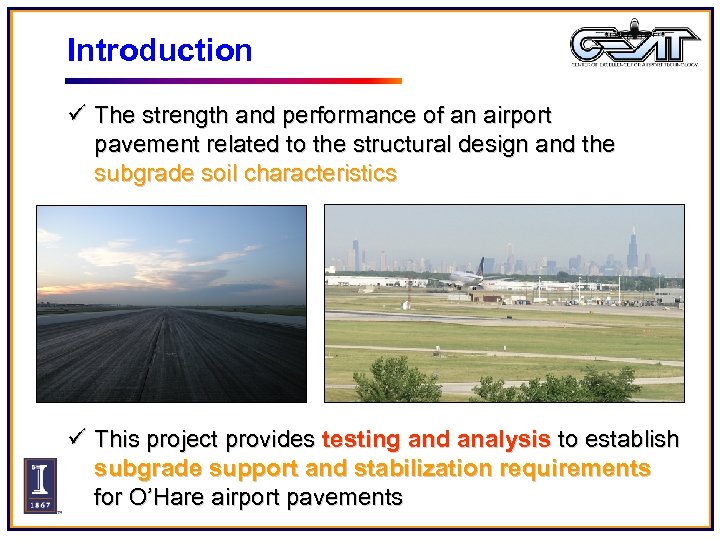
Introduction ü The strength and performance of an airport pavement related to the structural design and the subgrade soil characteristics ü This project provides testing and analysis to establish subgrade support and stabilization requirements for O’Hare airport pavements
Introduction (cont’d) ü The preliminary concrete pavement design for the O’Hare Modernization Program (OMP): • • • 15 – 17 inches of PCC Surface 6 -inch Hot Mix Asphalt Base 6 -inch Asphalt Treated Permeable Base (!? ) “Stabilized” Subgrade Zone (SSZ) Prepared Subgrade ü North Runway (9 L-27 R, 7, 500 ft) paving is scheduled first for the Spring 2006 • Stockpiles of local soil on runway centerline (excavated from the “Deep Pond” nearby) • Primarily fill and cut areas
Research Objectives ü Consider pavement design inputs for subgrade support • Modulus of subgrade reaction, k ü Consider/Establish subgrade support and stabilization requirements with respect to: • Need for subgrade stabilization • Selection of lime and other suitable admixture stabilization considerations • Stabilization depth ü Estimate “subgrade support” for various combinations of subgrade stabilization treatments and prepared subgrade conditions
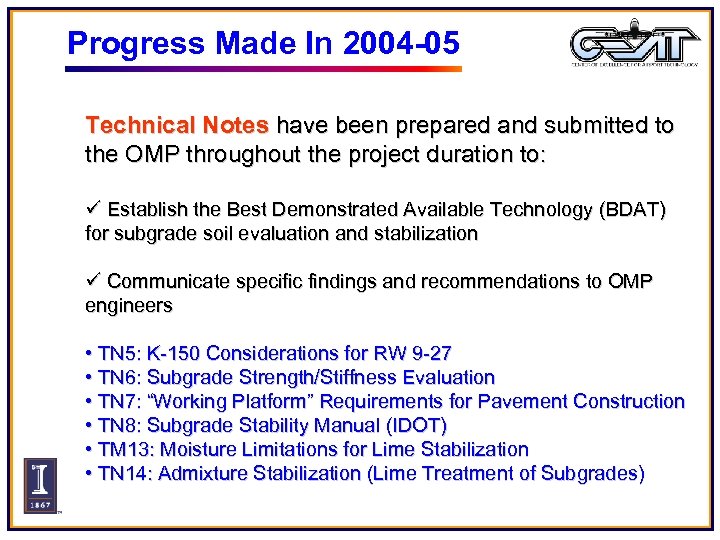
Progress Made In 2004 -05 Technical Notes have been prepared and submitted to the OMP throughout the project duration to: ü Establish the Best Demonstrated Available Technology (BDAT) for subgrade soil evaluation and stabilization ü Communicate specific findings and recommendations to OMP engineers • TN 5: K-150 Considerations for RW 9 -27 • TN 6: Subgrade Strength/Stiffness Evaluation • TN 7: “Working Platform” Requirements for Pavement Construction • TN 8: Subgrade Stability Manual (IDOT) • TM 13: Moisture Limitations for Lime Stabilization • TN 14: Admixture Stabilization (Lime Treatment of Subgrades)
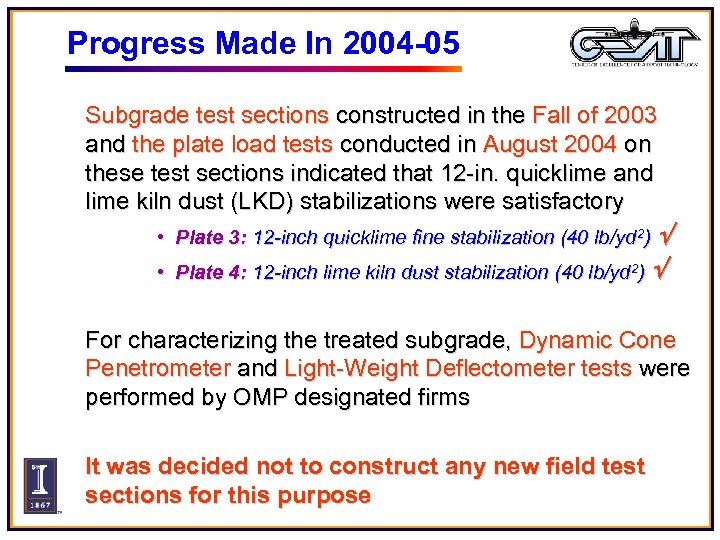
Progress Made In 2004 -05 Subgrade test sections constructed in the Fall of 2003 and the plate load tests conducted in August 2004 on these test sections indicated that 12 -in. quicklime and lime kiln dust (LKD) stabilizations were satisfactory • Plate 3: 12 -inch quicklime fine stabilization (40 lb/yd 2) • Plate 4: 12 -inch lime kiln dust stabilization (40 lb/yd 2) For characterizing the treated subgrade, Dynamic Cone Penetrometer and Light-Weight Deflectometer tests were performed by OMP designated firms It was decided not to construct any new field test sections for this purpose
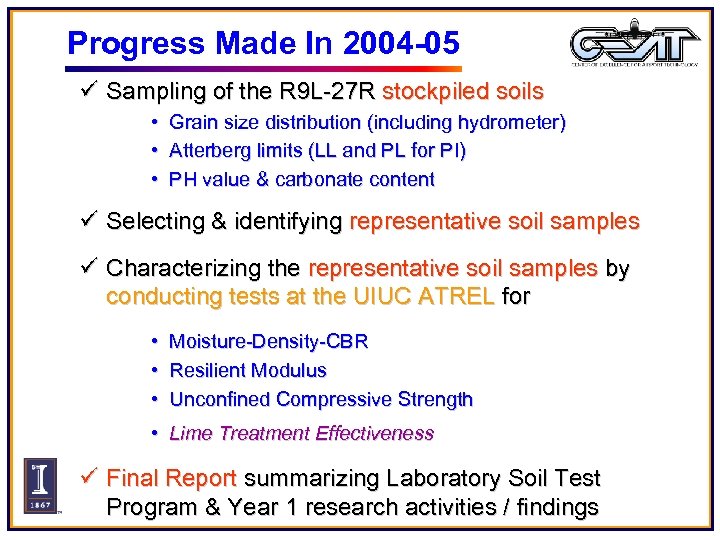
Progress Made In 2004 -05 ü Sampling of the R 9 L-27 R stockpiled soils • Grain size distribution (including hydrometer) • Atterberg limits (LL and PL for PI) • PH value & carbonate content ü Selecting & identifying representative soil samples ü Characterizing the representative soil samples by conducting tests at the UIUC ATREL for • Moisture-Density-CBR • Resilient Modulus • Unconfined Compressive Strength • Lime Treatment Effectiveness ü Final Report summarizing Laboratory Soil Test Program & Year 1 research activities / findings
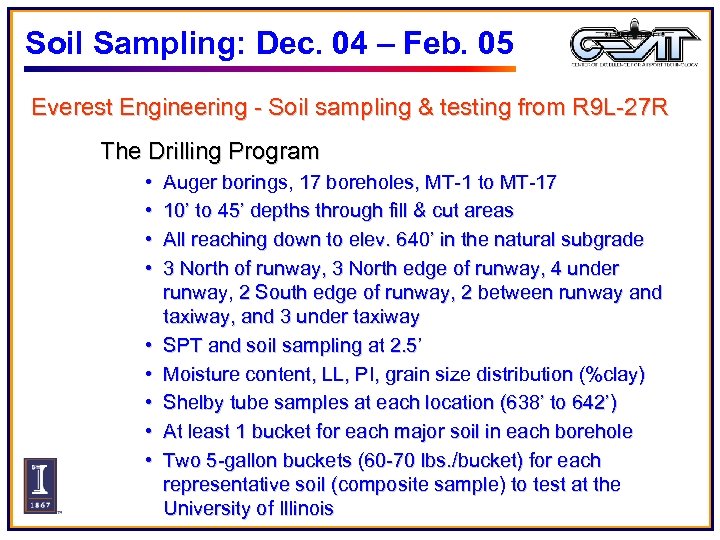
Soil Sampling: Dec. 04 – Feb. 05 Everest Engineering - Soil sampling & testing from R 9 L-27 R The Drilling Program • • • Auger borings, 17 boreholes, MT-1 to MT-17 10’ to 45’ depths through fill & cut areas All reaching down to elev. 640’ in the natural subgrade 3 North of runway, 3 North edge of runway, 4 under runway, 2 South edge of runway, 2 between runway and taxiway, and 3 under taxiway SPT and soil sampling at 2. 5’ Moisture content, LL, PI, grain size distribution (%clay) Shelby tube samples at each location (638’ to 642’) At least 1 bucket for each major soil in each borehole Two 5 -gallon buckets (60 -70 lbs. /bucket) for each representative soil (composite sample) to test at the University of Illinois
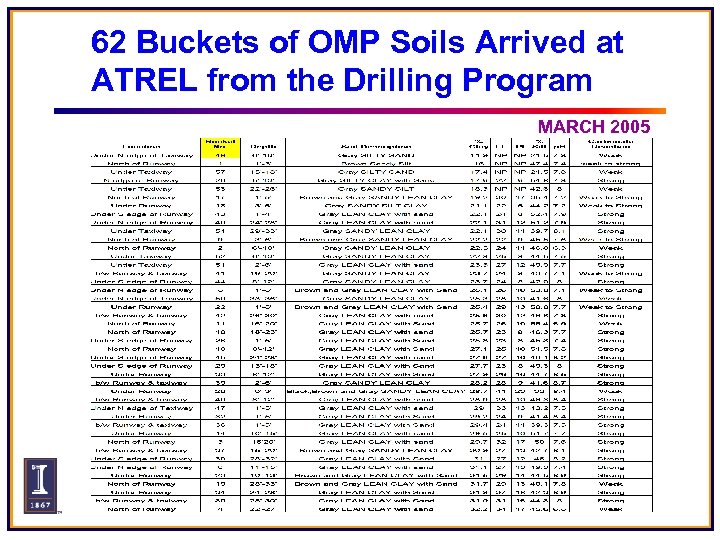
62 Buckets of OMP Soils Arrived at ATREL from the Drilling Program MARCH 2005
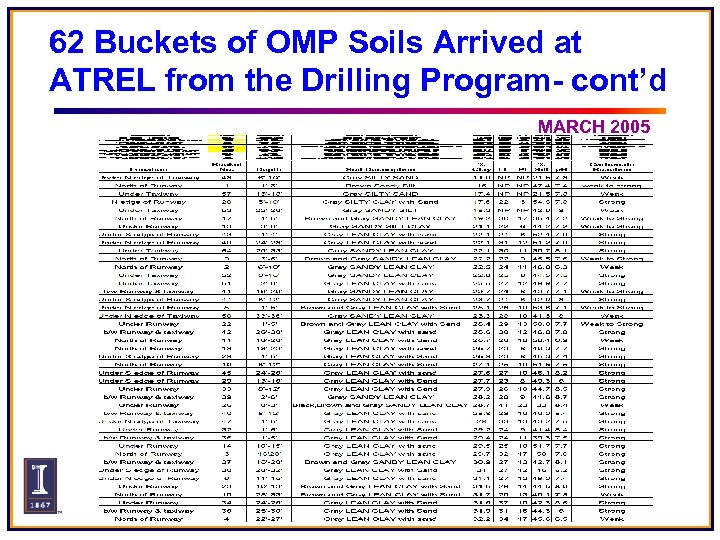
62 Buckets of OMP Soils Arrived at ATREL from the Drilling Program- cont’d MARCH 2005
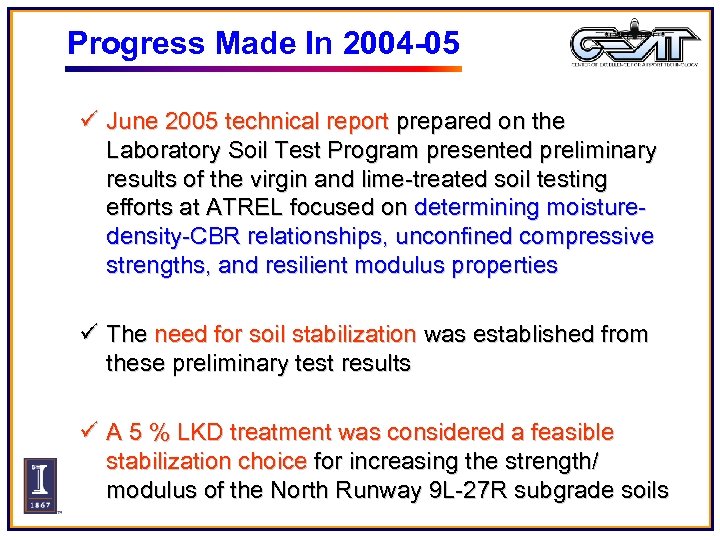
Progress Made In 2004 -05 ü June 2005 technical report prepared on the Laboratory Soil Test Program presented preliminary results of the virgin and lime-treated soil testing efforts at ATREL focused on determining moisturedensity-CBR relationships, unconfined compressive strengths, and resilient modulus properties ü The need for soil stabilization was established from these preliminary test results ü A 5 % LKD treatment was considered a feasible stabilization choice for increasing the strength/ modulus of the North Runway 9 L-27 R subgrade soils
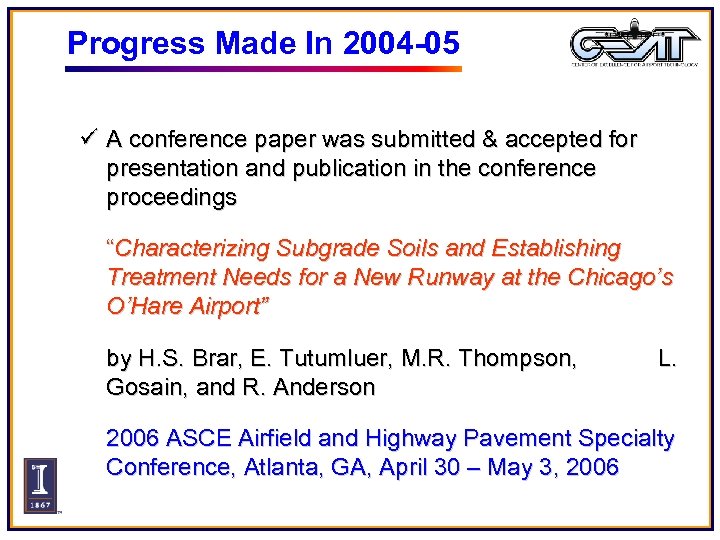
Progress Made In 2004 -05 ü A conference paper was submitted & accepted for presentation and publication in the conference proceedings “Characterizing Subgrade Soils and Establishing Treatment Needs for a New Runway at the Chicago’s O’Hare Airport” by H. S. Brar, E. Tutumluer, M. R. Thompson, Gosain, and R. Anderson L. 2006 ASCE Airfield and Highway Pavement Specialty Conference, Atlanta, GA, April 30 – May 3, 2006
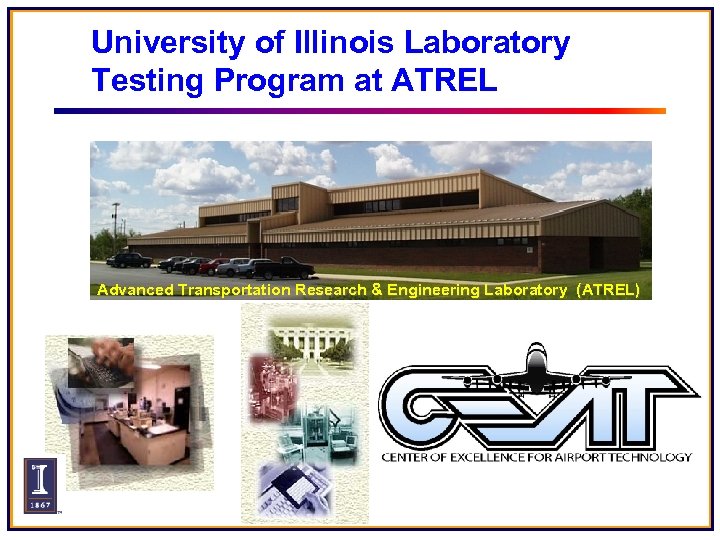
University of Illinois Laboratory Testing Program at ATREL Advanced Transportation Research & Engineering Laboratory (ATREL)
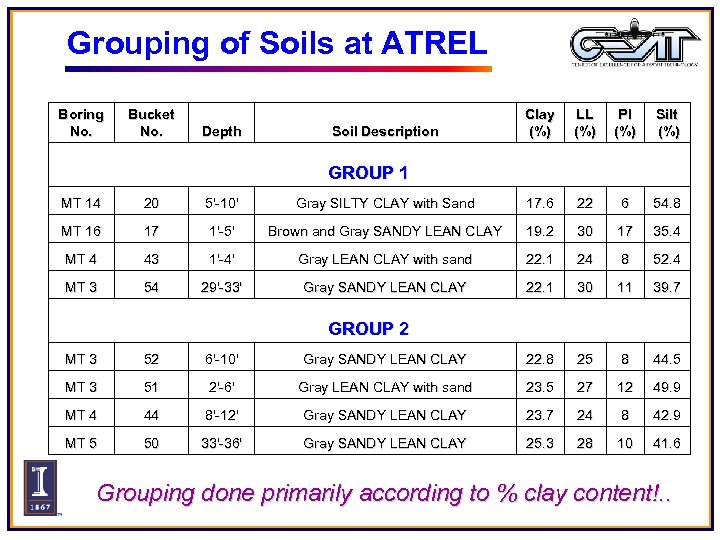
Grouping of Soils at ATREL Boring No. Bucket No. Depth Soil Description Clay (%) LL (%) PI (%) Silt (%) GROUP 1 MT 14 20 5'-10' Gray SILTY CLAY with Sand 17. 6 22 6 54. 8 MT 16 17 1'-5' Brown and Gray SANDY LEAN CLAY 19. 2 30 17 35. 4 MT 4 43 1'-4' Gray LEAN CLAY with sand 22. 1 24 8 52. 4 MT 3 54 29'-33' Gray SANDY LEAN CLAY 22. 1 30 11 39. 7 GROUP 2 MT 3 52 6'-10' Gray SANDY LEAN CLAY 22. 8 25 8 44. 5 MT 3 51 2'-6' Gray LEAN CLAY with sand 23. 5 27 12 49. 9 MT 4 44 8'-12' Gray SANDY LEAN CLAY 23. 7 24 8 42. 9 MT 5 50 33'-36' Gray SANDY LEAN CLAY 25. 3 28 10 41. 6 Grouping done primarily according to % clay content!. .
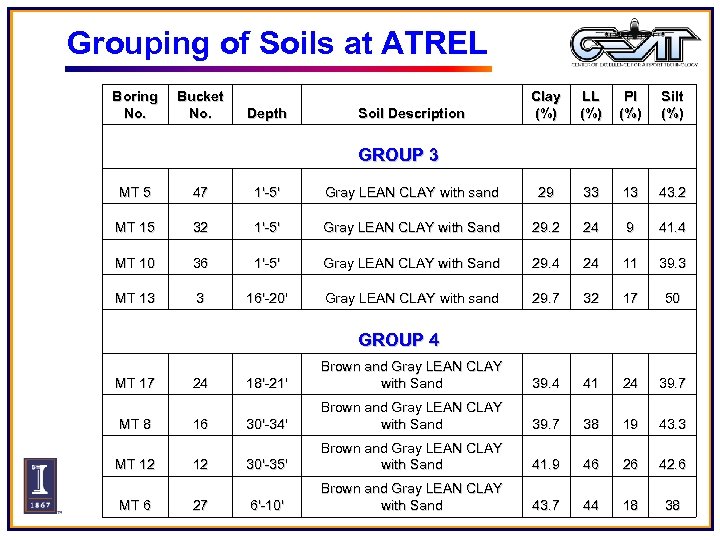
Grouping of Soils at ATREL Boring No. Bucket No. Depth Soil Description Clay (%) LL (%) PI (%) Silt (%) GROUP 3 MT 5 47 1'-5' Gray LEAN CLAY with sand 29 33 13 43. 2 MT 15 32 1'-5' Gray LEAN CLAY with Sand 29. 2 24 9 41. 4 MT 10 36 1'-5' Gray LEAN CLAY with Sand 29. 4 24 11 39. 3 MT 13 3 16'-20' Gray LEAN CLAY with sand 29. 7 32 17 50 18'-21' Brown and Gray LEAN CLAY with Sand 39. 4 41 24 39. 7 30'-34' Brown and Gray LEAN CLAY with Sand 39. 7 38 19 43. 3 30'-35' Brown and Gray LEAN CLAY with Sand 41. 9 46 26 42. 6 6'-10' Brown and Gray LEAN CLAY with Sand 43. 7 44 18 38 GROUP 4 MT 17 MT 8 MT 12 MT 6 24 16 12 27
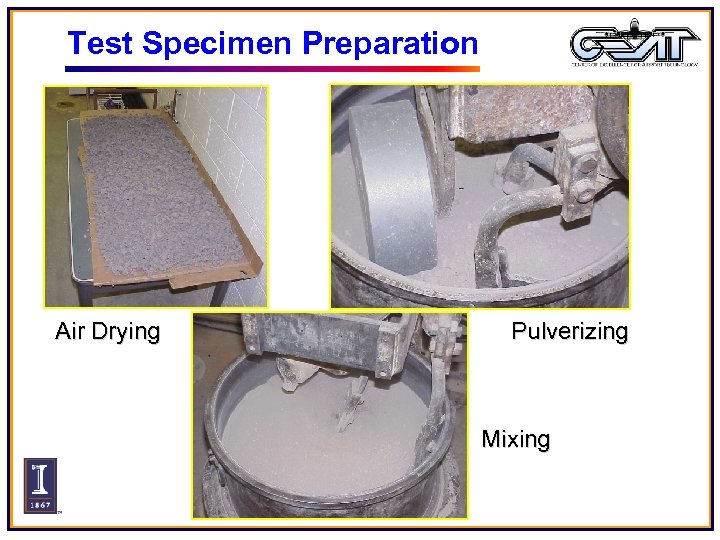
Test Specimen Preparation Air Drying Pulverizing Mixing
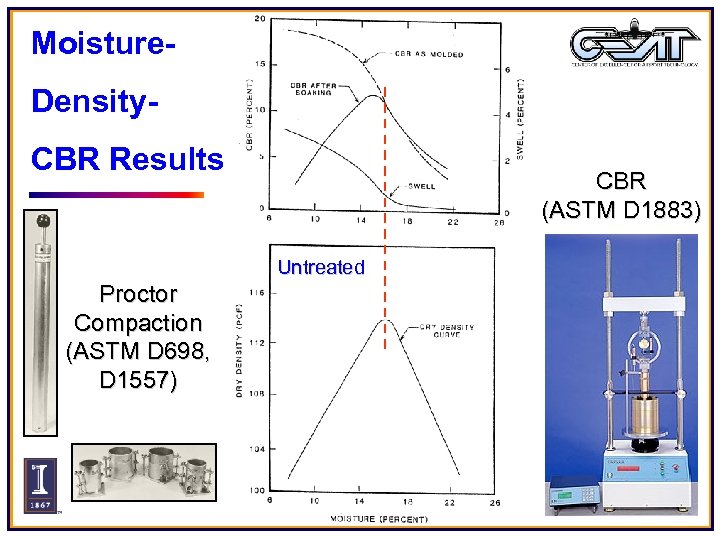
Moisture. Density. CBR Results CBR (ASTM D 1883) Untreated Proctor Compaction (ASTM D 698, D 1557)
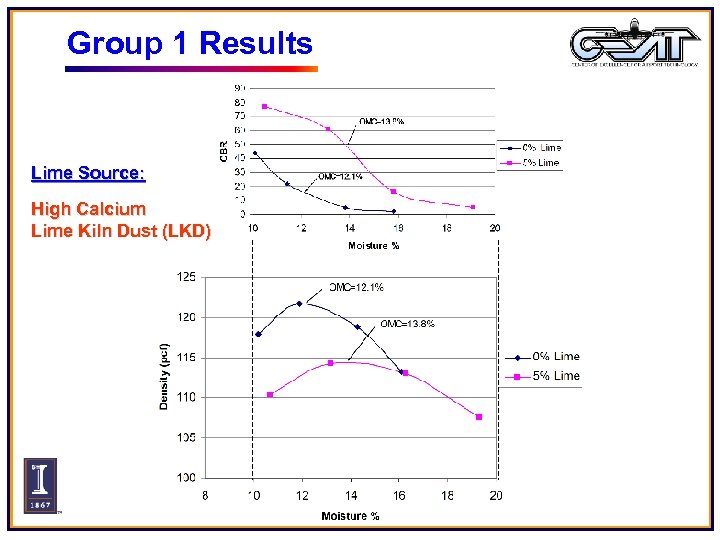
Group 1 Results Lime Source: High Calcium Lime Kiln Dust (LKD)
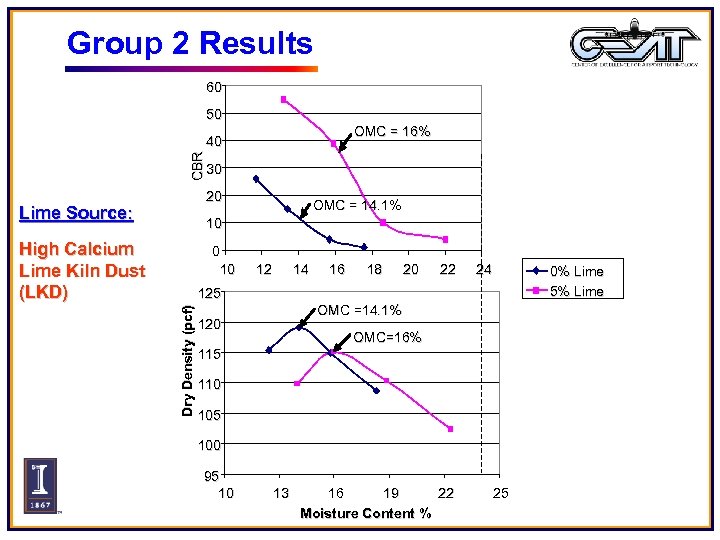
Group 2 Results 60 50 OMC = 16% CBR 40 30 20 Lime Source: OMC = 14. 1% 10 High Calcium Lime Kiln Dust (LKD) 0 10 12 14 16 18 20 22 24 0% Lime 5% Lime Dry Density (pcf) 125 OMC =14. 1% 120 OMC=16% 115 110 105 100 95 10 13 16 19 22 Moisture Content % 25
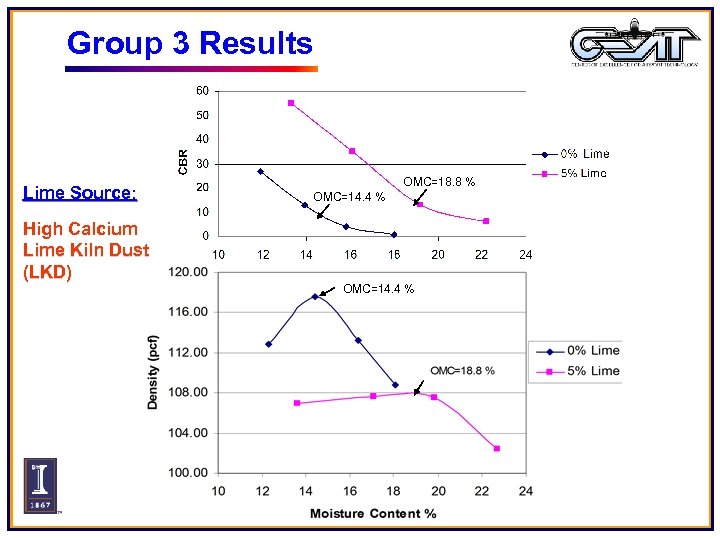
Group 3 Results Lime Source: High Calcium Lime Kiln Dust (LKD) OMC=18. 8 % OMC=14. 4 %
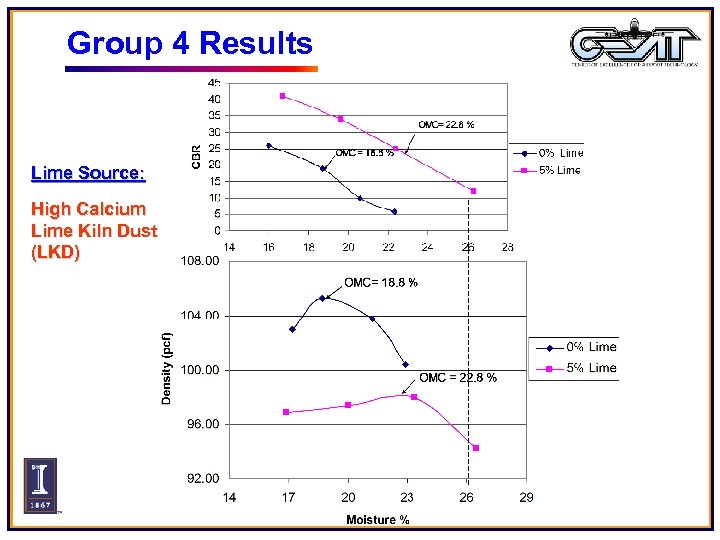
Group 4 Results Lime Source: High Calcium Lime Kiln Dust (LKD)
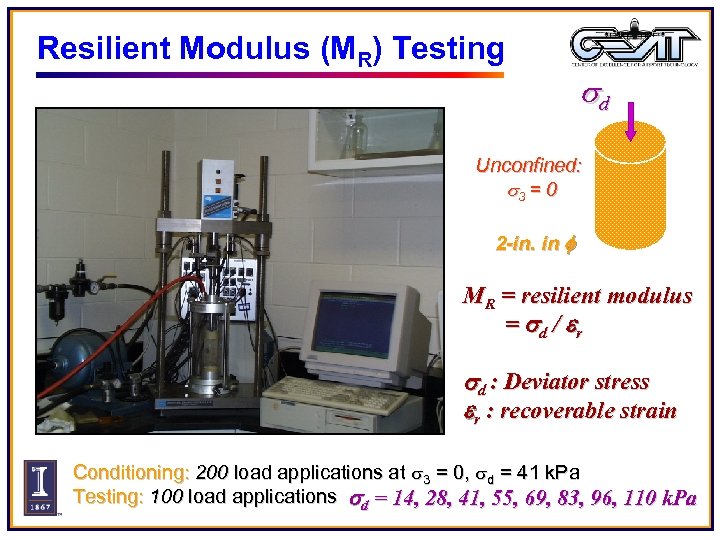
Resilient Modulus (MR) Testing sd Unconfined: s 3 = 0 2 -in. in f MR = resilient modulus = sd / e r sd : Deviator stress er : recoverable strain Conditioning: 200 load applications at s 3 = 0, sd = 41 k. Pa Testing: 100 load applications sd = 14, 28, 41, 55, 69, 83, 96, 110 k. Pa
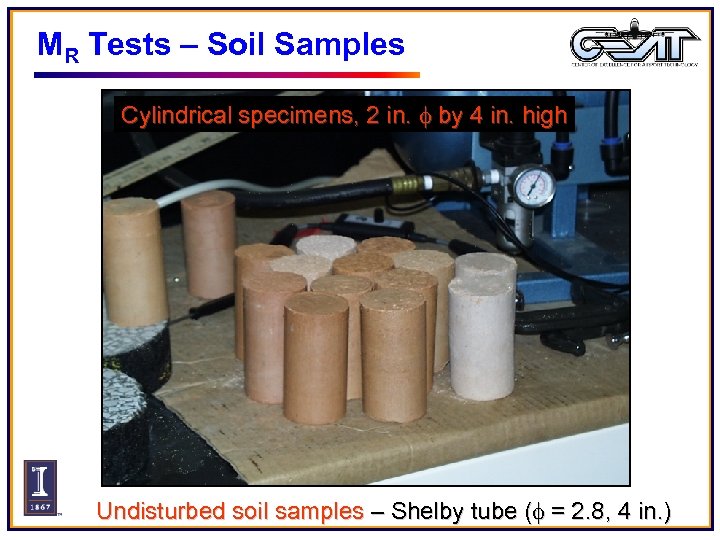
MR Tests – Soil Samples Cylindrical specimens, 2 in. f by 4 in. high Undisturbed soil samples – Shelby tube (f = 2. 8, 4 in. )
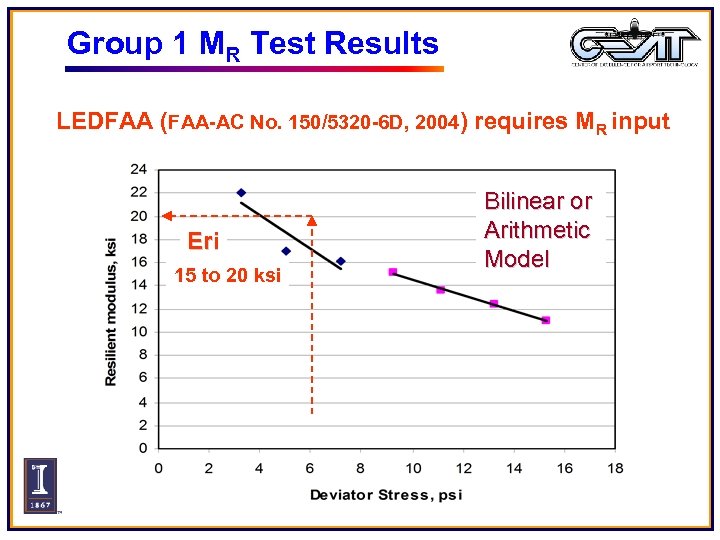
Group 1 MR Test Results LEDFAA (FAA-AC No. 150/5320 -6 D, 2004) requires MR input Eri 15 to 20 ksi Bilinear or Arithmetic Model
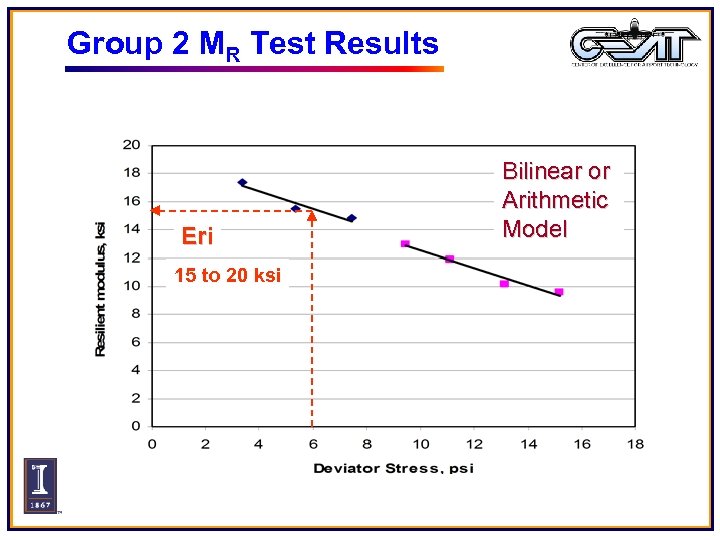
Group 2 MR Test Results Eri 15 to 20 ksi Bilinear or Arithmetic Model
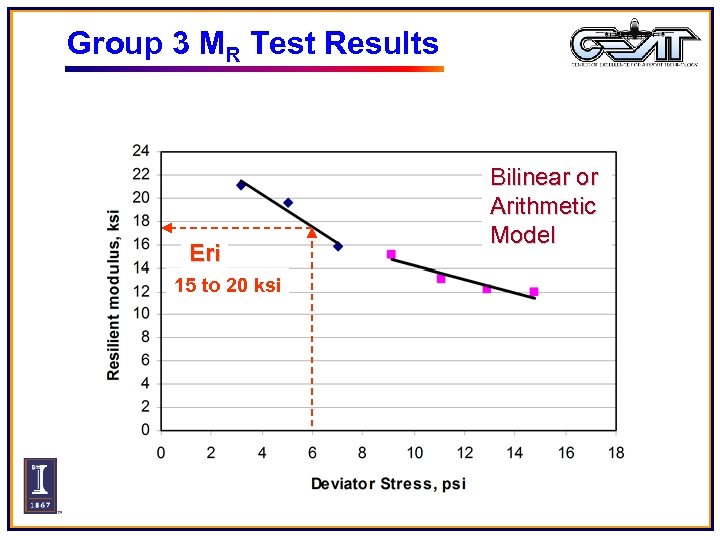
Group 3 MR Test Results Eri 15 to 20 ksi Bilinear or Arithmetic Model
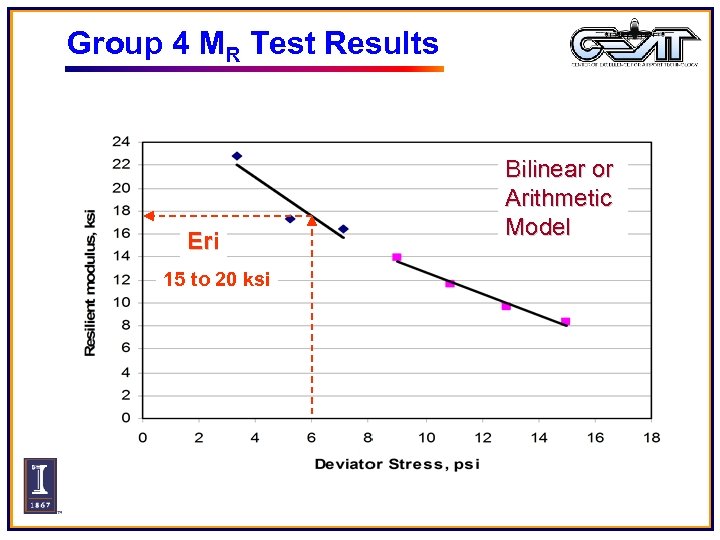
Group 4 MR Test Results Eri 15 to 20 ksi Bilinear or Arithmetic Model
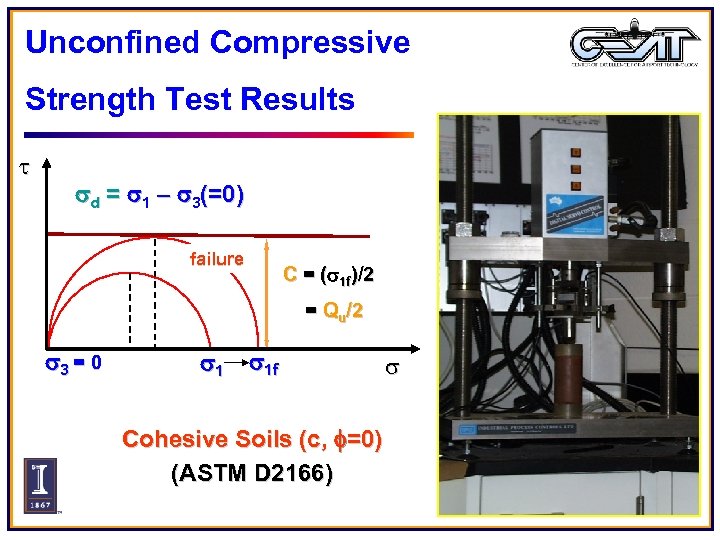
Unconfined Compressive Strength Test Results t sd = s 1 – s 3(=0) failure C = (s 1 f)/2 = Qu/2 s 3 = 0 s 1 f Cohesive Soils (c, f=0) (ASTM D 2166) s
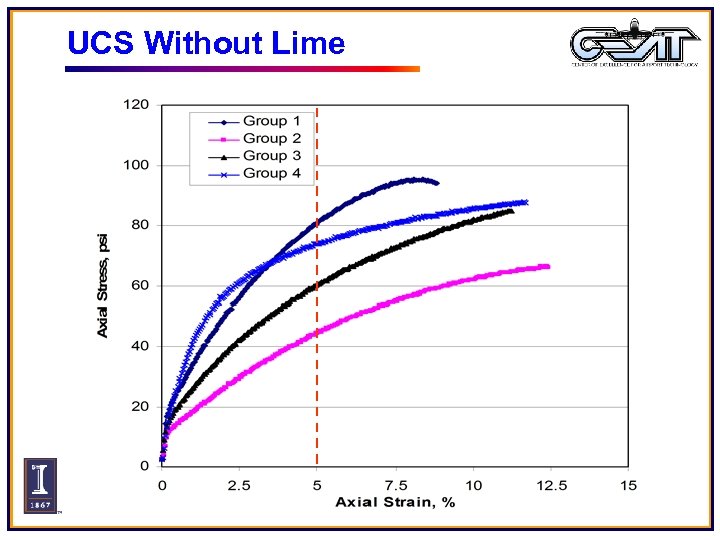
UCS Without Lime
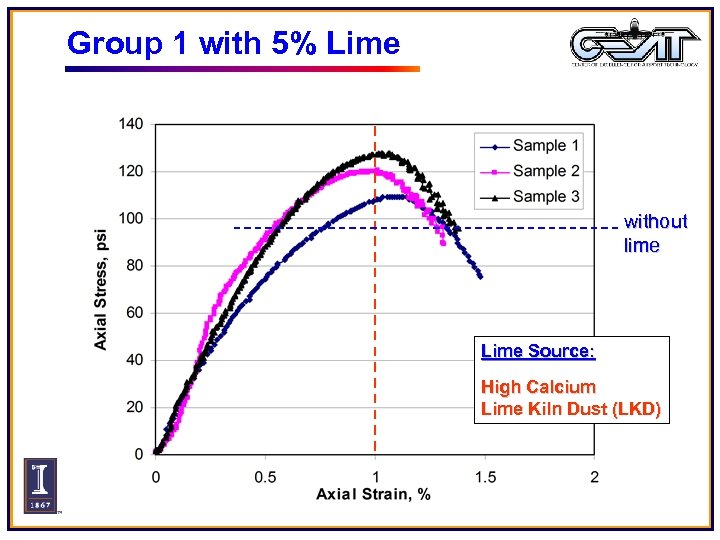
Group 1 with 5% Lime without lime Lime Source: High Calcium Lime Kiln Dust (LKD)
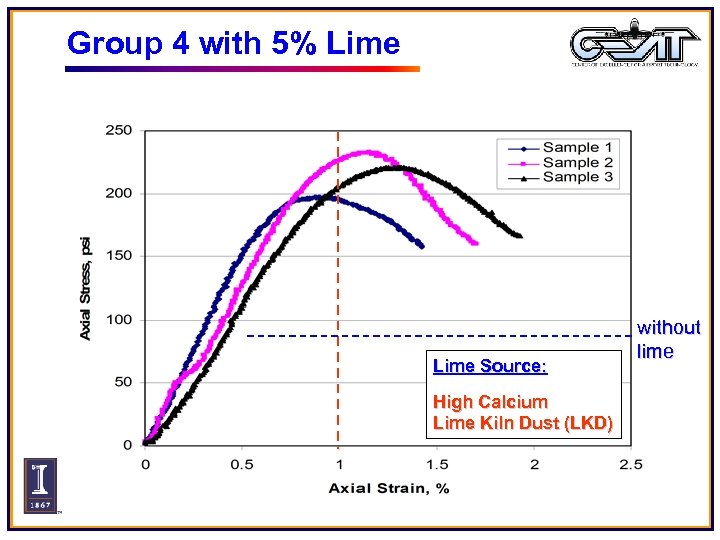
Group 4 with 5% Lime Source: High Calcium Lime Kiln Dust (LKD) without lime
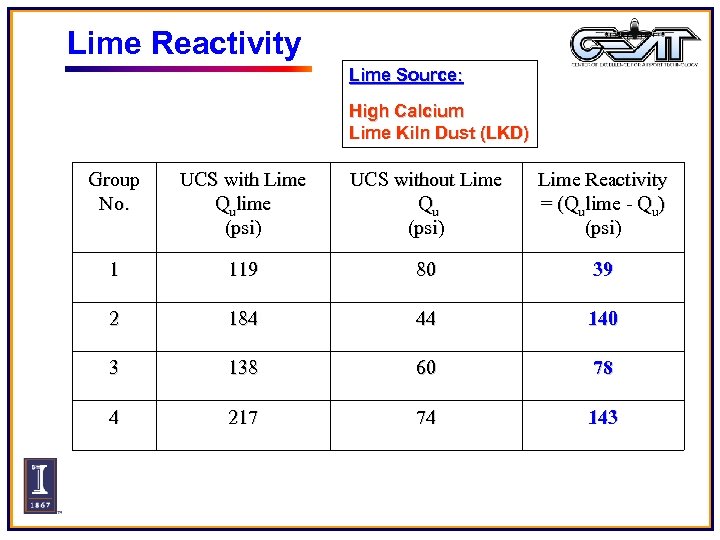
Lime Reactivity Lime Source: High Calcium Lime Kiln Dust (LKD) Group No. UCS with Lime Qulime (psi) UCS without Lime Qu (psi) Lime Reactivity = (Qulime - Qu) (psi) 1 119 80 39 2 184 44 140 3 138 60 78 4 217 74 143
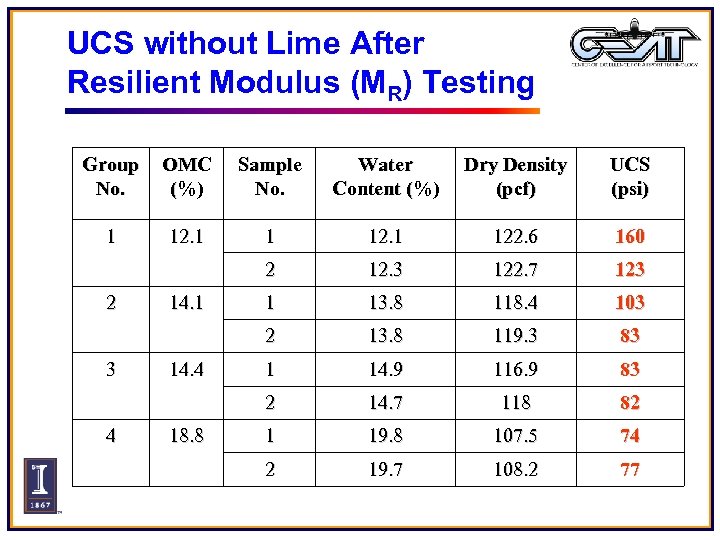
UCS without Lime After Resilient Modulus (MR) Testing Group No. OMC (%) Sample No. Water Content (%) Dry Density (pcf) UCS (psi) 1 122. 6 160 2 12. 3 122. 7 123 1 13. 8 118. 4 103 2 13. 8 119. 3 83 1 14. 9 116. 9 83 2 14. 7 118 82 1 19. 8 107. 5 74 2 19. 7 108. 2 77 2 3 4 14. 1 14. 4 18. 8
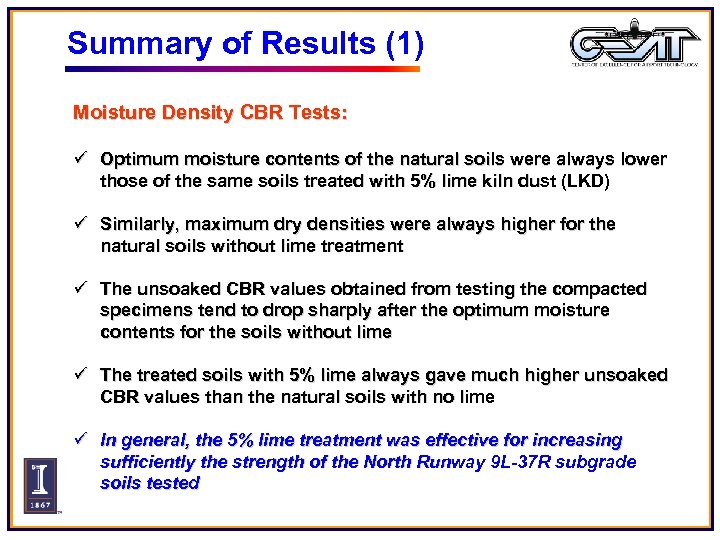
Summary of Results (1) Moisture Density CBR Tests: ü Optimum moisture contents of the natural soils were always lower those of the same soils treated with 5% lime kiln dust (LKD) ü Similarly, maximum dry densities were always higher for the natural soils without lime treatment ü The unsoaked CBR values obtained from testing the compacted specimens tend to drop sharply after the optimum moisture contents for the soils without lime ü The treated soils with 5% lime always gave much higher unsoaked CBR values than the natural soils with no lime ü In general, the 5% lime treatment was effective for increasing sufficiently the strength of the North Runway 9 L-37 R subgrade soils tested
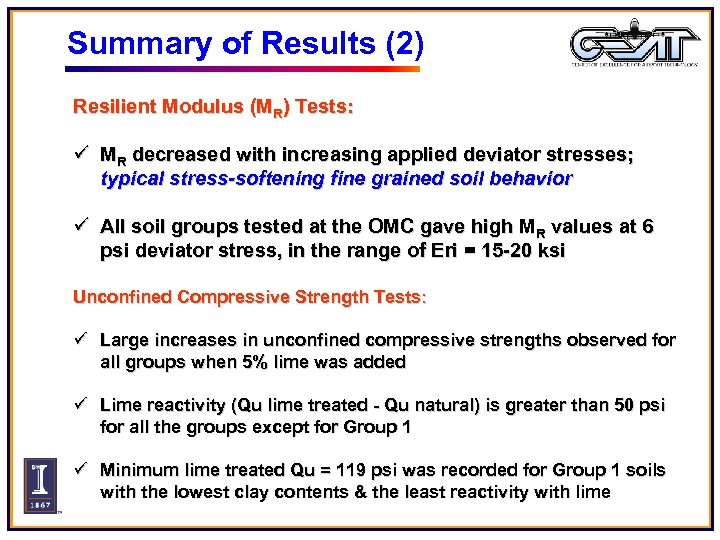
Summary of Results (2) Resilient Modulus (MR) Tests: ü MR decreased with increasing applied deviator stresses; typical stress-softening fine grained soil behavior ü All soil groups tested at the OMC gave high MR values at 6 psi deviator stress, in the range of Eri = 15 -20 ksi Unconfined Compressive Strength Tests: ü Large increases in unconfined compressive strengths observed for all groups when 5% lime was added ü Lime reactivity (Qu lime treated - Qu natural) is greater than 50 psi for all the groups except for Group 1 ü Minimum lime treated Qu = 119 psi was recorded for Group 1 soils with the lowest clay contents & the least reactivity with lime
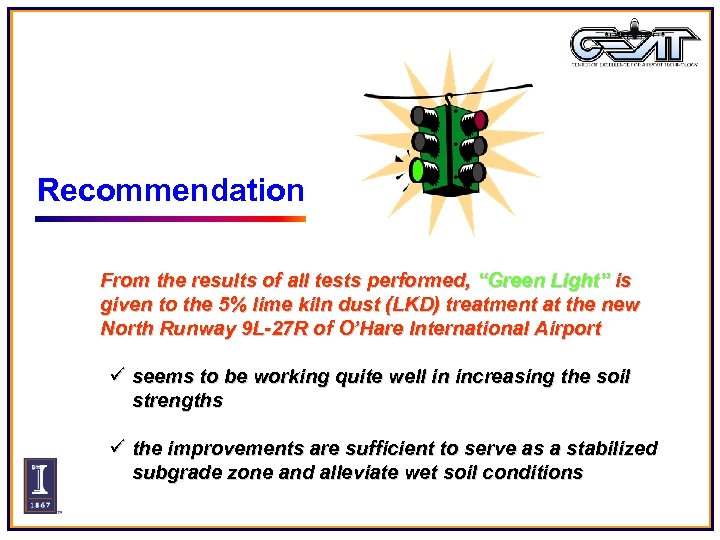
Recommendation From the results of all tests performed, “Green Light” is given to the 5% lime kiln dust (LKD) treatment at the new North Runway 9 L-27 R of O’Hare International Airport ü seems to be working quite well in increasing the soil strengths ü the improvements are sufficient to serve as a stabilized subgrade zone and alleviate wet soil conditions
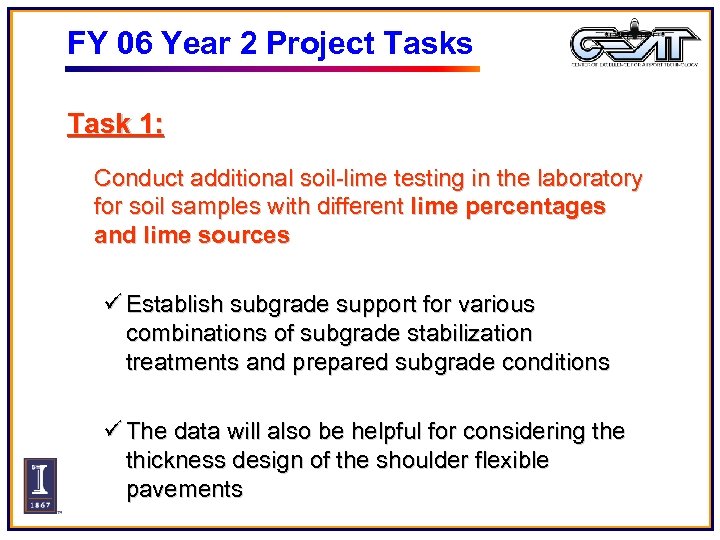
FY 06 Year 2 Project Tasks Task 1: Conduct additional soil-lime testing in the laboratory for soil samples with different lime percentages and lime sources ü Establish subgrade support for various combinations of subgrade stabilization treatments and prepared subgrade conditions ü The data will also be helpful for considering the thickness design of the shoulder flexible pavements
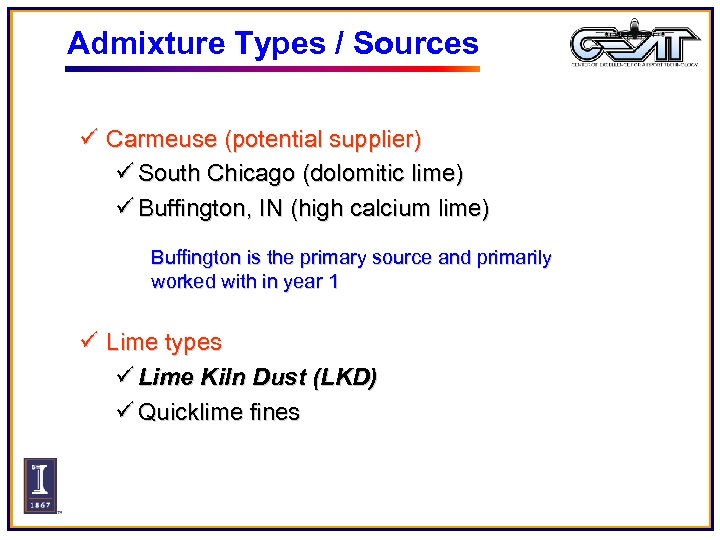
Admixture Types / Sources ü Carmeuse (potential supplier) ü South Chicago (dolomitic lime) ü Buffington, IN (high calcium lime) Buffington is the primary source and primarily worked with in year 1 ü Lime types ü Lime Kiln Dust (LKD) ü Quicklime fines
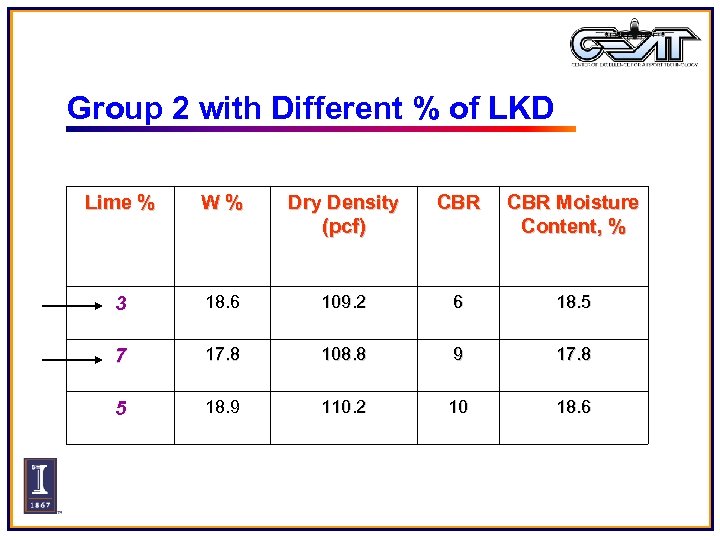
Group 2 with Different % of LKD Lime % W% Dry Density (pcf) CBR Moisture Content, % 3 18. 6 109. 2 6 18. 5 7 17. 8 108. 8 9 17. 8 5 18. 9 110. 2 10 18. 6
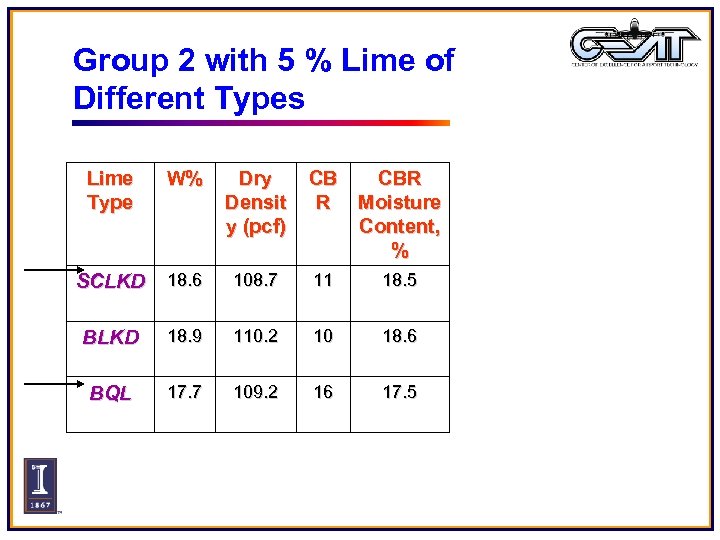
Group 2 with 5 % Lime of Different Types Lime Type W% Dry Densit y (pcf) CB CBR R Moisture Content, % SCLKD 18. 6 108. 7 11 18. 5 BLKD 18. 9 110. 2 10 18. 6 BQL 17. 7 109. 2 16 17. 5
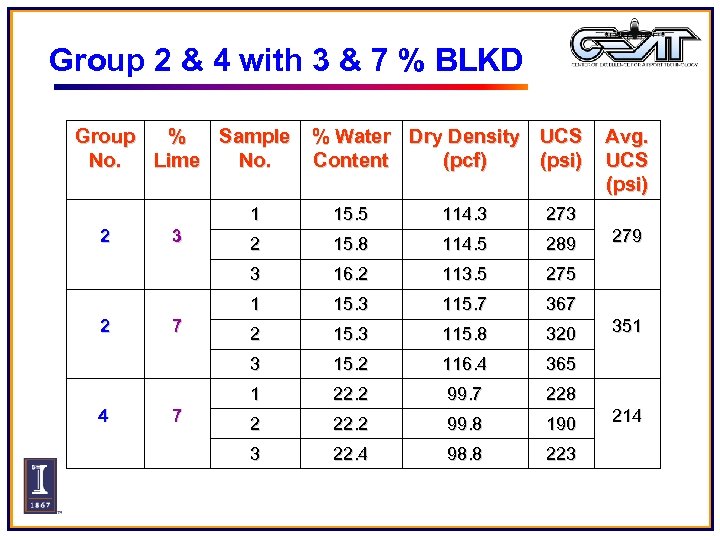
Group 2 & 4 with 3 & 7 % BLKD Group % Sample No. Lime No. % Water Dry Density UCS Content (pcf) (psi) 1 4 7 15. 8 114. 5 289 16. 2 113. 5 275 15. 3 115. 7 367 2 15. 3 115. 8 320 15. 2 116. 4 365 1 7 2 3 2 273 1 3 114. 3 3 2 15. 5 22. 2 99. 7 228 2 22. 2 99. 8 190 3 22. 4 98. 8 223 Avg. UCS (psi) 279 351 214
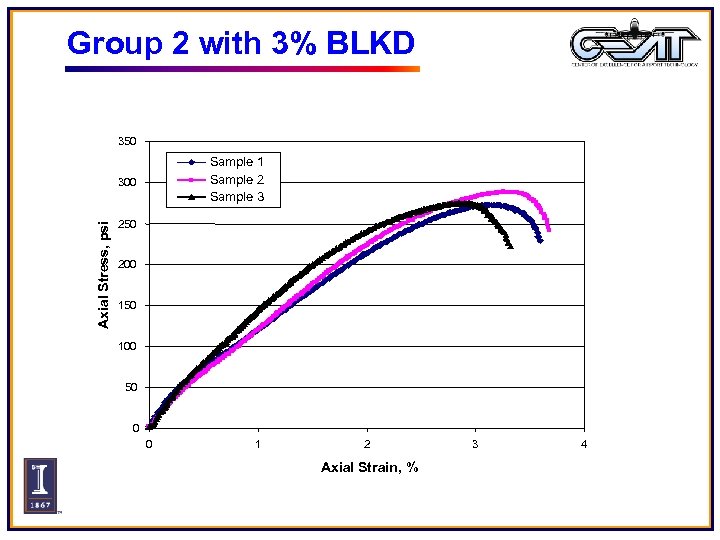
Group 2 with 3% BLKD 350 Sample 1 Sample 2 Sample 3 Axial Stress, psi 300 250 200 150 100 50 0 0 1 2 Axial Strain, % 3 4
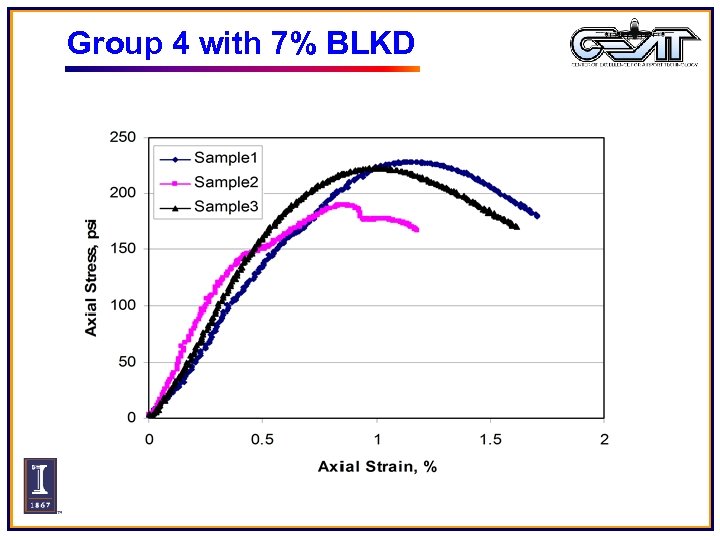
Group 4 with 7% BLKD
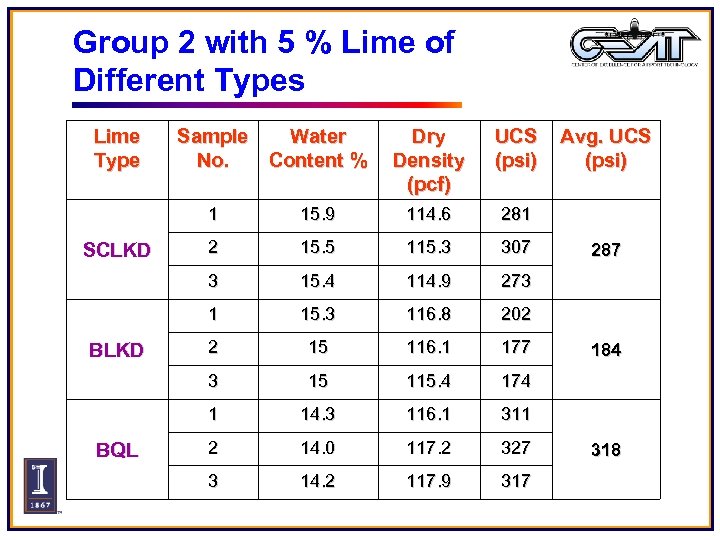
Group 2 with 5 % Lime of Different Types Lime Type Sample Water No. Content % Dry Density (pcf) UCS (psi) 1 2 15. 5 115. 3 307 15. 4 114. 9 273 15. 3 116. 8 202 2 15 116. 1 177 3 15 115. 4 174 1 BQL 281 1 BLKD 114. 6 3 SCLKD 15. 9 14. 3 116. 1 311 2 14. 0 117. 2 327 3 14. 2 117. 9 317 Avg. UCS (psi) 287 184 318
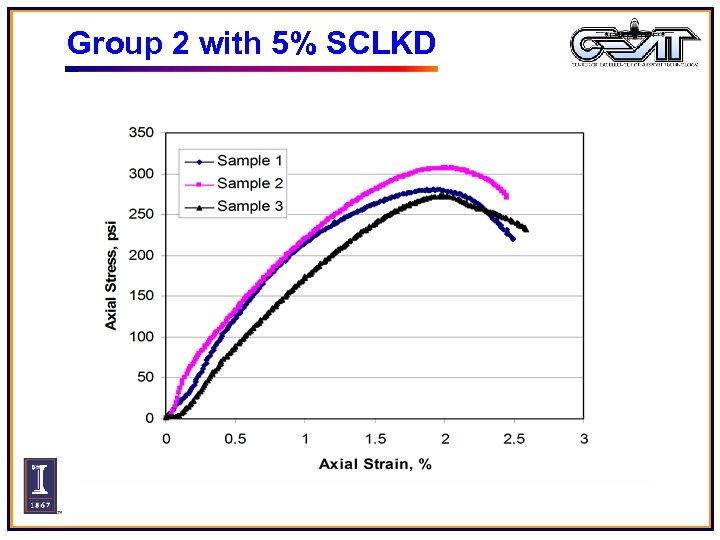
Group 2 with 5% SCLKD
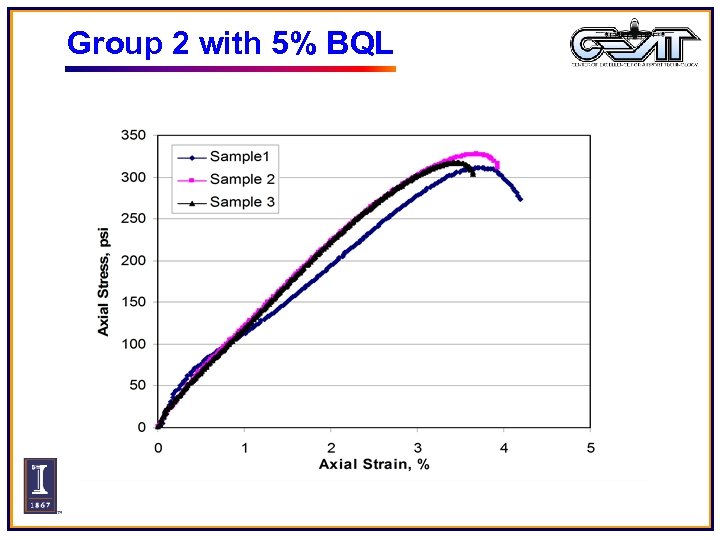
Group 2 with 5% BQL
FY 06 Year 2 Project Tasks Task 2: Provide OMP with guidelines and support for monitoring field soil lime stabilization and construction of the 9 L-27 R subgrades ü The research team will provide recommendations on the various field tests such as automated dynamic cone penetrometer, Clegg hammer, Light -Weight-Deflectometer, etc.
FY 06 Year 2 Project Tasks Task 3: Evaluate the 9 L-27 R runway/taxiway soil lime stabilization and modification for meeting the subgrade support (k-value) requirements ü The research team will support the activities of OMP in the evaluation of completed lime stabilization ü Project Staff will cooperate with the OMP Project – Field Validation of Constructed Subgrade and Pavement Layers in this effort
FY 06 Year 2 Project Tasks Task 4: Evaluate currently available geotechnical/subgrade data for the South airfield of the O’Hare International Airport with particular emphasis on the stockpiled soils ü Advise on the soil sampling needs and if considered essential, develop recommendations for additional soil exploration/sampling activities ü The need to construct additional subgrade treatment test sections will be considered ü Provide non-routine laboratory testing, such as the resilient modulus test, for the soils obtained from drilling and sampling and recommend and conduct (as time and budget permit) a lime-treatment testing program
Project Schedule & Deliverables ü Technical Notes will be prepared and submitted to the OMP throughout the duration of this project to communicate specific findings and recommendations to OMP engineers as needed ü A Final Report will be prepared at the end of the one-year study ü Several of the Project Tasks are already pursued simultaneously, and the specific delivery of results will be contingent upon availability of OMP data and other factors that depend on coordination with OMP ü Continue to work with OMP on current and future subgrade soil support and stabilization needs for all O’Hare runways/taxiways. This will be in the form of sustained support for working with OMP on subgrade soil support issues

Any Questions?
Скачать презентацию Subgrade Soil Support and Stabilization O HARE Airport Modernization
c5a8299ec7ad21d6409027cd97c0325e.ppt