 Скачать презентацию Sub Regional Workshop Ministry of Communication Transport Post
1e8e6193d0daeff37e9be2e1981f2cf7.ppt
- Количество слайдов: 30



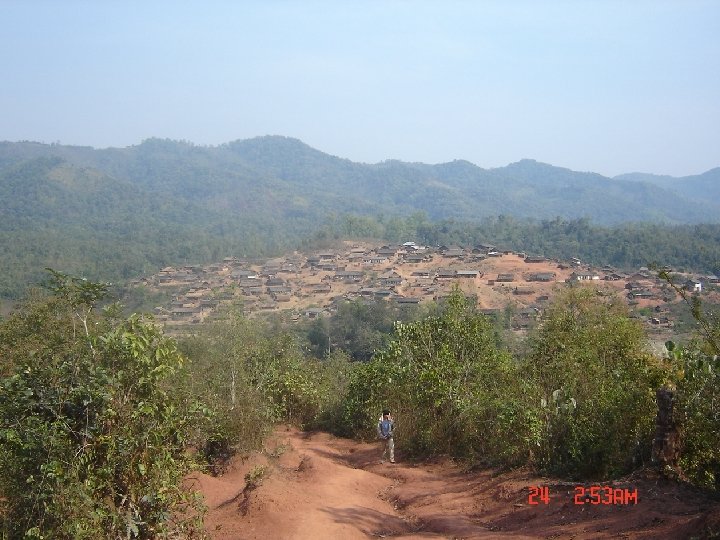
Sub Regional Workshop Ministry of Communication Transport Post and Construction Department of Roads Poverty and Environmental Nexus on Road Case Study In Kaluem and Ngot Ou District of Lao PDR Presented by: Somsanouk Vongsomphou 21 -22 June 2006
- The Objectives: + To study the natural resources status (NTFP) in the villages with road access and without road access. + To study the livelihood of poor villages and household with the road access and without. + To study the decline of NTFP between villages with road and without road access
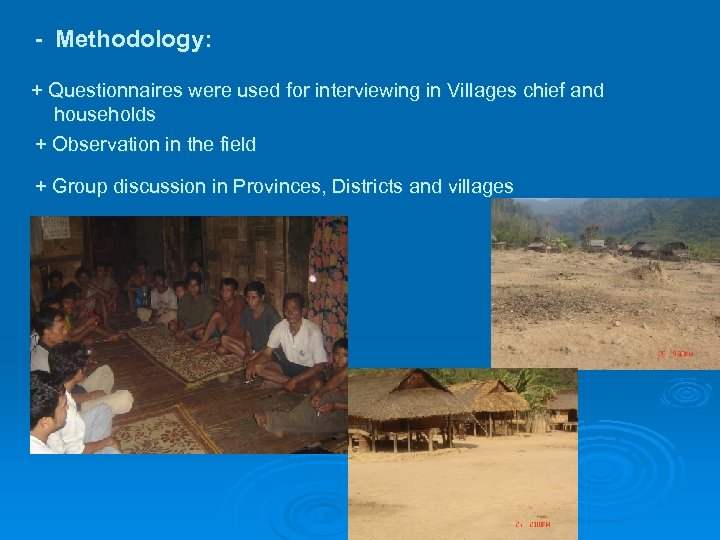
- Methodology: + Questionnaires were used for interviewing in Villages chief and households + Observation in the field + Group discussion in Provinces, Districts and villages
- Villages selection: + 6 villages in Kaleum “ 3 Villages no road access” + 4 villages in Ngot Ou “ 1 villages no road and 1 village with new road”). Sampling = 142 households for 2 districts (kaluem = 70 HH, Ngot Ou = 72 HH) - Data Analysis: + Secondary data was used: road network, maps, books, reports, Govn. Policy documents. + SPSS and Excel software was used for data interpretation.
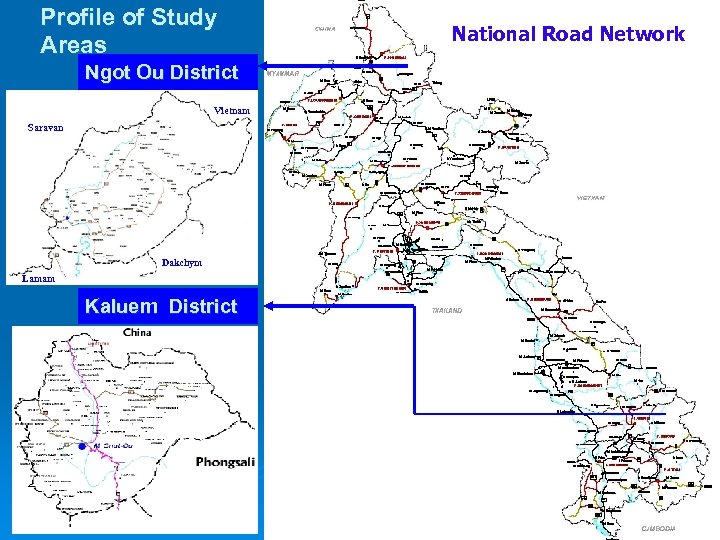
Profile of Study Areas Ngot Ou District Vietnam Saravan Dakchym Lamam Kaluem District National Road Network
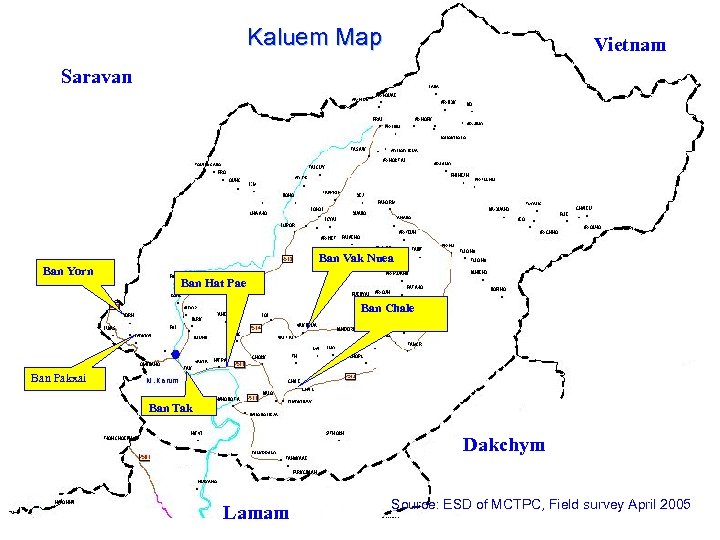
Kaluem Map Vietnam Saravan Ban Yorn Ban Vak Nuea Ban Hat Pae Ban Chale Ban Pakxai Ban Tak Dakchym Lamam Source: ESD of MCTPC, Field survey April 2005
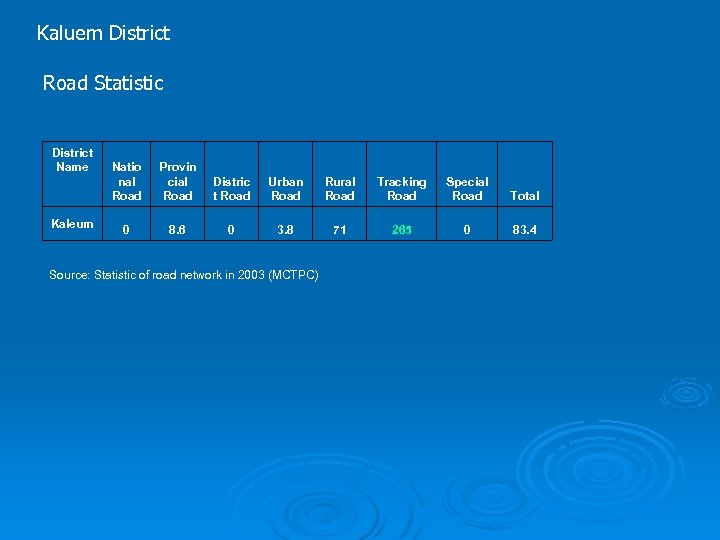
Kaluem District Road Statistic District Name Kaleum Natio nal Road Provin cial Road Distric t Road Urban Road Rural Road Tracking Road Special Road Total 0 8. 6 0 3. 8 71 265 0 83. 4 Source: Statistic of road network in 2003 (MCTPC)
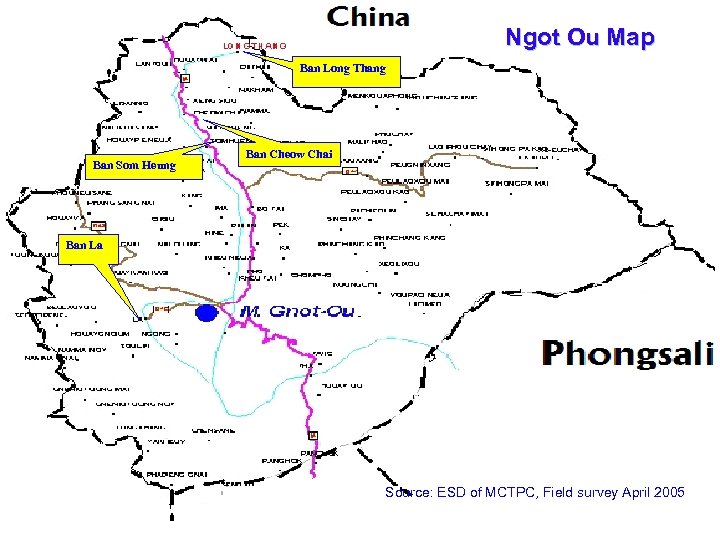
Ngot Ou Map Ban Long Thang Ban Som Heung Ban Cheow Chai Ban La Source: ESD of MCTPC, Field survey April 2005
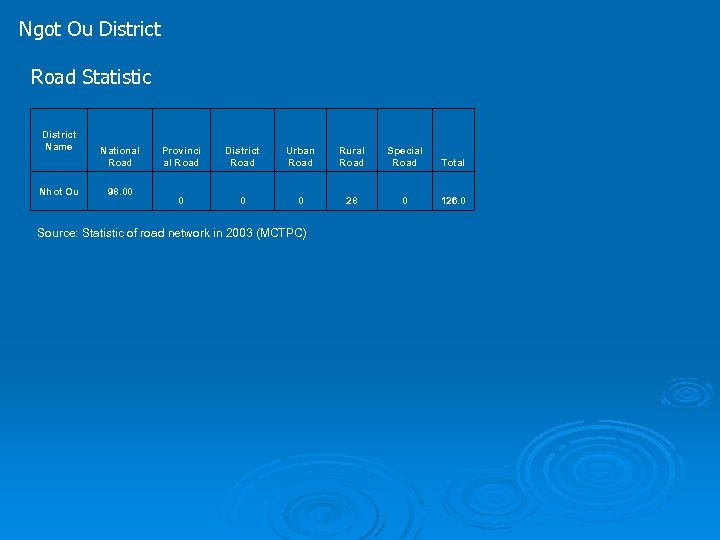
Ngot Ou District Road Statistic District Name Nhot Ou National Road 98. 00 Provinci al Road District Road Urban Road Rural Road Special Road Total 0 0 0 28 0 126. 0 Source: Statistic of road network in 2003 (MCTPC)
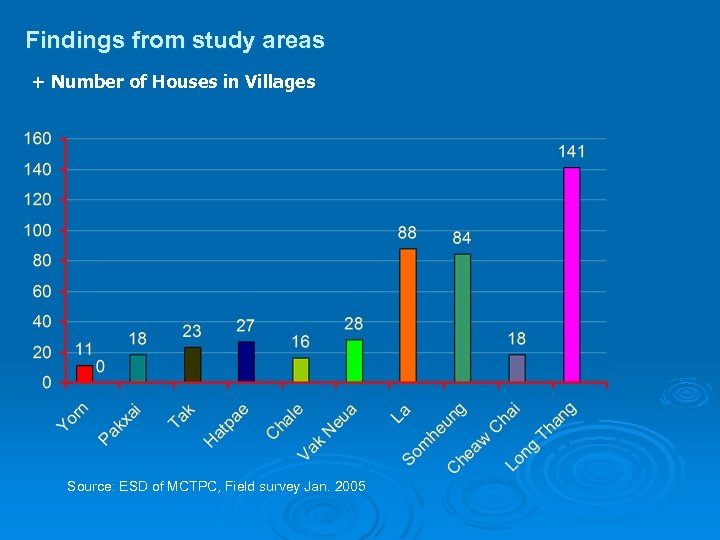
Findings from study areas + Number of Houses in Villages Source: ESD of MCTPC, Field survey Jan. 2005
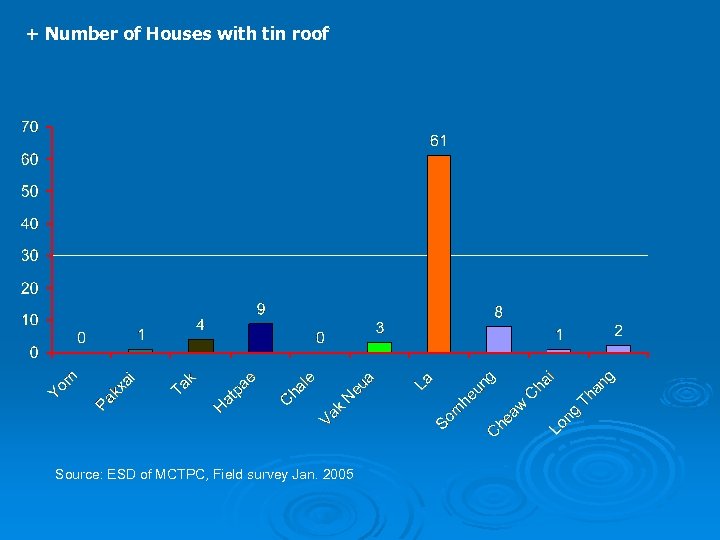
+ Number of Houses with tin roof Source: ESD of MCTPC, Field survey Jan. 2005
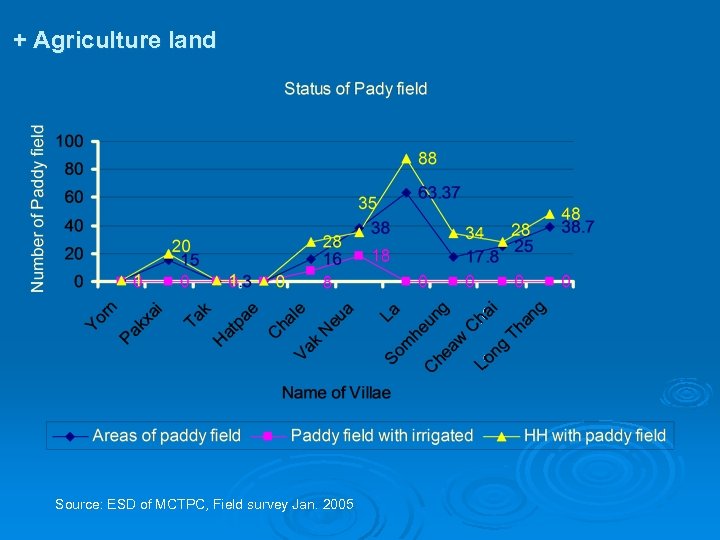
+ Agriculture land Source: ESD of MCTPC, Field survey Jan. 2005
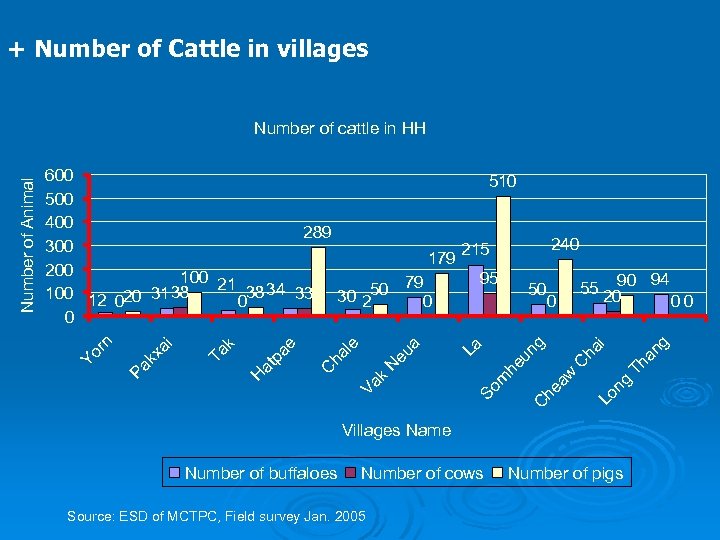
+ Number of Cattle in villages g i Th an ha Lo ng C he aw C So m k Va he un g La N eu a ha le C e H at pa k Ta i kx a Pa rn 600 510 500 400 289 240 300 215 179 200 100 21 95 94 55 90 34 33 30 50 79 50 38 100 12 020 31 38 20 0 2 0 0 00 0 Yo Number of Animal Number of cattle in HH Villages Name Number of buffaloes Number of cows Source: ESD of MCTPC, Field survey Jan. 2005 Number of pigs
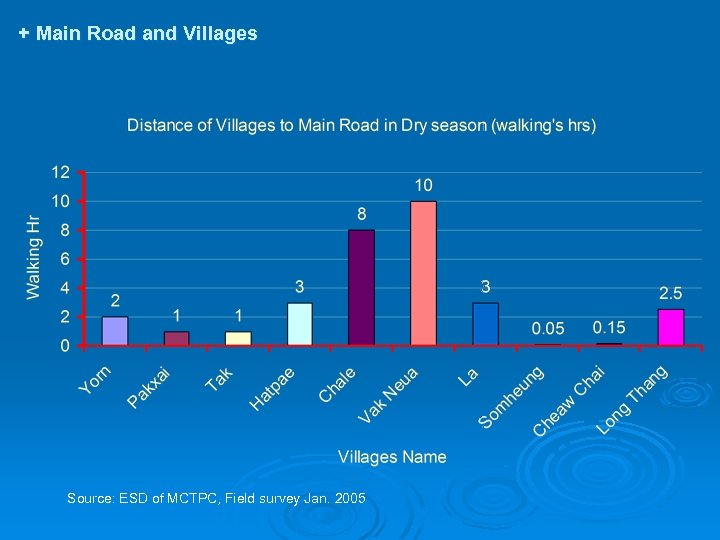
+ Main Road and Villages Source: ESD of MCTPC, Field survey Jan. 2005
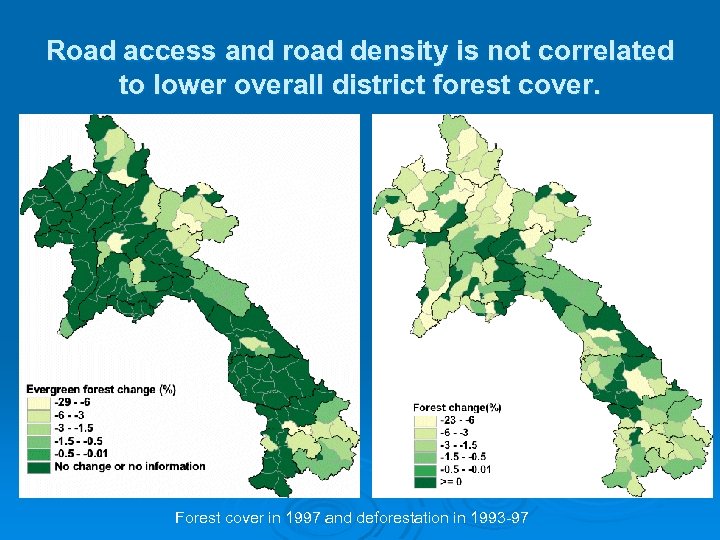
Road access and road density is not correlated to lower overall district forest cover. Forest cover in 1997 and deforestation in 1993 -97
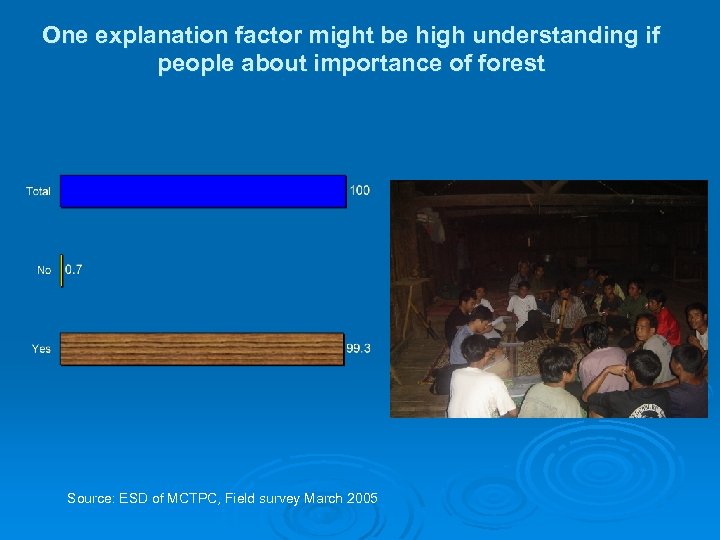
One explanation factor might be high understanding if people about importance of forest Source: ESD of MCTPC, Field survey March 2005
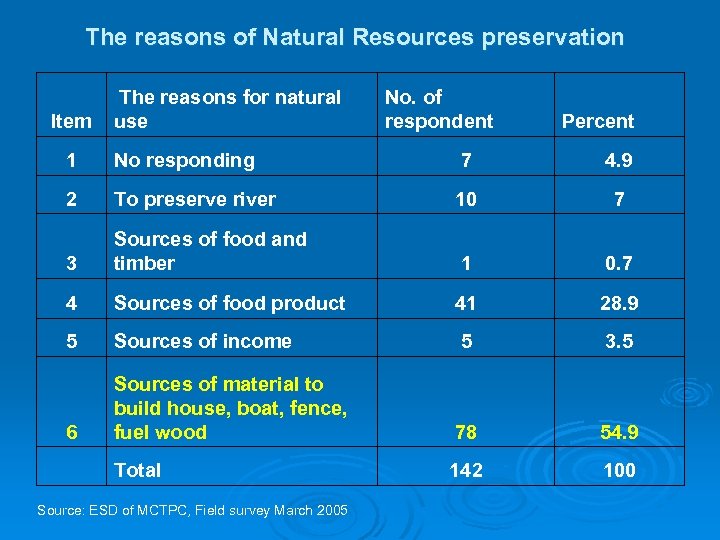
The reasons of Natural Resources preservation Item The reasons for natural use No. of respondent Percent 1 No responding 7 4. 9 2 To preserve river 10 7 3 Sources of food and timber 1 0. 7 4 Sources of food product 41 28. 9 5 Sources of income 5 3. 5 6 Sources of material to build house, boat, fence, fuel wood 78 54. 9 Total 142 100 Source: ESD of MCTPC, Field survey March 2005
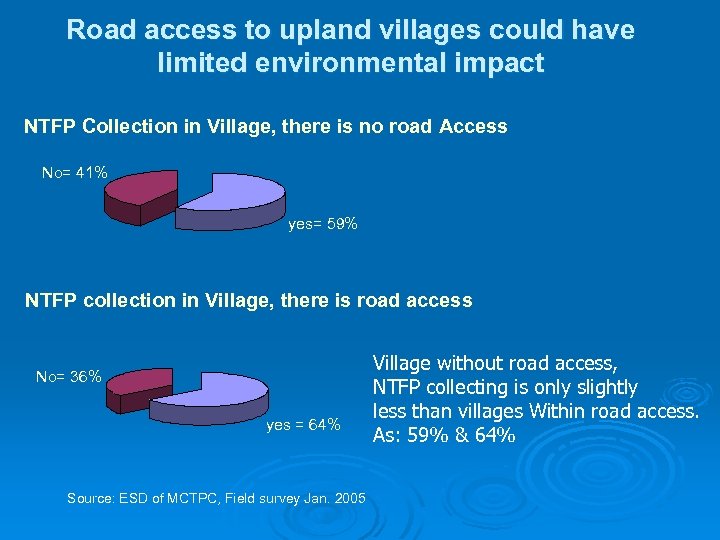
Road access to upland villages could have limited environmental impact NTFP Collection in Village, there is no road Access No= 41% yes= 59% NTFP collection in Village, there is road access No= 36% yes = 64% Source: ESD of MCTPC, Field survey Jan. 2005 Village without road access, NTFP collecting is only slightly less than villages Within road access. As: 59% & 64%
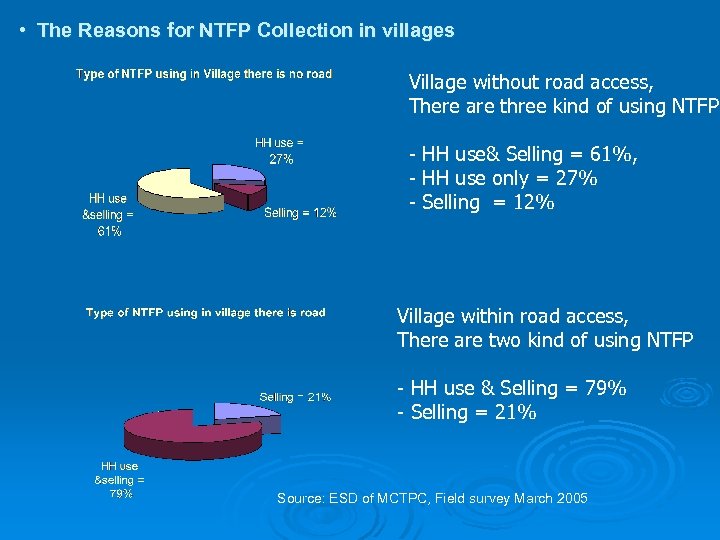
• The Reasons for NTFP Collection in villages Village without road access, There are three kind of using NTFP - HH use& Selling = 61%, - HH use only = 27% - Selling = 12% Village within road access, There are two kind of using NTFP - HH use & Selling = 79% - Selling = 21% Source: ESD of MCTPC, Field survey March 2005
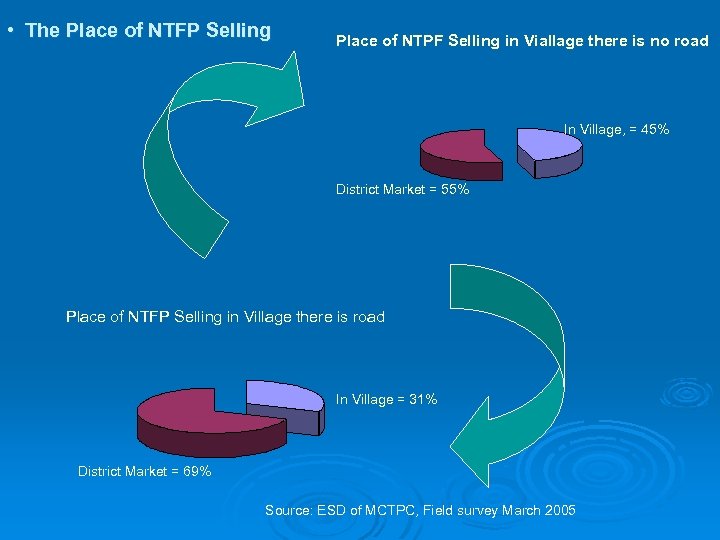
• The Place of NTFP Selling Place of NTPF Selling in Viallage there is no road In Village, = 45% District Market = 55% Place of NTFP Selling in Village there is road In Village = 31% District Market = 69% Source: ESD of MCTPC, Field survey March 2005
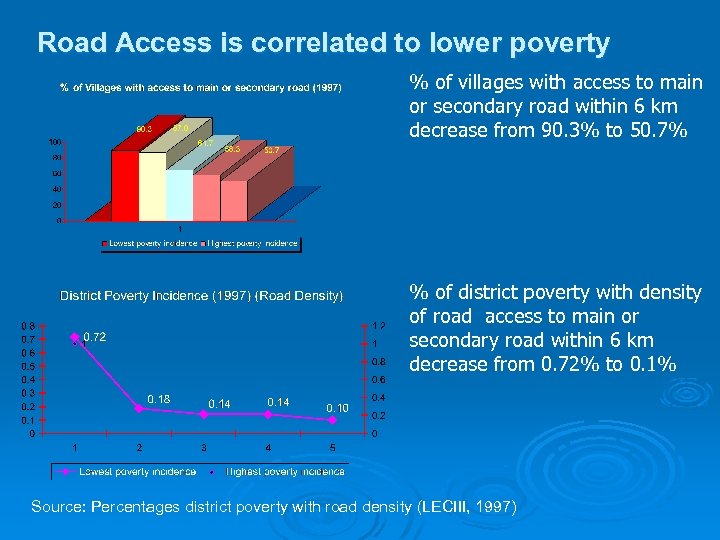
Road Access is correlated to lower poverty % of villages with access to main or secondary road within 6 km decrease from 90. 3% to 50. 7% % of district poverty with density of road access to main or secondary road within 6 km decrease from 0. 72% to 0. 1% Source: Percentages district poverty with road density (LECIII, 1997)
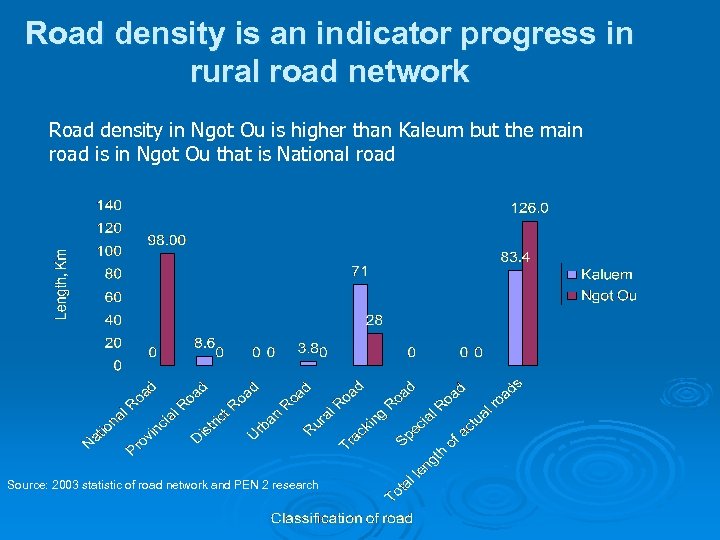
Road density is an indicator progress in rural road network Road density in Ngot Ou is higher than Kaleum but the main road is in Ngot Ou that is National road Source: 2003 statistic of road network and PEN 2 research
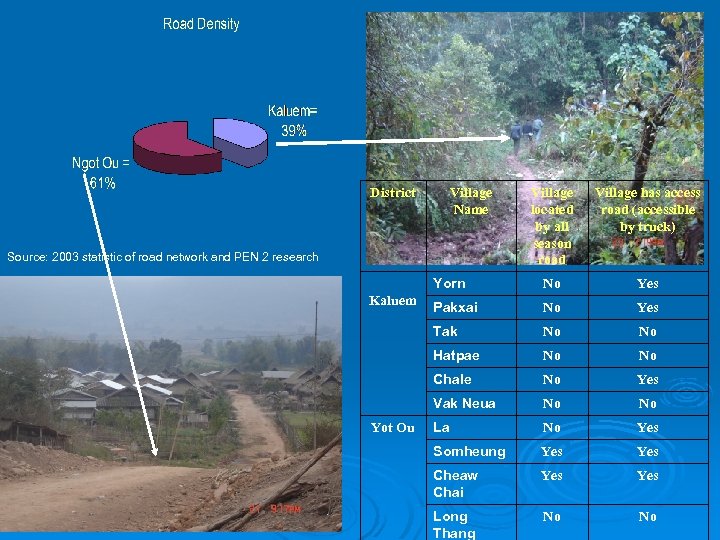
District Village Name Village located by all season road Village has access road (accessible by truck) Yorn No Yes Pakxai No Yes Tak No No Hatpae No No Chale No Yes Vak Neua No No La No Yes Somheung Yes Cheaw Chai Yes Long Thang No No Source: 2003 statistic of road network and PEN 2 research Kaluem Yot Ou
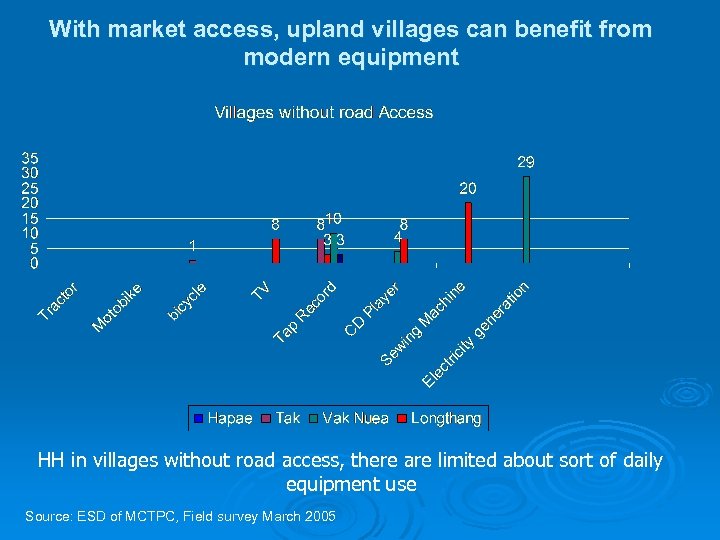
With market access, upland villages can benefit from modern equipment HH in villages without road access, there are limited about sort of daily equipment use Source: ESD of MCTPC, Field survey March 2005
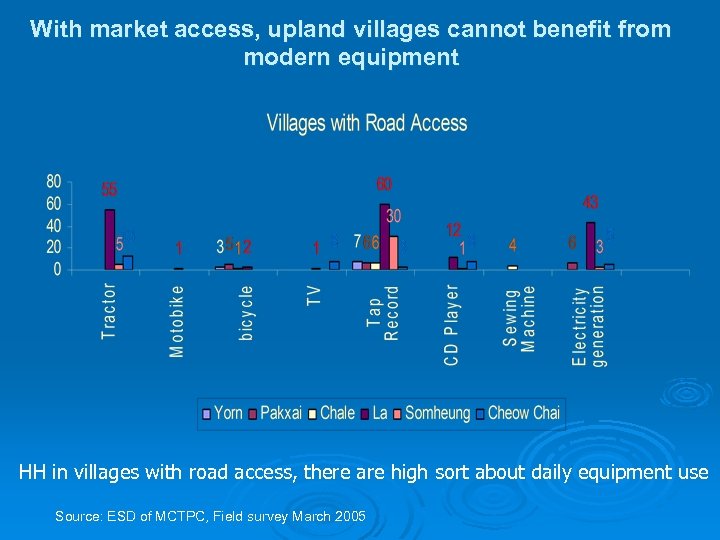
With market access, upland villages cannot benefit from modern equipment HH in villages with road access, there are high sort about daily equipment use Source: ESD of MCTPC, Field survey March 2005
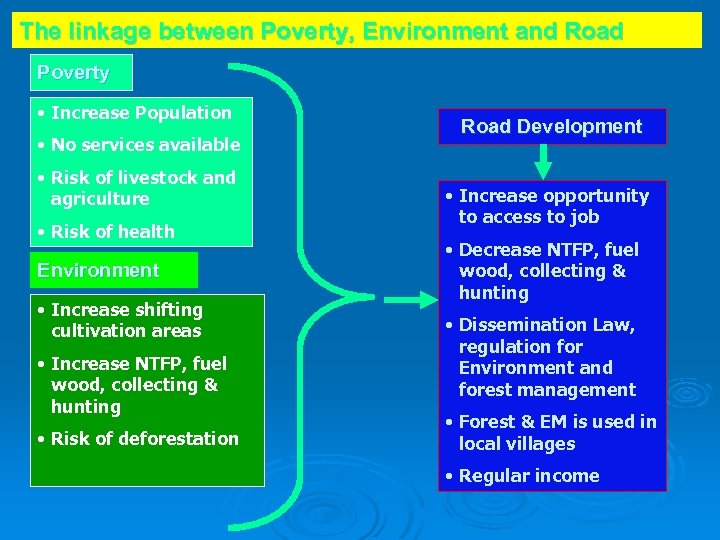
The linkage between Poverty, Environment and Road Poverty • Increase Population • No services available • Risk of livestock and agriculture • Risk of health Environment • Increase shifting cultivation areas • Increase NTFP, fuel wood, collecting & hunting • Risk of deforestation Road Development • Increase opportunity to access to job • Decrease NTFP, fuel wood, collecting & hunting • Dissemination Law, regulation for Environment and forest management • Forest & EM is used in local villages • Regular income
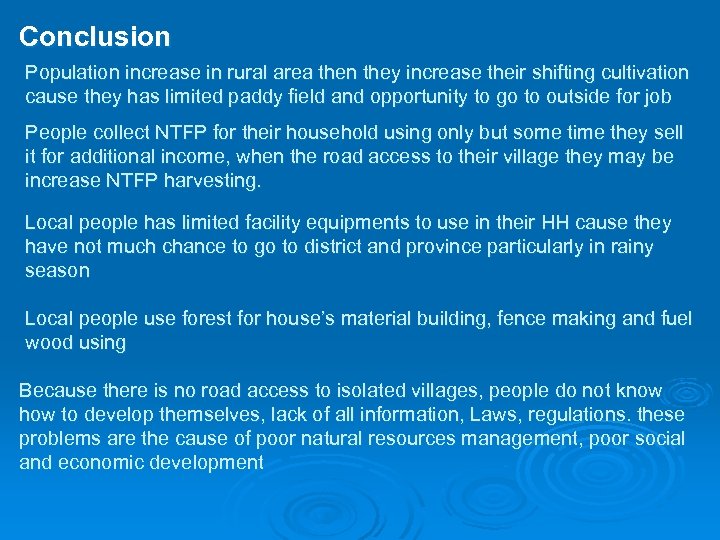
Conclusion Population increase in rural area then they increase their shifting cultivation cause they has limited paddy field and opportunity to go to outside for job People collect NTFP for their household using only but some time they sell it for additional income, when the road access to their village they may be increase NTFP harvesting. Local people has limited facility equipments to use in their HH cause they have not much chance to go to district and province particularly in rainy season Local people use forest for house’s material building, fence making and fuel wood using Because there is no road access to isolated villages, people do not know how to develop themselves, lack of all information, Laws, regulations. these problems are the cause of poor natural resources management, poor social and economic development
Recommendations Ø Rural/Village road access should be a priority: it is important for poverty reduction and environmental impacts can be managed
Attention to environmental and social impact during road construction remains critical task During the planning of road construction, Forest and Agriculture Sector, Pubic Health and Environment Sector should involve to promote the natural resources management and health care in local area. Road Law is the main tool to promote the awareness of road safety such as: accident to animal, people and other asset, particularly people encroach to right of way.

Thank you very much for your kindly attention
Скачать презентацию Sub Regional Workshop Ministry of Communication Transport Post
1e8e6193d0daeff37e9be2e1981f2cf7.ppt