 Скачать презентацию Students will Identify major breeds of chicken
10f094c2f92e7e0f703d75fb3449cc51.ppt
- Количество слайдов: 115



Students will: Identify major breeds of chicken and minor breeds of poultry Describe characteristics of each breed Identify breed purpose
What purpose(s) do chickens serve?
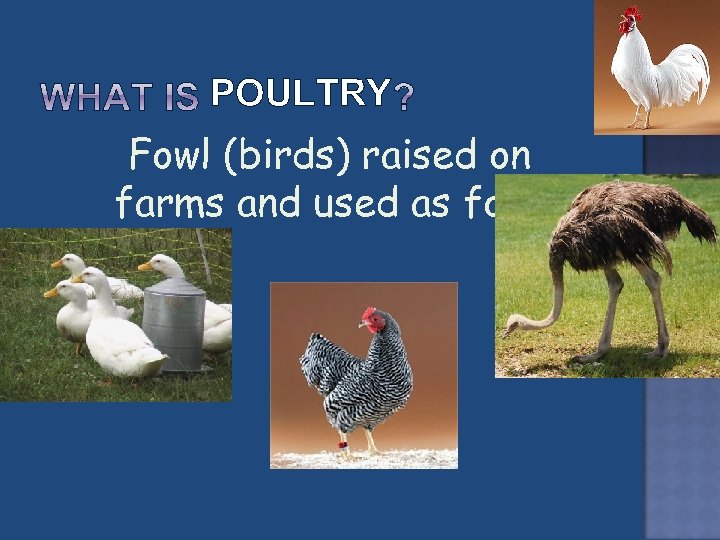
POULTRY Fowl (birds) raised on farms and used as food
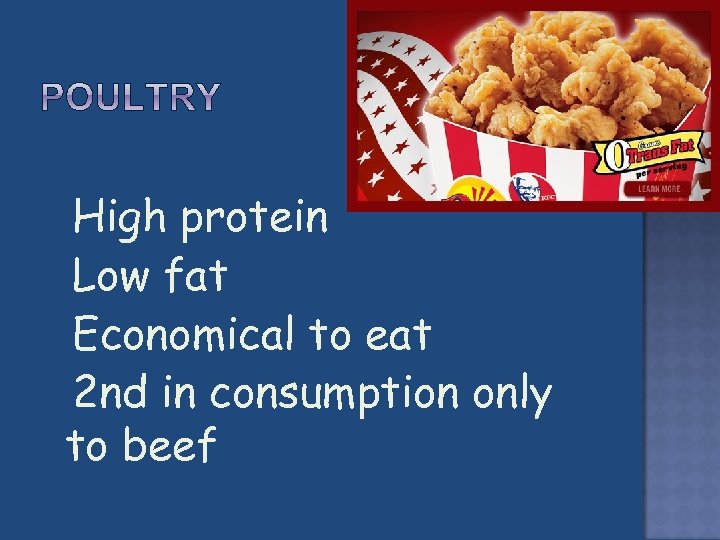
High protein Low fat Economical to eat 2 nd in consumption only to beef
Meat- Plymouth Rock Feathers- Peafowl Eggs- Leghorn Showing- White Crested Black Polish
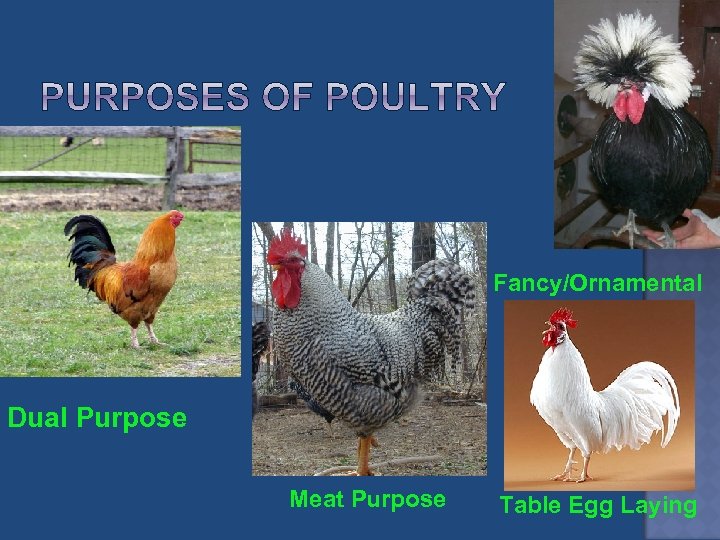
Fancy/Ornamental Dual Purpose Meat Purpose Table Egg Laying
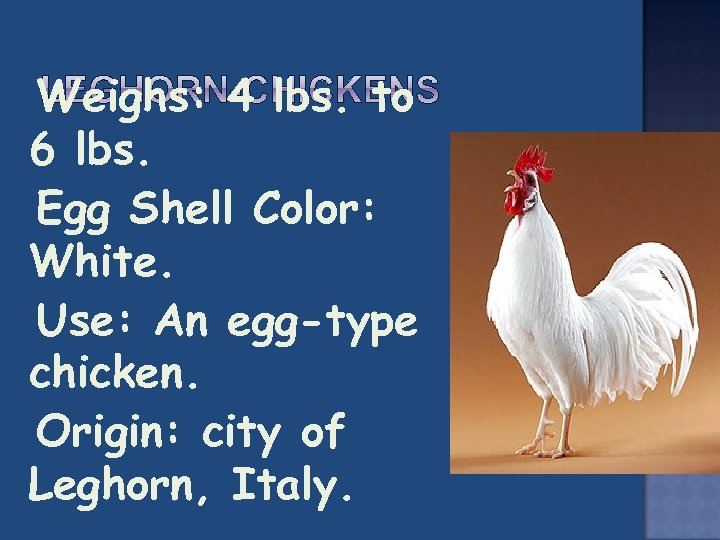
Weighs: 4 lbs. to 6 lbs. Egg Shell Color: White. Use: An egg-type chicken. Origin: city of Leghorn, Italy.
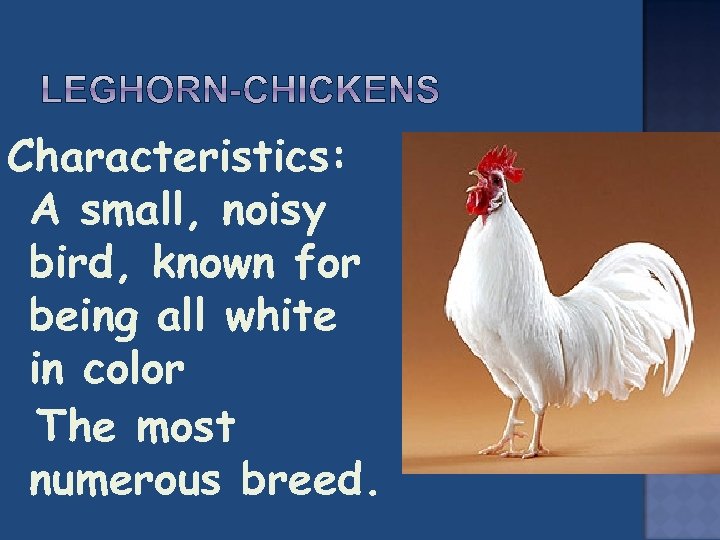
Characteristics: A small, noisy bird, known for being all white in color The most numerous breed.
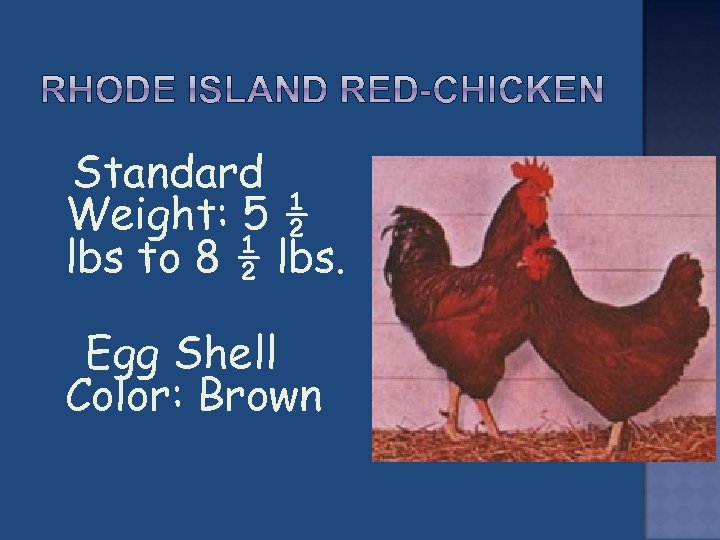
Standard Weight: 5 ½ lbs to 8 ½ lbs. Egg Shell Color: Brown
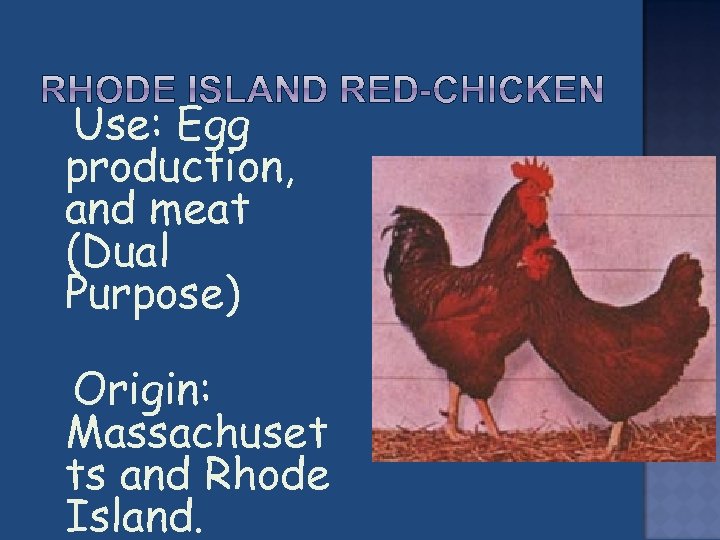
Use: Egg production, and meat (Dual Purpose) Origin: Massachuset ts and Rhode Island.
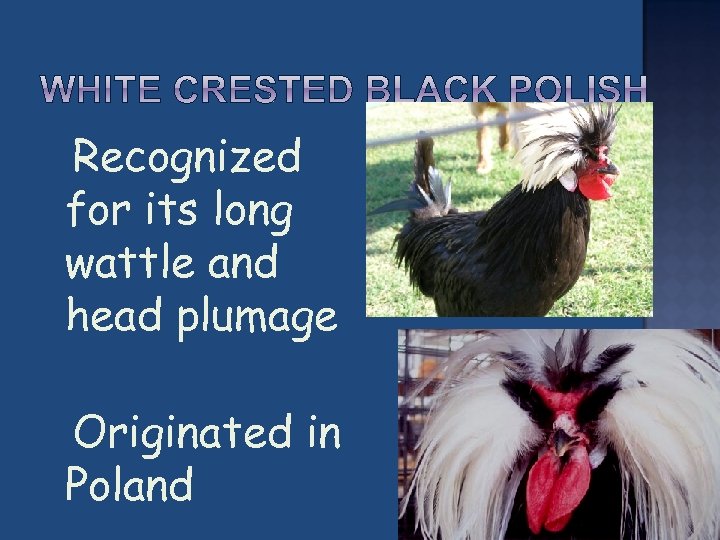
Recognized for its long wattle and head plumage Originated Poland in
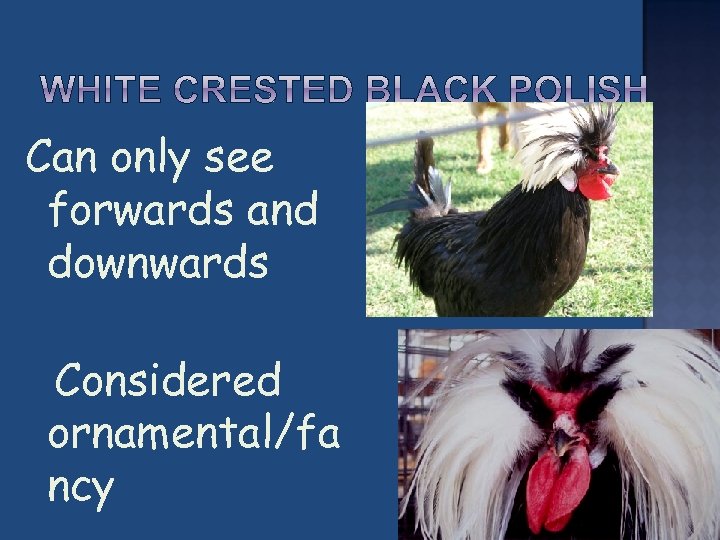
Can only see forwards and downwards Considered ornamental/fa ncy
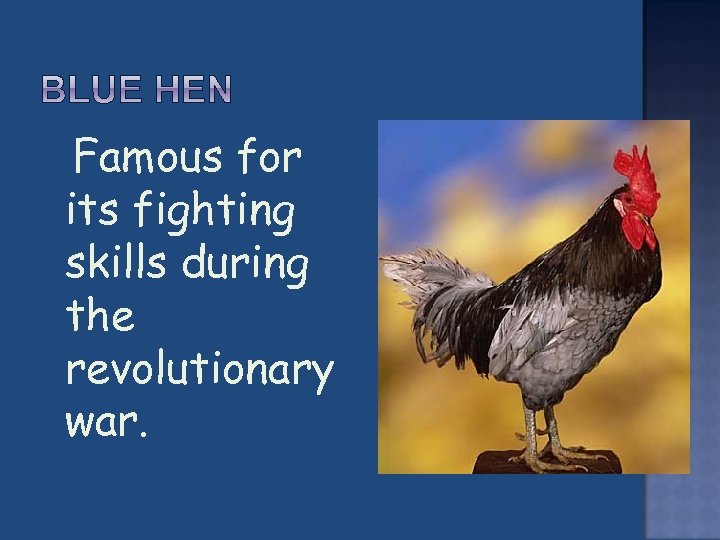
Famous for its fighting skills during the revolutionary war.
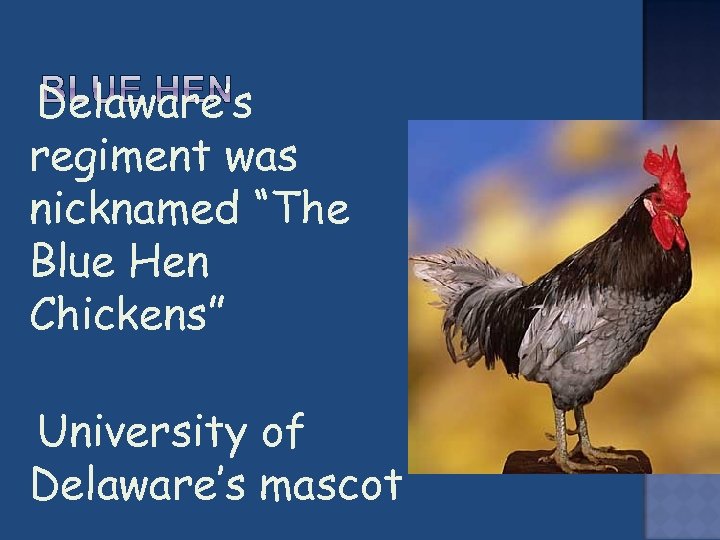
Delaware’s regiment was nicknamed “The Blue Hen Chickens” University of Delaware’s mascot
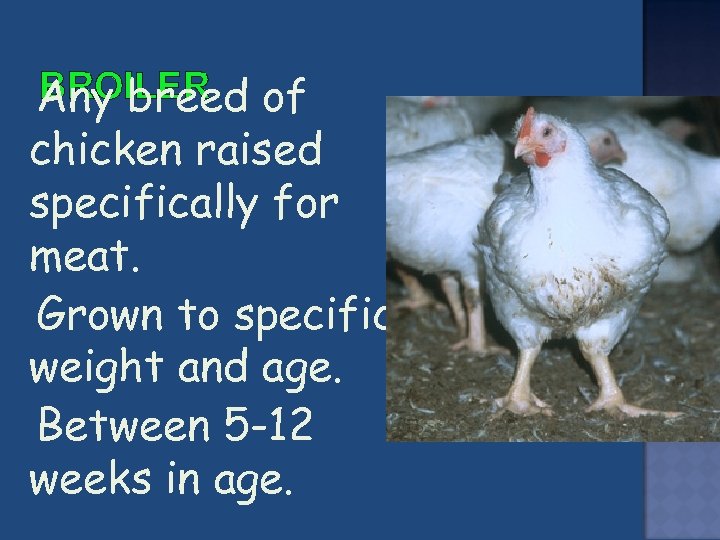
BROILER Any breed of chicken raised specifically for meat. Grown to specific weight and age. Between 5 -12 weeks in age.
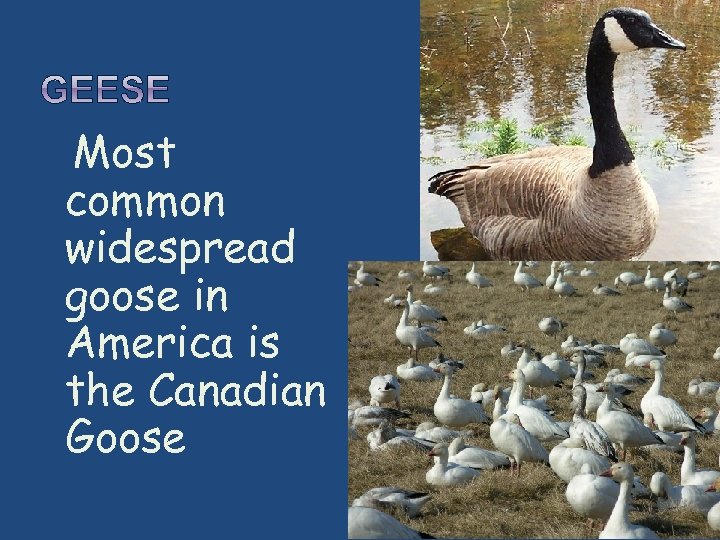
Most common widespread goose in America is the Canadian Goose
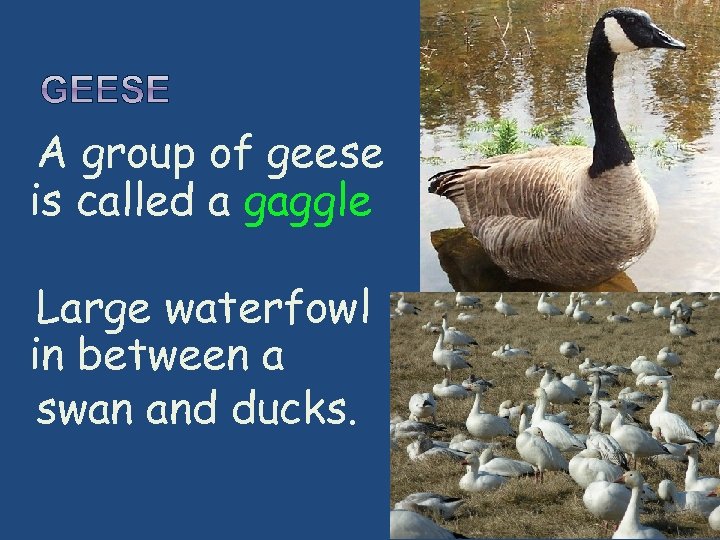
A group of geese is called a gaggle Large waterfowl in between a swan and ducks.
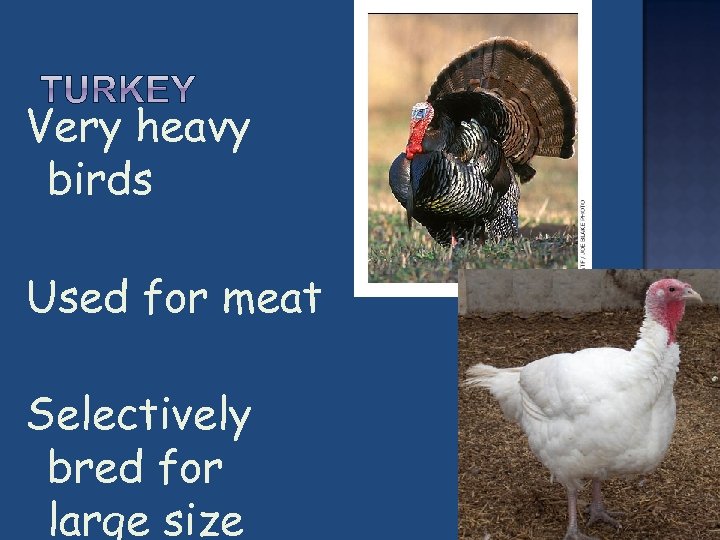
Very heavy birds Used for meat Selectively bred for large size
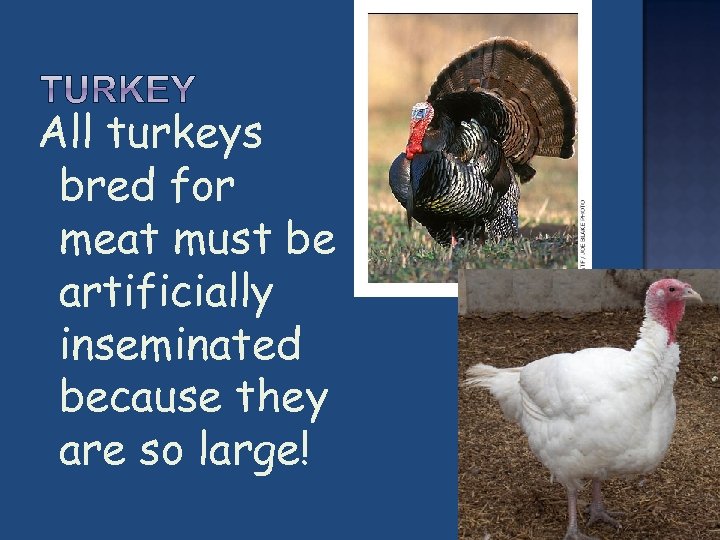
All turkeys bred for meat must be artificially inseminated because they are so large!
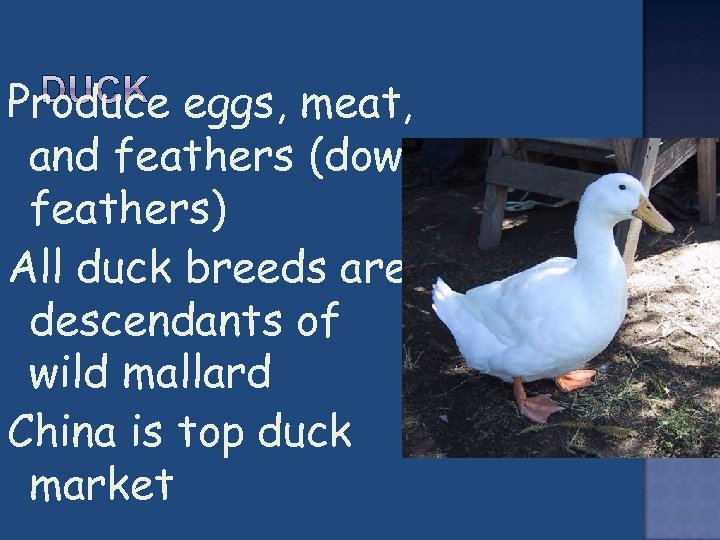
Produce eggs, meat, and feathers (down feathers) All duck breeds are descendants of wild mallard China is top duck market
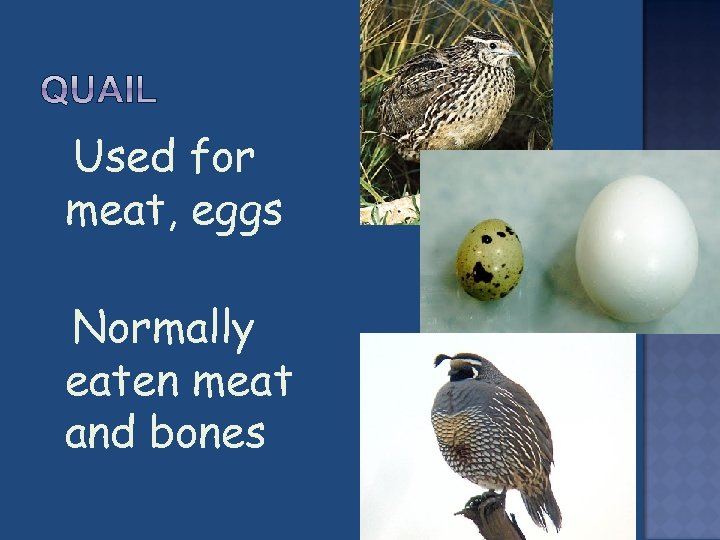
Used for meat, eggs Normally eaten meat and bones
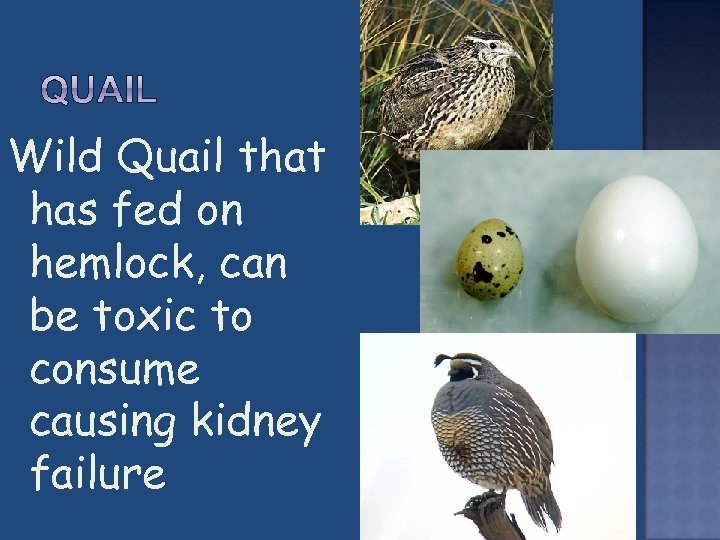
Wild Quail that has fed on hemlock, can be toxic to consume causing kidney failure
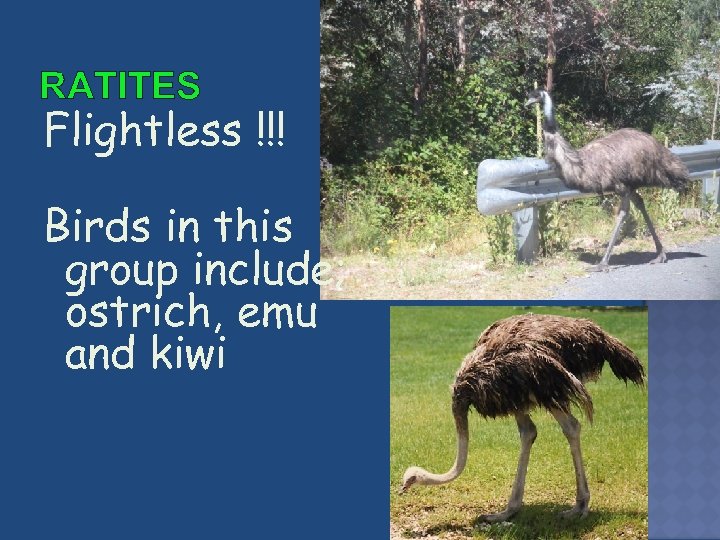
RATITES Flightless !!! Birds in this group include; ostrich, emu and kiwi
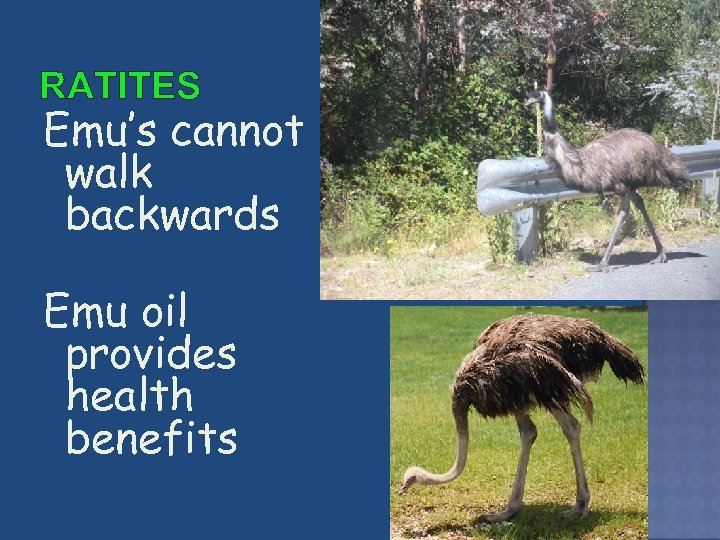
RATITES Emu’s cannot walk backwards Emu oil provides health benefits
Put your name and the date on the top. Define the following words: Poultry Dual Purpose (give breed example)
Table Egg Laying (give breed example) Fancy/ Ornamental (give breed example) Meat Purpose (give breed example)
Broiler Gaggle Ratites Turn in when finished. Due at the end of class. Please handle animals when you’re finished.
Library Project Directions: Choose a poultry breed not discussed in class. Provide a picture to the teacher (chosen from the internet) to be posted on the screen while you present.
Library Project Compile a profile of your bird. Include: Origin Color characteristics Average Size Purpose Product from or by the animal Fun Fact
Please Follow along with your worksheet provided it will be collected at the end of class for a grade worth 10 points
Label the major parts of poultry anatomy Explain the purpose of specific anatomical differences in digestion anatomy. Discuss the general reproductive anatomy of a hen.
What are 2 differences between human anatomy and poultry anatomy? Do these differences hold a purpose?
What do you call a mature male? Rooster What do you call a mature female? Hen What do you call a young female? Pullet
![What do you call a castrated male? Capon Chickens [Hatch] What is the incubation](https://present5.com/presentation/10f094c2f92e7e0f703d75fb3449cc51/image-35.jpg "What do you call a castrated male? Capon Chickens [Hatch] What is the incubation")
What do you call a castrated male? Capon Chickens [Hatch] What is the incubation period? 21 days
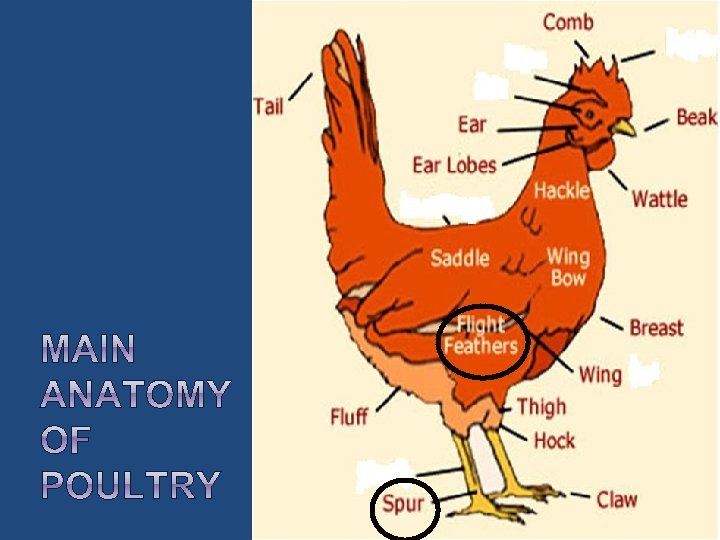
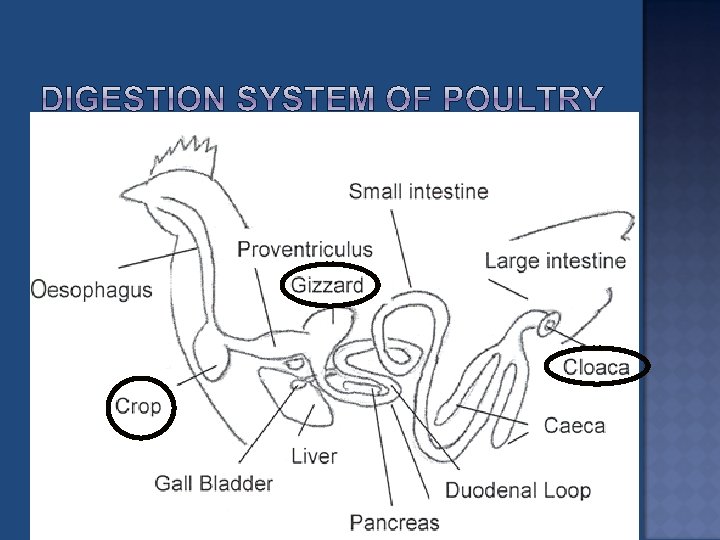
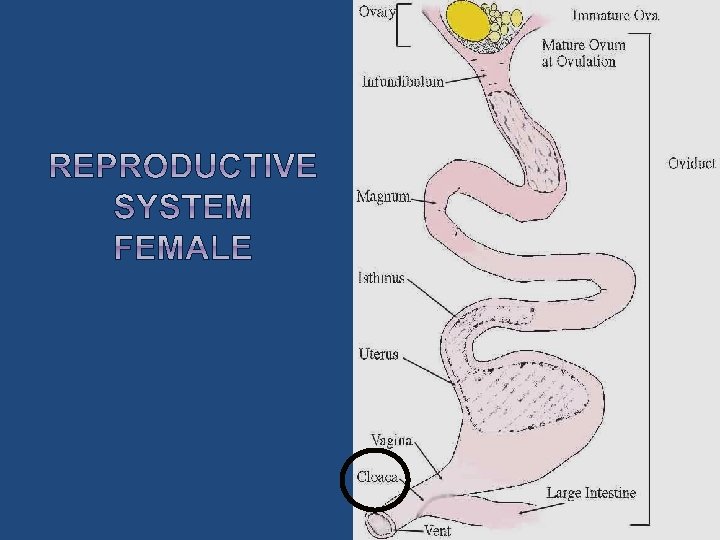
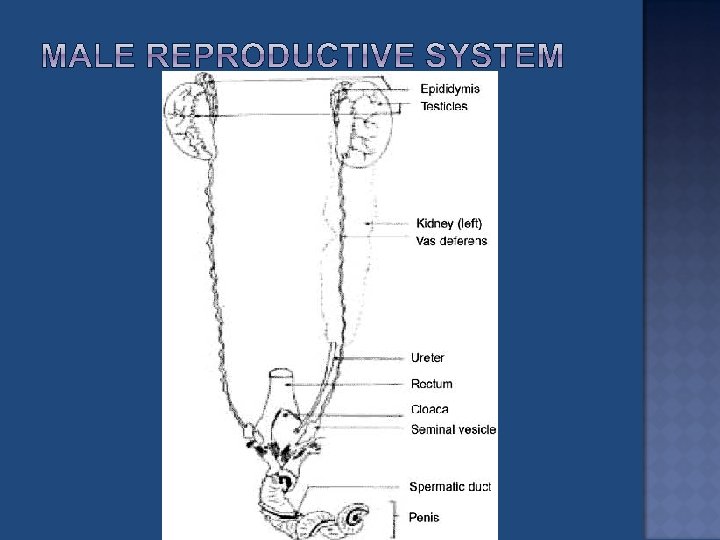
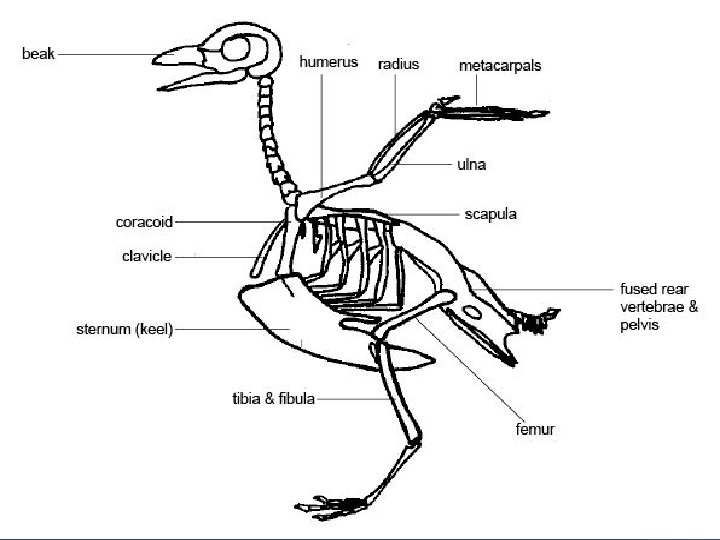
Put the date under yesterday’s words. Define the following words: § Spurs Primary Feathers Crop Gizzard Cloaca Turn in when finished. Due at the end of class.

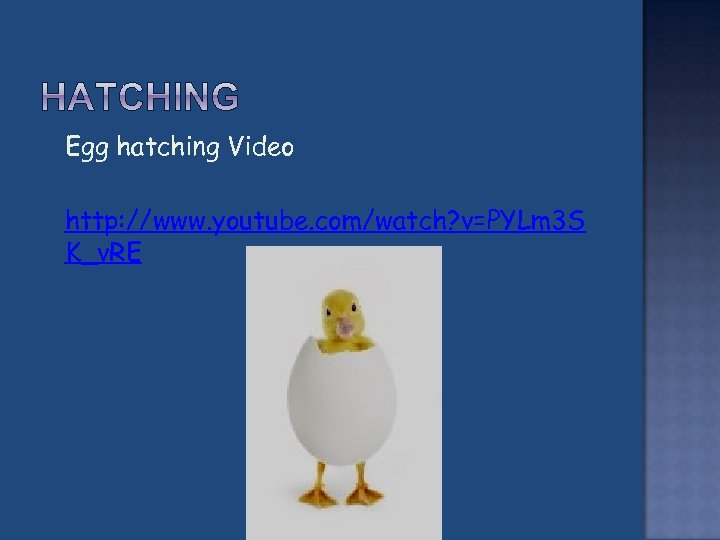
Egg hatching Video http: //www. youtube. com/watch? v=PYLm 3 S K_v. RE
Label the basic anatomical parts of the egg, and reproductive system of the hen Explain the process of gestation within the egg. Discuss the process of fertilization and egg development. Understand the importance and purpose of gestation. Define the process of incubation and its importance.
How do embryos change from fertilization to hatching? (list three main ideas)
Egg- the female germ cell. The egg becomes the embryo. Avian egg- bird eggs.
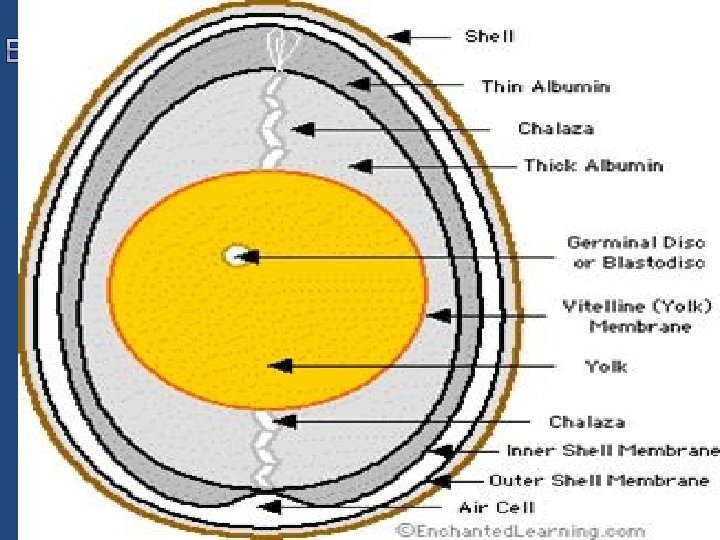
It includes the following: Shell membranes Albumen Yolk Together they protect and nourish.
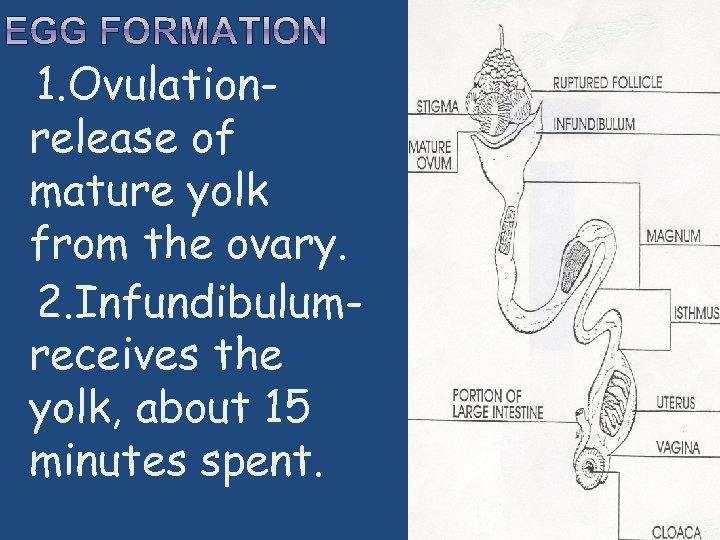
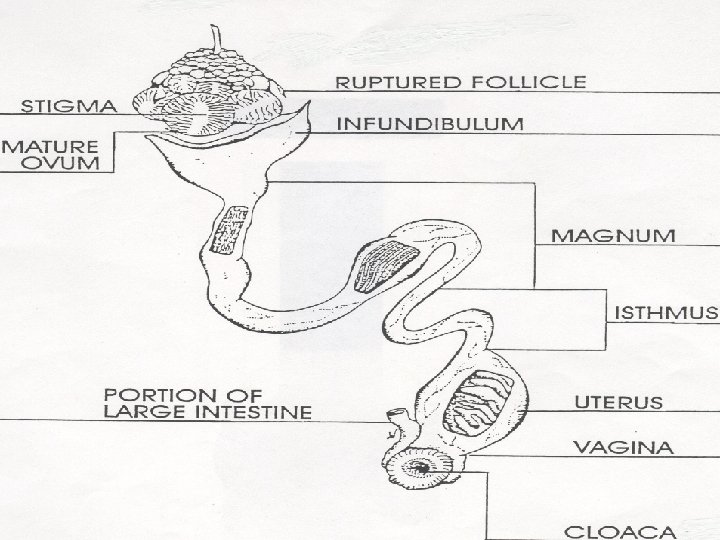
1. Ovulation- release of mature yolk from the ovary. 2. Infundibulumreceives the yolk, about 15 minutes spent.
3. Yolk moves into magnum 50% of albumen is added. Takes 3 hours. 4. Spends 1. 5 hours in the Isthmus. Shell membranes added. 5. Total process takes about 24 hours
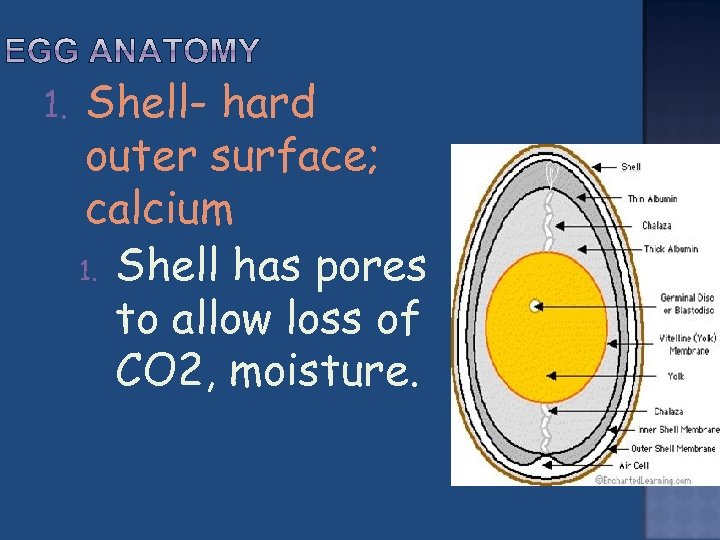
1. Shell- hard outer surface; calcium 1. Shell has pores to allow loss of CO 2, moisture.
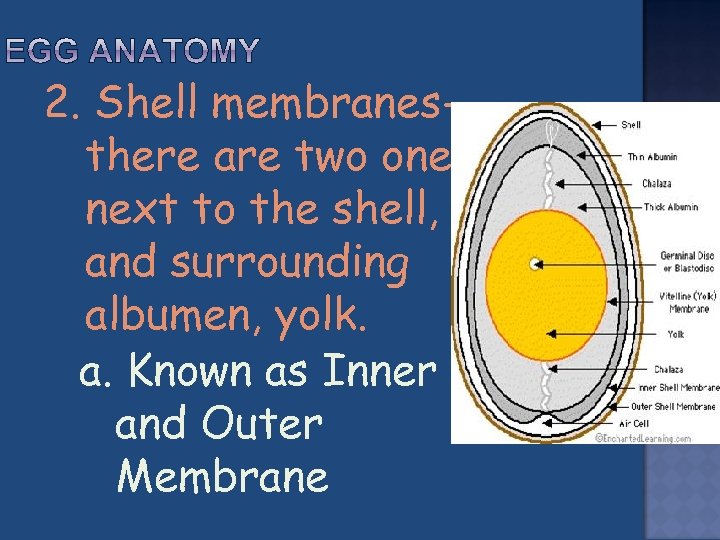
2. Shell membranesthere are two one next to the shell, and surrounding albumen, yolk. a. Known as Inner and Outer Membrane
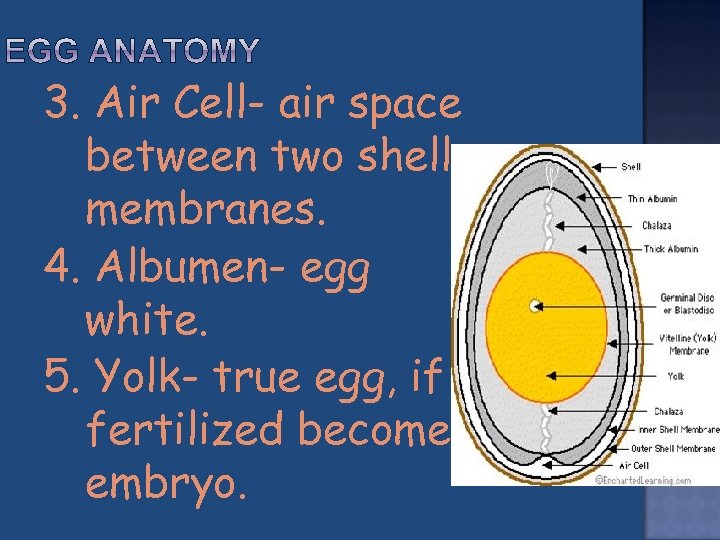
3. Air Cell- air space between two shell membranes. 4. Albumen- egg white. 5. Yolk- true egg, if fertilized become embryo.
Artificially keeping an egg warm until hatching. Done in an incubatorartificially heated container.
The incubator must be kept at a certain temperature range 99 to 103 F. Eggs must be turned while incubating -Why do we turn eggs during incubation? ?
-Temperature = 92 -95 degrees under light, 70 -75 deg in house -Decrease temp. 5 degrees / week until 60 degrees -Teach how to drink right away
-If chicks are huddled together under light = too cold -If none are under light = too hot -Should be scattered
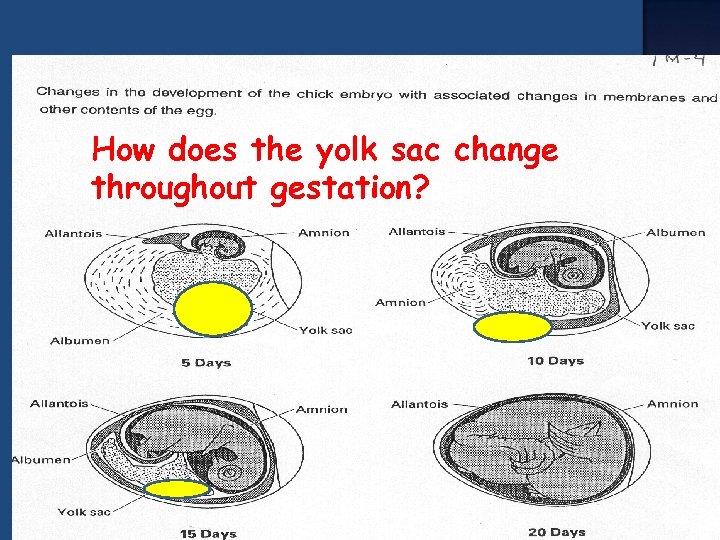
How does the yolk sac change throughout gestation?
Pg. 78, true or false, fill in the blanks and discussion questions.
Put the date under yesterday’s words. Define the following words: Ovum Albumen Gestation Yolk Sac Incubation Turn in when finished. Due at the end of class.
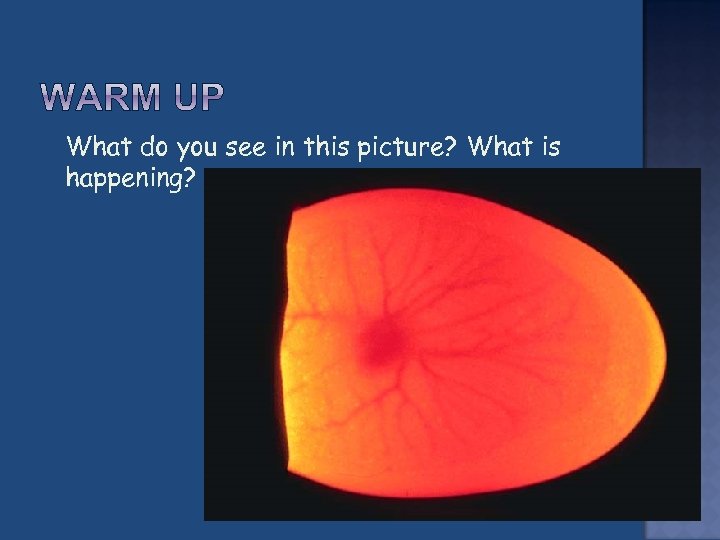
What do you see in this picture? What is happening?
Give one difference between the mammal and the avian fertilization process.
Young develop outside the mother (hen)
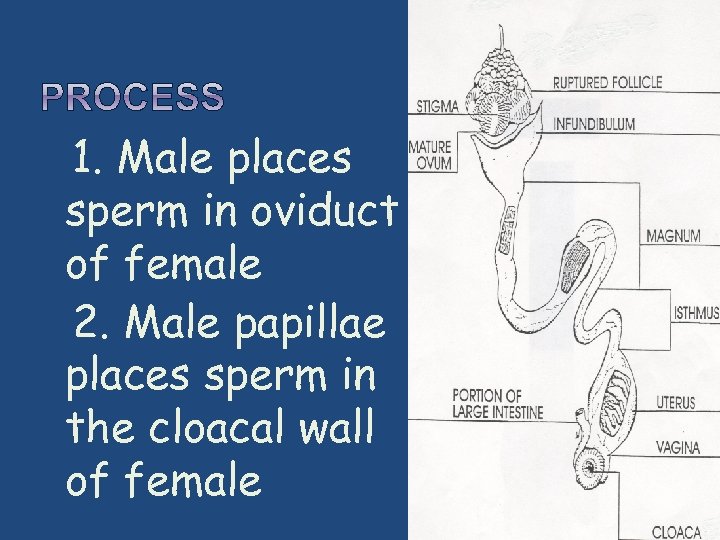
1. Male places sperm in oviduct of female 2. Male papillae places sperm in the cloacal wall of female
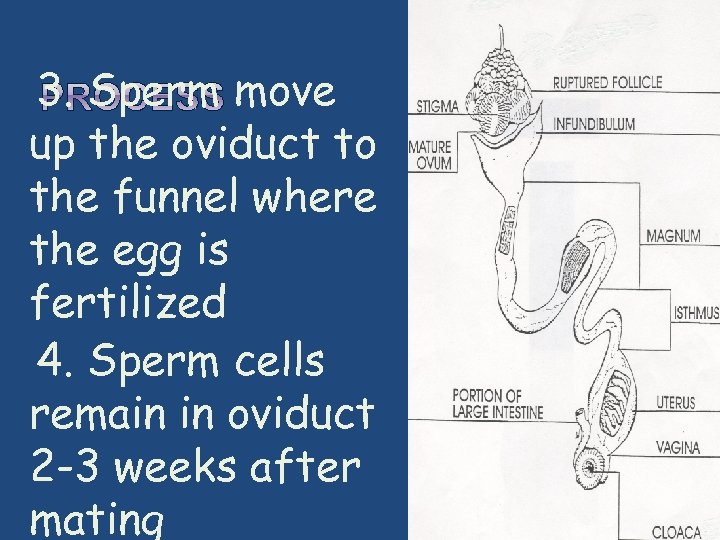
3. Sperm move up the oviduct to the funnel where the egg is fertilized 4. Sperm cells remain in oviduct 2 -3 weeks after mating
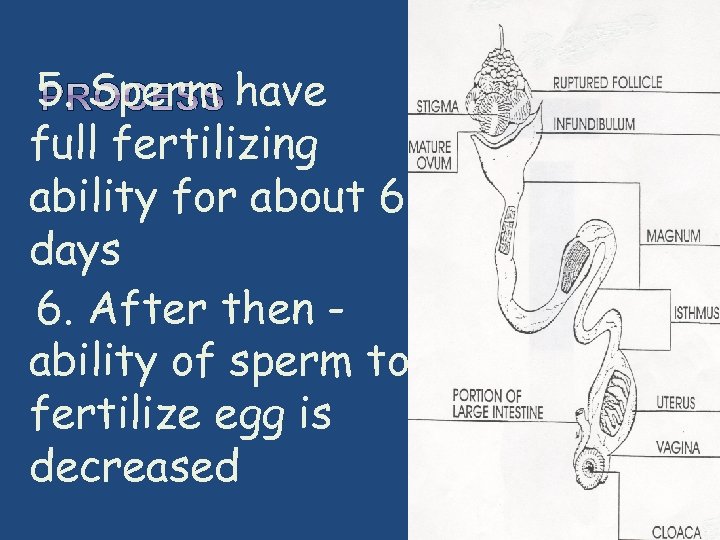
5. Sperm have full fertilizing ability for about 6 days 6. After then ability of sperm to fertilize egg is decreased
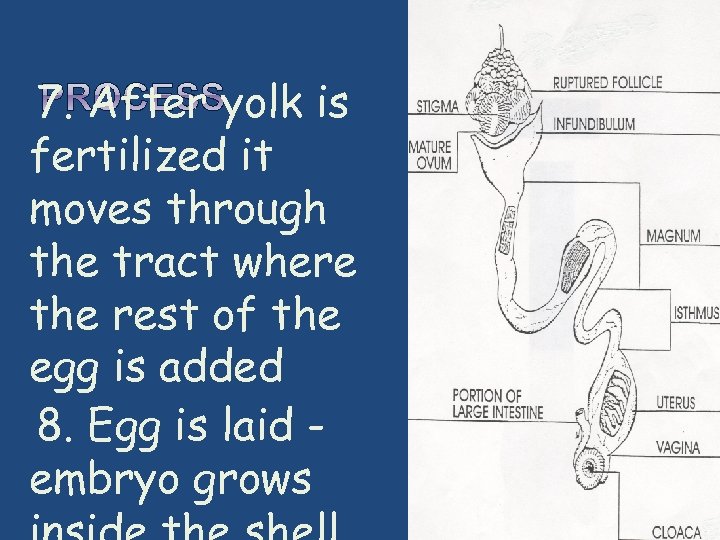
7. After yolk is fertilized it moves through the tract where the rest of the egg is added 8. Egg is laid embryo grows
1. Draw the fertilization process of chickens in your groups. - Include amount of time the sperm takes to travel through the system. -Include all 8 steps. Be CREATIVE! For example, make a cartoon or skit !
http: //www. youtube. com/watch? v=My. HNfy L 2 ru. Q
Describe required management practices and their purpose in poultry health. Evaluate Define basic parts of poultry nutrition. vaccinations and their purpose within the poultry industry.
If you were raising chickens, what types of housing, nutrition, or other needs would you have to meet to make your animals happy and healthy?
-Order chicks early -Only order what you can house
-Space requirements: 10 square inches / chick under light 25 square inches / chick house space -Chicks shouldn’t be allowed to get more than 3 ft away from light
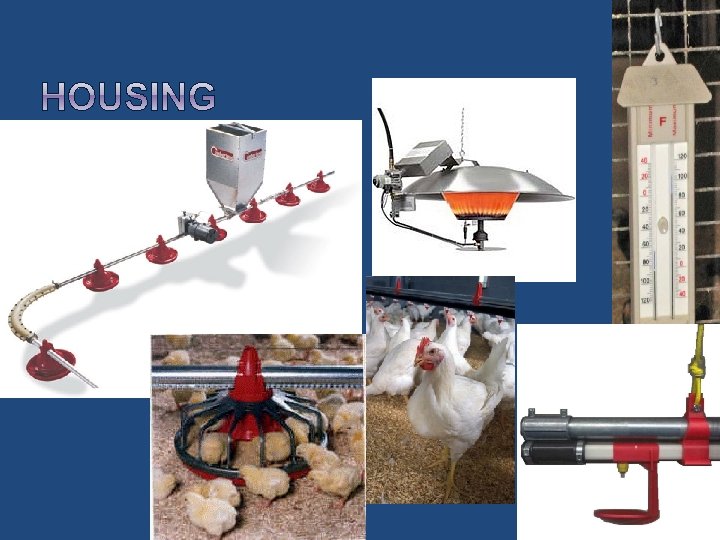
Requirements: Feeding Heaters Litter system Thermometers Alarm systems Humidity Standby Watering system equipment
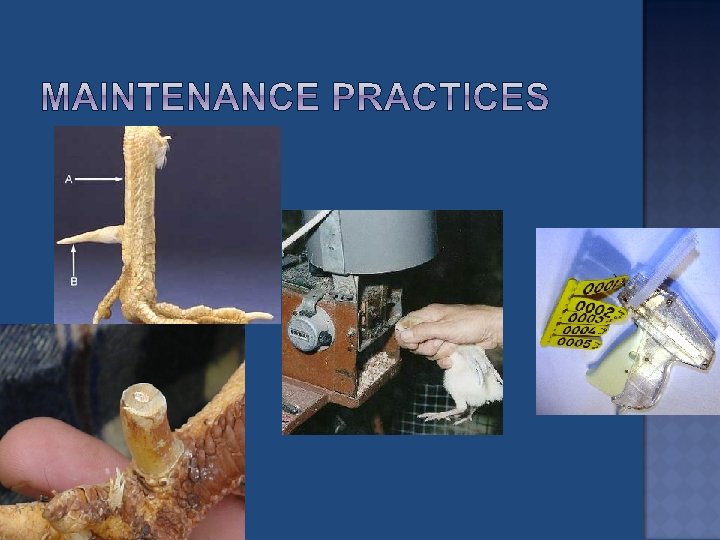
Debeaking: remove 1/3 of the top beak and a small part of the bottom (prevent cannibalism) at 6 -8 days old Vaccinate (hatchery can do this)
Lighting: birds naturally reproduce in spring, simulate spring, chickens molt (shed feathers) production increases
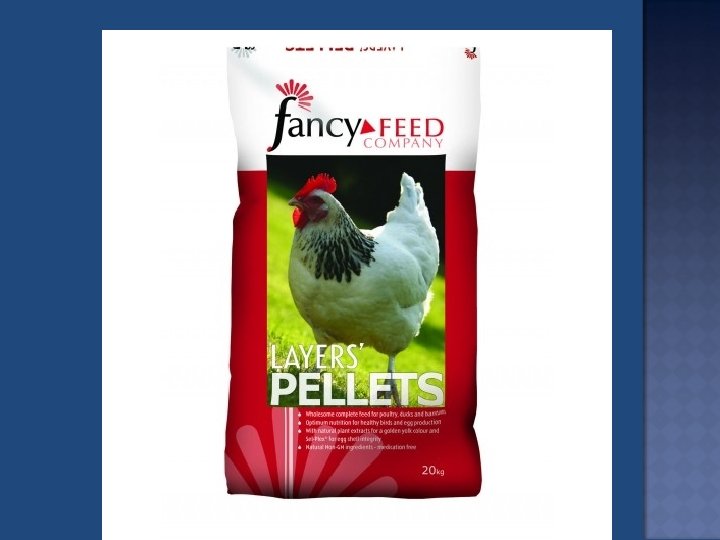
Water: MOST IMPORTANT nutrient Protein Carbohydrates Fats Minerals Vitamins Feed Additives: Marigold
VACCINATION Marek’s Disease: vaccine given in ovo Symptoms include : paralysis ,
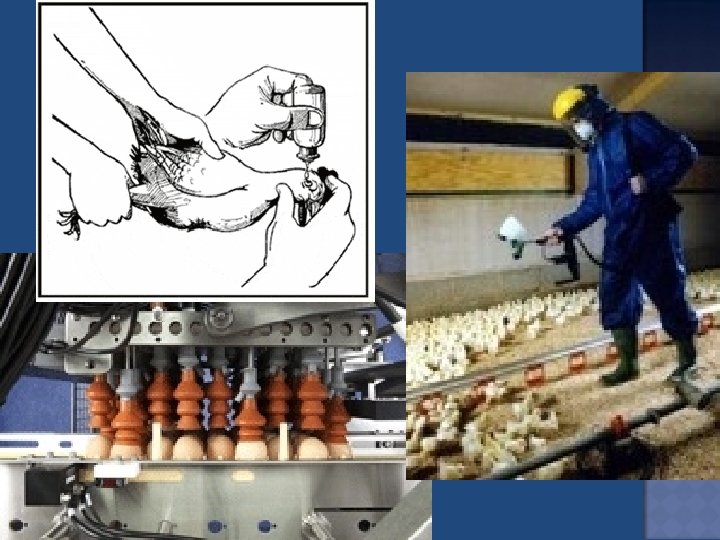
VACCINATION
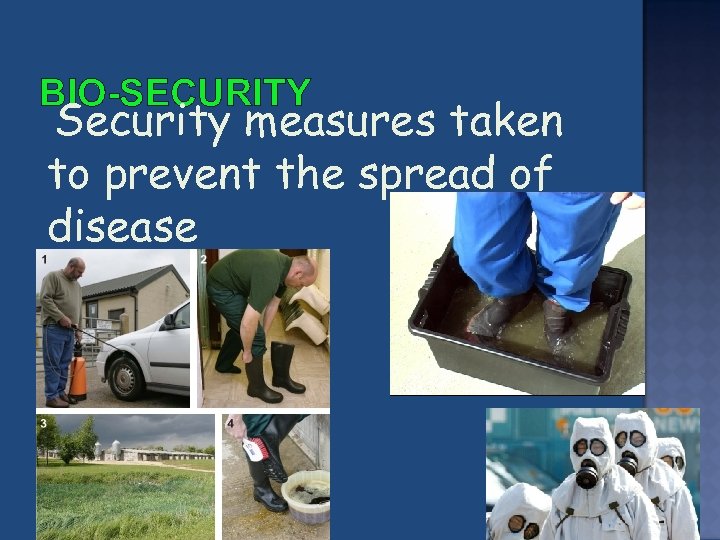
BIO-SECURITY Security measures taken to prevent the spread of disease
Define the following words: Litter Marek’s disease Vaccination Biosecurity Infectious Bronchitis Turn in when finished. Due at the end of class.
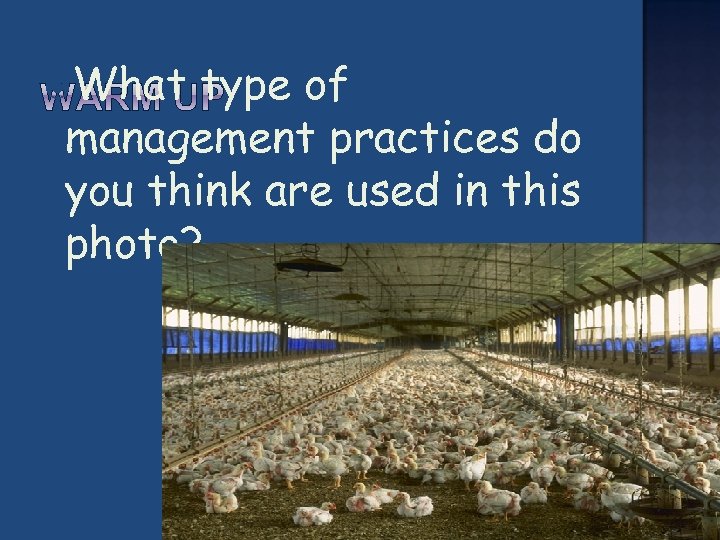
What type of management practices do you think are used in this photo?
Define Label vertical integration. major parts of the poultry industry. Summarize the main processes in poultry production.
How does vertical integration help chicken producers?
Collect eggs 2 -3 times per day (if hot) Wash eggs immediately in warm water
Refrigerate & keep away from onions & mold Production Goal: 4 lbs feed / dozen eggs Hens produce 7 eggs / 10 days
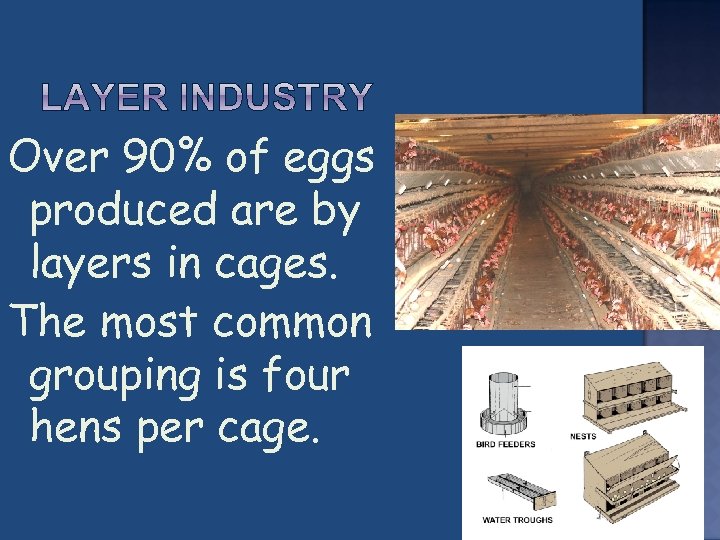
Over 90% of eggs produced are by layers in cages. The most common grouping is four hens per cage.
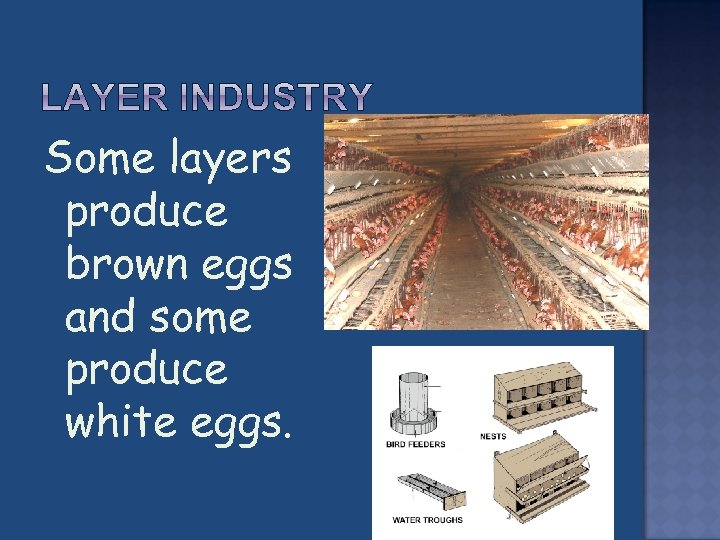
Some layers produce brown eggs and some produce white eggs.
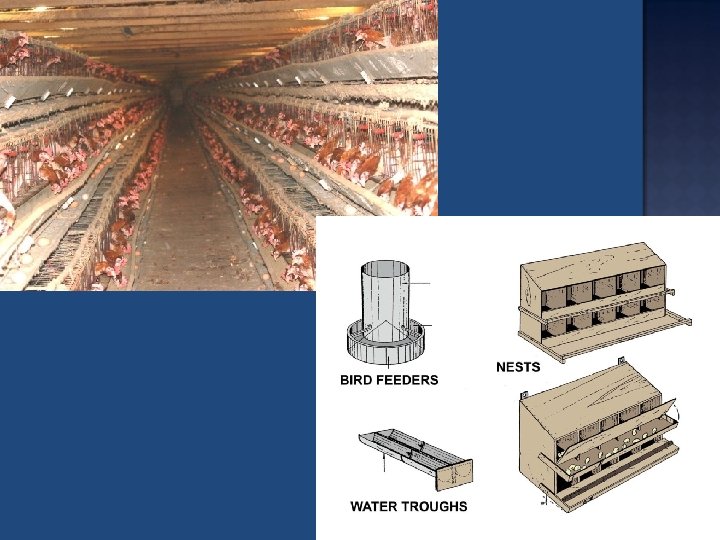
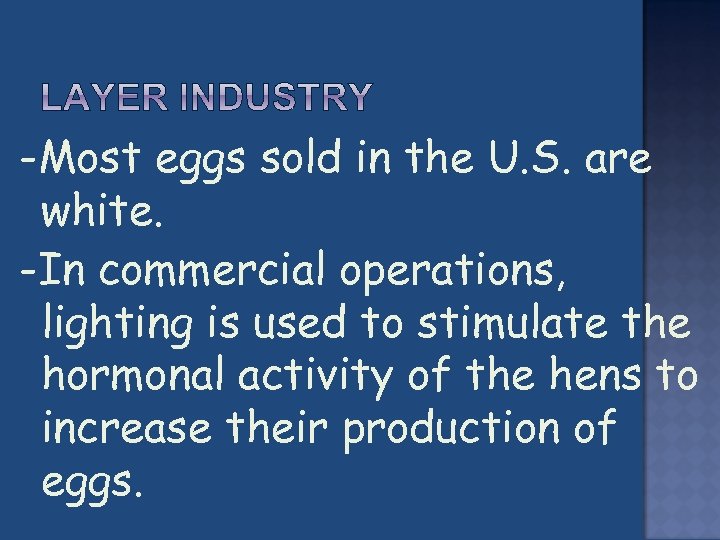
-Most eggs sold in the U. S. are white. -In commercial operations, lighting is used to stimulate the hormonal activity of the hens to increase their production of eggs.
-They produce eggs naturally when the days are longer than the nights. -Most operations allow 14 15 hours of light per day
-Eggs are coated with a thin coat of mineral oil to prevent carbon dioxide from escaping from within the egg. -Eggs are graded according to size and checked for cracks and interior spots by candling.
Don’t keep in cages (weak bones & bruise easily) Keep light on at night (prevent cannibalism)
Market at 4 1/2 lbs for males, 3 1/2 lbs for females (about 8 weeks) 2. 1 lbs feed / lb of gain
Most are white Colored birds have pigmentation spots in their skin which is undesirable to the consumer
Kept to certain age, based on weight ALL IN ALL OUT
All birds are hatched at same time Grow together at same general rate
All sent to slaughter at same time Entire house disinfected and cleaned New “generation” brought in
VERTICAL INTEGRATION Definition: Several steps in production, from raw materials to final product, are controlled by company or owner.
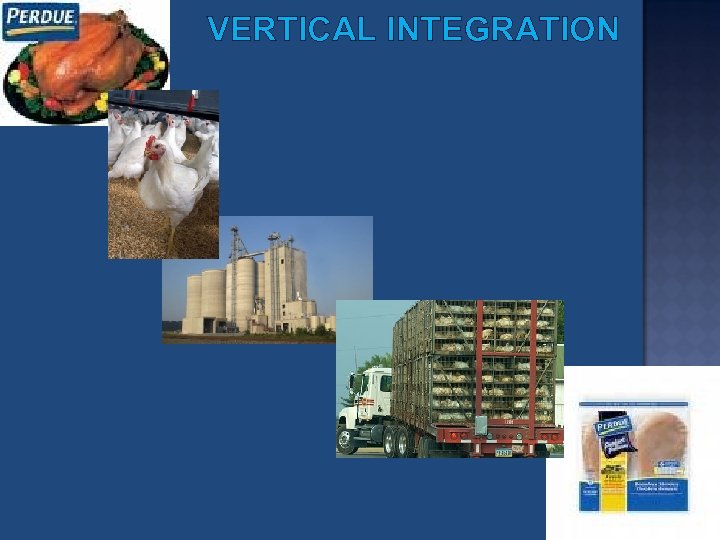
VERTICAL INTEGRATION
Draw on a poster with your group a representation on vertical integration. Label each segment (grain mill, slaughter house etc)
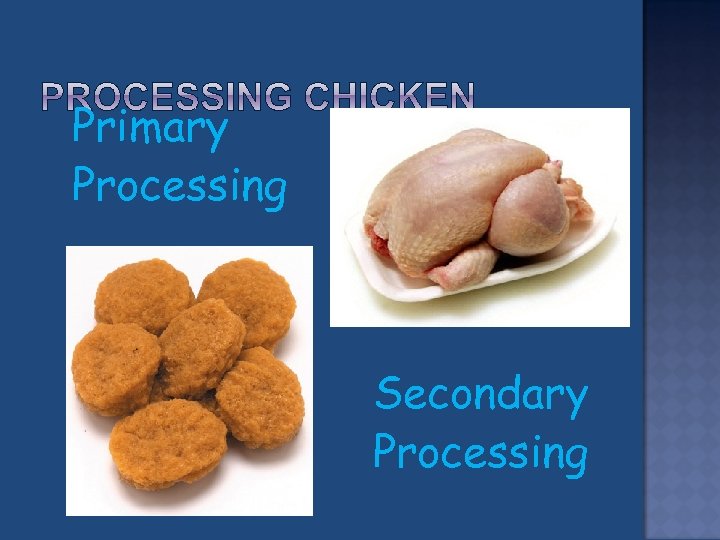
Primary Processing Secondary Processing
Agronomy Sales Shift supervisor Seed Production Grain Operations Farm Marketer Feed Mill Manager Plant Manager Waste Water Supervisor Barn Supervisor www. mrpoultry. com/oppor tunities. html
Define the following words: Vertical Integration Primary Processing (give an example) Secondary Processing (give an example) Turn in when finished. Due at the end of class.
Modern Livestock & Poultry Production 5 th Edition. By James Gillespie. Oklahoma State University- Animal Science department. http: //www. ca. uky. edu/agripedia
Скачать презентацию Students will Identify major breeds of chicken
10f094c2f92e7e0f703d75fb3449cc51.ppt