

Student’s name: Abdulla Kairat and Kenzhalina Nazdana Faculty:Dentistry

Student’s name: Abdulla Kairat and Kenzhalina Nazdana Faculty:Dentistry Course:4 Group:14-001 Teacher: Bizhanova Ainur SIW The theme: Dental caries and pulpitis Kazakh National Medical University named after S.D.Asfendiyarov
Dental caries Dental caries is a breakdown of teeth due to acids made by bacteria. The cavities may be a number of different colors from yellow to black. Symptoms may include pain and difficulty with eating.Complications may include inflammation of the tissue around the tooth, tooth loss, and infection or abscess formation.
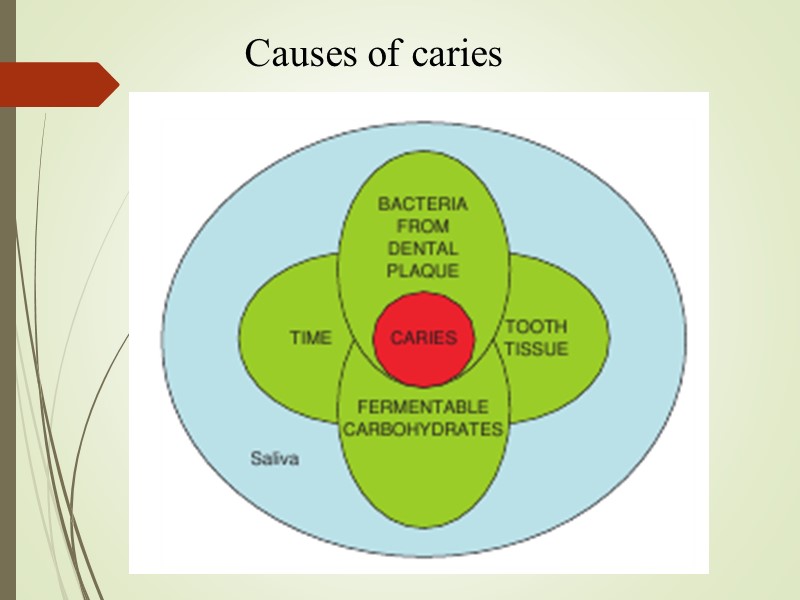
Causes of caries
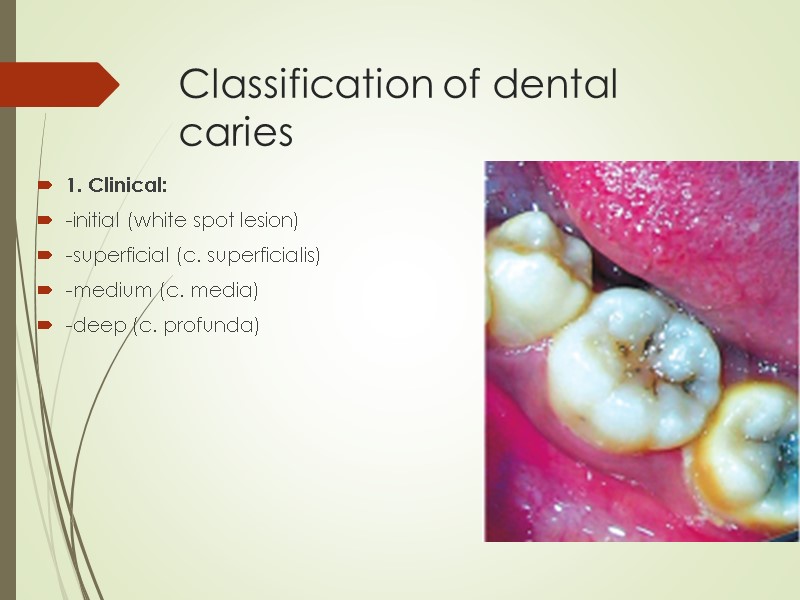
Classification of dental caries 1. Clinical: -initial (white spot lesion) -superficial (c. superficialis) -medium (c. media) -deep (c. profunda)
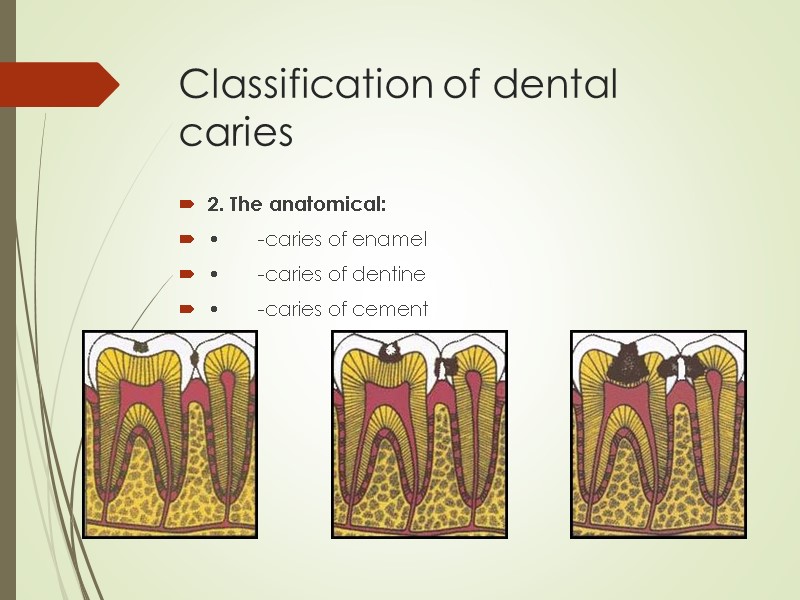
Classification of dental caries 2. The anatomical: • -caries of enamel • -caries of dentine • -caries of cement
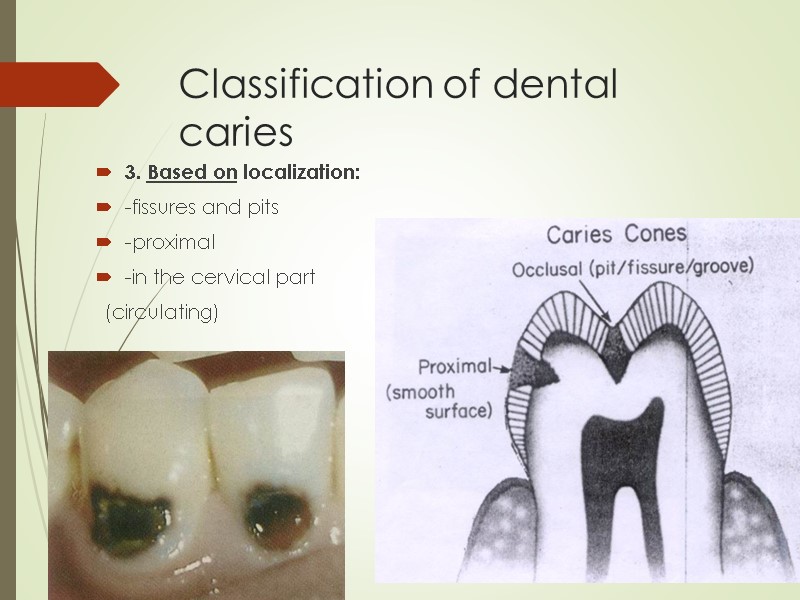
Classification of dental caries 3. Based on localization: -fissures and pits -proximal -in the cervical part (circulating)
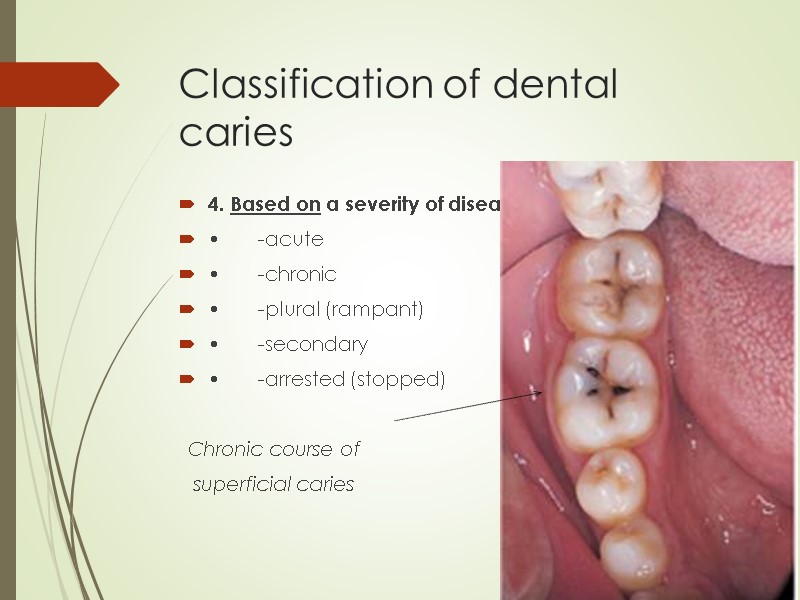
Classification of dental caries 4. Based on a severity of disease: • -acute • -chronic • -plural (rampant) • -secondary • -arrested (stopped) Chronic course of superficial caries
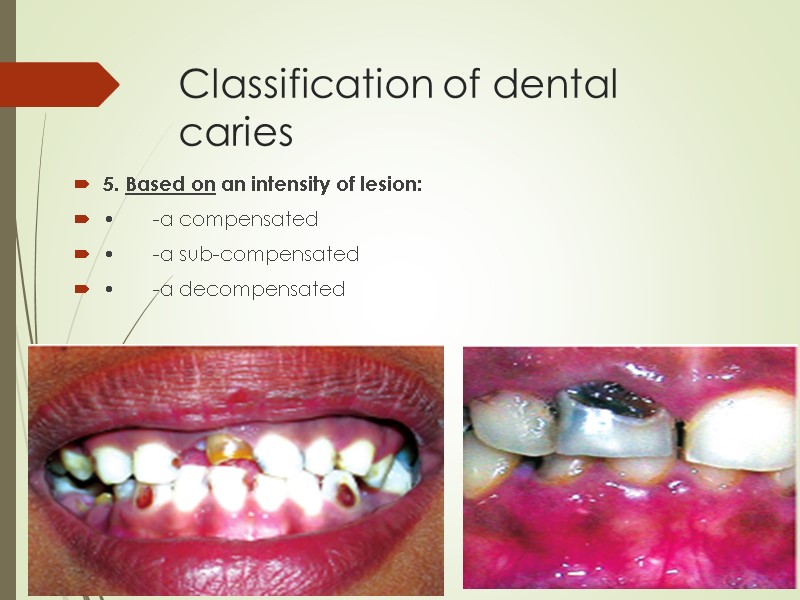
Classification of dental caries 5. Based on an intensity of lesion: • -a compensated • -a sub-compensated • -a decompensated
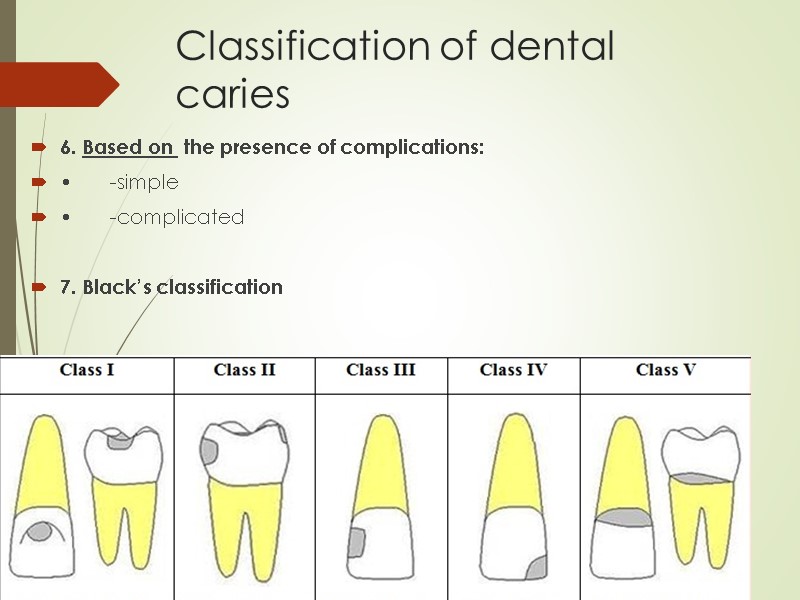
Classification of dental caries 6. Based on the presence of complications: • -simple • -complicated 7. Black’s classification
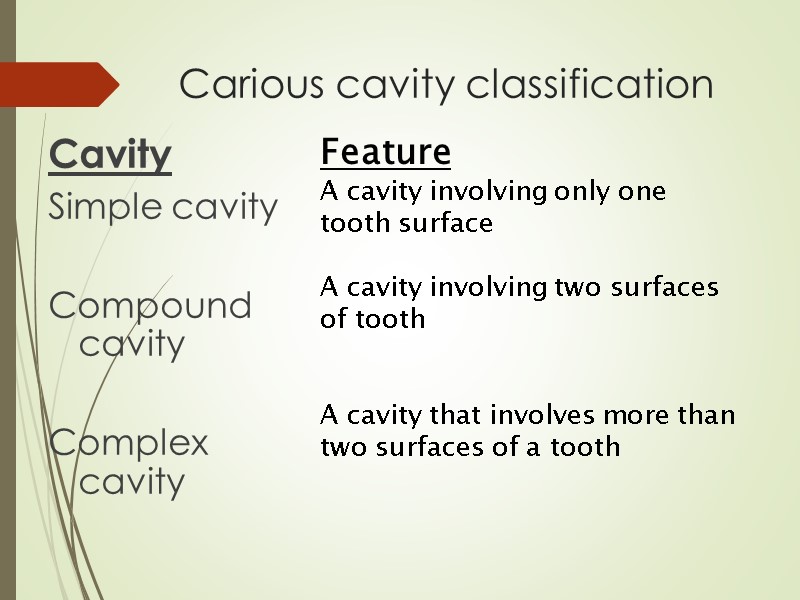
Carious cavity classification Cavity Simple cavity Compound cavity Complex cavity Feature A cavity involving only one tooth surface A cavity involving two surfaces of tooth A cavity that involves more than two surfaces of a tooth
Common stages of dental hard tissues preparation - Anaesthetizing - Disclosure (opening and extension) of carious cavity - Necrectomy - Formation of the carious - Finishing (smoothing) the edges of enamel
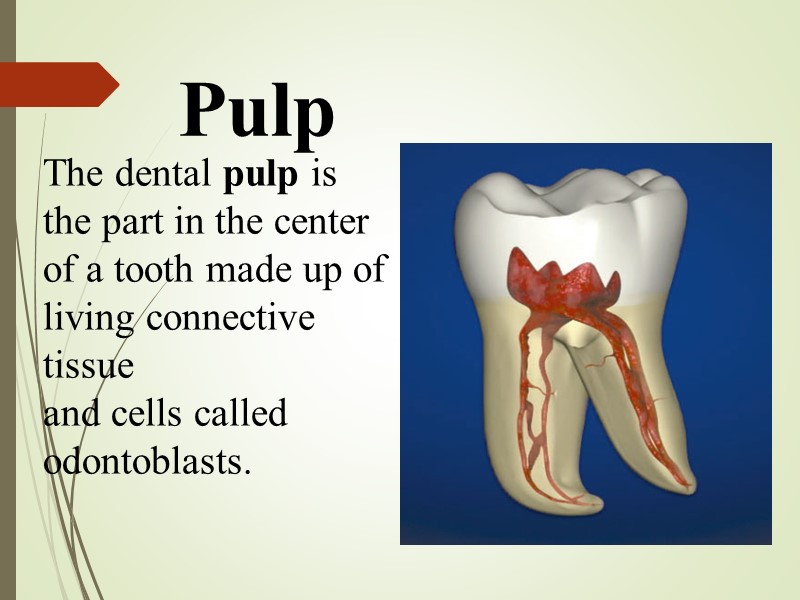
Pulp The dental pulp is the part in the center of a tooth made up of living connective tissue and cells called odontoblasts.
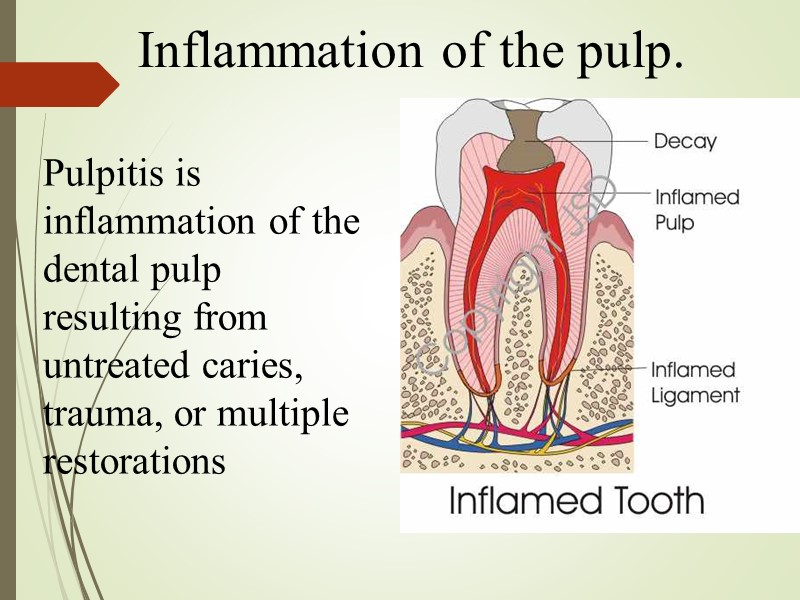
Inflammation of the pulp. Pulpitis is inflammation of the dental pulp resulting from untreated caries, trauma, or multiple restorations
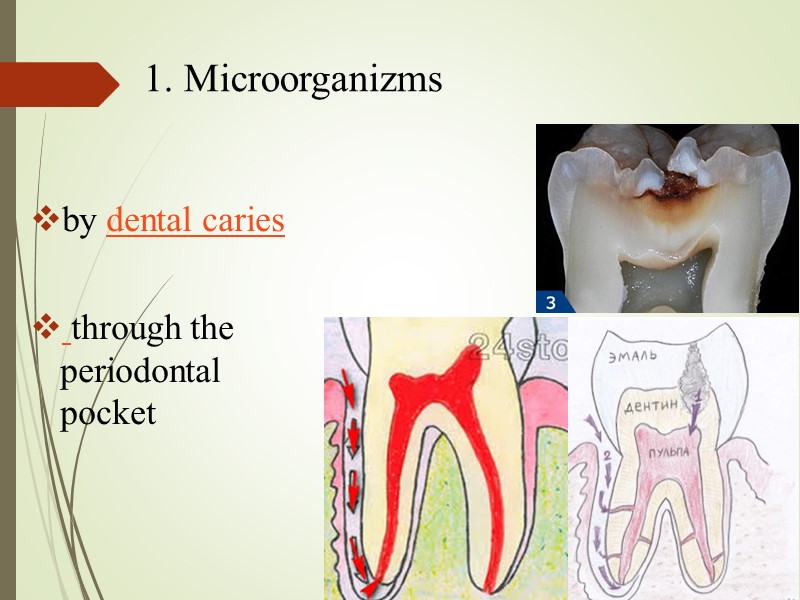
by dental caries through the periodontal pocket 1. Microorganizms
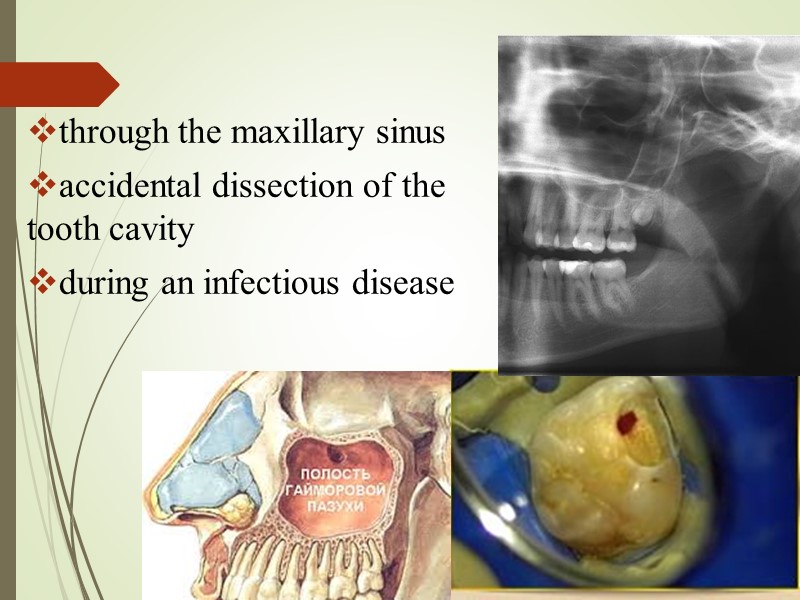
through the maxillary sinus accidental dissection of the tooth cavity during an infectious disease
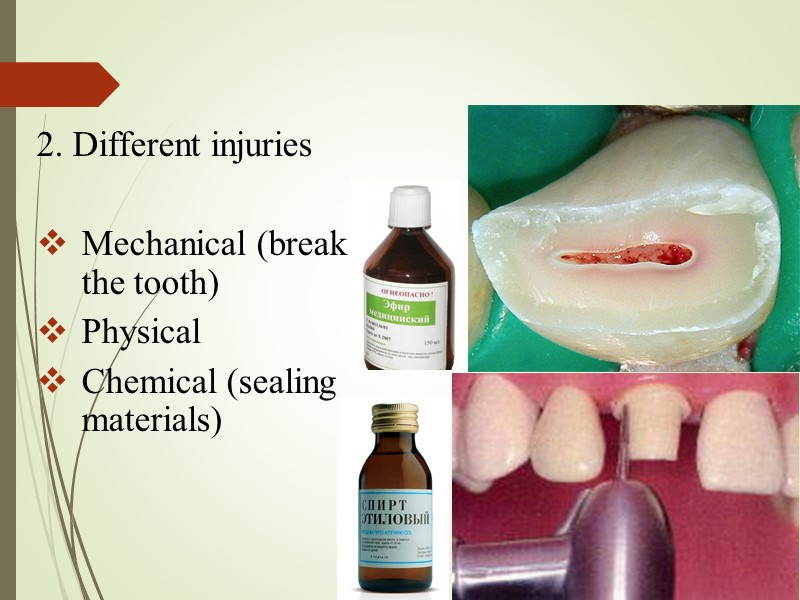
2. Different injuries Mechanical (break the tooth) Physical Chemical (sealing materials)
Аcute inflammation of the pulp: Partial Full Purulent Chronic inflammation of the pulp: Оrdinary Hypertrophic Gangrenous Exacerbation of chronic pulpitis: Retrograde Сoncrement Тraumatic E.M.Gophung(1927) & ASMI have created classification of pulpitis
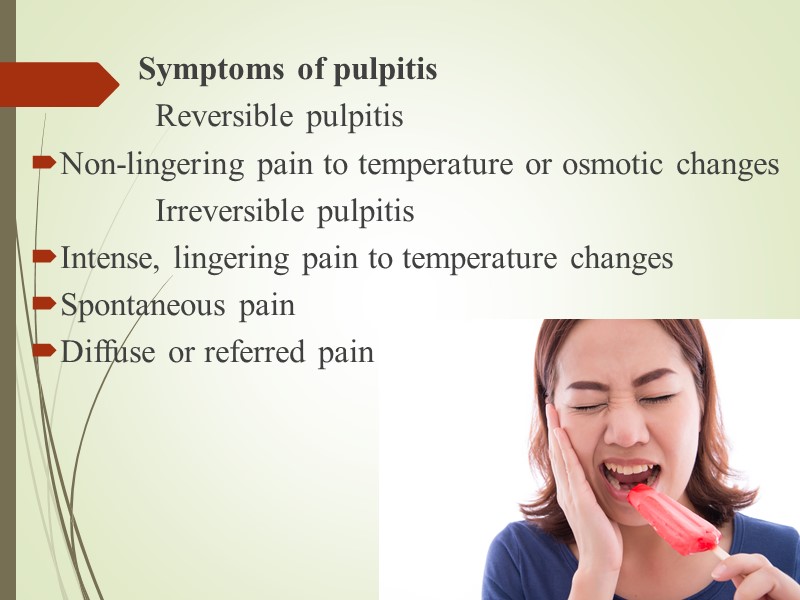
Symptoms of pulpitis Reversible pulpitis Non-lingering pain to temperature or osmotic changes Irreversible pulpitis Intense, lingering pain to temperature changes Spontaneous pain Diffuse or referred pain
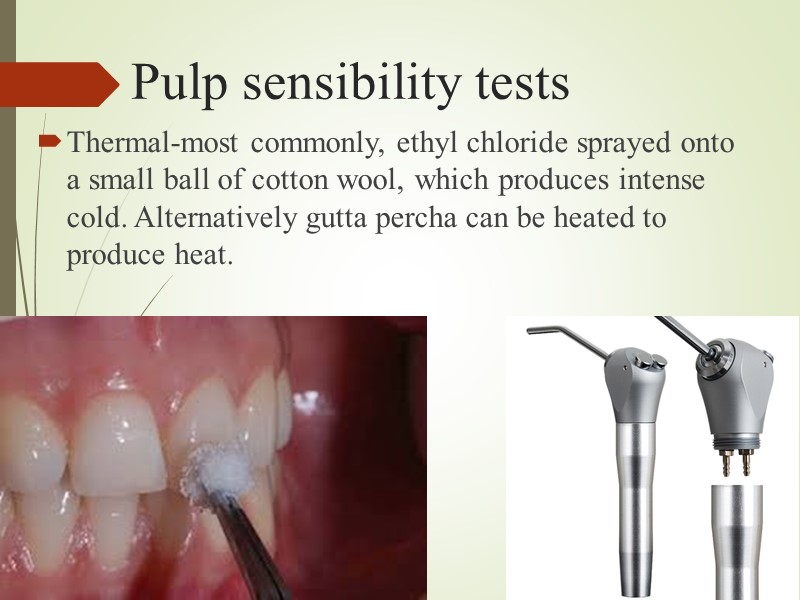
Pulp sensibility tests Thermal-most commonly, ethyl chloride sprayed onto a small ball of cotton wool, which produces intense cold. Alternatively gutta percha can be heated to produce heat.
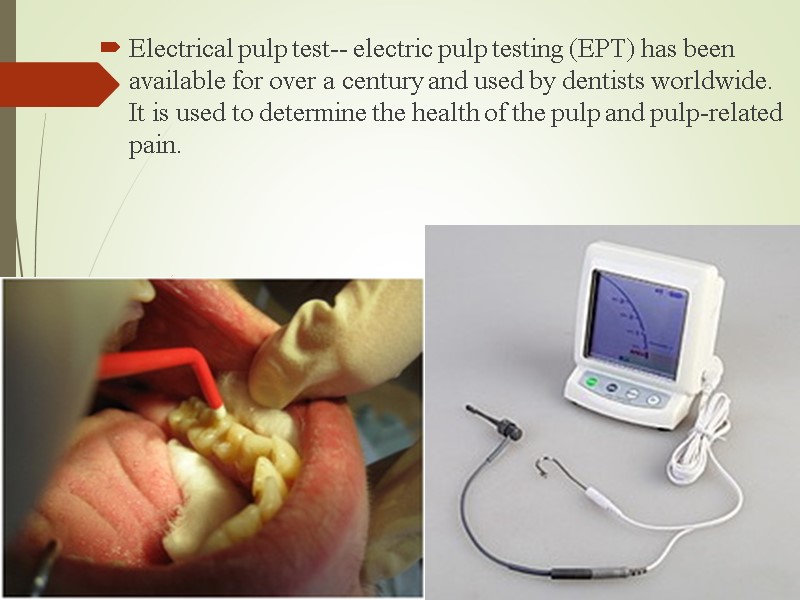
Electrical pulp test-- electric pulp testing (EPT) has been available for over a century and used by dentists worldwide. It is used to determine the health of the pulp and pulp-related pain.
Thank you for attention
 Скачать презентацию Student’s name: Abdulla Kairat and Kenzhalina Nazdana Faculty:Dentistry
35344-abdulla_k_and_nazdana.ppt
- Количество слайдов: 21