 Скачать презентацию STUDENTS BECOME HISTORIANS WHEN THEY DO THE HISTORY
e64b4f5e2614785b932d574eeb60864a.ppt
- Количество слайдов: 80



STUDENTS BECOME HISTORIANS WHEN THEY DO THE HISTORY FAIR! • YOU ask a historical question that you want to answer • YOU do research using authentic sources & join the conversations of other historians • YOU analyze and come to your own conclusions, make your own argument supported by evidence • YOU produce a project to present to the public HISTORY FAIR STUDENTS BECOME…
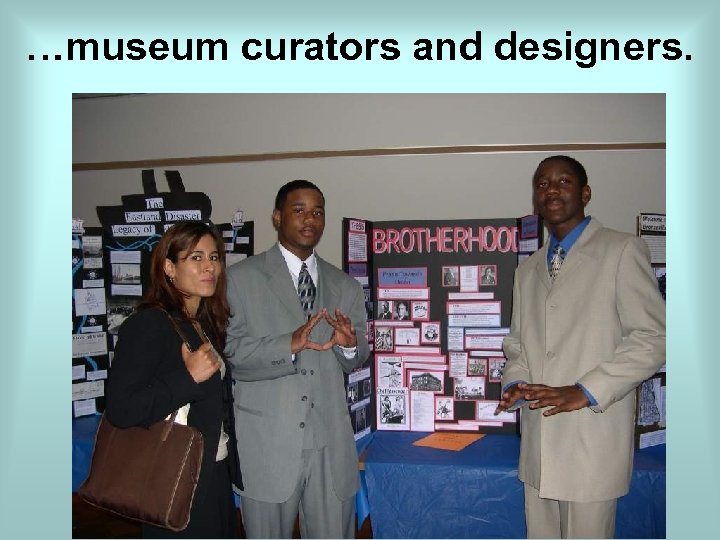
…museum curators and designers.
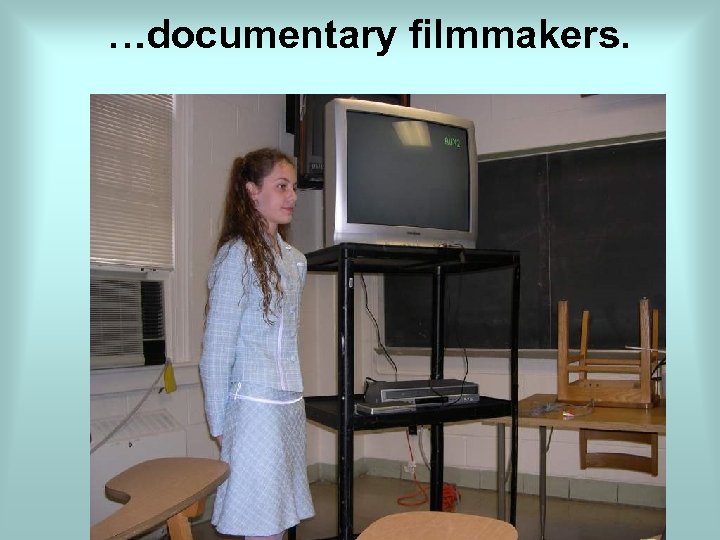
…documentary filmmakers.
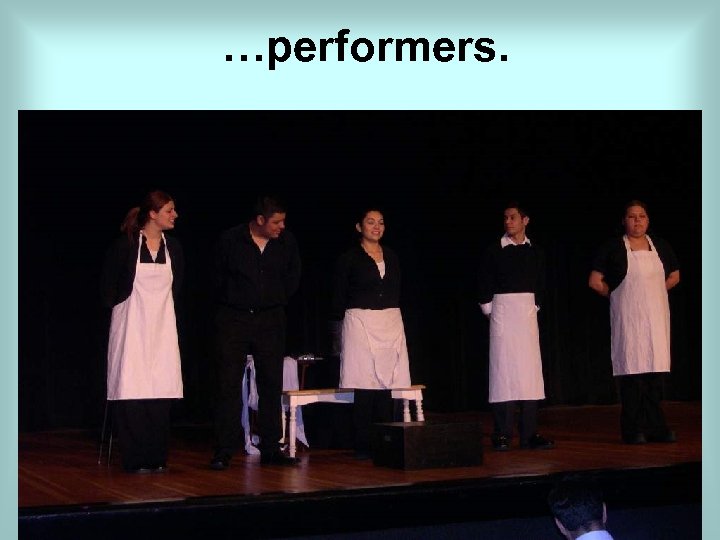
…performers.
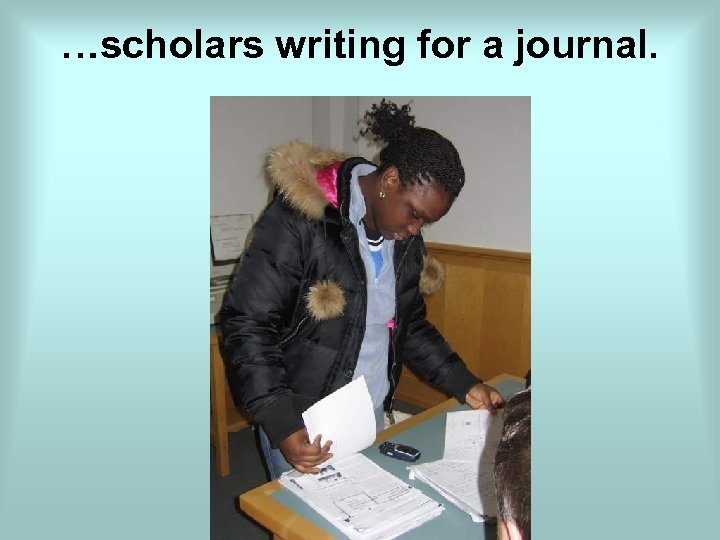
…scholars writing for a journal.
Here’s how you do it: 5 Steps to Becoming a Historian
Step 1 I Wonder Why… Asking questions, Finding a Topic
Approaches to Finding Topics • What broad topics interest you? Immigration, politics, labor, business, technology, arts, sports, race or ethnic issues, rights, women’s issues… • What’s going on in your community? In the world? In the U. S. ? • What part of history is most intriguing for you? • What do you wonder about: How do the arts change society? How do people get and share power in a democracy? What happens to people, communities, nations in times of war? How did my community get this way? What do people do when the economy changes?
Where to look for ideas… • Encyclopedia of Chicago, Chicago History, other Chicago-based publication • Newspapers, magazines • Your history book! • Archives, special collections • Talk to people, look around your own community, and city—you may find stories all over the place!
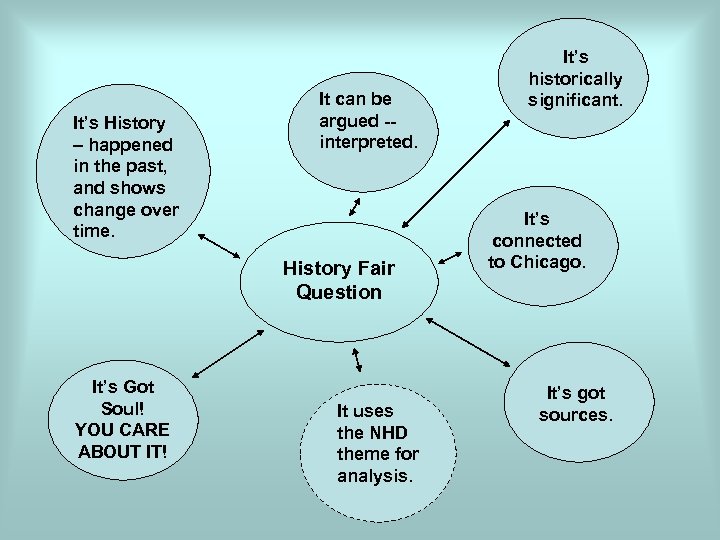
It’s History – happened in the past, and shows change over time. It can be argued -interpreted. History Fair Question It’s Got Soul! YOU CARE ABOUT IT! It uses the NHD theme for analysis. It’s historically significant. It’s connected to Chicago. It’s got sources.
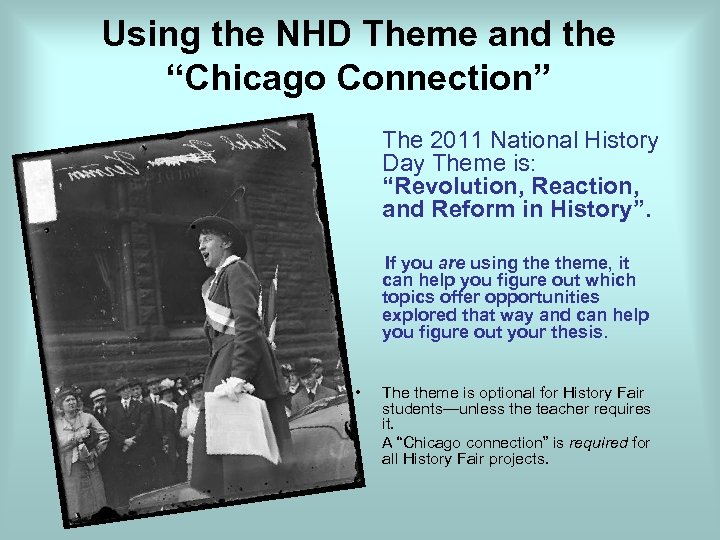
Using the NHD Theme and the “Chicago Connection” The 2011 National History Day Theme is: “Revolution, Reaction, and Reform in History”. If you are using theme, it can help you figure out which topics offer opportunities explored that way and can help you figure out your thesis. • • The theme is optional for History Fair students—unless the teacher requires it. A “Chicago connection” is required for all History Fair projects.
Just like a historian, keep these things in mind when making decisions about what is important enough to include in the story: • Causes and effects • What changed over time? • Why and how did events develop as they did? • So what? -- Why did this person/idea/event make an impact in history? • How does this topic connect to the “big picture”?
Step 2 – How do I find stuff? The Research Journey
Research is a journey. You start it when you seek a topic and question to developing your thesis and argument.
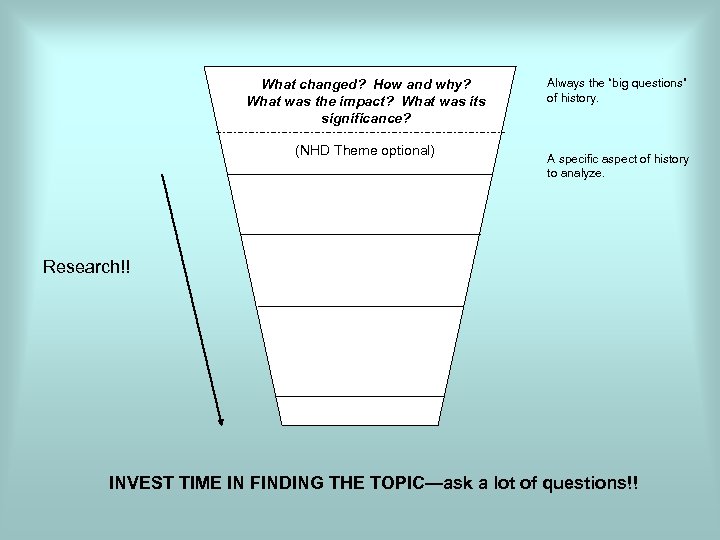
What changed? How and why? What was the impact? What was its significance? (NHD Theme optional) Always the “big questions” of history. A specific aspect of history to analyze. Research!! INVEST TIME IN FINDING THE TOPIC—ask a lot of questions!!
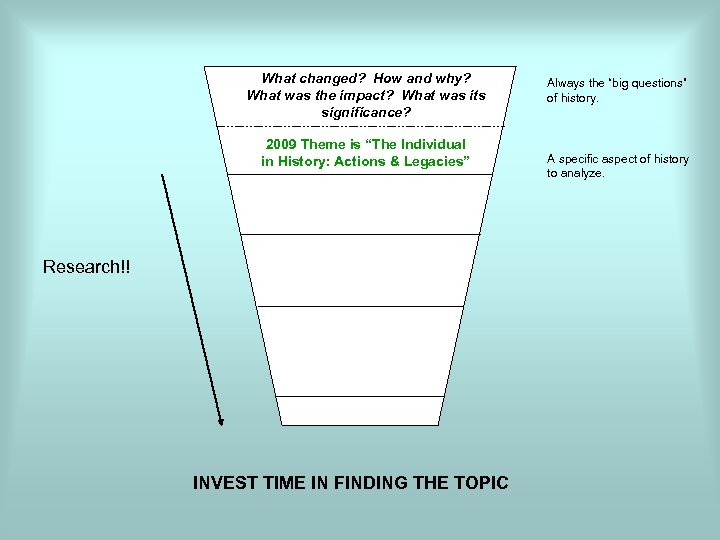
What changed? How and why? What was the impact? What was its significance? 2009 Theme is “The Individual in History: Actions & Legacies” Research!! INVEST TIME IN FINDING THE TOPIC Always the “big questions” of history. A specific aspect of history to analyze.
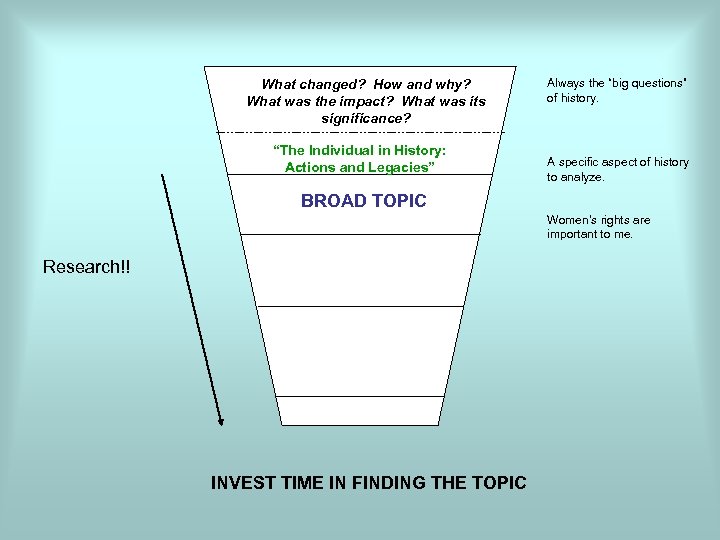
What changed? How and why? What was the impact? What was its significance? “The Individual in History: Actions and Legacies” Always the “big questions” of history. A specific aspect of history to analyze. BROAD TOPIC Women’s rights are important to me. Research!! INVEST TIME IN FINDING THE TOPIC
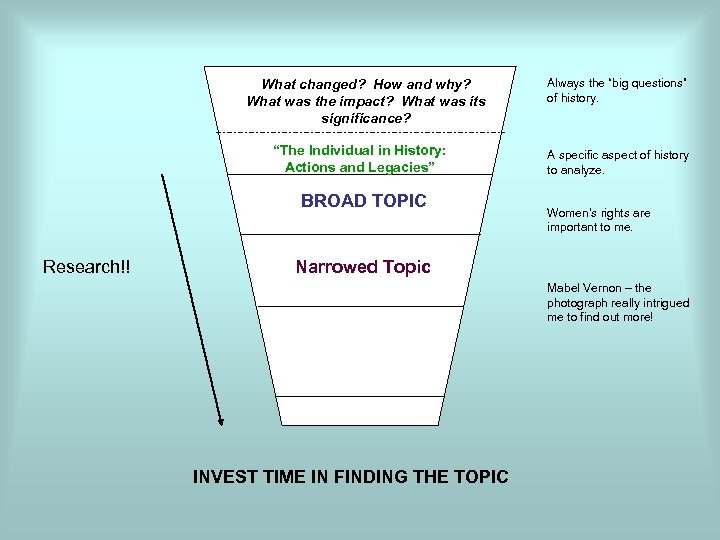
What changed? How and why? What was the impact? What was its significance? “The Individual in History: Actions and Legacies” BROAD TOPIC Research!! Always the “big questions” of history. A specific aspect of history to analyze. Women’s rights are important to me. Narrowed Topic Mabel Vernon – the photograph really intrigued me to find out more! INVEST TIME IN FINDING THE TOPIC
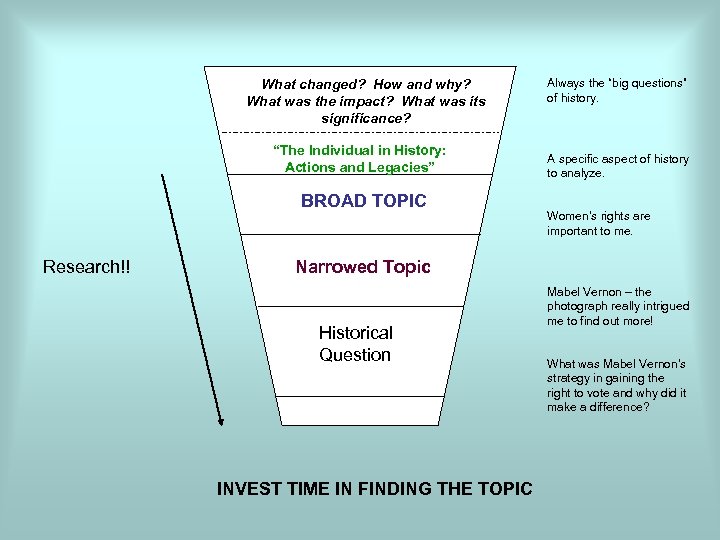
What changed? How and why? What was the impact? What was its significance? “The Individual in History: Actions and Legacies” BROAD TOPIC Research!! Always the “big questions” of history. A specific aspect of history to analyze. Women’s rights are important to me. Narrowed Topic Historical Question INVEST TIME IN FINDING THE TOPIC Mabel Vernon – the photograph really intrigued me to find out more! What was Mabel Vernon’s strategy in gaining the right to vote and why did it make a difference?
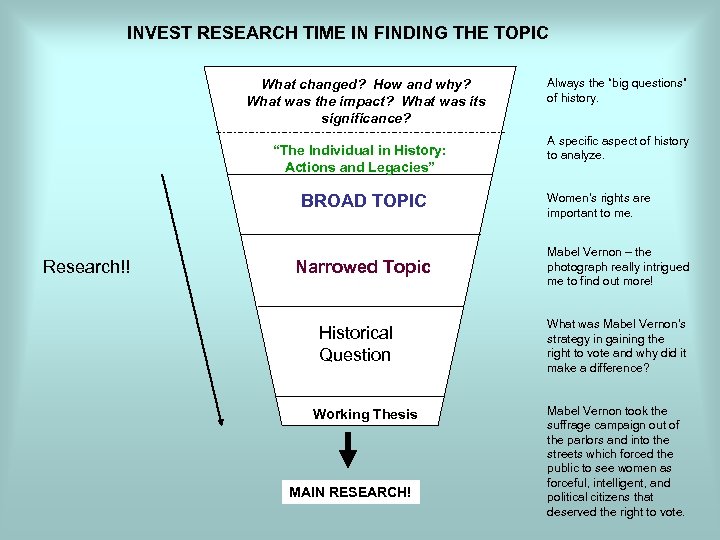
INVEST RESEARCH TIME IN FINDING THE TOPIC What changed? How and why? What was the impact? What was its significance? “The Individual in History: Actions and Legacies” BROAD TOPIC Research!! Narrowed Topic Historical Question Working Thesis MAIN RESEARCH! Always the “big questions” of history. A specific aspect of history to analyze. Women’s rights are important to me. Mabel Vernon – the photograph really intrigued me to find out more! What was Mabel Vernon’s strategy in gaining the right to vote and why did it make a difference? Mabel Vernon took the suffrage campaign out of the parlors and into the streets which forced the public to see women as forceful, intelligent, and political citizens that deserved the right to vote.
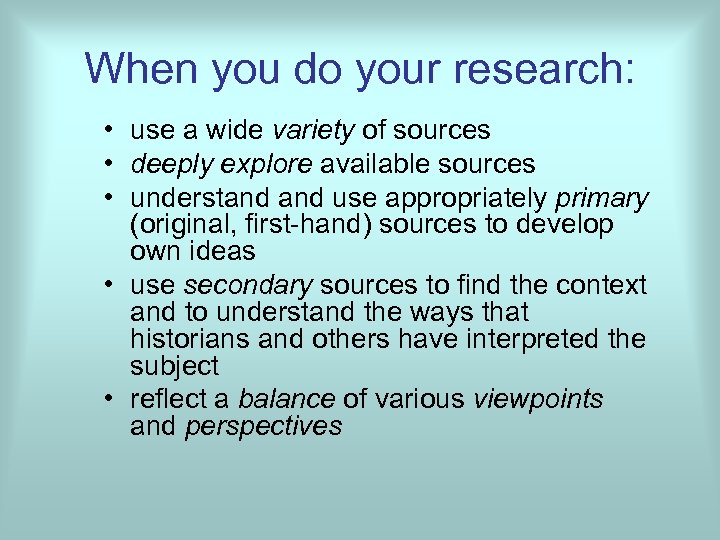
When you do your research: • use a wide variety of sources • deeply explore available sources • understand use appropriately primary (original, first-hand) sources to develop own ideas • use secondary sources to find the context and to understand the ways that historians and others have interpreted the subject • reflect a balance of various viewpoints and perspectives
Secondary Sources Materials that make an argument or offer interpretation built upon primary sources.
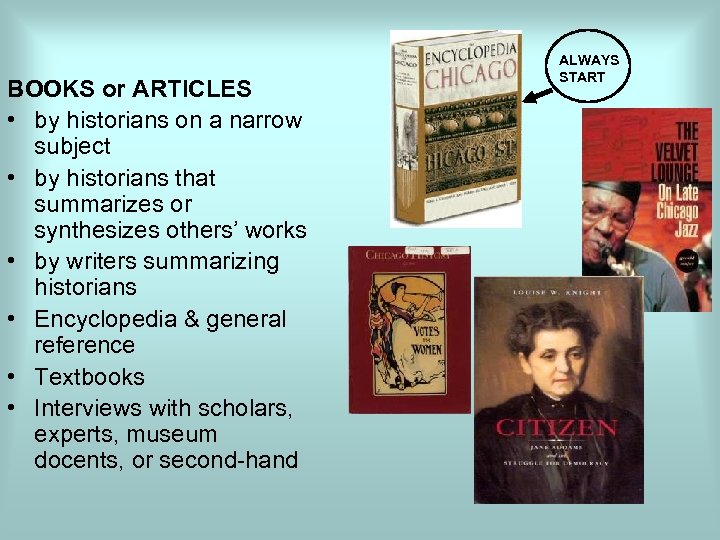
BOOKS or ARTICLES • by historians on a narrow subject • by historians that summarizes or synthesizes others’ works • by writers summarizing historians • Encyclopedia & general reference • Textbooks • Interviews with scholars, experts, museum docents, or second-hand ALWAYS START
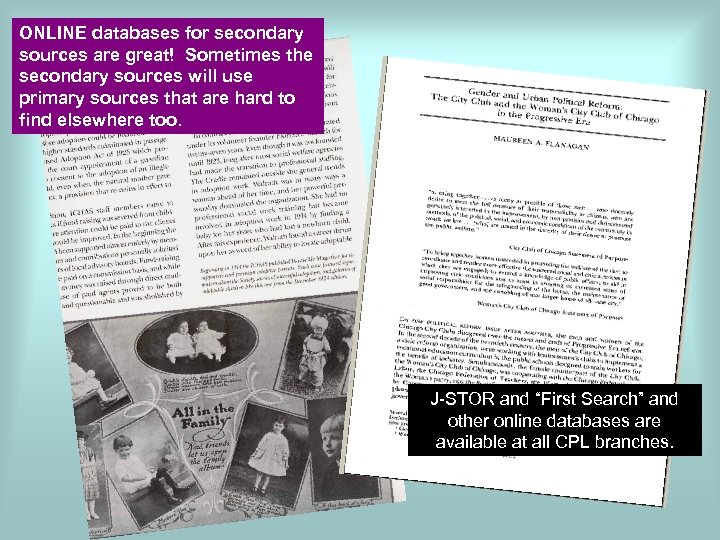
ONLINE databases for secondary sources are great! Sometimes the secondary sources will use primary sources that are hard to find elsewhere too. J-STOR and “First Search” and other online databases are available at all CPL branches.
BIG TIP THE BEST SECONDARY SOURCES CAN LEAD TO: – OTHER KEY SECONDARY SOURCES – WHERE TO FIND PRIMARY SOURCES – AND WILL OFTEN CONTAIN PRIMARY SOURCES STUDENTS CAN USE! Second BIG TIP: “Follow the footnotes”
Primary Sources The are the “voices into the past” that make history come alive. They are also the historian’s EVIDENCE.
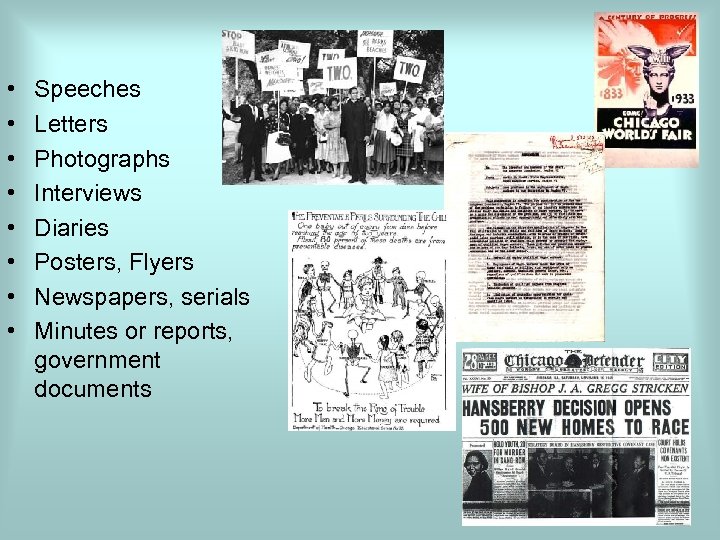
• • Speeches Letters Photographs Interviews Diaries Posters, Flyers Newspapers, serials Minutes or reports, government documents
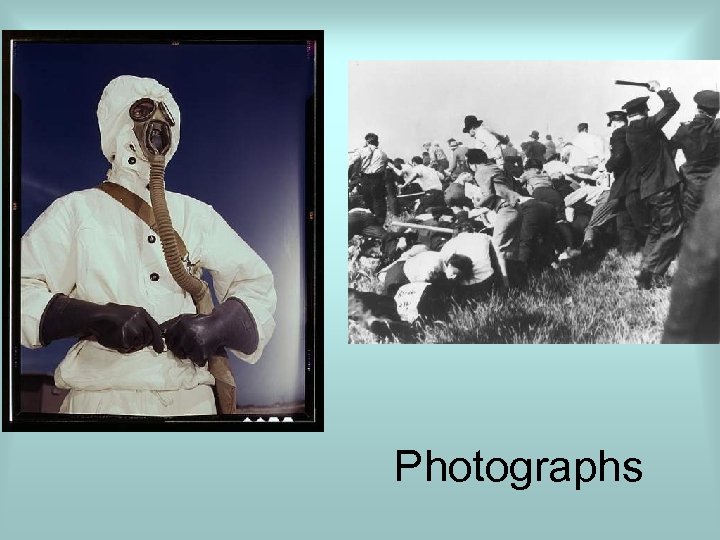
Photographs
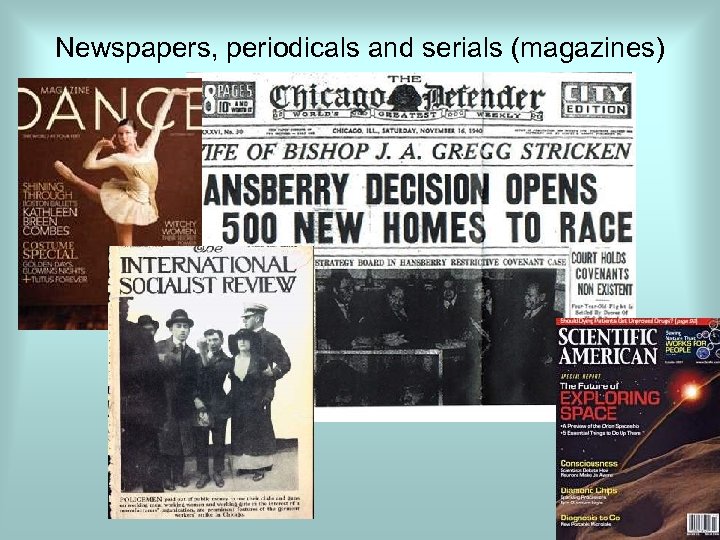
Newspapers, periodicals and serials (magazines)
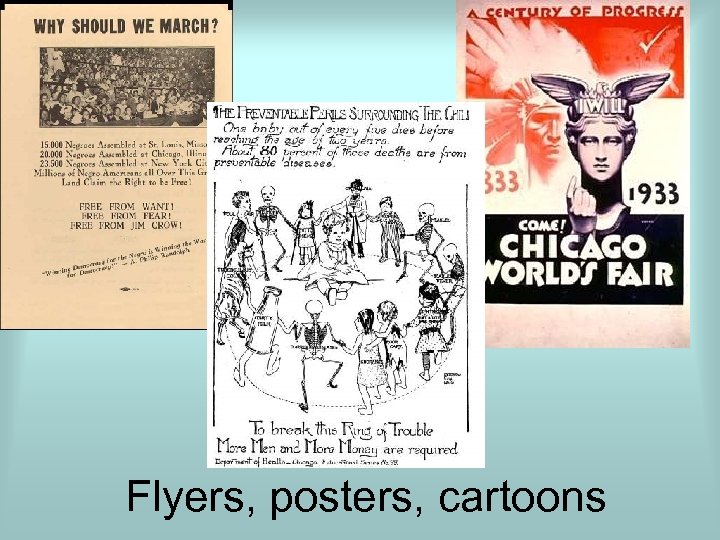
Flyers, posters, cartoons
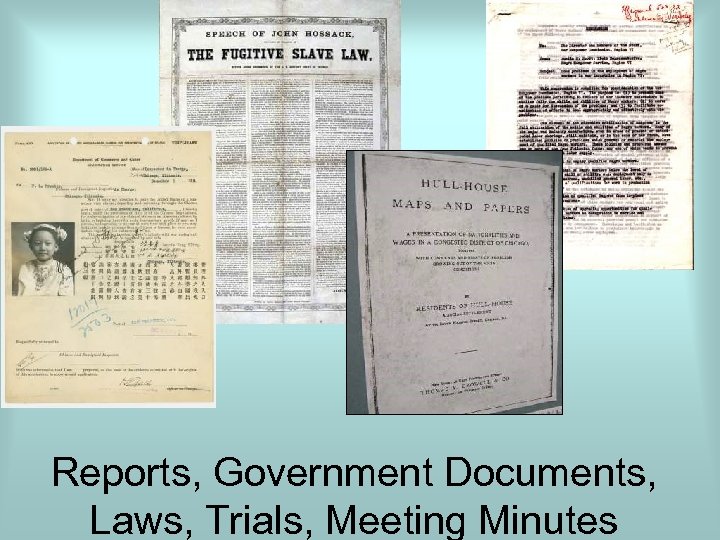
Reports, Government Documents, Laws, Trials, Meeting Minutes
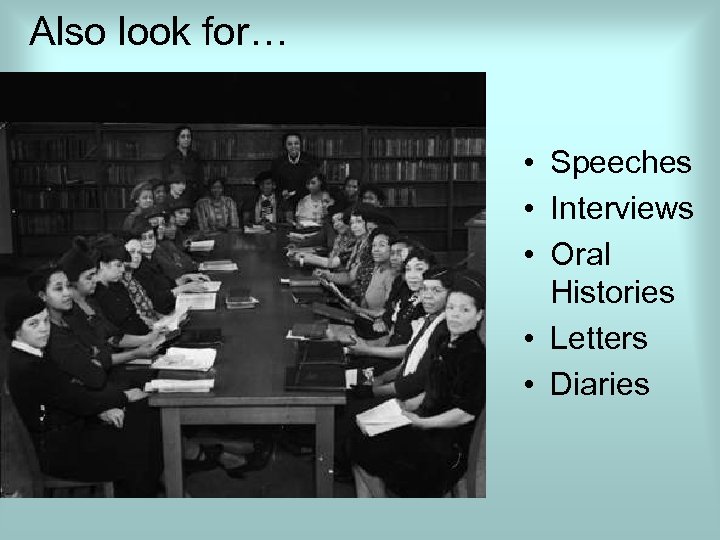
Also look for… • Speeches • Interviews • Oral Histories • Letters • Diaries
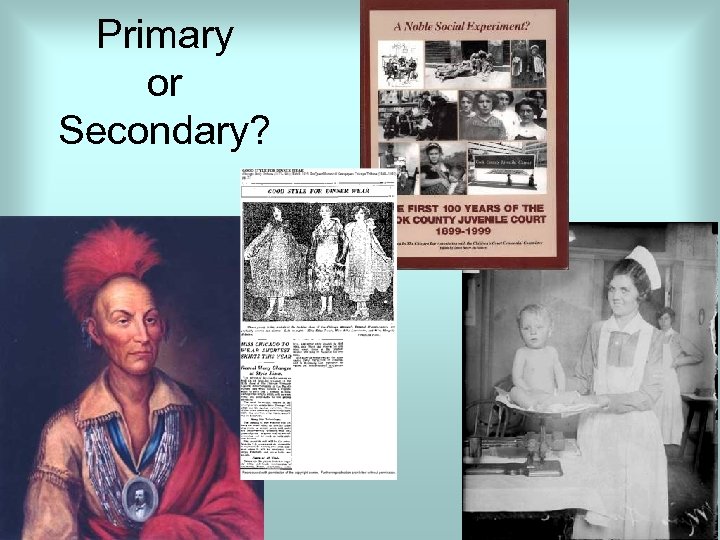
Primary or Secondary?
Where can you find them? • • libraries archives interviews neighborhoods organizations historic sites museums internet
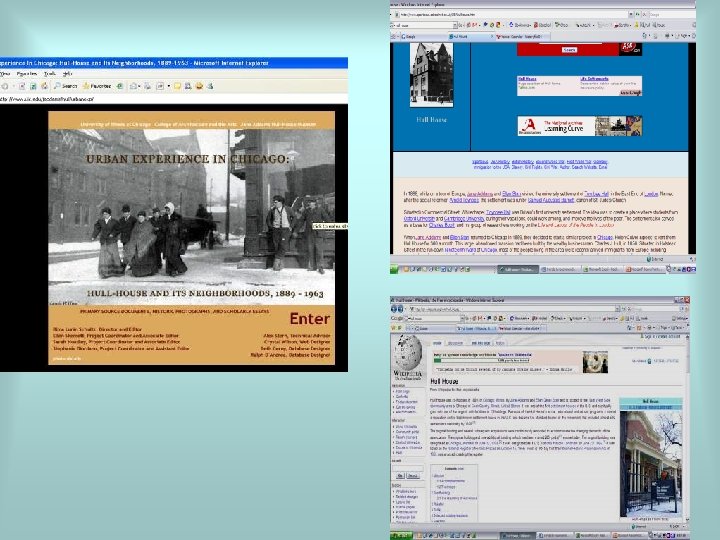
About that internet…WARNING Not all internet sources are equal • Google, Yahoo, Ask. com are search engines, not sources. Just the way that a LIBRARY is not a source, but a place that has sources! • Wikipedia? OK for background to get you going, not for bibliographies • . com, “unauthored sites” not credible • some. org can be ok if it is credible and authored • . edu, . gov – you can usually count on them, but be careful of which edu’s you use (it could be a 4 th grade classroom!) and on government sites, you want real images and not the “pr” page Find the REAL STUFF!
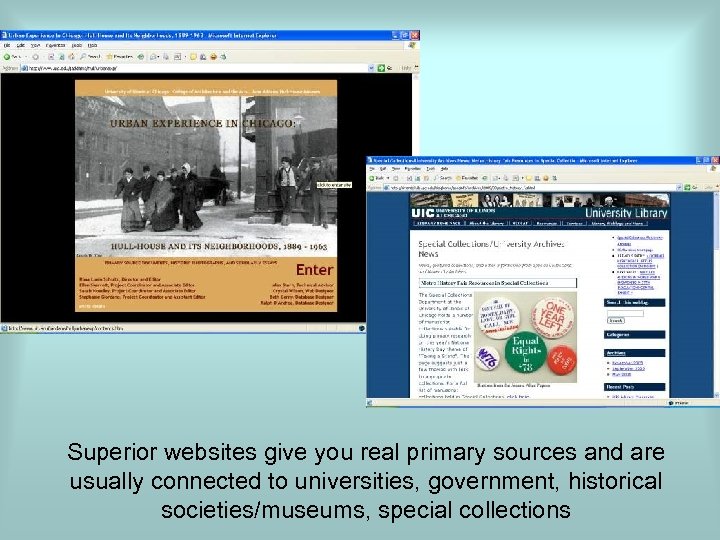
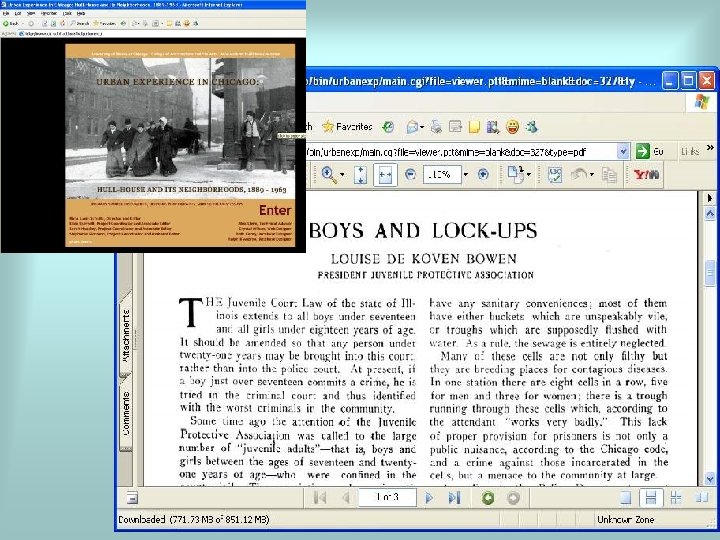
Superior websites give you real primary sources and are usually connected to universities, government, historical societies/museums, special collections
Just like historians do, you will need to submit an Annotated Bibliography with your project A bibliography that includes a brief description of each article or book used. The description helps the reader evaluate the content and usefulness of each item to his research. (It should be attached to the Summary Statement Form. )
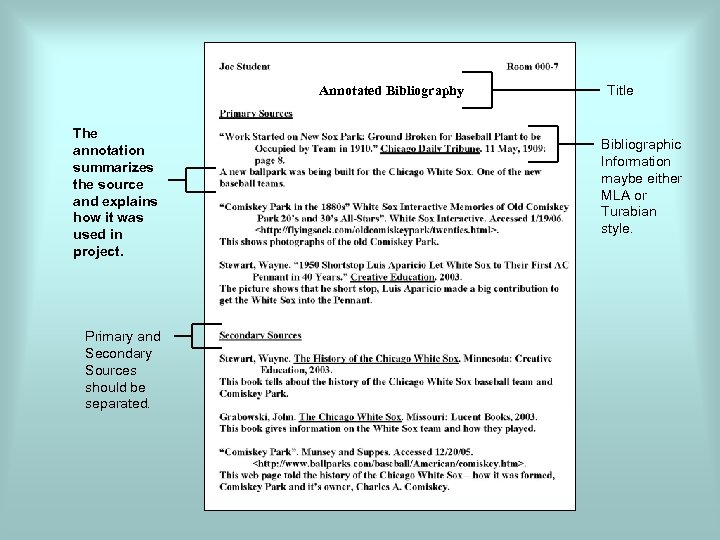
Annotated Bibliography The annotation summarizes the source and explains how it was used in project. Primary and Secondary Sources should be separated. Title Bibliographic Information maybe either MLA or Turabian style.
Step 3 What do I do with all of this? !? Note-Taking and Analyzing Sources
When you’re researching, it might help to organize what you are finding into six main areas: • Description: who, what, when, where • Historical context • What happened: how and why • Causes or contributing factors • What changed and why: effects and impact • Significance Consider using a “double column” format for taking notes in each cateory: on one side, record the information you find, on the other, ask questions, analyze, make connections.
Once you’ve narrowed your topic, formed a historical question and done more research, you will be able to write your “working thesis. ” • Makes a specific argument or interpretation • Has a narrow focus • Based on & can be “proven” with evidence • Can be communicated in one or two sentences
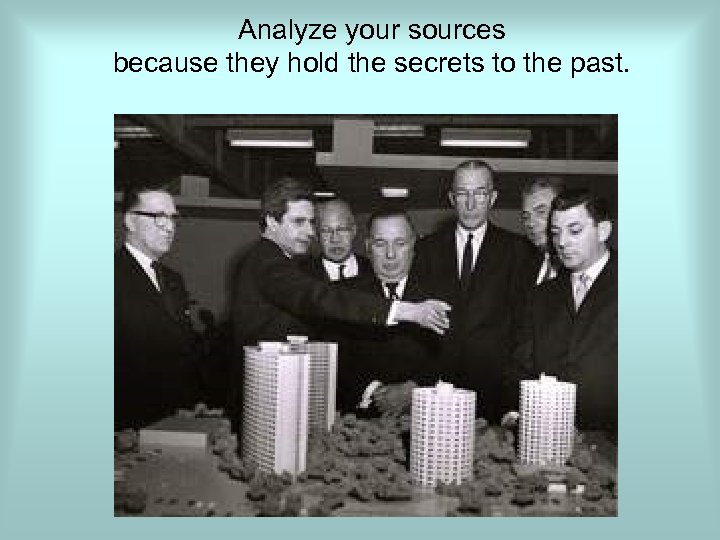
Analyze your sources because they hold the secrets to the past.
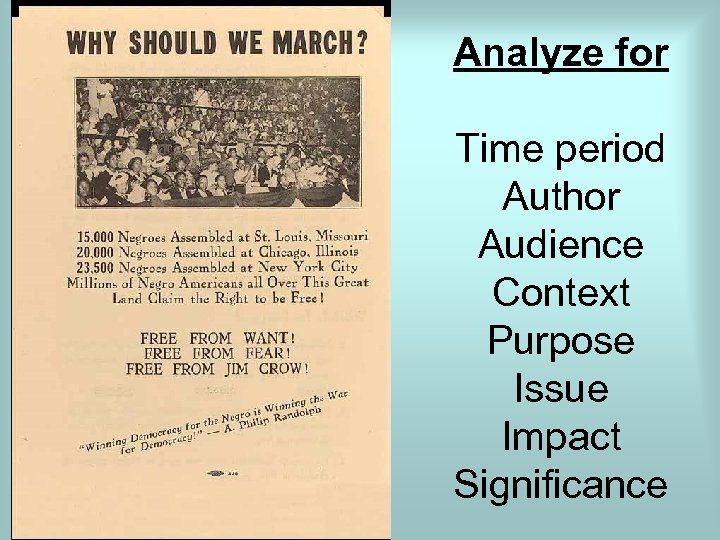
Analyze for Time period Author Audience Context Purpose Issue Impact Significance
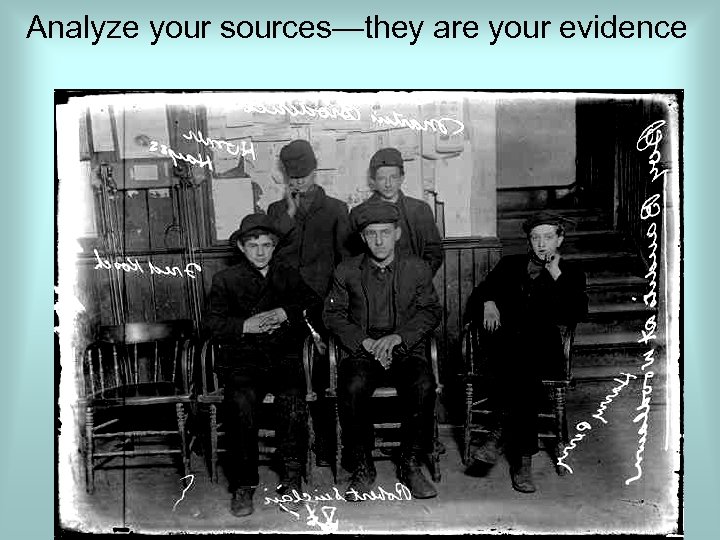
Analyze your sources—they are your evidence
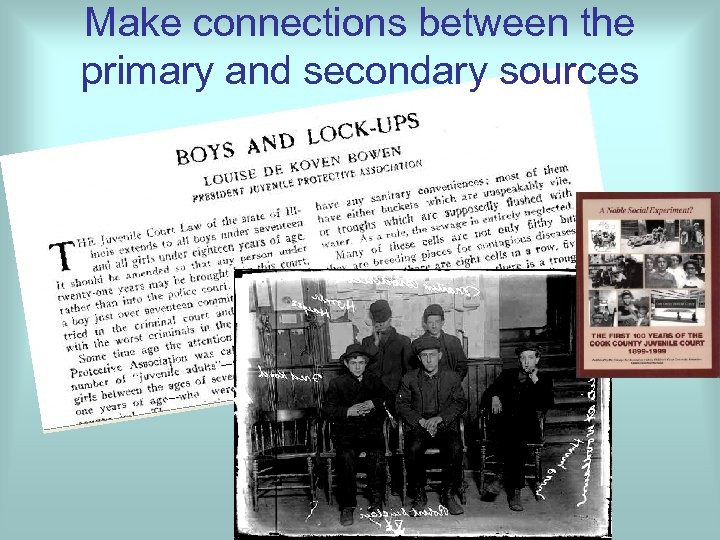
Make connections between the primary and secondary sources
Step 4 Why does this matter? Thinking like a historian and developing your argument with evidence
Just like a historian, keep these things in mind when making decisions about what is important enough to include in the story: – Causes and effects – What changed over time? – Why and how did events develop as they did? – So what? -- Why did this person/idea/event make an impact in history? – How does this topic connect to the “big picture”?
• Thesis • Argument • Conclusion
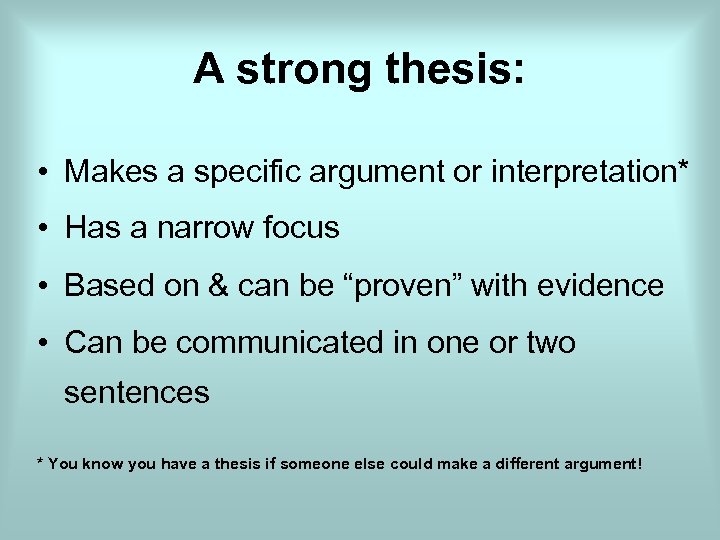
A strong thesis: • Makes a specific argument or interpretation* • Has a narrow focus • Based on & can be “proven” with evidence • Can be communicated in one or two sentences * You know you have a thesis if someone else could make a different argument!
In other words… What’s your point?
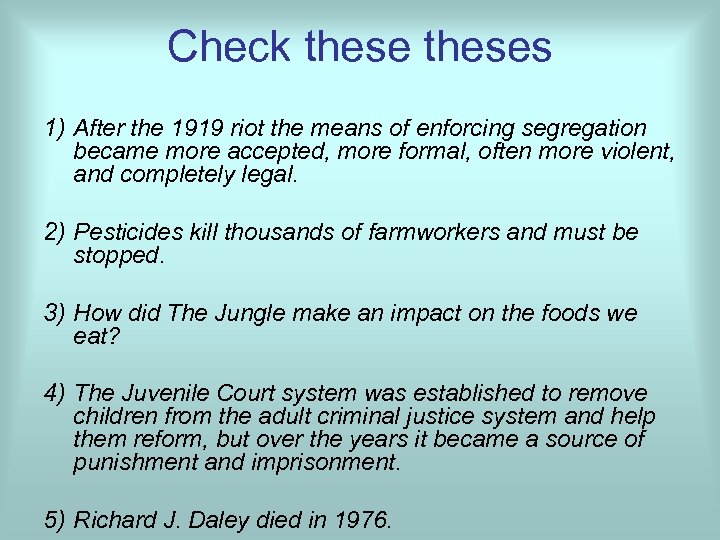
Check theses 1) After the 1919 riot the means of enforcing segregation became more accepted, more formal, often more violent, and completely legal. 2) Pesticides kill thousands of farmworkers and must be stopped. 3) How did The Jungle make an impact on the foods we eat? 4) The Juvenile Court system was established to remove children from the adult criminal justice system and help them reform, but over the years it became a source of punishment and imprisonment. 5) Richard J. Daley died in 1976.
Good/bad thesis? Pesticides kill thousands of farmworkers and must be stopped. The Juvenile Court system was established to remove children from the adult criminal justice system and help them reform, but over the years it became a source of punishment and imprisonment.
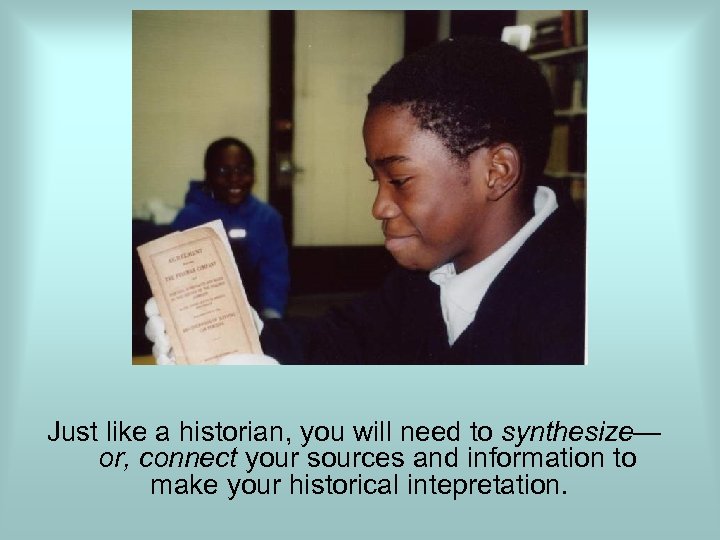
Just like a historian, you will need to synthesize— or, connect your sources and information to make your historical intepretation.
The introduction sets up the project The issue Context Change Impact and significance Thesis
The race riot of 1919 was a cataclysmic event in Chicago. After five days of rioting, 38 white and black citizens were killed and 537 were injured. The riot itself was the product of nearly two decades of conflict between whites and blacks over housing, jobs, and political representation. Before the riot, the black community was pressed into separate areas of the city by informal and extralegal means. After the riot the means of enforcing segregation became more accepted, more formal, often more violent, and completely legal. In this way the 1919 riot was a turning point for the city Martin Luther King, Jr. called the “most segregated in the nation. ”
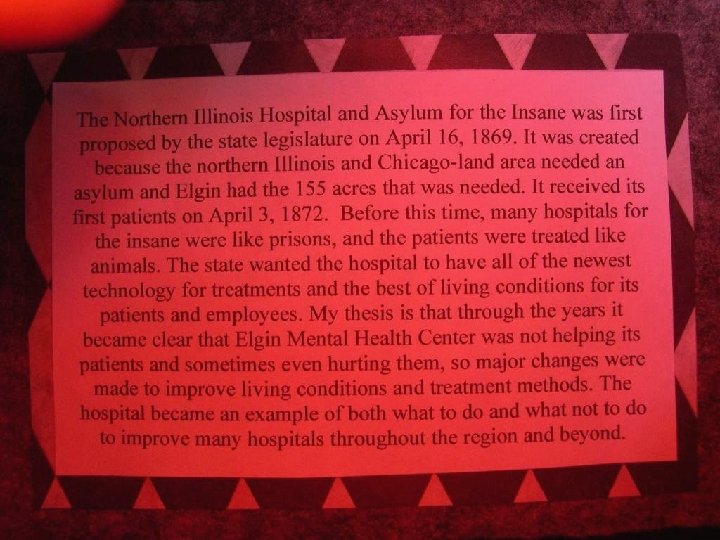
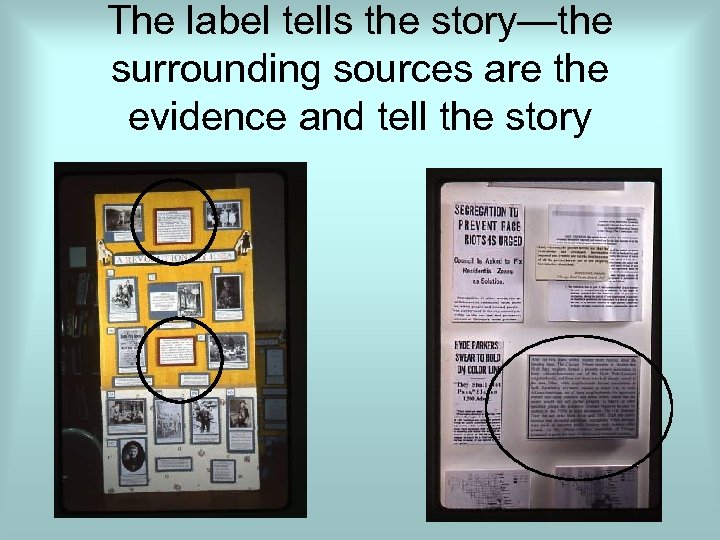
The label tells the story—the surrounding sources are the evidence and tell the story
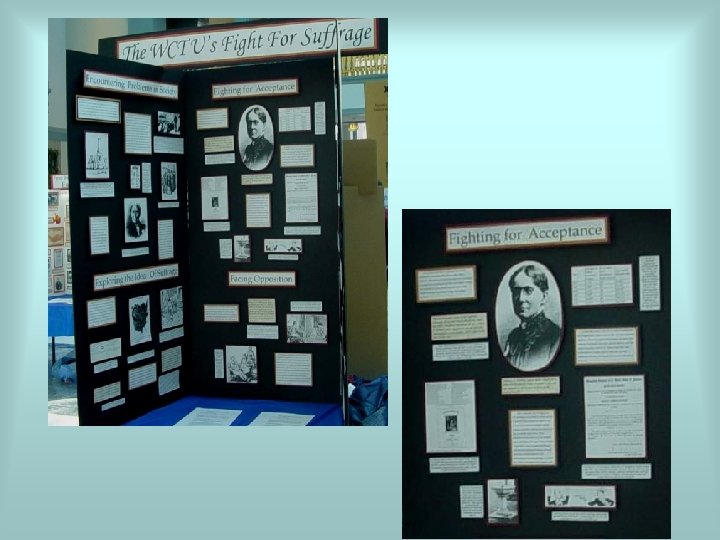
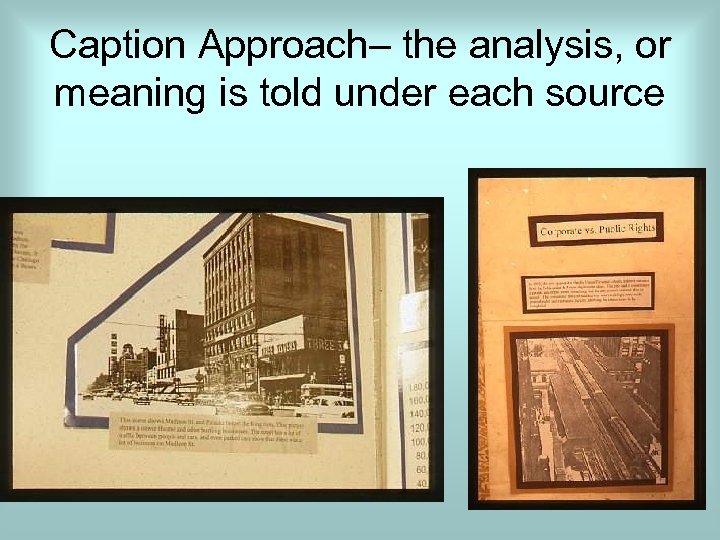
Caption Approach– the analysis, or meaning is told under each source
Your conclusion not only summarizes your argument, it tell us why this matters — what we can learn from history to understand today.
Step 5 Now how do I tell the story? Communicating an historical interpretation through History Fair projects
A superior presentation will be: • Clear about thesis, argument, and conclusion • Show evidence that supports your case —everything relates to your thesis • Written so that the labels or the script are organized and easy to understand • Interesting and creative
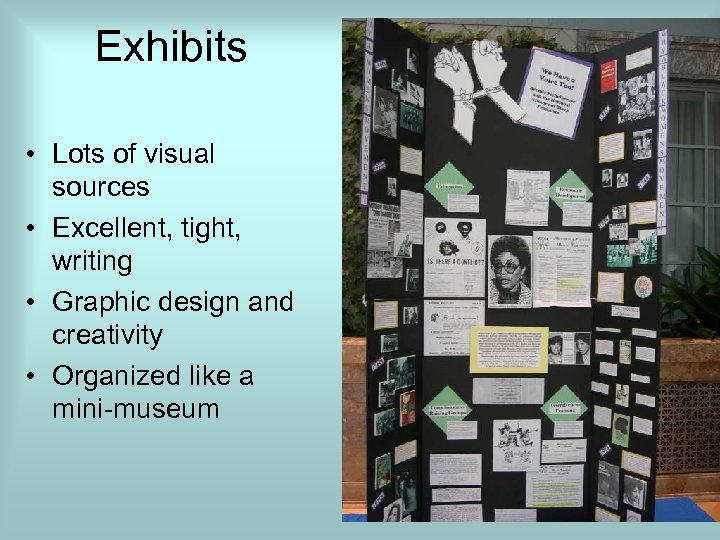
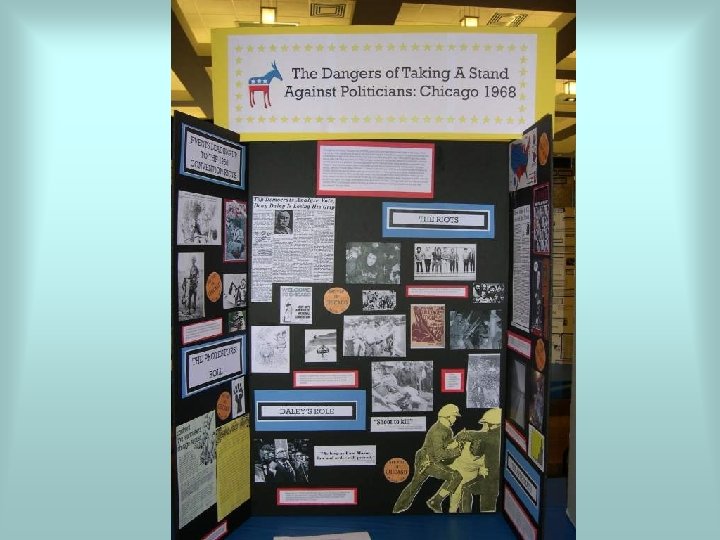
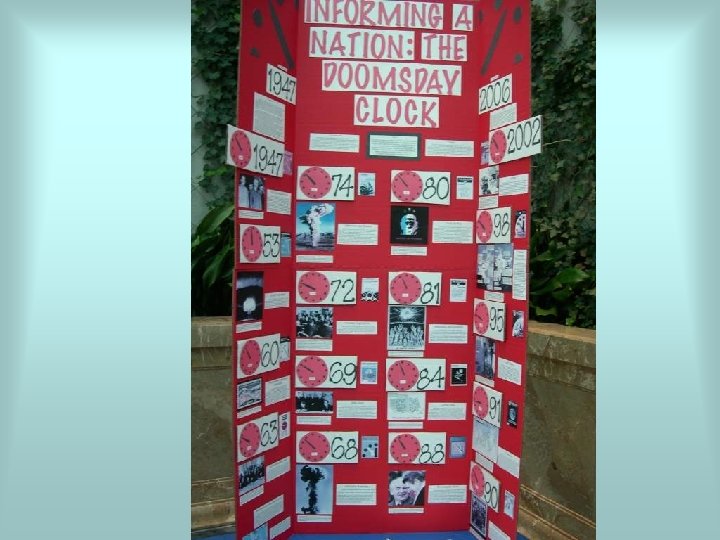
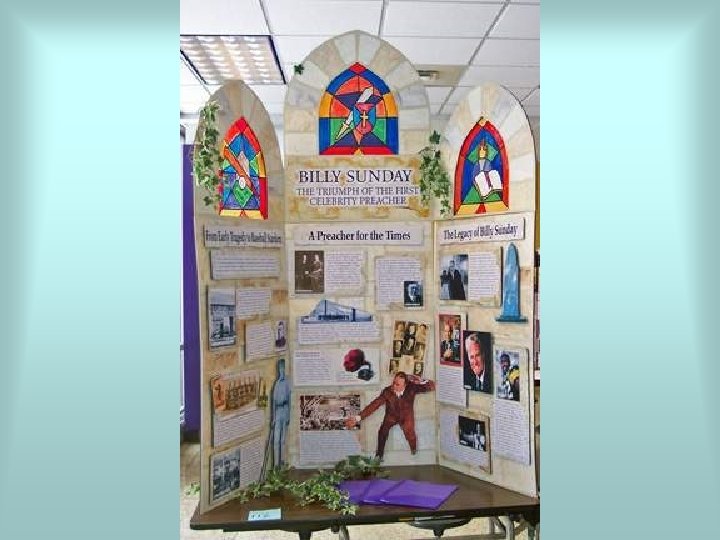
Exhibits • Lots of visual sources • Excellent, tight, writing • Graphic design and creativity • Organized like a mini-museum
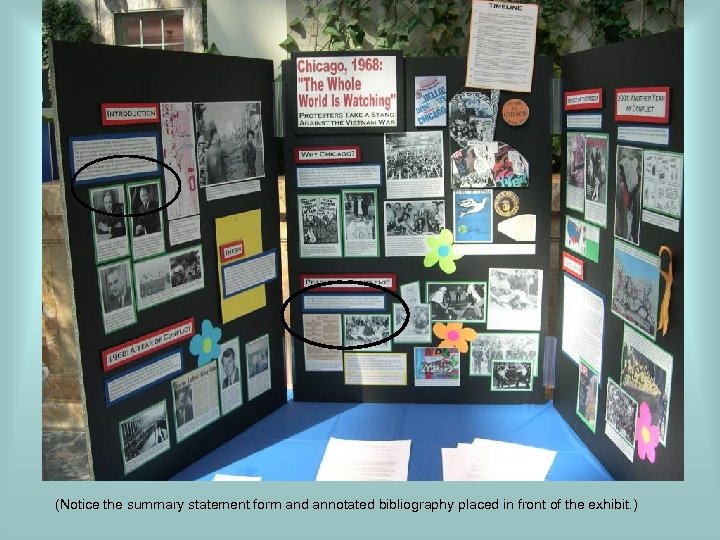
(Notice the summary statement form and annotated bibliography placed in front of the exhibit. )
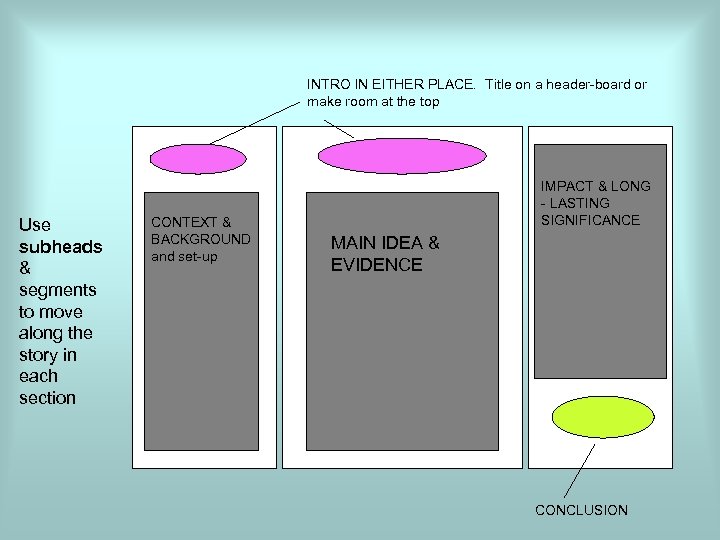
INTRO IN EITHER PLACE. Title on a header-board or make room at the top Use subheads & segments to move along the story in each section CONTEXT & BACKGROUND and set-up IMPACT & LONG - LASTING SIGNIFICANCE MAIN IDEA & EVIDENCE CONCLUSION
History Fair offers several additional ways to communicate your interpretation….
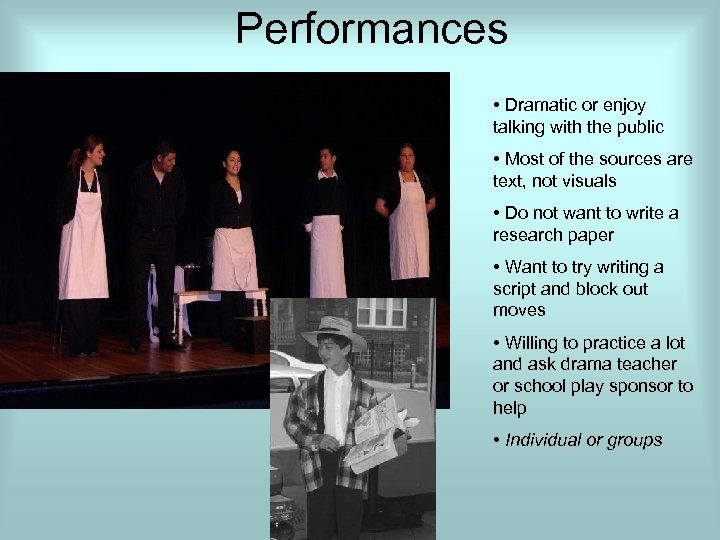
Performances • Dramatic or enjoy talking with the public • Most of the sources are text, not visuals • Do not want to write a research paper • Want to try writing a script and block out moves • Willing to practice a lot and ask drama teacher or school play sponsor to help • Individual or groups
Research Papers • Like to write • Few visual sources available • Don’t like to speak in public • Individuals only
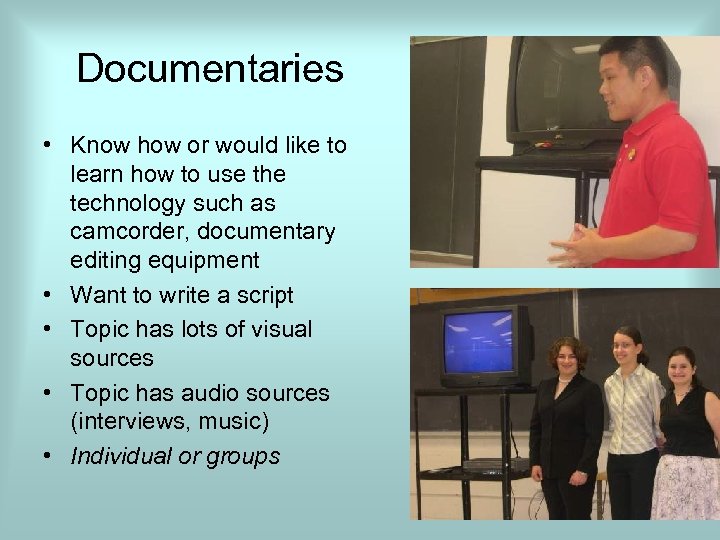
Documentaries • Know how or would like to learn how to use the technology such as camcorder, documentary editing equipment • Want to write a script • Topic has lots of visual sources • Topic has audio sources (interviews, music) • Individual or groups
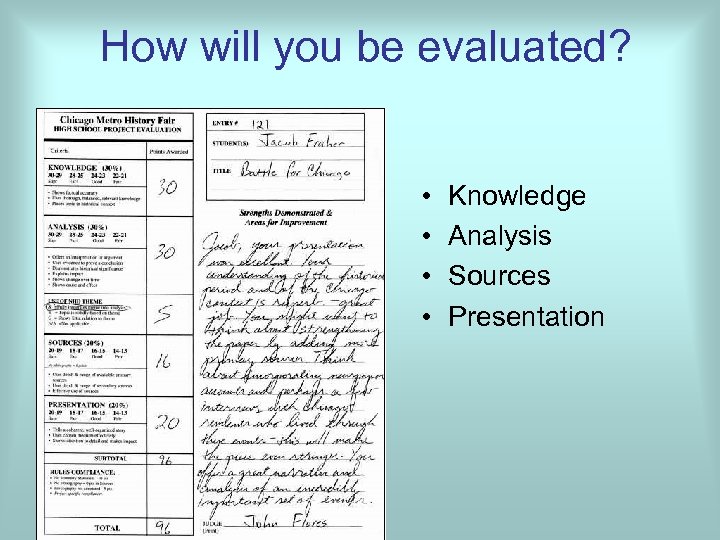
How will you be evaluated? • • Knowledge Analysis Sources Presentation
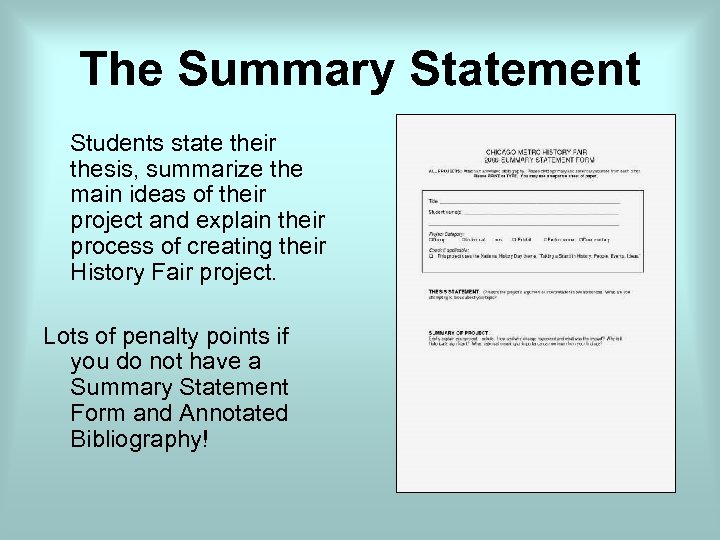
The Summary Statement Students state their thesis, summarize the main ideas of their project and explain their process of creating their History Fair project. Lots of penalty points if you do not have a Summary Statement Form and Annotated Bibliography!
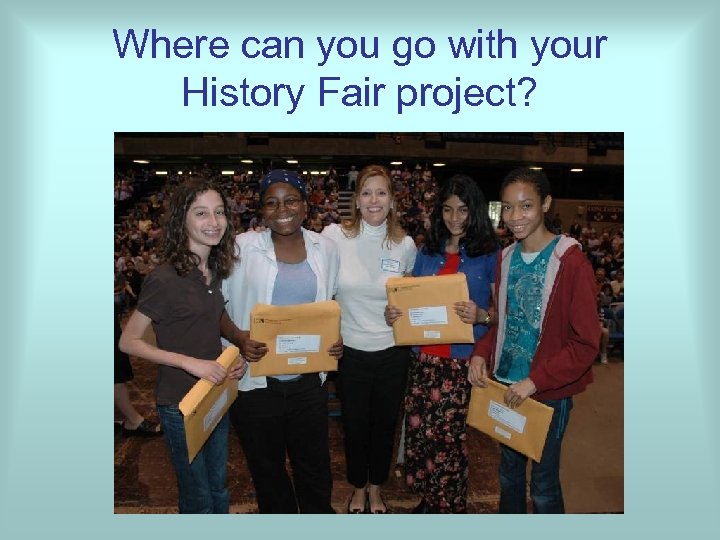
Where can you go with your History Fair project?
• School Fair • Citywide Fair • Finals (high school only) • State Expo • Public Presentations • National History Day You may earn cash prizes and be eligible for a college scholarship!
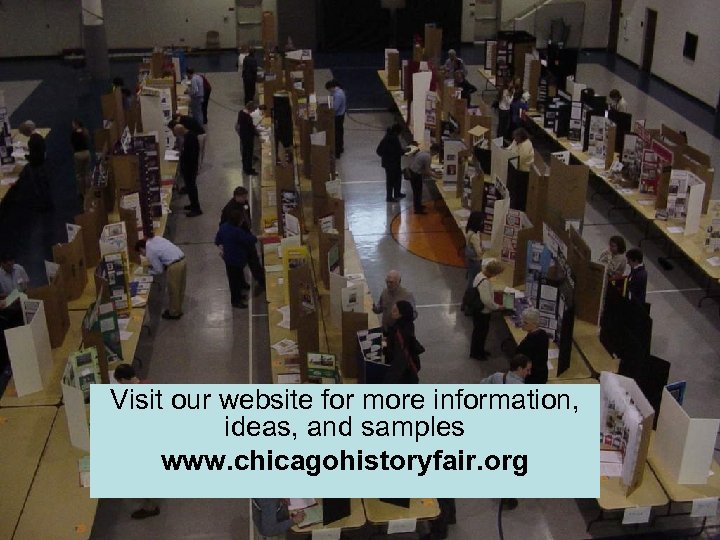
Visit our website for more information, ideas, and samples www. chicagohistoryfair. org
Photo Credits • • • Slide 11: WPA “Censored” poster (“By the People, For the People: Posters from the WPA 19361943, Library of Congress, http: //memory. loc. gov/ammem/wpaposters/) Slide 31: The Woodlawn Organization photograph (Industrial Area Foundation, Daley Library Special Collections Department, University of Illinois at Chicago); Memo (National Archives & Records Administration, Great Lakes Regional Center); Chicago World’s Fair poster, “Preventable Diseases” poster Board of Public Health Reports, Chicago Public Library; Chicago Defender front page Slide 32: Chemical man photograph (FSA-OWI Photographs, American Memory, Library of Congress); Memorial Day Massacre photograph (Illinois Labor History Society). Slide 34: “Why Should We March? ” flier (African-American Odyssey, American Memory, Library of Congress); Fugitive Slave broadside (Newberry Library); Naturalization application (National Archives & Records Administration, Great Lakes Regional Center); Hull House Report; Memo (National Archives & Records Administration, Great Lakes Regional Center) Slide 36: Women intellectuals photograph (Hall Branch Archives 033, Vivian Harsh Collection, Chicago Public Library) Slide 37: Portrait of Black Hawk (Courtesy Chicago History Museum); Nurse and infant photograph (DN-0085482, Chicago Daily News negatives collection, Chicago Historical Society); Newspaper article Slide 48: Daley and public housing photograph (www. roosevelt. edu/gagegallery/promise. htm) Slide 49: “Why Should We March? ” flier (African-American Odyssey, American Memory, Library of Congress) Slide 50: Juveniles awaiting trial photograph (DN-0004676, Chicago Daily News negatives collection, Chicago Historical Society)
Скачать презентацию STUDENTS BECOME HISTORIANS WHEN THEY DO THE HISTORY
e64b4f5e2614785b932d574eeb60864a.ppt