


 Скачать презентацию Structuring Cooperatives Kim Lowe Avisen Legal P A
8207713cedd4d87f23540f56450755e3.ppt
- Количество слайдов: 54
 Structuring Cooperatives Kim Lowe Avisen Legal, P. A. 1
 Overview • Definition of a Cooperative • When a Cooperative may be the best legal structure for a business • State and Federal Legal Status of Cooperatives • Special Legal Framework for Cooperatives – Anti-Trust Laws – Capper-Volstead Act and Subchapter T • Best Practices for Drafting Organizational Documents • Defining Board Fiduciary Duties and Functions
 General Ideas • History – European – United States • Part of U. S. Economy – Agribusiness – Retail – Consumer – Others – now and in the future • Industry Specific?
 Cooperatives Provide • Wholesale goods and supplies • Electricity • Telephone and telecom services • Farm production supplies and services • Farm marketing • • Credit Transportation Facilities Recreational Equipment Food Housing Healthcare Childcare
 5
5
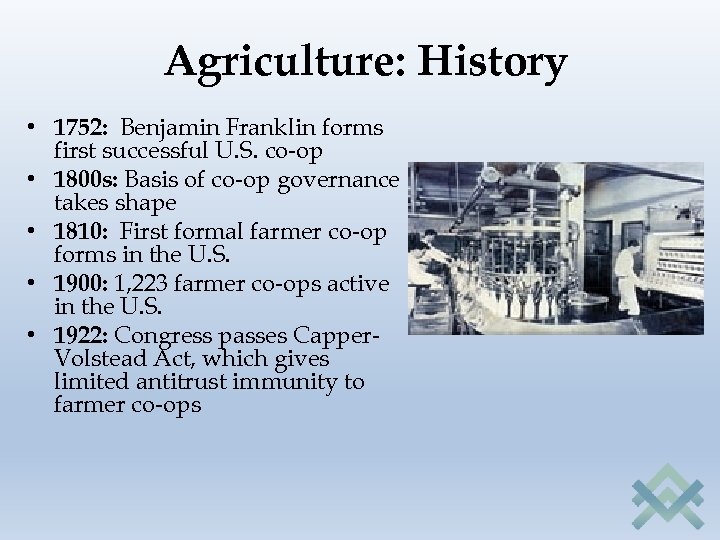 Agriculture: History • 1752: Benjamin Franklin forms first successful U. S. co-op • 1800 s: Basis of co-op governance takes shape • 1810: First formal farmer co-op forms in the U. S. • 1900: 1, 223 farmer co-ops active in the U. S. • 1922: Congress passes Capper. Volstead Act, which gives limited antitrust immunity to farmer co-ops
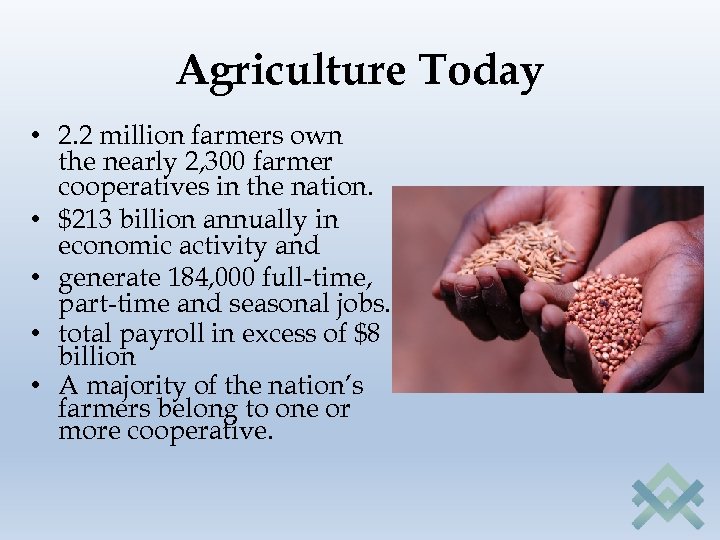 Agriculture Today • 2. 2 million farmers own the nearly 2, 300 farmer cooperatives in the nation. • $213 billion annually in economic activity and • generate 184, 000 full-time, part-time and seasonal jobs. • total payroll in excess of $8 billion • A majority of the nation’s farmers belong to one or more cooperative.
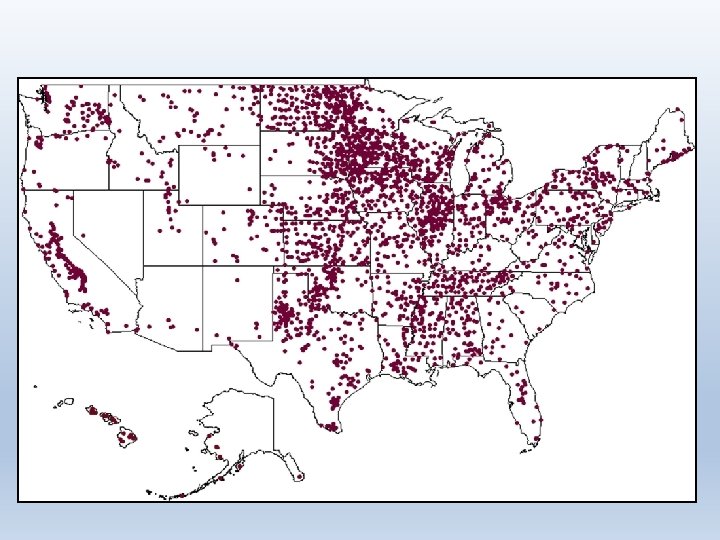
 Other Cooperatives
 What is a Cooperative? • International definition: – An autonomous association of persons united voluntarily to meet their common economic, social and cultural needs and aspirations through a jointly owned and democratically controlled enterprise. • Voluntary collectivism
 What is a Cooperative? • USDA definition: – A user-owned user-controlled business in which benefits are distributed on the basis of use. • User-owned • User-controlled • User-benefits
 User-Owned • “person” who uses the coop own it – Who owns your grocery store? – Who owns your golf course? • Member-owners finance the business in accordance with use • Users pay the tab
 User-Control • Member-owners control overall operations and activities through voting – So do other entities? • One member one vote • Democratic concept – Some coops may use proportional voting based on member use (versus ownership of equity)
 User-Benefit • Sole purpose is to provide and distribute benefits to members on the basis of member’s use • Earnings are distributed based on use and not on the basis of capital investment
 What is a Cooperative? An entity whereby members work together to achieve goals that the members would not be able to achieve as economically well individually and the members share in the benefits of that activity based on their participation in the business of the entity
 General Types of Cooperatives • Marketing • Purchasing • Service
 Marketing Cooperative • Assist members in maximizing returns from goods they produce – Handle, process and sell – Grade, transport, bargain – Add value – Research new product development • Ag, Forestry, Horticulture, Crafts
 Marketing Cooperative • Takes members products • Runs the products through a function of some sort: – Processing – Transport – Bargain – Distribute • Provides a member benefit – added value by controlling product delivery to market
 Purchasing Cooperative • Allow members to gain access to affordable production supplies and goods – Purchase in bulk to reduce costs and increase purchasing power – Provide direct ownership of refineries, plants, retail facilities, research facilities • Hardware, independent grocery stores, restaurants (fast food)
 Purchasing Cooperative • Allows members to reduce costs of producing products by collecting functions • Functions include: – Refining – Plants – Bulk purchasing – Delivery systems – Warehousing • Member benefits from reduced costs, quality control, increased access
 Service Cooperatives • Provide needed services: – meet many needs – Custom application of purchased supplies, transport of products, etc. – Provides utilities, credit, housing, health care, technology, etc.
 Service Cooperatives • Used by members to gain access to affordable quality services: – meet many needs – rural, urban, public – Custom application of purchased supplies, transport of products, etc. – Provides utilities, credit, housing, health care, technology, etc. • Increase access to services
 Structures • Geographical characteristic that defines the size and scope of operation – Member and scope driven • Who are the members? – Centralized structure (closed) – individuals are the direct members – Federated Structure – cooperatives are the direct members (joint ventures) – Mixed Structure – individuals and cooperatives are members
 Entity Selection POV • • • Limitation of Liability Perpetual existence – ease of transfer Taxation Financing Economic Outcome Question
 What is a Cooperative? • Type of Entity – Corporation – Formed under state law pursuant to a specific state statute • Creature of Tax – C Corporation – Partnership (K) – S Corporation – Tax-Exempt
 Cooperative Taxation • Subchapter T of the Code – History – Application – “Supplements” Subchapter C to the extent an entity is operated on a cooperative basis – Single level income tax on margins paid at the member level • Can use Subchapter K – Not a cooperative for tax purposes but may be for state law purposes • Section 521 Tax Exempt Farmer Cooperatives
 Application of Subchapter T • • • Operated on a Cooperative Basis Patronage Distributions Non-patronage distributions Gross Income Determination Pooling Written notice of allocations: – Qualified and nonqualified • When Subchapter C applies
 521 Exempt Cooperatives • Farmer’s cooperative • Tax exemption available only to farmers and fruit growers • Limitation on dividends • Limitation on nonmember business • Typical startup • Some additional benefits -- securities
 Other legal characteristics • Anti-Trust laws – Capper-Volstead Act – Ag – Northwest Wholesale Stationers – Buying groups • Securities laws – Federal exemption from registration for Section 521 Cooperatives – 12 -g exemption for agricultural cooperatives – State exemptions – primarily membership – Often argue that stock in a cooperative is not a security • Handy Hardware No-Action letter
 Antitrust Law Generated from concerns over late-1800 s steel, oil, and railroad trusts. Goal of antitrust law: To promote free-market competition and eliminate anticompetitive restraints such as monopolies and price fixing. Remember what a cooperative does?
 Major Federal Antitrust Statutes • The Sherman Act (1890) – Gives federal government authority to investigate and prosecute unlawful restraints of trade; price fixing; and monopolistic activity. – Basis for most antitrust litigation brought by the federal government. • The Clayton Act (1914) – Prevent anticompetitive behavior such as price discrimination, exclusive dealings, and mergers that would lessen competition. – Contains exemption for agricultural organizations that meet certain criteria. • The Federal Trade Commission Act (1914) – Established the Federal Trade Commission – goal is consumer protection.
 The Capper-Volstead Act, 7 U. S. C. 291 • Enacted in 1922. • Provides limited antitrust immunity to qualified farmer cooperatives. • Enables agricultural producers to join together to agree on prices for their products. • Without the Capper-Volstead Act, such activities would violate the Sherman Act by eliminating competition.
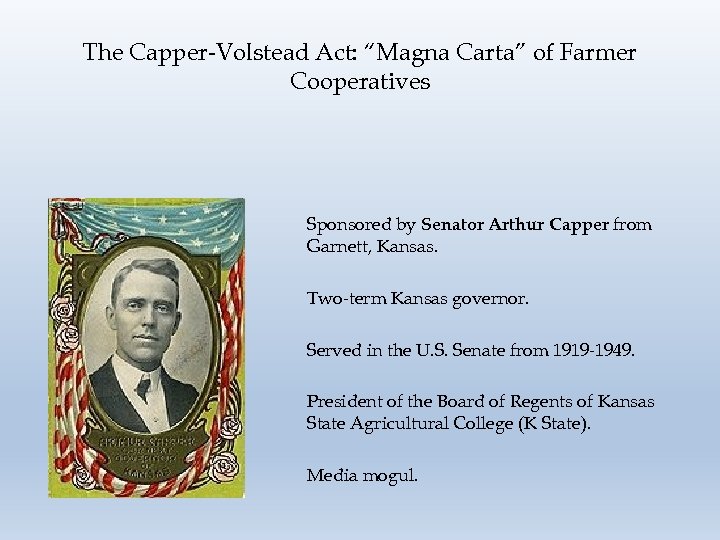 The Capper-Volstead Act: “Magna Carta” of Farmer Cooperatives Sponsored by Senator Arthur Capper from Garnett, Kansas. Two-term Kansas governor. Served in the U. S. Senate from 1919 -1949. President of the Board of Regents of Kansas State Agricultural College (K State). Media mogul.
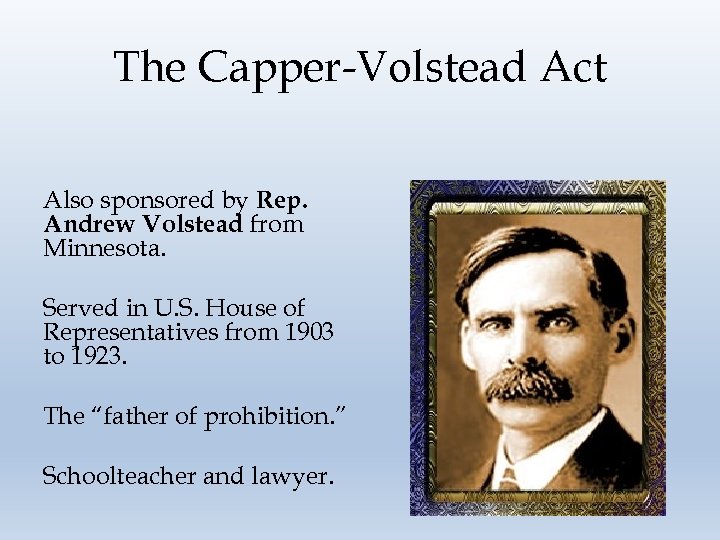 The Capper-Volstead Act Also sponsored by Rep. Andrew Volstead from Minnesota. Served in U. S. House of Representatives from 1903 to 1923. The “father of prohibition. ” Schoolteacher and lawyer.
 The Capper-Volstead Act To Qualify: • Cooperative’s voting members must all be producers. • Cooperative must choose to either operate under one member/one vote, or must limit distributions on dividends to eight percent. • Cooperative must conduct more than half of its business with members.
 The Capper-Volstead Act Restrictions: • Agreements between cooperatives and noncooperatives are subject to the antitrust laws. • Antitrust protection does not apply if cooperatives combine or conspire with nonproducers to monopolize or restrain trade. • Monopolistic practices, engaged in outside the legitimate purposes of a cooperative, are not protected
 The Capper-Volstead Act • Provides limited antitrust immunity for producers to: – Join together in their own cooperative – Join with other cooperatives to form a common marketing agency • Gives Secretary of Agriculture oversight authority. • Without the Capper-Volstead Act, such activities would violate the Sherman Act.
 Coops that Rely on Capper. Volstead Dairy Fruits Vegetables Nuts Sugar Wheat Feedgrains Rice Oilseeds Cotton Livestock
 Financing • Financing of a cooperative can be difficult • Member-patrons provide financing • Access to capital limited due to dividend limitation and patronage requirements • Hybrid “cooperative” structures allow for outside investors but still can be a “cooperative” for entity purposes (but not for tax purposes)
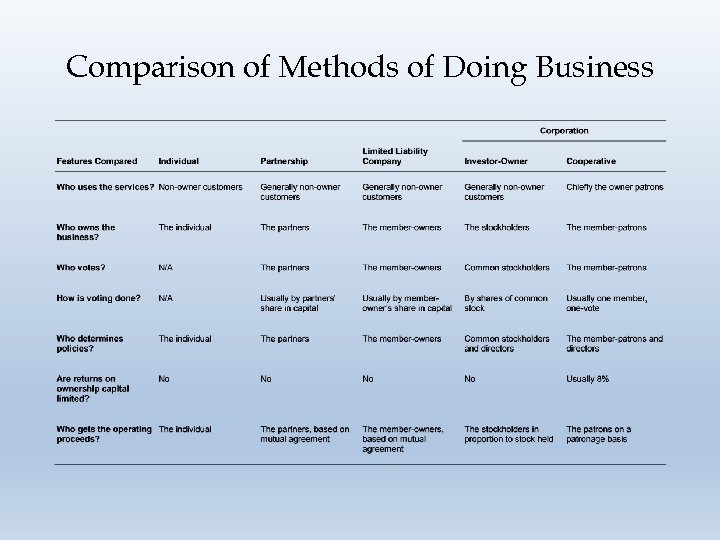 Comparison of Methods of Doing Business
 Select A Coop When. . . • There are known advantages from an antitrust perspective • The members can finance the business and intend to patronize the business • Outside financing is not necessary • A guaranteed input source is required • Guaranteed access to the market is desired • When people care. . .
 Organizational Documents • State Law Dictates: – Articles of Incorporation/Formation – Bylaws – Operating Agreement • Due to the democratic nature of cooperatives these documents matter
 Formation Document • Include statutory requirements – Vital statistics set by state • Purpose and geographic scope (more than a general business purpose) • Consider capital structure and patronage relationship • Voting and dividend limitations imposed on capital stock
 Bylaws or Operating Agreement • Title depends on state law • Much more like a member control agreement for a limited liability company than the bylaws of a C corporation • Sets forth the rights of the members which are different than the rights of shareholders in a investor-owned operation • Always remember that the rules are very important for a cooperative
 Bylaws or Operating Agreement • Include member identification – Who, how, when and why – Eligibility – Obligations and rights – Who can own what – classifications of members dependent on structure of cooperative – Termination process and procedure • Equity details – unit retains, equity credits, other financing functions
 Bylaws and Operating Agreement • Tax required provisions – Dividend limitation – Patronage language – requirement and distributions – First lien language and consent – Any consents or language required for Subchapter T – Talk to an accountant well versed with Subchapter T!!!!
 Bylaws and Operating Agreement • Liquidation Distribution scheme – Differs than a regular corporation due to the dual nature of the member-patrons – Revolving issues with respect to unit retains and equity credits
 Bylaws and Operating Agreement • Economics – Allocations and Distributions in a member control agreement • Since a cooperative is a more complex creature economically, its important that the economics be understood by the drafter of the document – Pooling – Allocations – Distributions
 Governance Structure • One member one vote • Structure – Primary cooperative – Member cooperatives – Districts – Producers • Board of Directors • Committees and Meetings • May be dictated by statute
 Meetings • Member meetings in a cooperative matter more than shareholder meetings in a investor owned entity • While members delegate day to day operational authority to the board of directors, the nature of a cooperative dictates active member involvement – Not a passive investment
 Board of Directors • Elected by the members – one member one vote • May be elected by district or some other group so that a director may represent a certain “constituency” of the cooperative from an election perspective (set forth in the governing documents!!!) • Typically need to be members or representatives of members
 Board of Directors • Conflict of Interest due to member-patrondirector status that does not exist in an investor-owned business • Impossible to legally eliminate this inherent conflict of interest since a cooperative by its very nature embodies this combined reality
 Fiduciary Duty • Fiduciary duty of the director dictated by the best interest of the cooperative as composed of all members • No duty runs to individual members but to members as a whole group • Often there is a conflict that needs to be worked through but basic governance guidelines still apply
 Final Thoughts • Cooperatives are sometimes a creative solution to a less then typical set of circumstances • Take into consideration all of the constituencies and financing needs • More often than not a partnership structured like a cooperative is an alternative option unless there is a business reason to be a cooperative • Tread lightly since the tax implications for a messed up cooperative can be dire – Double Taxation!