

STROKE. STROKE (APOPLEXY — CEREBRAL STROKE) acute

STROKE.
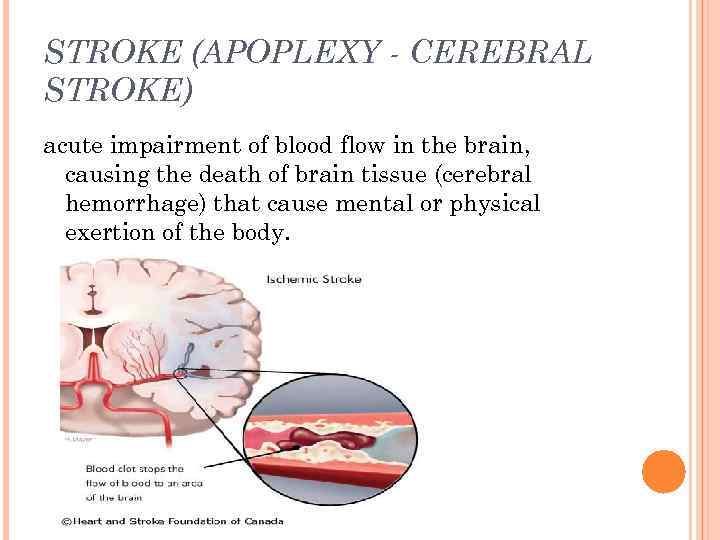
STROKE (APOPLEXY - CEREBRAL STROKE) acute impairment of blood flow in the brain, causing the death of brain tissue (cerebral hemorrhage) that cause mental or physical exertion of the body.
SYMPTOMS (SIGNS) OF A STROKE: sudden weakness and numbness in an arm or leg; sudden disruption of speech; sudden loss of balance, dizziness; sudden loss of consciousness; severe headache; sudden numbness of the face or lips, often with a "distortion" person; recent change in the nature or mental abilities;
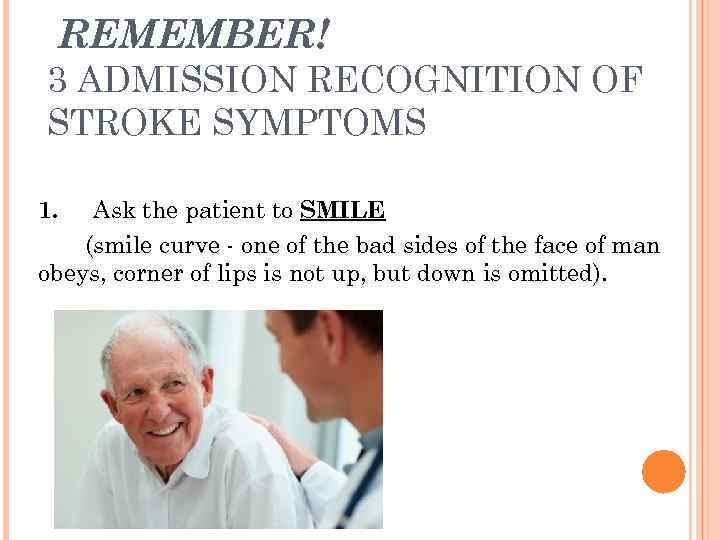
REMEMBER! 3 ADMISSION RECOGNITION OF STROKE SYMPTOMS 1. Ask the patient to SMILE (smile curve - one of the bad sides of the face of man obeys, corner of lips is not up, but down is omitted).
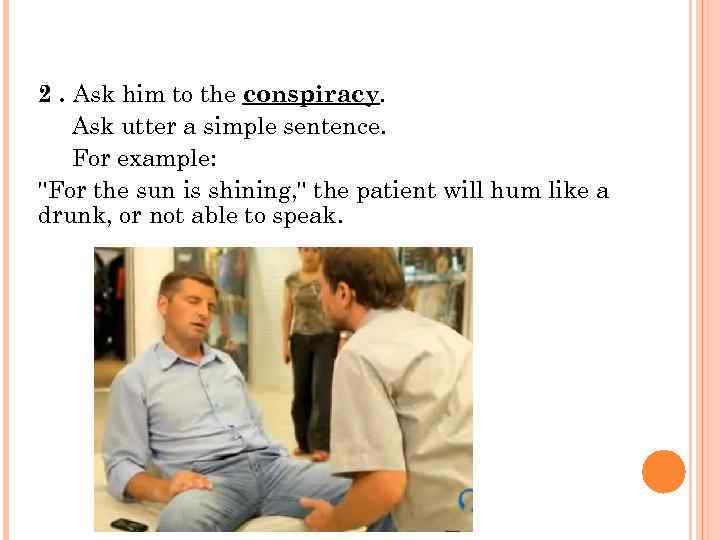
2. Ask him to the conspiracy. Ask utter a simple sentence. For example: "For the sun is shining, " the patient will hum like a drunk, or not able to speak.
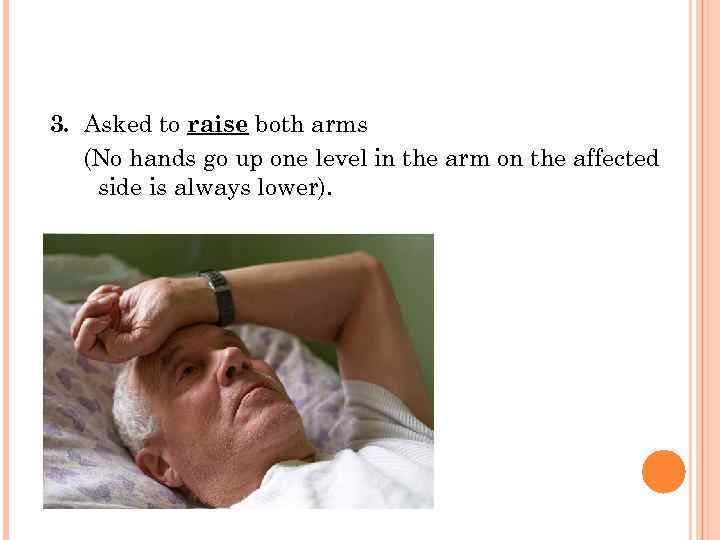
3. Asked to raise both arms (No hands go up one level in the arm on the affected side is always lower).
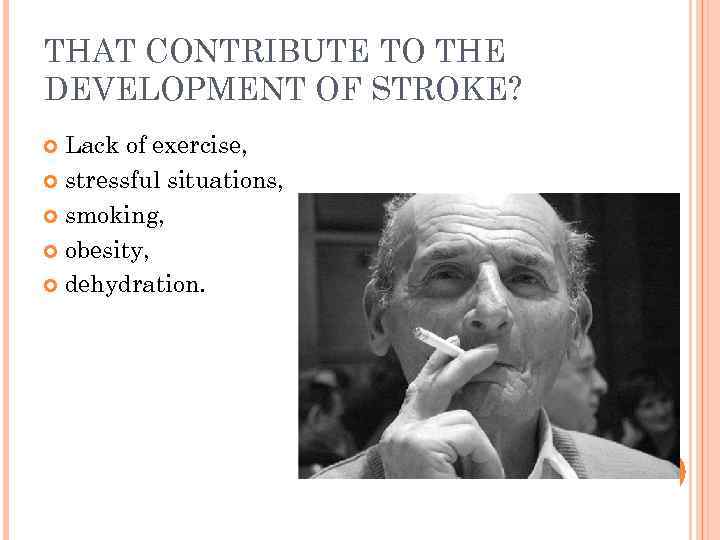
THAT CONTRIBUTE TO THE DEVELOPMENT OF STROKE? Lack of exercise, stressful situations, smoking, obesity, dehydration.
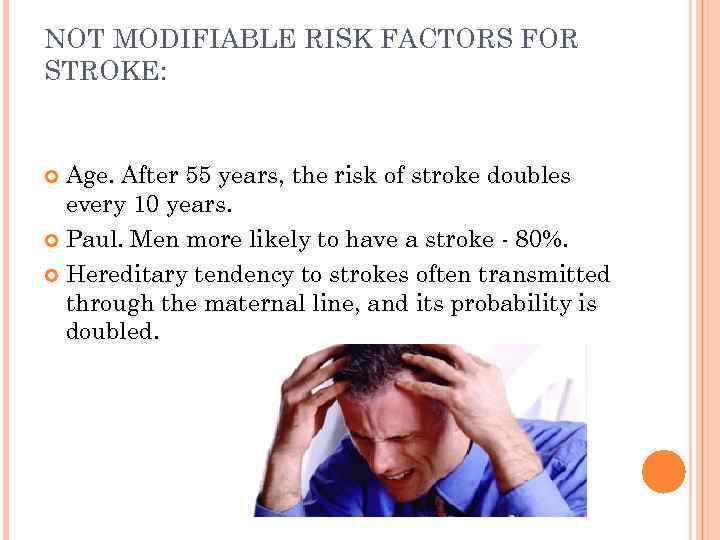
NOT MODIFIABLE RISK FACTORS FOR STROKE: Age. After 55 years, the risk of stroke doubles every 10 years. Paul. Men more likely to have a stroke - 80%. Hereditary tendency to strokes often transmitted through the maternal line, and its probability is doubled.
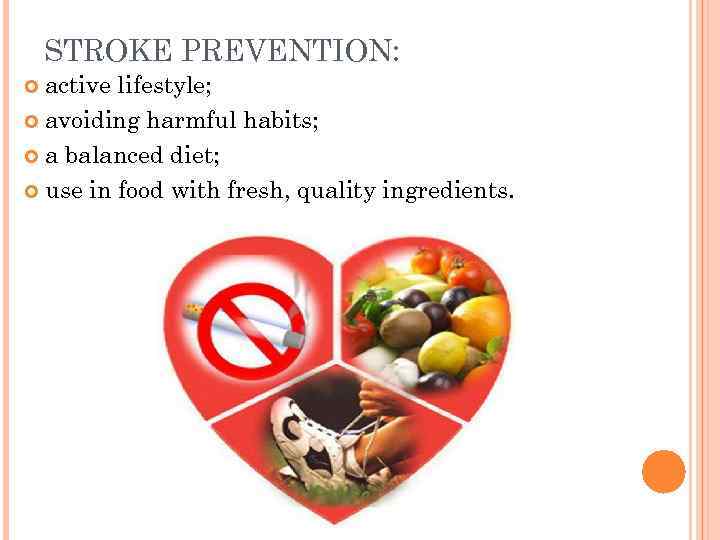
STROKE PREVENTION: active lifestyle; avoiding harmful habits; a balanced diet; use in food with fresh, quality ingredients.
THANK YOU FOR YOUR ATTENTION
 Скачать презентацию STROKE. STROKE (APOPLEXY — CEREBRAL STROKE) acute
Инсульт.ppt
- Количество слайдов: 10