


 Скачать презентацию STROKE PREVENTION- A REALITY IN THIS MILLENNIUM Prof
a2b8e82a90d62556fa94c23393f4c7a2.ppt
- Количество слайдов: 57
 STROKE PREVENTION- A REALITY IN THIS MILLENNIUM Prof. A. V. SRINIVASAN, MD, DM, Ph. D, F. A. A. N, F. I. A. N. Emeritus Professor The Tamilnadu Dr. M. G. R. Medical University Former Head Institute of Neurology, Madras Medical College 21 -08 -10
 Cerebrovascular Prevention Is survival a mere stroke of Luck? “My Opinions are founded on knowledge but modified by experience”
 INTRODUCTION Ø Perceptual Sense (Observation) Ø Word Sense (Recording) Ø Common Sense (Thinking) l Will lead you to get - Clinical Sense “ He who cannot forgive others destroys the bridge over which he himself must pass” - Annoy
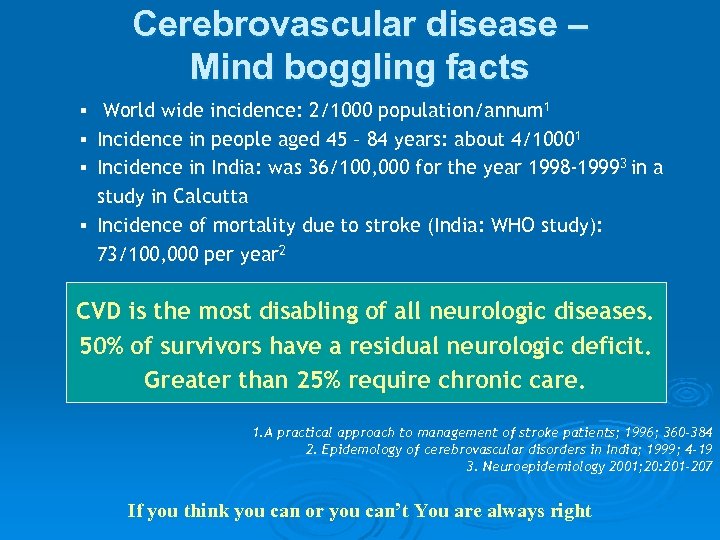 Cerebrovascular disease – Mind boggling facts § World wide incidence: 2/1000 population/annum 1 § Incidence in people aged 45 – 84 years: about 4/10001 § Incidence in India: was 36/100, 000 for the year 1998 -19993 in a study in Calcutta § Incidence of mortality due to stroke (India: WHO study): 73/100, 000 per year 2 CVD is the most disabling of all neurologic diseases. 50% of survivors have a residual neurologic deficit. Greater than 25% require chronic care. 1. A practical approach to management of stroke patients; 1996; 360 -384 2. Epidemology of cerebrovascular disorders in India; 1999; 4 -19 3. Neuroepidemiology 2001; 20: 201 -207 If you think you can or you can’t You are always right
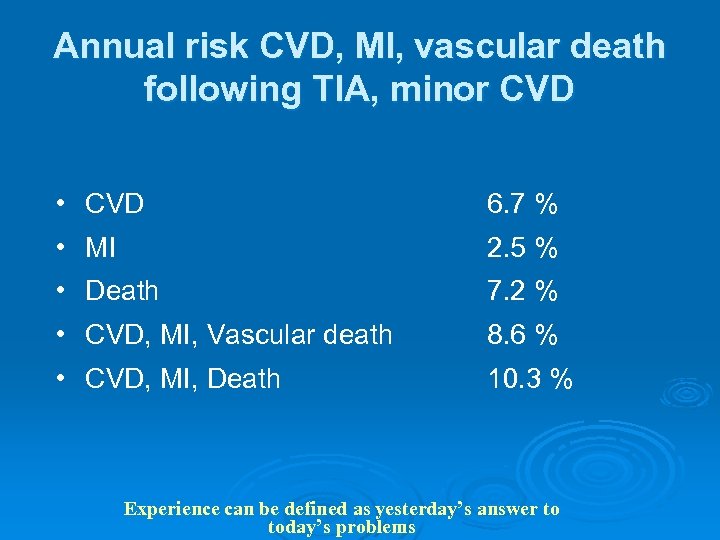 Annual risk CVD, MI, vascular death following TIA, minor CVD • CVD 6. 7 % • MI 2. 5 % • Death 7. 2 % • CVD, MI, Vascular death 8. 6 % • CVD, MI, Death 10. 3 % Experience can be defined as yesterday’s answer to today’s problems
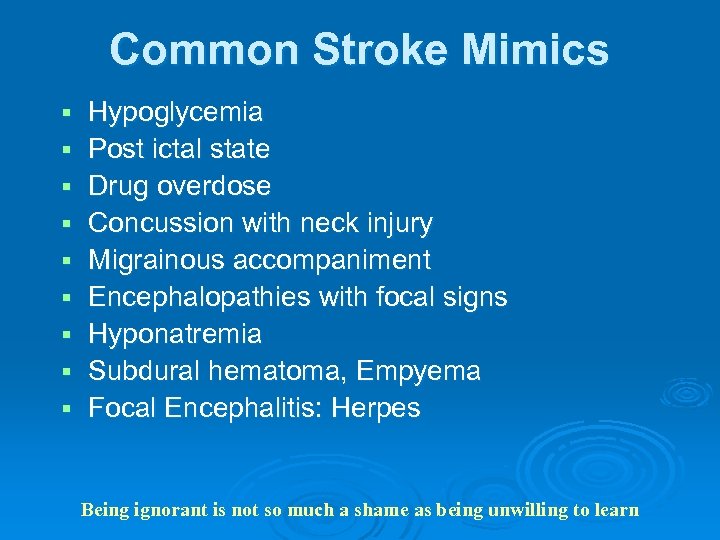 Common Stroke Mimics § § § § § Hypoglycemia Post ictal state Drug overdose Concussion with neck injury Migrainous accompaniment Encephalopathies with focal signs Hyponatremia Subdural hematoma, Empyema Focal Encephalitis: Herpes Being ignorant is not so much a shame as being unwilling to learn
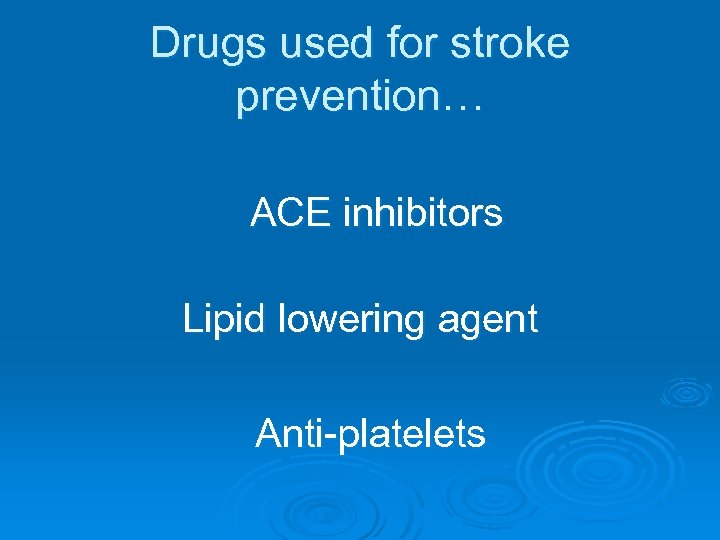 Drugs used for stroke prevention… ACE inhibitors Lipid lowering agent Anti-platelets
 Prevention of Cerebrovascular Events with Perindopril: New Evidence
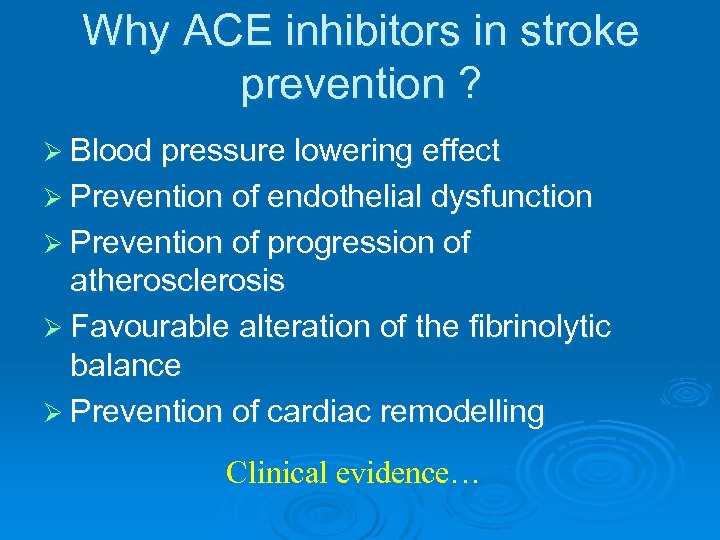 Why ACE inhibitors in stroke prevention ? Ø Blood pressure lowering effect Ø Prevention of endothelial dysfunction Ø Prevention of progression of atherosclerosis Ø Favourable alteration of the fibrinolytic balance Ø Prevention of cardiac remodelling Clinical evidence…
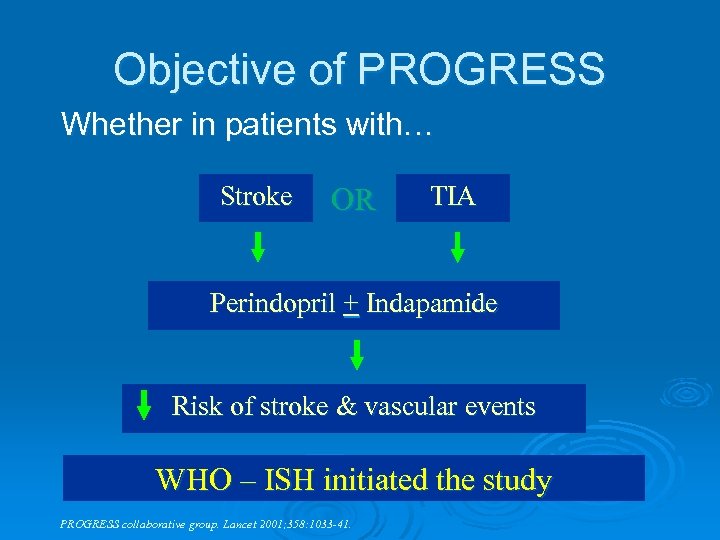 Objective of PROGRESS Whether in patients with… Stroke OR TIA Perindopril + Indapamide Risk of stroke & vascular events WHO – ISH initiated the study PROGRESS collaborative group. Lancet 2001; 358: 1033 -41.
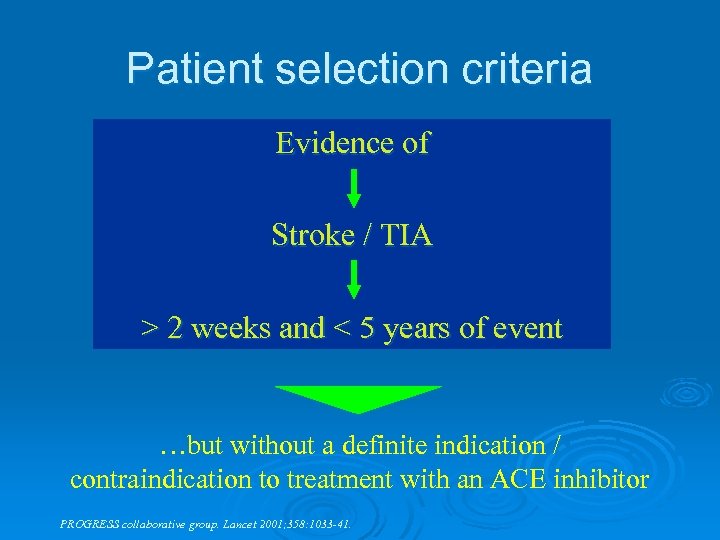 Patient selection criteria Evidence of Stroke / TIA > 2 weeks and < 5 years of event …but without a definite indication / contraindication to treatment with an ACE inhibitor PROGRESS collaborative group. Lancet 2001; 358: 1033 -41.
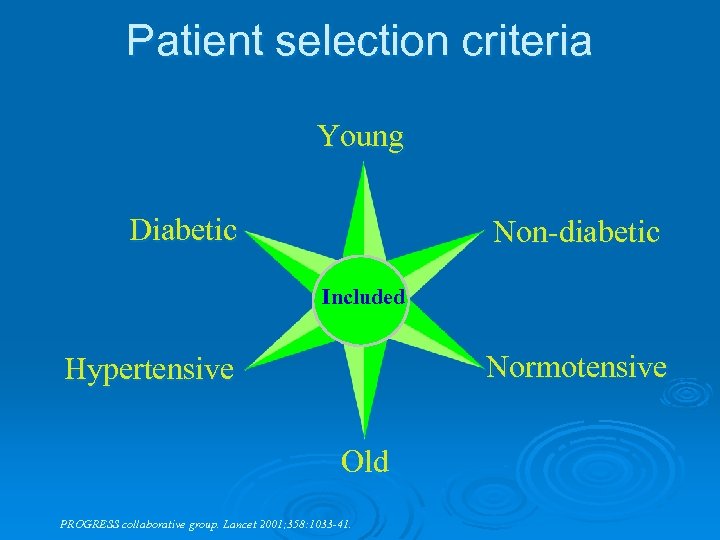 Patient selection criteria Young Diabetic Non-diabetic Included Normotensive Hypertensive Old PROGRESS collaborative group. Lancet 2001; 358: 1033 -41.
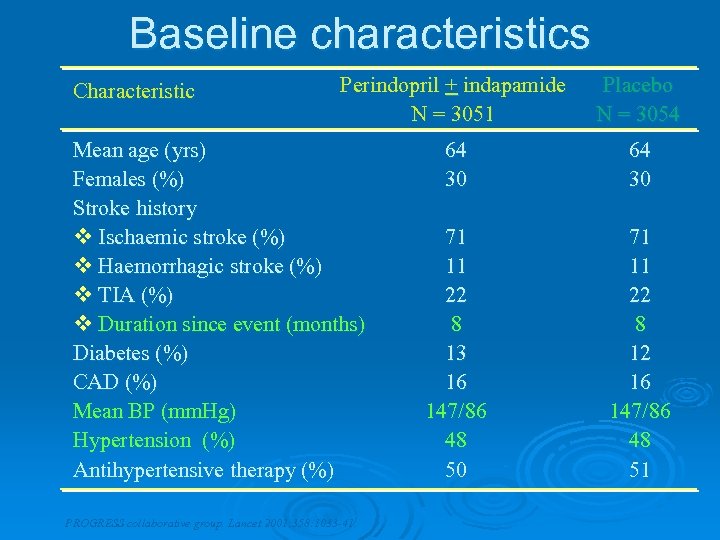 Baseline characteristics Characteristic Perindopril + indapamide N = 3051 Mean age (yrs) Females (%) Stroke history v Ischaemic stroke (%) v Haemorrhagic stroke (%) v TIA (%) v Duration since event (months) Diabetes (%) CAD (%) Mean BP (mm. Hg) Hypertension (%) Antihypertensive therapy (%) PROGRESS collaborative group. Lancet 2001; 358: 1033 -41. Placebo N = 3054 64 30 71 11 22 8 13 16 147/86 48 50 71 11 22 8 12 16 147/86 48 51
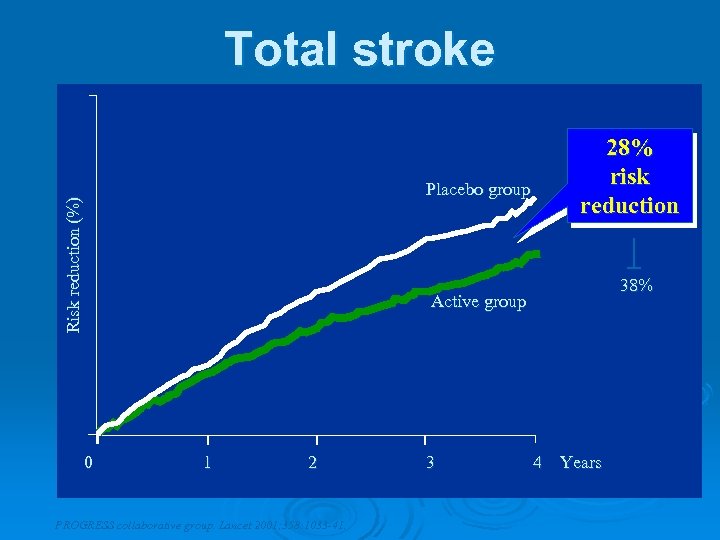 Total stroke Risk reduction (%) Placebo group 28% risk reduction 38% Active group 0 1 2 PROGRESS collaborative group. Lancet 2001; 358: 1033 -41. 3 4 Years
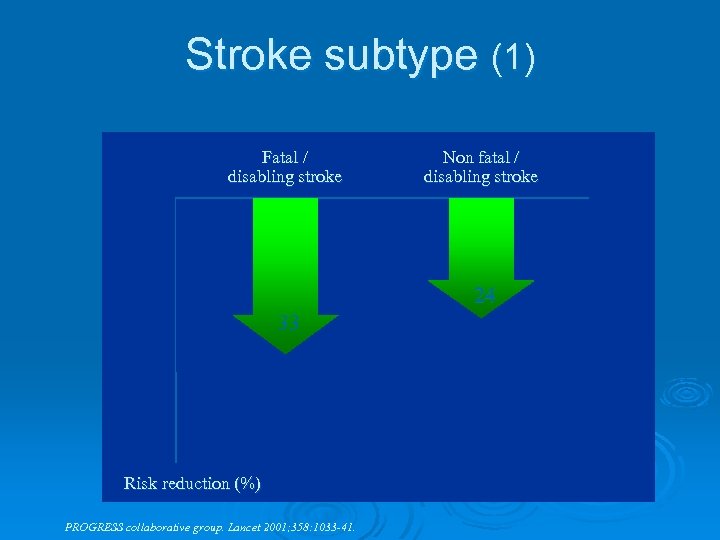 Stroke subtype (1) Fatal / disabling stroke Non fatal / disabling stroke 24 33 Risk reduction (%) PROGRESS collaborative group. Lancet 2001; 358: 1033 -41.
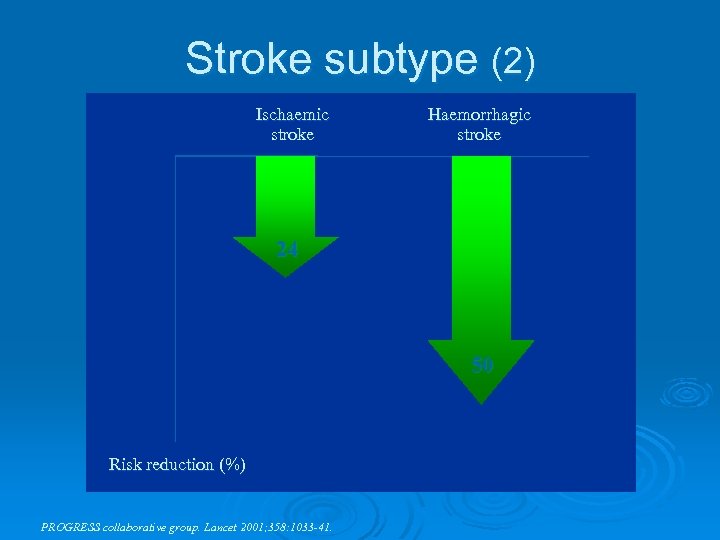 Stroke subtype (2) Ischaemic stroke Haemorrhagic stroke 24 50 Risk reduction (%) PROGRESS collaborative group. Lancet 2001; 358: 1033 -41.
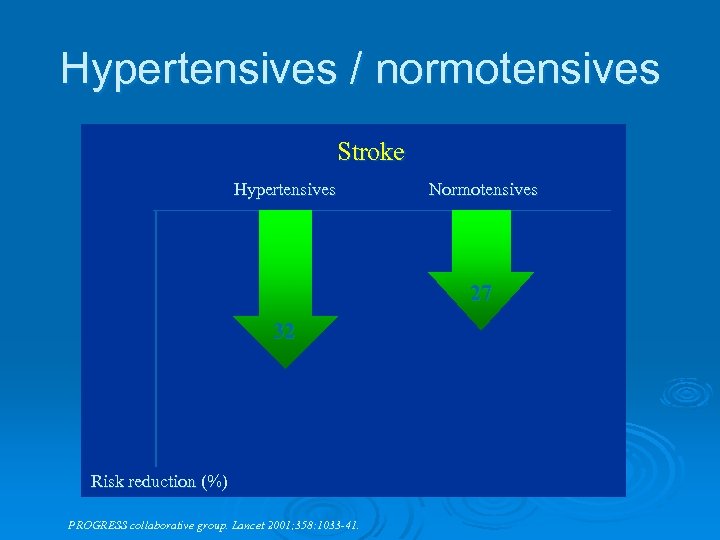 Hypertensives / normotensives Stroke Hypertensives Normotensives 27 32 Risk reduction (%) PROGRESS collaborative group. Lancet 2001; 358: 1033 -41.
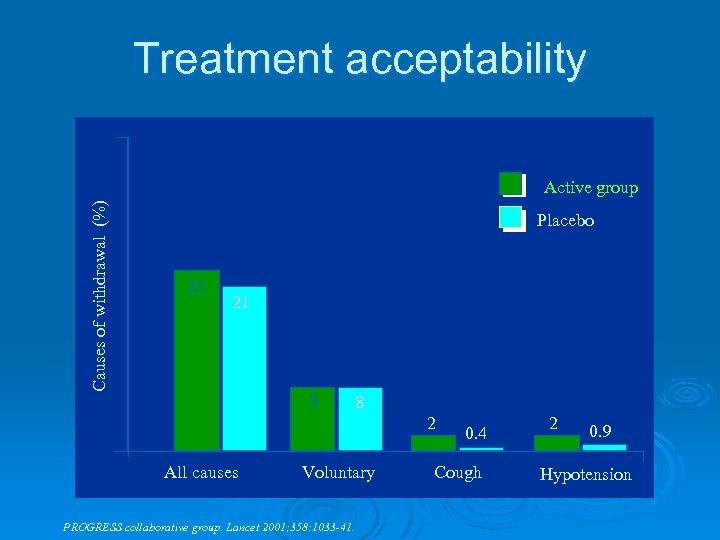 Treatment acceptability Causes of withdrawal (%) Active group Placebo 23 21 8 8 2 All causes Voluntary PROGRESS collaborative group. Lancet 2001; 358: 1033 -41. 0. 4 Cough 2 0. 9 Hypotension
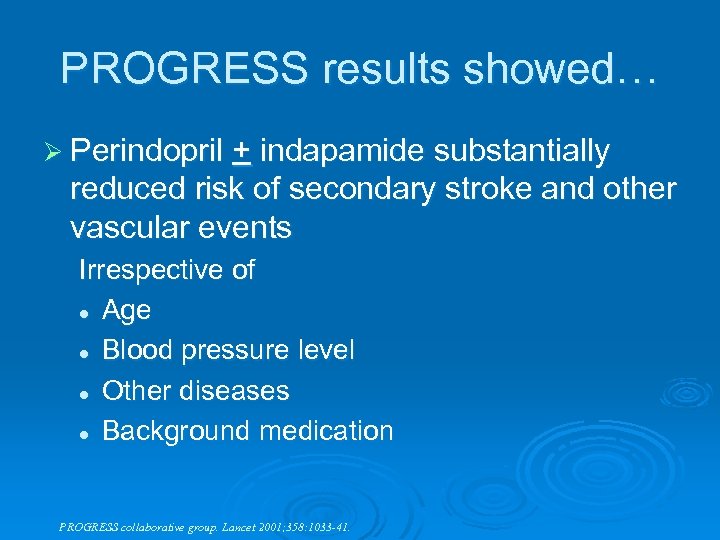 PROGRESS results showed… Ø Perindopril + indapamide substantially reduced risk of secondary stroke and other vascular events Irrespective of l Age l Blood pressure level l Other diseases l Background medication PROGRESS collaborative group. Lancet 2001; 358: 1033 -41.
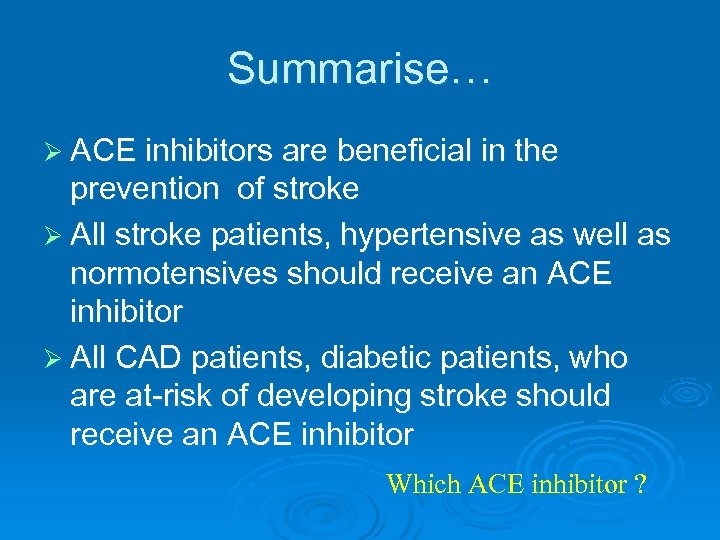 Summarise… Ø ACE inhibitors are beneficial in the prevention of stroke Ø All stroke patients, hypertensive as well as normotensives should receive an ACE inhibitor Ø All CAD patients, diabetic patients, who are at-risk of developing stroke should receive an ACE inhibitor Which ACE inhibitor ?
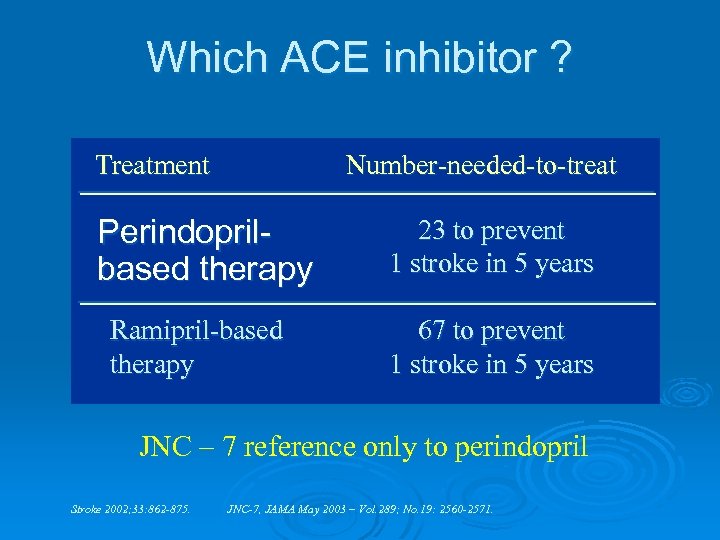 Which ACE inhibitor ? Treatment Number-needed-to-treat Perindoprilbased therapy Ramipril-based therapy 23 to prevent 1 stroke in 5 years 67 to prevent 1 stroke in 5 years JNC – 7 reference only to perindopril Stroke 2002; 33: 862 -875. JNC-7, JAMA May 2003 – Vol. 289; No. 19: 2560 -2571.
 Statins: Stroke Prevention and Survival Benefits
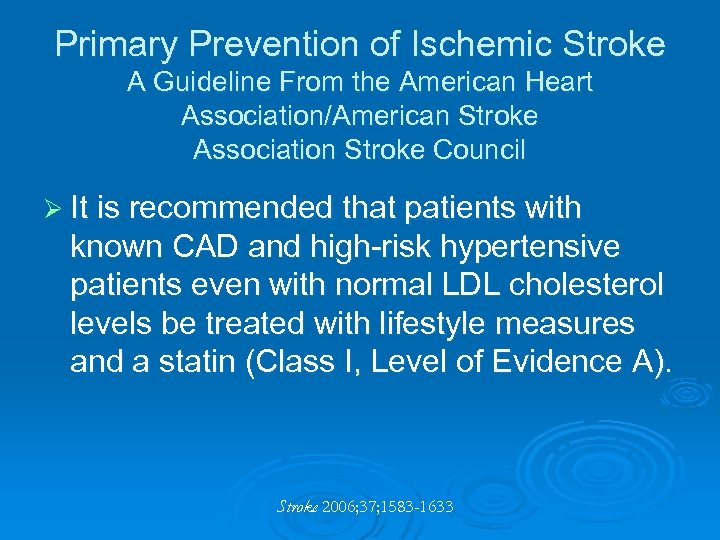 Primary Prevention of Ischemic Stroke A Guideline From the American Heart Association/American Stroke Association Stroke Council Ø It is recommended that patients with known CAD and high-risk hypertensive patients even with normal LDL cholesterol levels be treated with lifestyle measures and a statin (Class I, Level of Evidence A). Stroke 2006; 37; 1583 -1633
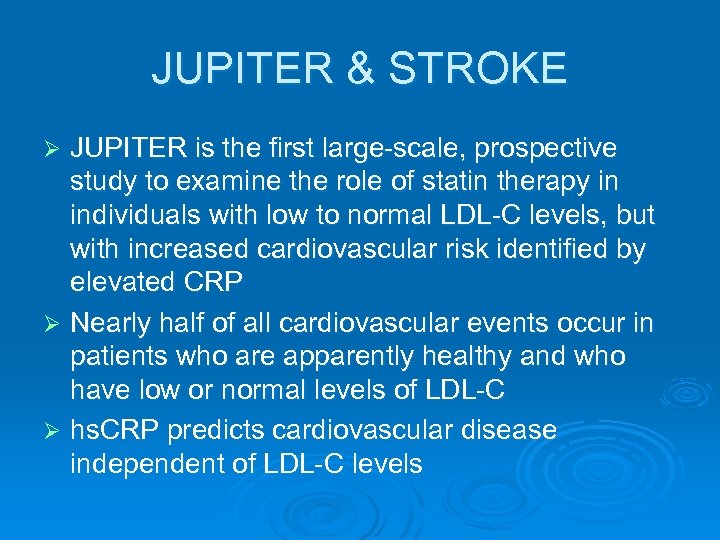 JUPITER & STROKE JUPITER is the first large-scale, prospective study to examine the role of statin therapy in individuals with low to normal LDL-C levels, but with increased cardiovascular risk identified by elevated CRP Ø Nearly half of all cardiovascular events occur in patients who are apparently healthy and who have low or normal levels of LDL-C Ø hs. CRP predicts cardiovascular disease independent of LDL-C levels Ø
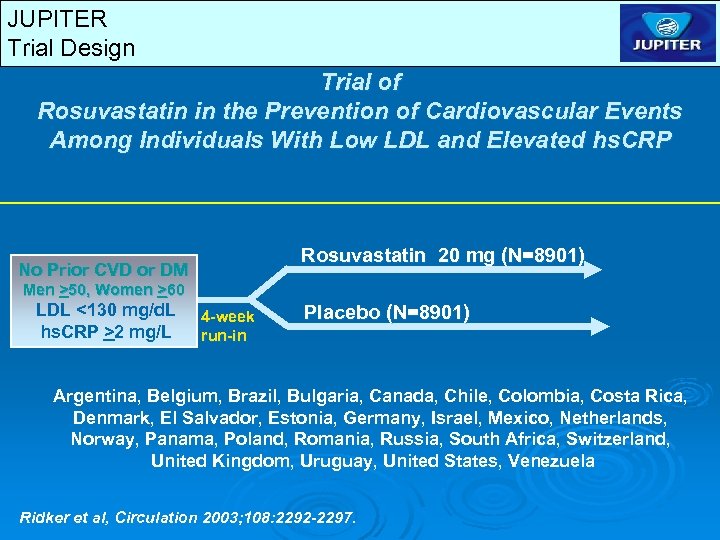 JUPITER Trial Design Multi-National Randomized Double Blind Placebo Controlled Trial of Rosuvastatin in the Prevention of Cardiovascular Events Among Individuals With Low LDL and Elevated hs. CRP Rosuvastatin 20 mg (N=8901) No Prior CVD or DM Men >50, Women >60 LDL <130 mg/d. L hs. CRP >2 mg/L 4 -week run-in Placebo (N=8901) Argentina, Belgium, Brazil, Bulgaria, Canada, Chile, Colombia, Costa Rica, Denmark, El Salvador, Estonia, Germany, Israel, Mexico, Netherlands, Norway, Panama, Poland, Romania, Russia, South Africa, Switzerland, United Kingdom, Uruguay, United States, Venezuela Ridker et al, Circulation 2003; 108: 2292 -2297.
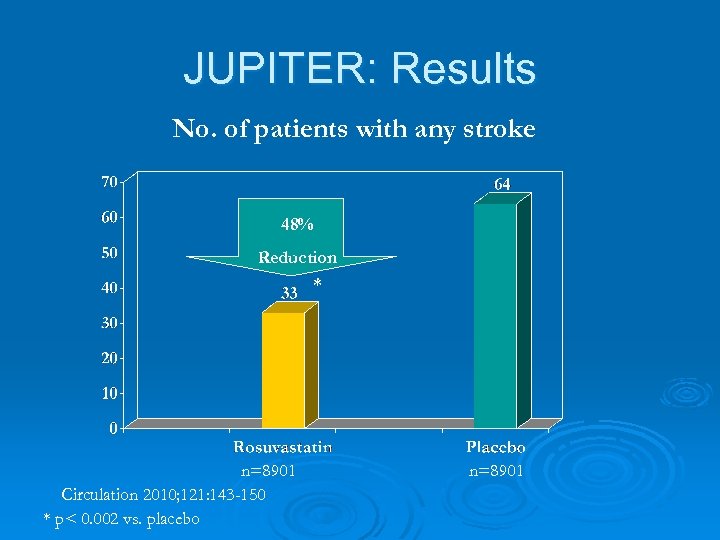 JUPITER: Results No. of patients with any stroke 48% Reduction * n=8901 Circulation 2010; 121: 143 -150 * p< 0. 002 vs. placebo n=8901
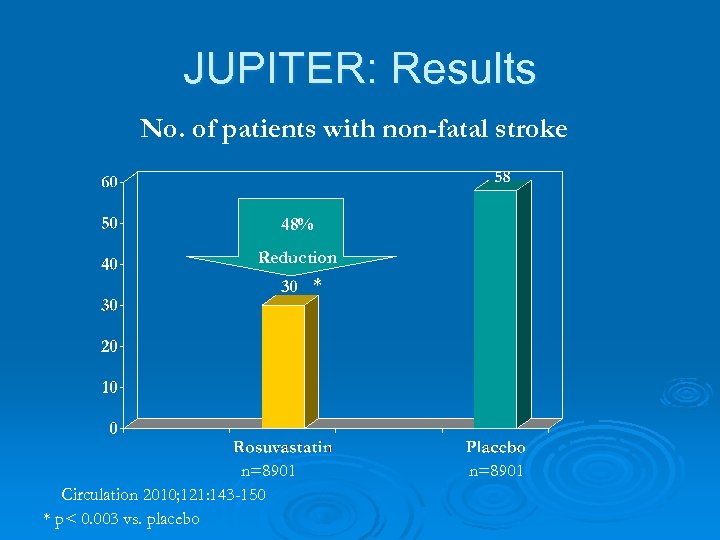 JUPITER: Results No. of patients with non-fatal stroke 48% Reduction * n=8901 Circulation 2010; 121: 143 -150 * p< 0. 003 vs. placebo n=8901
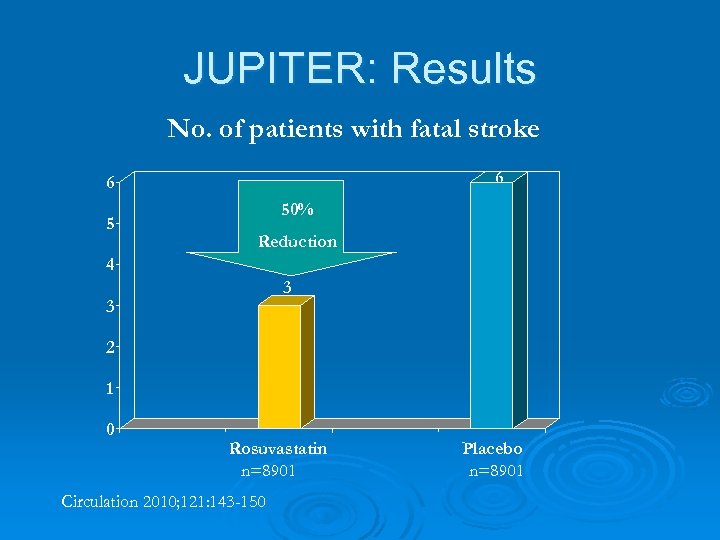 JUPITER: Results No. of patients with fatal stroke 6 6 5 50% Reduction 4 3 3 2 1 0 Rosuvastatin n=8901 Circulation 2010; 121: 143 -150 Placebo n=8901
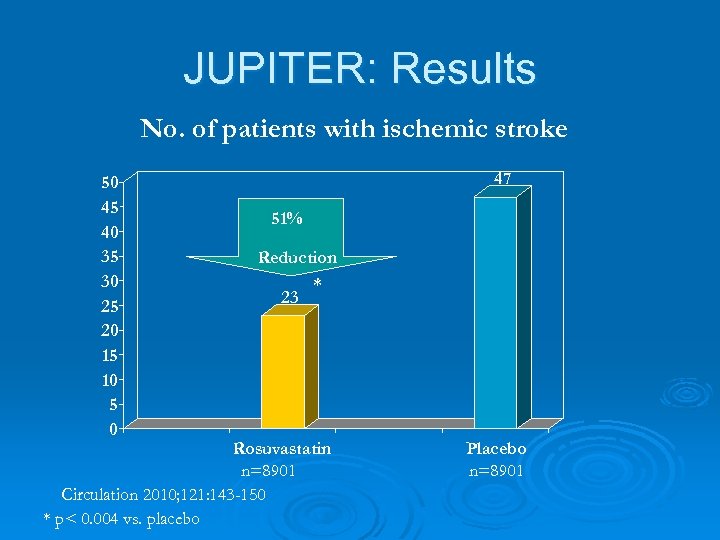 JUPITER: Results No. of patients with ischemic stroke 50 45 40 35 30 25 20 15 10 5 0 47 51% 48% Reduction 23 * Rosuvastatin n=8901 Circulation 2010; 121: 143 -150 * p< 0. 004 vs. placebo Placebo n=8901
 Primary Prevention of Stroke: What do the previous statins trials suggest?
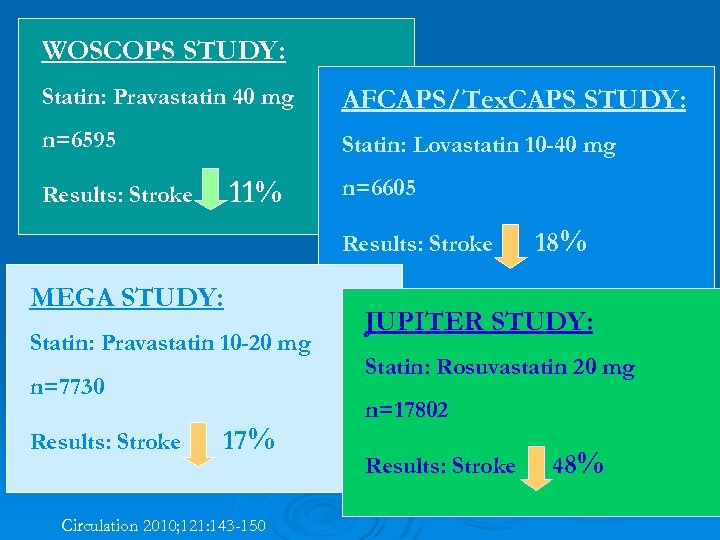 WOSCOPS STUDY: Statin: Pravastatin 40 mg AFCAPS/Tex. CAPS STUDY: n=6595 Statin: Lovastatin 10 -40 mg Results: Stroke 11% n=6605 Results: Stroke MEGA STUDY: Statin: Pravastatin 10 -20 mg n=7730 Results: Stroke 17% Circulation 2010; 121: 143 -150 18% JUPITER STUDY: Statin: Rosuvastatin 20 mg n=17802 Results: Stroke 4 8%
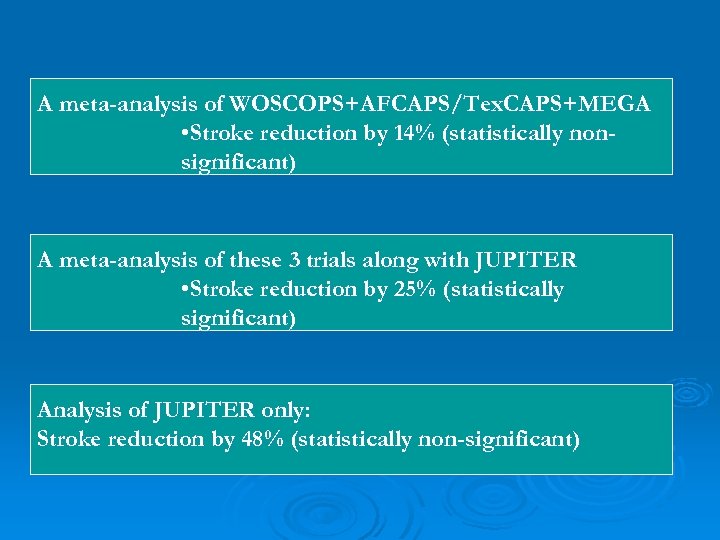 A meta-analysis of WOSCOPS+AFCAPS/Tex. CAPS+MEGA • Stroke reduction by 14% (statistically nonsignificant) A meta-analysis of these 3 trials along with JUPITER • Stroke reduction by 25% (statistically significant) Analysis of JUPITER only: Stroke reduction by 48% (statistically non-significant)
 Summary Ø Stroke is one of the leading cause of death worldwide. Ø Guidelines recommends the use of statins for primary as well as secondary prevention of stroke. Ø JUPITER trial has established that rosuvastatin is the most effective statin in preventing stroke in high risk population.
 Symptomatic Carotid Endarterectomy ASA 2006 Secondary Stroke Recs • Ipsilateral severe (70% to 99%) carotid stenosis, CEA is recommended (Class I, Evidence A). • Ipsilateral moderate (50% to 69%) carotid stenosis, CEA is recommended depending on age, gender, comorbidities, and the severity of symptoms (Class I, Evidence A). • Stenosis <50%, there is no indication for CEA (Class III, Evidence A).
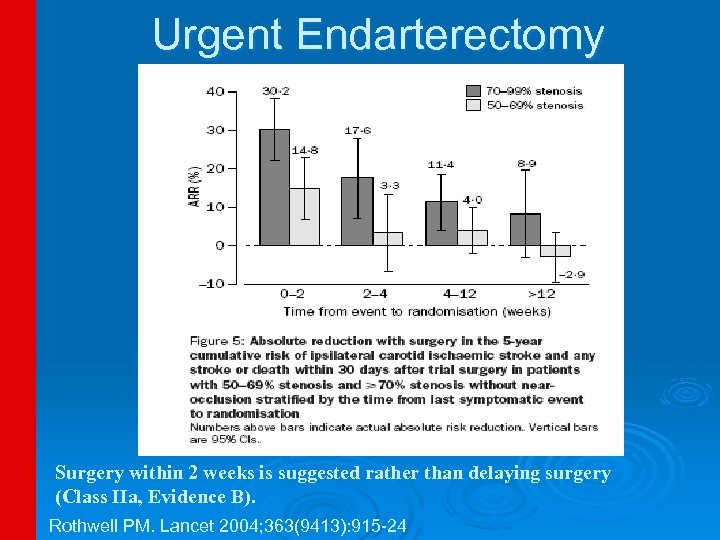 Urgent Endarterectomy Surgery within 2 weeks is suggested rather than delaying surgery (Class IIa, Evidence B). Rothwell PM. Lancet 2004; 363(9413): 915 -24
 Carotid Angioplasty and Stenting ASA 2006 Secondary Stroke Recs • CAS may be considered (Class IIb, Evidence B). - Stenosis (>70%) difficult to access surgically - Medical conditions that greatly increase the risk for surgery, or - When other circumstances exist such as radiation-induced stenosis or restenosis after CEA. • CAS is reasonable when performed by operators with morbidity and mortality rates of 4% to 6% (Class IIa, Evidence B).
 Atrial Fibrillation ASA 2006 Recommendations • For patients with ischemic stroke or TIA with persistent or paroxysmal (intermittent) AF, anticoagulation with adjusted-dose warfarin (target INR 2. 5, range 2. 0 to 3. 0) is recommended (Class I, Evidence A). • For patients unable to take oral anticoagulants, aspirin 325 mg per day is recommended (Class I, Evidence A).
 Stroke Prevention: Non-cardioembolic ASA 2006 Recommendations For patients with noncardioembolic ischemic stroke or TIA, antiplatelet agents are recommended rather than oral anticoagulation to reduce the risk of recurrent stroke and other cardiovascular events (Class I, Evidence A).
 Stroke Prevention: Noncardioembolic ASA 2006 Recommendations • Acceptable options for initial therapy (Class IIa, Evidence A). - aspirin (50 -325 mg qd) - the combination of aspirin and extendedrelease dipyridamole (25/200 mg bid) - clopidogrel (75 mg qd)
 Antiplatelet Therapy ASA 2006 Recommendations • Compared to aspirin alone, both the combination of aspirin and extended-release dipyridamole and clopidogrel are safe. • The combination of aspirin and extended-release dipyridamole is suggested instead of aspirin alone (Class IIa, Level A). • Clopidogrel is suggested instead of aspirin alone based on direct comparison trials (Class IIb, Level B).
 Secondary Stroke Prevention ASA 2006 Recommendations • Insufficient data are available to make evidencebased recommendations regarding choices between antiplatelet options other than aspirin. Selection of an antiplatelet agent should be individualized based on patient risk factor profiles, tolerance, and other clinical characteristics.
 Secondary Stroke Prevention ASA 2006 Recommendations • The addition of aspirin to clopidogrel increases the risk of hemorrhage and is not routinely recommended for stroke or TIA patients (Class III, Evidence A). • For patients allergic to aspirin, clopidogrel is recommended (Class IIa, Evidence B).
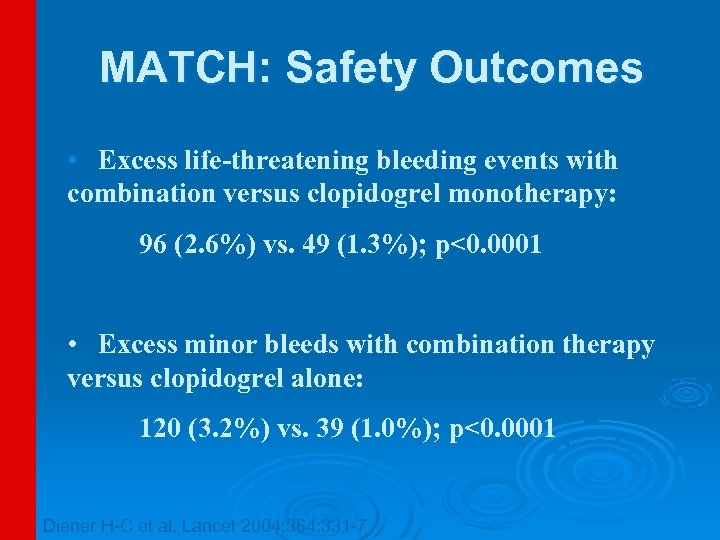 MATCH: Safety Outcomes • Excess life-threatening bleeding events with combination versus clopidogrel monotherapy: 96 (2. 6%) vs. 49 (1. 3%); p<0. 0001 • Excess minor bleeds with combination therapy versus clopidogrel alone: 120 (3. 2%) vs. 39 (1. 0%); p<0. 0001 Diener H-C et al. Lancet 2004; 364: 331 -7
 Secondary Stroke Prevention ASA 2006 Recommendations • For patients who have an ischemic cerebrovascular event while taking aspirin, there is no reliable evidence that increasing the dose of aspirin provides additional benefit. Although alternative antiplatelet agents are often considered for these patients, no single agent or combination has been specifically evaluated in patients who have had an event while receiving aspirin.
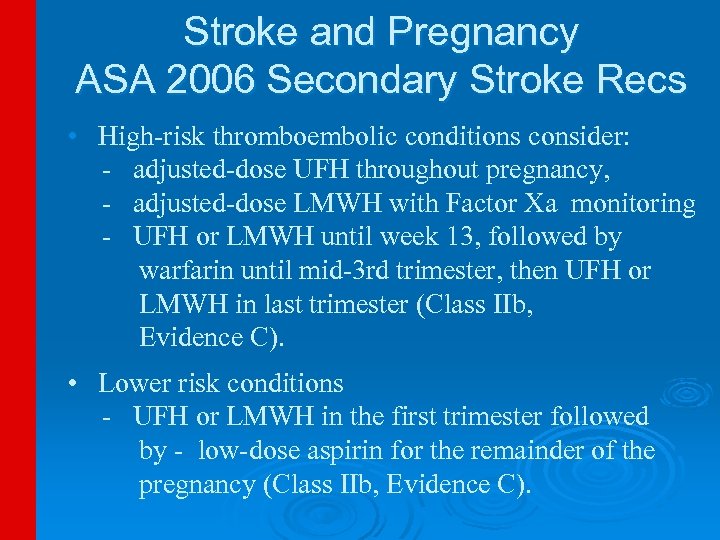 Stroke and Pregnancy ASA 2006 Secondary Stroke Recs • High-risk thromboembolic conditions consider: - adjusted-dose UFH throughout pregnancy, - adjusted-dose LMWH with Factor Xa monitoring - UFH or LMWH until week 13, followed by warfarin until mid-3 rd trimester, then UFH or LMWH in last trimester (Class IIb, Evidence C). • Lower risk conditions - UFH or LMWH in the first trimester followed by - low-dose aspirin for the remainder of the pregnancy (Class IIb, Evidence C).
 Postmenopausal Hormones ASA 2006 Secondary Stroke Recs For women with ischemic stroke or TIA, postmenopausal hormone therapy (with estrogen with or without a progestin) is not recommended (Class III, Evidence A).
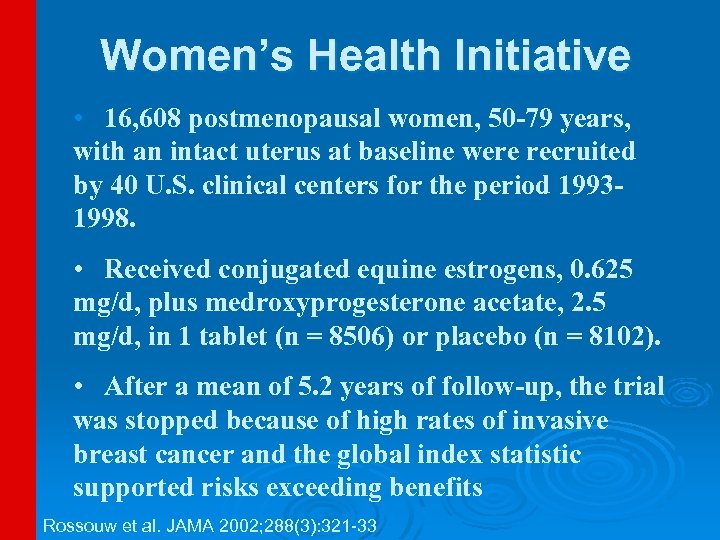 Women’s Health Initiative • 16, 608 postmenopausal women, 50 -79 years, with an intact uterus at baseline were recruited by 40 U. S. clinical centers for the period 19931998. • Received conjugated equine estrogens, 0. 625 mg/d, plus medroxyprogesterone acetate, 2. 5 mg/d, in 1 tablet (n = 8506) or placebo (n = 8102). • After a mean of 5. 2 years of follow-up, the trial was stopped because of high rates of invasive breast cancer and the global index statistic supported risks exceeding benefits. Rossouw et al. JAMA 2002; 288(3): 321 -33
 Other Circumstances ASA 2006 Secondary Stroke Recs • Dissections • PFO and hyperhomocysteinemia • Hypercoagulable states • Sickle cell disease • Cerebral venous thrombosis • Anticoagulation after cerebral hemorrhage
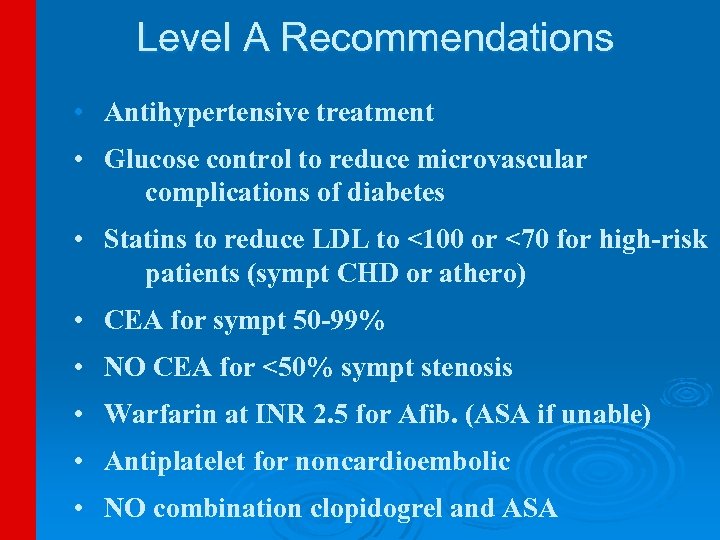 Level A Recommendations • Antihypertensive treatment • Glucose control to reduce microvascular complications of diabetes • Statins to reduce LDL to <100 or <70 for high-risk patients (sympt CHD or athero) • CEA for sympt 50 -99% • NO CEA for <50% sympt stenosis • Warfarin at INR 2. 5 for Afib. (ASA if unable) • Antiplatelet for noncardioembolic • NO combination clopidogrel and ASA
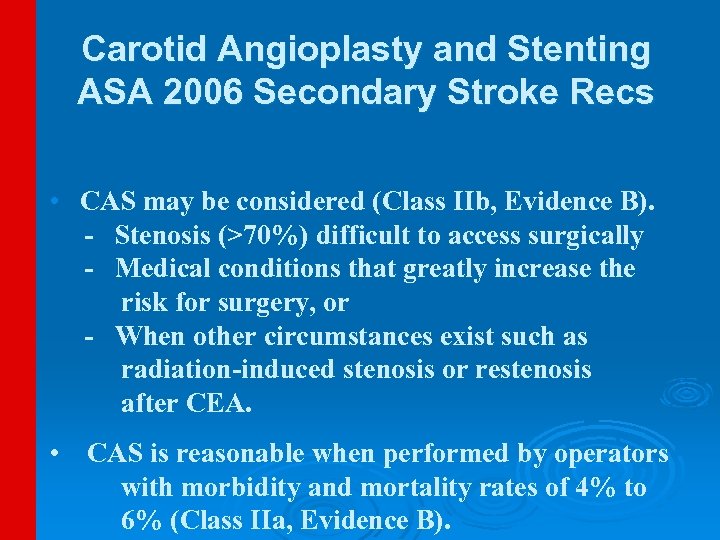 Carotid Angioplasty and Stenting ASA 2006 Secondary Stroke Recs • CAS may be considered (Class IIb, Evidence B). - Stenosis (>70%) difficult to access surgically - Medical conditions that greatly increase the risk for surgery, or - When other circumstances exist such as radiation-induced stenosis or restenosis after CEA. • CAS is reasonable when performed by operators with morbidity and mortality rates of 4% to 6% (Class IIa, Evidence B).
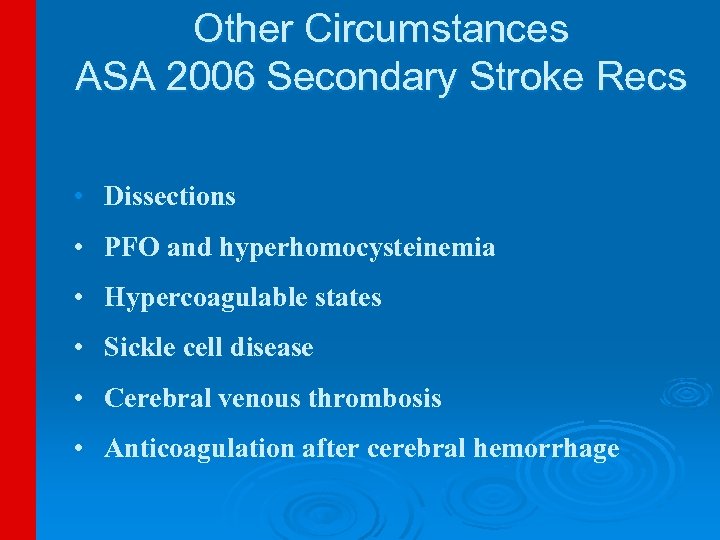 Other Circumstances ASA 2006 Secondary Stroke Recs • Dissections • PFO and hyperhomocysteinemia • Hypercoagulable states • Sickle cell disease • Cerebral venous thrombosis • Anticoagulation after cerebral hemorrhage
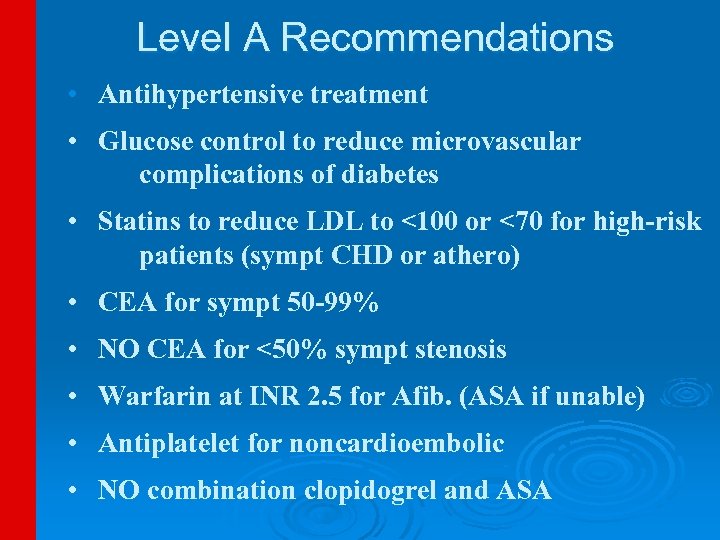 Level A Recommendations • Antihypertensive treatment • Glucose control to reduce microvascular complications of diabetes • Statins to reduce LDL to <100 or <70 for high-risk patients (sympt CHD or athero) • CEA for sympt 50 -99% • NO CEA for <50% sympt stenosis • Warfarin at INR 2. 5 for Afib. (ASA if unable) • Antiplatelet for noncardioembolic • NO combination clopidogrel and ASA
 PROGNOSTIC PEARLS § § § § § Flaccid Paralysis for more than 96 hrs When tendon reflexes recover without return of voluntary movement – prognosis poor Recovery of sensory less in usual to a degree. Postion sense recovers but not pain and temperature Recovery from Dysphasia is never complete Dysarthria usual improves and Dysphagia never improves Diplopia due to brain stem is usually permanent Conjugate gaze – recovers Vertigo improves but hearing loss is permanent Pseudobulbar palsy permanent “By Nature All Men/ Women are alike but by Education widely different”
 CVD – Prevention or Cure? While number of curative methods are available, preventive therapy is undoubtedly the main strategy in the management of CVD Lijec Vjesn. 2003 Nov-Dec; 125(11 -12): 322 -8 The sign wasn’t placed there By the Big Printer in the sky

 Dedicated to my family for making everything worthwhile
 READ not to contradict or confute Nor to Believe and Take for Granted but TO WEIGH AND CONSIDER THANK YOU My sincere thanks to Serdia pharmaceuticals