


 Скачать презентацию Strengthening Private Sector Resilience under Conflict Lessons Learned
666136e98a6f8cbb944da2a663f14a3d.ppt
- Количество слайдов: 18
 Strengthening Private Sector Resilience under Conflict: Lessons Learned and the Way Forward 11 -12 November 2008 Beirut, Lebanon Mr. Tarik Alami Chief, Unit for Emerging and Conflict Related Issues (ECRI) 1
 Patterns and Dynamics of Conflict and Instability in the ESCWA Region 2
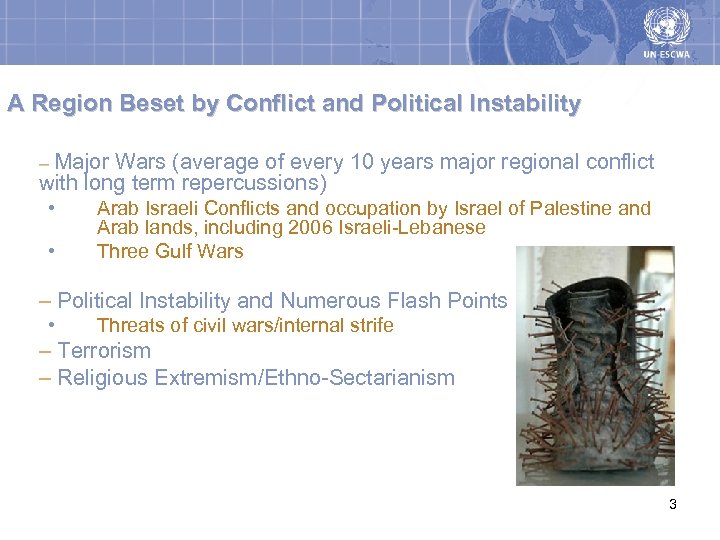 A Region Beset by Conflict and Political Instability – Major Wars (average of every 10 years major regional conflict with long term repercussions) • • Arab Israeli Conflicts and occupation by Israel of Palestine and Arab lands, including 2006 Israeli-Lebanese Three Gulf Wars – Political Instability and Numerous Flash Points • Threats of civil wars/internal strife – Terrorism – Religious Extremism/Ethno-Sectarianism 3
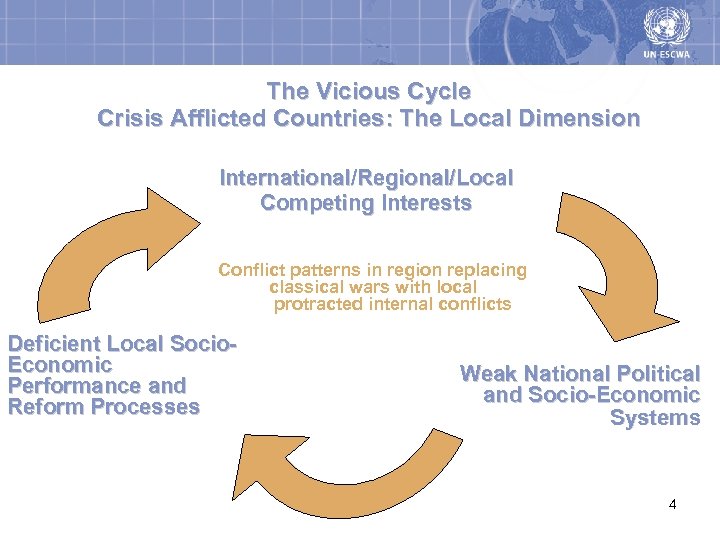 The Vicious Cycle Crisis Afflicted Countries: The Local Dimension International/Regional/Local Competing Interests Conflict patterns in region replacing classical wars with local protracted internal conflicts Deficient Local Socio. Economic Performance and Reform Processes Weak National Political and Socio-Economic Systems 4
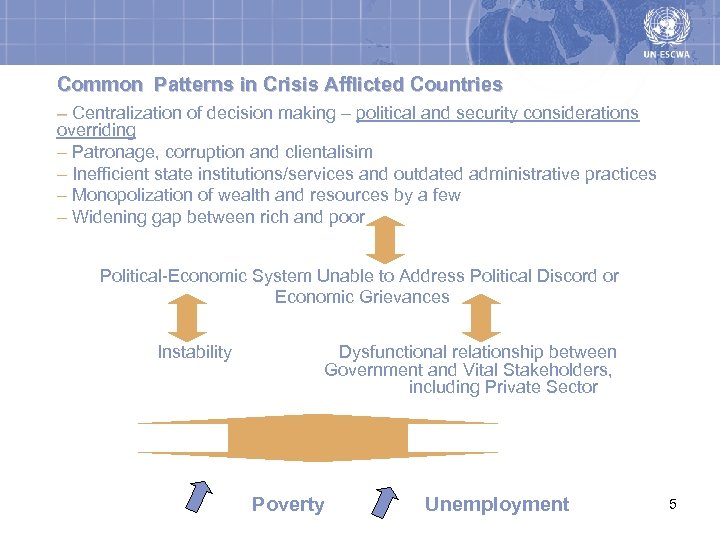 Common Patterns in Crisis Afflicted Countries – Centralization of decision making – political and security considerations overriding – Patronage, corruption and clientalisim – Inefficient state institutions/services and outdated administrative practices – Monopolization of wealth and resources by a few – Widening gap between rich and poor Political-Economic System Unable to Address Political Discord or Economic Grievances Instability Dysfunctional relationship between Government and Vital Stakeholders, including Private Sector Poverty Unemployment 5
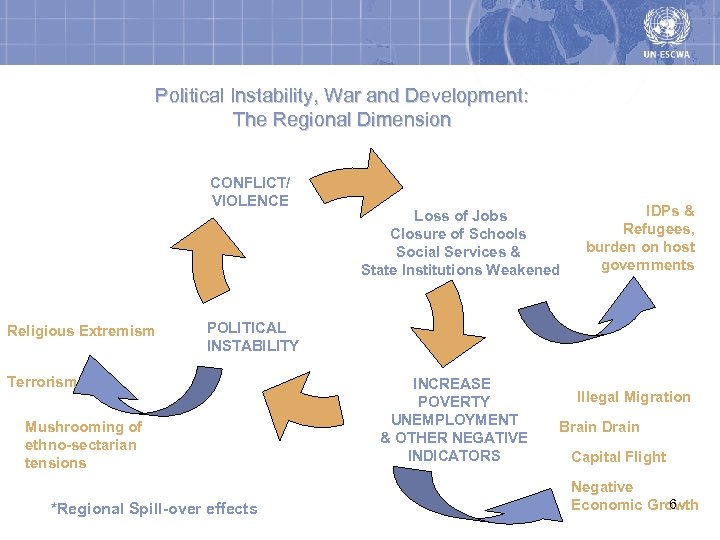 Political Instability, War and Development: The Regional Dimension CONFLICT/ VIOLENCE Religious Extremism Loss of Jobs Closure of Schools Social Services & State Institutions Weakened IDPs & Refugees, burden on host governments POLITICAL INSTABILITY Terrorism Mushrooming of ethno-sectarian tensions *Regional Spill-over effects INCREASE POVERTY UNEMPLOYMENT & OTHER NEGATIVE INDICATORS Illegal Migration Brain Drain Capital Flight Negative 6 Economic Growth
 Impact of Conflict/Instability on Socio-Economic Development 7
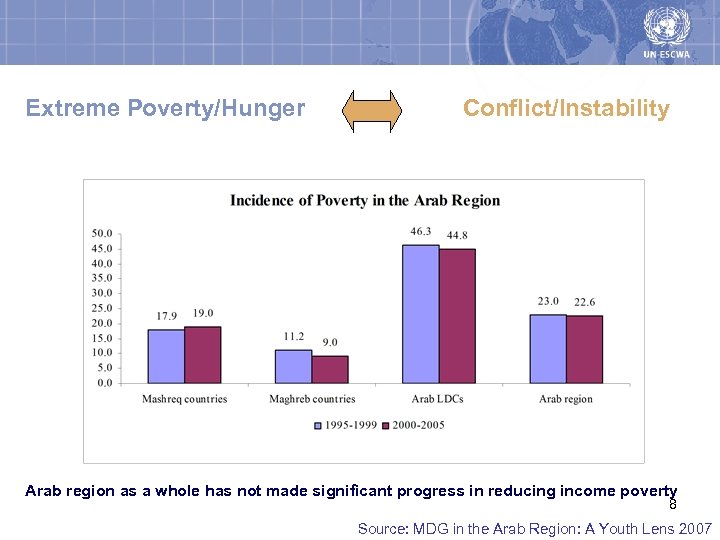 Extreme Poverty/Hunger Conflict/Instability Arab region as a whole has not made significant progress in reducing income poverty 8 Source: MDG in the Arab Region: A Youth Lens 2007
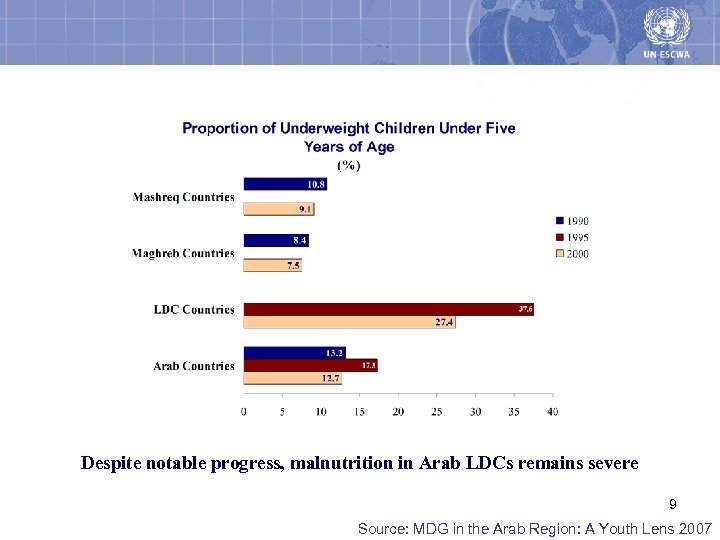 Despite notable progress, malnutrition in Arab LDCs remains severe 9 Source: MDG in the Arab Region: A Youth Lens 2007
 Other Obvious Repercussions of Conflict and Instability • Low Economic Growth • Scarce resources spent on military and security items rather development • Decrease confidence of local and foreign investors • Increase in countries risk premia on capital market borrowings resulting in high interest rates • Decrease in foreign direct investment • Decline in output, including manufacturing and tourism • Constriction of trade • High debt service costs • Decline in fiscal revenues as a result of lower incomes 10
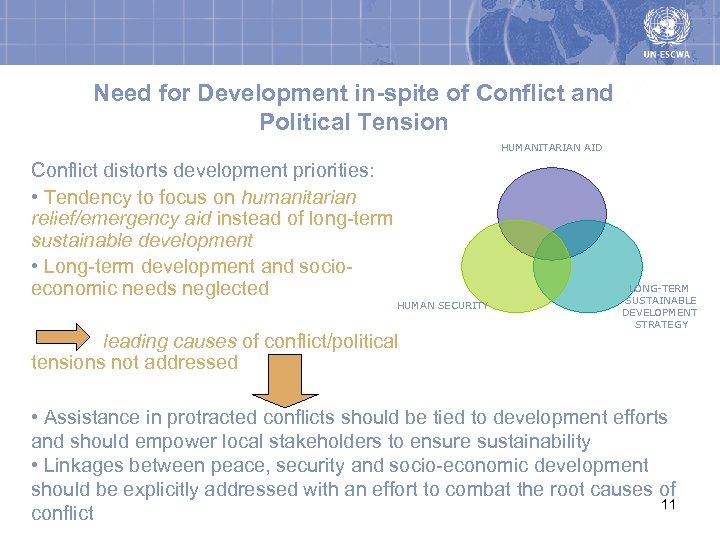 Need for Development in-spite of Conflict and Political Tension HUMANITARIAN AID Conflict distorts development priorities: • Tendency to focus on humanitarian relief/emergency aid instead of long-term sustainable development • Long-term development and socioeconomic needs neglected HUMAN SECURITY leading causes of conflict/political tensions not addressed LONG-TERM SUSTAINABLE DEVELOPMENT STRATEGY • Assistance in protracted conflicts should be tied to development efforts and should empower local stakeholders to ensure sustainability • Linkages between peace, security and socio-economic development should be explicitly addressed with an effort to combat the root causes of 11 conflict
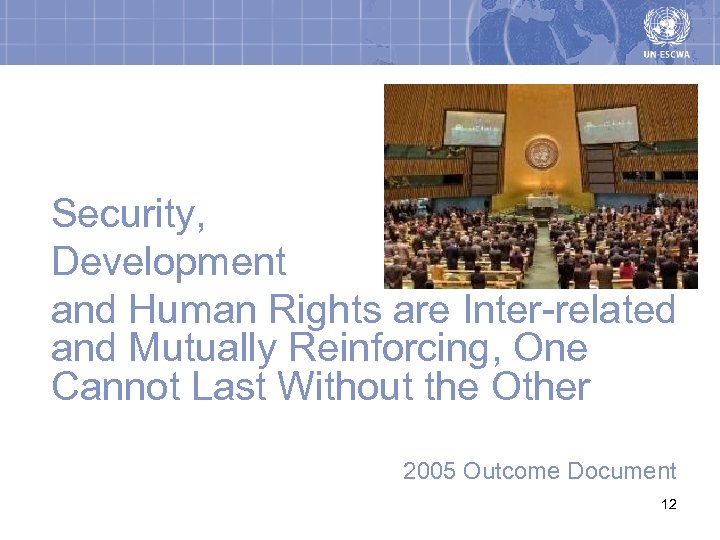 Security, Development and Human Rights are Inter-related and Mutually Reinforcing, One Cannot Last Without the Other 2005 Outcome Document 12
 Private Sector: Vehicle for Development in Crisis Afflicted Countries ? 13
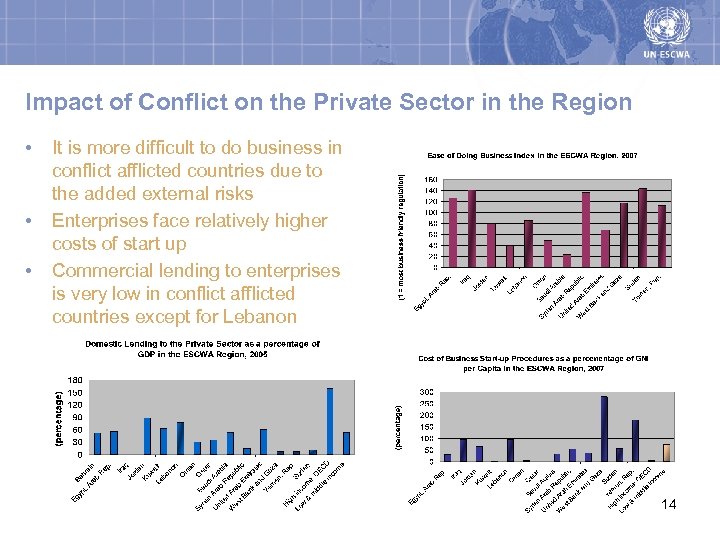 Impact of Conflict on the Private Sector in the Region • • • It is more difficult to do business in conflict afflicted countries due to the added external risks Enterprises face relatively higher costs of start up Commercial lending to enterprises is very low in conflict afflicted countries except for Lebanon 14
 • A real and viable vehicle for local development – Promote productivity and economic growth create jobs reduce poverty and improve economic security – Retains a vested interest in administrative efficiency of state institutions – An able resource for development actors • A strong local peace building and conflict mitigation catalyst – Retains a vested interest in economic recovery and political/security stability – Economic influence, political contacts, financial resources, skilled workforce and connection with all levels of society is ideally poised to be a positive actor in conflict mitigation 15
 Negative Role of Business in Conflict Settings • • Corruption and rent seeking Inequality and deepening poverty Economic distortion and sidelining labor-intensive industries Preventing transparency, accountability and other good governance practices from taking root • Derailing state building and socio-economic development efforts • Financing the sustenance of conflict 16
 How to Maximize the Potential and Positive Role of the Private Sector in Crisis Afflicted Countries: The Objective of the EGM Study the Challenges, Build on Success Stories and Design Responses – Strengthen positive role of the private sector in development and ways to mitigate it’s negative influence “UN Global Compact where corporate signatories committed to a set of ten basic principles concerning human rights, labor, environment and transparency” – Strengthen capacities of civil servants to facilitate the affairs of the private sector – Examine national insurance schemes and access to risk pooling funds – Study potential of incubators and SME support schemes 17
 Thank You. 18