 Скачать презентацию Strengthening health information and library systems in Africa
8e6f4a7fcb129175b1d6da50bbaea954.ppt
- Количество слайдов: 23



Strengthening health information and library systems in Africa through capacity building and partnership working A case study in Tanzania Presenters: Rehema Chande-Mallya (MUHAS) Lucy Reid (RCOG)
Introduction and Background HLG 2002: seeing a presentation about a Phi partnership 2006 - Phi put Alli Mcharazo (MUHAS) in touch with RCOG ◦ Development of MUHAS library ◦ Delivery of good quality health information to members of the public in Tanzania ◦ Supporting the improvement of health across Tanzania 2007 – Alli moved to TLSB, Rehema became director at MUHAS ◦ Expanded scope of partnership to include public libraries and the formal project was developed
Partnership working PHI - supporting health library partnership between UK and developing countries – facilitated partnership and drove funding application RCOG – professional body for doctors specialising in women’s health, developing reproductive health, delivering information services to support reproductive health TVU - host a one year Ph. D candidate for Split Site Scholarship
Partnership working MUHAS - public medical university in Tanzania, delivers education and training for doctors, nurses and allied health professionals, national medical collection TLSB – network of public libraries in major towns in Tanzania, mechanism for delivering library services to members of the public SLADS – TLSB hosted library school training librarians to certificate and diploma level
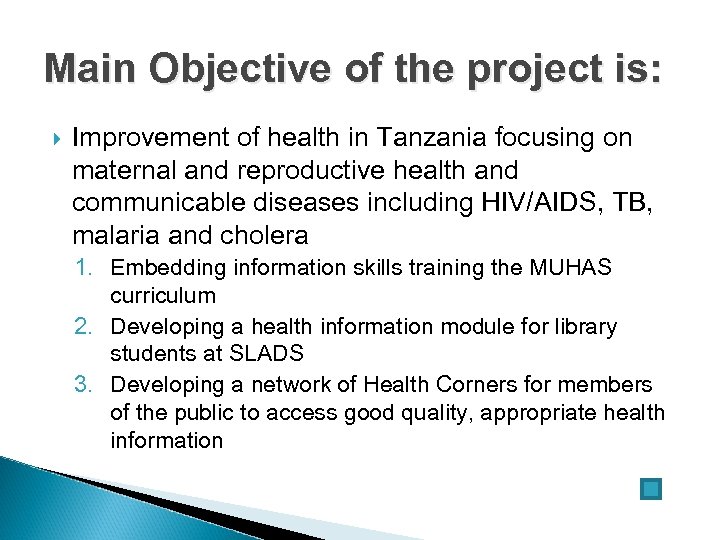
Main Objective of the project is: Improvement of health in Tanzania focusing on maternal and reproductive health and communicable diseases including HIV/AIDS, TB, malaria and cholera 1. Embedding information skills training the MUHAS curriculum 2. Developing a health information module for library students at SLADS 3. Developing a network of Health Corners for members of the public to access good quality, appropriate health information
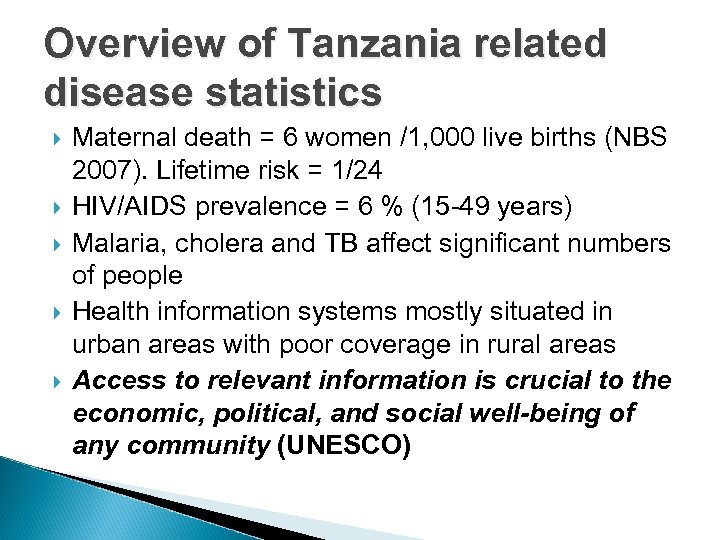
Overview of Tanzania related disease statistics Maternal death = 6 women /1, 000 live births (NBS 2007). Lifetime risk = 1/24 HIV/AIDS prevalence = 6 % (15 -49 years) Malaria, cholera and TB affect significant numbers of people Health information systems mostly situated in urban areas with poor coverage in rural areas Access to relevant information is crucial to the economic, political, and social well-being of any community (UNESCO)
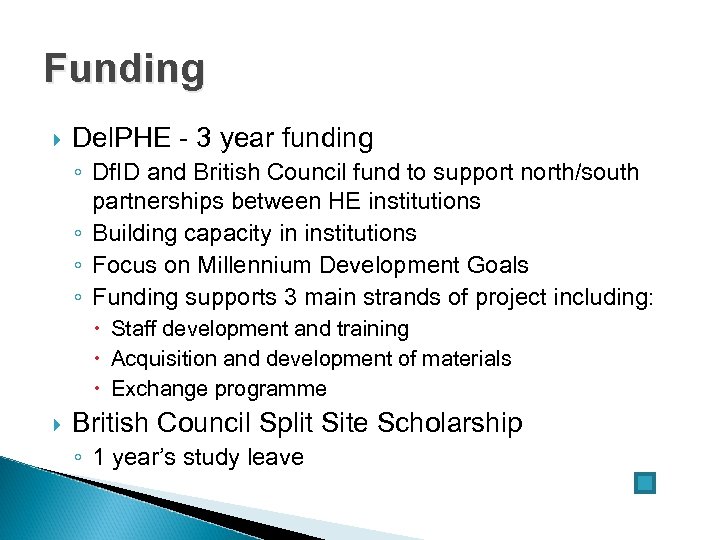
Funding Del. PHE - 3 year funding ◦ Df. ID and British Council fund to support north/south partnerships between HE institutions ◦ Building capacity in institutions ◦ Focus on Millennium Development Goals ◦ Funding supports 3 main strands of project including: Staff development and training Acquisition and development of materials Exchange programme British Council Split Site Scholarship ◦ 1 year’s study leave
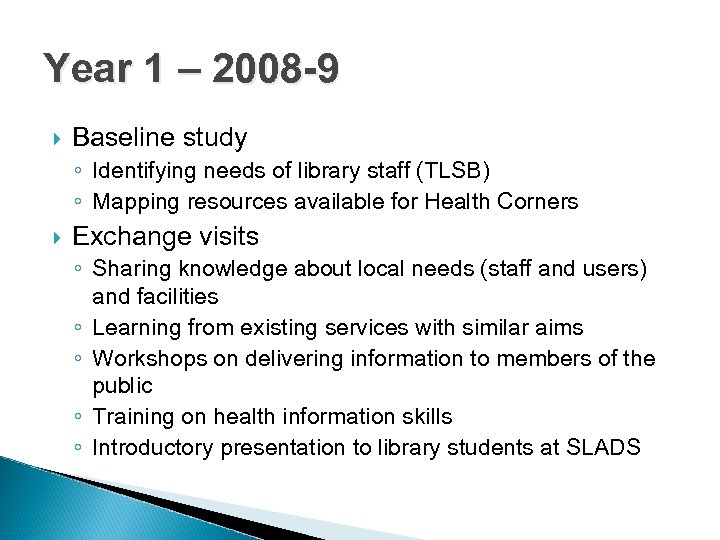
Year 1 – 2008 -9 Baseline study ◦ Identifying needs of library staff (TLSB) ◦ Mapping resources available for Health Corners Exchange visits ◦ Sharing knowledge about local needs (staff and users) and facilities ◦ Learning from existing services with similar aims ◦ Workshops on delivering information to members of the public ◦ Training on health information skills ◦ Introductory presentation to library students at SLADS
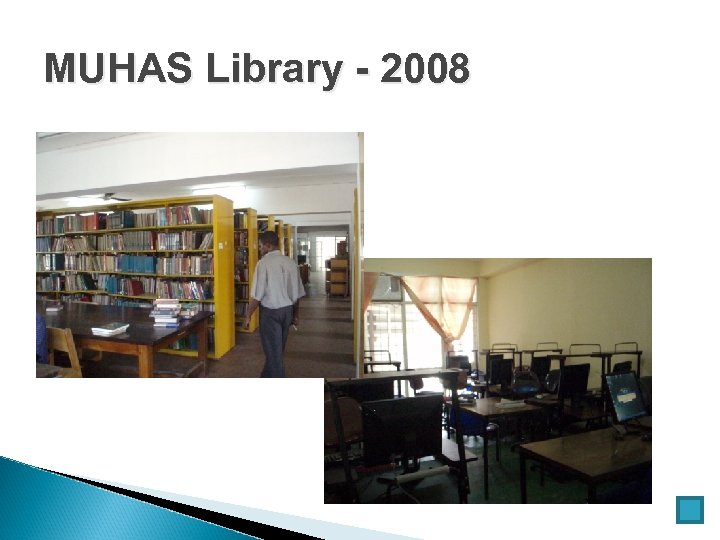
MUHAS Library - 2008
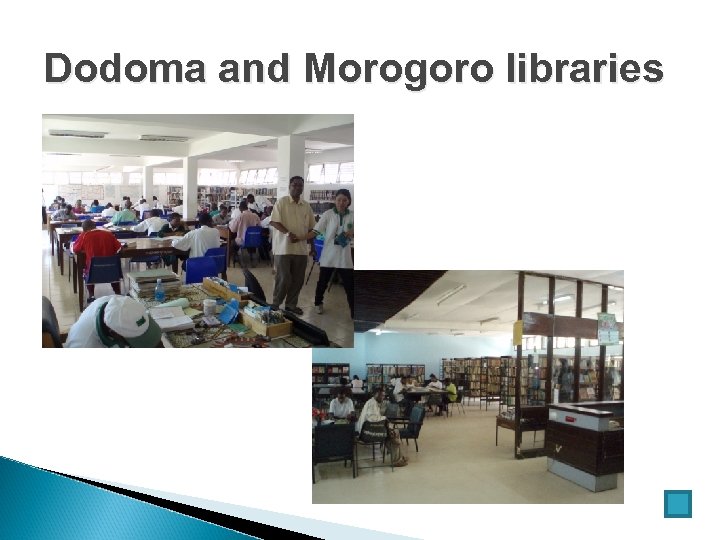
Dodoma and Morogoro libraries
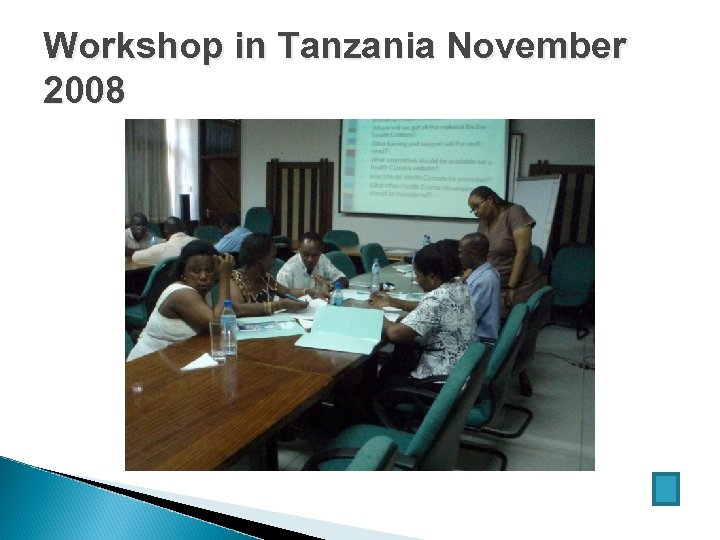
Workshop in Tanzania November 2008
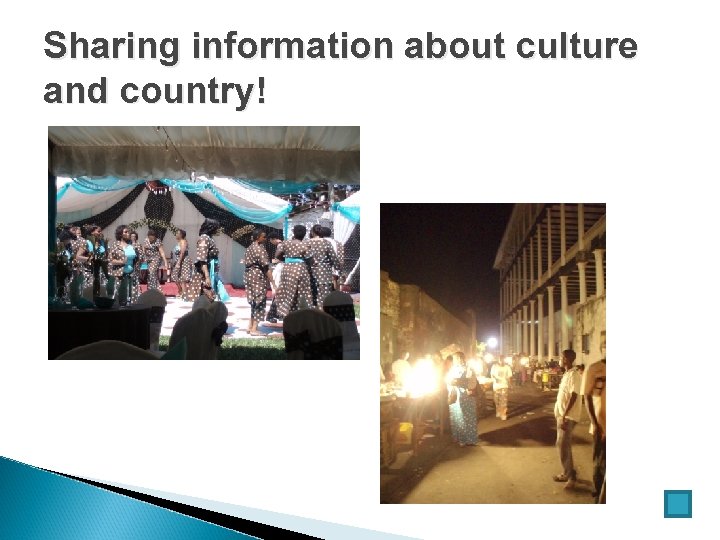
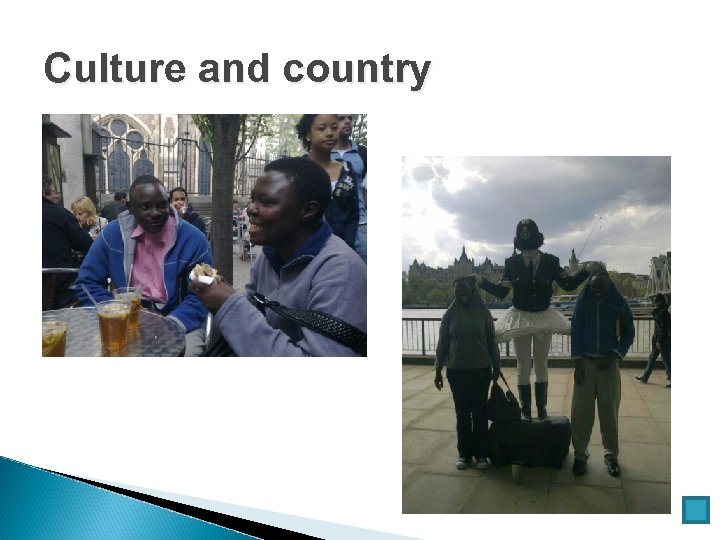
Sharing information about culture and country!
UK visit - 2008 UCL Clinical Sciences library ◦ Moodle virtual learning environment ◦ Medical school library services St Thomas’ Hospital ◦ Patient information service Homerton Hospital ◦ Macmillan information service National Collaborating Centre for Women’s and Children’s Health ◦ Information specialists working in guideline development
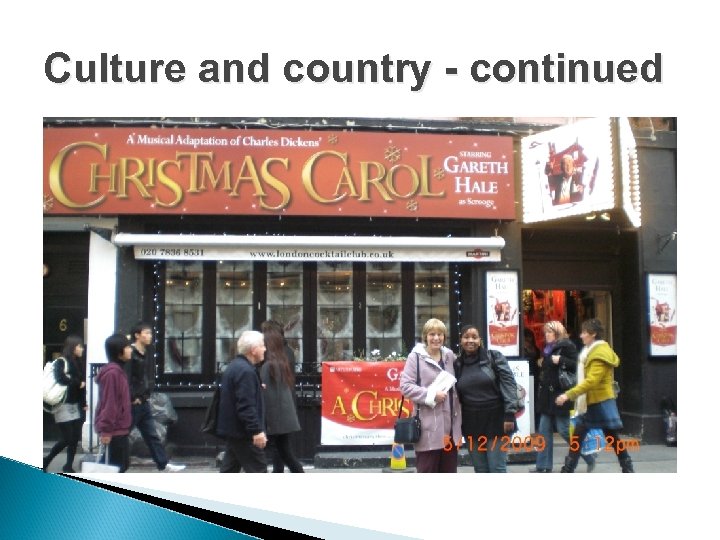
Culture and country - continued
Year 2 – 2009 -10 Developing information skills programmes for undergraduates and postgraduates at MUHAS Improving infrastructure at MUHAS Developing partnership working between MUHAS (appraising health information) and TLSB (network for dissemination) Ph. D study – Effectiveness of communication channels in disseminating HIV/AIDS information Exchange visit to UK
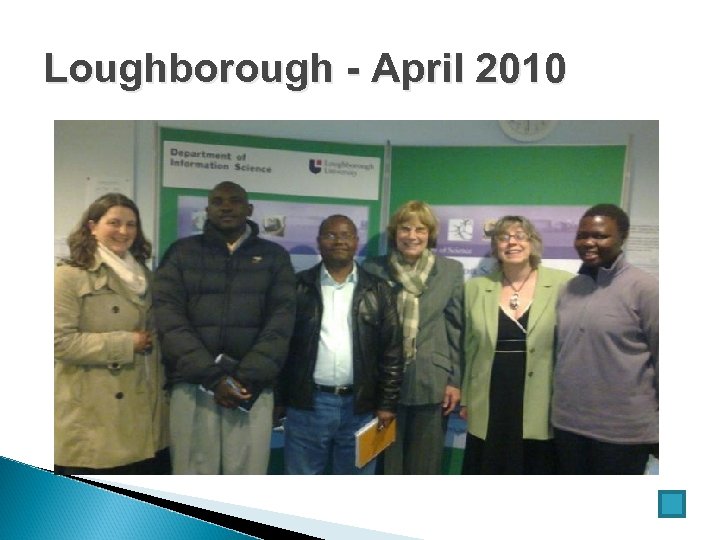
UK visit 2010 University of Nottingham ◦ Medical school library services ◦ Information skills training Wellcome library ◦ Pub. Med training Coventry hospital ◦ Patient information service Loughborough University ◦ Health curriculum for library students
Loughborough - April 2010
Culture and country
Lessons learnt Tanzania faces significant health challenges Access to health information for members of the public is difficult Libraries are ideally placed to deliver health information to members of the public Institutions working in partnership have resources and skills to deliver health information in a way that is suitable for members of the public Librarians need to repackage information and develop ways of disseminating it to the community
Achievement Exchange programme has broadened the horizons of staff in all partner organisations MUHAS staff have acquired more information literacy skills TLSB has the mandate of transferring the health information to the community Mechanism for training future generations of library staff at SLADS
Challenges Lack of facilities to access health information in public libraries Few public library staff currently have the skills to deliver health information Insufficient health librarians Lack of stable internet connectivity and equipment Techno phobia and low computer literacy Different information seeking behaviours
Conclusion Working towards the project goals: ◦ Providing and disseminating health information services to the community as a whole through Health Corners ◦ Educating library staff, students, lecturers and practitioners on how to use the e-resources ◦ Training librarians to work with health information Working in partnership to bring different skills and knowledge to the project
Authors Rehema Chande-Mallya: c_rehema@yahoo. com Shane Godbolt: shane@godbolt. co. uk Alli Mcharazo: amcharazo@hotmail. com Tony Olden: tony. olden@tvu. ac. uk Lucy Reid: lreid@rcog. org. uk Emma Stanley: estanley@phi-info. org. uk
Скачать презентацию Strengthening health information and library systems in Africa
8e6f4a7fcb129175b1d6da50bbaea954.ppt