 Скачать презентацию Strategies for Staying Informed about Public Health Concerns
b42fddb0529d3c01dd9c574df05ff30c.ppt
- Количество слайдов: 25



Strategies for Staying Informed about Public Health Concerns Kristine Alpi, MLS, MPH kalpi@att. net November 6, 2004
Objectives and Competencies • Articulate three strategies for staying informed about news and developments relevant to public health. • Analytic assessment. “Identifies relevant and appropriate data and information sources. ” • Inform, educate and empower people about health issues. “Research for new insights and innovative solutions to health problems”
Why Adopt Strategies to Stay Informed? • • • Credibility and advance preparation time Limited budgets for meetings, etc. Potential to identify collaborators Professional responsibility Changes in speed of information access • Are there other reasons that would convince colleagues or administration to make time for keeping up?
Strategies for Keeping Up • Identify specific resources in areas of interest: 1. Web sites that have news updates or continuous news feeds. 2. E-mail discussion lists (Listservs™) 3. E-mail announcement/notification lists 4. Journal table of contents (TOC) of the latest issue 5. Automated subject-specific literature searches 6. Professional organizations • Outline a plan for incorporating keeping up-todate into a work routine
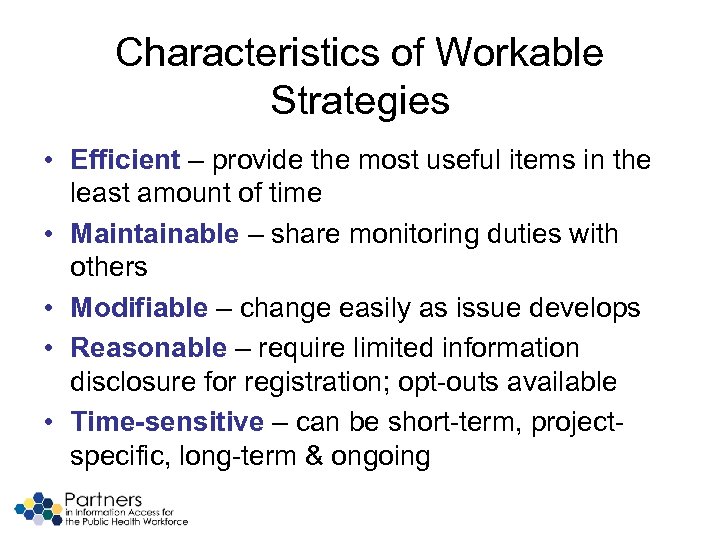
Characteristics of Workable Strategies • Efficient – provide the most useful items in the least amount of time • Maintainable – share monitoring duties with others • Modifiable – change easily as issue develops • Reasonable – require limited information disclosure for registration; opt-outs available • Time-sensitive – can be short-term, projectspecific, long-term & ongoing
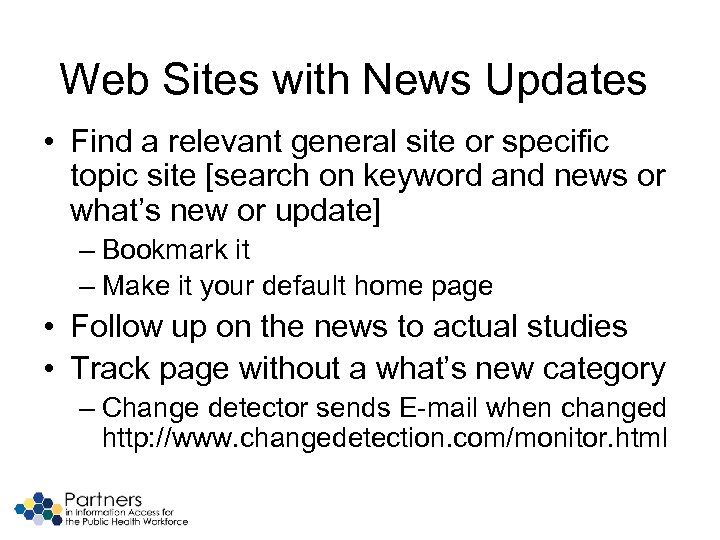
Web Sites with News Updates • Find a relevant general site or specific topic site [search on keyword and news or what’s new or update] – Bookmark it – Make it your default home page • Follow up on the news to actual studies • Track page without a what’s new category – Change detector sends E-mail when changed http: //www. changedetection. com/monitor. html
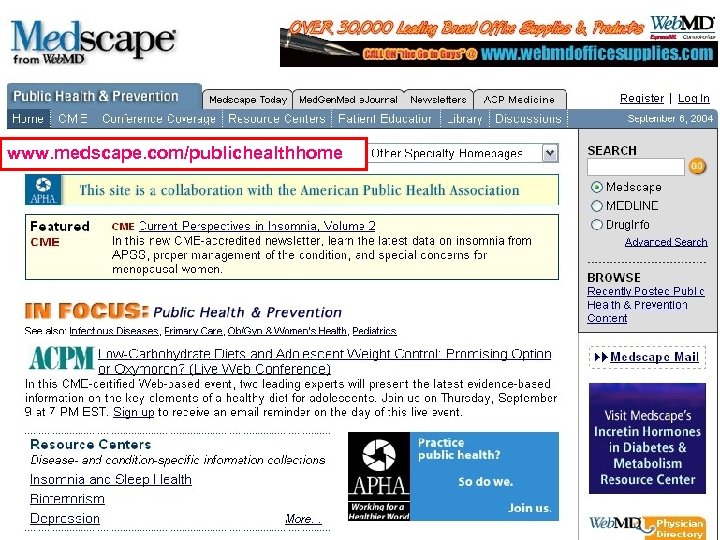
Medscape www. medscape. com/publichealthhome
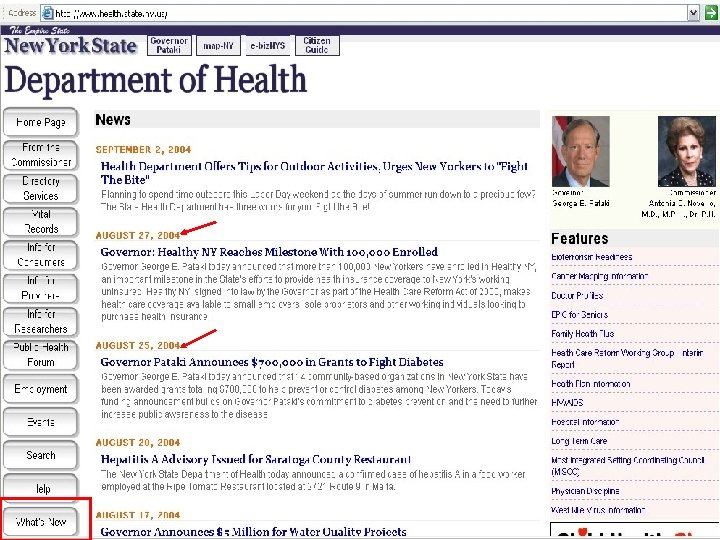
NY State Home
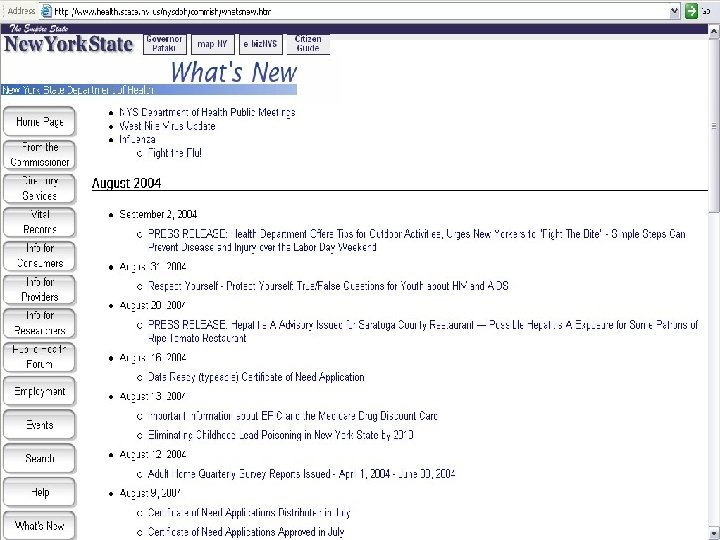
What’s New page
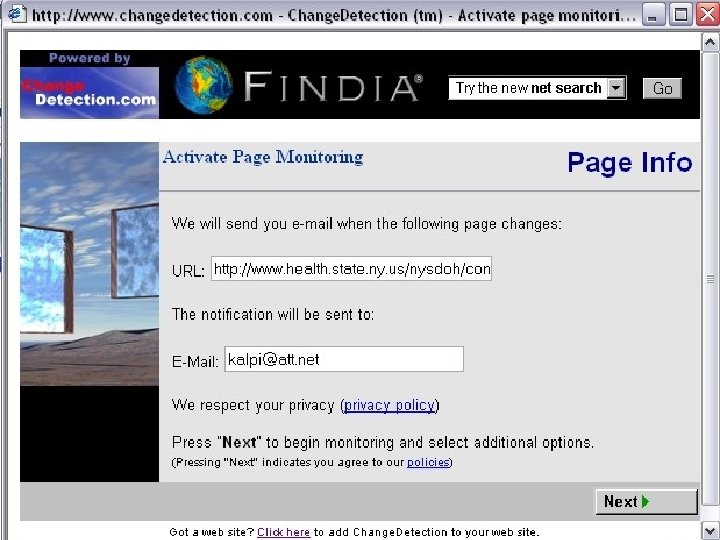
Change Detection
E-mail Discussion Lists (Listservs™) • Discussion lists are interactive lists – Disadvantages –postings volume, no quality control – Advantages – ability to post questions and get feedback • Reduce volume with daily Digest format • Review or search list archives • Sign on to observe a list for a week and then re-evaluate.
E-mail Discussion Lists • Find relevant lists by searching the Web sites of likely organizations or browsing some of the following resources: Partners in Information Access for the Public Health Workforce - Discussion and E-mail Lists – http: //phpartners. org/dlists. html The School of Public Health and Community Medicine, University of Washington has several lists through the Mailman system (example on next screen) – http: //mailman. u. washington. edu/mailman/listinfo/ Central list directories: – Cata. List: L-Soft - http: //www. lsoft. com/lists/listref. html – Topica (formerly Listz of Lists) - http: //lists. topica. com/ – Tile. Net - http: //tile. net/lists/
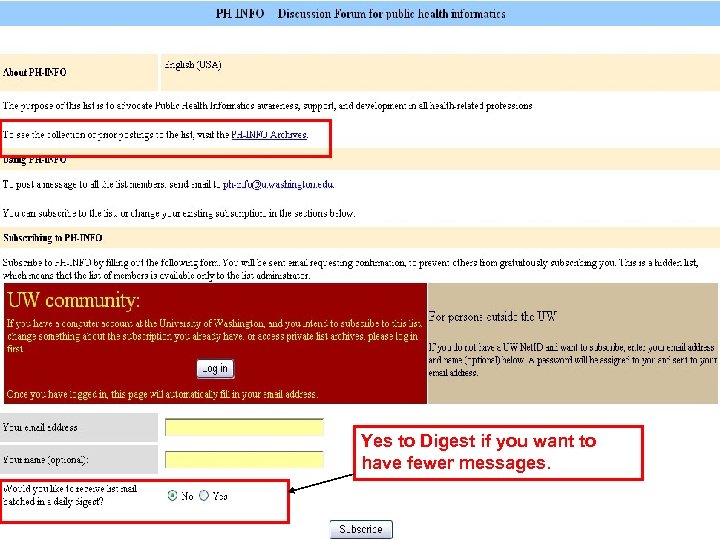
PH-Info List Yes to Digest if you want to have fewer messages.
E-mail Announcement Lists • One-way communication of information • Frequency varies • Volume of these lists tends to be lower and more predictable than interactive lists • Many Sites offer a What’s New E-mail update • Subject-specific or organization-specific – See Discussion & E-mail Lists page on the Partners site
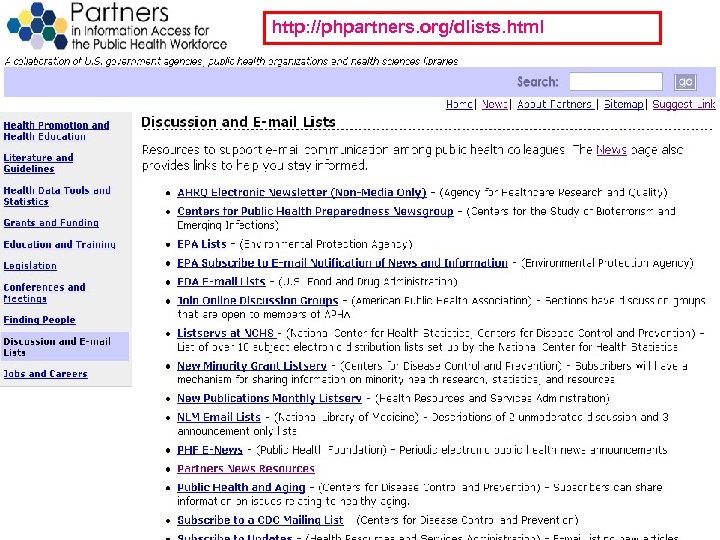
http: //phpartners. org/dlists. html Partners Lists
Tables of Contents of Journals • Offered from publisher Web sites (E-Alerts) – Single journal or multiple journals from same publisher – Some require registration • Activate the online access for print subscriptions • Can also set up for multiple journals as automatic search (next slide) • Core Journal List provides possible titles – http: //publichealth. yale. edu/phlibrary/phjournals/
Tables of Contents • Individual title services such as: – – Morbidity & Mortality Weekly Report (MMWR) http: //www. cdc. gov/mmwrsubscribe. html Emerging Infectious Diseases http: //www. cdc. gov/ncidod/EID/subscrib. htm • Examples of multiple title alert services include: – Individual publisher sites – Bio. Mail searches of Pub. Med by journal title – Paid services
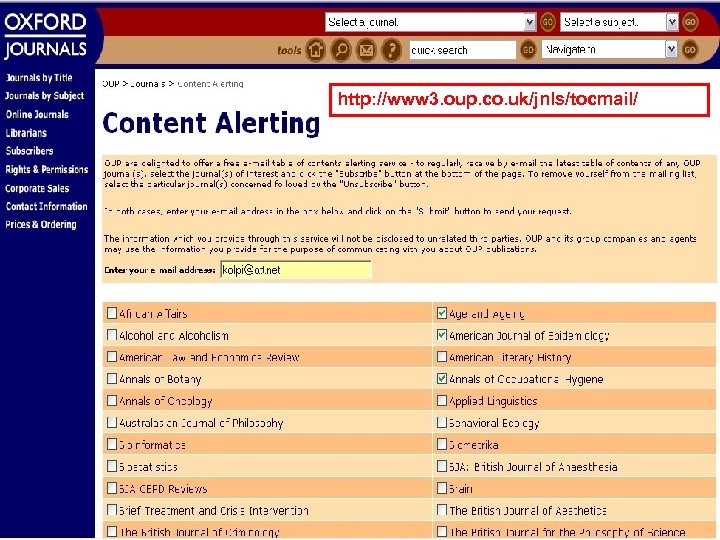
Oxford Sample Contents http: //www 3. oup. co. uk/jnls/tocmail/
Automated Subject-Specific Literature Searches • Search by subject, author, institution or journal title • Free searches of Pub. Med (MEDLINE) by Biomail (www. biomail. org) or Pub. Crawler (www. pubcrawler. ie) • Pre-prepared searches linked from a web site – Healthy People 2010 Information Access Project (http: //phpartners. org/hp/)
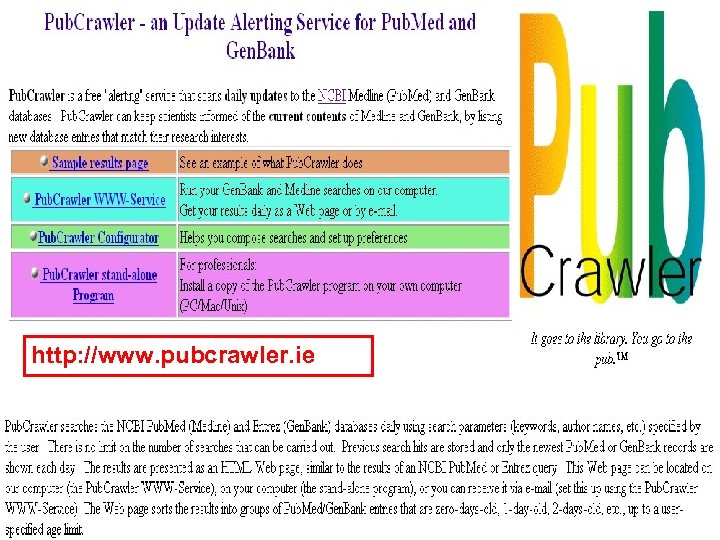
Pub. Crawler http: //www. pubcrawler. ie
Professional Organizations • Benefits of membership for keeping up – – Newsletters and journal subscriptions Discussion lists Live and virtual meetings Continuing education opportunities • Assessing an organization – Examine sample newsletters on web – Ask colleagues about networking – Consider local chapters of national organizations
Discussion and Planning • Has anyone tried any of these strategies already? How did it go? • How much time could you make available for keeping up? Each day? Each week? • Set-up time takes longer than maintenance. Ask an information professional colleague to assist with set up.
Outline a Plan to Stay Informed • How much time do you have? • Will you follow the resources yourself or assign to staff members? • What is your focus? News, legal, best practices, scientific research… • Do you prefer to receive E-mail or go out to resources?
Questions or Comments? Contact information: Kristine Alpi kalpi@att. net
Case Study Exercises
Скачать презентацию Strategies for Staying Informed about Public Health Concerns
b42fddb0529d3c01dd9c574df05ff30c.ppt