


 Скачать презентацию Strategies for re-orienting a TDM program from switching
f21457433b1a3cd8ec1fd76b7585938d.ppt
- Количество слайдов: 34
 Strategies for re-orienting a TDM program from switching modes to reducing emissions of greenhouse gases Edward L. Hillsman Washington State DOT Olympia, WA 98501 USA For presentation at: ECOMM, London, June 4 -6, 2008
 Purpose • Review changes in vehicle-kilometers traveled (VKT) in a TDM program that has not targeted VKT reductions • Assess whether VKT reduction targets proposed for program participants are realistic • Identify opportunities for reducing VKT • Identify changes to realize opportunities
 Background (1)
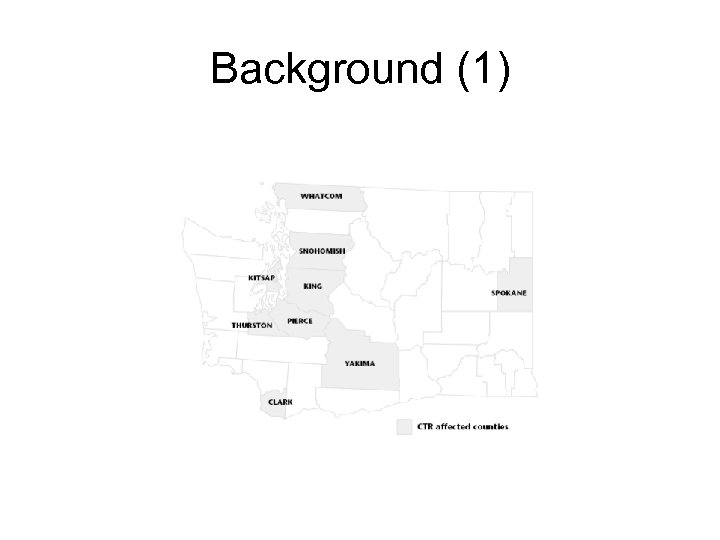
 Background (2) • State program works with ~570, 000 employees in 9 most-populous counties – 25% of employment in these counties, 20% of state’s employment – ~1, 100 worksites 25% in Seattle, 25% in close suburbs, 50% in other counties • Targets for reducing drive-alone rate and VKT – Program has focused on drive-alone rate and vehicle trips, not on VKT
 Background (3) • Revisions to program in 2006 – Additional emphasis on congestion but retained VKT – Goals to reduce VKT 13% between 2007 and 2011 • State set targets in 2006– 7 to reduce GHG emissions – 6. 7% overall by 2020 – Possibly 15. 7– 24% for on-road transportation
 What has happened at program worksites between 1993 and 2007? • The drive-alone rate decreased from 70. 9% to 65. 6% (a reduction of 8. 2%) • VKT per employee increased from 17. 1 km to 17. 2 km (an increase of 0. 8%) • But, the average length of the commute increased from 21. 6 km to 24. 6 km in 2005 (an increase of 13. 8%)
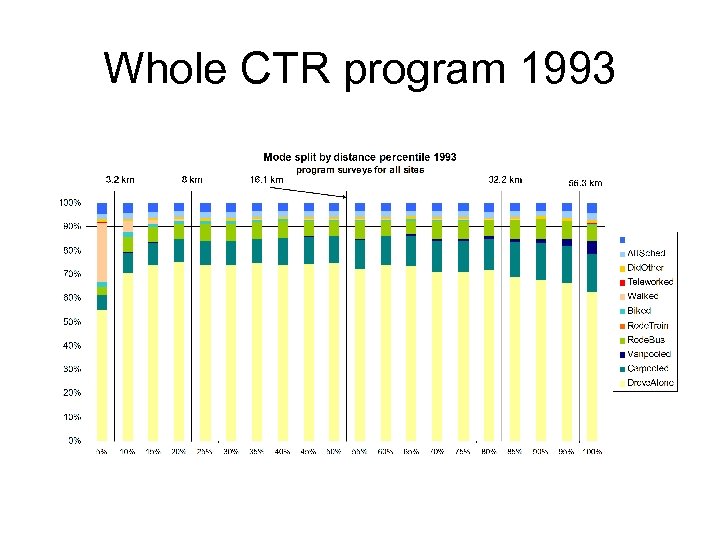 Whole CTR program 1993
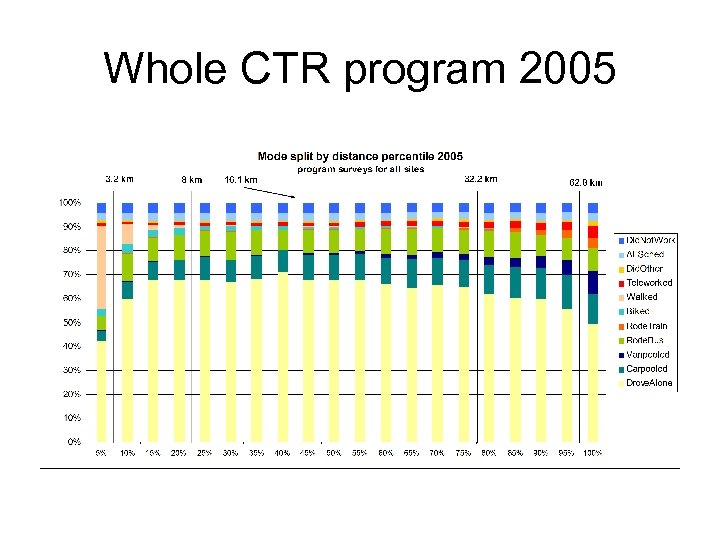 Whole CTR program 2005
 But some worksites and jurisdictions have done very well • VKT per employee has decreased at 596 of the 1439 sites that had ever been in the program through 2006: – by at least 13% at 234 of these, at some time following their baseline survey – by 7– 12% (enough to meet the U. S. Kyoto targets) at an additional 155 – by smaller amounts at an additional 207
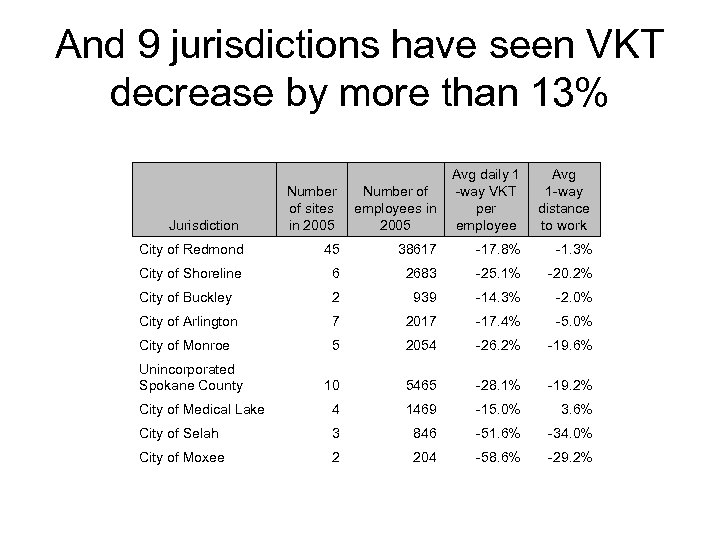 And 9 jurisdictions have seen VKT decrease by more than 13% Number of sites in 2005 Number of employees in 2005 Avg daily 1 -way VKT per employee City of Redmond 45 38617 -17. 8% -1. 3% City of Shoreline 6 2683 -25. 1% -20. 2% City of Buckley 2 939 -14. 3% -2. 0% City of Arlington 7 2017 -17. 4% -5. 0% City of Monroe 5 2054 -26. 2% -19. 6% 10 5465 -28. 1% -19. 2% City of Medical Lake 4 1469 -15. 0% 3. 6% City of Selah 3 846 -51. 6% -34. 0% City of Moxee 2 204 -58. 6% -29. 2% Jurisdiction Unincorporated Spokane County Avg 1 -way distance to work
 How did they do it? • Review survey results for sites that have achieved the largest reductions • Three examples follow
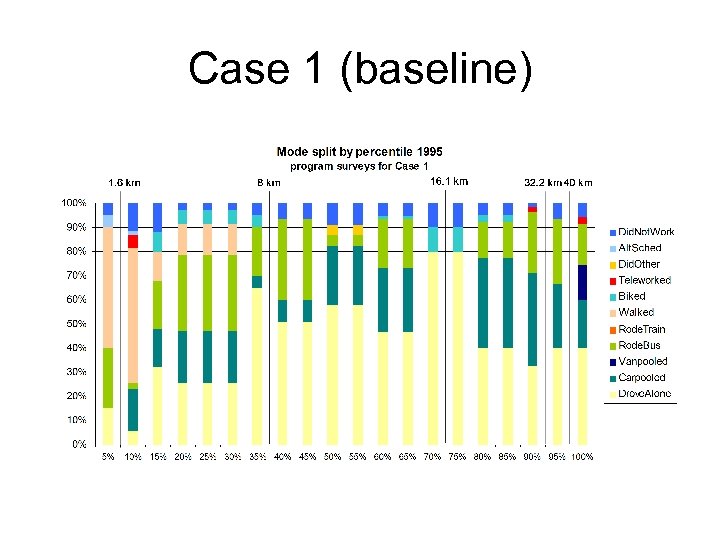 Case 1 (baseline)
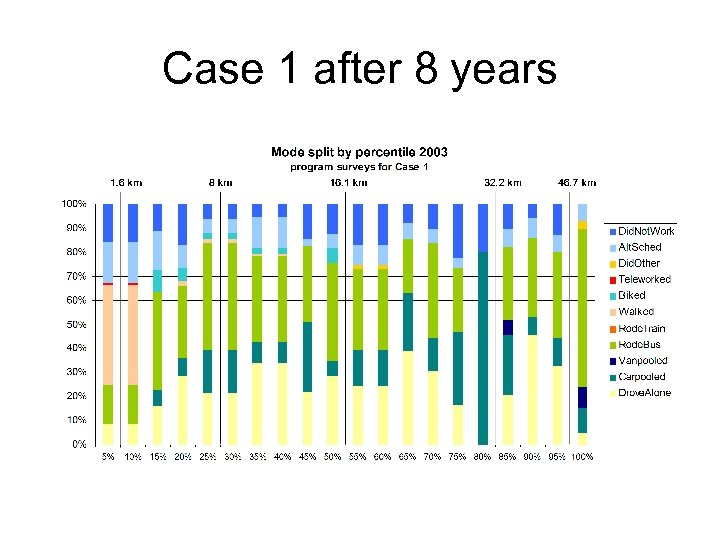 Case 1 after 8 years
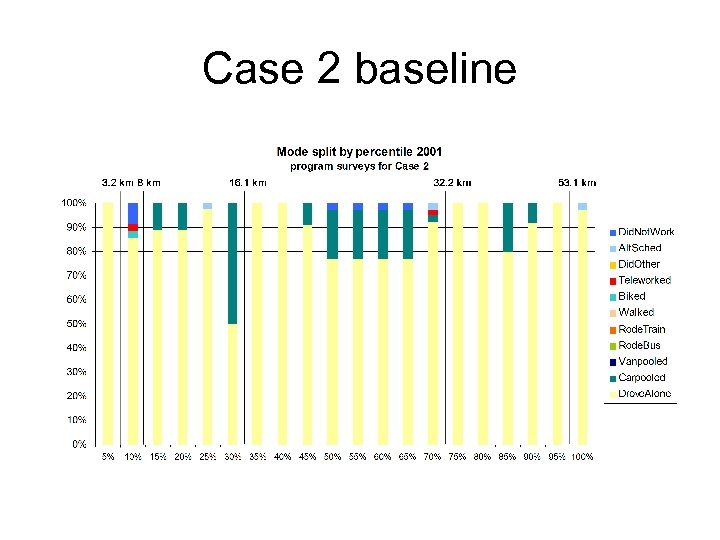 Case 2 baseline
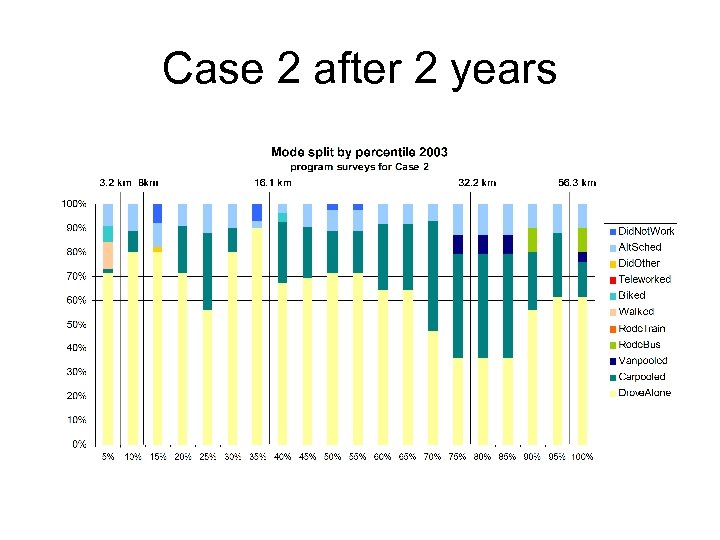 Case 2 after 2 years
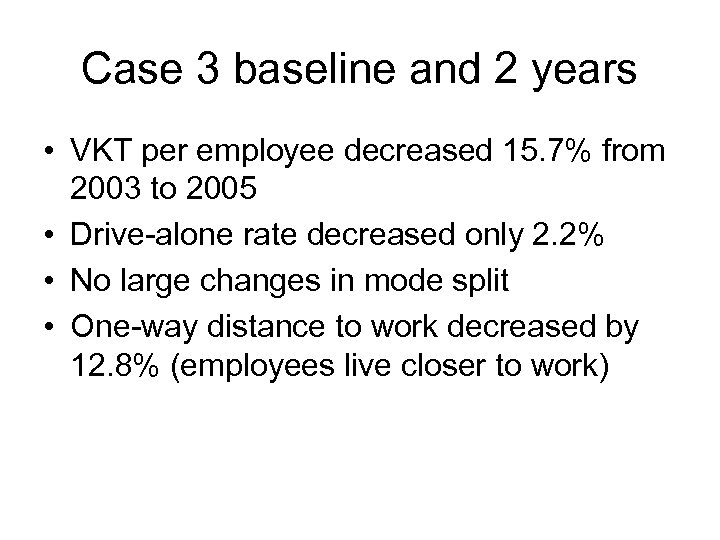 Case 3 baseline and 2 years • VKT per employee decreased 15. 7% from 2003 to 2005 • Drive-alone rate decreased only 2. 2% • No large changes in mode split • One-way distance to work decreased by 12. 8% (employees live closer to work)
 So, what works? • From these and other examples: – Switch modes not just from drive-alone but also from carpooling to higher-occupancy modes, or from any motorized mode to nonmotorized modes (including telework and alternative schedules) – Concentrate switching among longer-distance commuters – Reduce distance from home to work (including errands)
 What does this mean for running a statewide program? • Switch from mass marketing to targeted marketing • Promote greater coordination among jurisdictions, transit agencies, planning agencies • Encourage employees to live closer to work
 Targeted marketing • Focus on more-distant commuters • Focus on switching from drive-alone and from carpooling • Use spatial detail with employer data on employee addresses to identify areas where alternatives compete well • Track frequency of use and work with lowfrequency users • Coordinate with construction mitigation
 How have we been marketing? • Mass marketing to all employees at a site or group of sites – Encourage all employees who are driving alone to try an alternative – Print, e-mail, “bus sides”, radio – Focus on recruiting new users, not on increasing use by present users • Targeted marketing has been largely modespecific – Bicycle commuter contests/bike-to-work days – Bus or bicycle mentoring – Vanpooling to fill out a van
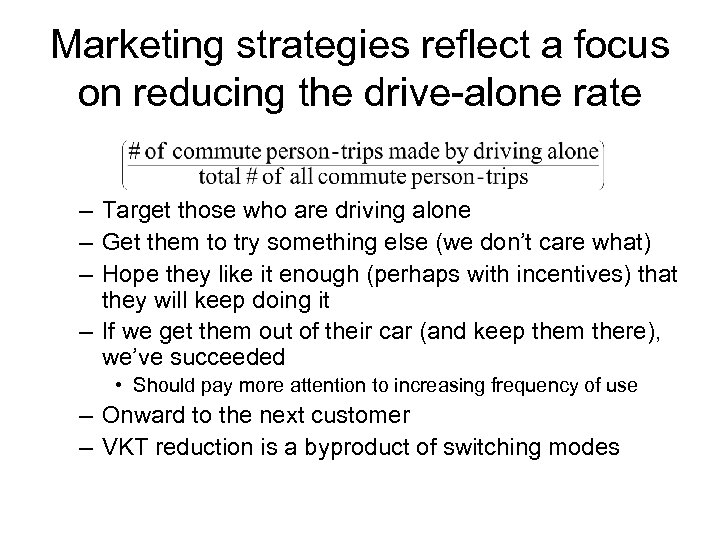 Marketing strategies reflect a focus on reducing the drive-alone rate – Target those who are driving alone – Get them to try something else (we don’t care what) – Hope they like it enough (perhaps with incentives) that they will keep doing it – If we get them out of their car (and keep them there), we’ve succeeded • Should pay more attention to increasing frequency of use – Onward to the next customer – VKT reduction is a byproduct of switching modes
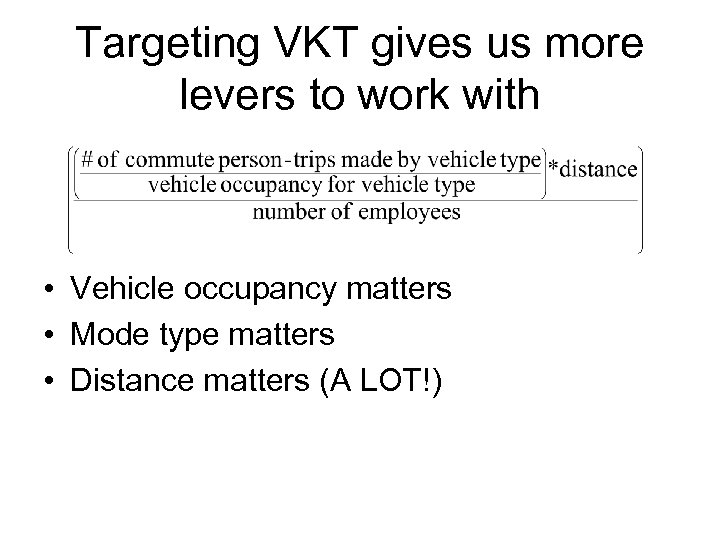 Targeting VKT gives us more levers to work with • Vehicle occupancy matters • Mode type matters • Distance matters (A LOT!)
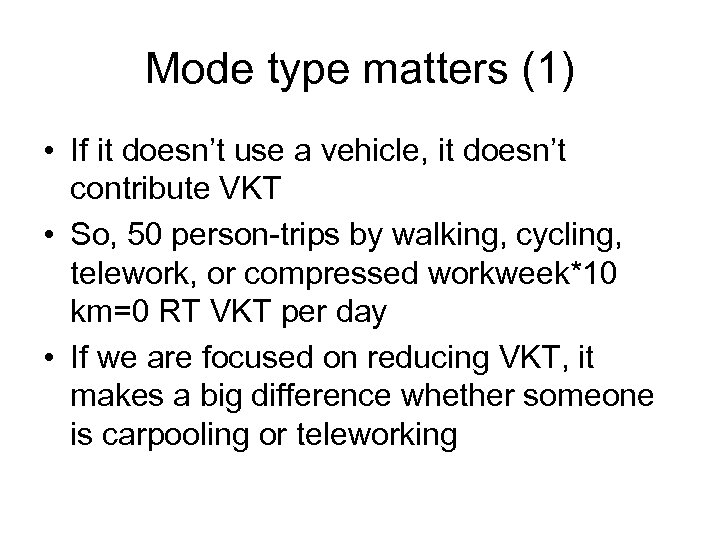 Mode type matters (1) • If it doesn’t use a vehicle, it doesn’t contribute VKT • So, 50 person-trips by walking, cycling, telework, or compressed workweek*10 km=0 RT VKT per day • If we are focused on reducing VKT, it makes a big difference whether someone is carpooling or teleworking
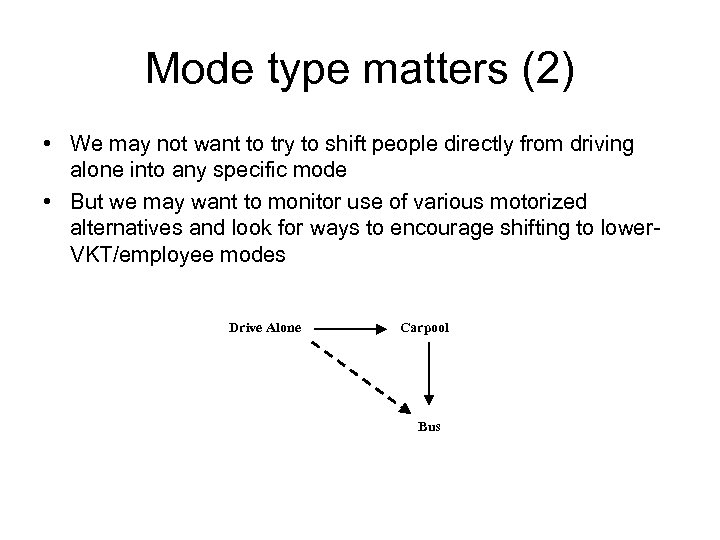 Mode type matters (2) • We may not want to try to shift people directly from driving alone into any specific mode • But we may want to monitor use of various motorized alternatives and look for ways to encourage shifting to lower. VKT/employee modes Drive Alone Carpool Bus
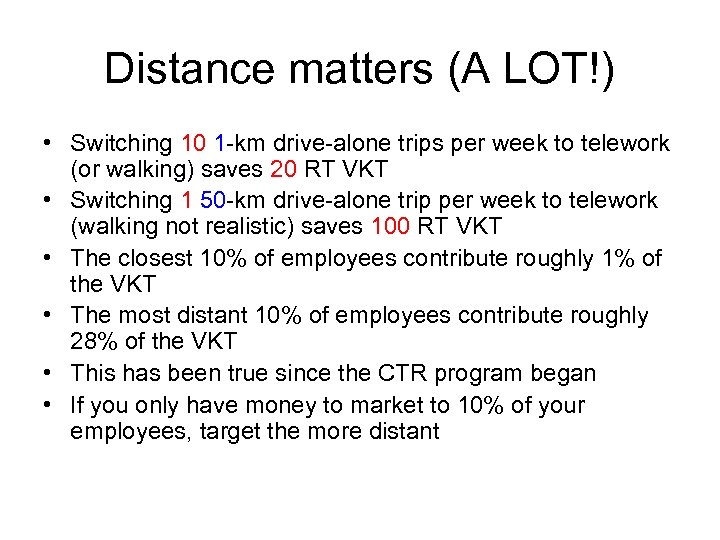 Distance matters (A LOT!) • Switching 10 1 -km drive-alone trips per week to telework (or walking) saves 20 RT VKT • Switching 1 50 -km drive-alone trip per week to telework (walking not realistic) saves 100 RT VKT • The closest 10% of employees contribute roughly 1% of the VKT • The most distant 10% of employees contribute roughly 28% of the VKT • This has been true since the CTR program began • If you only have money to market to 10% of your employees, target the more distant
 Barriers to targeted marketing • This may not be easy for jurisdictions and transit agencies to do directly – Privacy concerns – Data assembly – Peak-period service is just one of several competing interests • Develop tools for employers to use • Consider this kind of marketing activity during travel plan review
 Coordination (1)
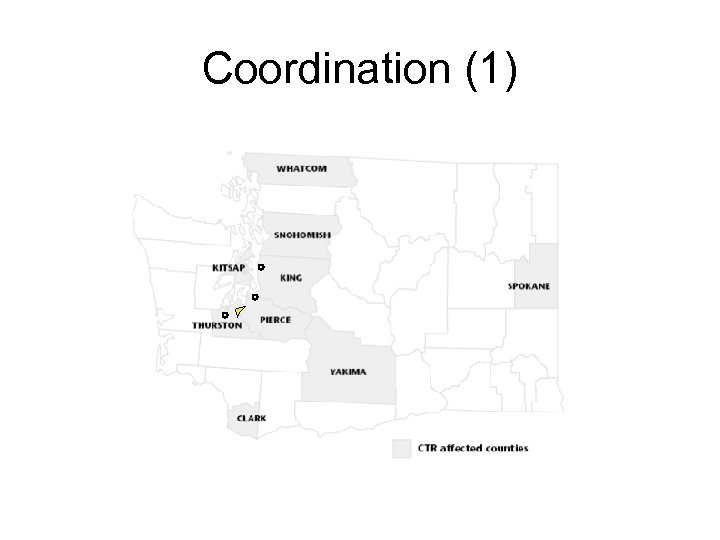
 Coordination (1 a) • Local/transit partners—example – Increasing number of people live in Thurston County and commute north along I-5 (long trips) – First part of the trip is through Ft. Lewis (no alternative routes) – Develop park-and-ride lots and supporting transit/vanpool services south of Ft. Lewis, and promote to this market – If they park and ride north of Ft. Lewis, they’ve incurred a lot of VKT – Pierce and King County jurisdictions have an interest in Thurston County park-and-rides
 Coordination (2) • Employers, jurisdictions, and other program partners can advocate for state policies to support VKT reduction – Base automobile insurance premiums on distance driven – Shift road revenue source from fuel tax to charge for distance driven – Increasing the gasoline tax – Probably other things
 Reducing the distance from home to workplace (1) • Employers – Structure commute incentives to favor living closer to work – Consider commute distance in relocation assistance planning for new employers
 Reducing the distance from home to workplace (2) • Local governments, transit agencies, planning agencies – Getting employees to live closer to work (or slowing the trend toward living farther away • Land use, growth boundaries • Development (mixed-use, transit-oriented) • Affordable housing – Tax commute distance – Longer time frame – Changing the perception of what “a house” is
 Conclusions • The VKT targets are achievable • We know this because some sites and jurisdictions have seen equivalent changes • Some jurisdictions and sites can probably meet them without focusing on them • But getting smart about them would probably increase prospects for success
 Getting smart probably means: • Targeted marketing and provision of commute services • More market research – To figure out how to do this most effectively • More cooperation among jurisdictions and other partners – Long commutes are much more likely to traverse jurisdictions
 Getting smart also means • Some short-term inefficiencies while we develop expertise with reducing VKT equivalent to that for the drive-alone rate – We’ve had 14 years to learn how to focus on drive-alone; it will take time to learn how to do VKT well