 Скачать презентацию Strategic Politicians Number of House seats held
635d5e0369f2b49e5504d9529b2c870d.ppt
- Количество слайдов: 14



Strategic Politicians
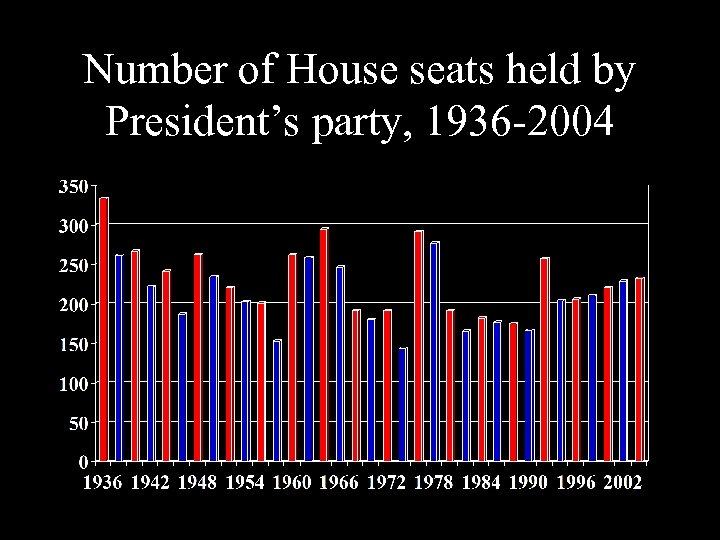
Number of House seats held by President’s party, 1936 -2004
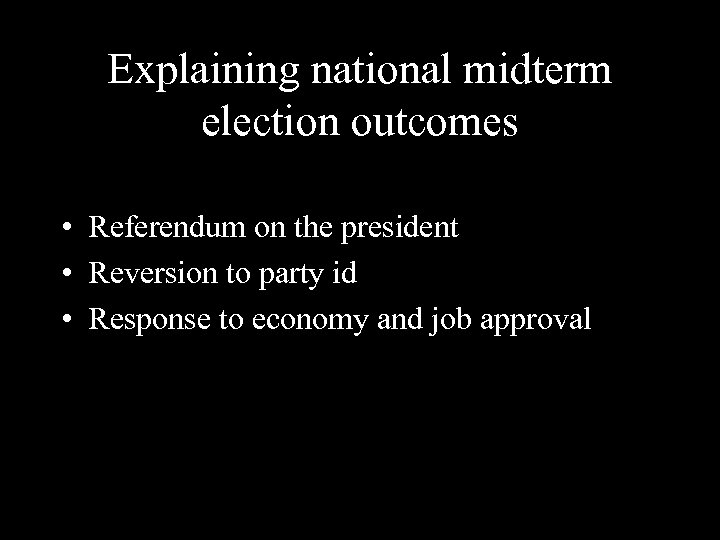
Explaining national midterm election outcomes • Referendum on the president • Reversion to party id • Response to economy and job approval
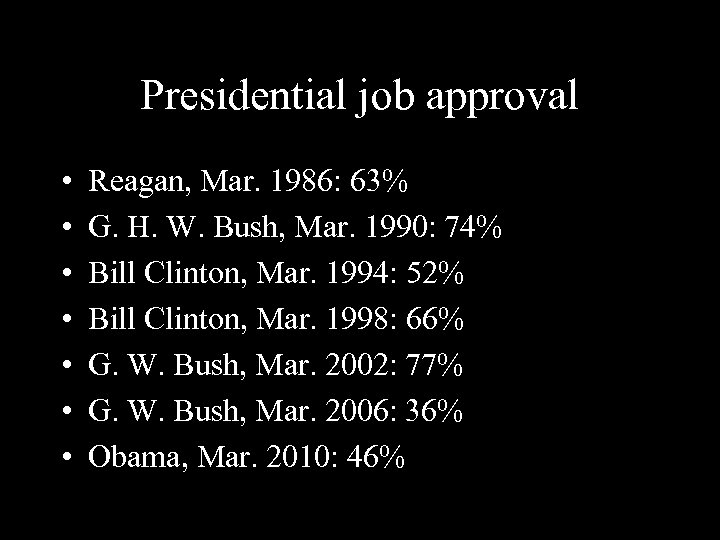
Presidential job approval • • Reagan, Mar. 1986: 63% G. H. W. Bush, Mar. 1990: 74% Bill Clinton, Mar. 1994: 52% Bill Clinton, Mar. 1998: 66% G. W. Bush, Mar. 2002: 77% G. W. Bush, Mar. 2006: 36% Obama, Mar. 2010: 46%
Explaining national midterm election outcomes • • Referendum on the president Reversion to party id Response to economy and job approval Strategic politicians
What does the “political opportunity structure” look like? • • Not overly structured Lots of offices Uncertainty about success Some offices more desirable; fewer of those Structurally similar offices throughout hierarchy Overlapping constituencies Competition
Implications of the political opportunity structure • Competition for office • Lots of qualified, experienced politicians available (overabundance? !) • So why aren’t elections more competitive? • And how does this relate to surge and decline in midterm elections?
Candidate strategy • Experienced candidates see their current office as an asset • Candidates building political careers are risk averse • Candidates weigh risk of losing when they consider running for a new office
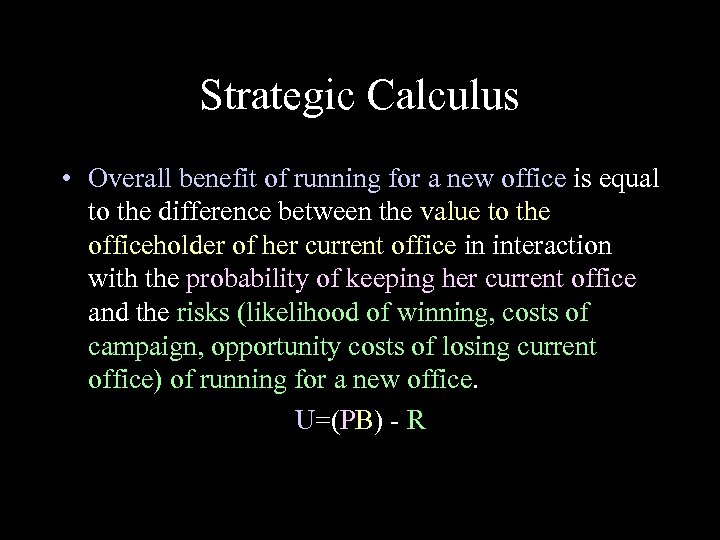
Strategic Calculus • Overall benefit of running for a new office is equal to the difference between the value to the officeholder of her current office in interaction with the probability of keeping her current office and the risks (likelihood of winning, costs of campaign, opportunity costs of losing current office) of running for a new office. U=(PB) - R

Therefore, collectively, The quality of challengers willing to run varies with the national partisan conditions. Incumbency itself also deters high quality challengers
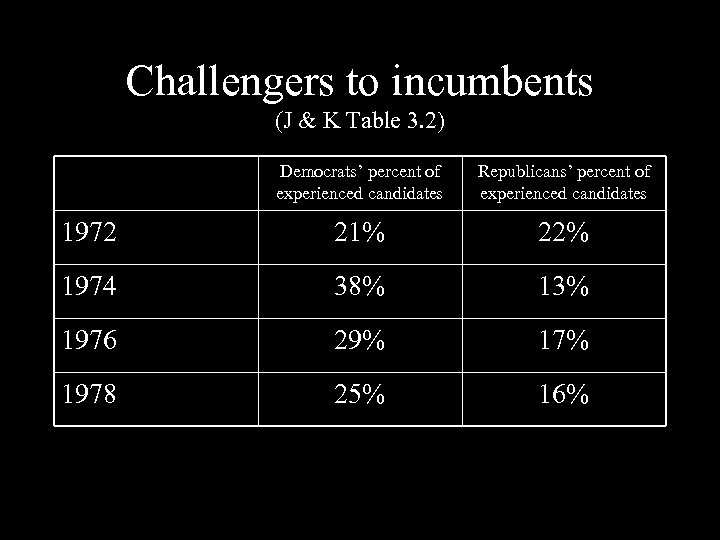
Challengers to incumbents (J & K Table 3. 2) Democrats’ percent of experienced candidates Republicans’ percent of experienced candidates 1972 21% 22% 1974 38% 13% 1976 29% 17% 1978 25% 16%
Two other arguments • Strategic Resources • Strategic Retirement
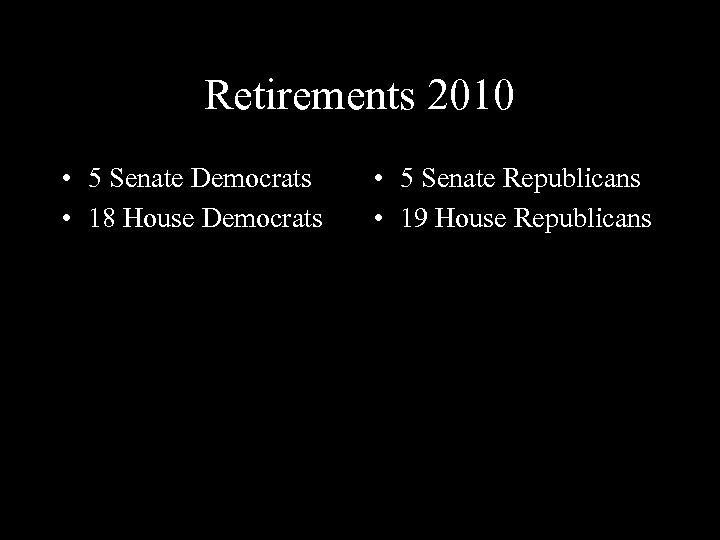
Retirements 2010 • 5 Senate Democrats • 18 House Democrats • 5 Senate Republicans • 19 House Republicans
So expectations about national trends lead to behavior that will reinforce those trends.
Скачать презентацию Strategic Politicians Number of House seats held
635d5e0369f2b49e5504d9529b2c870d.ppt