


 Скачать презентацию Steve Ingham Administrator Division of Food Safety Federal
b0714eddd8330b22b23fb84e7cad819d.ppt
- Количество слайдов: 46
 Steve Ingham Administrator Division of Food Safety Federal Produce Safety Regulations: Why do have them? What do they require? 15 Marc h 2018 1
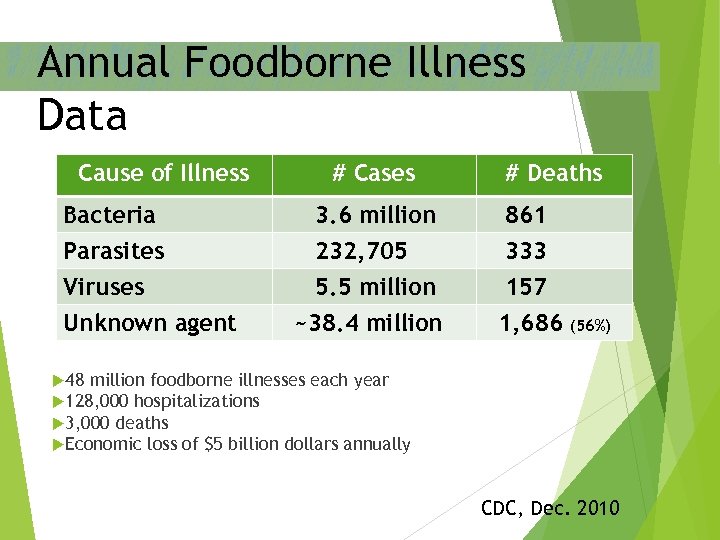 Annual Foodborne Illness Data Cause of Illness Bacteria Parasites Viruses Unknown agent # Cases 3. 6 million 232, 705 5. 5 million ~38. 4 million # Deaths 861 333 157 1, 686 (56%) 48 million foodborne illnesses each year 128, 000 hospitalizations 3, 000 deaths Economic loss of $5 billion dollars annually CDC, Dec. 2010
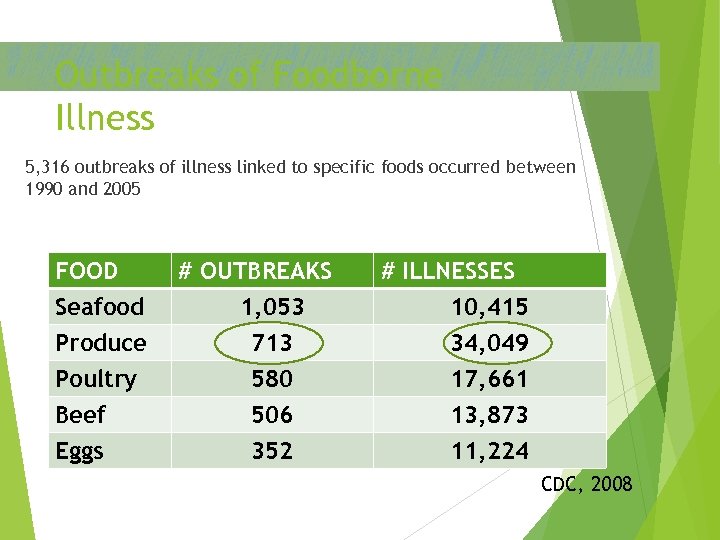 Outbreaks of Foodborne Illness 5, 316 outbreaks of illness linked to specific foods occurred between 1990 and 2005 FOOD Seafood Produce Poultry Beef Eggs # OUTBREAKS 1, 053 713 580 506 352 # ILLNESSES 10, 415 34, 049 17, 661 13, 873 11, 224 CDC, 2008
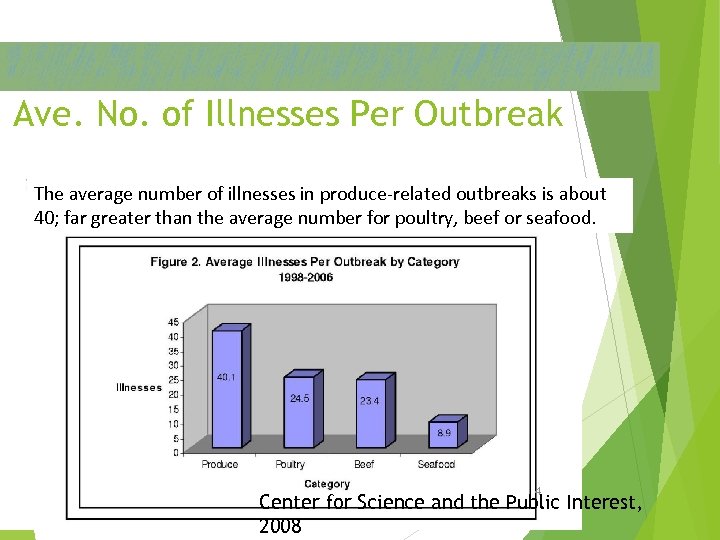 Ave. No. of Illnesses Per Outbreak The average number of illnesses in produce-related outbreaks is about 40; far greater than the average number for poultry, beef or seafood. 4 Center for Science and the Public Interest, 2008
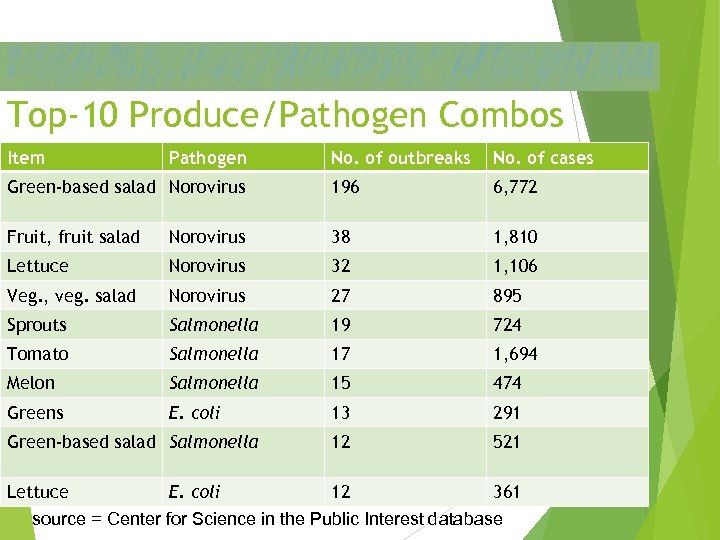 Top-10 Produce/Pathogen Combos Item Pathogen No. of outbreaks No. of cases Green-based salad Norovirus 196 6, 772 Fruit, fruit salad Norovirus 38 1, 810 Lettuce Norovirus 32 1, 106 Veg. , veg. salad Norovirus 27 895 Sprouts Salmonella 19 724 Tomato Salmonella 17 1, 694 Melon Salmonella 15 474 Greens E. coli 13 291 12 521 Green-based salad Salmonella Lettuce E. coli 12 361 source = Center for Science in the Public Interest database
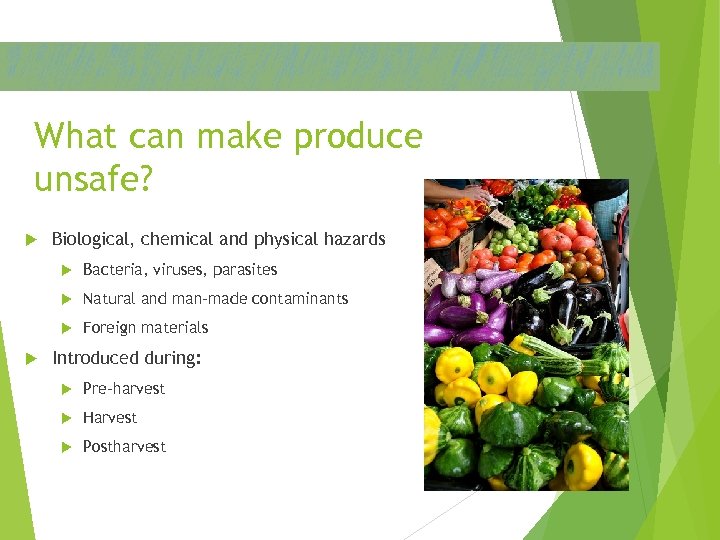 What can make produce unsafe? Biological, chemical and physical hazards Natural and man-made contaminants Bacteria, viruses, parasites Foreign materials Introduced during: Pre-harvest Harvest Postharvest
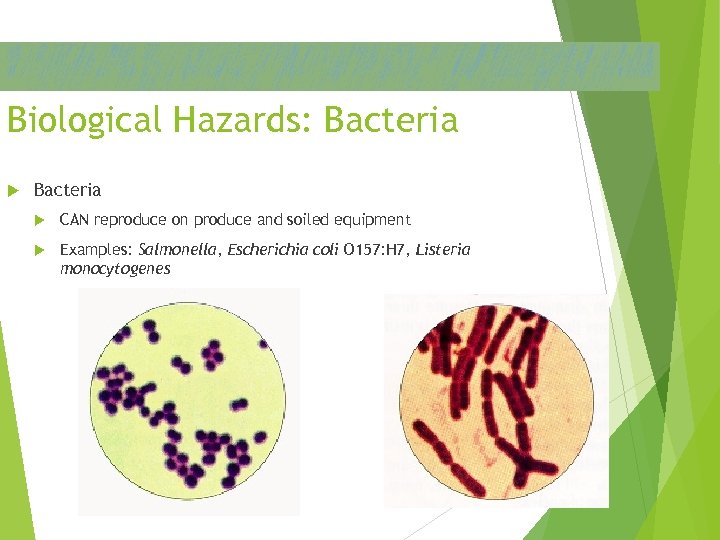 Biological Hazards: Bacteria CAN reproduce on produce and soiled equipment Examples: Salmonella, Escherichia coli O 157: H 7, Listeria monocytogenes
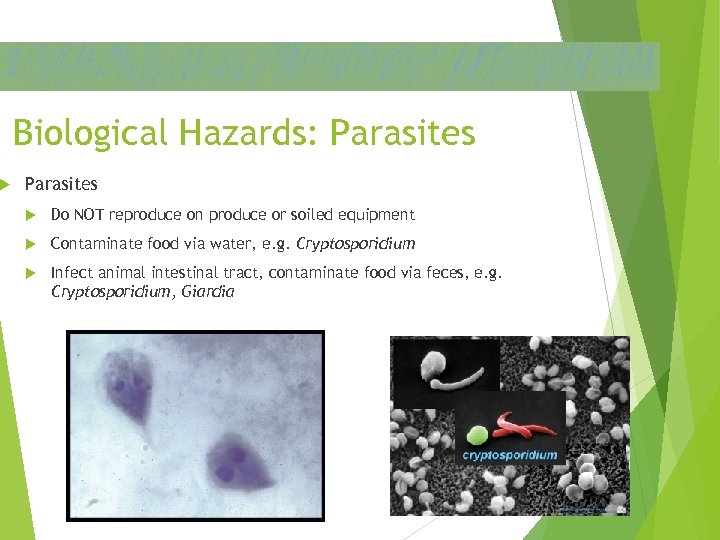 Biological Hazards: Parasites Do NOT reproduce on produce or soiled equipment Contaminate food via water, e. g. Cryptosporidium Infect animal intestinal tract, contaminate food via feces, e. g. Cryptosporidium, Giardia
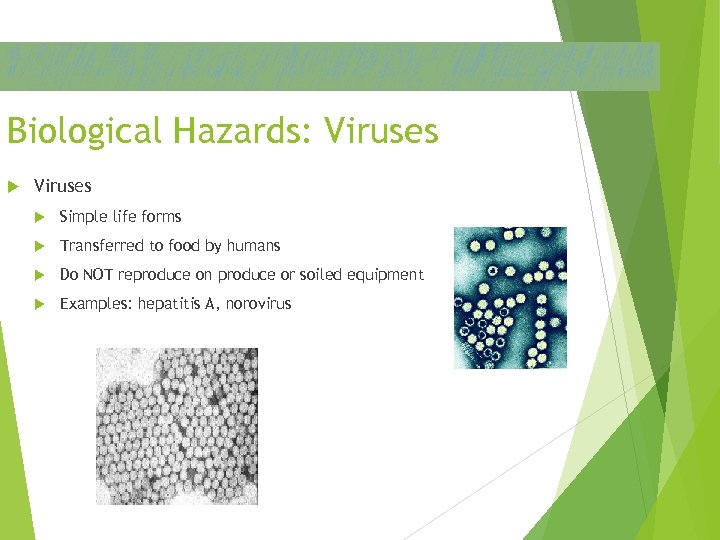 Biological Hazards: Viruses Simple life forms Transferred to food by humans Do NOT reproduce on produce or soiled equipment Examples: hepatitis A, norovirus
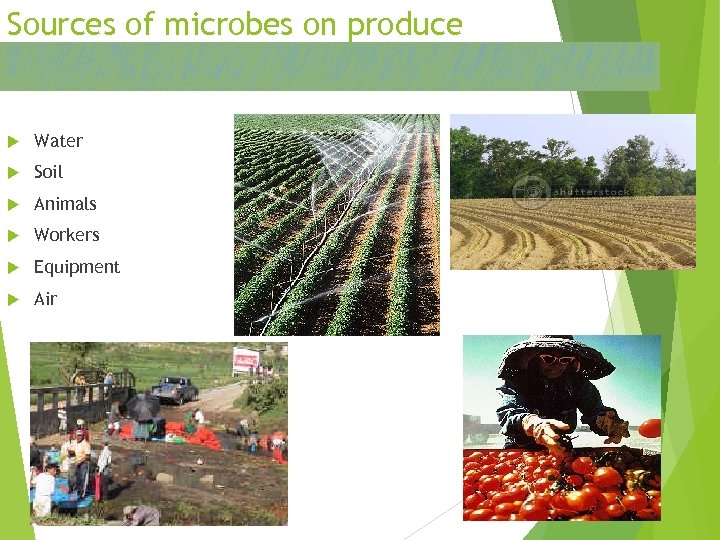 Sources of microbes on produce Water Soil Animals Workers Equipment Air
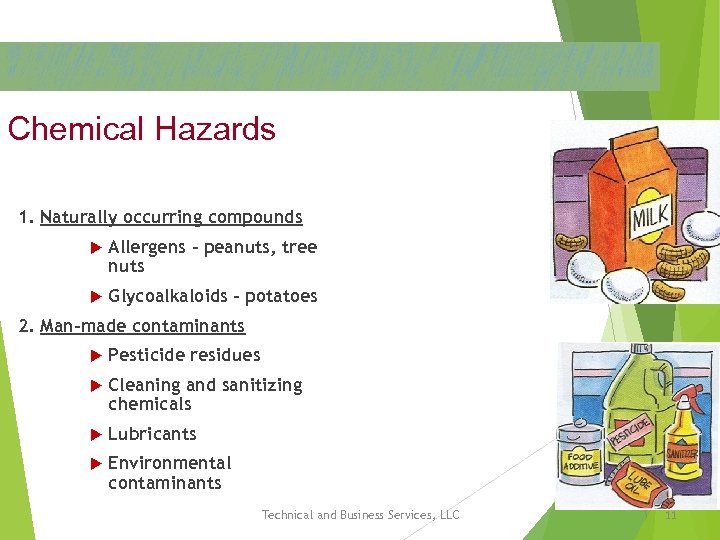 Chemical Hazards 1. Naturally occurring compounds Allergens – peanuts, tree nuts Glycoalkaloids - potatoes 2. Man-made contaminants Pesticide residues Cleaning and sanitizing chemicals Lubricants Environmental contaminants Technical and Business Services, LLC 11
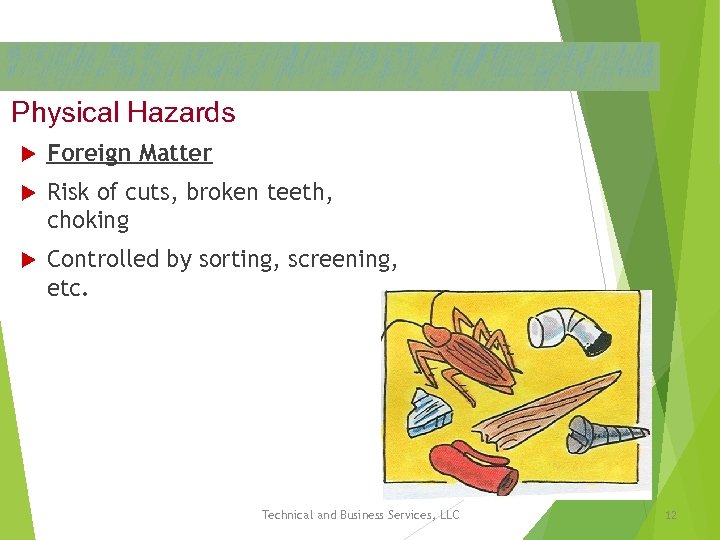 Physical Hazards Foreign Matter Risk of cuts, broken teeth, choking Controlled by sorting, screening, etc. Technical and Business Services, LLC 12
 Registration of Food Facilities w/ FDA: the FSMA starting point NO FEE Only facilities processing food for wholesale, or warehousing processed food Processing plants Includes farms where produce is “processed’ Warehouses Biennial registration Registration = consent to inspection 15 13 March http: //www. fda. gov/food/guidancecomplianceregulatoryinformation/ 2018 registrationoffoodfacilities/default. htm
 Exempt from registration Farms Includes on-farm packing if all produce is grown, raised or consumed on that farm or another farm under same ownership Retail Food Establishments Regulated by state and local jurisdictions Restaurants Grocery / Convenience stores Direct sales to consumers Roadside stands and farmers’ markets Community-supported agriculture 15 March 2018 14
 Examples Farmer grows seed for other farmers: NO if planted, YES if fed to animals Farmer washes lettuce with chlorinated water: NO if < 200 ppm Cl, YES if >200 ppm Cl Farmer puts stickers on fruits: NO if all fruit is from his/her farm, YES if fruit brought in from other farms Farm grows, harvests, packs its own crop and ships it elsewhere: NO Produce grown and harvested, trimmed, and then packed at a packing shed at a different location from farm: NO for farm, YES for packing shed 15 March 2018 15
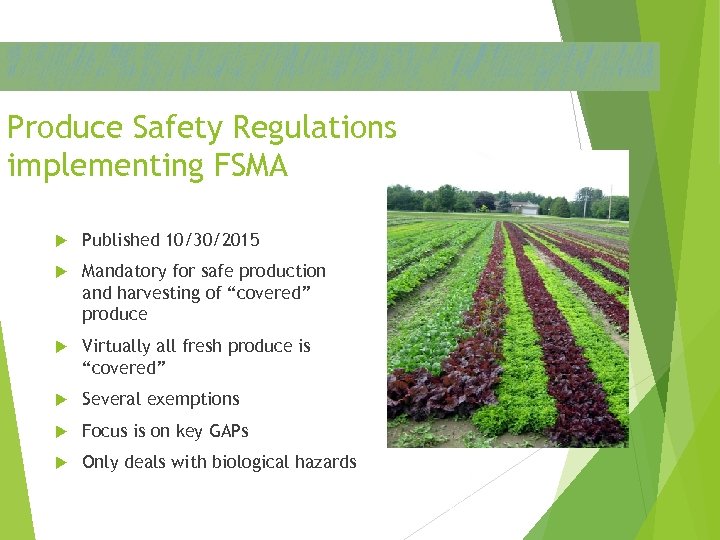 Produce Safety Regulations implementing FSMA Published 10/30/2015 Mandatory for safe production and harvesting of “covered” produce Virtually all fresh produce is “covered” Several exemptions Focus is on key GAPs Only deals with biological hazards 15 March 2018 16
 What do these regulations have to do with food service? Restaurants and retail food establishments must use foods from sources that “comply with law” – WI regulations Food processing plants must use ingredients that are “safe, wholesome, and unadulterated” – WI regulations Food warehouse operators shall “promptly destroy, or shall exclude or promptly remove” any contaminated food – WI regulations Meeting the produce safety regulations could be viewed as minimal requirements in a legal case 17 2018 It is in your best interest to obtain produce from farmers who meet the standards 15 March
 Produce Safety Rule, Title 21 CFR, Part 112. Components: Subpart A: What’s covered produce? Who’s exempt? Who has a qualified exemption? Subpart B: General requirements Growing, harvesting, packing Subpart C: Personnel qualifications and training Subpart D: Health and hygiene Subpart E: Agricultural water
 Produce Safety Rule Components, continued: Subpart F: Biological soil amendments Microbiological standards Application intervals (application-to-harvest) Subpart I: Domesticated and wild animals Subpart K: Growing, harvesting, packing, holding Subpart L: Equipment, tools, buildings, sanitation Subpart M: Sprouts
 Produce Safety Rule components, continued: Subpart N: Analytical methods Subpart O: Records Generally 2 -year retention Subpart P: Variances Could be requested by state, tribe, or foreign country Scope can be expanded beyond requested Subpart Q: Compliance and enforcement Subpart R: Withdrawal of qualified exemption
 What is covered? What is not covered? Fruits and vegetables, peanuts, tree nuts, herbs, mushrooms, sprouts, mixes of intact fruits and vegetables COVERED Produce that is rarely consumed raw NOT COVERED Produce that is grown for personal or on-farm consumption NOT COVERED Produce that is grown for further processing that adequately reduces pathogens NOT COVERED 15 March 2018 21
 The Exemption and the Qualified Exemption Very small businesses: <$25, 000 per year over past 3 years “Qualified Exemption” > 50% of sales to “qualified end users”: consumers, restaurants, retail In same state OR within 275 miles of farm Total food sales < $500, 000 Packaging / placards indicate source 15 March 2018 22
 What parts apply to qualified exemption farms? Subpart A – General provisions Subpart O – Records Subpart Q – Compliance and Enforcement Subpart R – Withdrawal of Qualified Exemption 15 March 2018 23
 Training requirement (Subpart C) All personnel who harvest or handle covered produce (or supervise these activities) Supervisors – training at least equivalent to a standard curriculum recognized by FDA Training must be understandable for audience, and documented Training topics are listed in the regulation 15 March 2018 24
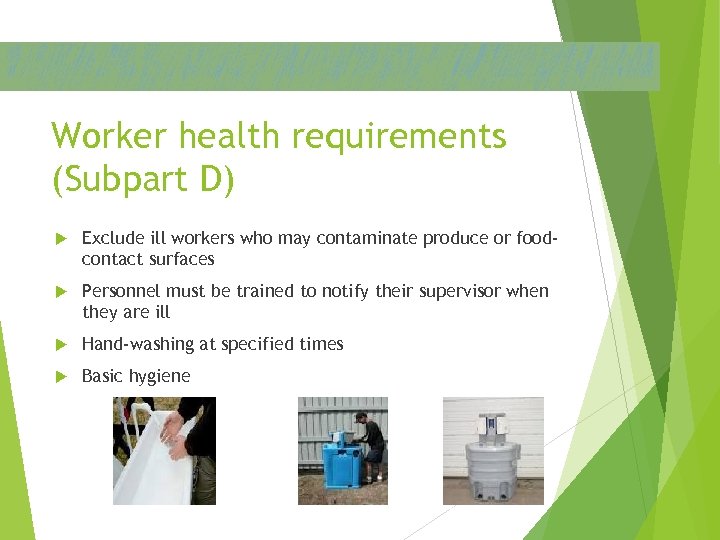 Worker health requirements (Subpart D) Exclude ill workers who may contaminate produce or foodcontact surfaces Personnel must be trained to notify their supervisor when they are ill Hand-washing at specified times Basic hygiene 15 March 2018 25
 Requirements for Agricultural Water (Subpart E) Inspect water system at start of growing season, and at least annually Maintain water sources and distribution systems that are under your control – prevent contamination Use of untreated surface water is forbidden for certain activities, e. g. washing hands Ensure water for harvest and post-harvest activities 15 meets microbiological standard of no detectable generic 26 March E. coli in 100 ml 2018
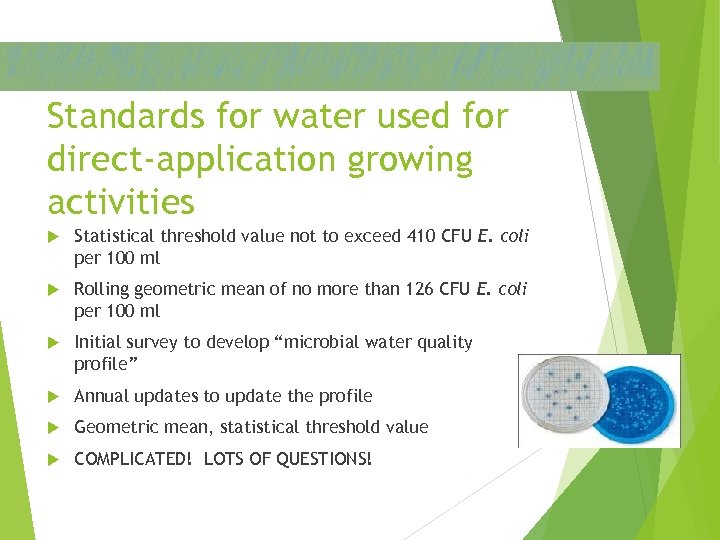 Standards for water used for direct-application growing activities Statistical threshold value not to exceed 410 CFU E. coli per 100 ml Rolling geometric mean of no more than 126 CFU E. coli per 100 ml Initial survey to develop “microbial water quality profile” Annual updates to update the profile Geometric mean, statistical threshold value COMPLICATED! LOTS OF QUESTIONS! 15 March 2018 27
 Biological Soil Amendment of Animal Origin (Subpart F) Treatments must either result in < 3 MPN Salmonella in 4 g total solids No L. monocytogenes in 5 g < 0. 3 MPN E. coli O 157: H 7 in 1 g OR < 3 MPN Salmonella in 4 g total solids < 1, 000 MPN fecal coliforms per g 15 March 2018 28
 Validated Critical Factors in Manure Composting Static and aerobic At least 131°F for 3 days, followed by adequate curing Turned and aerobic At least 131°F for 15 days, with at least 5 turnings, followed by adequate curing 15 March 2018 29
 Minimum Application Intervals for manure Untreated, no contact during application, minimal contact after application Interval to be determined Untreated, no contact with edible portion during or after application 0 days Treated to meet microbial standards for Salm. , E. c. O 157: H 7 0 days, no contact restrictions Composted to meet microbial standards for Salm. , fecal coliforms; no contact during and after application 0 days 15 March 2018 30
 Animal Control Requirements (Subpart I) If animals graze or work in produce fields, you must: Ensure an “adequate waiting period between grazing and harvesting” Take measures to prevent introduction by working animals of hazards into or onto produce If animal intrusion is reasonably likely: Monitor Evaluate whether uncontaminated produce can be harvested 15 March 2018 31
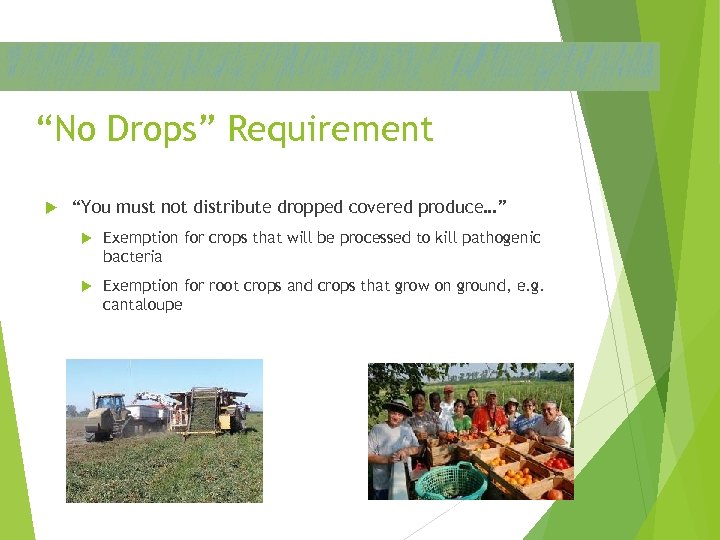 “No Drops” Requirement “You must not distribute dropped covered produce…” Exemption for crops that will be processed to kill pathogenic bacteria Exemption for root crops and crops that grow on ground, e. g. cantaloupe 15 March 2018 32
 Equipment and Tools Requirements (Subpart L) Equipment and tools for harvesting, packing, holding Food-contact surfaces: Emphasis on cleanability and maintenance Inspect maintain clean and sanitize when appropriate Non-food-contact surfaces: Inspect maintain clean when appropriate 15 March 2018 33
 Building Requirements (Subpart L) Sufficient space for equipment and materials Separation of operations in which contamination is likely to occur Constructed so that cleaning and repair is possible Floors, walls, ceilings, fixtures, ducts, pipes Constructed so that contamination is unlikely Produce, food-contact surfaces, pkg. materials 15 March 2018 34
 Building / Facility Requirements (Subpart L) Adequate: Drainage Pest control Toilet and hand-washing facilities – readily accessible Sewage disposal Trash disposal 15 March 2018 35
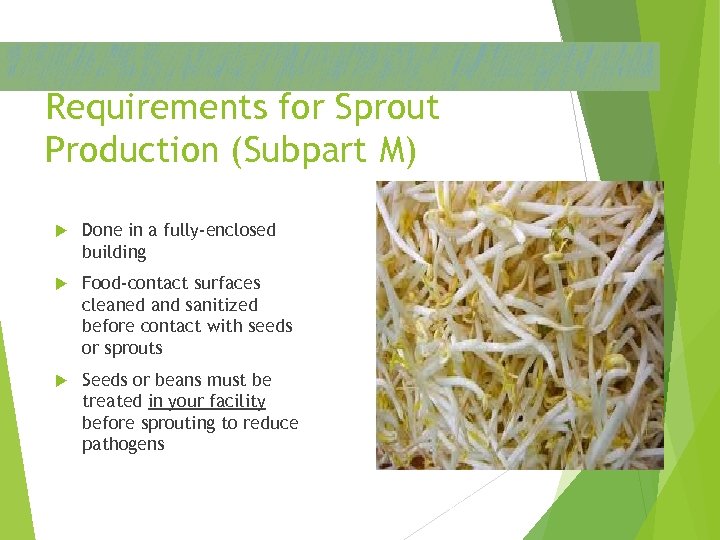 Requirements for Sprout Production (Subpart M) Done in a fully-enclosed building Food-contact surfaces cleaned and sanitized before contact with seeds or sprouts Seeds or beans must be treated in your facility before sprouting to reduce pathogens 15 March 2018 36
 Requirements for Sprout Production Environmental testing for Listeria spp. or L. monocytogenes Written plan At least monthly Testing spent irrigation water or in-process sprouts for E. coli O 157: H 7 and Salmonella Written plan Every batch 15 March 2018 37
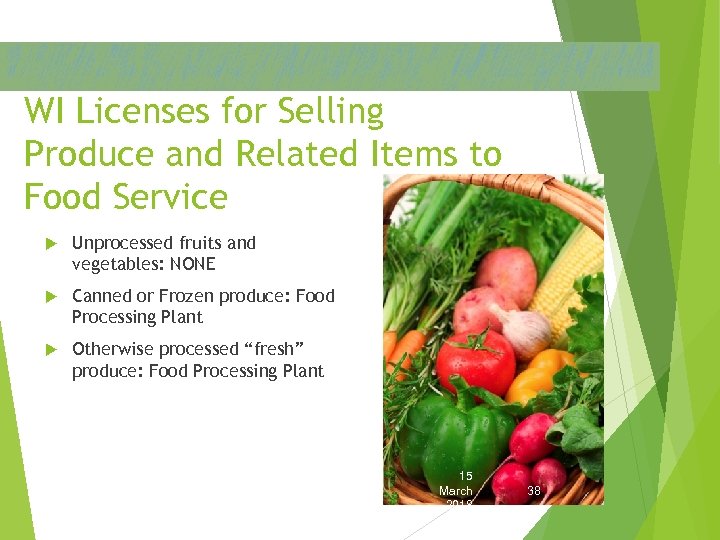 WI Licenses for Selling Produce and Related Items to Food Service Unprocessed fruits and vegetables: NONE Canned or Frozen produce: Food Processing Plant Otherwise processed “fresh” produce: Food Processing Plant 15 March 2018 38
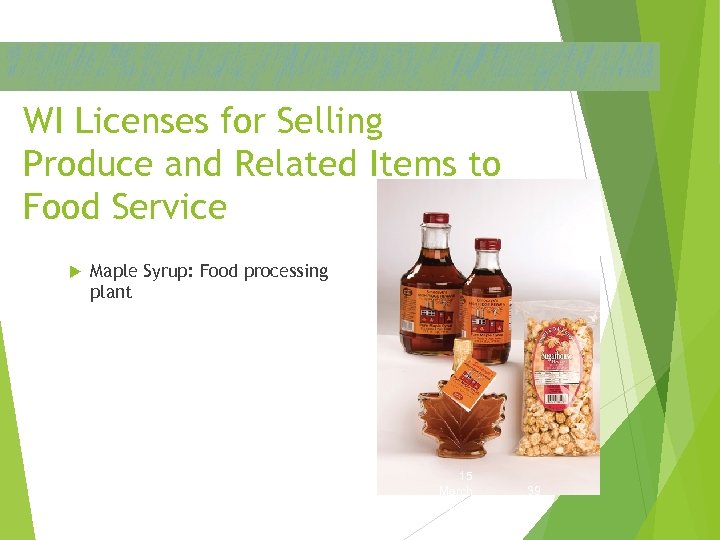 WI Licenses for Selling Produce and Related Items to Food Service Maple Syrup: Food processing plant 15 March 2018 39
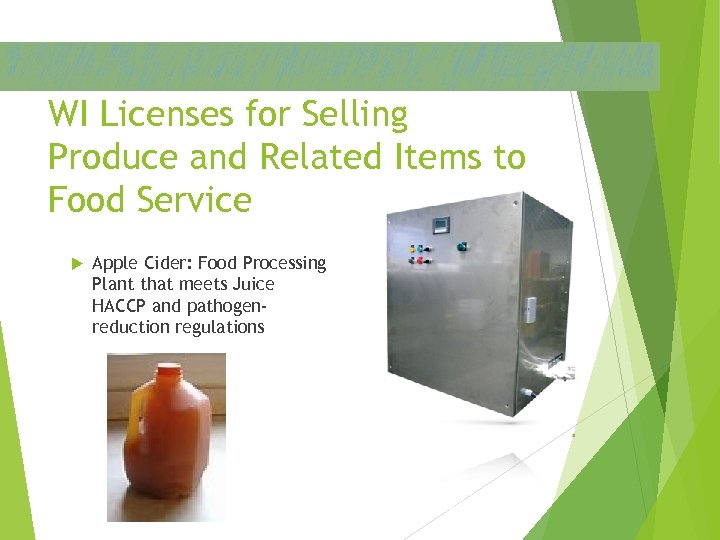 WI Licenses for Selling Produce and Related Items to Food Service Apple Cider: Food Processing Plant that meets Juice HACCP and pathogenreduction regulations 15 March 2018 40
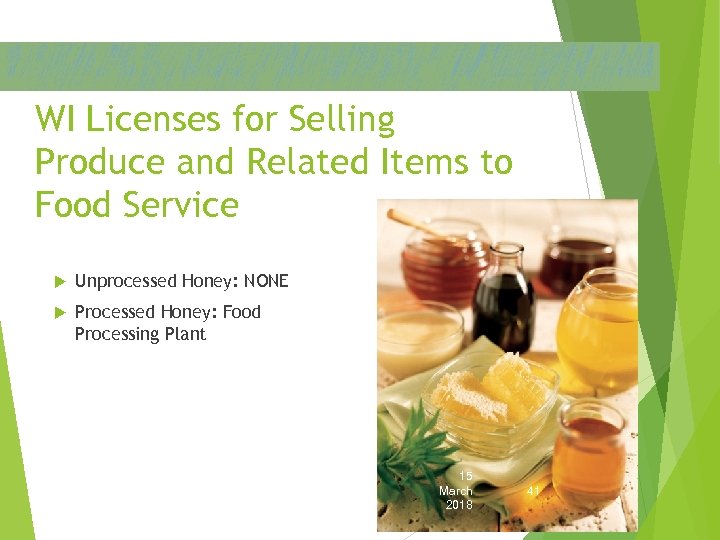 WI Licenses for Selling Produce and Related Items to Food Service Unprocessed Honey: NONE Processed Honey: Food Processing Plant 15 March 2018 41
 Coming July 1, 2016 TO WDATCP: Division of Food and Recreational Safety Bureau of Food and Recreational Businesses Restaurants Retail Food Establishments Dairy and Food Processing Plants Food warehouses Dairy farms Hotels, B + B’s, tourist rooming houses Campgrounds, camps Pools, water parks Bureau of Meat and Poultry Businesses 15 March 2018 42
 Questions? Steve Ingham 608 -224 -4701 Steve. Ingham@wi. gov 15 March 2018 43
 When can alternatives to the regulations be used? Water testing, and responding to test results Composting of biological soil amendments of animal origin Application intervals for untreated biological soil amendments of animal origin or compost agricultural tea You must have adequate data to validate the process 15 March 2018 44
 Other Water Requirements Maintain adequate sanitary quality, incl. use of waterchange schedules for re-circulating water Visual monitoring for build-up of organic materials Maintain and monitor temperature of water to minimize potential for infiltration of microorganisms 15 March 2018 45
 Record-Retention Requirements (Subpart O) At least 2 years for most records Can be off-site after 6 mo. ; retrieve within 24 h of request Electronic records are acceptable For records relating to adequacy of equipment or processes: at least 2 years after equipment or process use is discontinued 15 March 2018 46