 Скачать презентацию Steps towards free public transport in Tallinn Taavi
020930f9703f447742ac99eb3d0c415d.ppt
- Количество слайдов: 19



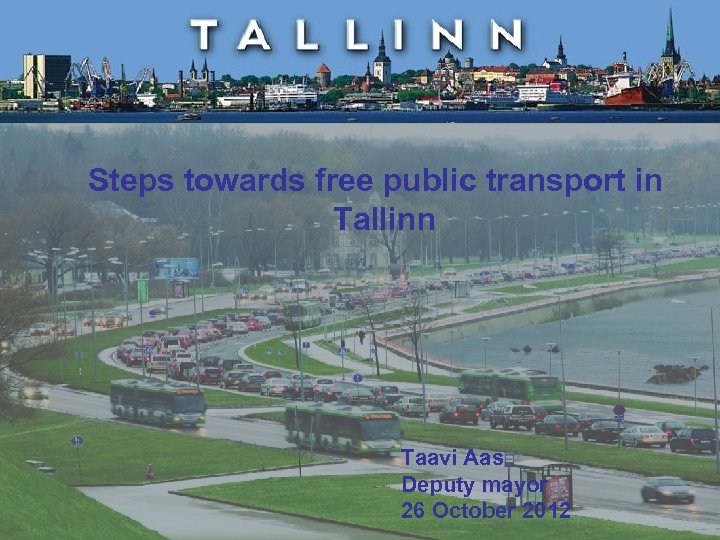
Steps towards free public transport in Tallinn Taavi Aas Deputy mayor 26 October 2012
Facts about Tallinn • Population: 416 539 • Area: 159, 2 km² • Islands: Aegna • Lakes: Harku Lake and Ülemiste Lake • Sea coast: 46 km • Land boarder: 59 km • Tallinn has 40 km² of greenery areas (parks, forests etc. )
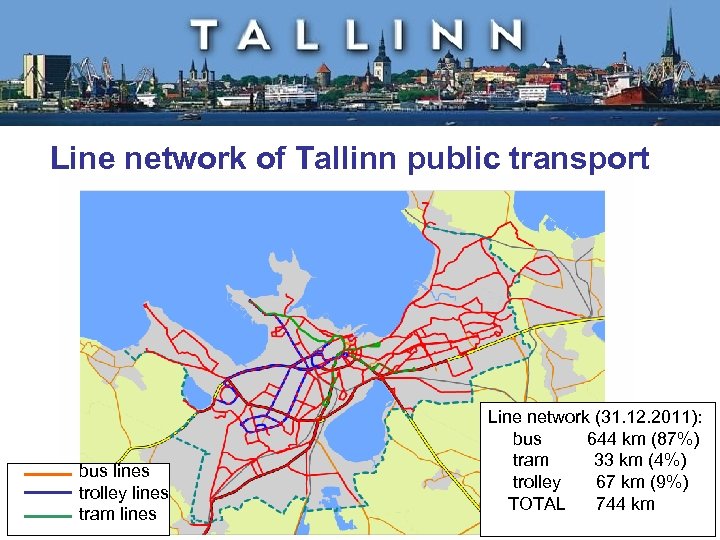
Line network of Tallinn public transport bus lines trolley lines tram lines Line network (31. 12. 2011): bus 644 km (87%) tram 33 km (4%) trolley 67 km (9%) TOTAL 744 km
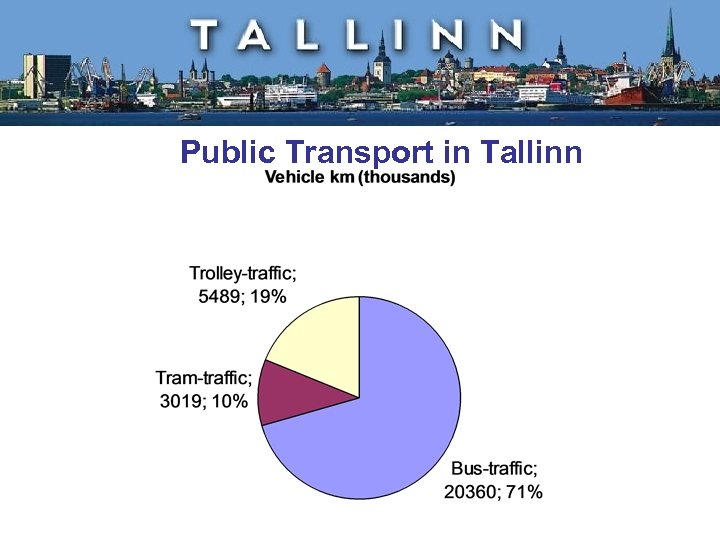
Public Transport in Tallinn
Tickets and discounts today • Only 33% of public transport operating costs are covered by ticket revenue (approx. 18 M EUR) • Only 8% of passengers pay for the full cost of their ticket. Others have the right to travel for free or they are entitled to some kind of a discount. • There are 17 categories of passengers who have the right to travel for free. • 6 categories of passengers have a right for a discounted ticket.
The main problems still existing in the field of city transportation. • City geographical location • Land use planning and urban sprawl • Difference between central and local government priorities • Lack of city ring roads • Harbour connection cause big heavy vehicle transit • Lack of legislation
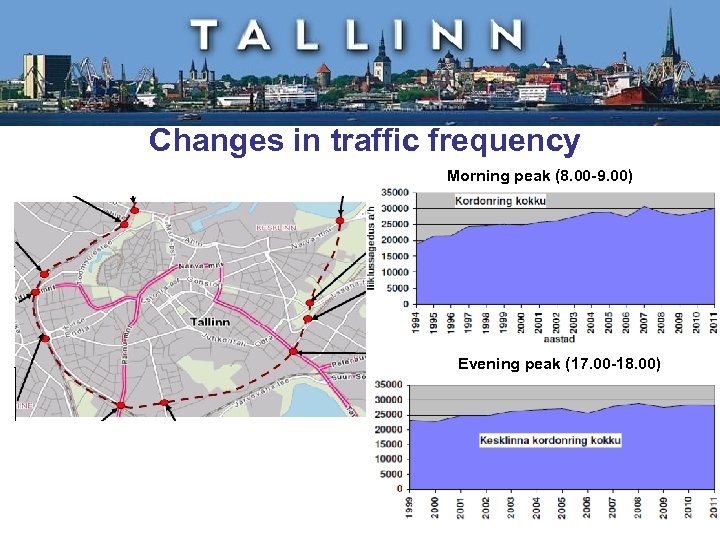
Changes in traffic frequency Morning peak (8. 00 -9. 00) Evening peak (17. 00 -18. 00)
What does this tendency mean? • Average speed during peak hour decreases 2 km/h annually. • Time spent on travelling is growing. • Duration of peak period will grow longer. • Cars demand more space in the city. This means that people will no longer be the users of urban space – it will be cars, either moving or parking. • Living environment will worsen considerably.
Public Transport can save the World
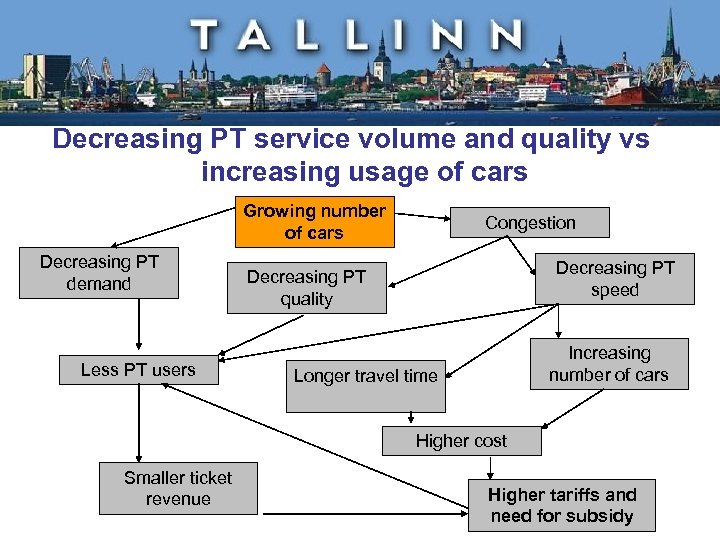
Decreasing PT service volume and quality vs increasing usage of cars Growing number of cars Decreasing PT demand Less PT users Congestion Decreasing PT speed Decreasing PT quality Increasing number of cars Longer travel time Higher cost Smaller ticket revenue Higher tariffs and need for subsidy
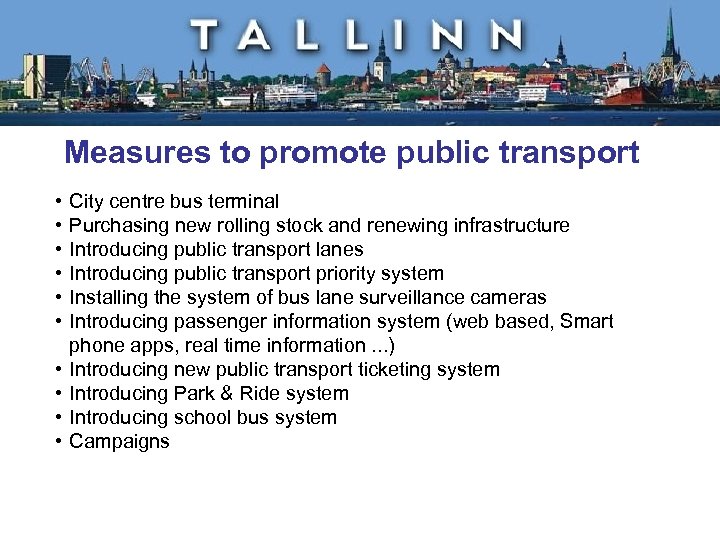
Measures to promote public transport • • • City centre bus terminal Purchasing new rolling stock and renewing infrastructure Introducing public transport lanes Introducing public transport priority system Installing the system of bus lane surveillance cameras Introducing passenger information system (web based, Smart phone apps, real time information. . . ) Introducing new public transport ticketing system Introducing Park & Ride system Introducing school bus system Campaigns
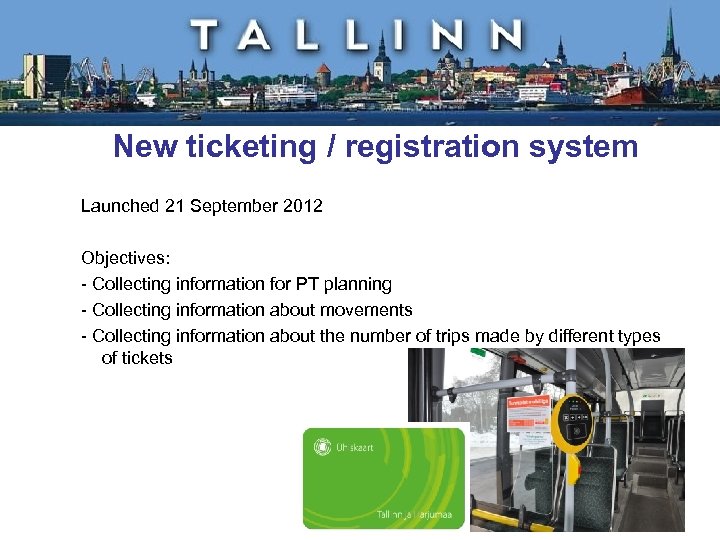
New ticketing / registration system Launched 21 September 2012 Objectives: - Collecting information for PT planning - Collecting information about movements - Collecting information about the number of trips made by different types of tickets
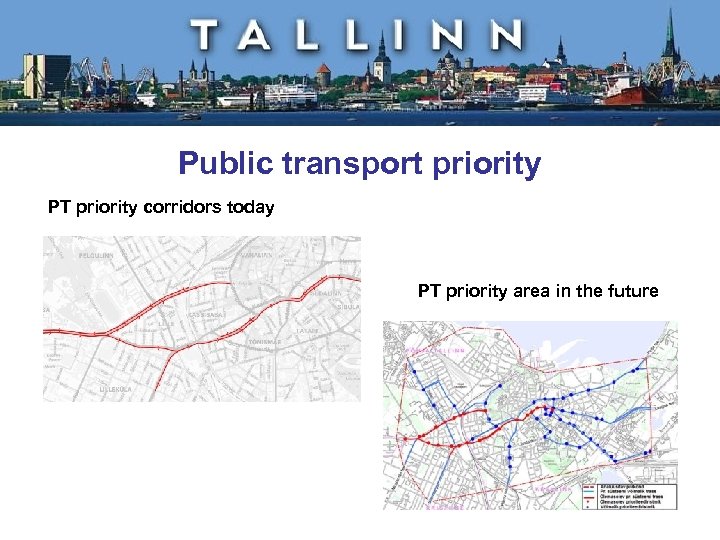
Public transport priority PT priority corridors today PT priority area in the future
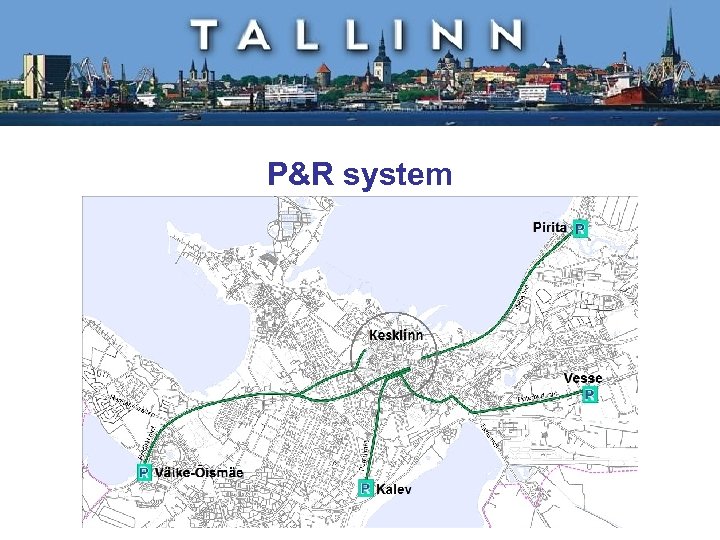
P&R system
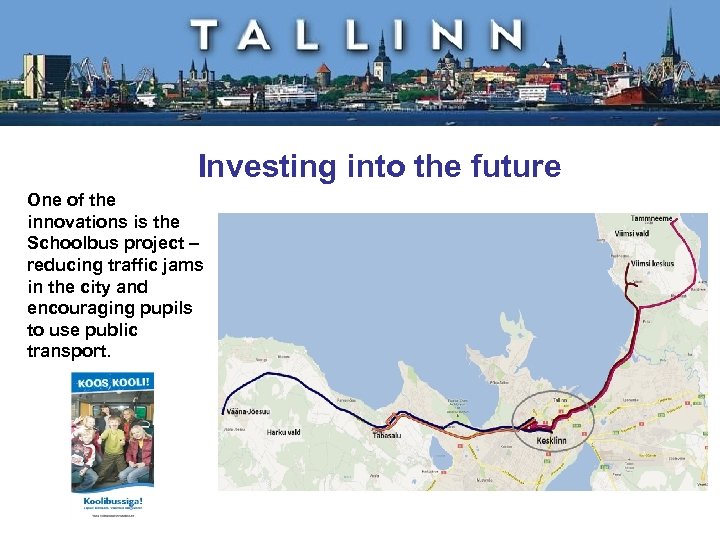
Investing into the future One of the innovations is the Schoolbus project – reducing traffic jams in the city and encouraging pupils to use public transport.
Free public transport in Tallinn – a brave step towards green capital
Advantages of free public transport: • Social aspect: ensuring accessibility to unemployed and people with low-income • Green aspect: shifting modal split from private car to public transport, cleaner living environment, less noise • Due to diminishing traffic load less need to create additional space for traffic. • Additionally: drawing greater attention to sustainable development of public transport at local, national and European level.
Counterarguments for free public transport: • Diminishing service quality: less rolling stock in traffic, older rolling stock, longer intervals, increasing crime and more vandalism, lot of homeless people spending time in public transport • Overcrowded public transport vehicles • Current public transport user might shift to private car • Free public transport will be provided at the expense of other public services: kindergartens, schools, roads and streets. • Private car users are the ones paying for free public transport.
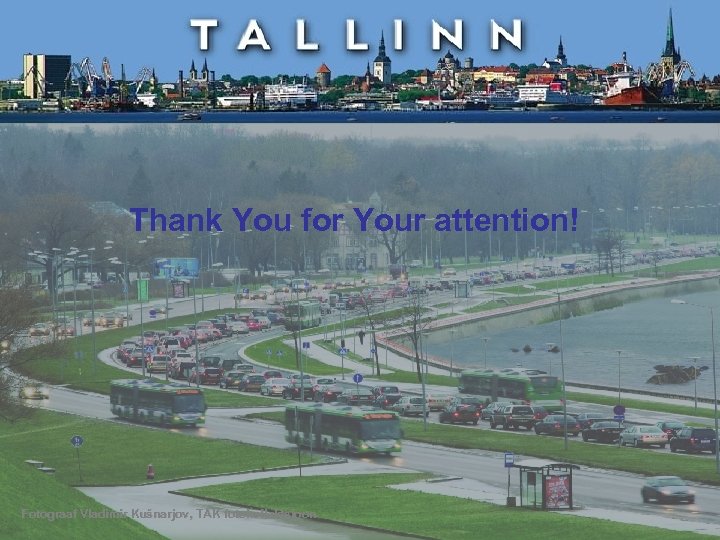
Thank You for Your attention! Fotograaf Vladimir Kušnarjov, TAK fotokollektsioon
Скачать презентацию Steps towards free public transport in Tallinn Taavi
020930f9703f447742ac99eb3d0c415d.ppt