


 Скачать презентацию Steps in the Target Marketing Process 1
1119450ceec562ade3c409af35927cbf.ppt
- Количество слайдов: 30
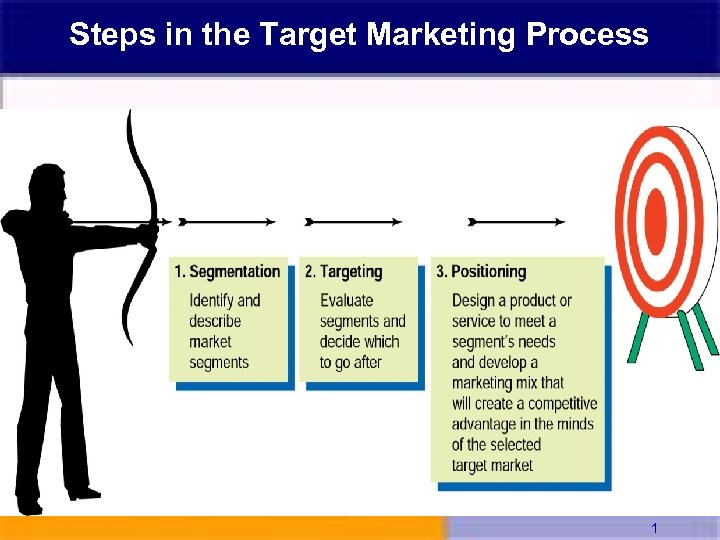 Steps in the Target Marketing Process 1
 Step 1: Segmentation • Segmentation is the process of dividing a larger market into smaller pieces based on one or more meaningful, shared characteristics • Segmentation variables are used to divide the market into smaller slices 2
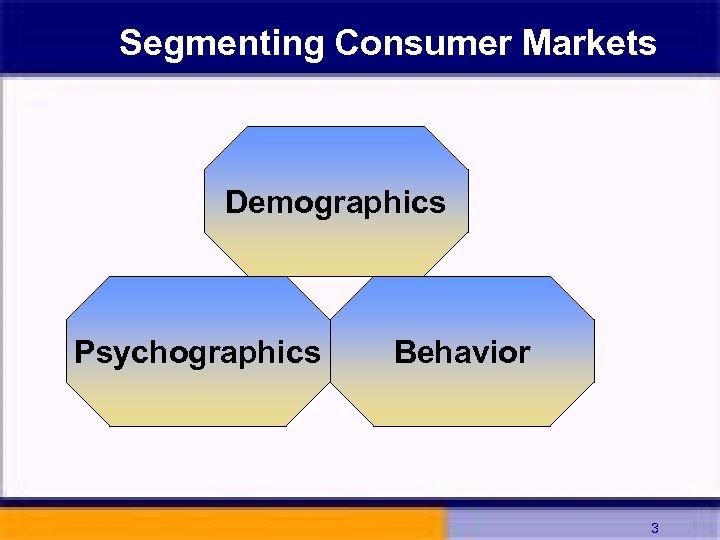 Segmenting Consumer Markets Demographics Psychographics Behavior 3
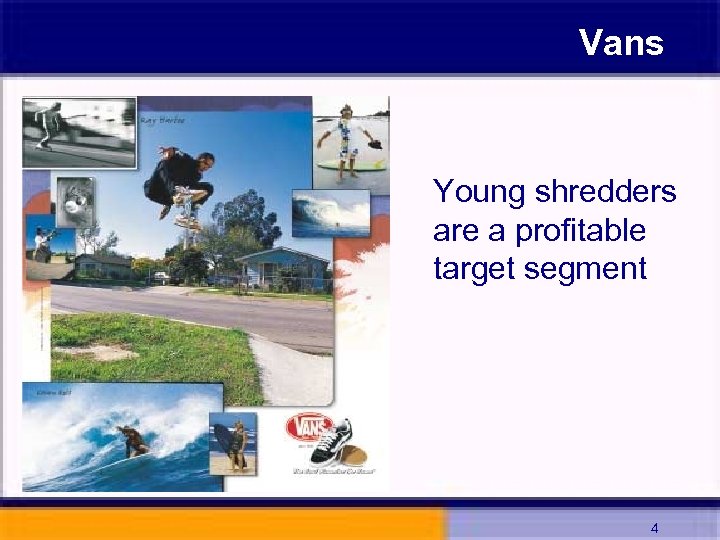 Vans Young shredders are a profitable target segment 4
 Demographic Dimensions • • • Age Gender Family structure Income and social class Race and ethnicity Geography 5
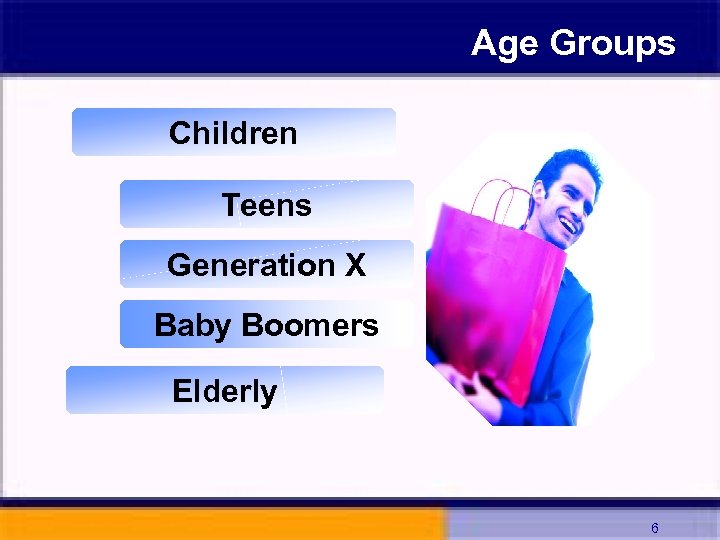 Age Groups Children Teens Generation X Baby Boomers Elderly 6
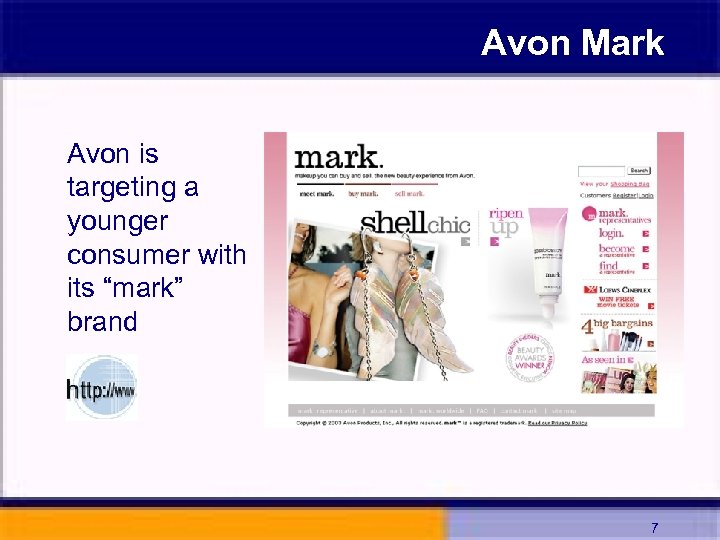 Avon Mark Avon is targeting a younger consumer with its “mark” brand 7
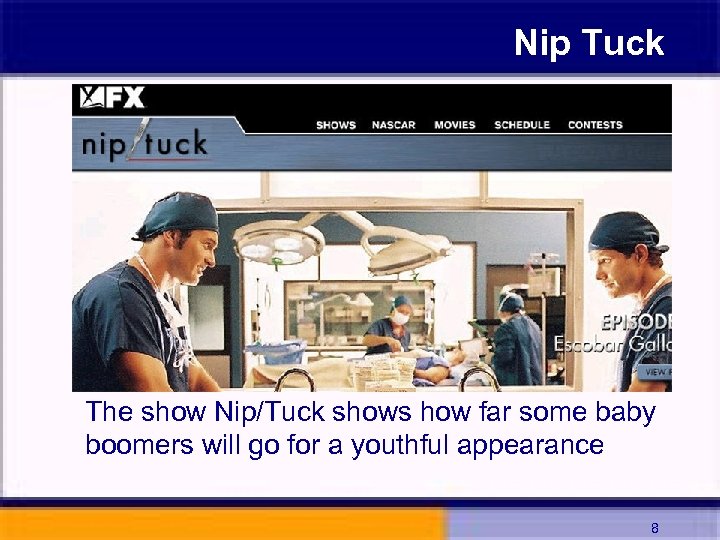 Nip Tuck The show Nip/Tuck shows how far some baby boomers will go for a youthful appearance 8
 Psychographics • Psychographics segments markets in terms of shared attitudes, interests, and opinions • Segments include demographic information such as age and income, but also includes richer descriptions • Some organizations develop their own psychographic segments for their consumers, but others utilize national systems (VALS by SRI International) 9
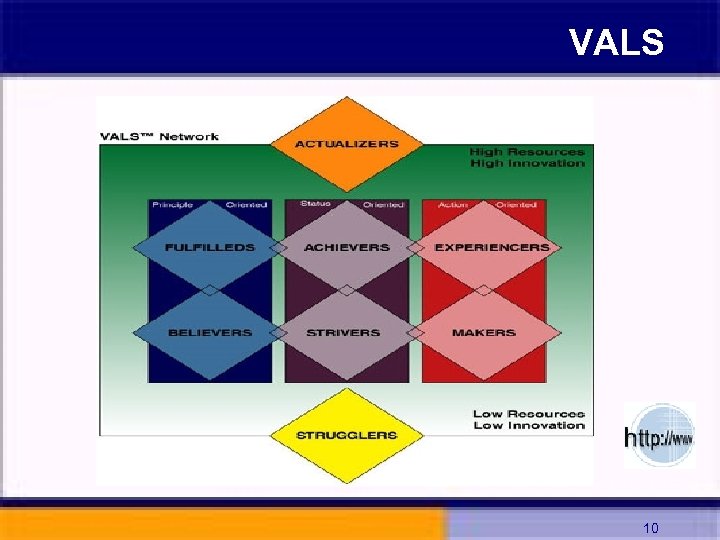 VALS 10
 Segmenting by Behavior • Behavioral segmentation slices consumers on the basis of how they act toward, feel about, or use a product – Users versus nonusers – Heavy, moderate, light users – Usage occasions 11
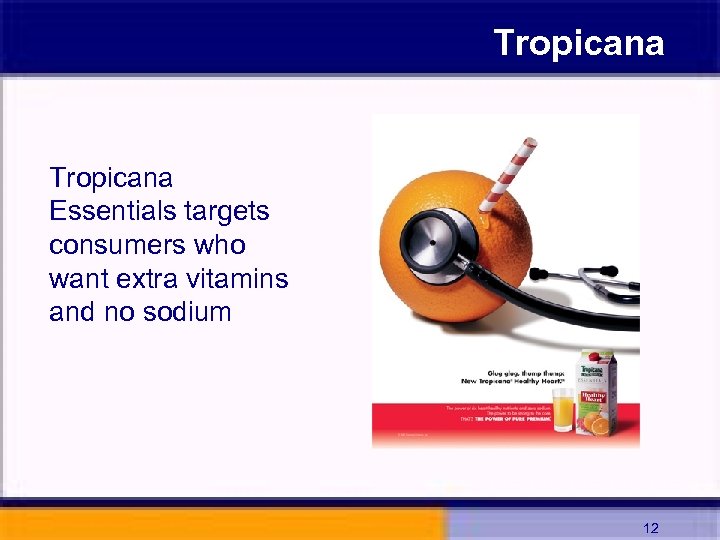 Tropicana Essentials targets consumers who want extra vitamins and no sodium 12
 Segmenting Industrial Markets • Organizational demographics – firm size – number of facilities – domestic or multinational – type of business – production technology utilized 13
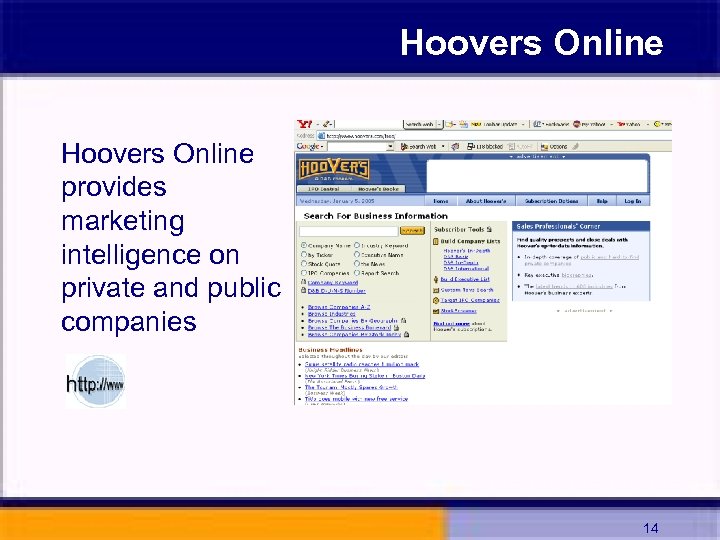 Hoovers Online provides marketing intelligence on private and public companies 14
 Step 2: Targeting • Evaluating Market Segments • Developing Segment Profiles • Choosing a Targeting Strategy 15
 Evaluating Market Segments • A viable target segment should satisfy these requirements: – Are members of the segment similar to each other but different from other segments? – Can marketers measure the segment? – Is the segment large enough to be profitable? – Can marketing communications reach the segment? – Can the marketer serve the segment’s needs? 16
 Developing Segment Profiles • A profile is a description of the typical customer in that segment – RJ Reynolds’ “Dakota” Profile of the “Virile Female”: Her favorite pastimes are cruising, partying, going to hot-rod shows and tractor pulls with her boyfriend, and watching evening soap operas. Her chief aspiration is to get married in her early twenties. ” 17
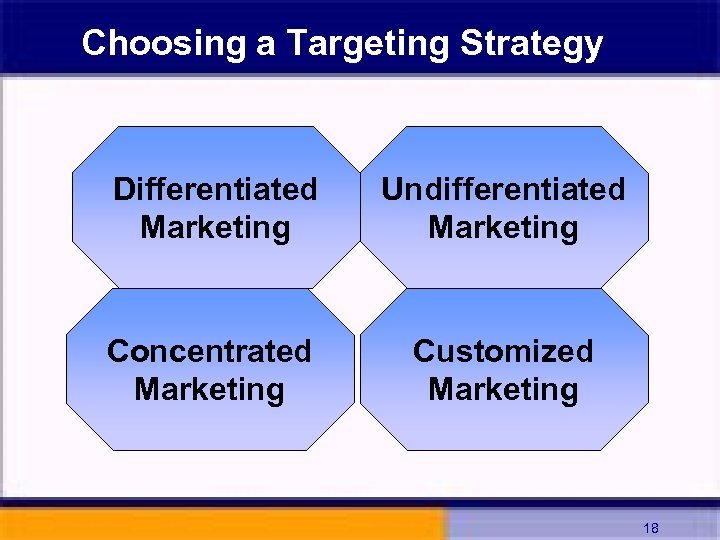 Choosing a Targeting Strategy Differentiated Marketing Undifferentiated Marketing Concentrated Marketing Customized Marketing 18
 Undifferentiated Marketing • Appeals to a broad spectrum of people • Efficient due to economies of scale • Effective when most consumers have similar needs • Example: Wal-Mart, Gas stations (S-Oil) • Home. Ever? 19
 Differentiated Marketing • Develops one or more products for each of several customer groups with different product needs • Appropriate when consumers are choosing among well-known brands with distinctive images and it is possible to identify one or more segments with distinct needs for different types of products • Example: Elseve, L’Oreal, Lancome Hyundai, Kia 20
 Concentrated Marketing • Entails focusing efforts on offering one or more products to a single segment • Useful for smaller firms that do not have the resources to serve all markets • Example: Hard Candy 21
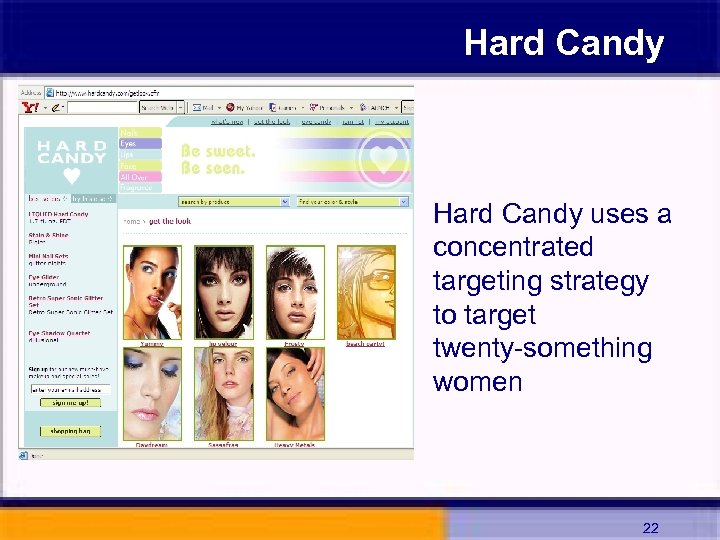 Hard Candy uses a concentrated targeting strategy to target twenty-something women 22
 Customized Marketing • Segments are so precisely defined that products are offered to exactly meet the needs of each individual – Example: hair stylists • Mass customization is a related approach in which a company modifies a basic good to meet the needs of an individual – Example: Proctor & Gamble’s products at Reflect. com – Dell Computers 23
 Developing a Positioning Strategy • Analyze the competitors’ positions in the marketplace • Offer a product with a competitive advantage • Finalize the marketing mix • Evaluate the target market’s response so modifications to the positioning strategy can be made (repositioning) 24
 The Brand Personality • A positioning strategy attempts to create a brand personality for a product - a distinctive image that captures its character and benefits • How do marketers determine where their products actually stand in the minds of consumers? – Perceptual mapping 25
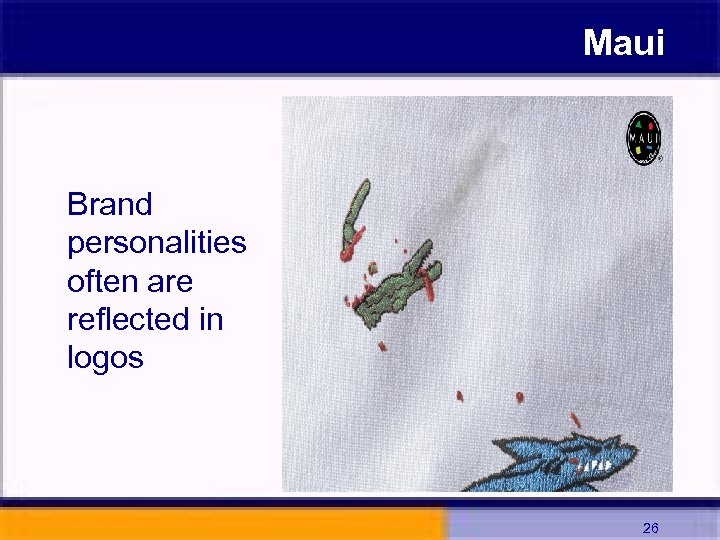 Maui Brand personalities often are reflected in logos 26
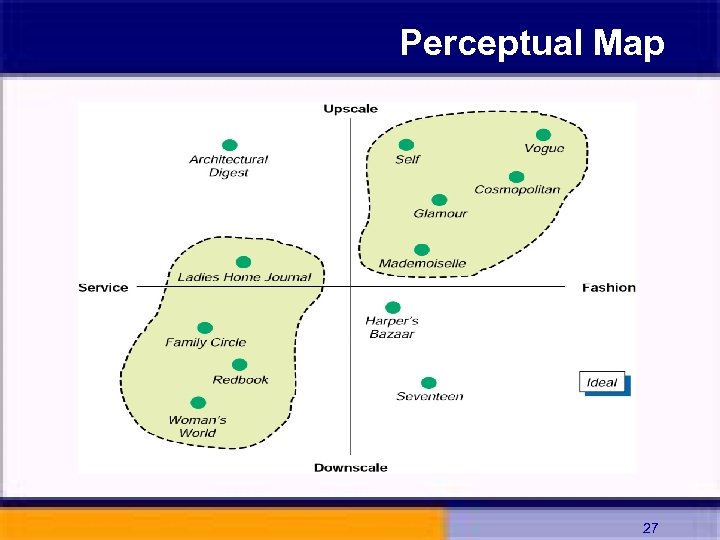 Perceptual Map 27
 Customer Relationship Management • A CRM strategy allows a company to identify its best customers, stay on top of their needs, and increase their satisfaction • CRM is about communicating with customers one on one • CRM views customers as partners 28
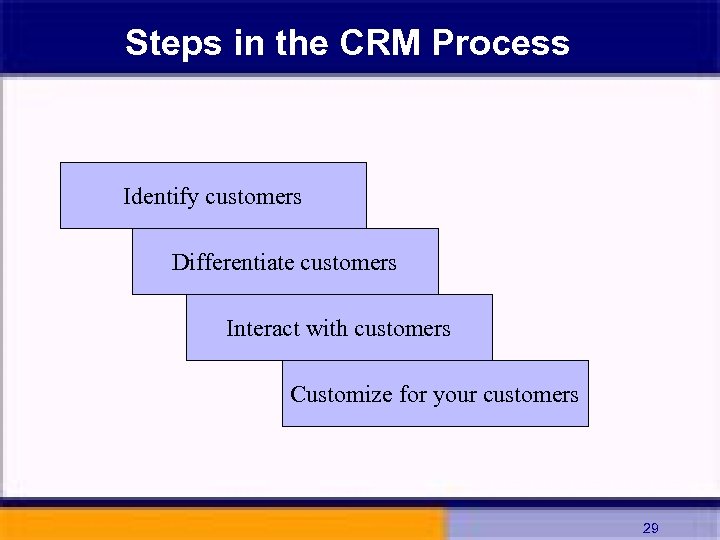 Steps in the CRM Process Identify customers Differentiate customers Interact with customers Customize for your customers 29
 Characteristics of CRM • • Share of Customer Lifetime Value of the Customer Equity A Greater Focus on High-Value Customers 30