


 Скачать презентацию Stellar Evolution Where do gold earrings come from
e3b9f30733055ad34ff7e008815b9996.ppt
- Количество слайдов: 38
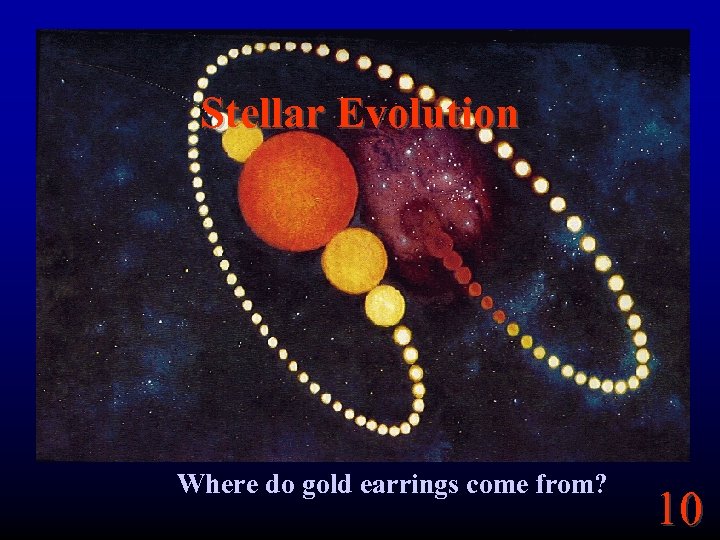 Stellar Evolution Where do gold earrings come from? 10
 Goals • • • Explain why stars evolve off the main sequence. What happens when they leave the main sequence? How does mass affect what happens? How do stars die? Where does gold come from? 10
 10
10
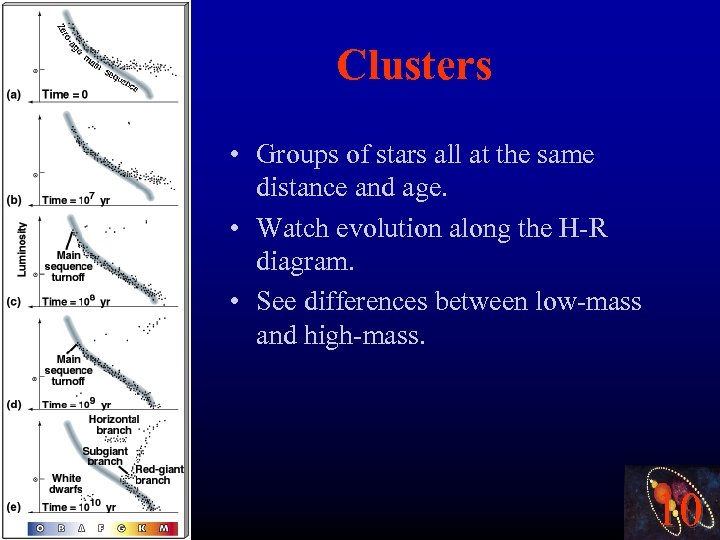 Clusters • Groups of stars all at the same distance and age. • Watch evolution along the H-R diagram. • See differences between low-mass and high-mass. 10
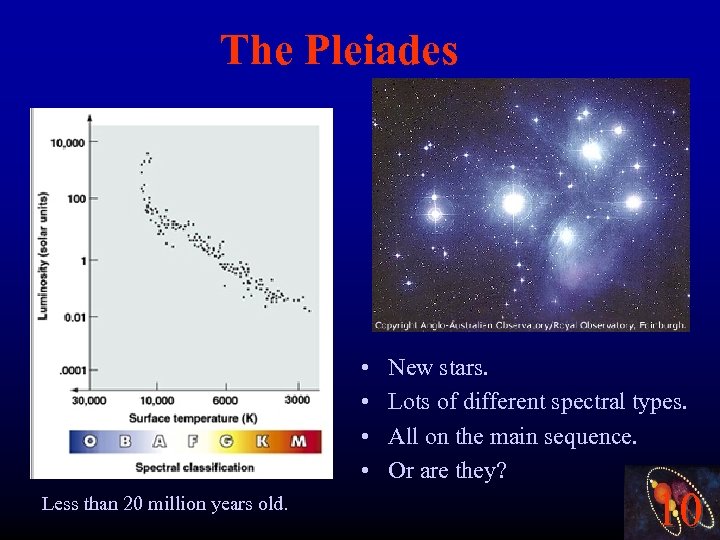 The Pleiades • • Less than 20 million years old. New stars. Lots of different spectral types. All on the main sequence. Or are they? 10
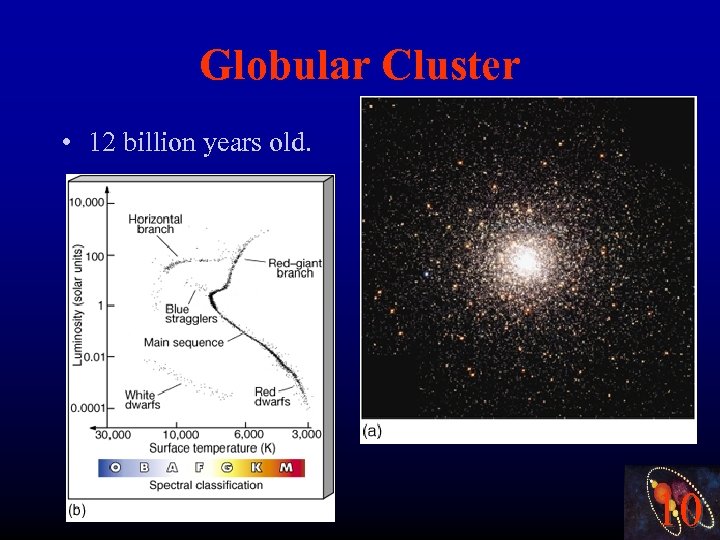 Globular Cluster • 12 billion years old. 10
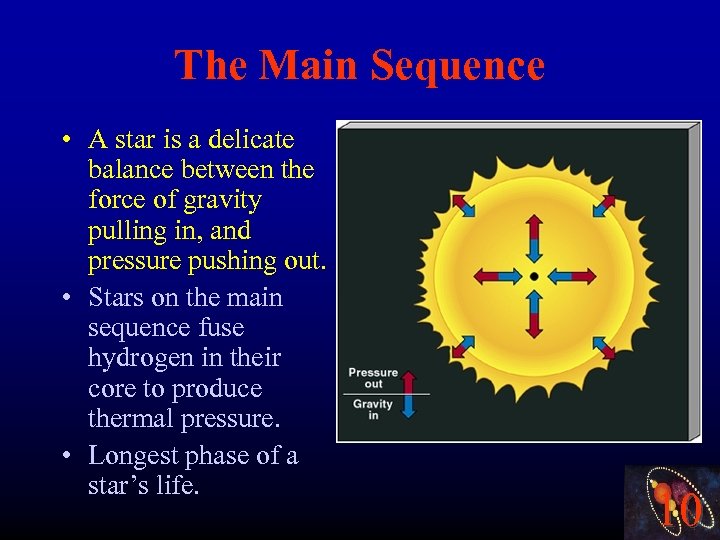 The Main Sequence • A star is a delicate balance between the force of gravity pulling in, and pressure pushing out. • Stars on the main sequence fuse hydrogen in their core to produce thermal pressure. • Longest phase of a star’s life. 10
 What then? • When the hydrogen in the core is almost consumed the balance between gravity pulling in and pressure pushing out is disturbed. • The structure and appearance of the star changes dramatically. • What happens then, depends on the star’s mass. • Two cases: – Low-mass (< 8 x mass of Sun) – High-mass (> 8 x mass of Sun) 10
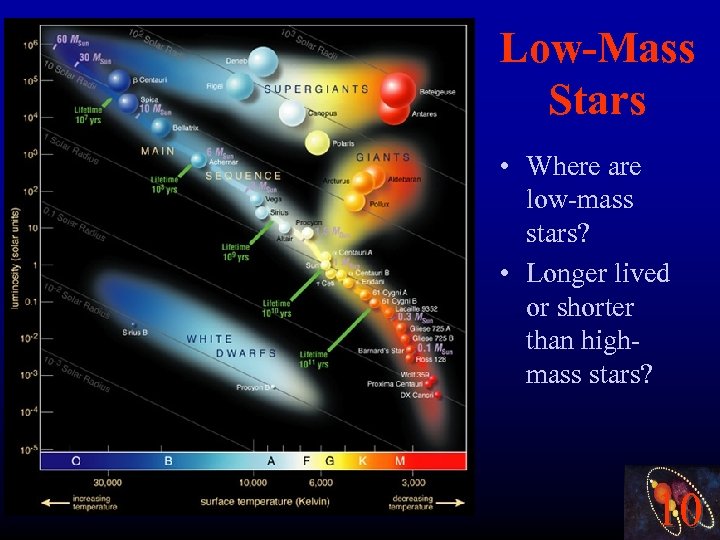 Low-Mass Stars • Where are low-mass stars? • Longer lived or shorter than highmass stars? 10
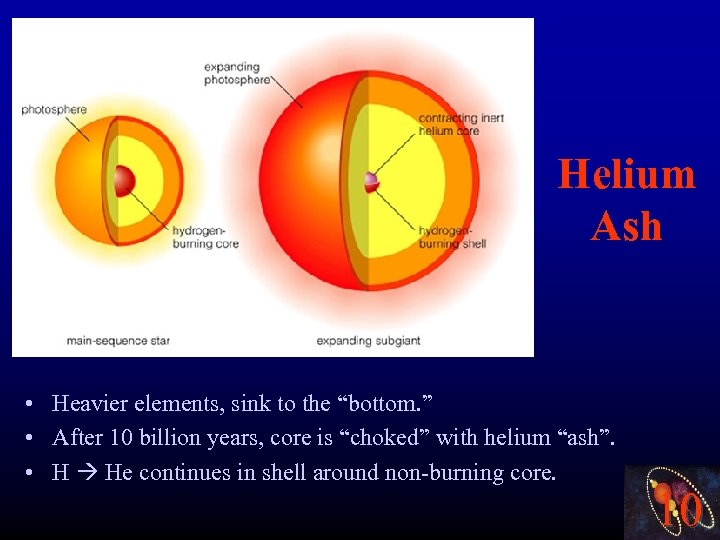 Helium Ash • Heavier elements, sink to the “bottom. ” • After 10 billion years, core is “choked” with helium “ash”. • H He continues in shell around non-burning core. 10
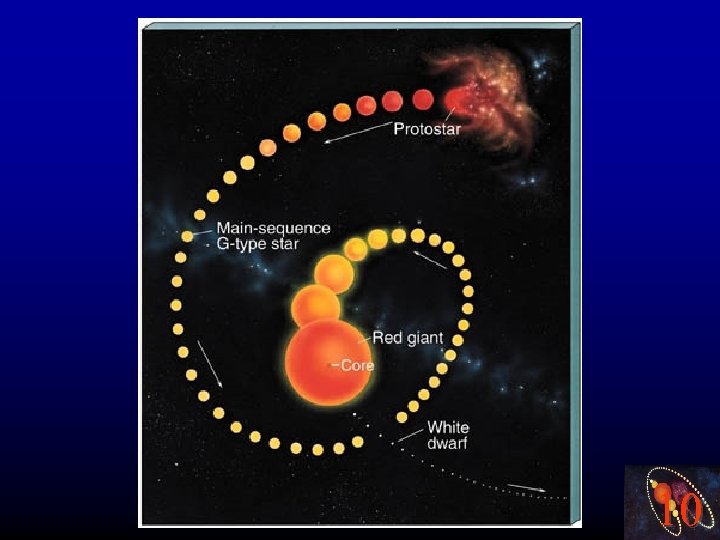
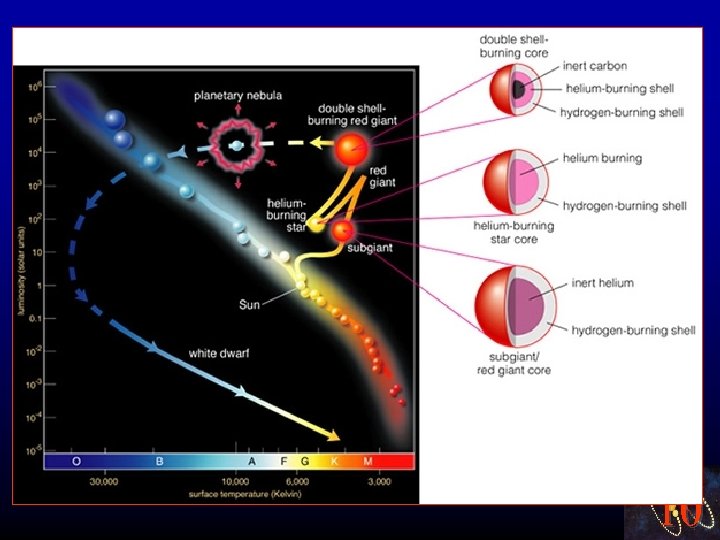
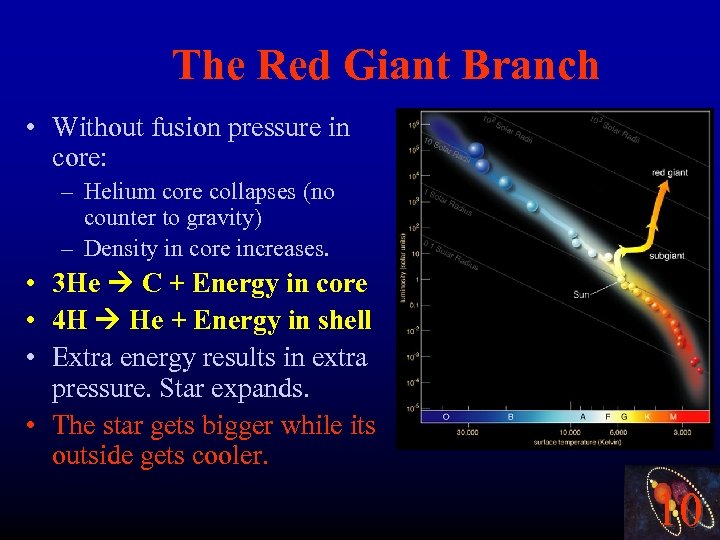 The Red Giant Branch • Without fusion pressure in core: – Helium core collapses (no counter to gravity) – Density in core increases. • 3 He C + Energy in core • 4 H He + Energy in shell • Extra energy results in extra pressure. Star expands. • The star gets bigger while its outside gets cooler. 10
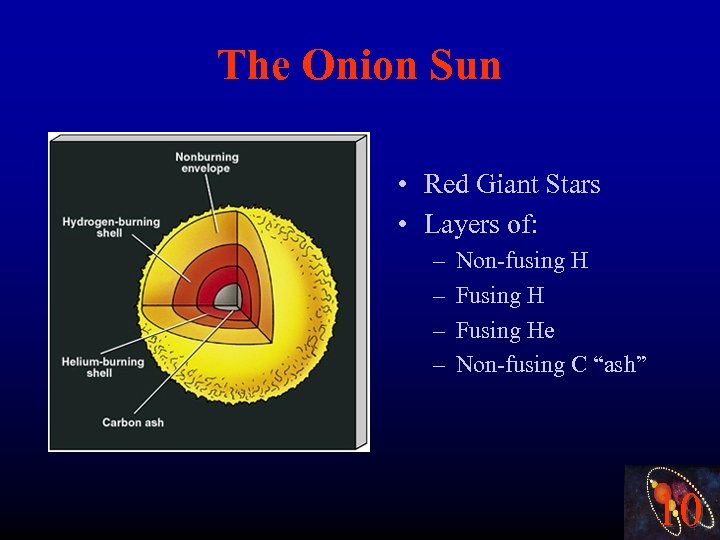 The Onion Sun • Red Giant Stars • Layers of: – – Non-fusing H Fusing He Non-fusing C “ash” 10
 …And the Solar System? • A few million years from now: – Sun becomes slightly brighter – Ocean’s begin to evaporate – “Hot House” Earth • A few billion years from now: – – Sun swells up Engulfs the inner Solar System Certain death for terrestrial planets Possible “spring” on the Jovian ocean-moons! 10
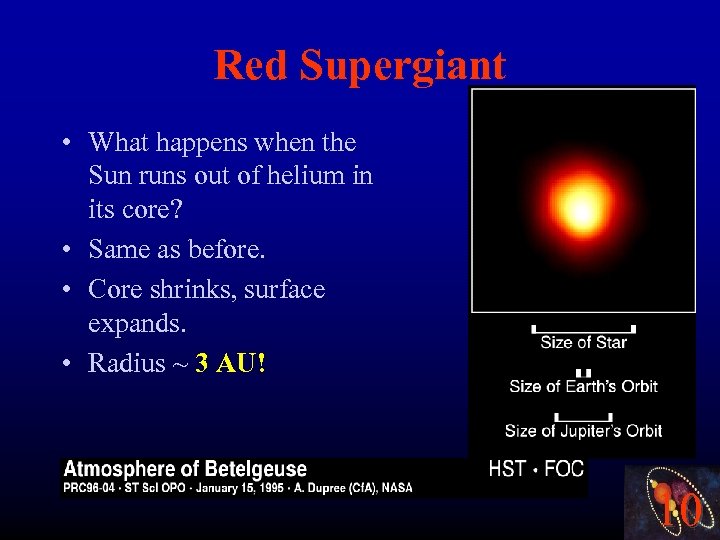 Red Supergiant • What happens when the Sun runs out of helium in its core? • Same as before. • Core shrinks, surface expands. • Radius ~ 3 AU! 10
 Death • Core is contracting and heating. – Surface is cooling and expanding. • Will it finally become hot enough in core for Carbon to fuse? • For the Sun: No. • Gravity keeps contracting the core: 1000 kg/cm 3! • What stops it? • Electron degeneracy pressure! 10
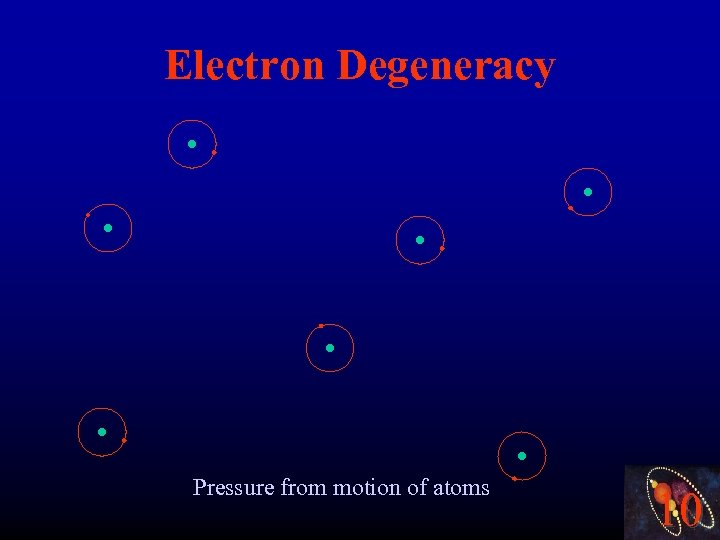 Electron Degeneracy Pressure from motion of atoms 10
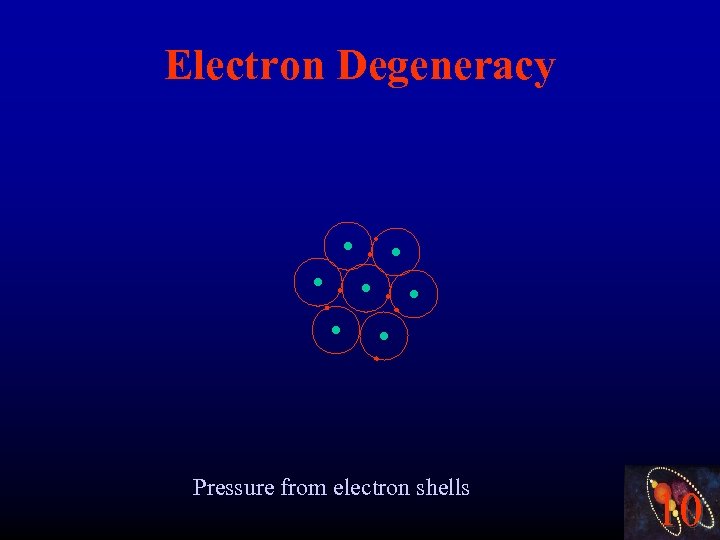 Electron Degeneracy Pressure from electron shells 10
 Where are we now? • Core dead – nothing happening. • Shells – burning H and He, but soon stop too. • Outside atmosphere of star still cooling and expanding. • …and expanding • Force of radiation from burning shells blows the atmosphere away. 10
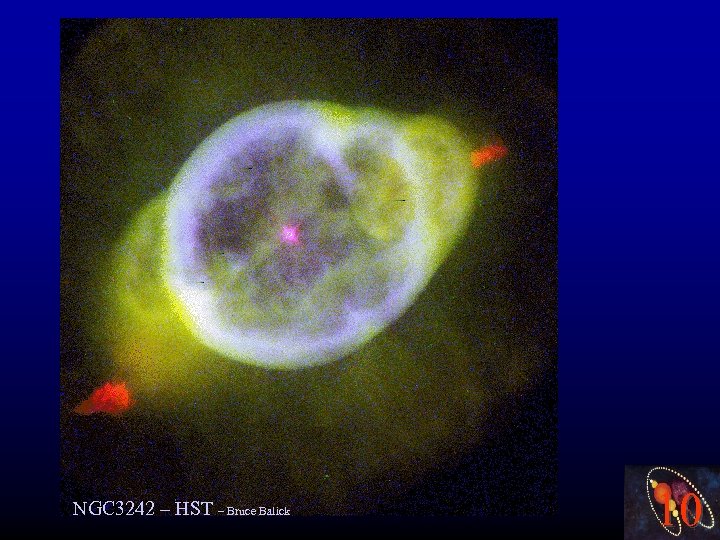 NGC 3242 – HST – Bruce Balick 10
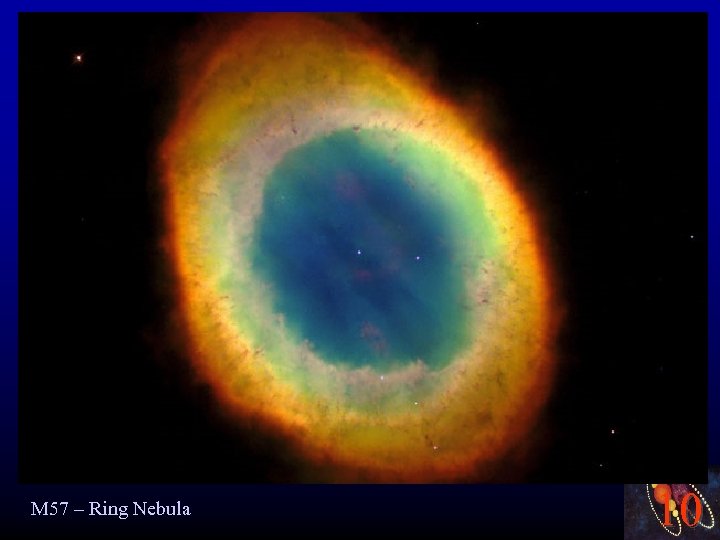 M 57 – Ring Nebula 10
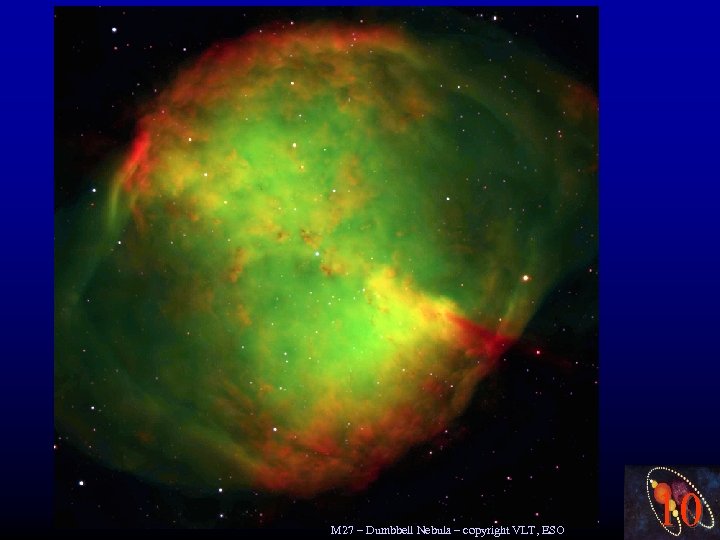 M 27 – Dumbbell Nebula – copyright VLT, ESO 10
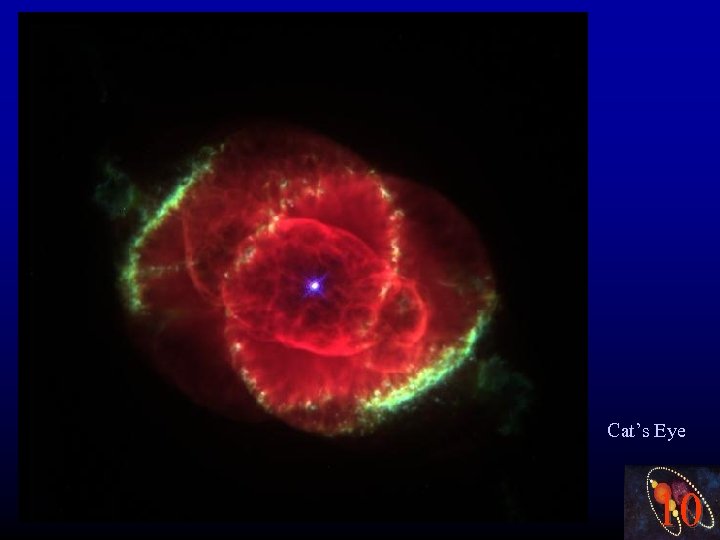 Cat’s Eye 10
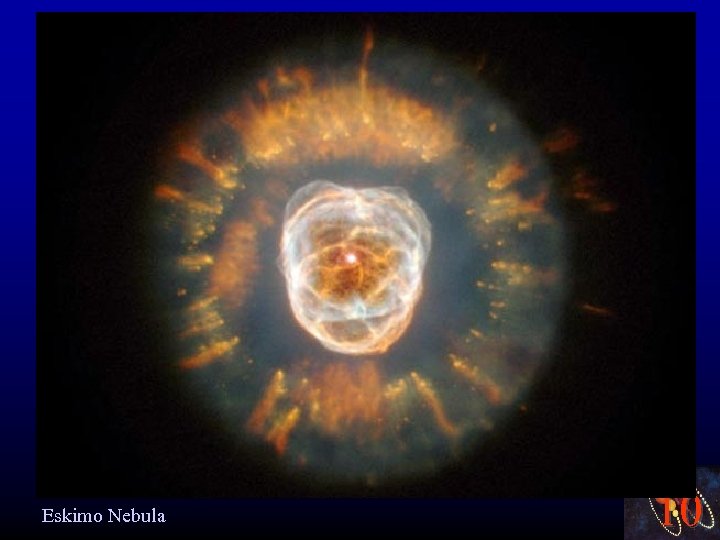 Eskimo Nebula 10
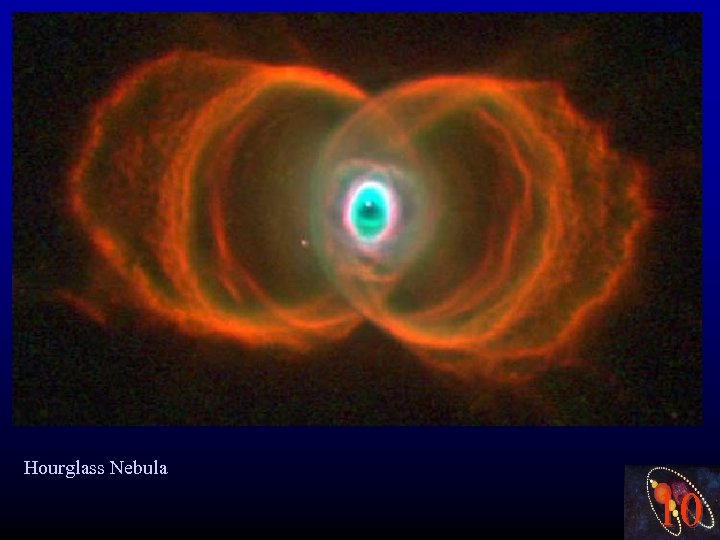 Hourglass Nebula 10
 White Dwarfs • Q: What’s left once the atmosphere blows away? • A: The exposed electron degenerate carbon core. • Size of Earth. • No more fusion. • Glow by their heat alone. • Eventually cool and fade away black dwarf. 10
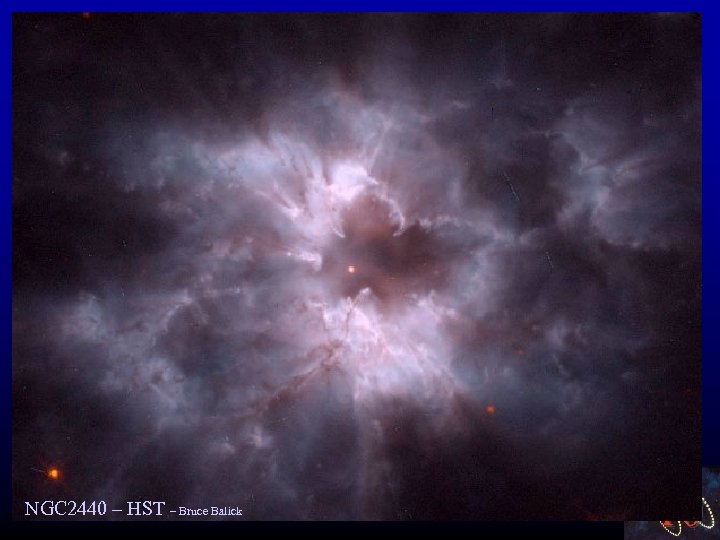 NGC 2440 – HST – Bruce Balick 10
 10
10
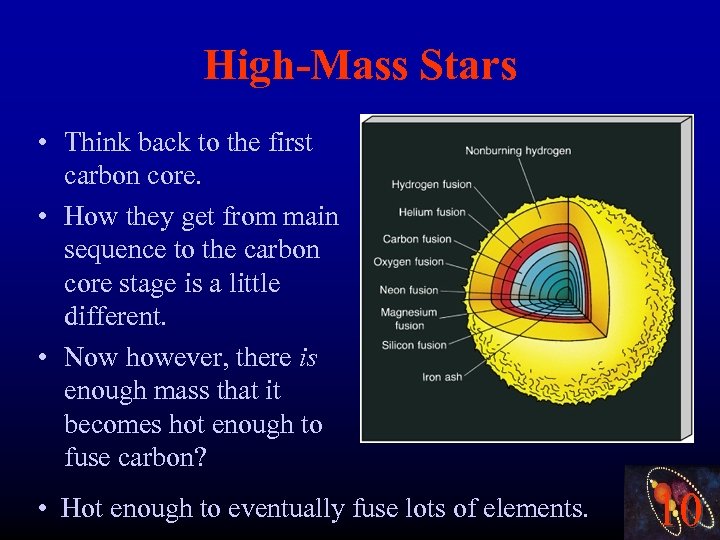 High-Mass Stars • Think back to the first carbon core. • How they get from main sequence to the carbon core stage is a little different. • Now however, there is enough mass that it becomes hot enough to fuse carbon? • Hot enough to eventually fuse lots of elements. 10
 The Iron Core • • 4 H He + Energy 3 He C + Energy 2 C O + Energy The ash of one reaction, becomes the fuel of the next. • Fusion takes place in the core as long as the end result also yields energy. • This energy causes pressure which counters gravity. • But Iron doesn’t fuse. 10
 Core-Collapse • • • Iron core – no outward pressure. Gravity wins! Star collapses rapidly! Electron degeneracy can’t stop it. Atomic structure can’t stop it. Electrons and protons crushed together to produce neutrons. • Neutrons pushed together by force of gravity. 10
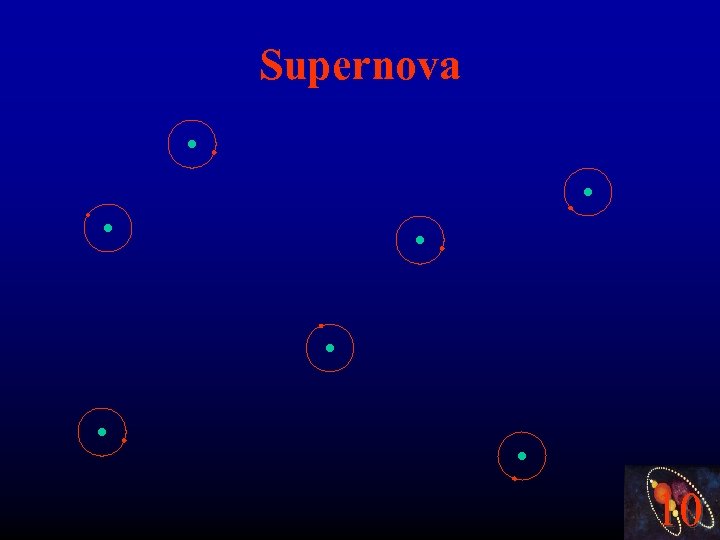 Supernova 10
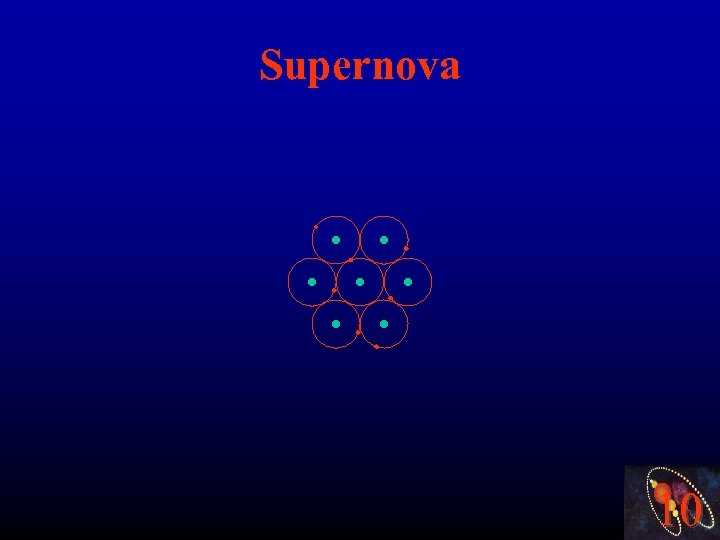 Supernova 10
 Supernova 10
 Supernova 10
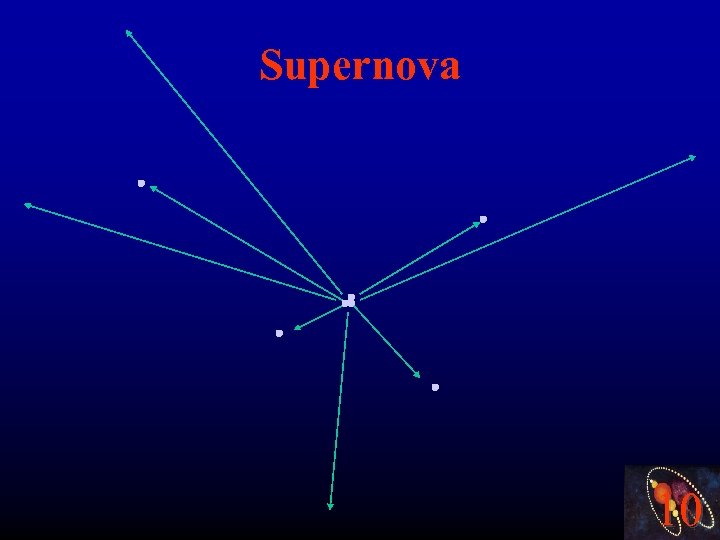
 Supernovae • The result of the catastrophic collapse is the rebound and explosion of the core. • From start of collapse to now: 1 second! • Matter thrown back into the interstellar medium. • Matter rushing outwards, fuses with matter rushing inwards. • Every element after Fe is made in the instant of a supernova! 10
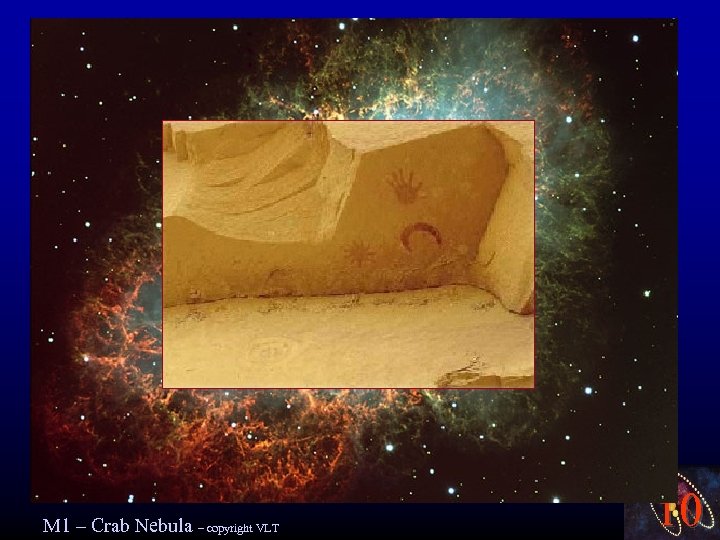 M 1 – Crab Nebula – copyright VLT 10
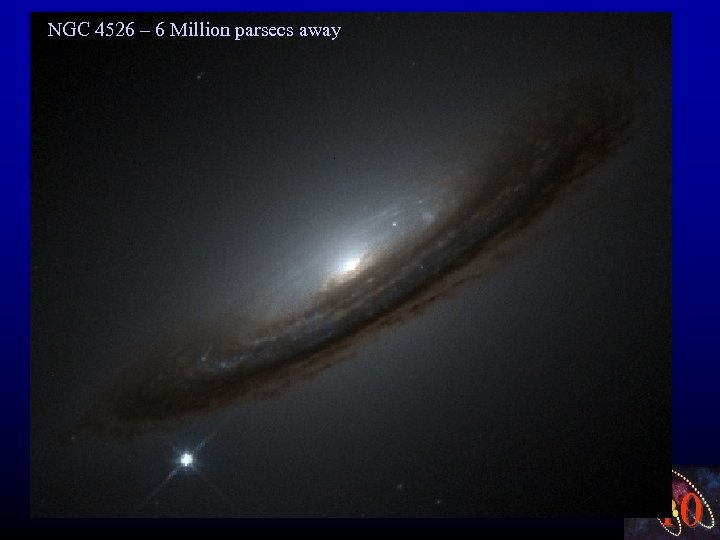 NGC 4526 – 6 Million parsecs away 10
 Homework #10 • For 2/19: • Read B 18. 3 -18. 5 • Do: Problems 16 and 18. – Math folks replace 18 with 21 10