


 Скачать презентацию Steamships and the Colville Landing Water Transportation
927977b3497f2e655673dff6296ac6f4.ppt
- Количество слайдов: 12
 Steamships and the Colville Landing
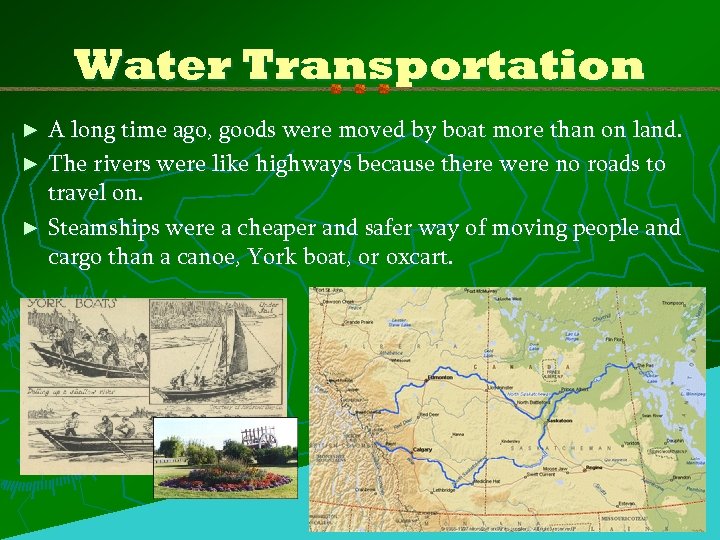 Water Transportation A long time ago, goods were moved by boat more than on land. ► The rivers were like highways because there were no roads to travel on. ► Steamships were a cheaper and safer way of moving people and cargo than a canoe, York boat, or oxcart. ►
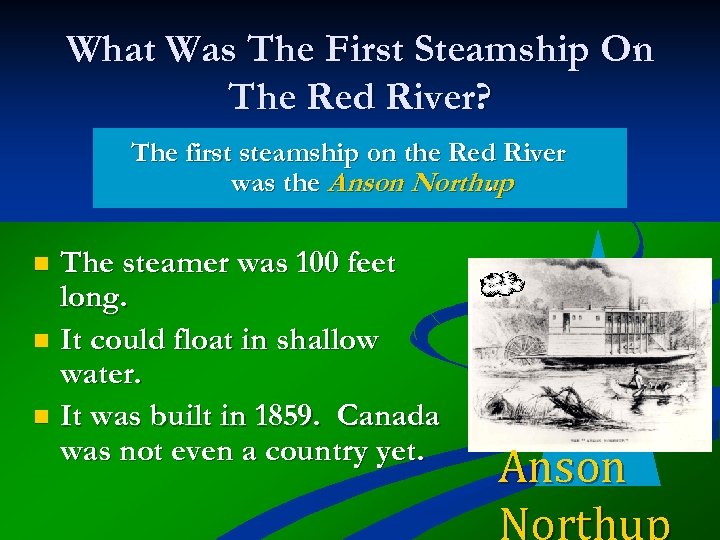 What Was The First Steamship On The Red River? The first steamship on the Red River was the Anson Northup. The steamer was 100 feet long. n It could float in shallow water. n It was built in 1859. Canada was not even a country yet. n Anson Northup
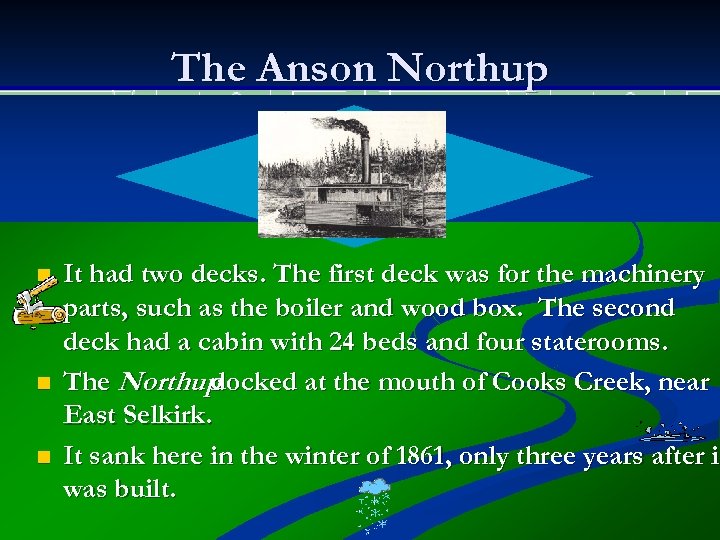 The Anson Northup n n n It had two decks. The first deck was for the machinery parts, such as the boiler and wood box. The second deck had a cabin with 24 beds and four staterooms. The Northup docked at the mouth of Cooks Creek, near East Selkirk. It sank here in the winter of 1861, only three years after it i was built.
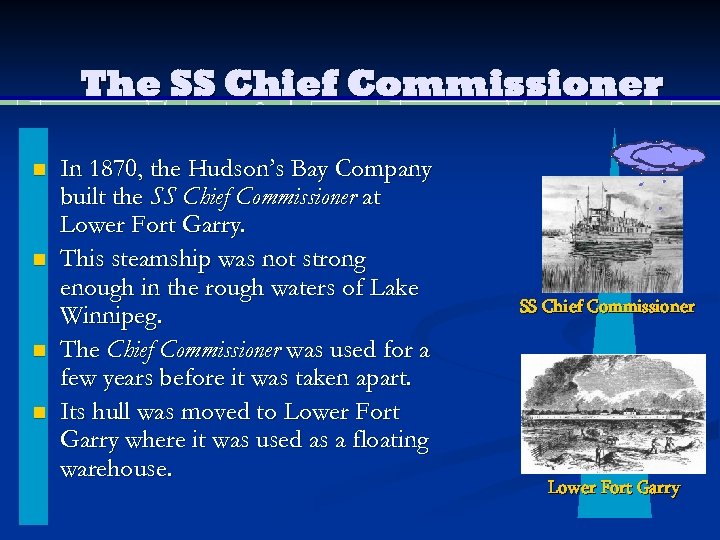 The SS Chief Commissioner n n In 1870, the Hudson’s Bay Company built the SS Chief Commissioner at Lower Fort Garry. This steamship was not strong enough in the rough waters of Lake Winnipeg. The Chief Commissioner was used for a few years before it was taken apart. Its hull was moved to Lower Fort Garry where it was used as a floating warehouse. SS Chief Commissioner Lower Fort Garry
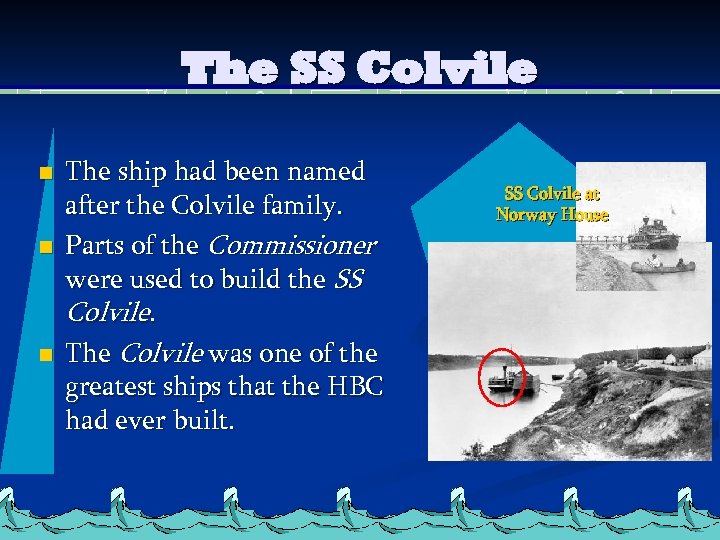 The SS Colvile n n n The ship had been named after the Colvile family. Parts of the Commissioner were used to build the SS Colvile. The Colvile was one of the greatest ships that the HBC had ever built. SS Colvile at Norway House
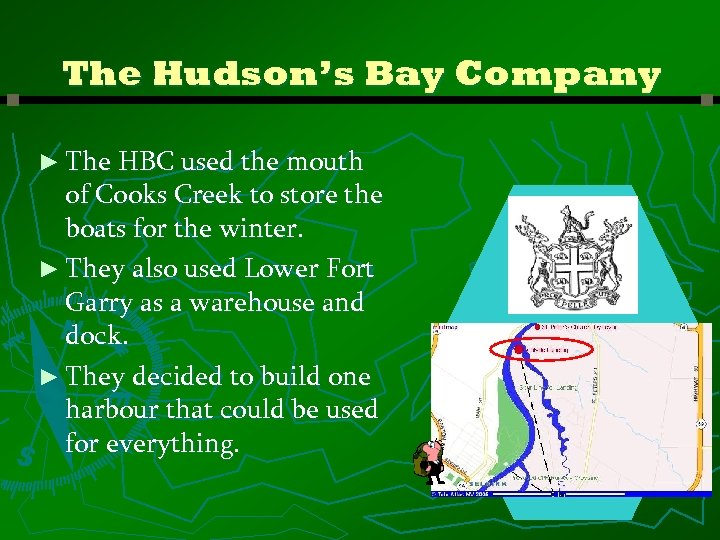 The Hudson’s Bay Company ► The HBC used the mouth of Cooks Creek to store the boats for the winter. ► They also used Lower Fort Garry as a warehouse and dock. ► They decided to build one harbour that could be used for everything.
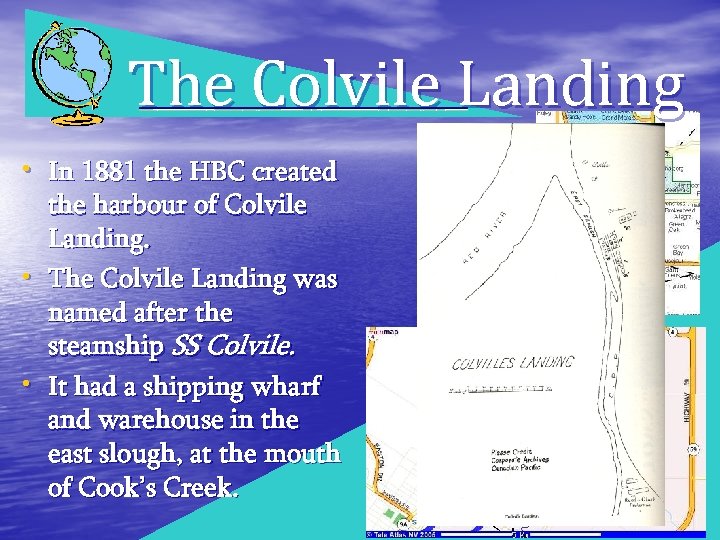 The Colvile Landing • In 1881 the HBC created • • the harbour of Colvile Landing. The Colvile Landing was named after the steamship SS Colvile. It had a shipping wharf and warehouse in the east slough, at the mouth of Cook’s Creek.
 New Buildings • The Hudson’s Bay Company • decided to build a very big store at the harbour. The Manitoba Weekly Press described the building as a, “large and handsome store…one of the finest and largest in the Province outside of Winnipeg, and is fitted up in elaborate style. ”
 Doomed to Failure § For 20 years the Colvile moved goods all over. § But the ship was destroyed by fire. § The harbour ended when the other buildings caught fire and burnt to the ground.
 What Is Left Of The Colville Landing Today n n There was a railway that was built across Canada. It was called the Trans-Canada Railway. It was cheaper to move goods by train than by boat. So the Colvile Landing was not needed anymore. The Colville Landing became a “ghost town/harbour. ”
 • This presentation brought to you by the St. Clements Heritage Advisory Committee! - “preserving our community’s heritage one story at a time” – • Information Compiled/Presentation Created by Jared Laberge The End • • Bibliography St. Clements Historical Committee. East Side Of The Red. Winnipeg: Inter-Collegiate Press, 1984. http: //www. umanitoba. ca/canadian_wartime/graphics/steamer. jpg http: //www. telusplanet. net/public/hexaquad/photo-k 41 f. jpg http: //collections. ic. gc. ca/geoscience/linktopast_oldtowns_2_e. html http: //www. gov. mb. ca/chc/archives/hbca/resource/ship_rec/alpha. html