


 Скачать презентацию Status of the OPERA Neutrino Oscillation Experiment Sergey
0aebad3be8145b619569d895b4c9f25f.ppt
- Количество слайдов: 28
 Status of the OPERA Neutrino Oscillation Experiment Sergey Dmitrievsky Joint Institute for Nuclear Research, Dubna on behalf of the OPERA Collaboration CRACOW EPIPHANY CONFERENCE On Physics in Underground Laboratories and Its Connection with LHC 5 -8 January 2010, Cracow, Poland
 Outline 1. About the Experiment 2. The OPERA Detector 3. Data Analysis 4. Present Status of OPERA
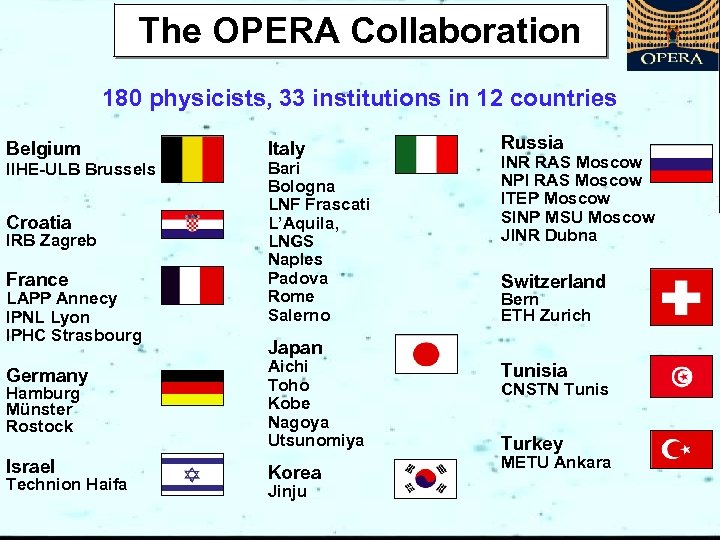 The OPERA Collaboration 180 physicists, 33 institutions in 12 countries Belgium IIHE-ULB Brussels Croatia IRB Zagreb France LAPP Annecy IPNL Lyon IPHC Strasbourg Italy Bari Bologna LNF Frascati L’Aquila, LNGS Naples Padova Rome Salerno Hamburg Münster Rostock Israel Korea Technion Haifa INR RAS Moscow NPI RAS Moscow ITEP Moscow SINP MSU Moscow JINR Dubna Switzerland Bern ETH Zurich Japan Aichi Toho Kobe Nagoya Utsunomiya Germany Russia Jinju Tunisia CNSTN Tunis Turkey METU Ankara
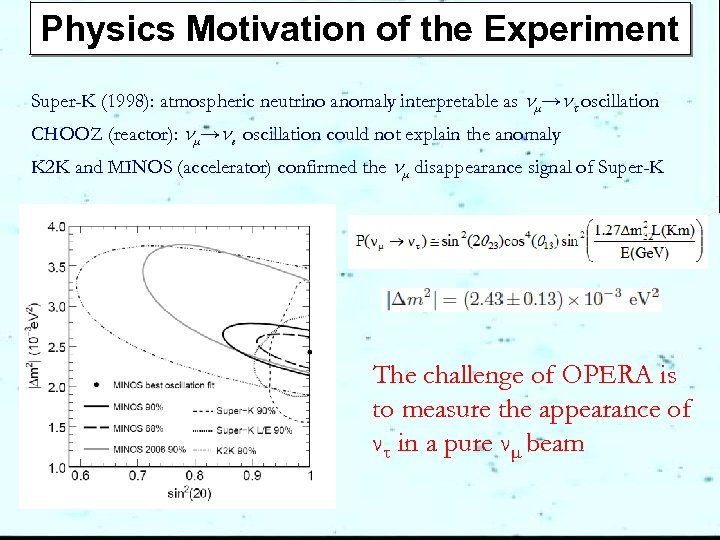 Physics Motivation of the Experiment Super-K (1998): atmospheric neutrino anomaly interpretable as µ→ oscillation CHOOZ (reactor): µ→ e oscillation could not explain the anomaly K 2 K and MINOS (accelerator) confirmed the µ disappearance signal of Super-K The challenge of OPERA is to measure the appearance of ν in a pure ν beam
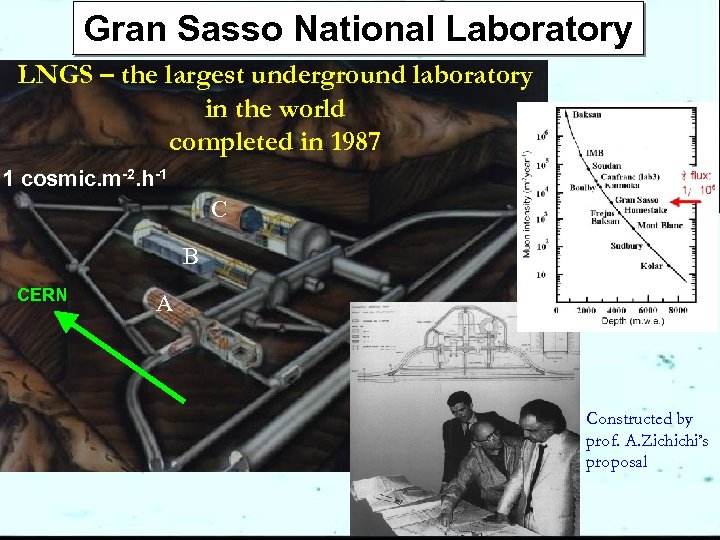 Gran Sasso National Laboratory LNGS – the largest underground laboratory in the world completed in 1987 1 cosmic. m-2. h-1 C B CERN A Constructed by prof. A. Zichichi’s proposal
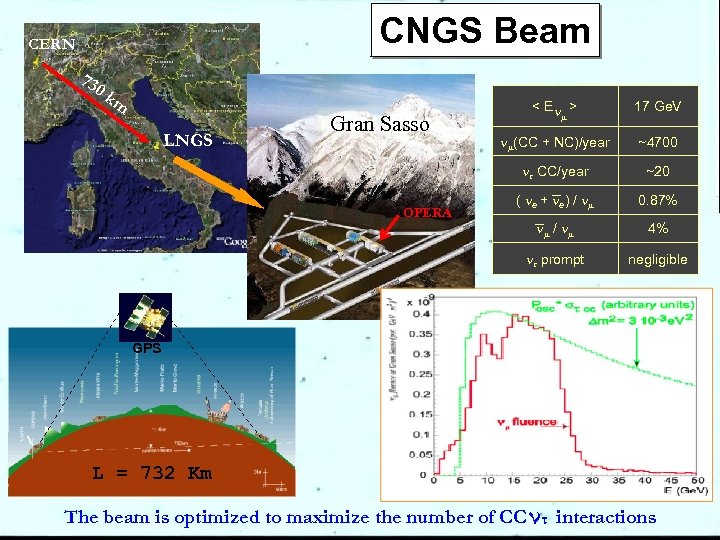 CNGS Beam CERN 73 CERN 0 k m LNGS OPERA (CC + NC)/year ~4700 ~20 ( e + e) / 0. 87% / 4% prompt 0 LNGS km 17 Ge. V CC/year Gran Sasso 73 < E > negligible GPS L = 732 Km The beam is optimized to maximize the number of CC ντ interactions
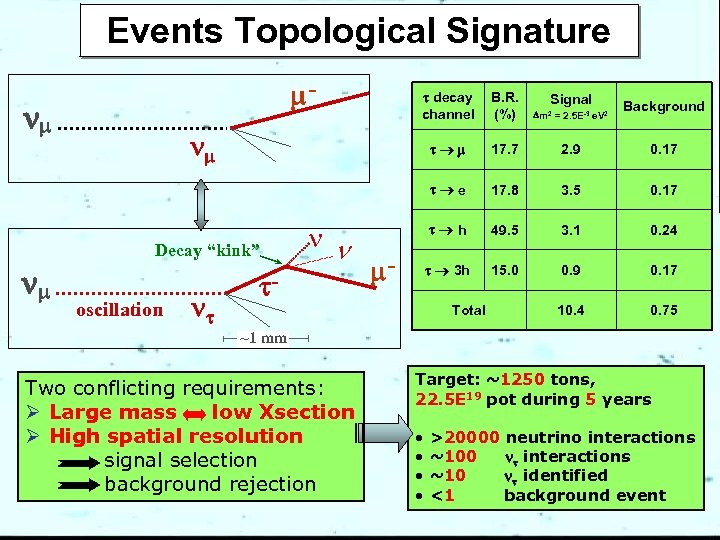 Events Topological Signature - 17. 7 2. 9 0. 17 17. 8 3. 5 0. 17 h 49. 5 3. 1 0. 24 3 h 15. 0 0. 9 0. 17 10. 4 0. 75 Decay “kink” B. R. (%) e decay channel oscillation - - Total Signal m 2 = 2. 5 E-3 e. V 2 Background ~1 mm Two conflicting requirements: Ø Large mass low Xsection Ø High spatial resolution signal selection background rejection Target: ~1250 tons, 22. 5 E 19 pot during 5 years • • >20000 neutrino interactions ~100 interactions ~10 identified <1 background event
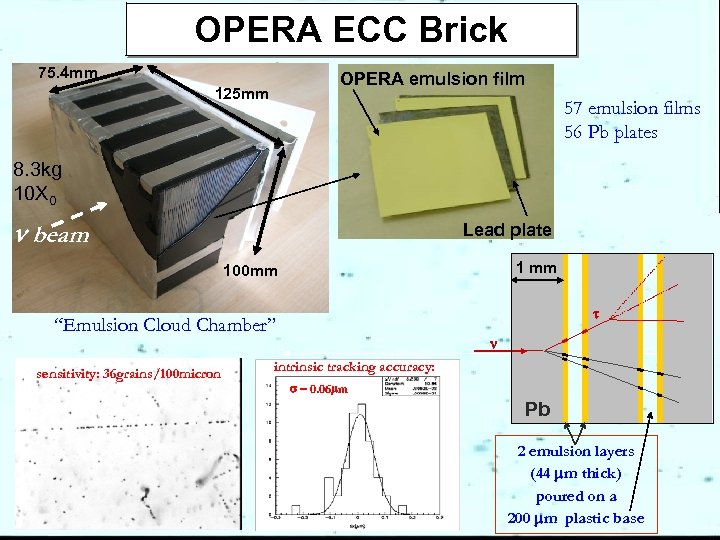 OPERA ECC Brick 75. 4 mm OPERA emulsion film 125 mm 57 emulsion films 56 Pb plates 8. 3 kg 10 X 0 beam Lead plate 1 mm 100 mm “Emulsion Cloud Chamber” sensitivity: 36 grains/100 micron intrinsic tracking accuracy: = 0. 06 m Pb 2 emulsion layers (44 m thick) poured on a 200 m plastic base
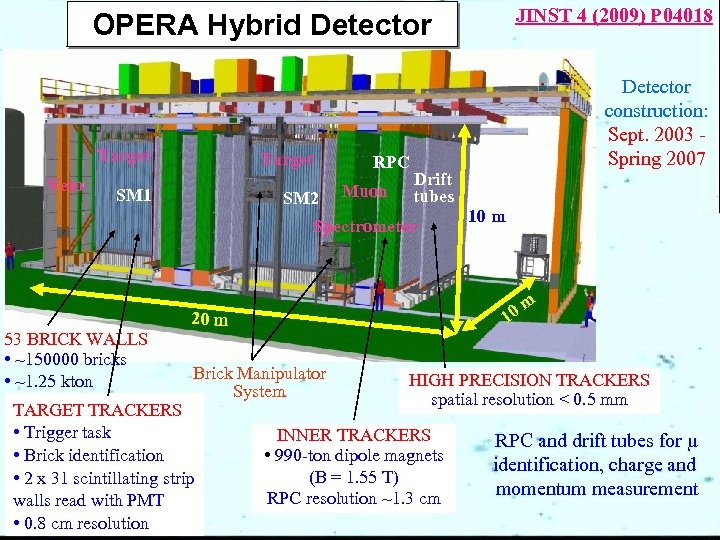 JINST 4 (2009) P 04018 OPERA Hybrid Detector Target Veto Target SM 1 SM 2 RPC Muon Detector construction: Sept. 2003 Spring 2007 Drift tubes Spectrometer 53 BRICK WALLS • ~150000 bricks • ~1. 25 kton 10 20 m Brick Manipulator System TARGET TRACKERS • Trigger task • Brick identification • 2 x 31 scintillating strip walls read with PMT • 0. 8 cm resolution 10 m m HIGH PRECISION TRACKERS spatial resolution < 0. 5 mm INNER TRACKERS • 990 -ton dipole magnets (B = 1. 55 T) RPC resolution ~1. 3 cm RPC and drift tubes for µ identification, charge and momentum measurement
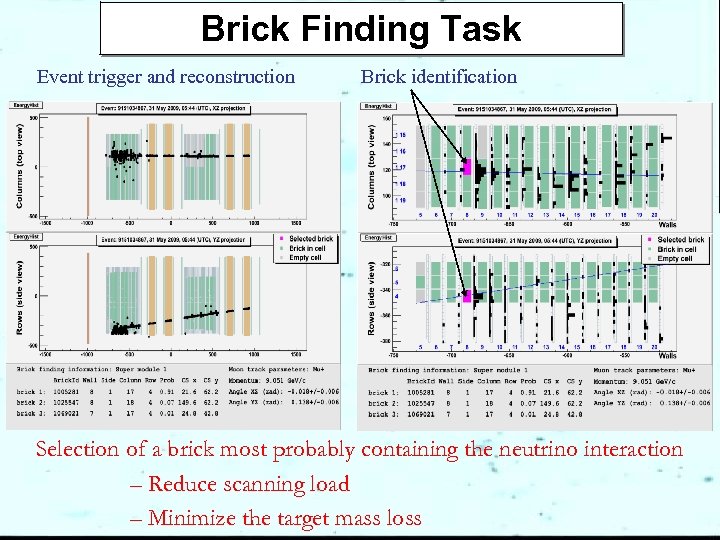 Brick Finding Task Event trigger and reconstruction Brick identification Selection of a brick most probably containing the neutrino interaction – Reduce scanning load – Minimize the target mass loss
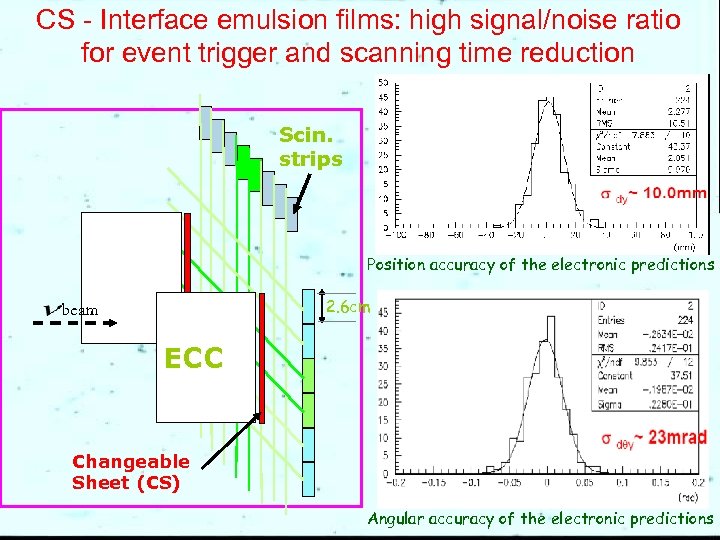 CS - Interface emulsion films: high signal/noise ratio for event trigger and scanning time reduction Scin. strips Position accuracy of the electronic predictions 2. 6 cm beam ECC Changeable Sheet (CS) Angular accuracy of the electronic predictions
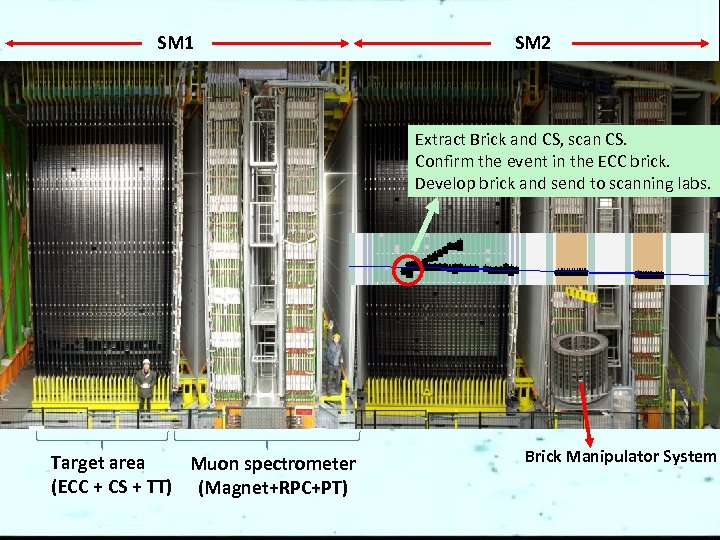 SM 1 SM 2 Extract Brick and CS, scan CS. Confirm the event in the ECC brick. Develop brick and send to scanning labs. Target area Muon spectrometer (ECC + CS + TT) (Magnet+RPC+PT) Brick Manipulator System
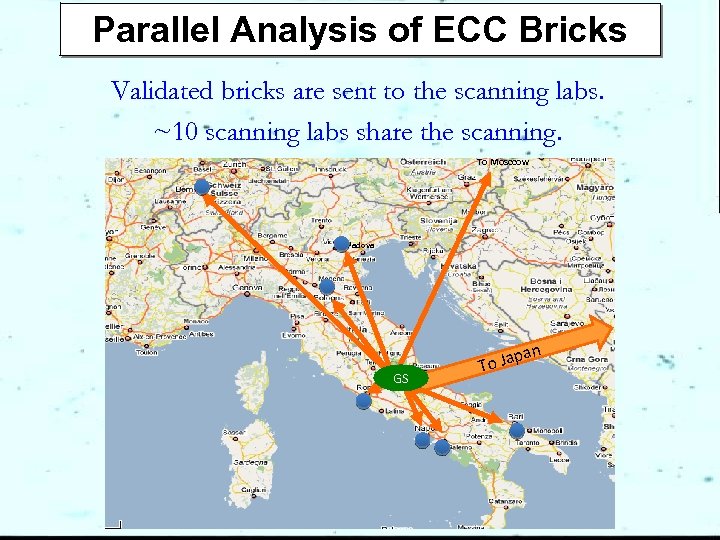 Parallel Analysis of ECC Bricks Validated bricks are sent to the scanning labs. ~10 scanning labs share the scanning. To Mosccow Padova pan GS To Ja
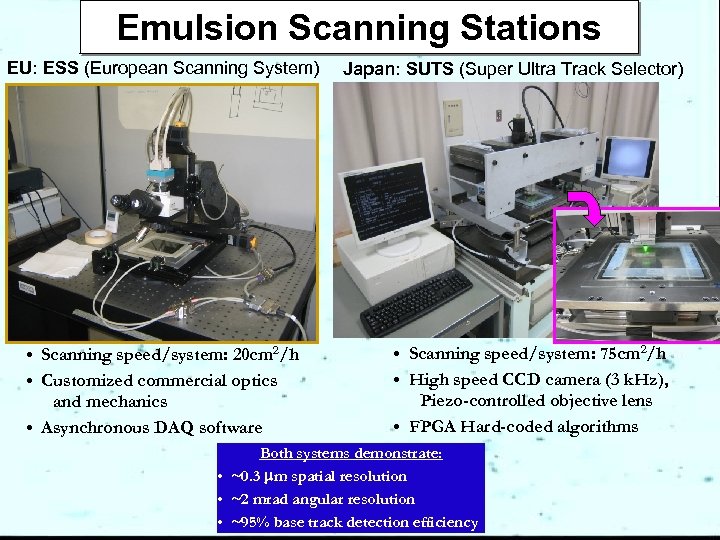 Emulsion Scanning Stations EU: ESS (European Scanning System) • Scanning speed/system: 20 cm 2/h • Customized commercial optics and mechanics • Asynchronous DAQ software Japan: SUTS (Super Ultra Track Selector) • Scanning speed/system: 75 cm 2/h • High speed CCD camera (3 k. Hz), Piezo-controlled objective lens • FPGA Hard-coded algorithms Both systems demonstrate: • ~0. 3 m spatial resolution • ~2 mrad angular resolution • ~95% base track detection efficiency
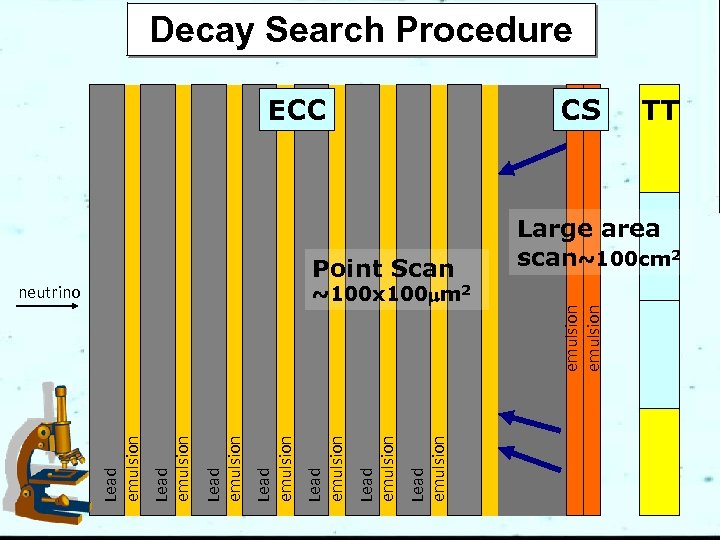 Lead emulsion neutrino Lead emulsion Lead emulsion ECC Point Scan ~100 x 100 m 2 emulsion Decay Search Procedure CS TT Large area scan~100 cm 2 15
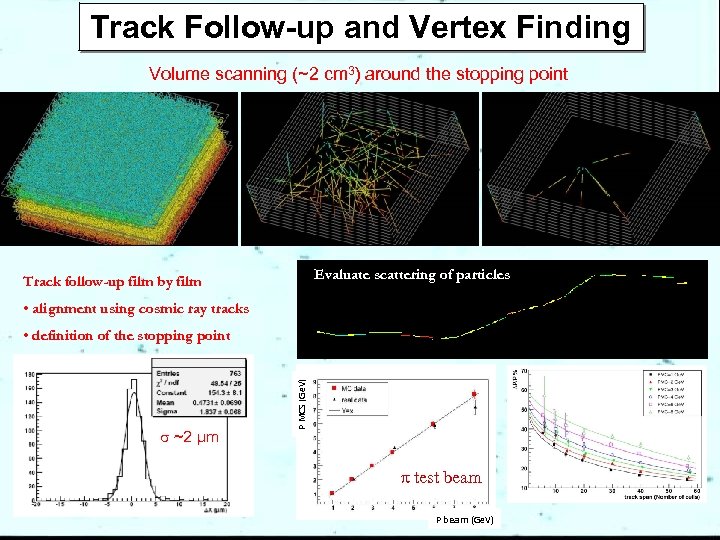 Track Follow-up and Vertex Finding Volume scanning (~2 cm 3) around the stopping point Evaluate scattering of particles Track follow-up film by film • alignment using cosmic ray tracks ~2 µm P MCS (Ge. V) • definition of the stopping point p test beam P beam (Ge. V)
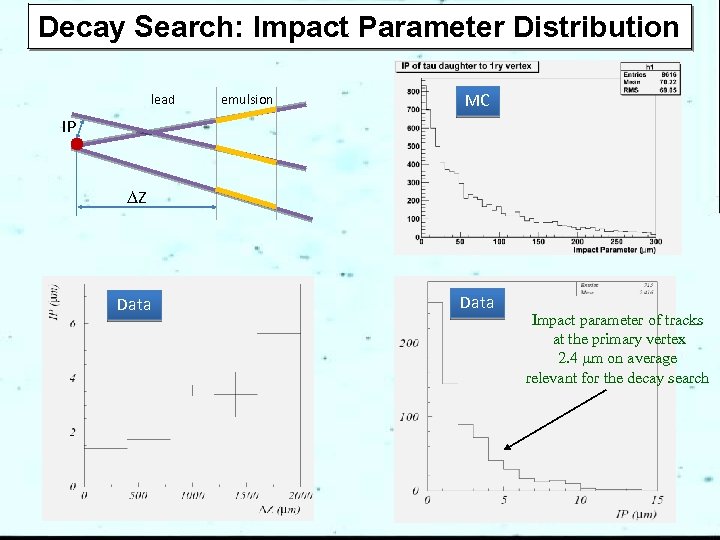 Decay Search: Impact Parameter Distribution lead emulsion MC IP DZ Data Impact parameter of tracks at the primary vertex 2. 4 µm on average relevant for the decay search
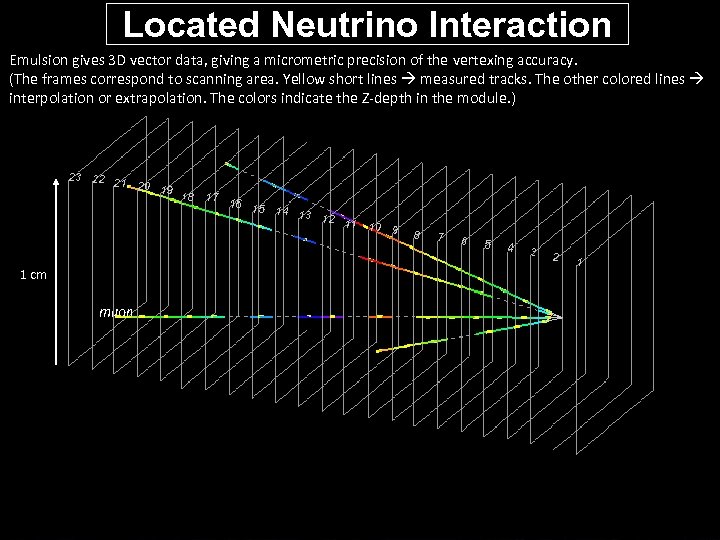 Located Neutrino Interaction Emulsion gives 3 D vector data, giving a micrometric precision of the vertexing accuracy. (The frames correspond to scanning area. Yellow short lines measured tracks. The other colored lines interpolation or extrapolation. The colors indicate the Z-depth in the module. ) 1 cm
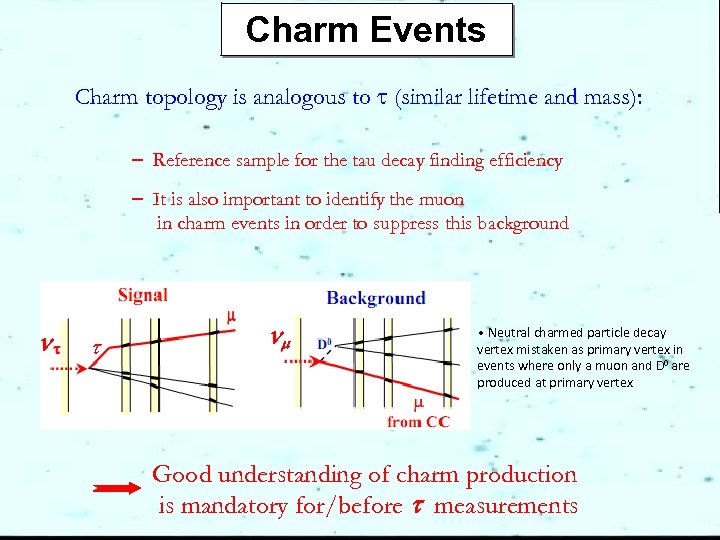 Charm Events Charm topology is analogous to (similar lifetime and mass): – Reference sample for the tau decay finding efficiency – It is also important to identify the muon in charm events in order to suppress this background τ • Neutral charmed particle decay vertex mistaken as primary vertex in events where only a muon and D 0 are produced at primary vertex Good understanding of charm production is mandatory for/before measurements
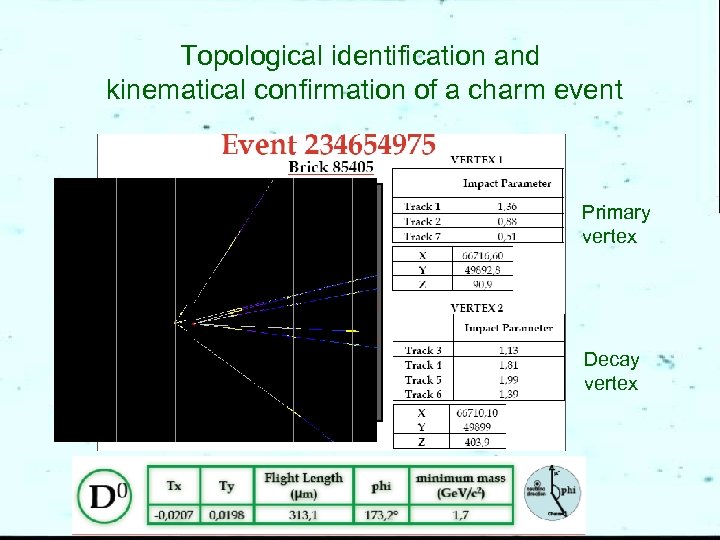 Topological identification and kinematical confirmation of a charm event Primary vertex Decay vertex
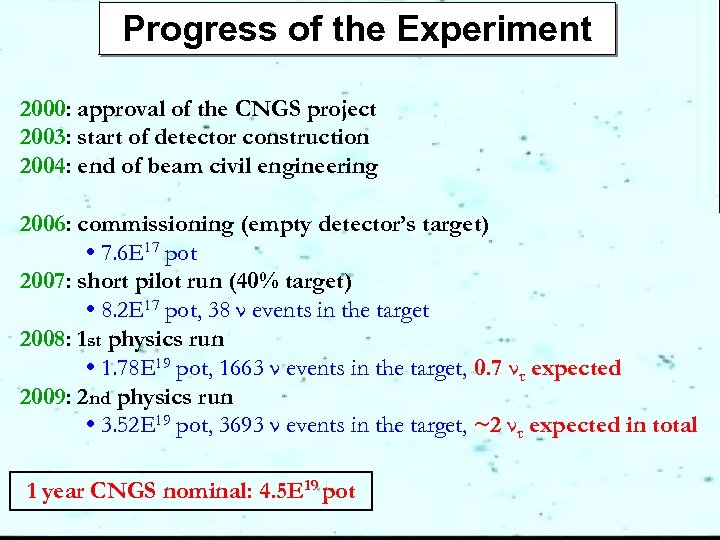 Progress of the Experiment 2000: approval of the CNGS project 2003: start of detector construction 2004: end of beam civil engineering 2006: commissioning (empty detector’s target) • 7. 6 E 17 pot 2007: short pilot run (40% target) • 8. 2 E 17 pot, 38 ν events in the target 2008: 1 st physics run • 1. 78 E 19 pot, 1663 ν events in the target, 0. 7 ντ expected 2009: 2 nd physics run • 3. 52 E 19 pot, 3693 ν events in the target, ~2 ντ expected in total 1 year CNGS nominal: 4. 5 E 19 pot
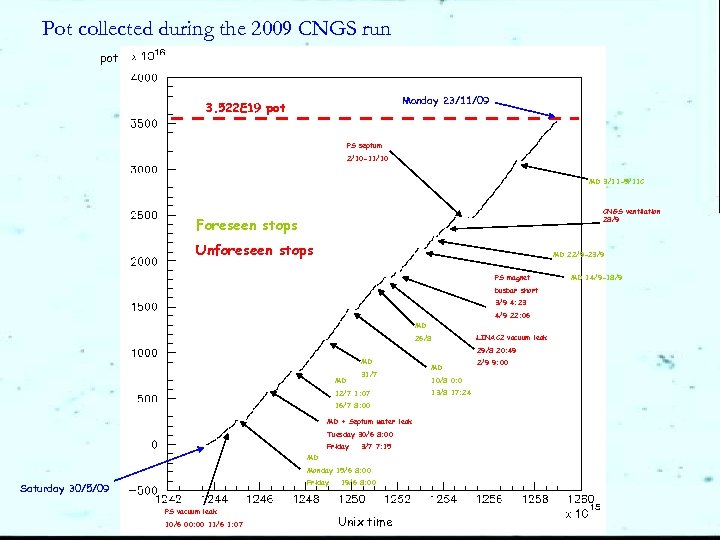 Pot collected during the 2009 CNGS run pot Monday 23/11/09 3. 522 E 19 pot PS septum 2/10 -11/10 MD 3/11 -5/11 C CNGS ventilation 28/9 Foreseen stops Unforeseen stops MD 22/9 -23/9 PS magnet busbar short 3/9 4: 23 4/9 22: 06 MD 26/8 LINAC 2 vacuum leak 29/8 20: 49 MD MD 31/7 12/7 1: 07 16/7 8: 00 MD + Septum water leak Tuesday 30/6 8: 00 Friday 3/7 7: 15 MD Monday 15/6 8: 00 Friday Saturday 30/5/09 PS vacuum leak 10/6 00: 00 11/6 1: 07 19/6 8: 00 Unix time MD 10/8 0: 0 13/8 17: 24 2/9 9: 00 MD 14/9 -18/9
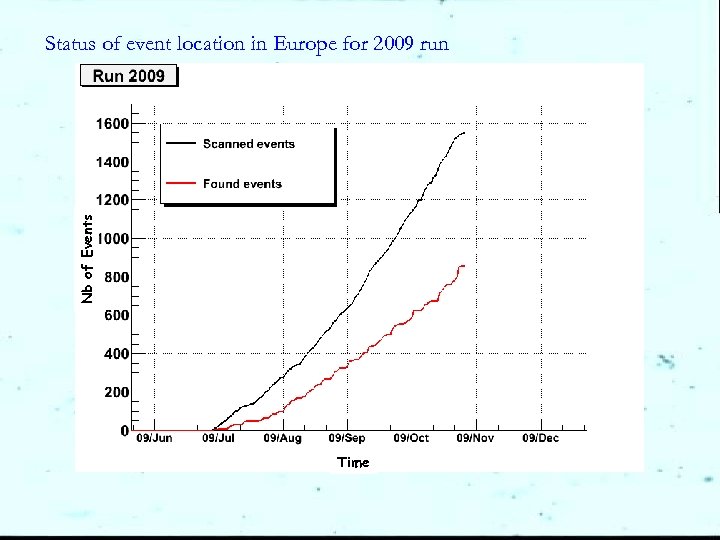 Nb of Events Status of event location in Europe for 2009 run Time
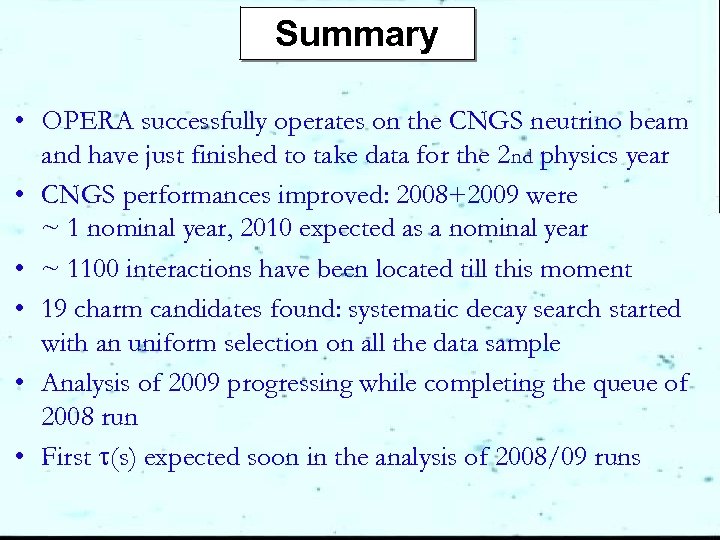 Summary • OPERA successfully operates on the CNGS neutrino beam and have just finished to take data for the 2 nd physics year • CNGS performances improved: 2008+2009 were ~ 1 nominal year, 2010 expected as a nominal year • ~ 1100 interactions have been located till this moment • 19 charm candidates found: systematic decay search started with an uniform selection on all the data sample • Analysis of 2009 progressing while completing the queue of 2008 run • First (s) expected soon in the analysis of 2008/09 runs
 Backup Slides
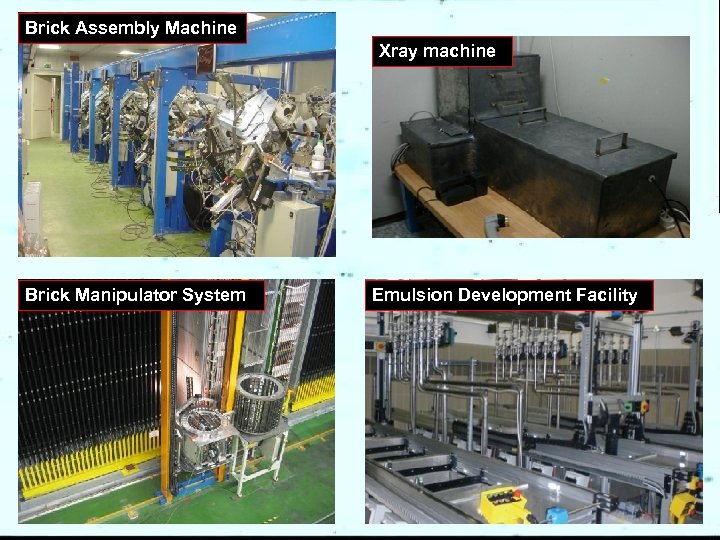 Brick Assembly Machine Xray machine Brick Manipulator System Emulsion Development Facility
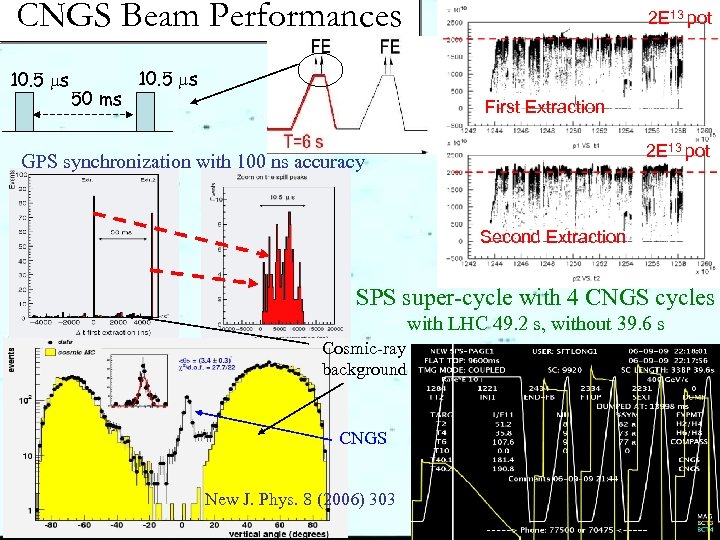 CNGS Beam Performances 10. 5 s 50 ms 2 E 13 pot 10. 5 s First Extraction 2 E 13 pot GPS synchronization with 100 ns accuracy Second Extraction SPS super-cycle with 4 CNGS cycles with LHC 49. 2 s, without 39. 6 s Cosmic-ray background CNGS New J. Phys. 8 (2006) 303
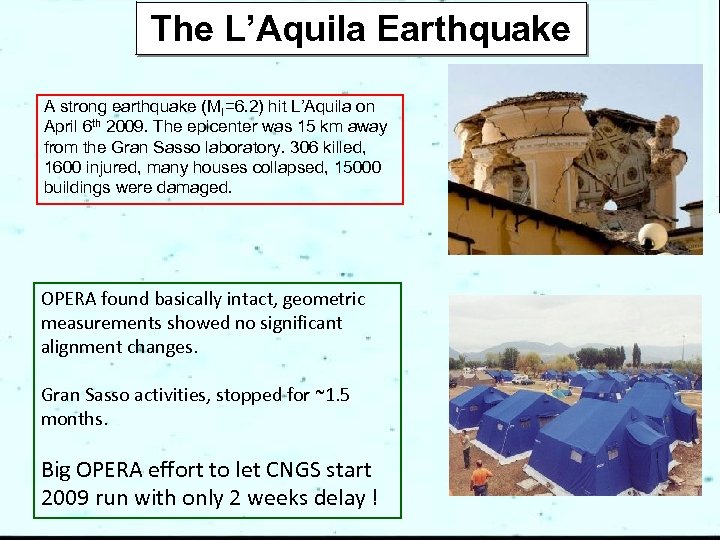 The L’Aquila Earthquake A strong earthquake (MI=6. 2) hit L’Aquila on April 6 th 2009. The epicenter was 15 km away from the Gran Sasso laboratory. 306 killed, 1600 injured, many houses collapsed, 15000 buildings were damaged. OPERA found basically intact, geometric measurements showed no significant alignment changes. Gran Sasso activities, stopped for ~1. 5 months. Big OPERA effort to let CNGS start 2009 run with only 2 weeks delay !