 Скачать презентацию STATUS AND WAY FORWARD ON STANDARDIZED BASELINES UNFCCC
2fe5924aafff726f11e895ec209e38cf.ppt
- Количество слайдов: 13



STATUS AND WAY FORWARD ON STANDARDIZED BASELINES UNFCCC Joint coordination Workshop 24 -25 March 2012, Bonn Kishor Rajhansa, Programme Officer SDM programme, UNFCCC secretariat
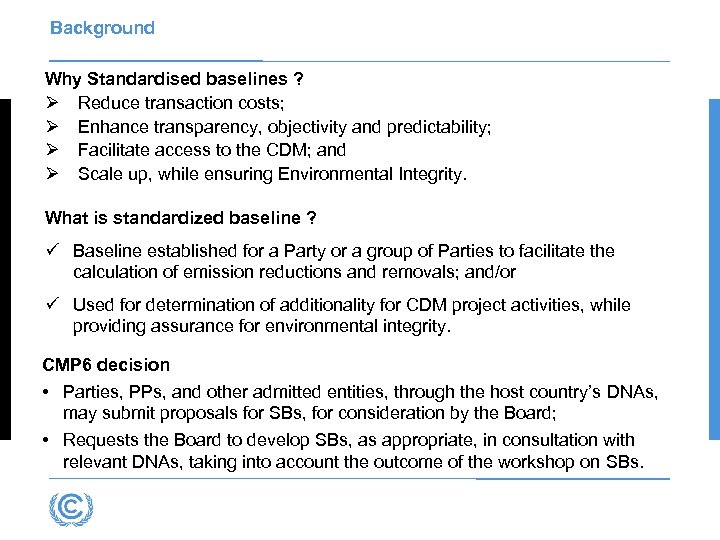
Background Why Standardised baselines ? Ø Reduce transaction costs; Ø Enhance transparency, objectivity and predictability; Ø Facilitate access to the CDM; and Ø Scale up, while ensuring Environmental Integrity. What is standardized baseline ? ü Baseline established for a Party or a group of Parties to facilitate the calculation of emission reductions and removals; and/or ü Used for determination of additionality for CDM project activities, while providing assurance for environmental integrity. CMP 6 decision • Parties, PPs, and other admitted entities, through the host country’s DNAs, may submit proposals for SBs, for consideration by the Board; • Requests the Board to develop SBs, as appropriate, in consultation with relevant DNAs, taking into account the outcome of the workshop on SBs.
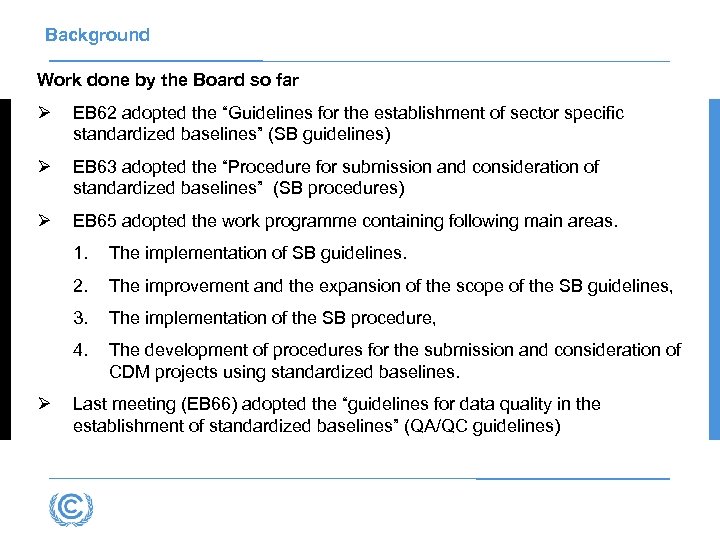
Background Work done by the Board so far Ø EB 62 adopted the “Guidelines for the establishment of sector specific standardized baselines” (SB guidelines) Ø EB 63 adopted the “Procedure for submission and consideration of standardized baselines” (SB procedures) Ø EB 65 adopted the work programme containing following main areas. 1. 2. The improvement and the expansion of the scope of the SB guidelines, 3. The implementation of the SB procedure, 4. Ø The implementation of SB guidelines. The development of procedures for the submission and consideration of CDM projects using standardized baselines. Last meeting (EB 66) adopted the “guidelines for data quality in the establishment of standardized baselines” (QA/QC guidelines)
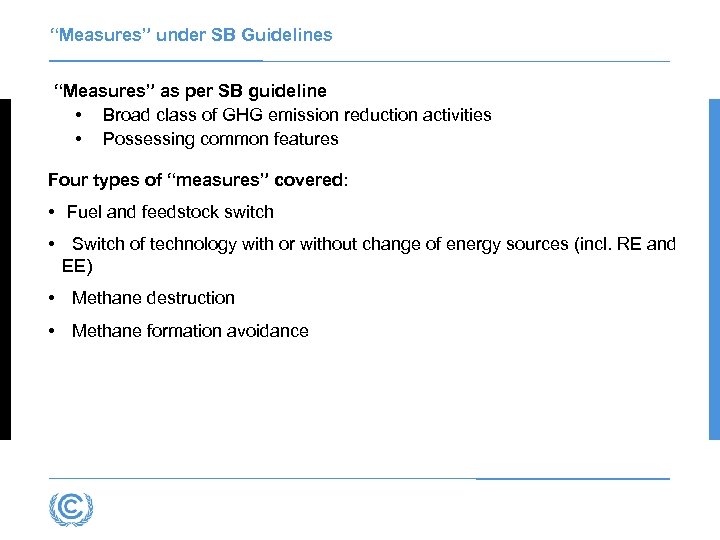
“Measures” under SB Guidelines “Measures” as per SB guideline • Broad class of GHG emission reduction activities • Possessing common features Four types of “measures” covered: • Fuel and feedstock switch • Switch of technology with or without change of energy sources (incl. RE and EE) • Methane destruction • Methane formation avoidance
Applicability of SB guidelines Applicability • For Sectors • For Stationary sources, but not A/R • Cover most types of project activities Standardized baselines • For a country or a group of countries • Demonstrate additionality: positive lists • Identify baseline technology/fuel • Determination of baseline emissions
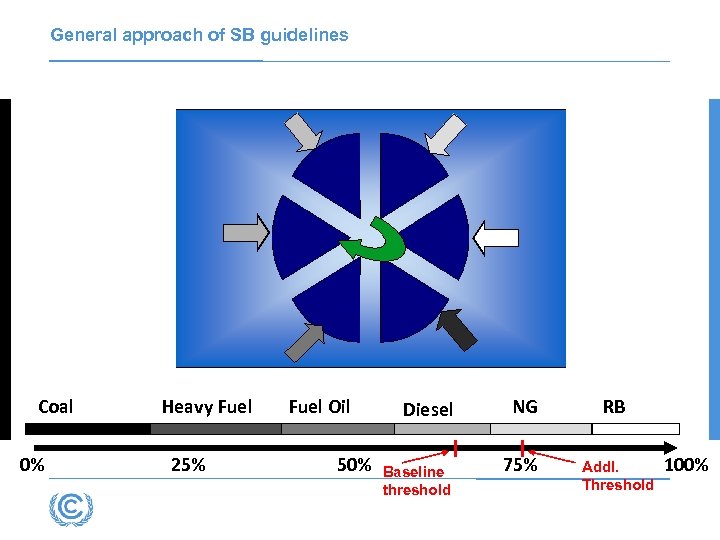
General approach of SB guidelines Country Total output of Sector Fuels/ technologies Coal 0% Heavy Fuel 25% Fuel Oil 50% Diesel Baseline threshold NG RB 75% Addl. Threshold 100%
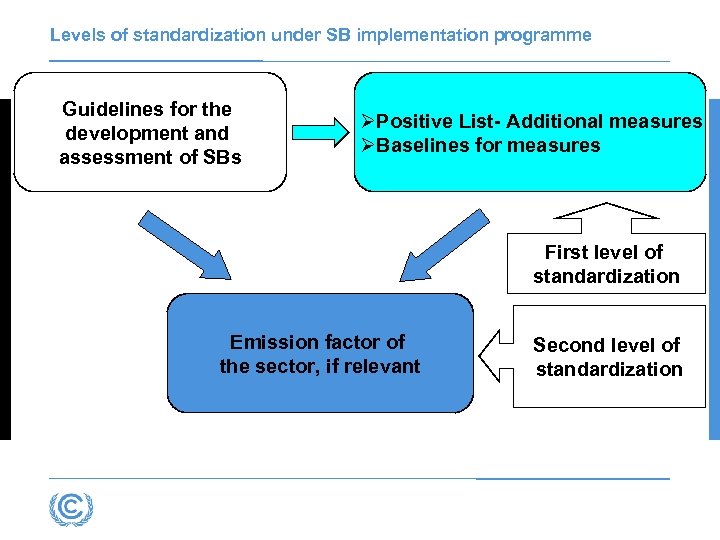
Levels of standardization under SB implementation programme Guidelines for the development and assessment of SBs ØPositive List- Additional measures ØBaselines for measures First level of standardization Emission factor of the sector, if relevant Second level of standardization
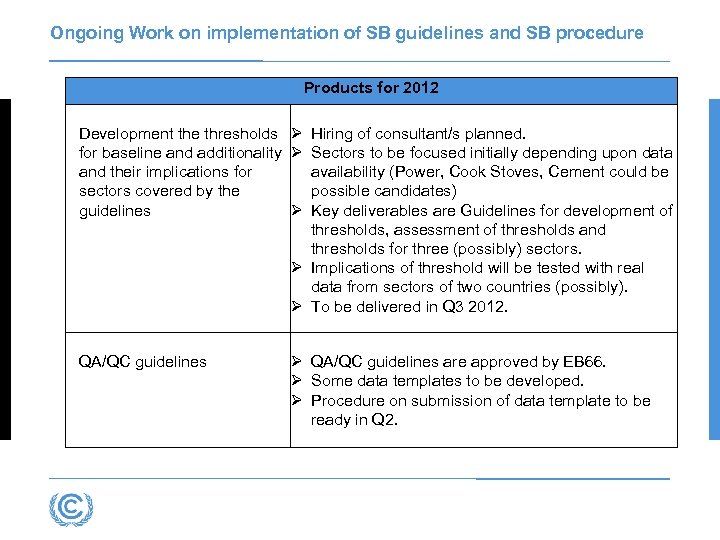
Ongoing Work on implementation of SB guidelines and SB procedure Products for 2012 Development the thresholds Ø Hiring of consultant/s planned. for baseline and additionality Ø Sectors to be focused initially depending upon data and their implications for availability (Power, Cook Stoves, Cement could be sectors covered by the possible candidates) guidelines Ø Key deliverables are Guidelines for development of thresholds, assessment of thresholds and thresholds for three (possibly) sectors. Ø Implications of threshold will be tested with real data from sectors of two countries (possibly). Ø To be delivered in Q 3 2012. QA/QC guidelines Ø QA/QC guidelines are approved by EB 66. Ø Some data templates to be developed. Ø Procedure on submission of data template to be ready in Q 2.
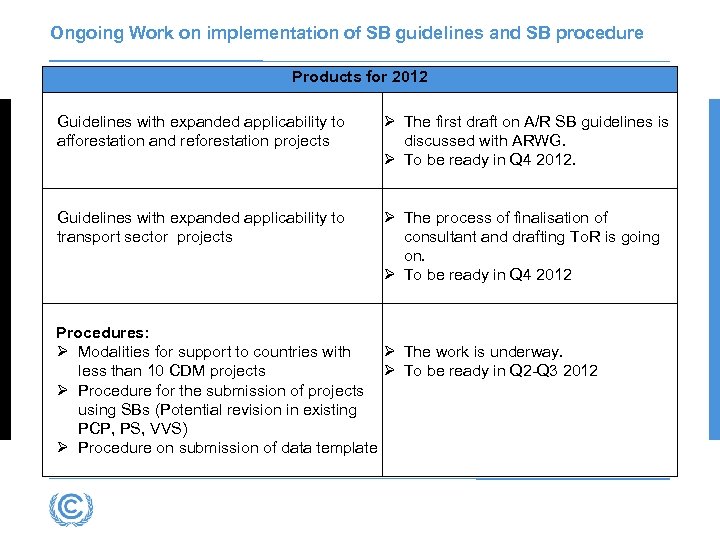
Ongoing Work on implementation of SB guidelines and SB procedure Products for 2012 Guidelines with expanded applicability to afforestation and reforestation projects Ø The first draft on A/R SB guidelines is discussed with ARWG. Ø To be ready in Q 4 2012. Guidelines with expanded applicability to transport sector projects Ø The process of finalisation of consultant and drafting To. R is going on. Ø To be ready in Q 4 2012 Procedures: Ø Modalities for support to countries with Ø The work is underway. less than 10 CDM projects Ø To be ready in Q 2 -Q 3 2012 Ø Procedure for the submission of projects using SBs (Potential revision in existing PCP, PS, VVS) Ø Procedure on submission of data template
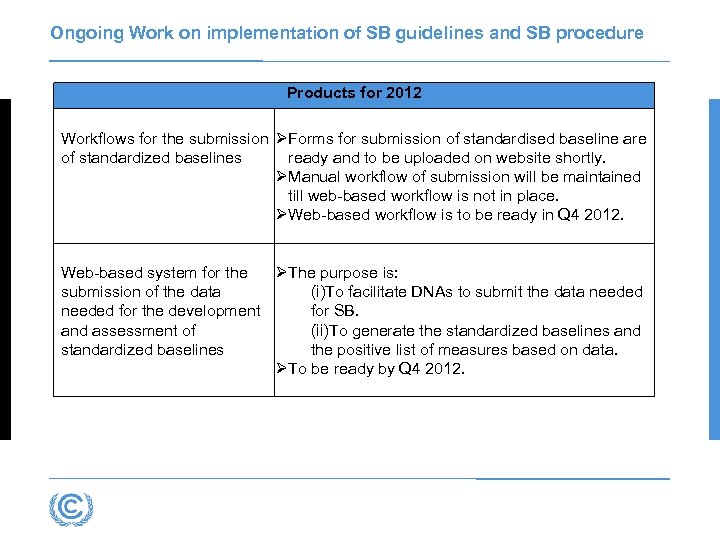
Ongoing Work on implementation of SB guidelines and SB procedure Products for 2012 Workflows for the submission Ø Forms for submission of standardised baseline are of standardized baselines ready and to be uploaded on website shortly. Ø Manual workflow of submission will be maintained till web-based workflow is not in place. Ø Web-based workflow is to be ready in Q 4 2012. Web-based system for the Ø The purpose is: submission of the data (i)To facilitate DNAs to submit the data needed for the development for SB. and assessment of (ii)To generate the standardized baselines and standardized baselines the positive list of measures based on data. Ø To be ready by Q 4 2012.
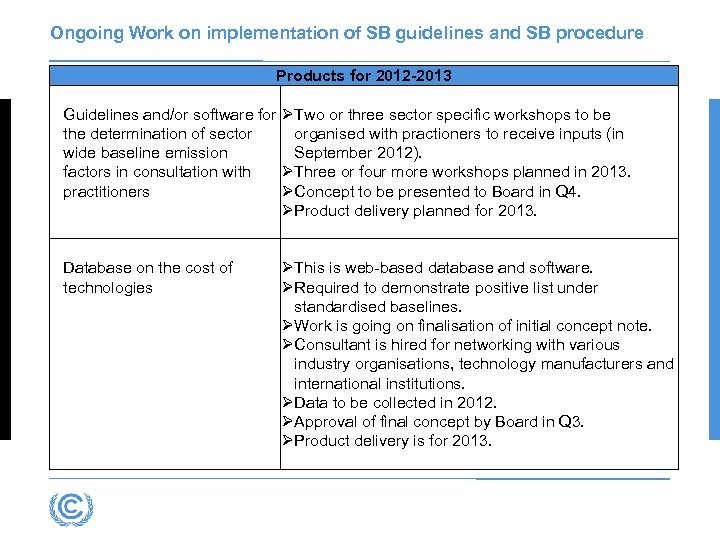
Ongoing Work on implementation of SB guidelines and SB procedure Products for 2012 -2013 Guidelines and/or software for Ø Two or three sector specific workshops to be the determination of sector organised with practioners to receive inputs (in wide baseline emission September 2012). factors in consultation with Ø Three or four more workshops planned in 2013. practitioners Ø Concept to be presented to Board in Q 4. Ø Product delivery planned for 2013. Database on the cost of technologies Ø This is web-based database and software. Ø Required to demonstrate positive list under standardised baselines. Ø Work is going on finalisation of initial concept note. Ø Consultant is hired for networking with various industry organisations, technology manufacturers and international institutions. Ø Data to be collected in 2012. Ø Approval of final concept by Board in Q 3. Ø Product delivery is for 2013.
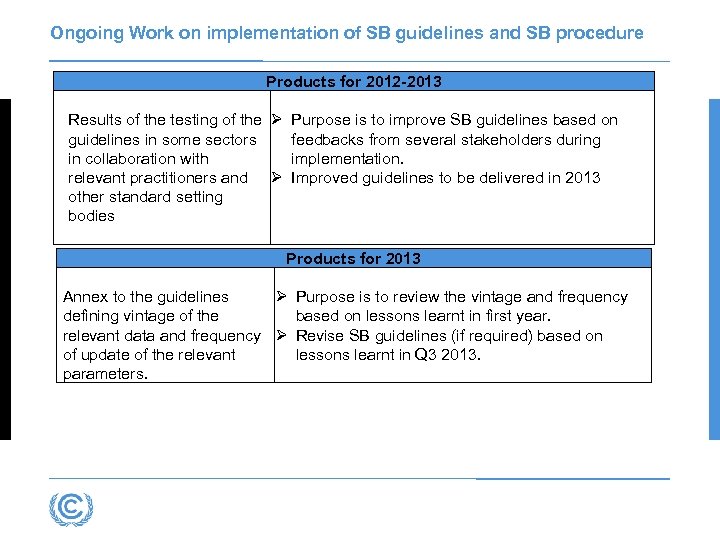
Ongoing Work on implementation of SB guidelines and SB procedure Products for 2012 -2013 Results of the testing of the Ø Purpose is to improve SB guidelines based on guidelines in some sectors feedbacks from several stakeholders during in collaboration with implementation. relevant practitioners and Ø Improved guidelines to be delivered in 2013 other standard setting bodies Products for 2013 Annex to the guidelines Ø Purpose is to review the vintage and frequency defining vintage of the based on lessons learnt in first year. relevant data and frequency Ø Revise SB guidelines (if required) based on of update of the relevant lessons learnt in Q 3 2013. parameters.
THANK YOU! krajhansa@unfccc. int Kishor Rajhansa, Programme Officer SDM programme, UNFCCC secretariat
Скачать презентацию STATUS AND WAY FORWARD ON STANDARDIZED BASELINES UNFCCC
2fe5924aafff726f11e895ec209e38cf.ppt