 Скачать презентацию Statistical Analysis of Microarray Data By H Bjørn
73615119a33f94a8ed021a2ef730c776.ppt
- Количество слайдов: 26



Statistical Analysis of Microarray Data By H. Bjørn Nielsen & Hanne Jarmer
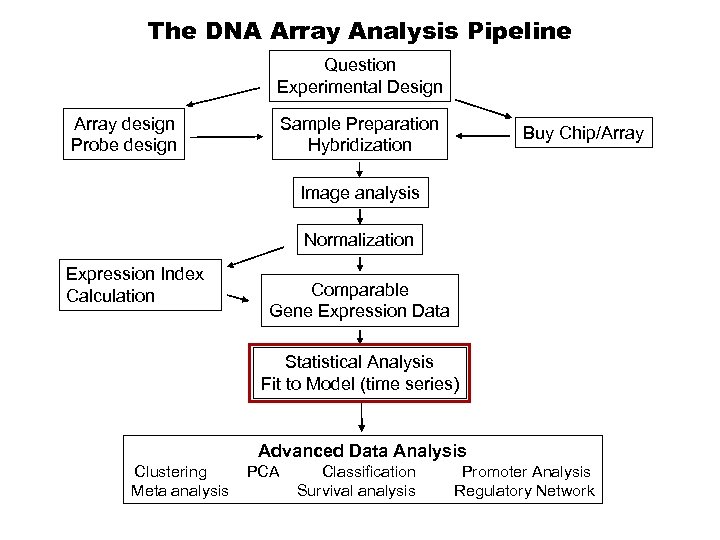
The DNA Array Analysis Pipeline Question Experimental Design Array design Probe design Sample Preparation Hybridization Buy Chip/Array Image analysis Normalization Expression Index Calculation Comparable Gene Expression Data Statistical Analysis Fit to Model (time series) Advanced Data Analysis Clustering Meta analysis PCA Classification Survival analysis Promoter Analysis Regulatory Network
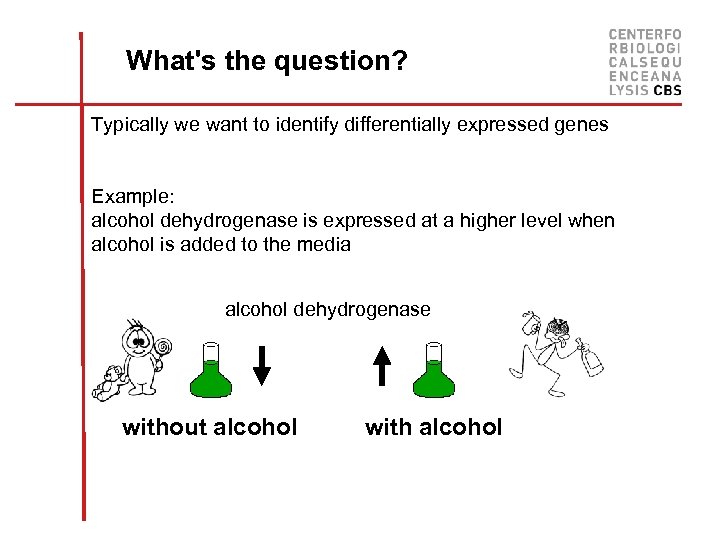
What's the question? Typically we want to identify differentially expressed genes Example: alcohol dehydrogenase is expressed at a higher level when alcohol is added to the media alcohol dehydrogenase without alcohol with alcohol
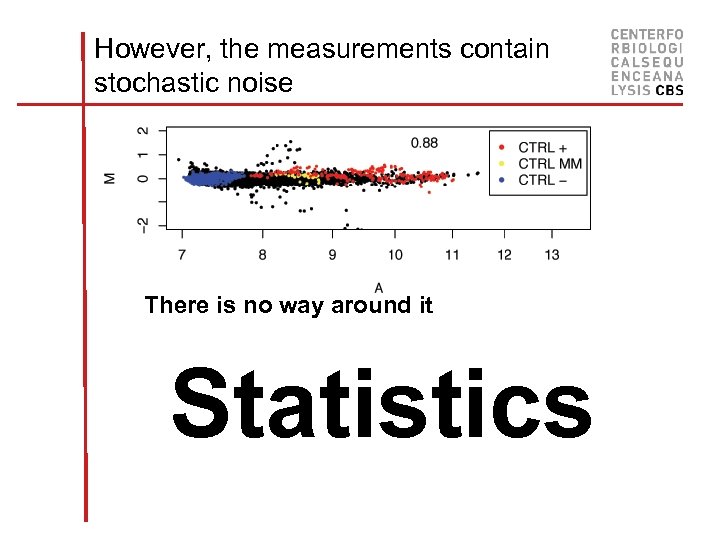
However, the measurements contain stochastic noise There is no way around it He’s going to say it Statistics
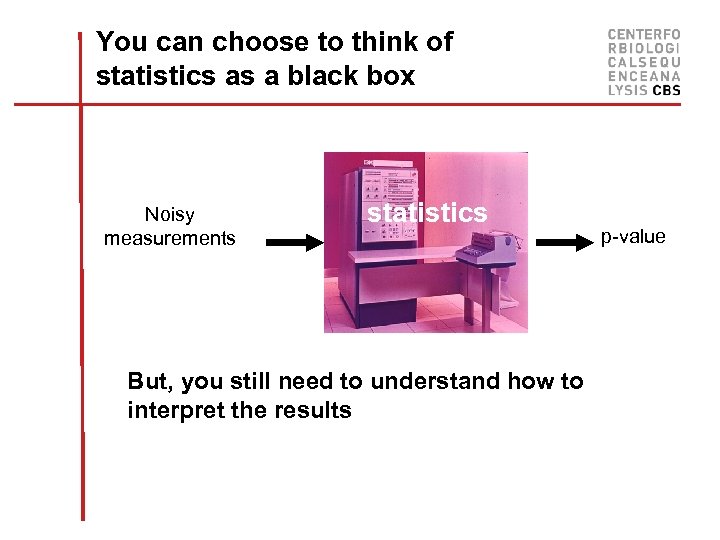
You can choose to think of statistics as a black box Noisy measurements statistics But, you still need to understand how to interpret the results p-value
The output of the statistics P-value The chance of rejecting the null hypothesis by coincidence --------------For gene expression analysis we can say: the chance that a gene is categorized as differentially expressed by coincidence
The statistics gives us a p-value for each gene We can rank the genes according to the p-value But, we can’t really trust the p-value in a strict statistical way!
Why not! For two reasons: 1. We are rarely fulfilling all the assumptions of the statistical test 2. We have to take multi-testing into account
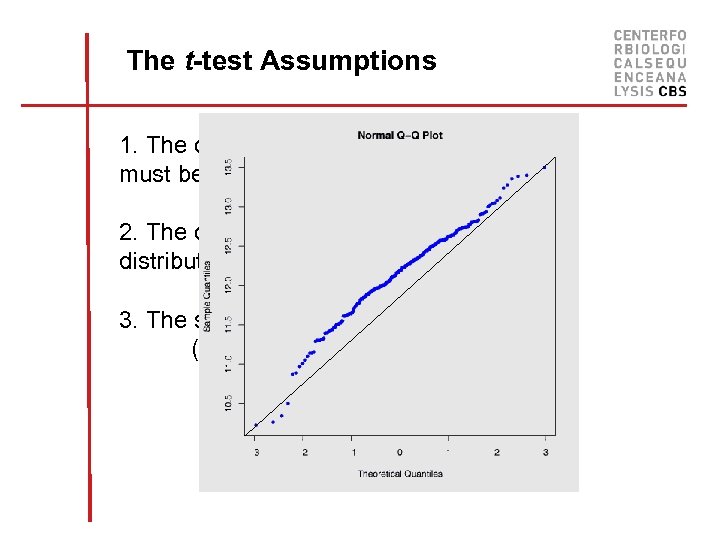
The t-test Assumptions 1. The observations in the two categories must be independent 2. The observations should be normally distributed 3. The sample size must be ‘large’ (>30 replicates)
Multi-testing? In a typical microarray analysis we test thousands of genes If we use a significance level of 0. 05 and we test 1000 genes. We expect 50 genes to be significant by chance 1000 x 0. 05 = 50
Correction for multiple testing Bonferroni: Confidence level of 99% 0. 01 P≤ N Benjamini-Hochberg: P≤ i N 0. 01 N = number of genes i = number of accepted genes
But really, those methods are too strict What we can trust is the ability of the statistical test to rank the genes according to their reliability The number of genes that are needed or can be handled in downstream processes can be used to set the cutoff If we permute the samples we can get an estimate of the False Discovery Rate (FDR) in this set
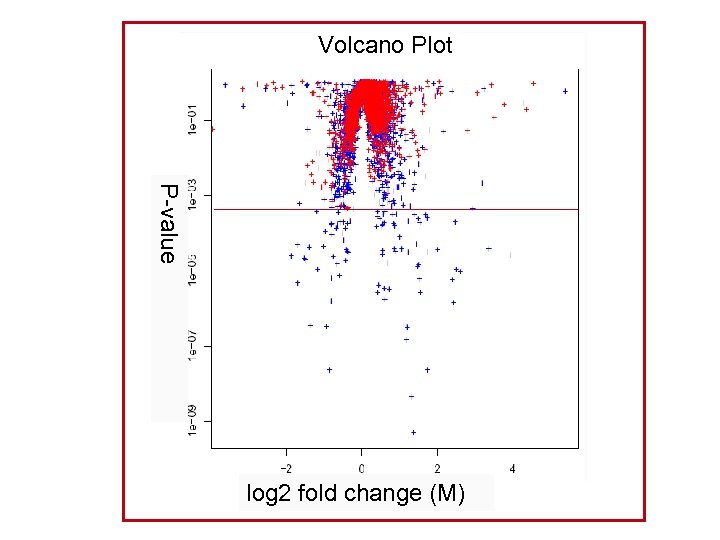
Volcano Plot P-value log 2 fold change (M)
What's inside the black box ‘statistics’ t-test or ANOVA
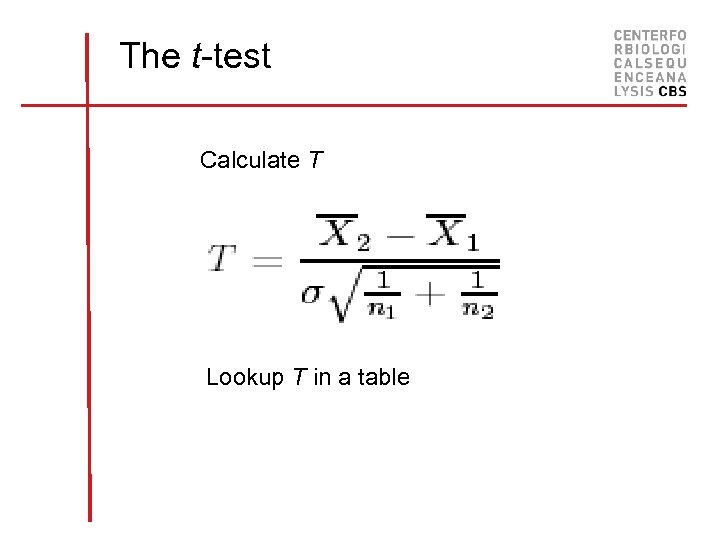
The t-test Calculate T Lookup T in a table
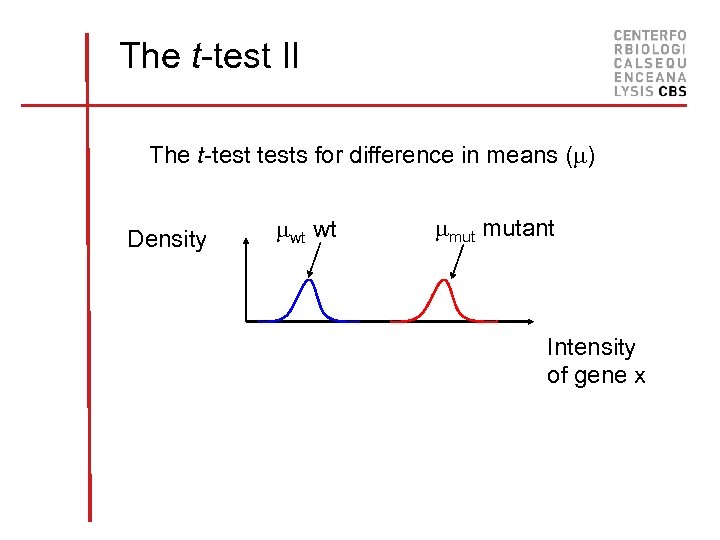
The t-test II The t-tests for difference in means ( ) Density wt wt mutant Intensity of gene x
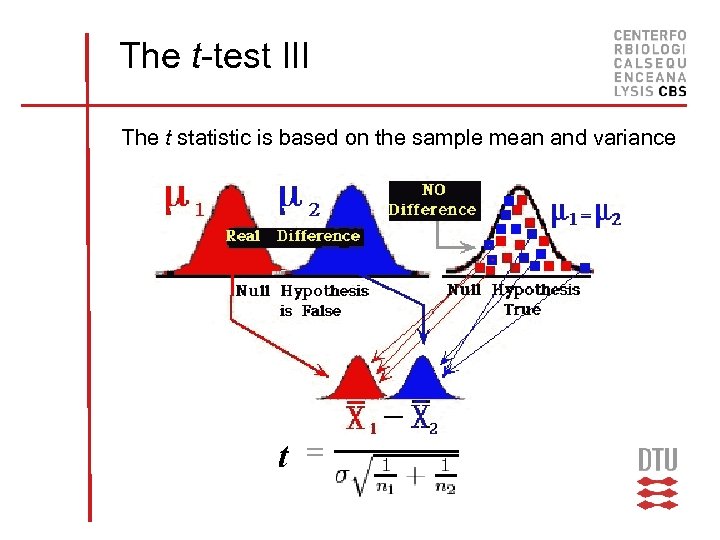
The t-test III The t statistic is based on the sample mean and variance t
ANOVA ANalysis Of Variance Very similar to the t-test, but can test multiple categories Ex: is gene x differentially expressed between wt, mutant 1 and mutant 2 Advantage: it has more ‘power’ than the t -test
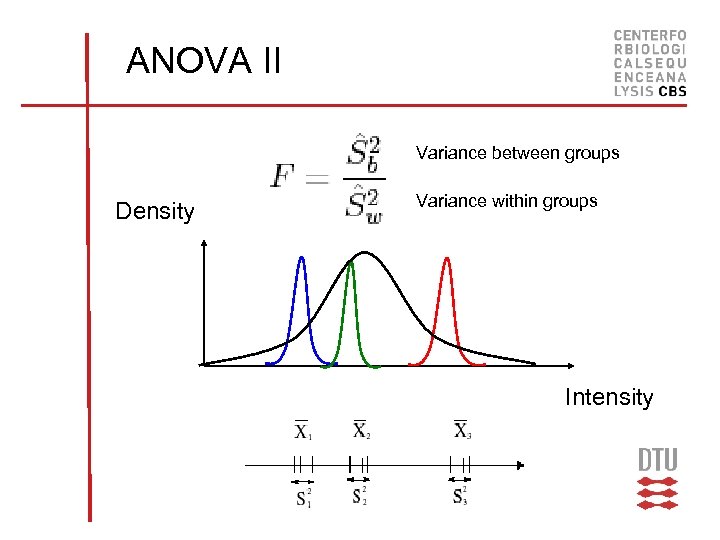
ANOVA II Variance between groups Density Variance within groups Intensity
Blocks and paired tests Some undesired factors may influence the experiments, the effect of such can be greatly reduced if they are blocked out or if the experiment is paired. Some possible blocks: - Dye - Patient - Technician - Batch - Day of experiment - Array
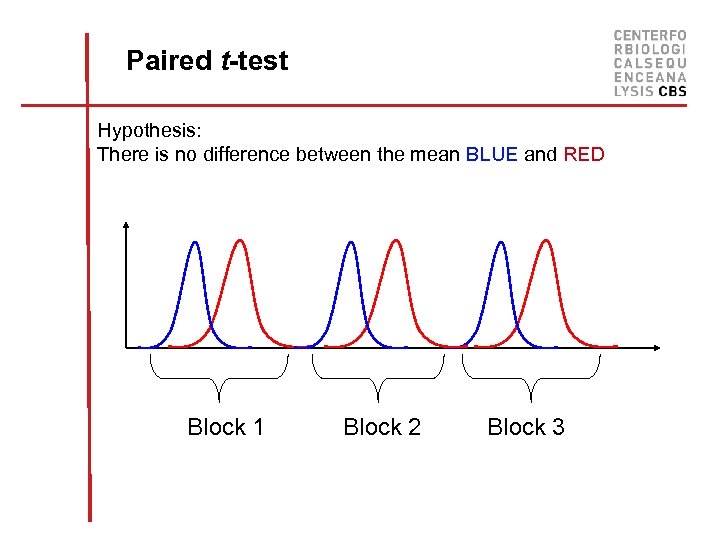
Paired t-test Hypothesis: There is no difference between the mean BLUE and RED Block 1 Block 2 Block 3
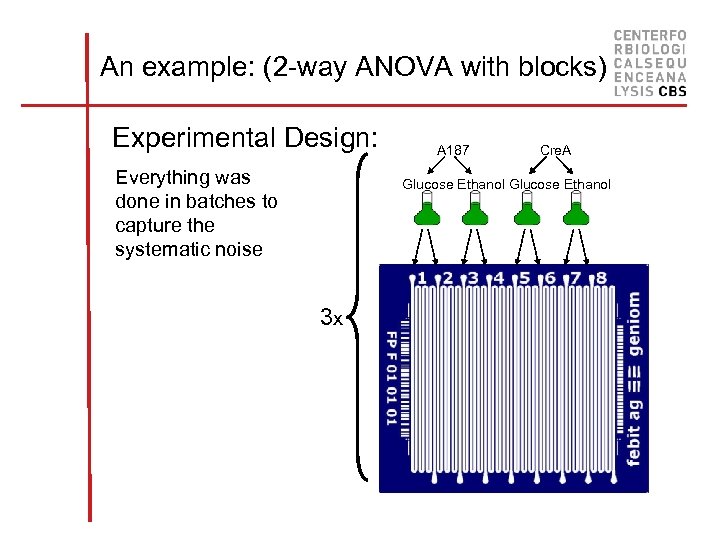
An example: (2 -way ANOVA with blocks) Experimental Design: Everything was done in batches to capture the systematic noise A 187 Cre. A Glucose Ethanol 3 x
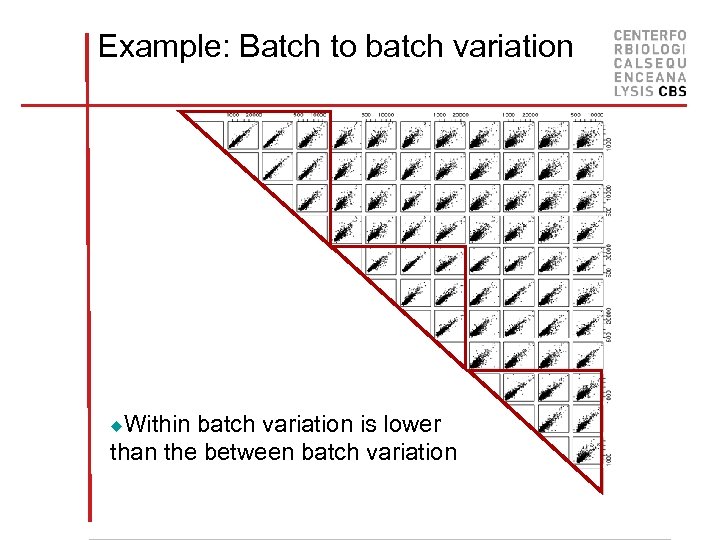
Example: Batch to batch variation Within batch variation is lower than the between batch variation ¿
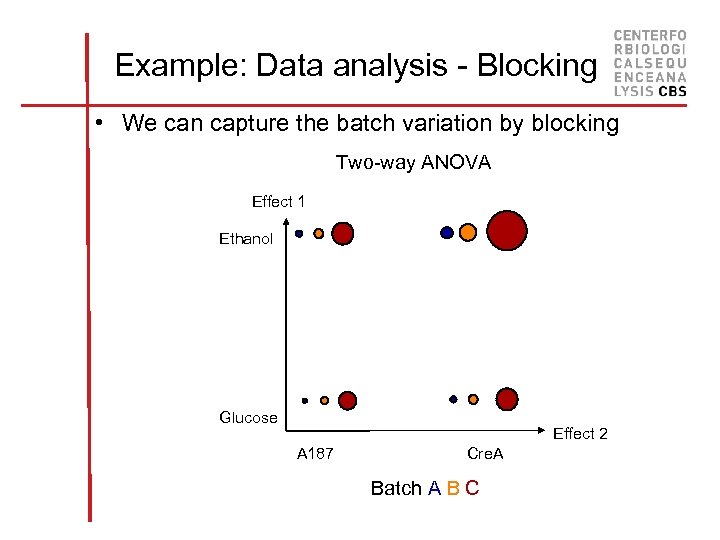
Example: Data analysis - Blocking • We can capture the batch variation by blocking Two-way ANOVA Effect 1 Ethanol Glucose Effect 2 A 187 Cre. A Batch A B C
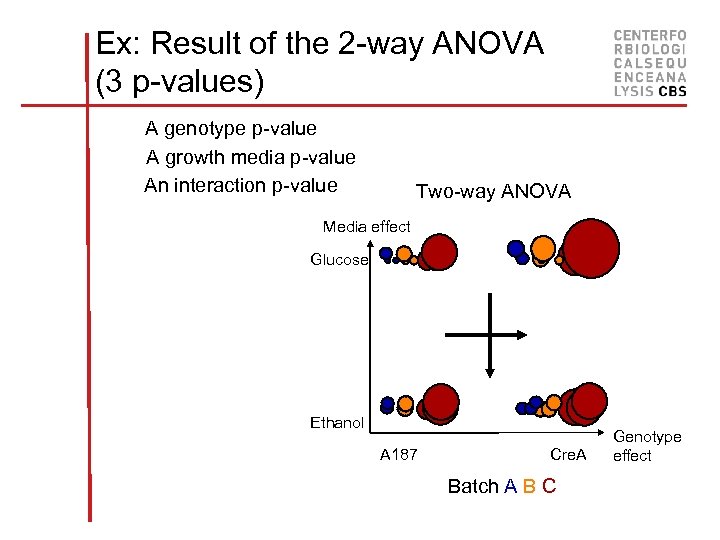
Ex: Result of the 2 -way ANOVA (3 p-values) A genotype p-value A growth media p-value An interaction p-value Two-way ANOVA Media effect Glucose Ethanol A 187 Cre. A Batch A B C Genotype effect
Conclusion • Array data contains stochastic noise – Therefore statistics is needed to conclude on differential expression • We can’t really trust the p-value • But the statistics can rank genes • The capacity/needs of downstream processes can be used to set cutoff • FDR can be estimated • t-test is used for two category tests • ANOVA is used for multiple categories
Скачать презентацию Statistical Analysis of Microarray Data By H Bjørn
73615119a33f94a8ed021a2ef730c776.ppt