


 Скачать презентацию Statewide Teacher and Principal Professional Growth and Effectiveness
f5e9087428461c1087a903fde6aebf96.ppt
- Количество слайдов: 12
 Statewide Teacher and Principal Professional Growth and Effectiveness System January 31, 2012
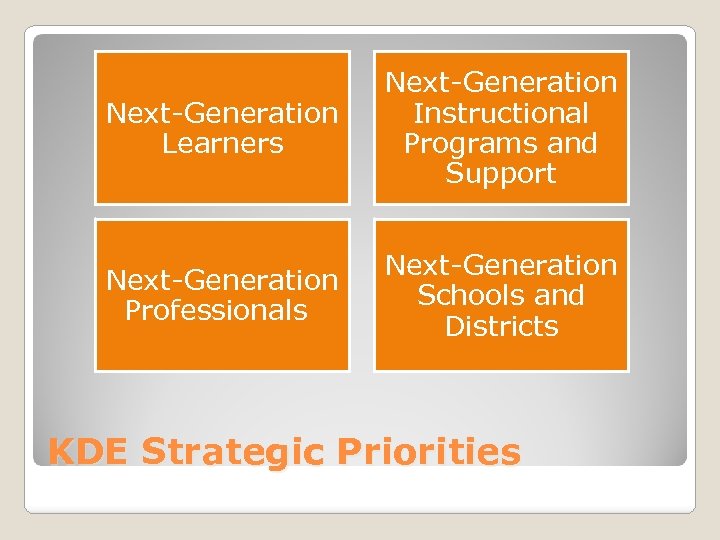 Next-Generation Learners Next-Generation Instructional Programs and Support Next-Generation Professionals Next-Generation Schools and Districts KDE Strategic Priorities
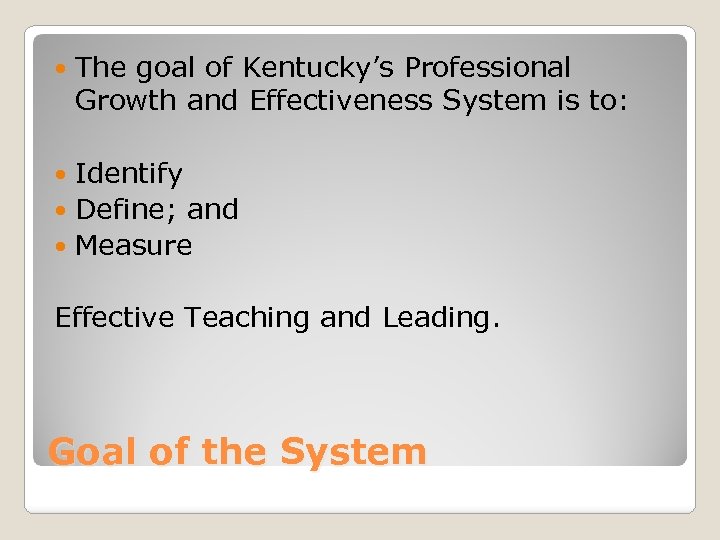 The goal of Kentucky’s Professional Growth and Effectiveness System is to: Identify Define; and Measure Effective Teaching and Leading. Goal of the System
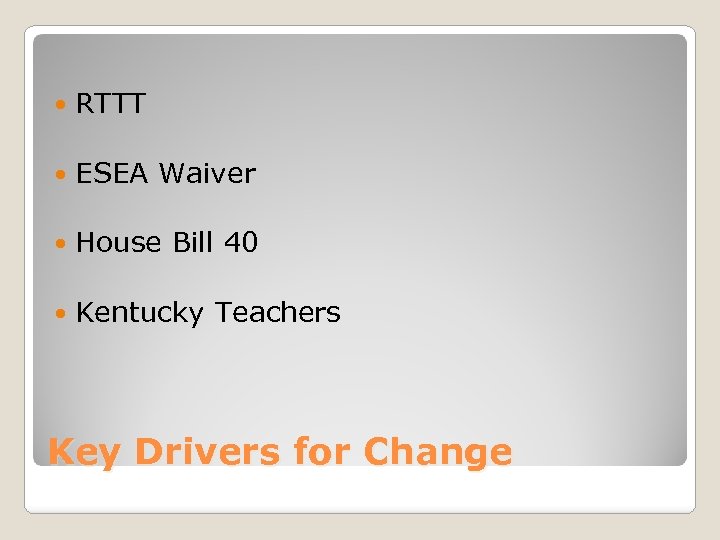 RTTT ESEA Waiver House Bill 40 Kentucky Teachers Key Drivers for Change
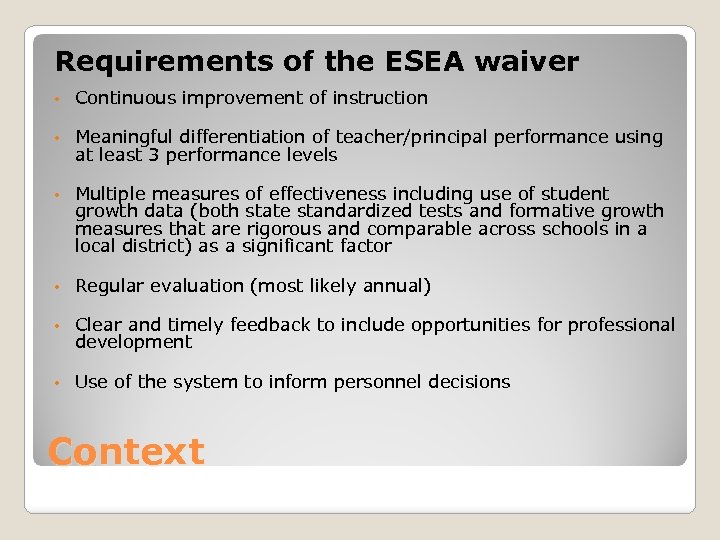 Requirements of the ESEA waiver • Continuous improvement of instruction • Meaningful differentiation of teacher/principal performance using at least 3 performance levels • Multiple measures of effectiveness including use of student growth data (both state standardized tests and formative growth measures that are rigorous and comparable across schools in a local district) as a significant factor • Regular evaluation (most likely annual) • Clear and timely feedback to include opportunities for professional development • Use of the system to inform personnel decisions Context
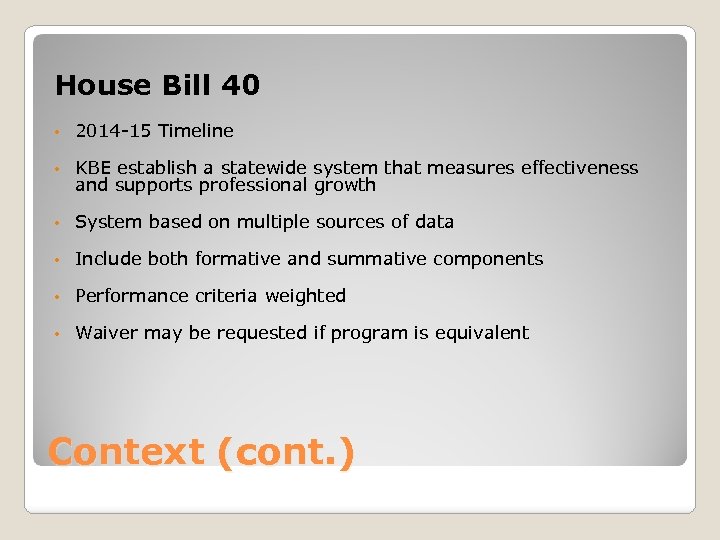 House Bill 40 • 2014 -15 Timeline • KBE establish a statewide system that measures effectiveness and supports professional growth • System based on multiple sources of data • Include both formative and summative components • Performance criteria weighted • Waiver may be requested if program is equivalent Context (cont. )
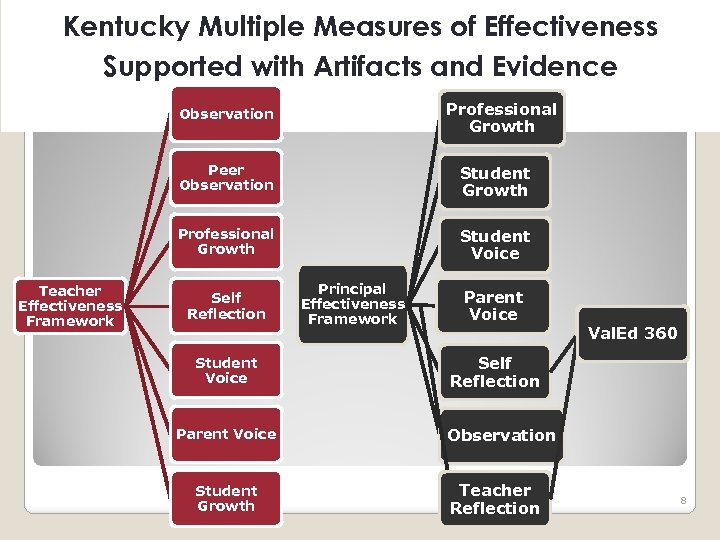 Kentucky Multiple Measures of Effectiveness Supported with Artifacts and Evidence Professional Growth Observation Peer Observation Professional Growth Teacher Effectiveness Framework Student Growth Student Voice Self Reflection Student Voice Parent Voice Student Growth Principal Effectiveness Framework Parent Voice Val. Ed 360 Self Reflection Observation Teacher Reflection 8
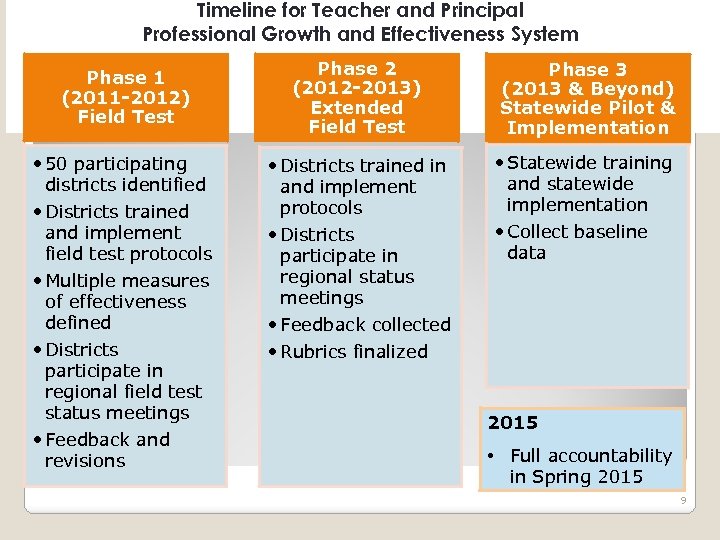 Timeline for Teacher and Principal Professional Growth and Effectiveness System Phase 1 (2011 -2012) Field Test • 50 participating districts identified • Districts trained and implement field test protocols • Multiple measures of effectiveness defined • Districts participate in regional field test status meetings • Feedback and revisions Phase 2 (2012 -2013) Extended Field Test Phase 3 (2013 & Beyond) Statewide Pilot & Implementation • Districts trained in and implement protocols • Districts participate in regional status meetings • Feedback collected • Rubrics finalized • Statewide training and statewide implementation • Collect baseline data 2015 • Full accountability in Spring 2015 9
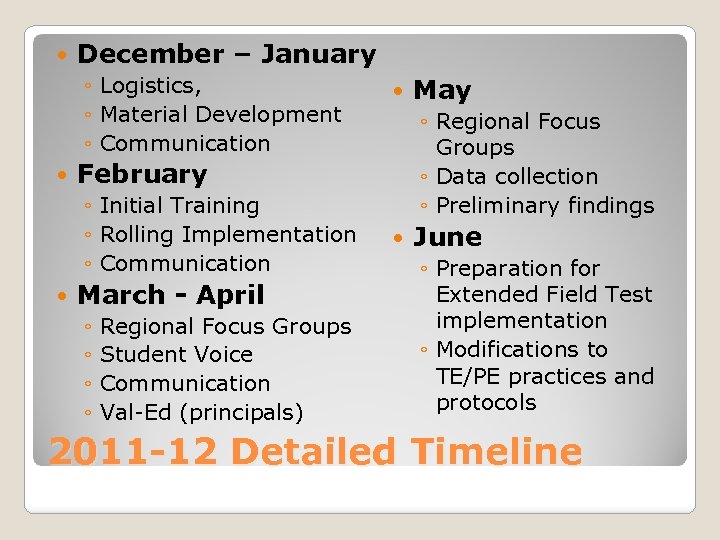 December – January ◦ Logistics, ◦ Material Development ◦ Communication March - April ◦ ◦ Regional Focus Groups Student Voice Communication Val-Ed (principals) May ◦ Regional Focus Groups ◦ Data collection ◦ Preliminary findings February ◦ Initial Training ◦ Rolling Implementation ◦ Communication June ◦ Preparation for Extended Field Test implementation ◦ Modifications to TE/PE practices and protocols 2011 -12 Detailed Timeline
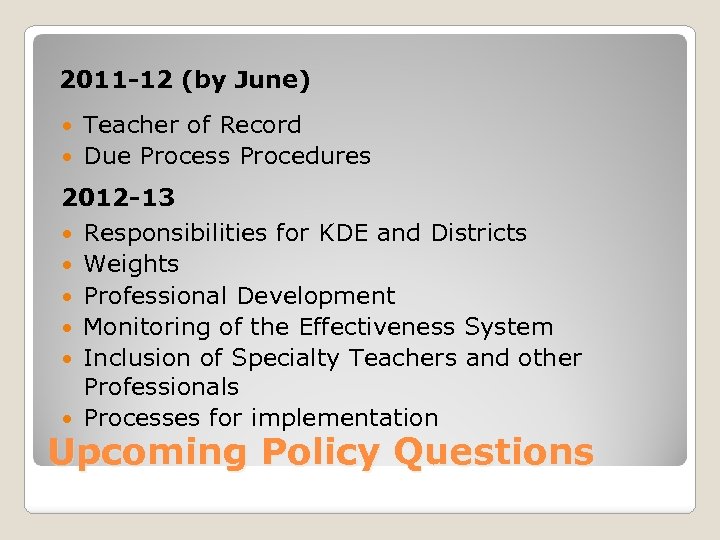 2011 -12 (by June) Teacher of Record Due Process Procedures 2012 -13 Responsibilities for KDE and Districts Weights Professional Development Monitoring of the Effectiveness System Inclusion of Specialty Teachers and other Professionals Processes for implementation Upcoming Policy Questions
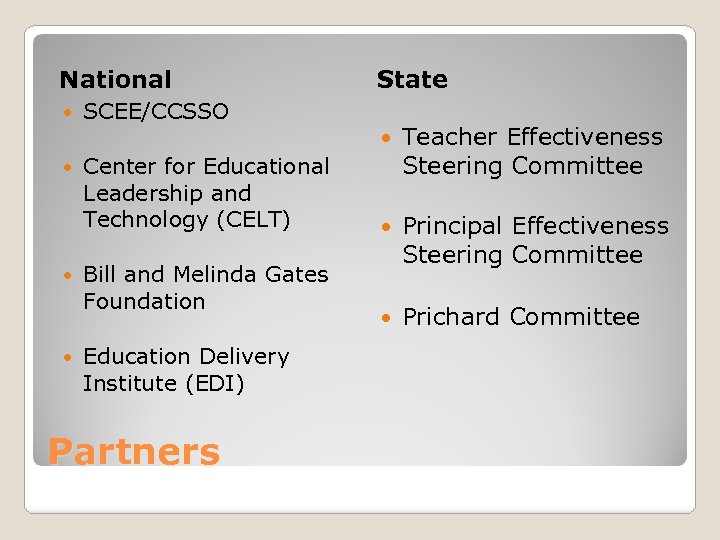 National State SCEE/CCSSO Center for Educational Leadership and Technology (CELT) Bill and Melinda Gates Foundation Education Delivery Institute (EDI) Partners Teacher Effectiveness Steering Committee Principal Effectiveness Steering Committee Prichard Committee