


 Скачать презентацию STATE STRATEGIES TO EXPAND OR MAINTAIN HEALTH CARE
668bde7bfd471a877f2dd2d2fc19defd.ppt
- Количество слайдов: 20
 STATE STRATEGIES TO EXPAND OR MAINTAIN HEALTH CARE COVERAGE Presentation to the Citizens’ Health Care Working Group May 12, 2005 Linda T. Bilheimer, Ph. D.
 Overview § Variation in nature of the problem among the states § Strategies affecting private health insurance § Public program strategies § Impact of current fiscal constraints § Future directions 2
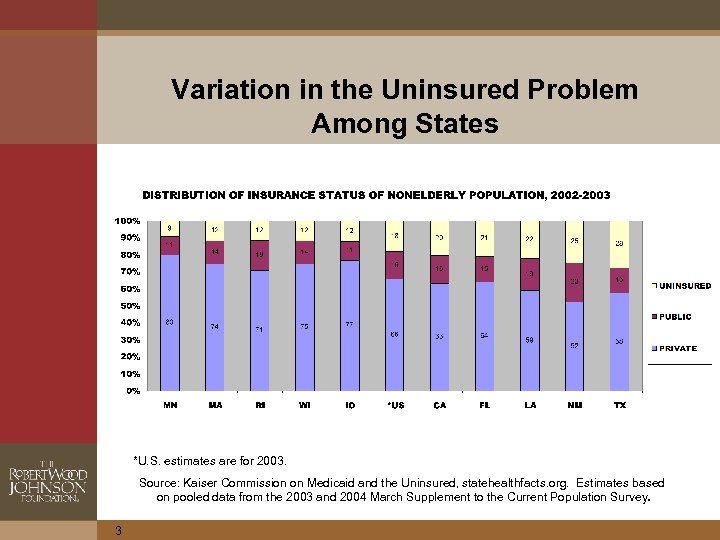 Variation in the Uninsured Problem Among States *U. S. estimates are for 2003. Source: Kaiser Commission on Medicaid and the Uninsured, statehealthfacts. org. Estimates based on pooled data from the 2003 and 2004 March Supplement to the Current Population Survey. 3
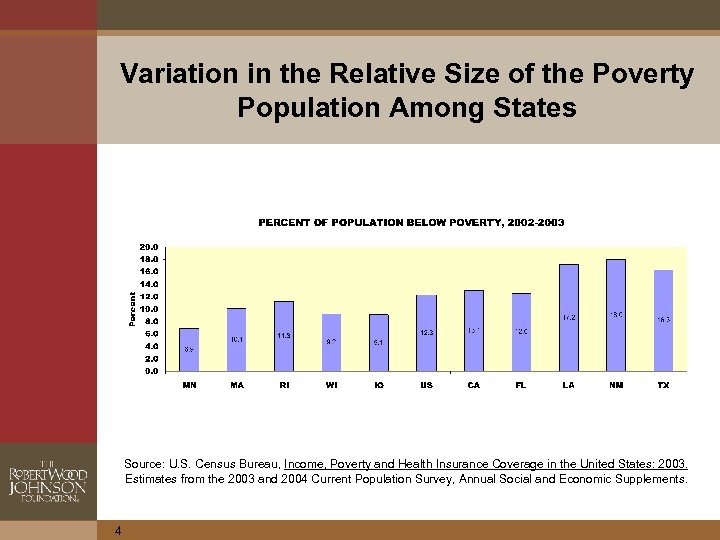 Variation in the Relative Size of the Poverty Population Among States Source: U. S. Census Bureau, Income, Poverty and Health Insurance Coverage in the United States: 2003. Estimates from the 2003 and 2004 Current Population Survey, Annual Social and Economic Supplements. 4
 Efforts to Improve Availability and Affordability of Private Coverage § Underwriting and rating reforms in individual and small-group markets § Exemptions from mandated benefits § Group purchasing arrangements § Reinsurance § High-risk pools § Tax incentives 5
 Expansions of Public Coverage: Income Eligibility § Focus on low-income children, following enactment of SCHIP in 1997 § Most states at 200% FPL or above for Medicaid/SCHIP children, by July 2004 § Expansions for low-income parents and other adults, in some states § Income eligibility standards generally much lower for adults 6
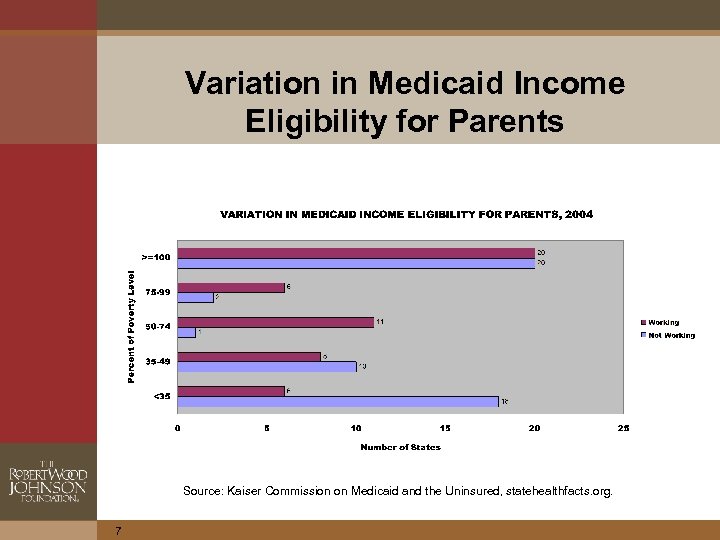 Variation in Medicaid Income Eligibility for Parents Source: Kaiser Commission on Medicaid and the Uninsured, statehealthfacts. org. 7
 Expansions of Public Coverage: Facilitating Enrollment § Outreach § Simplification of enrollment and reenrollment processes § Coordination among public coverage programs 8
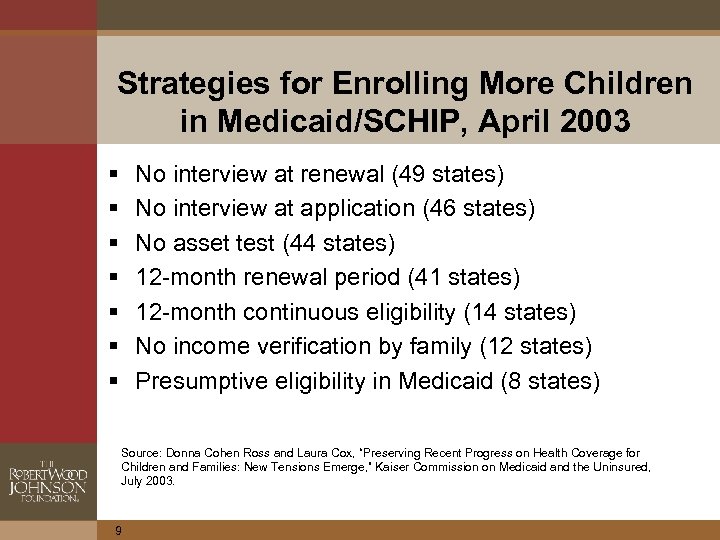 Strategies for Enrolling More Children in Medicaid/SCHIP, April 2003 § § § § No interview at renewal (49 states) No interview at application (46 states) No asset test (44 states) 12 -month renewal period (41 states) 12 -month continuous eligibility (14 states) No income verification by family (12 states) Presumptive eligibility in Medicaid (8 states) Source: Donna Cohen Ross and Laura Cox, “Preserving Recent Progress on Health Coverage for Children and Families: New Tensions Emerge, ” Kaiser Commission on Medicaid and the Uninsured, July 2003. 9
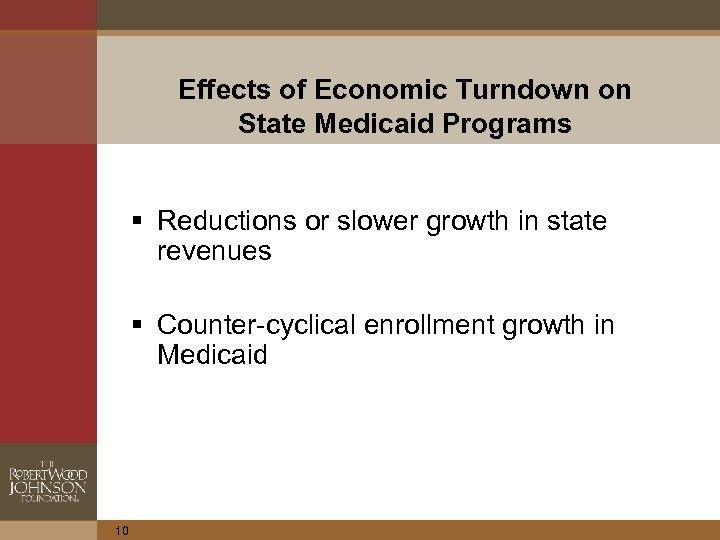 Effects of Economic Turndown on State Medicaid Programs § Reductions or slower growth in state revenues § Counter-cyclical enrollment growth in Medicaid 10
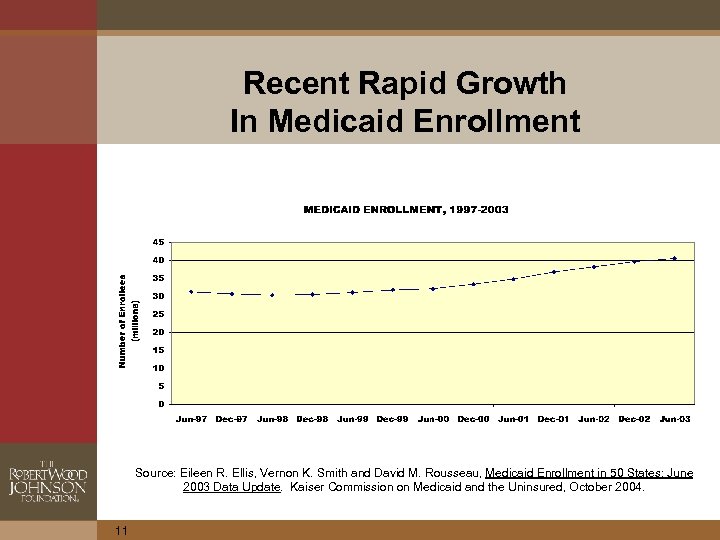 Recent Rapid Growth In Medicaid Enrollment Source: Eileen R. Ellis, Vernon K. Smith and David M. Rousseau, Medicaid Enrollment in 50 States: June 2003 Data Update. Kaiser Commission on Medicaid and the Uninsured, October 2004. 11
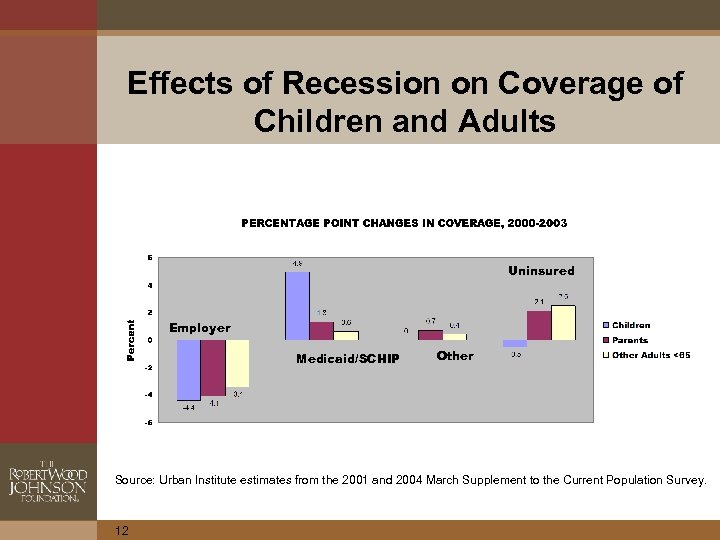 Effects of Recession on Coverage of Children and Adults Uninsured Employer Medicaid/SCHIP Other Source: Urban Institute estimates from the 2001 and 2004 March Supplement to the Current Population Survey. 12
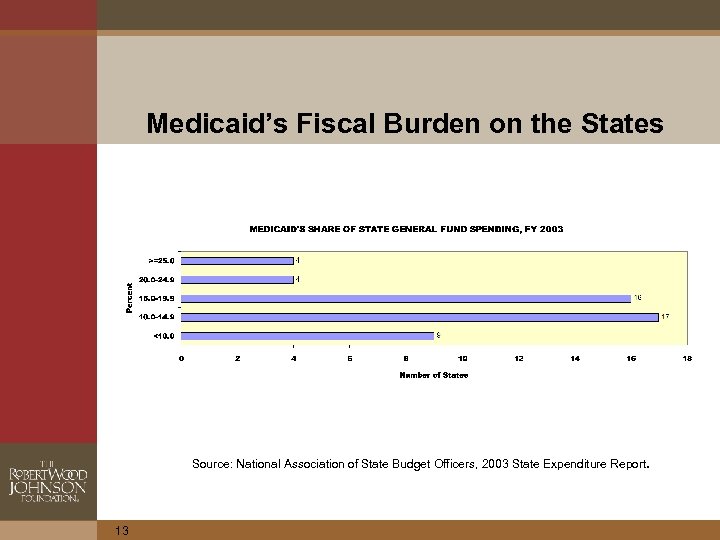 Medicaid’s Fiscal Burden on the States Source: National Association of State Budget Officers, 2003 State Expenditure Report. 13
 State Attempts to Control Costs and Maintain Coverage (1) § Scaling back eligibility (MO, TN) § Cutting optional benefits (vision, dental, podiatry, Rx) § Freezing or cutting provider payments § Initiating or increasing premiums and cost-sharing § Shifting more beneficiaries into managed care § Restructuring benefits, to expand limited coverage to a broader population (UT, NJ, OR, MI) § Using Medicaid to help low-income workers pay employer premiums (ID, OR, MI, NM) 14
 State Attempts to Control Costs and Maintain Coverage (2) § Shifting care from hospitals and nursing homes to home settings (NY) § Restructuring public coverage programs, with beneficiary incentives to control costs, adopt healthy behaviors (FL, SC) § Restructuring health care system in the state (ME, MA) 15
 HRSA Grantees: A Look at the Future? § 2000 -2005, State planning grants (SPGs) to study demographic and health insurance trends § More recently, pilot planning grants (PPGs) to: § Plan for implementation of policy option § Test option among population subgroup § Implement plan § SPG research findings: large majority of uninsured are workers or their dependents Focus on employment-related strategies 16
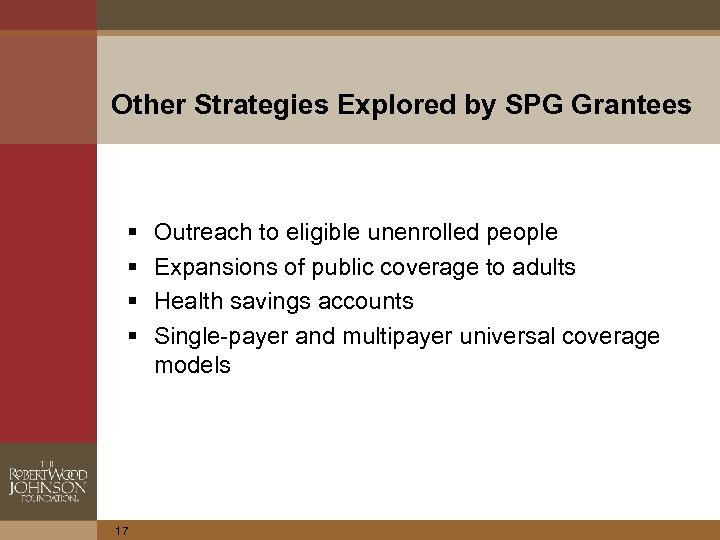 Other Strategies Explored by SPG Grantees § § 17 Outreach to eligible unenrolled people Expansions of public coverage to adults Health savings accounts Single-payer and multipayer universal coverage models
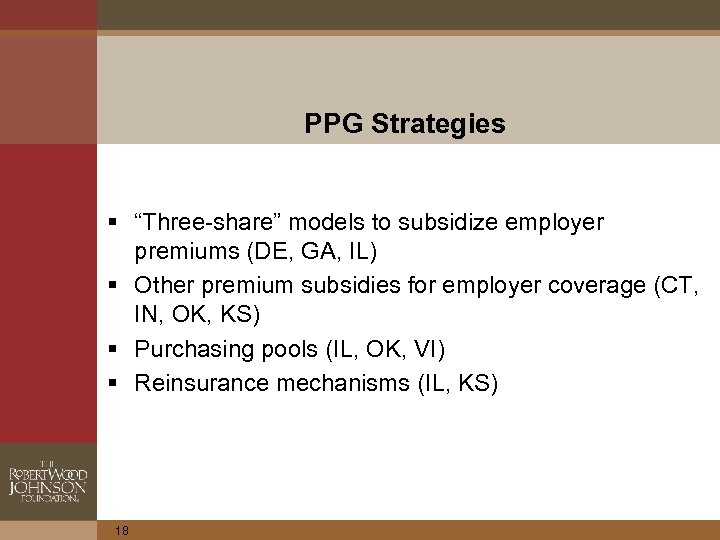 PPG Strategies § “Three-share” models to subsidize employer premiums (DE, GA, IL) § Other premium subsidies for employer coverage (CT, IN, OK, KS) § Purchasing pools (IL, OK, VI) § Reinsurance mechanisms (IL, KS) 18
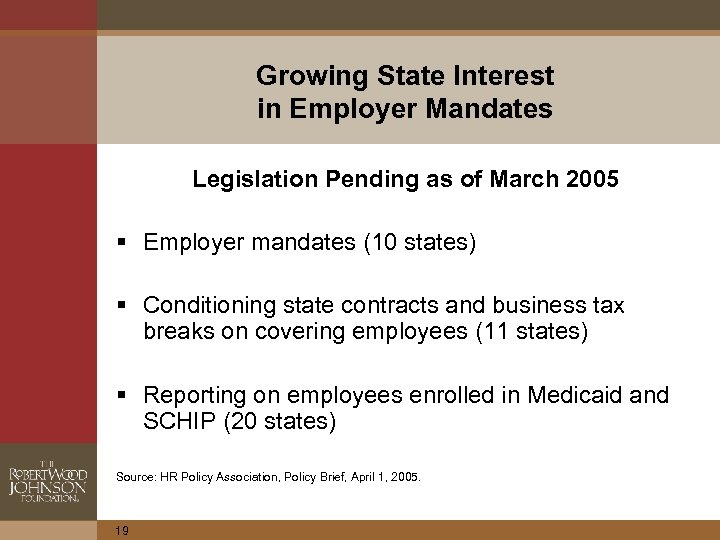 Growing State Interest in Employer Mandates Legislation Pending as of March 2005 § Employer mandates (10 states) § Conditioning state contracts and business tax breaks on covering employees (11 states) § Reporting on employees enrolled in Medicaid and SCHIP (20 states) Source: HR Policy Association, Policy Brief, April 1, 2005. 19
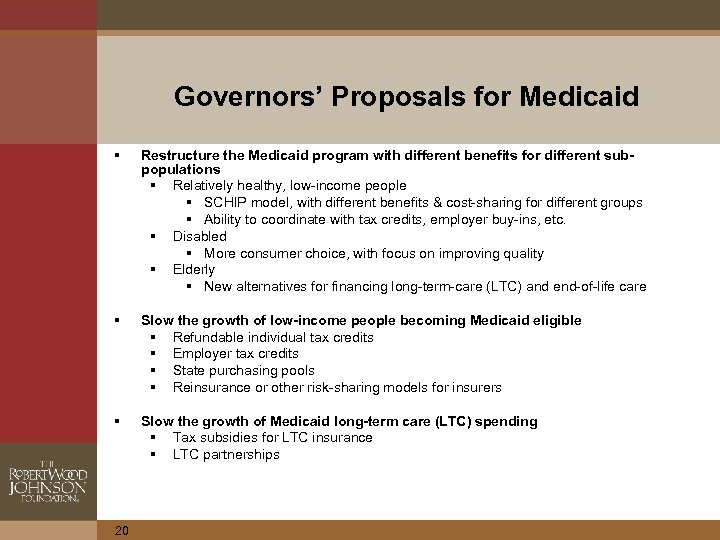 Governors’ Proposals for Medicaid § Restructure the Medicaid program with different benefits for different subpopulations § Relatively healthy, low-income people § SCHIP model, with different benefits & cost-sharing for different groups § Ability to coordinate with tax credits, employer buy-ins, etc. § Disabled § More consumer choice, with focus on improving quality § Elderly § New alternatives for financing long-term-care (LTC) and end-of-life care § Slow the growth of low-income people becoming Medicaid eligible § Refundable individual tax credits § Employer tax credits § State purchasing pools § Reinsurance or other risk-sharing models for insurers § Slow the growth of Medicaid long-term care (LTC) spending § Tax subsidies for LTC insurance § LTC partnerships 20