


 Скачать презентацию State of the States 2009 Overview of State
f1fb4aee2c63a69f5d67f0348c3d2e62.ppt
- Количество слайдов: 42
 State of the States 2009 Overview of State Reform Efforts California Senate Health Committee Sacramento, CA February 25, 2009 Enrique Martinez-Vidal Vice President, Academy. Health Director, State Coverage Initiatives
 State Coverage Initiatives (SCI) l An Initiative of the Robert Wood Johnson Foundation Community of State Officials Ø Convening state officials Resources and Information Ø Web site: www. statecoverage. org Ø State Profiles Ø Publications/State of the States Direct technical assistance to states Ø State-specific help, research on state policymakers’ questions Ø Grant funding/Coverage Institute
 Overview of Presentation • • • Background Federal-State Partnership? State Reform Strategies Small Employer Strategies Cost-Containment/Quality Improvement Lessons Learned from State Reforms
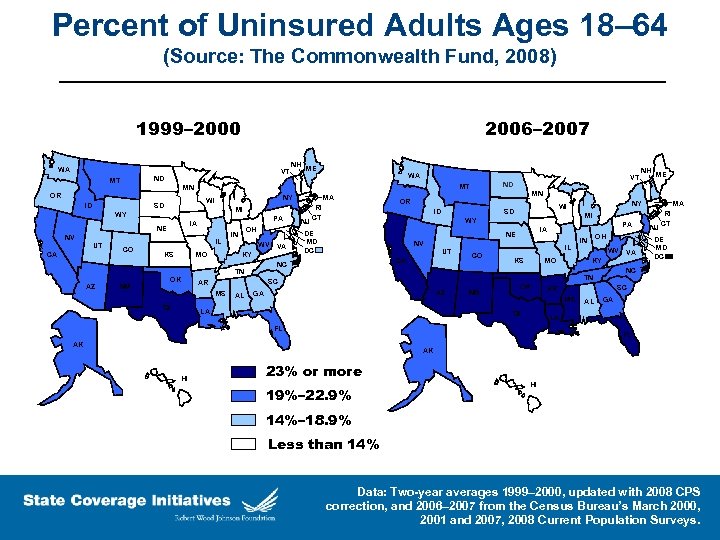 Percent of Uninsured Adults Ages 18– 64 (Source: The Commonwealth Fund, 2008) 1999– 2000 2006– 2007 WA VT ND MT ID MI WY PA IA NE NV IL CO KS MO OH IN WV NM OK NJ RI CT IL CO KS MO OH IN WV AZ GA LA NM OK NJ RI CT DE MD DC NC SC AR MS TX VA KY TN SC AL PA IA NV CA MA MI NE UT NY WI SD WY DE MD DC NH ME MN OR ID NC AR MS TX VA KY TN AZ MA VT ND MT NY WI SD CA WA MN OR UT NH ME AL GA LA FL FL AK AK HI 23% or more 19%– 22. 9% HI 14%– 18. 9% Less than 14% Data: Two-year averages 1999– 2000, updated with 2008 CPS correction, and 2006– 2007 from the Census Bureau’s March 2000, 2001 and 2007, 2008 Current Population Surveys.
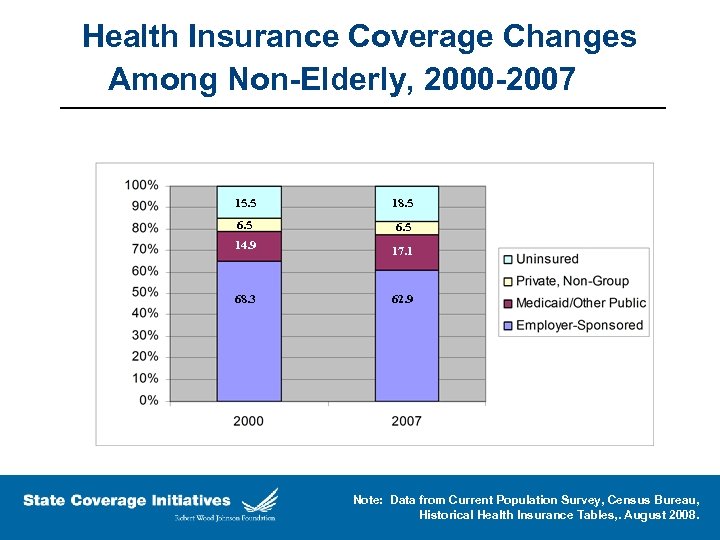 Health Insurance Coverage Changes Among Non-Elderly, 2000 -2007 15. 5 18. 5 6. 5 14. 9 17. 1 68. 3 62. 9 Note: Data from Current Population Survey, Census Bureau, Historical Health Insurance Tables, . August 2008.
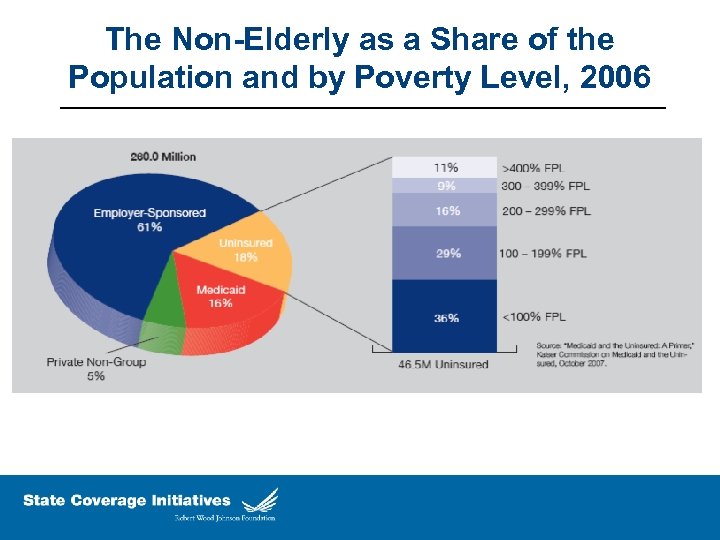 The Non-Elderly as a Share of the Population and by Poverty Level, 2006 11% 14. 9 29% 17. 7
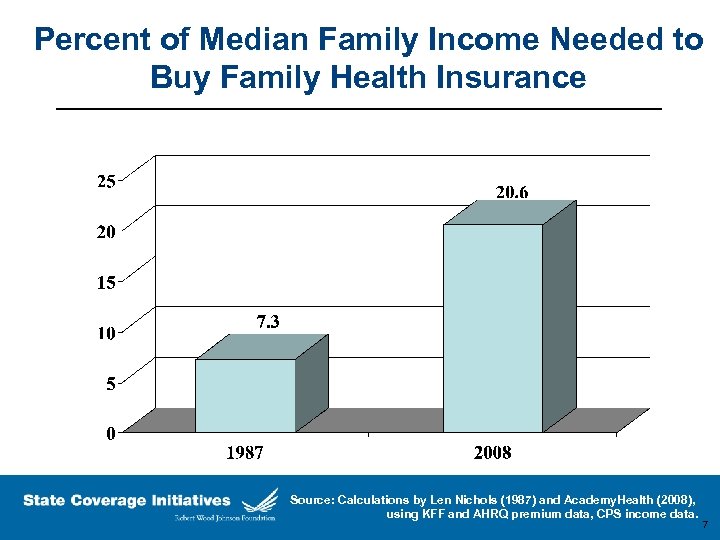 Percent of Median Family Income Needed to Buy Family Health Insurance Source: Calculations by Len Nichols (1987) and Academy. Health (2008), using KFF and AHRQ premium data, CPS income data. 7
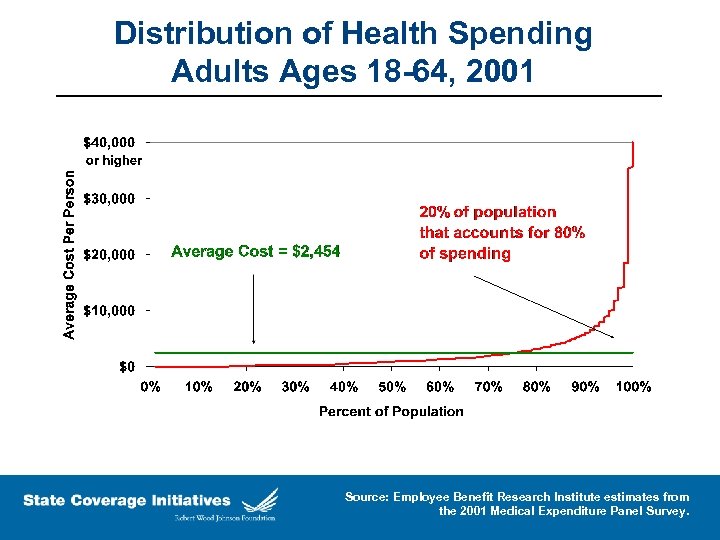 Distribution of Health Spending Adults Ages 18 -64, 2001 Source: Employee Benefit Research Institute estimates from the 2001 Medical Expenditure Panel Survey.
 Drivers of State Health Reform Efforts Uninsured still high l Employer-sponsored insurance down l Costs/premiums increasingly unaffordable – Indiv; Families; Govt l Coverage needed for effective and efficient health care system l Lack of national consensus – future? l Greater political will at state level l
 Key Policy and Design Issues l l l l Different Populations Require Different Solutions Subsidies and Financing: Who will pay? Who will benefit? Should Health Insurance Coverage Be Required? What is Affordable Coverage? What is the Most Appropriate Benefit Design? Do Insurance Markets Need to be Reformed/Reorganized? Best Mechanisms for Cost Containment/Systems Improvement 2008 State of the States
 State and National Health Care Reform: A Case for Federalism 2009 State of the States – pp. 14 -19
 Federal-State Partnership: State Strengths l Proximity: Ø l Due to the local nature of health care delivery, states are closer to the action for implementing system redesign Flexibility to implement system redesign: Ø States have in-depth knowledge of local landscapes and the ability to foster relationships with local stakeholders critical to successful system change.
 Federal-State Partnership: Federal Strengths l l Ability to establish minimum national standards for eligibility rates, benefit design, etc. Capacity to address budgetary issues: Ø Ø Ø Counter-cyclical budgeting Multi-year budgets Revenue raising capacity
 Federal-State Partnership Features: Insurance Market Regulation l l State regulation efforts are hampered by ERISA and lack of oversight of federal insurance programs The federal government could take a number of policy steps to alleviate uncertainty on permissible state regulatory actions Ø Ø Ø States could be allowed to collect enrollment and benefit information from ERISA plans Provide more clarity about ERISA and/or allow “safe harbors” Allow states to require ERISA-protected purchasers to participate in payment reform/quality improvement collaboratives/Medicaid premium assistance programs/all-payor databases Freedom to apply premium taxes to employer plans Establish a national floor on benefits Shift consumer protection/oversight responsibility to state level
 Federal-State Partnership Features: Public Programs l l Burdensome federal regulations and unilateral program changes have strained the federal-state partnership. To reduce the tensions, national reform should address policy changes in the following areas: Ø Ø Ø Waiver process Dual eligibles, citizenship requirements, and other Medicaid policy changes SCHIP limitations – 8/17/07 directive – now rescinded
 Federal-State Partnership Features: Systems Redesign/Quality Improvement l l l Need to link value (cost/quality) enhancement strategies with coverage expansion The implementation of quality initiatives has occurred on the state level Feds can leverage federal programs to encourage better processes - improved outcomes could be accelerated Ø Ø Ø Promote evidence-based care; comparative effectiveness research; include state programs in Medicare payment/delivery redesign demonstration projects; include Medicare in state demos Develop interoperability standards to ease HIT adoption Develop a set of national standards and guidelines in the area of quality metrics
 State Variation in the Context of Federal Reform l l l There is broad agreement on the need for reform, but significant differences on means to needed to achieve it. Uniform national strategy will not have uniform effects at the state level and will not guarantee uniform outcomes Three possible solutions for federal government to address state level variation: Ø Ø Ø l Don’t address variation and let states fend for themselves Provide variable assistance based on state need Allow states to comply with federal guidelines in a sequenced fashion over time. Combination of variable assistance and sequencing likely best method to help states comply with national reform over time
 Federal-State Partnership: Future? l l Funding vs. Flexibility Ideas related to federal-state partnership not new, many similar to those proposed in early 1990 s States fear federal reforms may hinder, rather than help state efforts Despite state hesitance, inaction not an option. Federal-state partnership offers real potential and should be considered
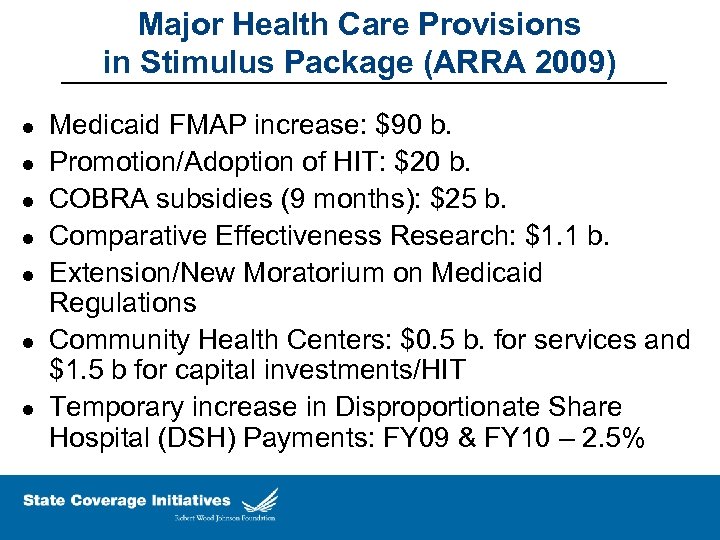 Major Health Care Provisions in Stimulus Package (ARRA 2009) l l l l Medicaid FMAP increase: $90 b. Promotion/Adoption of HIT: $20 b. COBRA subsidies (9 months): $25 b. Comparative Effectiveness Research: $1. 1 b. Extension/New Moratorium on Medicaid Regulations Community Health Centers: $0. 5 b. for services and $1. 5 b for capital investments/HIT Temporary increase in Disproportionate Share Hospital (DSH) Payments: FY 09 & FY 10 – 2. 5%
 Comprehensive/Substantial Efforts Implementation Continues Maine (’ 03) Massachusetts (’ 06) Vermont (’ 06) 2009 State of the States – pp. 29 -32
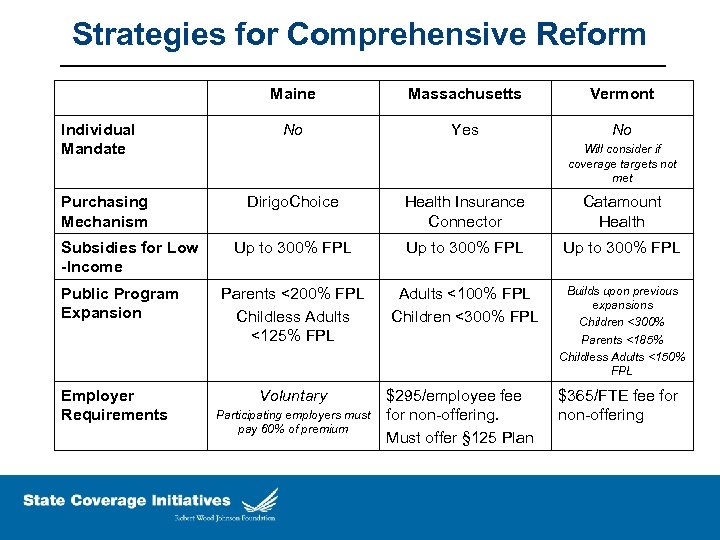 Strategies for Comprehensive Reform Maine Individual Mandate Purchasing Mechanism Subsidies for Low -Income Public Program Expansion Employer Requirements Massachusetts Vermont No Yes No Will consider if coverage targets not met Dirigo. Choice Health Insurance Connector Catamount Health Up to 300% FPL Parents <200% FPL Childless Adults <125% FPL Adults <100% FPL Children <300% FPL Builds upon previous expansions Children <300% Parents <185% Childless Adults <150% FPL Voluntary Participating employers must pay 60% of premium $295/employee for non-offering. Must offer § 125 Plan $365/FTE fee for non-offering
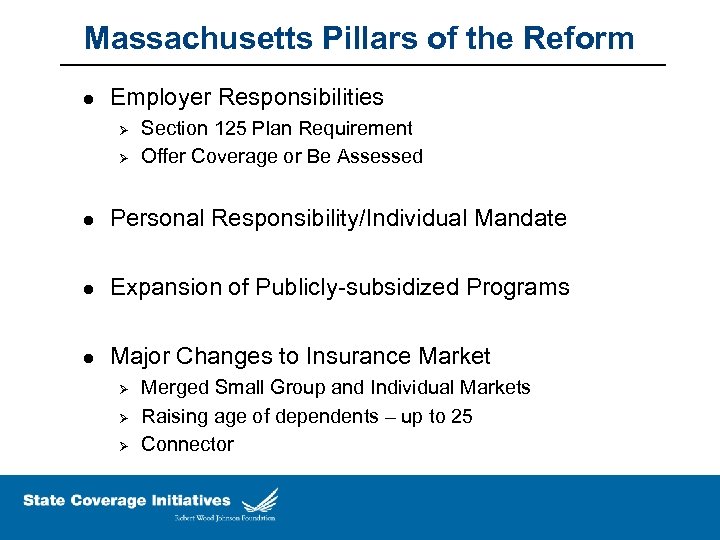 Massachusetts Pillars of the Reform l Employer Responsibilities Ø Ø Section 125 Plan Requirement Offer Coverage or Be Assessed l Personal Responsibility/Individual Mandate l Expansion of Publicly-subsidized Programs l Major Changes to Insurance Market Ø Ø Ø Merged Small Group and Individual Markets Raising age of dependents – up to 25 Connector
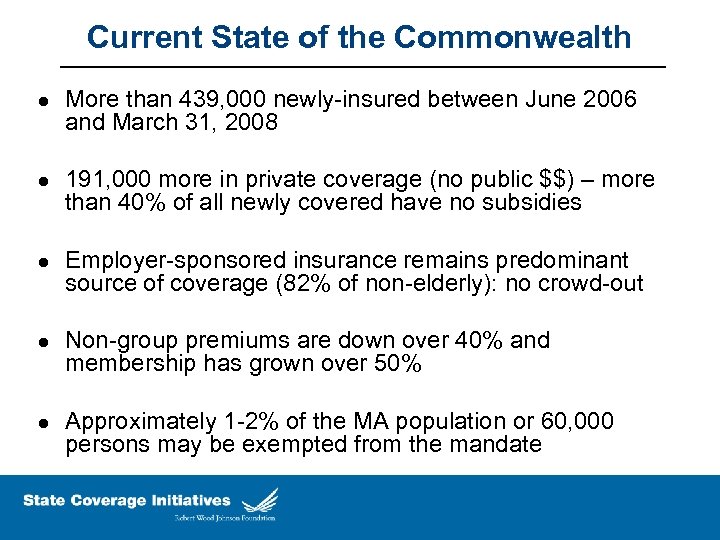 Current State of the Commonwealth l l l More than 439, 000 newly-insured between June 2006 and March 31, 2008 191, 000 more in private coverage (no public $$) – more than 40% of all newly covered have no subsidies Employer-sponsored insurance remains predominant source of coverage (82% of non-elderly): no crowd-out Non-group premiums are down over 40% and membership has grown over 50% Approximately 1 -2% of the MA population or 60, 000 persons may be exempted from the mandate
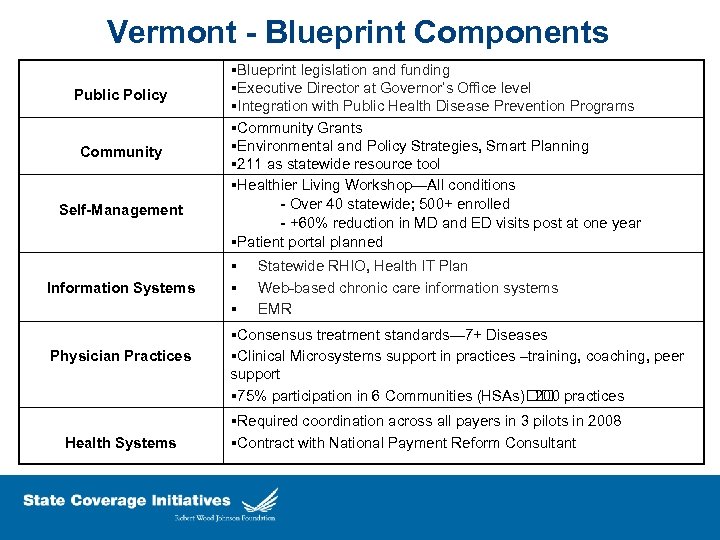 Vermont - Blueprint Components Public Policy Community Self-Management Information Systems Physician Practices Health Systems §Blueprint legislation and funding §Executive Director at Governor’s Office level §Integration with Public Health Disease Prevention Programs §Community Grants §Environmental and Policy Strategies, Smart Planning § 211 as statewide resource tool §Healthier Living Workshop—All conditions - Over 40 statewide; 500+ enrolled - +60% reduction in MD and ED visits post at one year §Patient portal planned § § § Statewide RHIO, Health IT Plan Web-based chronic care information systems EMR §Consensus treatment standards— 7+ Diseases §Clinical Microsystems support in practices –training, coaching, peer support § 75% participation in 6 Communities (HSAs) practices 200 §Required coordination across all payers in 3 pilots in 2008 §Contract with National Payment Reform Consultant
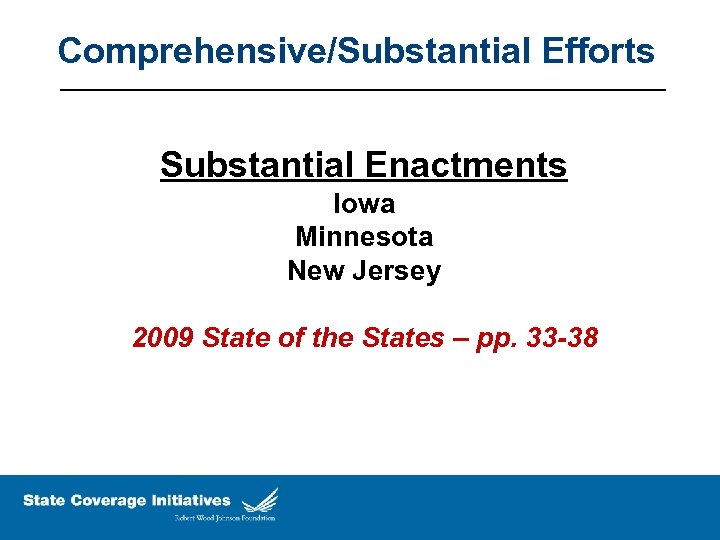 Comprehensive/Substantial Efforts Substantial Enactments Iowa Minnesota New Jersey 2009 State of the States – pp. 33 -38
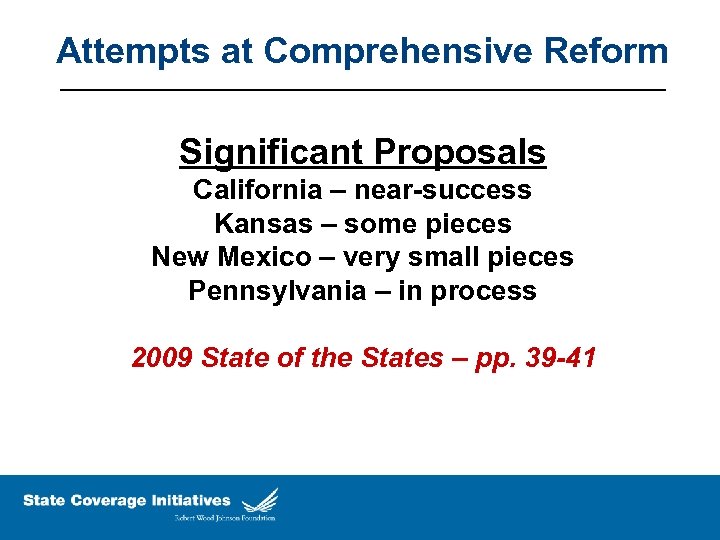 Attempts at Comprehensive Reform Significant Proposals California – near-success Kansas – some pieces New Mexico – very small pieces Pennsylvania – in process 2009 State of the States – pp. 39 -41
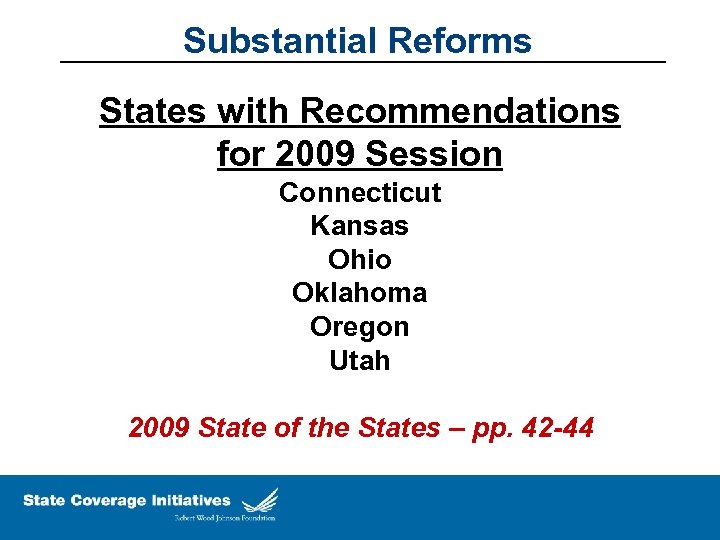 Substantial Reforms States with Recommendations for 2009 Session Connecticut Kansas Ohio Oklahoma Oregon Utah 2009 State of the States – pp. 42 -44
 State Reform Efforts Target Small Employers 2009 State of the States – pp. 48 -53
 The Erosion of Small Group Coverage l l l Higher admin costs: smaller pool to spread fixed costs – increases person premium Premiums can change dramatically annually: one/two people with high costs Risk premium added: cover year-to-year unknown variation Small Employers: more employ low-wage workers; operate on tighter margins – difficult to even offer coverage Greater cost-sharing by employees
 State Approaches to Declining Coverage l l l Premium Subsidies Reinsurance Restructured Benefit Design Section 125 Plans Employer Mandates
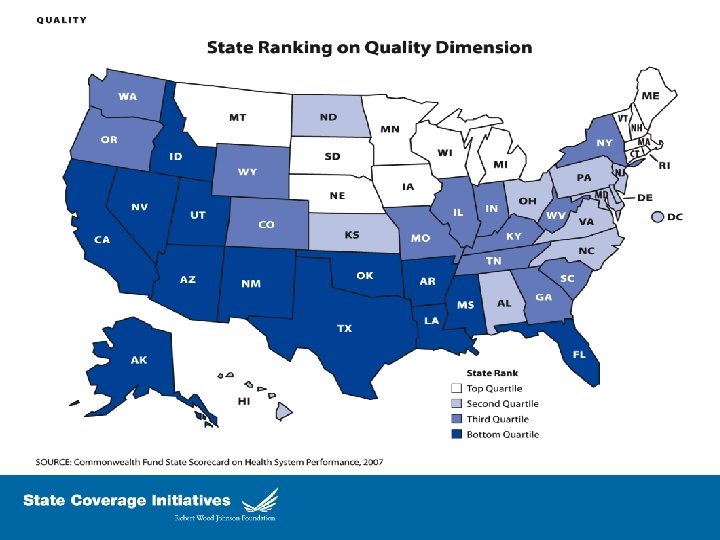
 Cost Containment and Quality Improvement Prioritized by States 2009 State of the States – pp. 54 -59
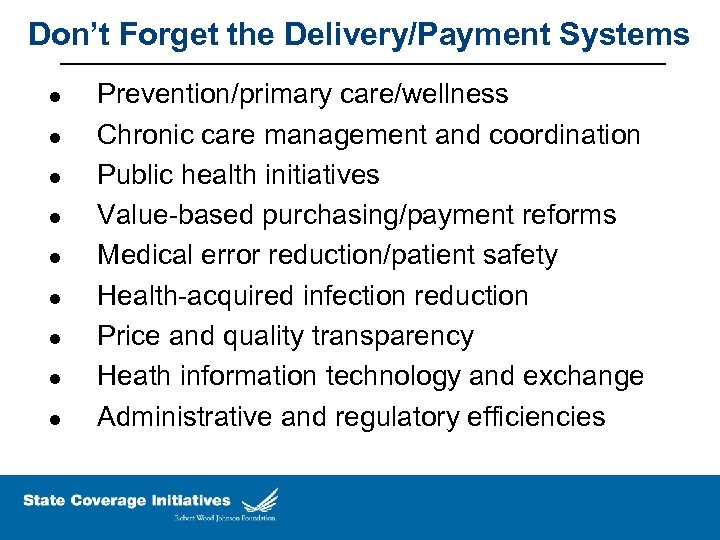 Don’t Forget the Delivery/Payment Systems l l l l l Prevention/primary care/wellness Chronic care management and coordination Public health initiatives Value-based purchasing/payment reforms Medical error reduction/patient safety Health-acquired infection reduction Price and quality transparency Heath information technology and exchange Administrative and regulatory efficiencies
 Lessons Learned in State Reform Efforts 2009 State of the States – pp. 20 -25
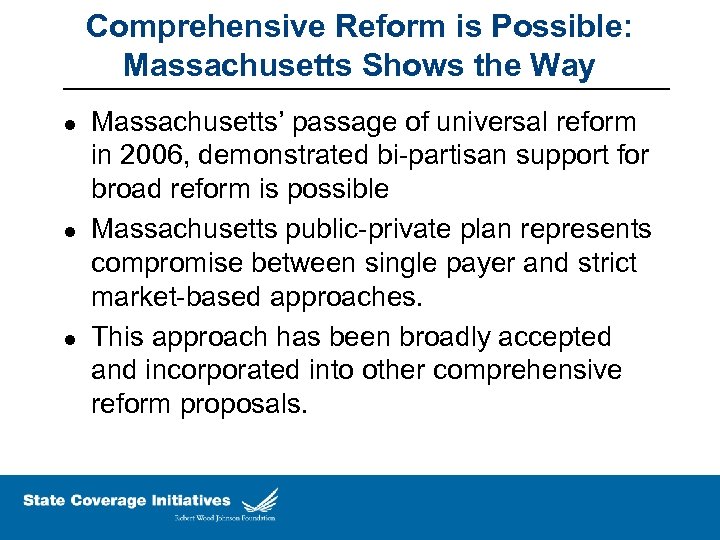 Comprehensive Reform is Possible: Massachusetts Shows the Way l l l Massachusetts’ passage of universal reform in 2006, demonstrated bi-partisan support for broad reform is possible Massachusetts public-private plan represents compromise between single payer and strict market-based approaches. This approach has been broadly accepted and incorporated into other comprehensive reform proposals.
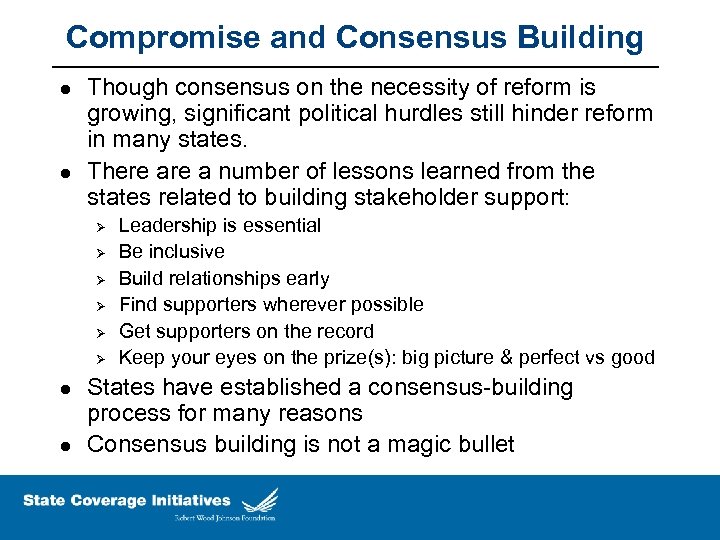 Compromise and Consensus Building l l Though consensus on the necessity of reform is growing, significant political hurdles still hinder reform in many states. There a number of lessons learned from the states related to building stakeholder support: Ø Ø Ø l l Leadership is essential Be inclusive Build relationships early Find supporters wherever possible Get supporters on the record Keep your eyes on the prize(s): big picture & perfect vs good States have established a consensus-building process for many reasons Consensus building is not a magic bullet
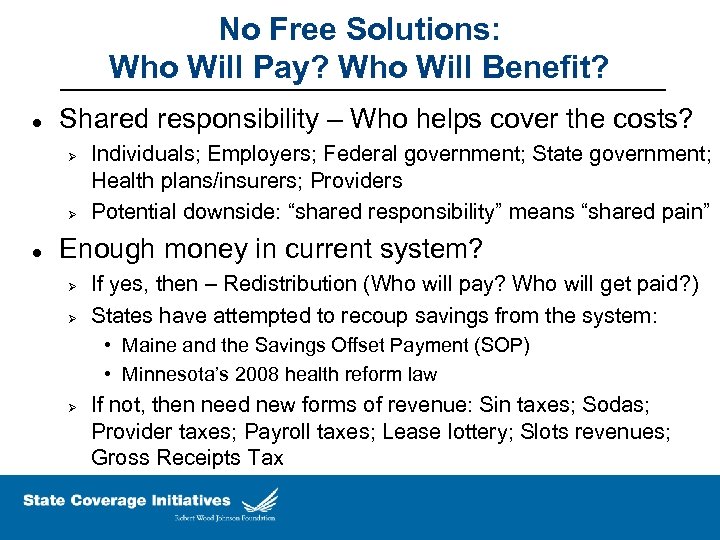 No Free Solutions: Who Will Pay? Who Will Benefit? l Shared responsibility – Who helps cover the costs? Ø Ø l Individuals; Employers; Federal government; State government; Health plans/insurers; Providers Potential downside: “shared responsibility” means “shared pain” Enough money in current system? Ø Ø If yes, then – Redistribution (Who will pay? Who will get paid? ) States have attempted to recoup savings from the system: • Maine and the Savings Offset Payment (SOP) • Minnesota’s 2008 health reform law Ø If not, then need new forms of revenue: Sin taxes; Sodas; Provider taxes; Payroll taxes; Lease lottery; Slots revenues; Gross Receipts Tax
 Sustained Effort Needed l Health reform takes sustained effort/built on previous efforts, financing mechanisms Ø Ø Ø l Massachusetts New Jersey, Iowa, and Wisconsin Oregon, Colorado, and New Mexico Sustained effort during implementation of reform is especially critical. To ensure success of reform: Ø Ø Outreach and education are crucial Strong evaluation mechanisms which allow reform to be adapted as it moves forward
 A Sense of Urgency Creates Opportunity l l l Massachusetts reforms propelled by potential to loose federal funds Other states seek way to create similar sense of urgency Comprehensive reform will remain difficult without a sense of urgency or a sense of inevitability as many stakeholders are invested in status quo
 Individual Mandate l l l Voluntary strategies will not result in universal coverage - some states are beginning to recognize the need for mandatory participation - Massachusetts Unenforceable? Impingement on individual freedom? Money for subsidies? Those pursuing individual mandate must consider: Ø Ø Ø l Affordability of mandate Richness of benefits package How to enforce mandate Though there are significant policy challenges, there also notable benefits: Ø Ø Ø Distribution of risk Fairness “System-ness”
 Relationship Btw Reducing Costs, Improving Quality & Expanding Coverage l l Little success so far in addressing underlying cost of health care but a new focus on chronic care management/preventive care holds potential Massachusetts leads on health coverage reform, while Minnesota is at the forefront of cost containment The trend in states is to address access, systems improvement, cost containment simultaneously— concern about long-term sustainability of coverage programs and improved population health Concerns about rising costs are an impetus for reform, but cost cutting is likely to raise opposition from various stakeholders.
 States Can Advance Reform Initiatives But Need Federal Support l States face growing pressures for reform Ø Uninsurance continues to rise as ESI declines Ø Cost increases threaten state budgets and capacity to sustain Medicaid/SCHIP l States play critical role in moving the conversations about coverage expansions Ø Testing new ideas (politically and practically) Ø Creating momentum for national policy solution l l States cannot achieve universal coverage without a federal framework and funding BUT remember variation State and National: Comprehensive reforms need sequencing Ø Sequential = incremental with a vision 42