 Скачать презентацию State-of-the-art probes Alan Bigelow Alternative sensing methods
9de673fd8b25beb96a9cd6e97d8a1ea5.ppt
- Количество слайдов: 30



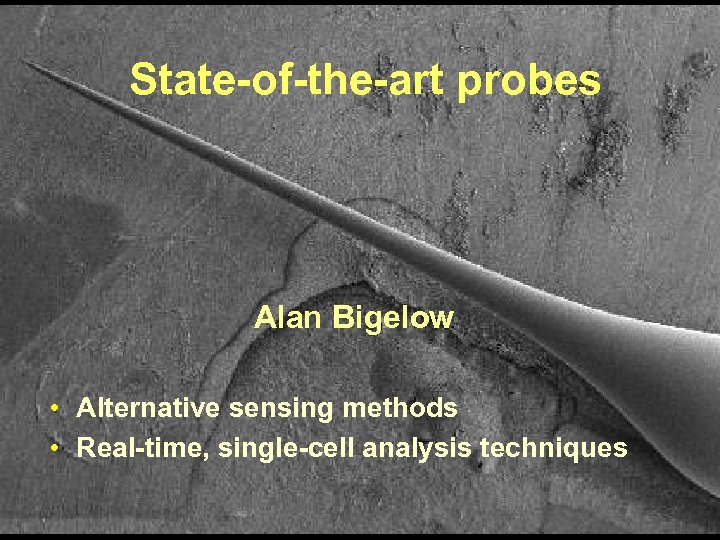
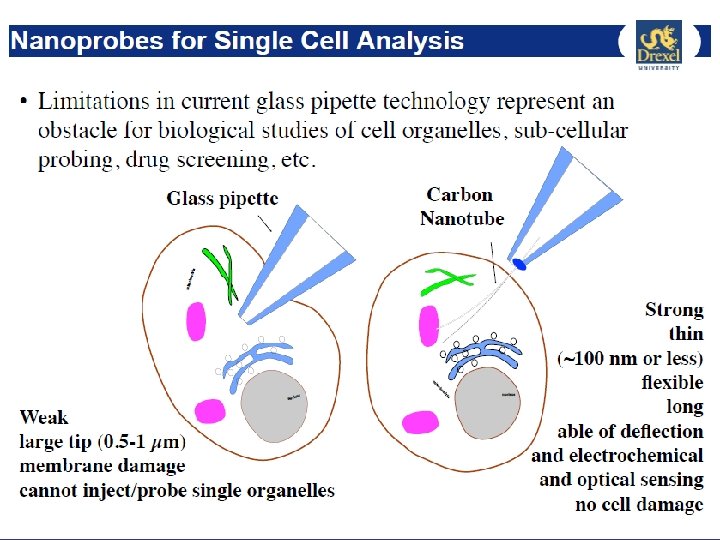
State-of-the-art probes Alan Bigelow • Alternative sensing methods • Real-time, single-cell analysis techniques
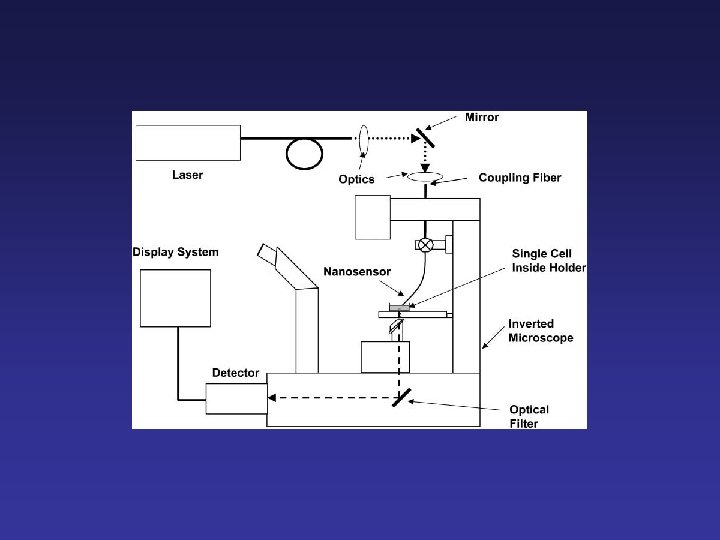
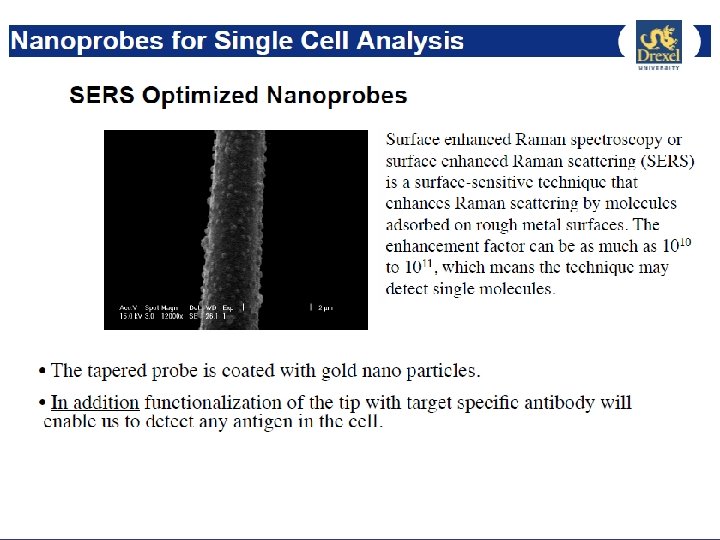
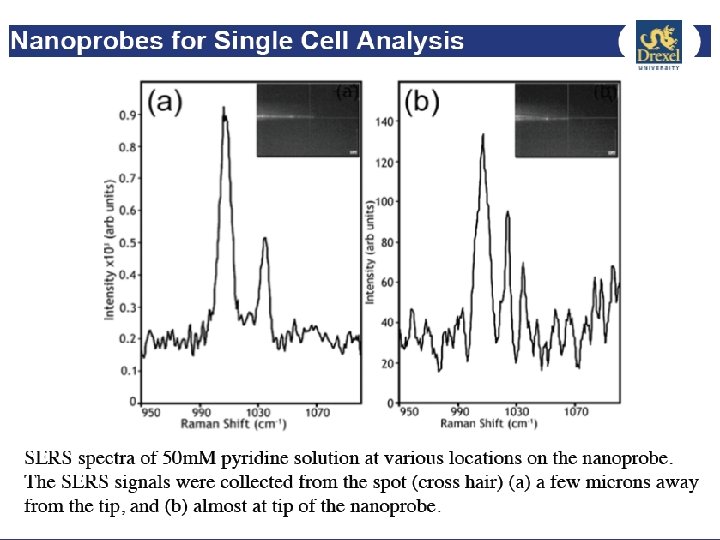
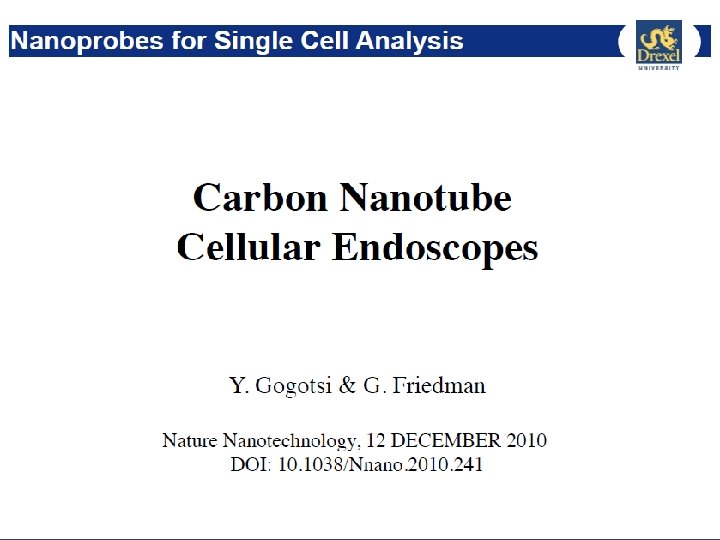
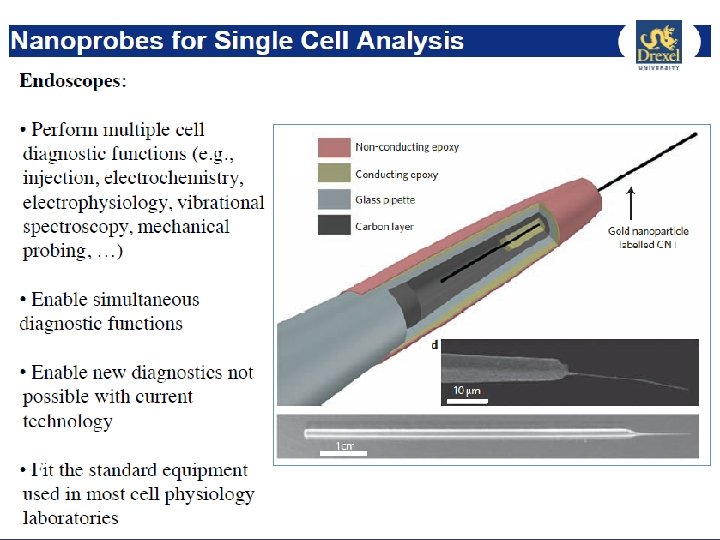
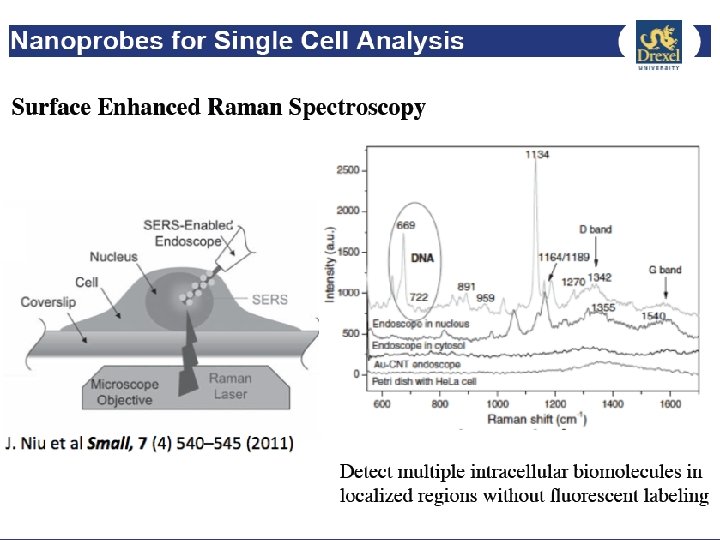
Outline 1. Miniature ion-selective single-cell probes Collaboration with the Biocurrents Research Lab at Woods Hole 2. Probe positioner and manipulator 3. Laser excited single-cell optical nanosensors Collaboration with Tuan Vo-Dihn 4. Kambiz Pourrezaei collaboration 1. A Surface-Enhanced Raman Scattering Nano-Needle for Cellular Measurements 2. Carbon Nanotube Cellular Endoscopes 5. Automated Microscope Observation Environment for Biological Analyses (AMOEBA)
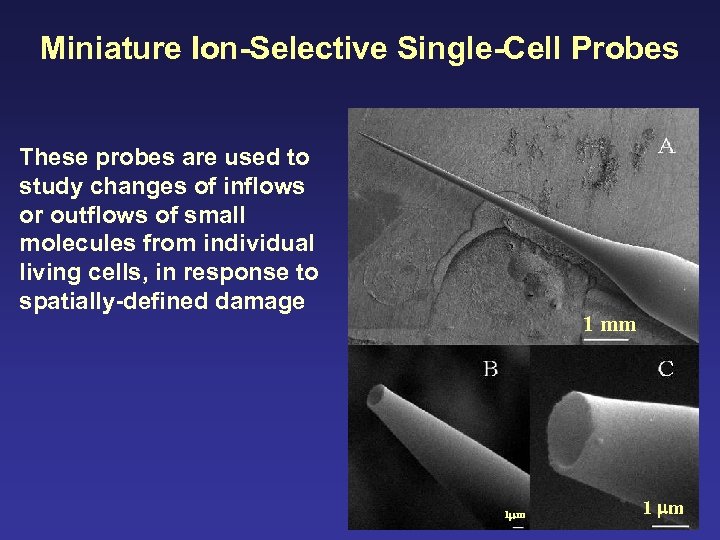
Miniature Ion-Selective Single-Cell Probes These probes are used to study changes of inflows or outflows of small molecules from individual living cells, in response to spatially-defined damage 1 mm
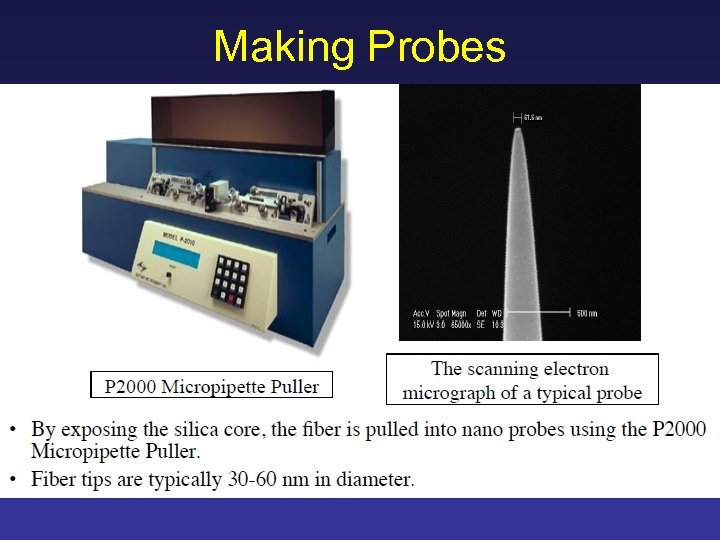
Making Probes
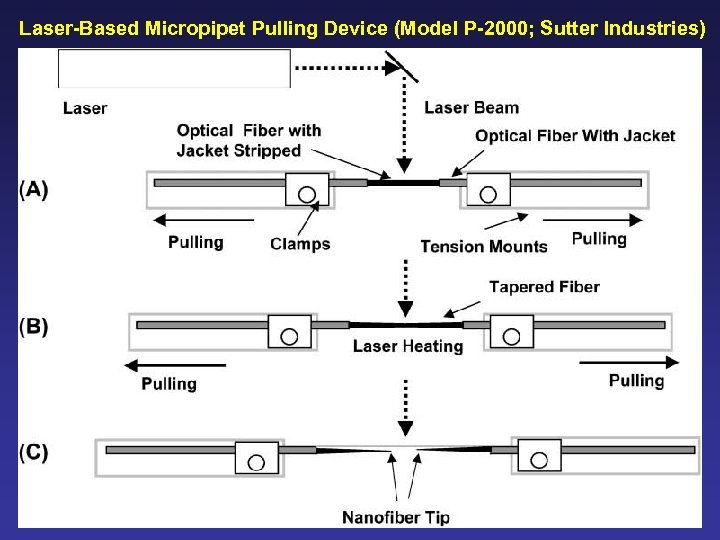
Laser-Based Micropipet Pulling Device (Model P-2000; Sutter Industries)
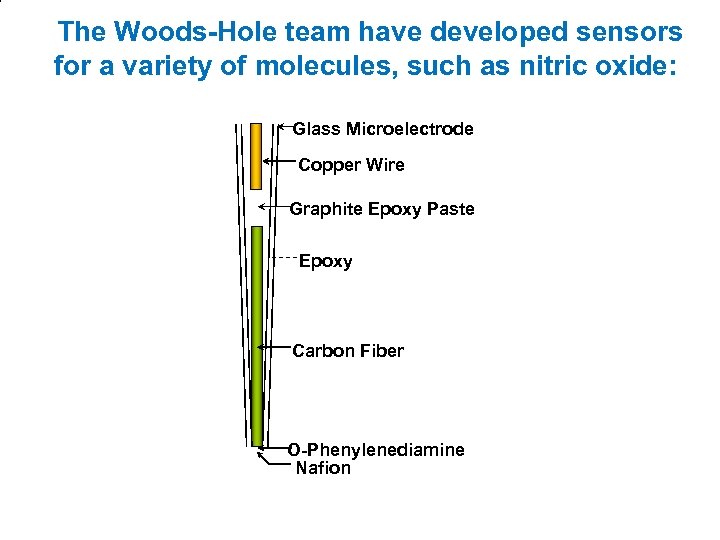
The Woods-Hole team have developed sensors for a variety of molecules, such as nitric oxide: Glass Microelectrode Copper Wire Graphite Epoxy Paste Epoxy Carbon Fiber O-Phenylenediamine Nafion
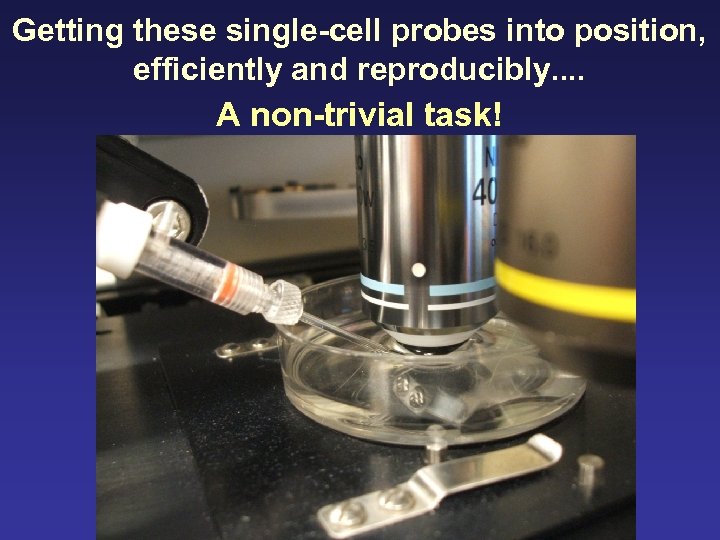
Getting these single-cell probes into position, efficiently and reproducibly. . A non-trivial task!
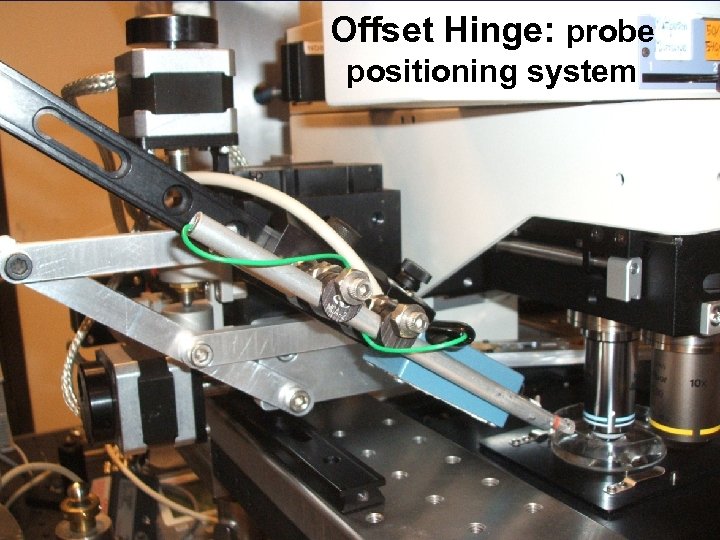
Offset Hinge: probe positioning system
Other manipulations using the offset hinge mount • • Cell micro-injection Single cell harvesting Optical fiber based Raman spectroscopy Orientation of medaka embryos
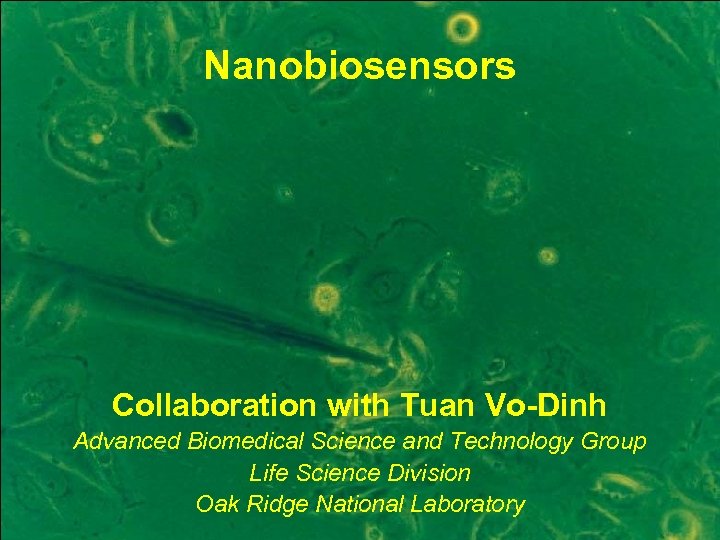
Nanobiosensors Collaboration with Tuan Vo-Dinh Advanced Biomedical Science and Technology Group Life Science Division Oak Ridge National Laboratory
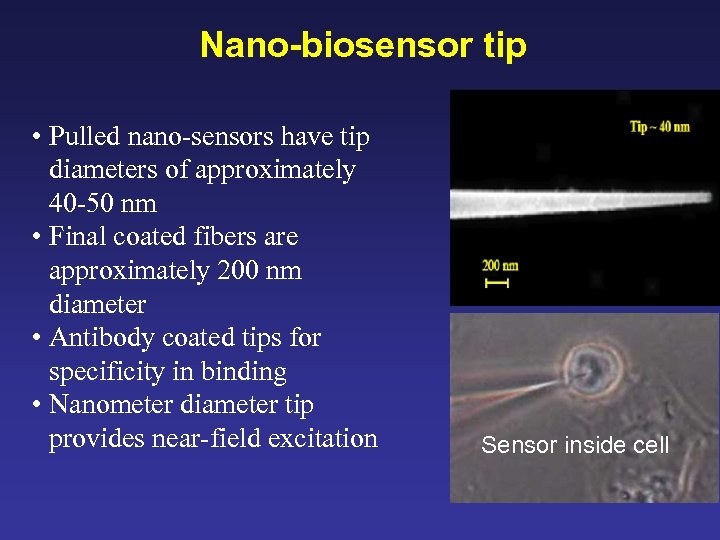
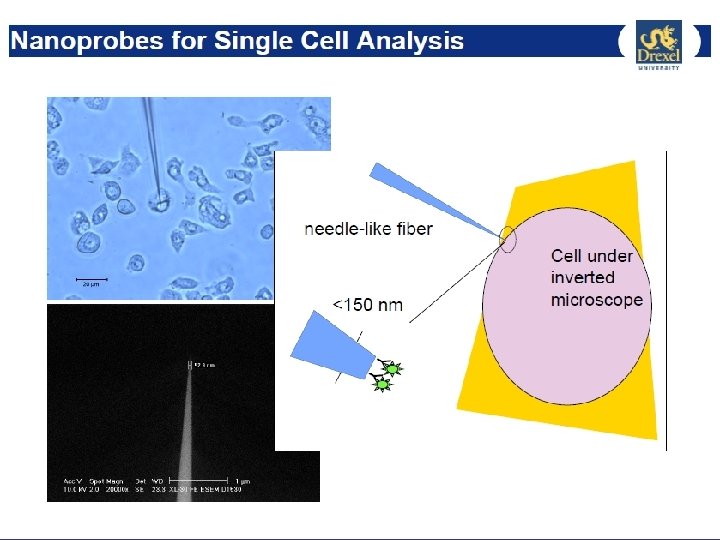
Nano-biosensor tip • Pulled nano-sensors have tip diameters of approximately 40 -50 nm • Final coated fibers are approximately 200 nm diameter • Antibody coated tips for specificity in binding • Nanometer diameter tip provides near-field excitation Sensor inside cell
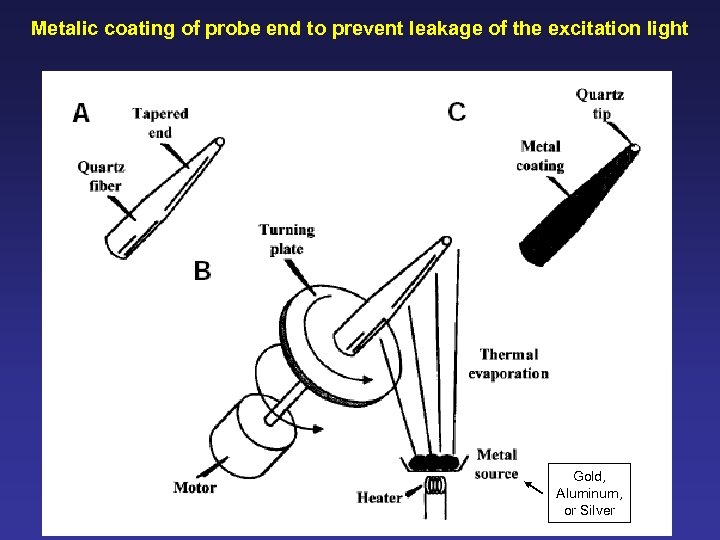
Metalic coating of probe end to prevent leakage of the excitation light Gold, Aluminum, or Silver
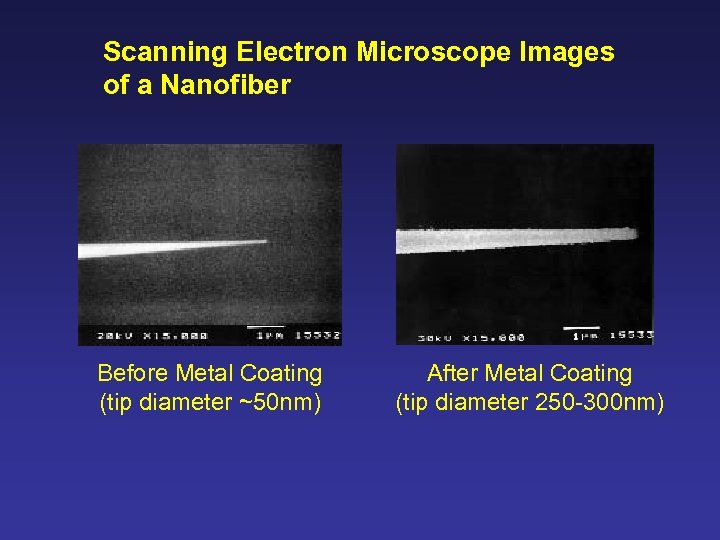
Scanning Electron Microscope Images of a Nanofiber Before Metal Coating (tip diameter ~50 nm) After Metal Coating (tip diameter 250 -300 nm)
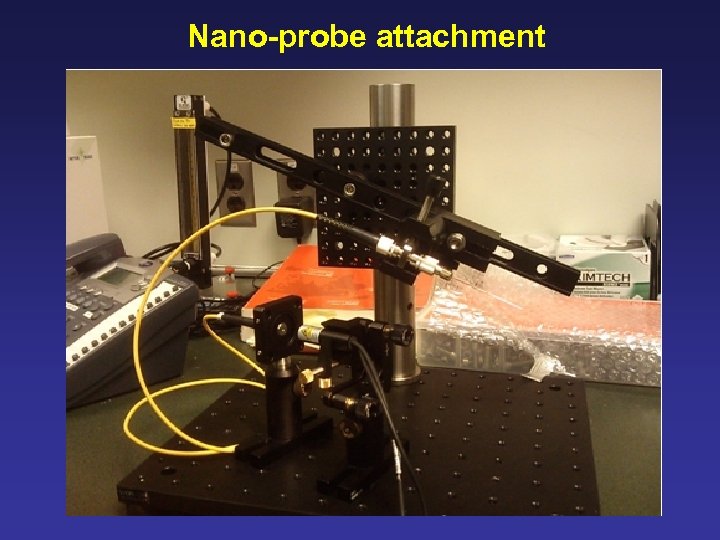
Nano-probe attachment
Automated Microscope Observation Environment for Biological Analyses (AMOEBA)
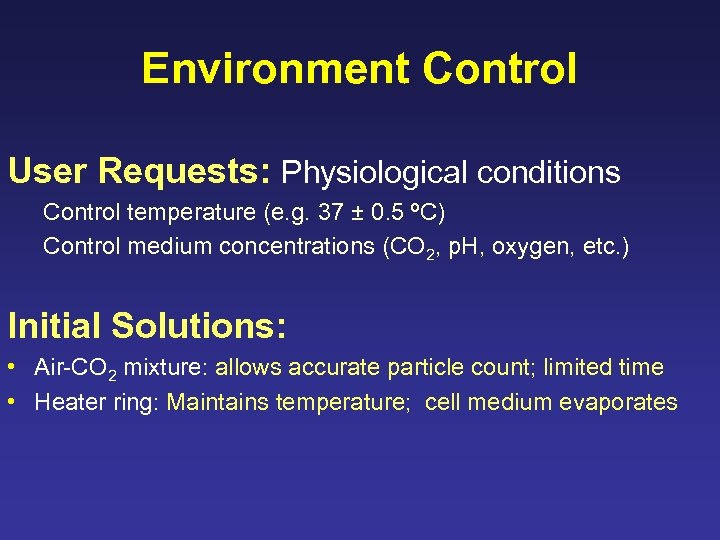
Environment Control User Requests: Physiological conditions Control temperature (e. g. 37 ± 0. 5 ºC) Control medium concentrations (CO 2, p. H, oxygen, etc. ) Initial Solutions: • Air-CO 2 mixture: allows accurate particle count; limited time • Heater ring: Maintains temperature; cell medium evaporates
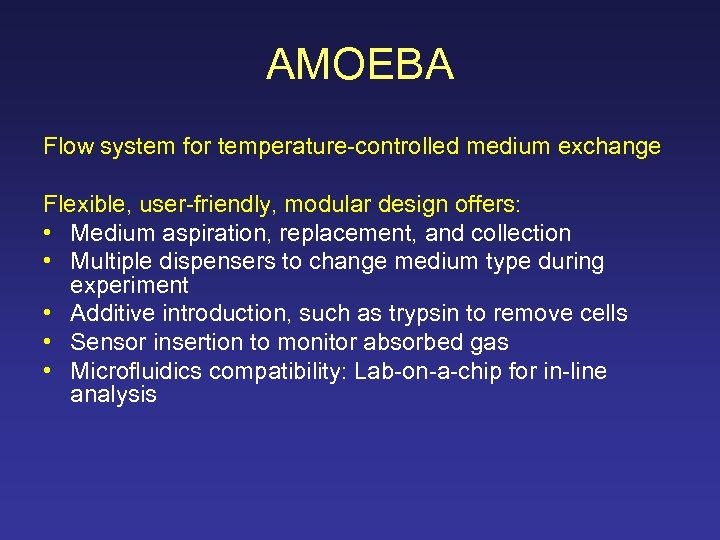
AMOEBA Flow system for temperature-controlled medium exchange Flexible, user-friendly, modular design offers: • Medium aspiration, replacement, and collection • Multiple dispensers to change medium type during experiment • Additive introduction, such as trypsin to remove cells • Sensor insertion to monitor absorbed gas • Microfluidics compatibility: Lab-on-a-chip for in-line analysis
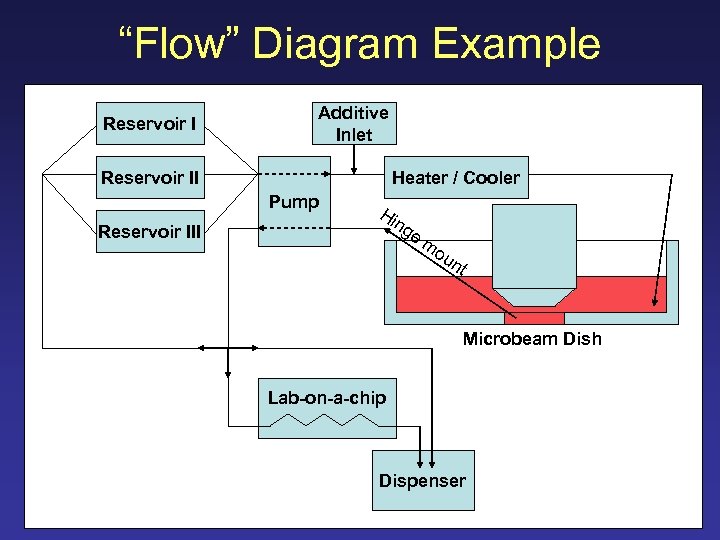
“Flow” Diagram Example Reservoir I Additive Inlet Reservoir II Heater / Cooler Pump Reservoir III Hi ng em ou nt Microbeam Dish Lab-on-a-chip Dispenser
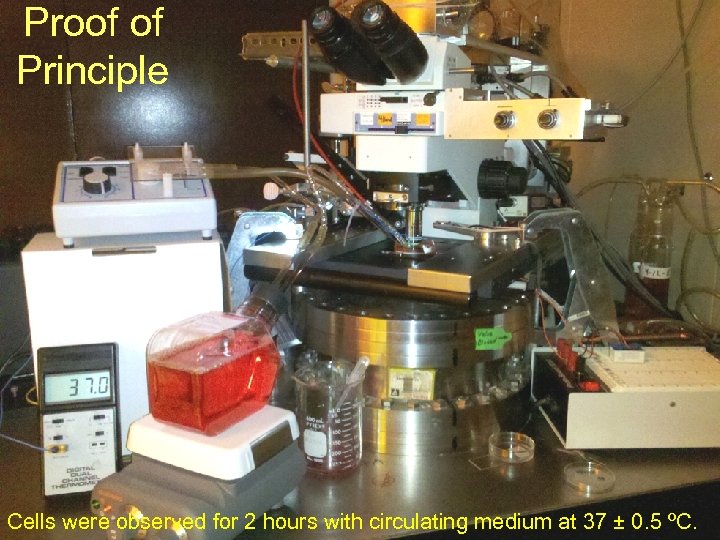
Proof of Principle Cells were observed for 2 hours with circulating medium at 37 ± 0. 5 ºC.
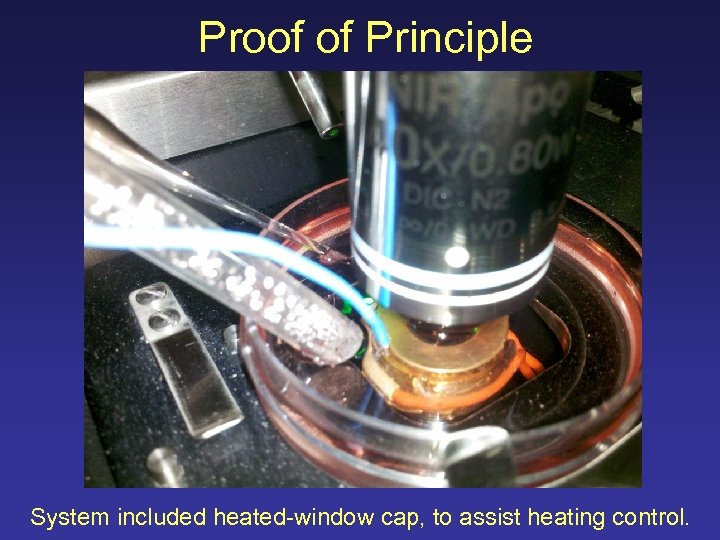
Proof of Principle System included heated-window cap, to assist heating control.
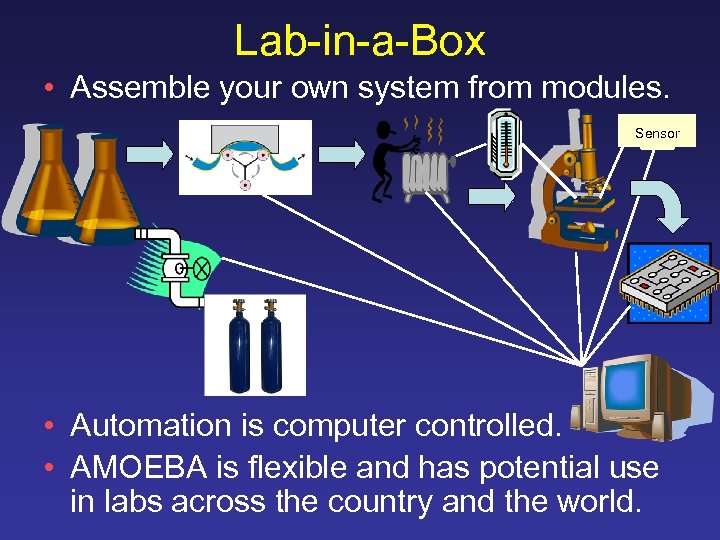
Lab-in-a-Box • Assemble your own system from modules. Sensor • Automation is computer controlled. • AMOEBA is flexible and has potential use in labs across the country and the world.
Скачать презентацию State-of-the-art probes Alan Bigelow Alternative sensing methods
9de673fd8b25beb96a9cd6e97d8a1ea5.ppt