


 Скачать презентацию Starting down a NEWPATH Nutrition Environment in Waterloo
8d0847e7c098ee7d99dbfec0f8e0b391.ppt
- Количество слайдов: 26
 Starting down a NEWPATH Nutrition, Environment in Waterloo Region, Physical Activity, Transportation and Health Andrew Devlin, University of British Columbia Leia Minaker, University of Alberta ACT Canada 2009 TDM Summit | Toronto ON | 15 November 2009 1
 Outline 1) Links between travel, built environment, and health behaviour outcomes. 1) Description of the NEWPATH project. 2) Perspectives on interdisciplinary project development. 3) Recommendations for various stakeholder groups on how to increase collaboration between departments and disciplines. 2
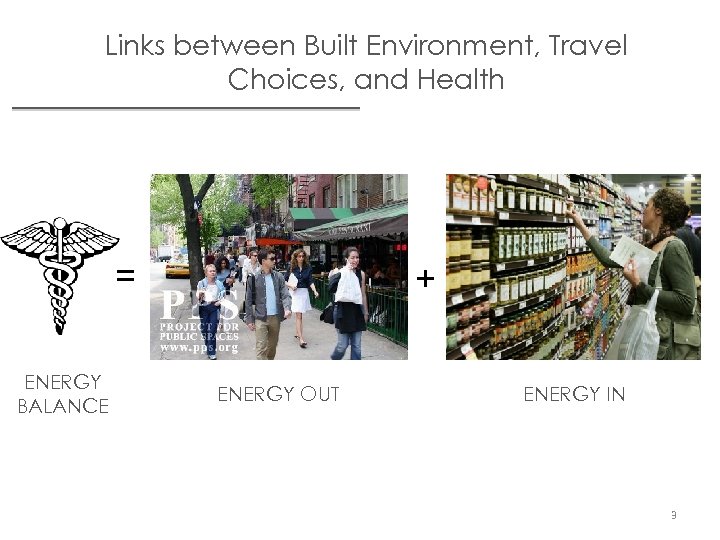 Links between Built Environment, Travel Choices, and Health = ENERGY BALANCE + ENERGY OUT ENERGY IN 3
 Some Unique Questions 1. Do differences in the local built and food environment where people live predict their levels of physical activity? Diet? Obesity? 2. What are the relative effects of physical activity vs. diet in explaining obesity rates across demographic groups and built environment types? 3. Does proximity to different types of food outlets influence food purchasing patterns? 4
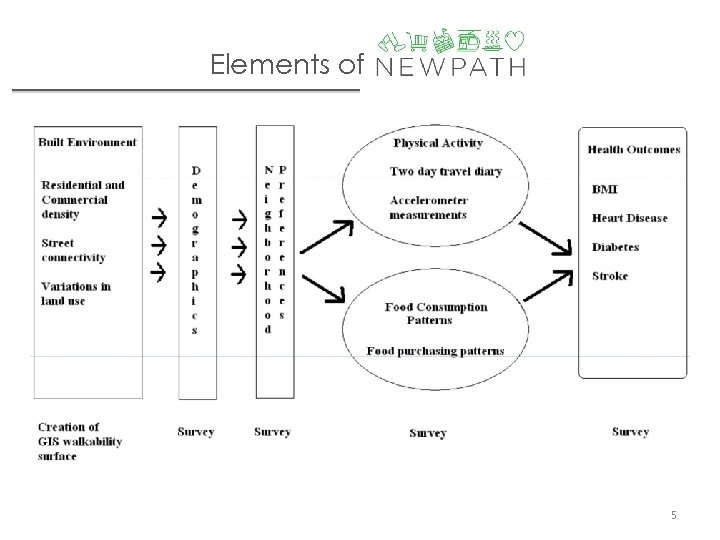 Elements of 5
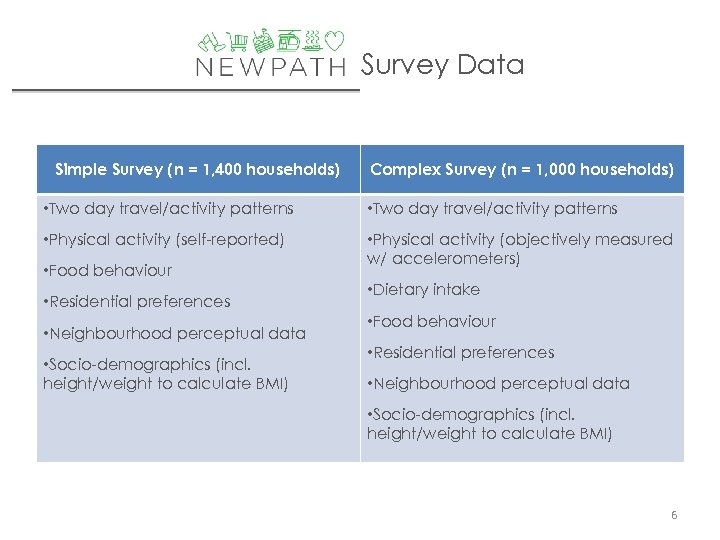 Survey Data Simple Survey (n = 1, 400 households) Complex Survey (n = 1, 000 households) • Two day travel/activity patterns • Physical activity (self-reported) • Physical activity (objectively measured w/ accelerometers) • Food behaviour • Residential preferences • Neighbourhood perceptual data • Socio-demographics (incl. height/weight to calculate BMI) • Dietary intake • Food behaviour • Residential preferences • Neighbourhood perceptual data • Socio-demographics (incl. height/weight to calculate BMI) 6
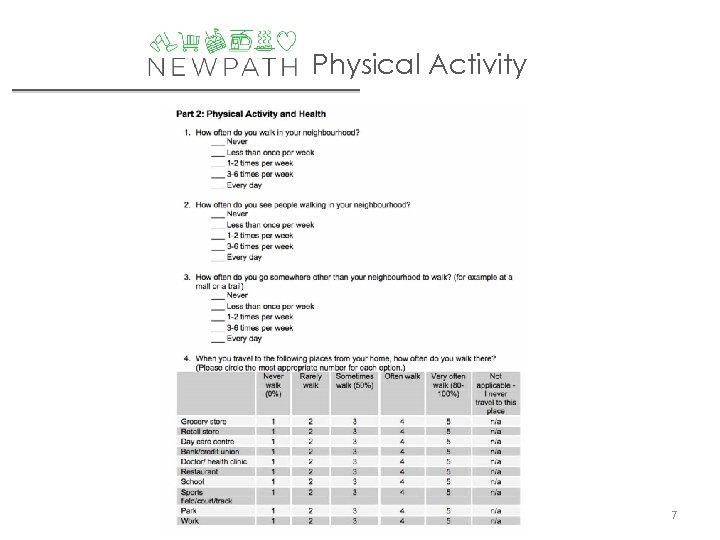 Physical Activity 7
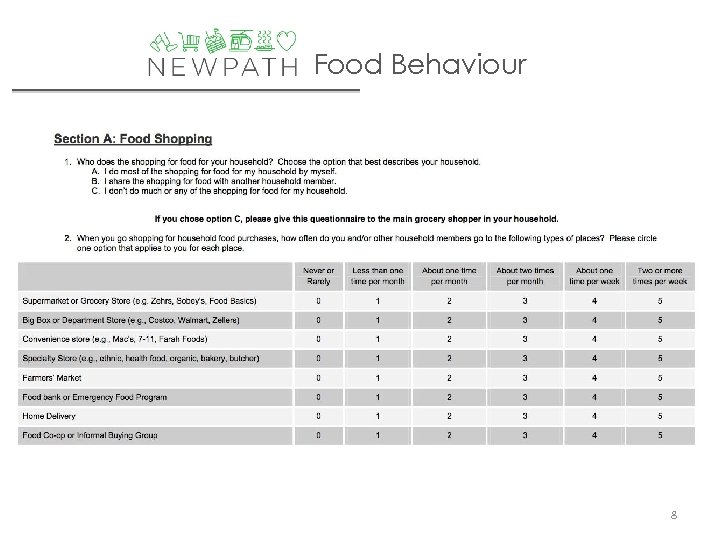 Food Behaviour 8
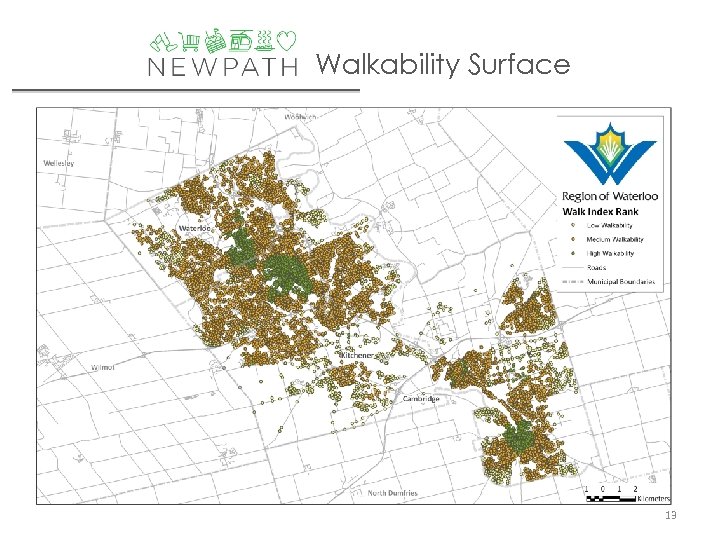
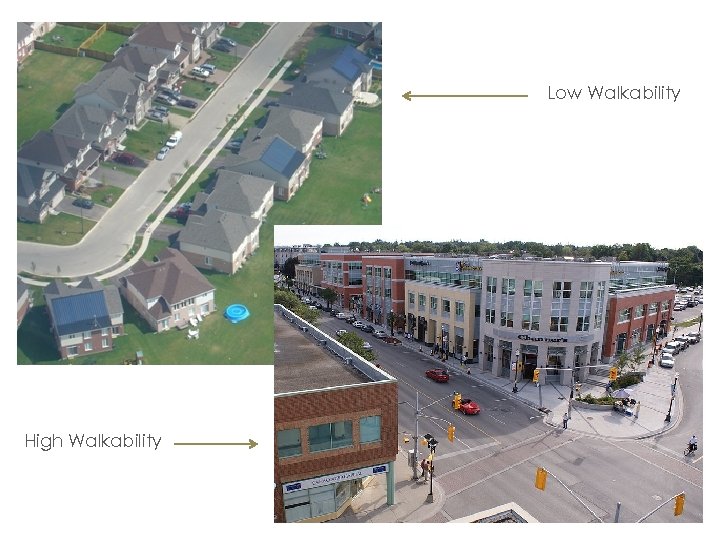
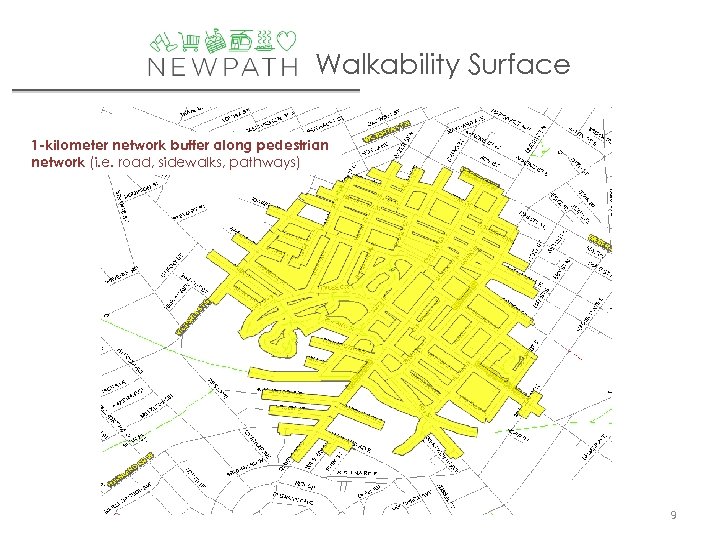 Walkability Surface 1 -kilometer network buffer along pedestrian network (i. e. road, sidewalks, pathways) 9
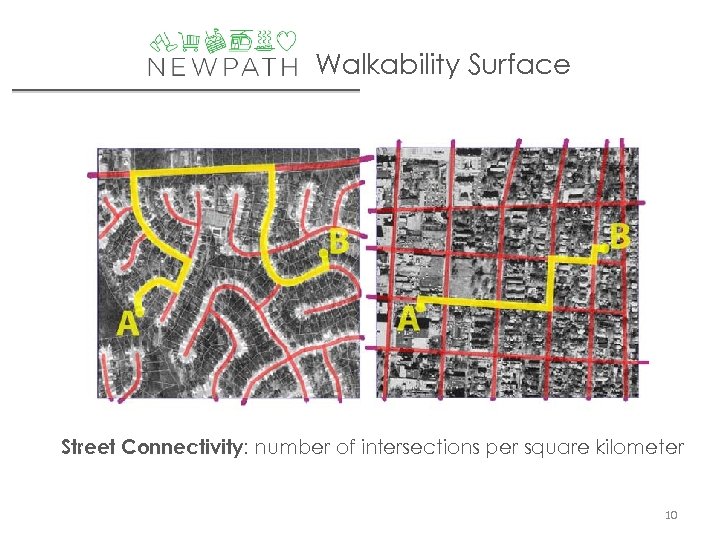 Walkability Surface Street Connectivity: number of intersections per square kilometer 10
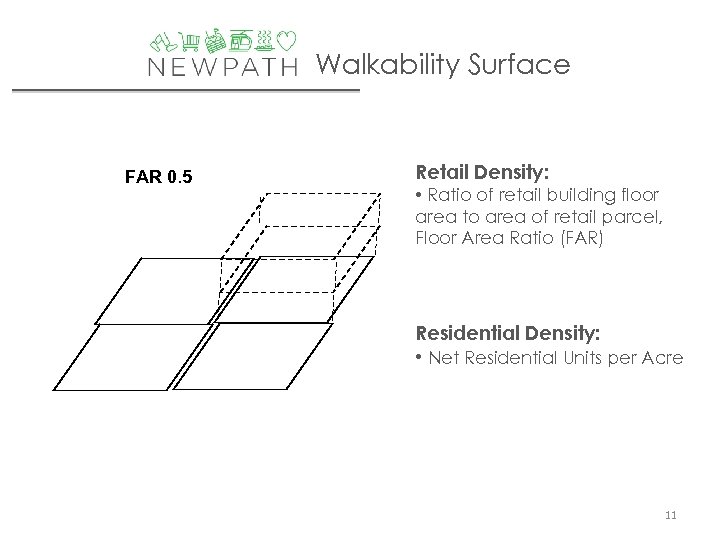 Walkability Surface FAR 0. 5 Retail Density: • Ratio of retail building floor area to area of retail parcel, Floor Area Ratio (FAR) Residential Density: • Net Residential Units per Acre 11
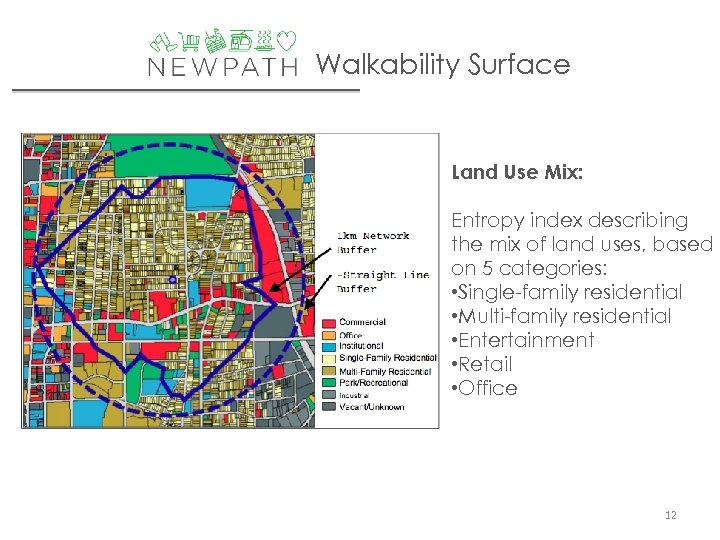 Walkability Surface Land Use Mix: Entropy index describing the mix of land uses, based on 5 categories: • Single-family residential • Multi-family residential • Entertainment • Retail • Office 12
 Walkability Surface 13
 Low Walkability High Walkability 14
 Conceptual Framework 15
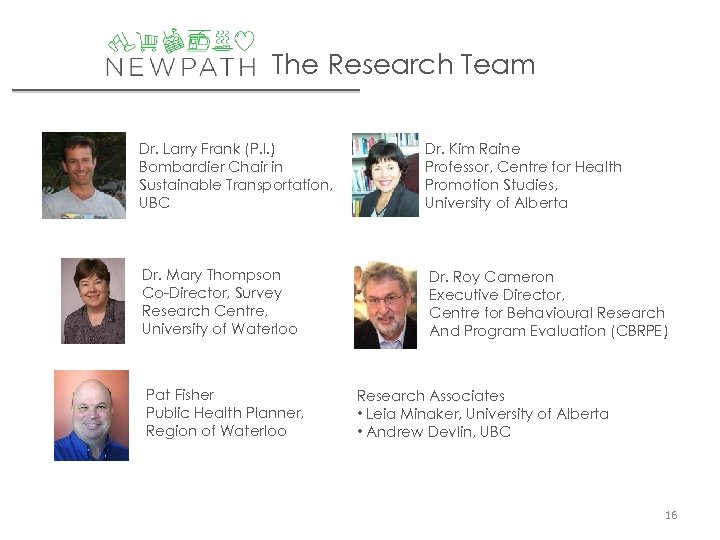 The Research Team Dr. Larry Frank (P. I. ) Bombardier Chair in Sustainable Transportation, UBC Dr. Kim Raine Professor, Centre for Health Promotion Studies, University of Alberta Dr. Mary Thompson Co-Director, Survey Research Centre, University of Waterloo Dr. Roy Cameron Executive Director, Centre for Behavioural Research And Program Evaluation (CBRPE) Pat Fisher Public Health Planner, Region of Waterloo Research Associates • Leia Minaker, University of Alberta • Andrew Devlin, UBC 16
 The Partnership: Beginnings • The project is the result of collaboration between municipal staff and academics • Development of Regional Growth Management Strategy by Waterloo Region – Staff asked to identify and develop research projects related to health and the built environment – One project assessed subjective walkability and physical activity 17
 The Partnership: Beginnings • Municipal staff contacted the Principal Investigator to develop a walkability index • The NEWPATH project evolved and developed with substantial input from both the Region and academics – Municipal public health staff encouraged to work collaboratively with colleagues in other departments to create implementation strategy – Push from funders and academic institutions to increase inter/multi/trans-disciplinary research 18
 Collaboration • Collaboration between municipal staff increases buy-in among Regional stakeholders • Collaboration between researchers increases applicability of findings to an increased number of academic disciplines 19
 Recommendations For practitioners: • Develop relationships with local academic communities • Be involved in every stage of the research, from the proposal through data collection to the analyses and knowledge transfer strategies 20
 Recommendations For academics: • Seek opportunities to partner with municipal or provincial government departments or agencies to increase knowledge transfer: – the exchange, synthesis and ethically-sound application of knowledge - within a complex system of interactions among researchers and users - to accelerate the capture of the benefits of research for Canadians through improved health, more effective services and products, and a strengthened health care system (CIHR, 2004) 21
 Recommendations For funders: • Continue to require community partners for academic research. • Identify common interests between academics and municipalities 22
 Recommendations To increase public support for walkable communities: • Increase public education about benefits of walkable communities: – Improved health behaviours (e. g. , physical activity) – Improved health outcomes (e. g. , lower obesity rates) – Improved air quality (e. g. , lower vehicle emissions) • Increase access to walkable communities 23
 Knowledge Transfer Within Waterloo Region • Findings can assist in creating tools and models to evaluate potential health impacts associated with future development scenarios. Within Scientific Community • Methodology advancement; increased knowledge base. To National Audience • Partner with Smart Growth, Land Development, and Transportation/TDM sectors to generalize and disseminate findings to other areas across Canada. Website • http: //www. act-trans. ubc. ca/ 24
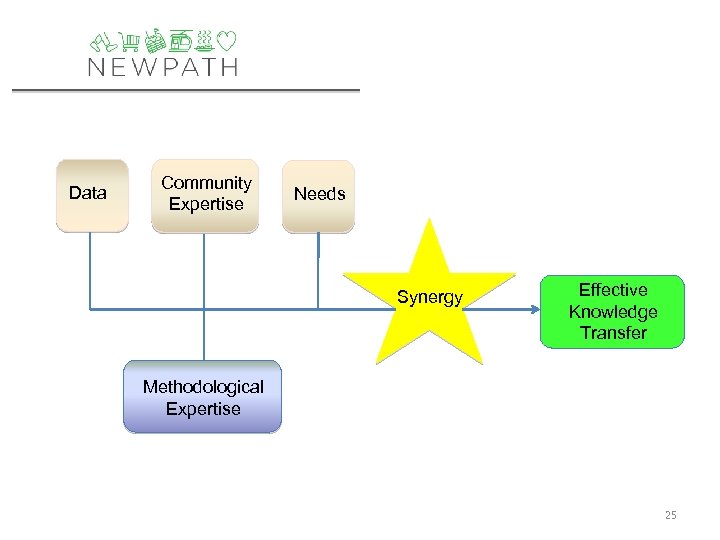 Data Community Expertise Needs Synergy Effective Knowledge Transfer Methodological Expertise 25
 Follow at www. act-trans. ubc. ca Research Funding and Sponsors 26