 Скачать презентацию Stakes and opportunities for hydrocarbon refrigerant use in
0e5681ab4b2ade82e2cc34b236eed8a4.ppt
- Количество слайдов: 18



Stakes and opportunities for hydrocarbon refrigerant use in global ice cream sales Rene van Gerwen Global Lead Engineer Refrigeration & HVAC International Conference on Natural Refrigerants, October 19 -20, 2009, Brussels, Belgium
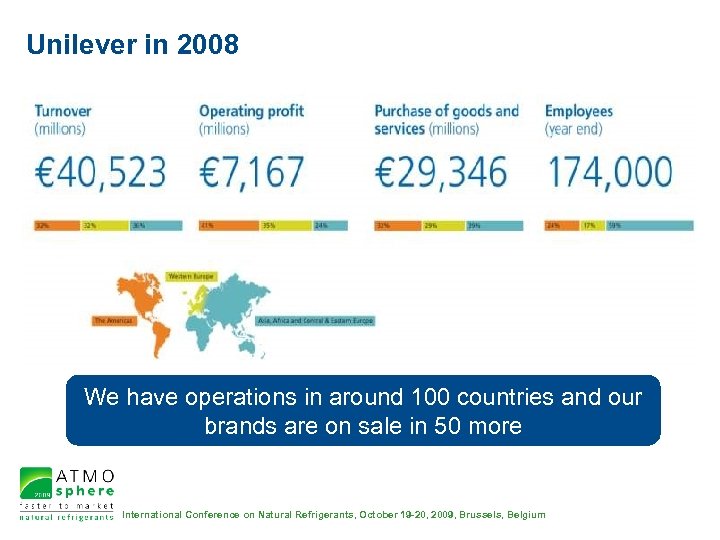
Unilever in 2008 We have operations in around 100 countries and our brands are on sale in 50 more International Conference on Natural Refrigerants, October 19 -20, 2009, Brussels, Belgium
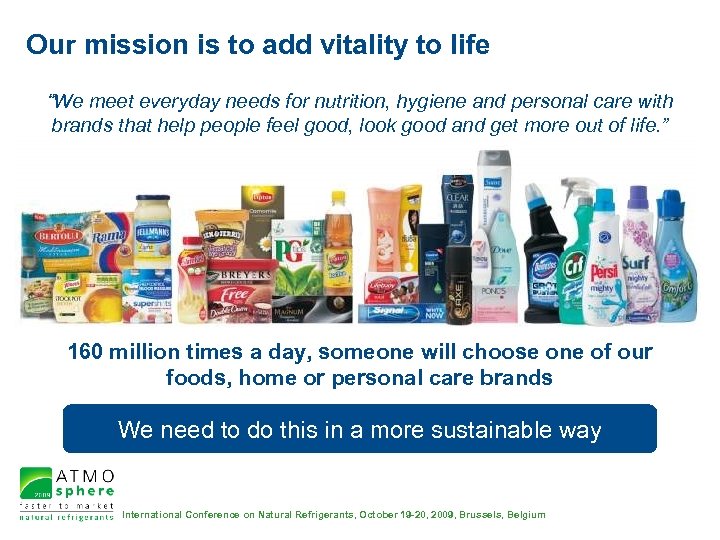
Our mission is to add vitality to life “We meet everyday needs for nutrition, hygiene and personal care with brands that help people feel good, look good and get more out of life. ” 160 million times a day, someone will choose one of our foods, home or personal care brands We need to do this in a more sustainable way International Conference on Natural Refrigerants, October 19 -20, 2009, Brussels, Belgium
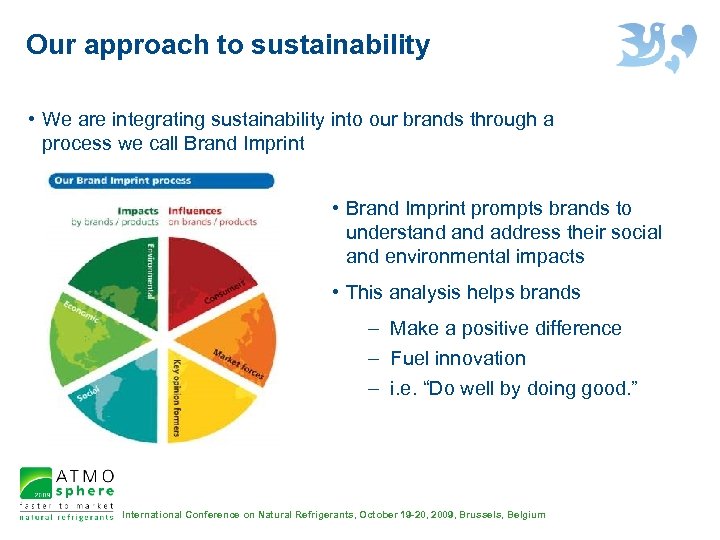
Our approach to sustainability • We are integrating sustainability into our brands through a process we call Brand Imprint • Brand Imprint prompts brands to understand address their social and environmental impacts • This analysis helps brands – Make a positive difference – Fuel innovation – i. e. “Do well by doing good. ” International Conference on Natural Refrigerants, October 19 -20, 2009, Brussels, Belgium
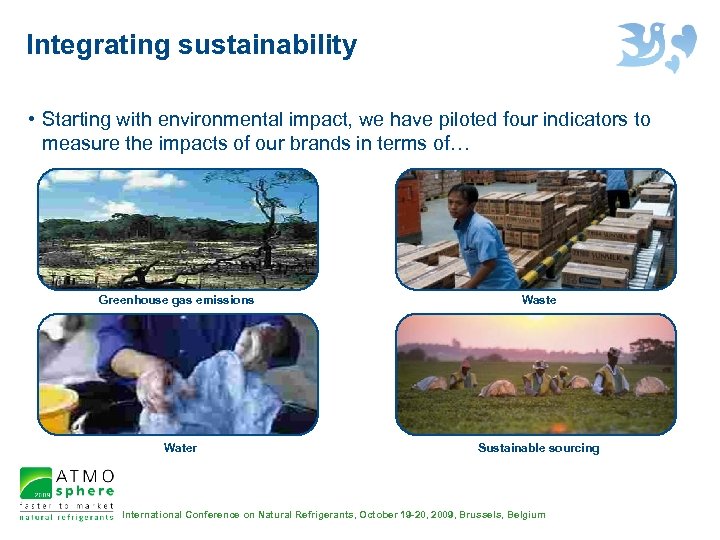
Integrating sustainability • Starting with environmental impact, we have piloted four indicators to measure the impacts of our brands in terms of… Greenhouse gas emissions Waste Water Sustainable sourcing International Conference on Natural Refrigerants, October 19 -20, 2009, Brussels, Belgium
Recognition for our efforts • Dow Jones Sustainability World Indexes foods industry leader for 11 th year running in 2009 – the only company to achieve this • Included in the Global 100 Most Sustainable Corporations in the World by Corporate Knights & Innovest Strategic Value Advisors • Included in FTSE 4 Good Index Series and FTSE 4 Good Environmental Leaders Europe 40 Index International Conference on Natural Refrigerants, October 19 -20, 2009, Brussels, Belgium
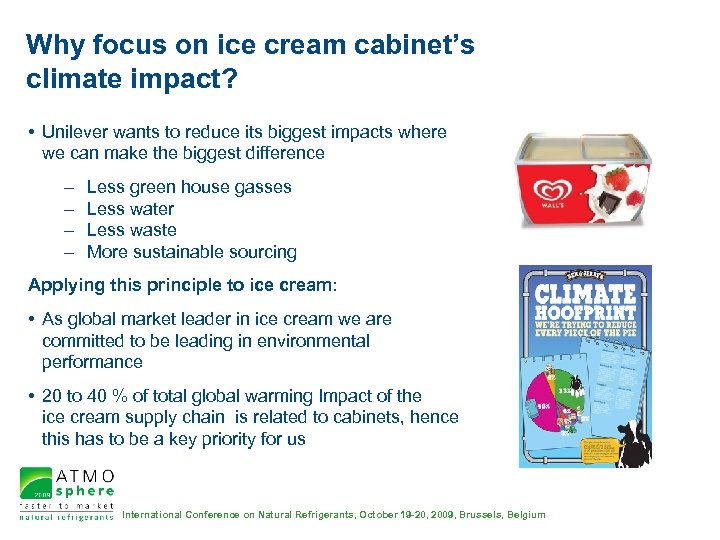
Why focus on ice cream cabinet’s climate impact? • Unilever wants to reduce its biggest impacts where we can make the biggest difference – – Less green house gasses Less water Less waste More sustainable sourcing Applying this principle to ice cream: • As global market leader in ice cream we are committed to be leading in environmental performance • 20 to 40 % of total global warming Impact of the ice cream supply chain is related to cabinets, hence this has to be a key priority for us International Conference on Natural Refrigerants, October 19 -20, 2009, Brussels, Belgium
Working together: refrigerants naturally! • Since 2003, we work with Greenpeace, UNEP and other multinational FMCG companies to promote refrigeration technologies for POS equipment that avoid the use of climate-damaging HFCs International Conference on Natural Refrigerants, October 19 -20, 2009, Brussels, Belgium
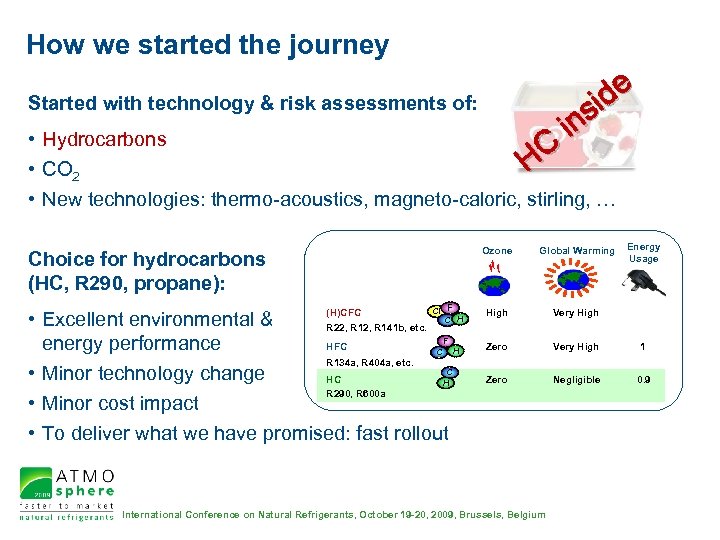
How we started the journey de si in Started with technology & risk assessments of: • Hydrocarbons C H • CO 2 • New technologies: thermo-acoustics, magneto-caloric, stirling, … Energy Usage Ozone Choice for hydrocarbons (HC, R 290, propane): (H)CFC R 22, R 141 b, etc. Cl F C H • Excellent environmental & HFC energy performance R 134 a, R 404 a, etc. • Minor technology change HC R 290, R 600 a • Minor cost impact • To deliver what we have promised: fast rollout C F C H H Global Warming High Very High Zero Very High 1 Zero Negligible 0. 9 International Conference on Natural Refrigerants, October 19 -20, 2009, Brussels, Belgium
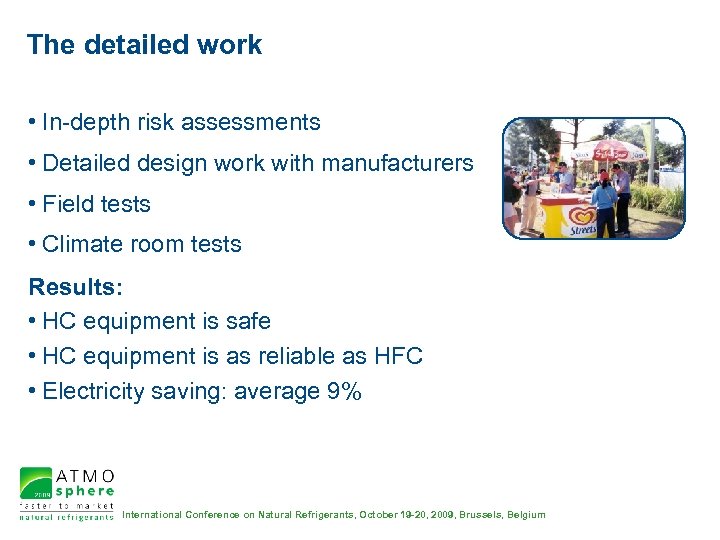
The detailed work • In-depth risk assessments • Detailed design work with manufacturers • Field tests • Climate room tests Results: • HC equipment is safe • HC equipment is as reliable as HFC • Electricity saving: average 9% International Conference on Natural Refrigerants, October 19 -20, 2009, Brussels, Belgium
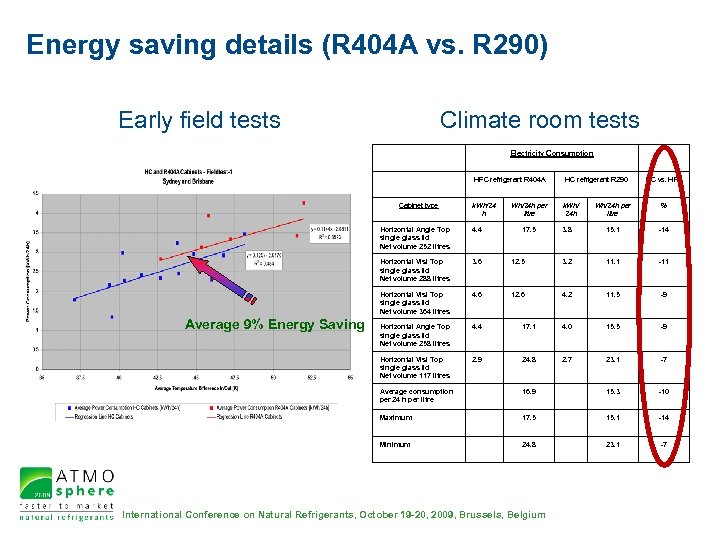
Energy saving details (R 404 A vs. R 290) Early field tests Climate room tests Electricity Consumption HFC refrigerant R 404 A Cabinet type k. Wh/24 h Wh/24 h per litre k. Wh/ 24 h HC vs. HFC Wh/24 h per litre % 3. 8 15. 1 -14 Horizontal Angle Top single glass lid Net volume 252 litres 4. 4 Horizontal Visi Top single glass lid Net volume 288 litres 3. 6 12. 5 3. 2 11. 1 -11 Horizontal Visi Top single glass lid Net volume 364 litres 4. 6 12. 6 4. 2 11. 5 -9 Horizontal Angle Top single glass lid Net volume 258 litres 4. 4 17. 1 4. 0 15. 5 -9 Horizontal Visi Top single glass lid Net volume 117 litres Average 9% Energy Saving 17. 5 HC refrigerant R 290 2. 9 24. 8 2. 7 23. 1 -7 Average consumption per 24 h per litre 16. 9 15. 3 -10 Maximum 17. 5 15. 1 -14 Minimum 24. 8 23. 1 -7 International Conference on Natural Refrigerants, October 19 -20, 2009, Brussels, Belgium
Equipment design Functional specifications for equipment suppliers • Cabinet manufacturer is responsible for design and safety • Follow appropriate ISO, IEC, CEN or CENELEC standards • Avoid potential ignition sources • Minimise possibility of leaks • Minimise accumulation in compressor compartment (ventilation) • Clear labels and documents • Standardise on propane (R 290) International Conference on Natural Refrigerants, October 19 -20, 2009, Brussels, Belgium
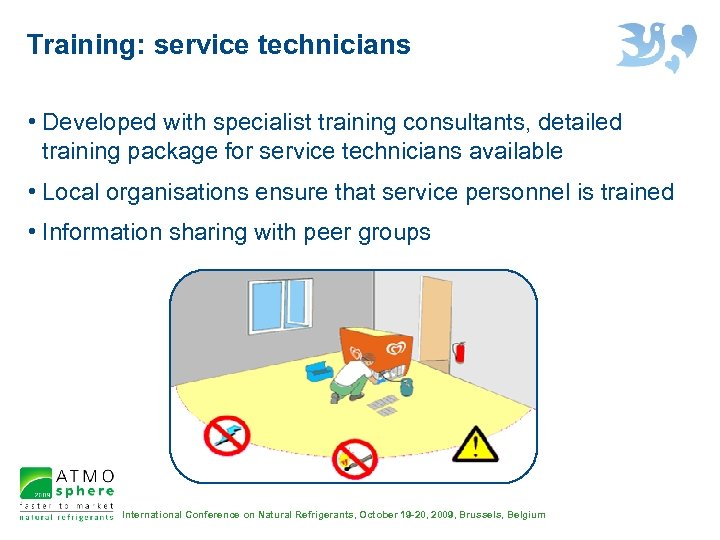
Training: service technicians • Developed with specialist training consultants, detailed training package for service technicians available • Local organisations ensure that service personnel is trained • Information sharing with peer groups International Conference on Natural Refrigerants, October 19 -20, 2009, Brussels, Belgium
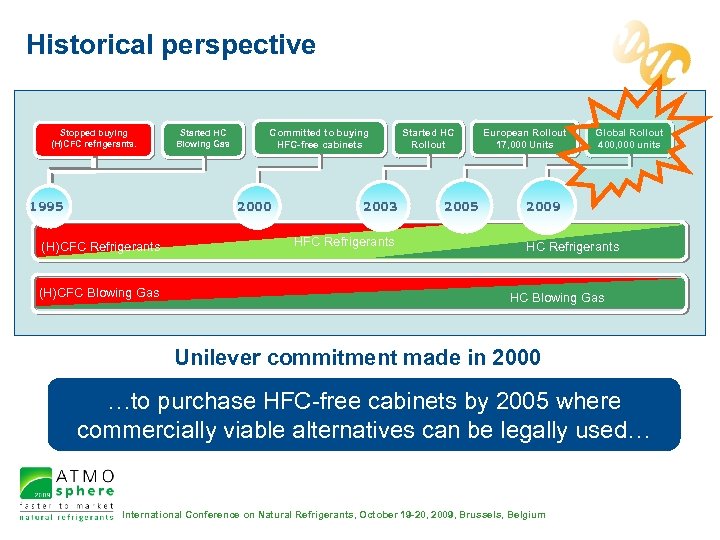
Historical perspective Stopped buying (H)CFC refrigerants. 1995 Started HC Blowing Gas Committed to buying HFC-free cabinets 2000 (H)CFC Refrigerants (H)CFC Blowing Gas 2003 HFC Refrigerants Started HC Rollout 2005 European Rollout 17, 000 Units Global Rollout 400, 000 units 2009 HC Refrigerants HC Blowing Gas Unilever commitment made in 2000 …to purchase HFC-free cabinets by 2005 where commercially viable alternatives can be legally used… International Conference on Natural Refrigerants, October 19 -20, 2009, Brussels, Belgium
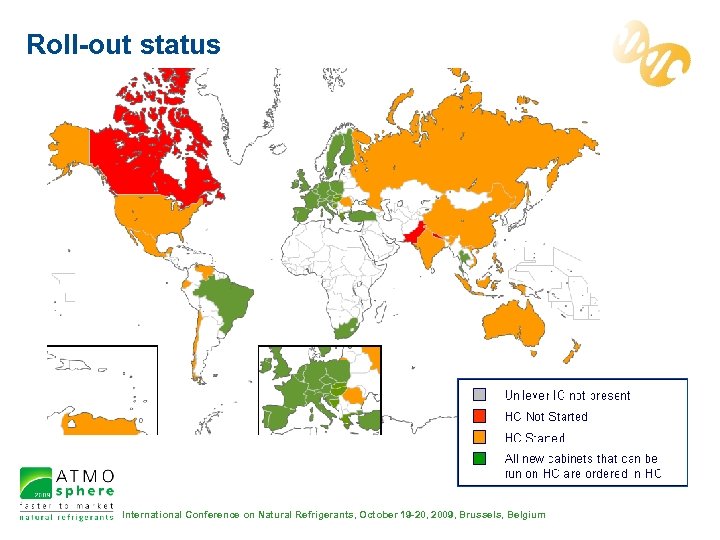
Roll-out status International Conference on Natural Refrigerants, October 19 -20, 2009, Brussels, Belgium
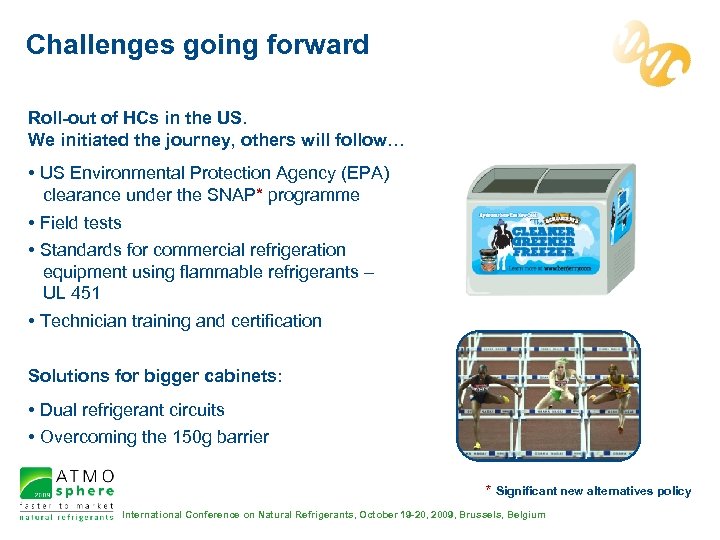
Challenges going forward Roll-out of HCs in the US. We initiated the journey, others will follow… • US Environmental Protection Agency (EPA) clearance under the SNAP* programme • Field tests • Standards for commercial refrigeration equipment using flammable refrigerants – UL 451 • Technician training and certification Solutions for bigger cabinets: • Dual refrigerant circuits • Overcoming the 150 g barrier * Significant new alternatives policy International Conference on Natural Refrigerants, October 19 -20, 2009, Brussels, Belgium
We believe that… • Hydrocarbons are the best refrigerant option for ice cream cabinets • Developing and rolling out new refrigeration technologies for certain applications is challenging and needs careful preparation and management • Economics of any social and environmental benefits are crucial - otherwise they cannot be sustainable! International Conference on Natural Refrigerants, October 19 -20, 2009, Brussels, Belgium
Thank you International Conference on Natural Refrigerants, October 19 -20, 2009, Brussels, Belgium
Скачать презентацию Stakes and opportunities for hydrocarbon refrigerant use in
0e5681ab4b2ade82e2cc34b236eed8a4.ppt