


 Скачать презентацию Stakeholder Analysis Pacific Region Starwood One Tool
0034a97559b965c73f6a30b525c8a4ed.ppt
- Количество слайдов: 9
 Stakeholder Analysis Pacific Region – Starwood One Tool Library Rodney Brack – MBB Starwood Hotels – Pacific Region Template based on minitab solutions 1
 Stakeholder Analysis • Why is it important? – Stakeholder management is critical to the success of every project in every organization I have ever worked with. By engaging the right people in the right way in your project, you can make a big difference to its success. . . and to your career. " Experienced Project Manager • What is a stakeholder? – A stakeholder is any group/individual that are affected by your work, who have influence or power over it, or have an interest in its successful or unsuccessful conclusion. 2
 Completing Stakeholder Analysis 1) Brainstorm Stakeholders – remember that although stakeholders may be both organizations and people, ultimately you must communicate with people. Make sure that you identify the correct individual stakeholders within a stakeholder organization. 2) Prioritize stakeholders – calculate attitude, activity, power & interest of stakeholders 3) Interpret graphs : identify roadblocks, supporters & those vital to the project 4) Determine strategy – use quadrants & PAIN! 3
 Attitude, Activity, Power & Interest • Attitude : – -10 (strongly against) – 10 (strongly for) • Activity : – 0 (completely passive) – 10 (strongly active) • Power : – 0 (no effective power) – 10 (powerful influence) • Interest : – 0 (no interest) – 10 (very interested) 4
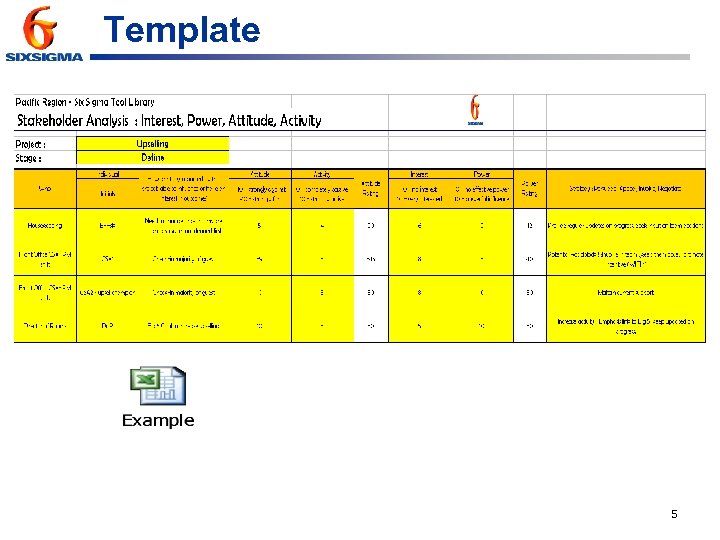 Template 5
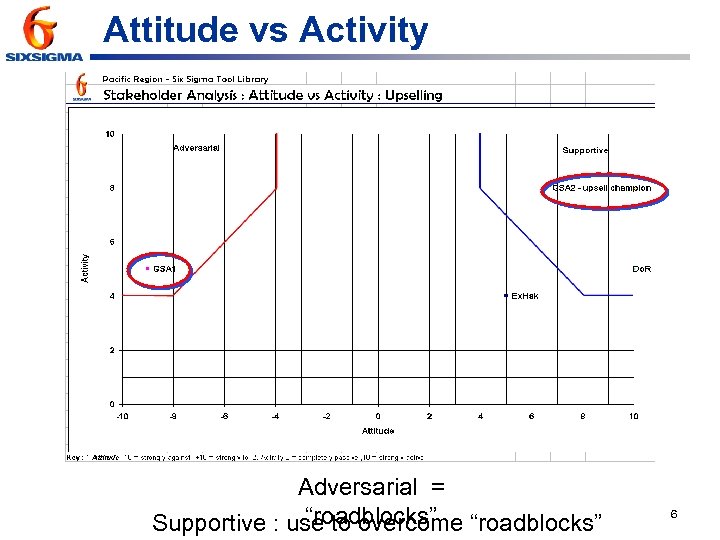 Attitude vs Activity Adversarial = “roadblocks” Supportive : use to overcome “roadblocks” 6
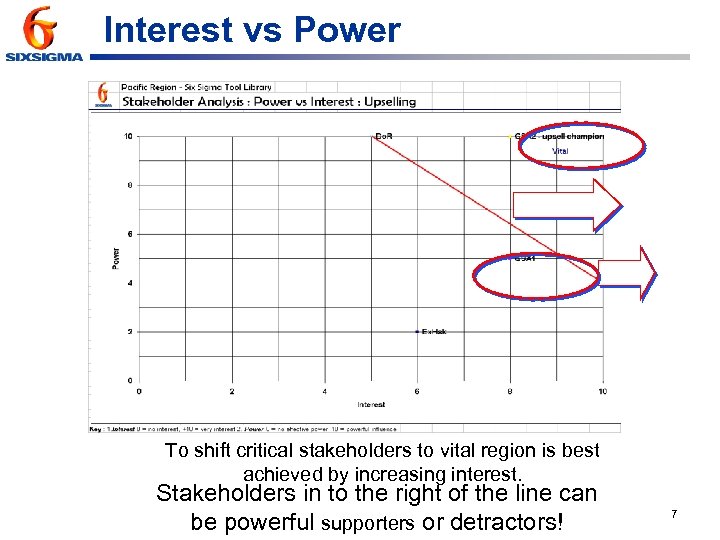 Interest vs Power To shift critical stakeholders to vital region is best achieved by increasing interest. Stakeholders in to the right of the line can be powerful supporters or detractors! 7
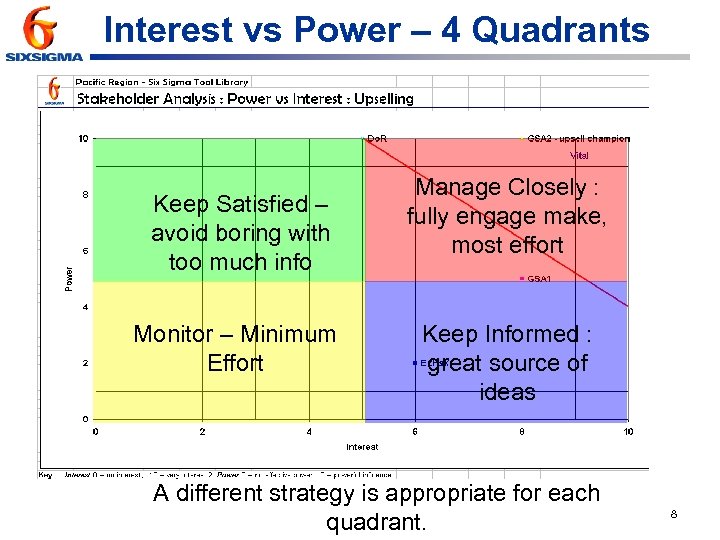 Interest vs Power – 4 Quadrants Keep Satisfied – avoid boring with too much info Monitor – Minimum Effort Manage Closely : fully engage make, most effort Keep Informed : great source of ideas A different strategy is appropriate for each quadrant. 8
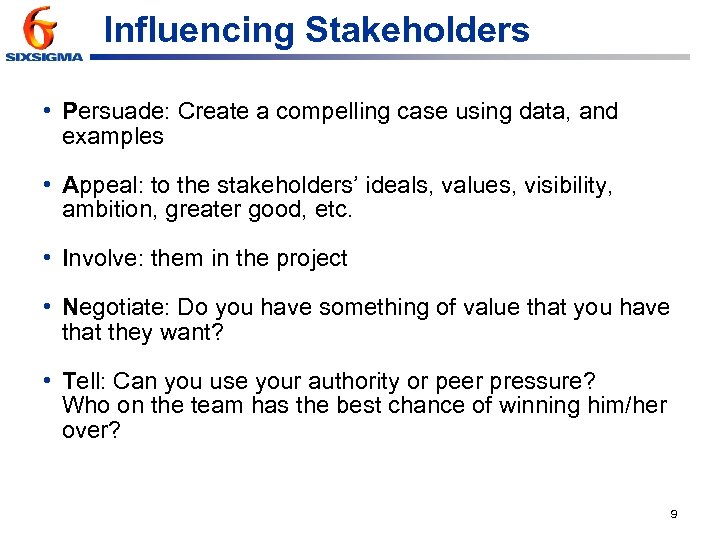 Influencing Stakeholders • Persuade: Create a compelling case using data, and examples • Appeal: to the stakeholders’ ideals, values, visibility, ambition, greater good, etc. • Involve: them in the project • Negotiate: Do you have something of value that you have that they want? • Tell: Can you use your authority or peer pressure? Who on the team has the best chance of winning him/her over? 9