


 Скачать презентацию Stages of Travel Management Excellence Strategies for Advancing
4cc8f48f37a12ea96f9d467d273193c1.ppt
- Количество слайдов: 48
 Stages of Travel Management Excellence Strategies for Advancing Your Travel Programme Presented by Scott Gillespie, CEO TRAVEL ANALYTICS INC
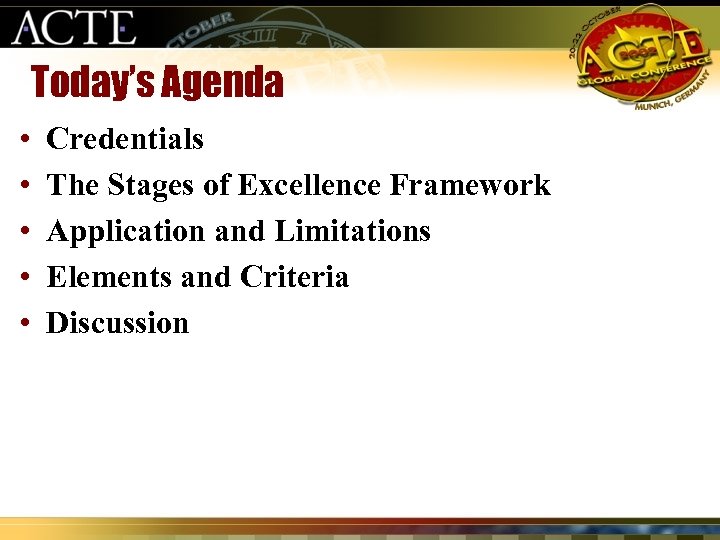 Today’s Agenda • • • Credentials The Stages of Excellence Framework Application and Limitations Elements and Criteria Discussion
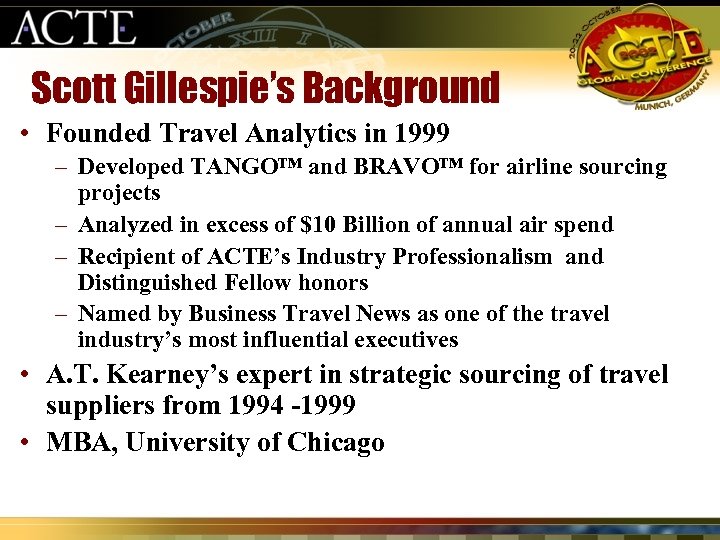 Scott Gillespie’s Background • Founded Travel Analytics in 1999 – Developed TANGO™ and BRAVO™ for airline sourcing projects – Analyzed in excess of $10 Billion of annual air spend – Recipient of ACTE’s Industry Professionalism and Distinguished Fellow honors – Named by Business Travel News as one of the travel industry’s most influential executives • A. T. Kearney’s expert in strategic sourcing of travel suppliers from 1994 -1999 • MBA, University of Chicago
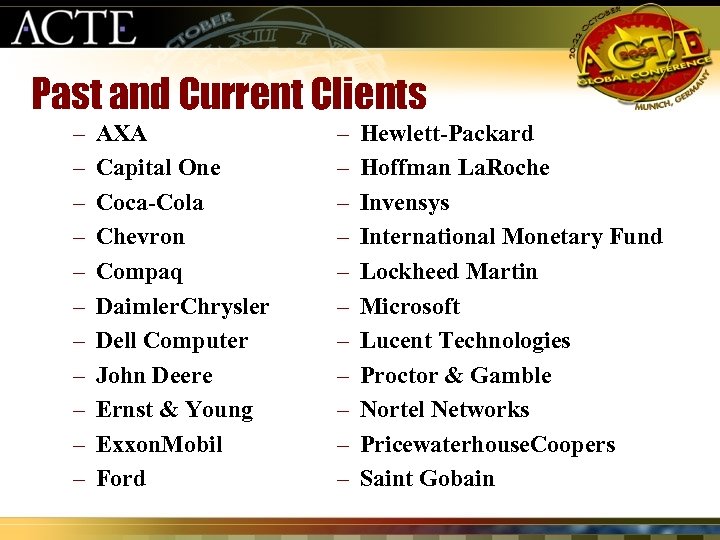 Past and Current Clients – – – AXA Capital One Coca-Cola Chevron Compaq Daimler. Chrysler Dell Computer John Deere Ernst & Young Exxon. Mobil Ford – – – Hewlett-Packard Hoffman La. Roche Invensys International Monetary Fund Lockheed Martin Microsoft Lucent Technologies Proctor & Gamble Nortel Networks Pricewaterhouse. Coopers Saint Gobain
 Stages of Excellence For Travel Management The Framework
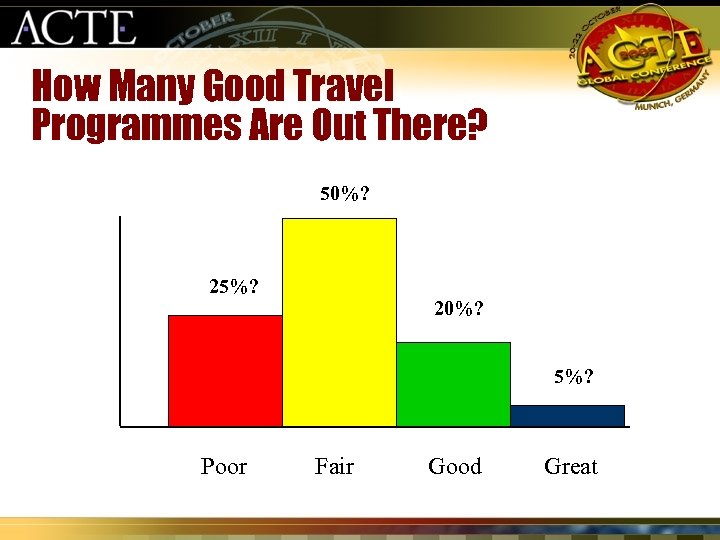 How Many Good Travel Programmes Are Out There? 50%? 25%? 20%? 5%? Poor Fair Good Great
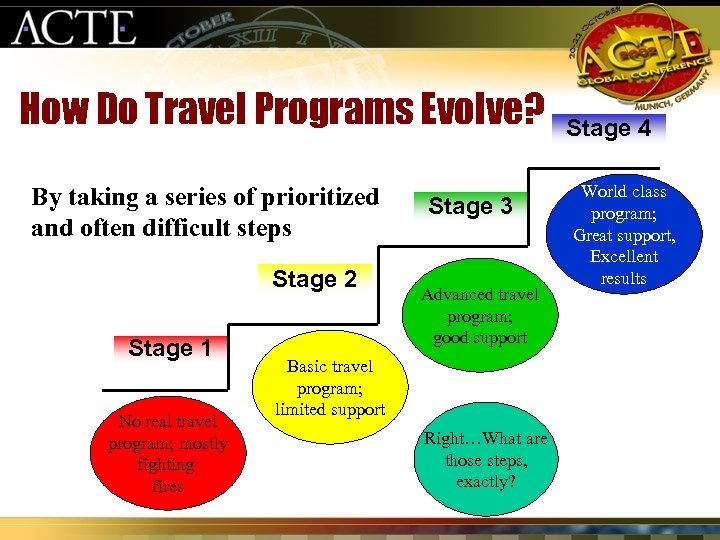 How Do Travel Programs Evolve? By taking a series of prioritized and often difficult steps Stage 2 Stage 1 No real travel program; mostly fighting fires Stage 3 Advanced travel program; good support Basic travel program; limited support Right…What are those steps, exactly? Stage 4 World class program; Great support, Excellent results
 The Answers Are Not Clear…But The Method Is • The travel/procurement team must agree on a basic strategy and key goals – What is realistically achievable? – What does our company expect? • Requires a rigorous assessment of current program, practices, processes and stakeholders • Managers must prioritize costs and benefits of each potential improvement Managers need a useful framework
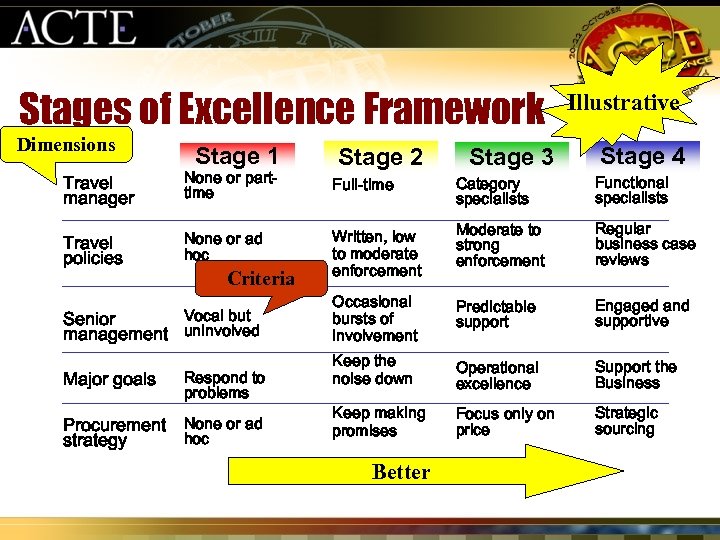 Stages of Excellence Framework Dimensions Stage 1 Stage 2 Stage 3 Illustrative Stage 4 Travel manager None or parttime Full-time Category specialists Functional specialists Travel policies None or ad hoc Written, low to moderate enforcement Moderate to strong enforcement Regular business case reviews Occasional bursts of involvement Predictable support Engaged and supportive Keep the noise down Operational excellence Support the Business Keep making promises Focus only on price Strategic sourcing Criteria Vocal but Senior management uninvolved Major goals Respond to problems Procurement None or ad hoc strategy Better
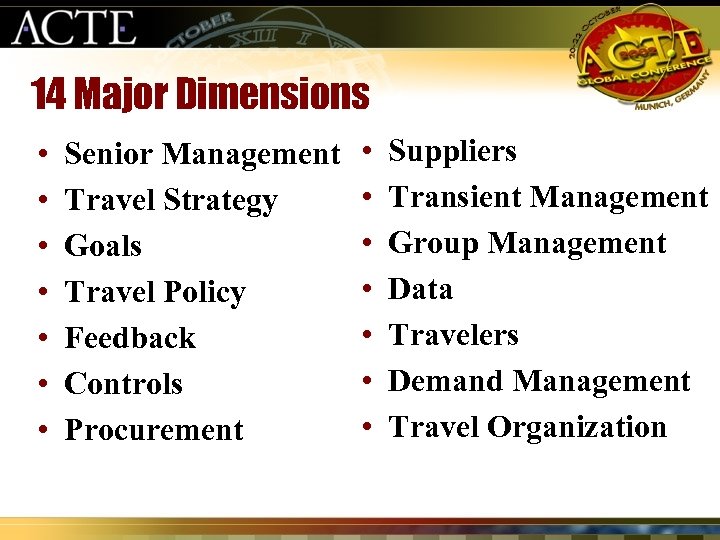 14 Major Dimensions • • Senior Management Travel Strategy Goals Travel Policy Feedback Controls Procurement • • Suppliers Transient Management Group Management Data Travelers Demand Management Travel Organization
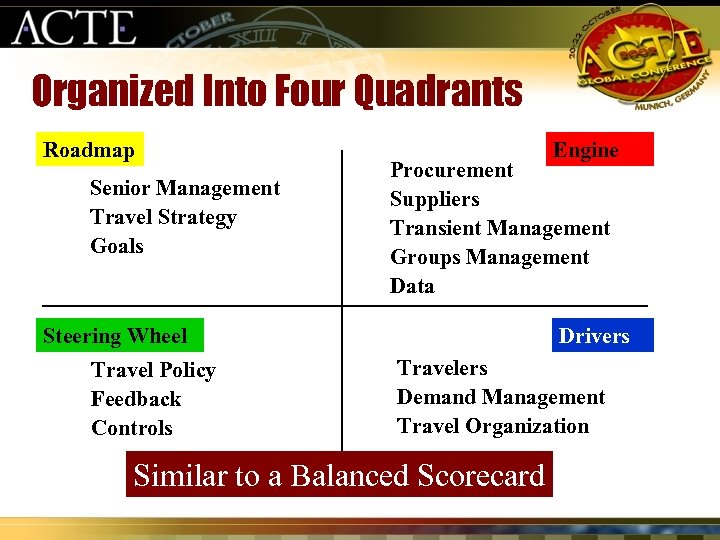 Organized Into Four Quadrants Roadmap Senior Management Travel Strategy Goals Engine Procurement Suppliers Transient Management Groups Management Data Steering Wheel Travel Policy Feedback Controls Drivers Travelers Demand Management Travel Organization Similar to a Balanced Scorecard
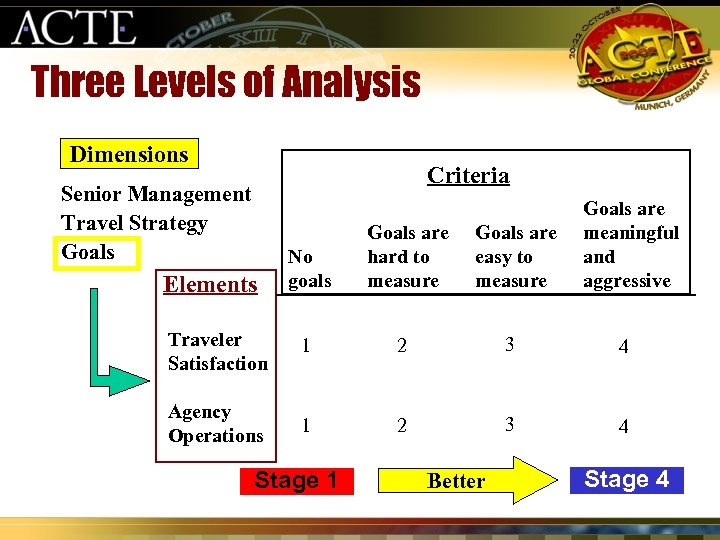 Three Levels of Analysis Dimensions Criteria Senior Management Travel Strategy Goals Elements No goals Goals are hard to measure Goals are easy to measure Goals are meaningful and aggressive Traveler Satisfaction 1 2 3 4 Agency Operations 1 2 3 4 Stage 1 Better Stage 4
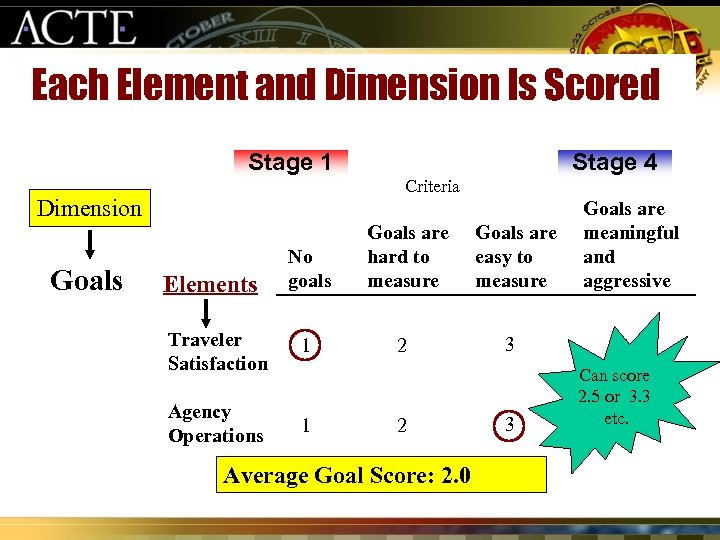 Each Element and Dimension Is Scored Stage 1 Criteria Dimension Goals Stage 4 Elements No goals Traveler Satisfaction 1 Agency Operations 1 Goals are hard to measure 2 2 Average Goal Score: 2. 0 Goals are easy to measure 3 3 Goals are meaningful and aggressive 4 Can score 2. 5 or 3. 3 etc. 4
 Stages of Excellence For Travel Management Application and Limitations
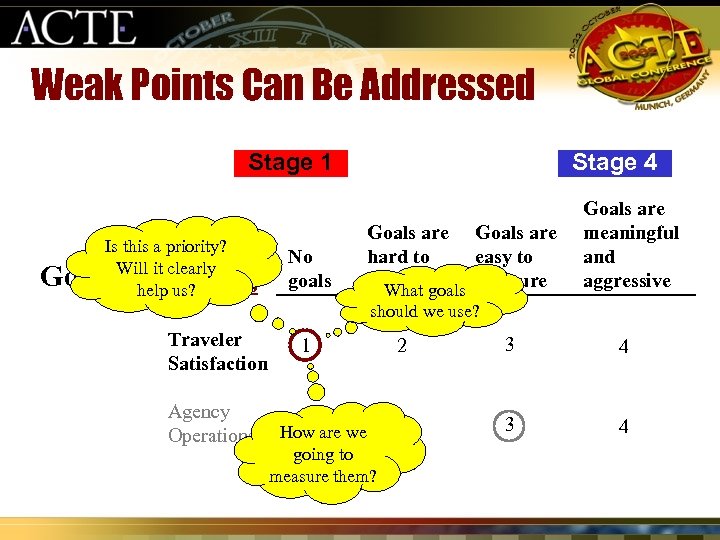 Weak Points Can Be Addressed Stage 1 Is this a priority? Will it clearly Elements help us? Goals No goals Stage 4 Goals are hard to easy to measure What goals measure Goals are meaningful and aggressive should we use? Traveler Satisfaction Agency Operations 1 1 How are we going to measure them? 2 3 4
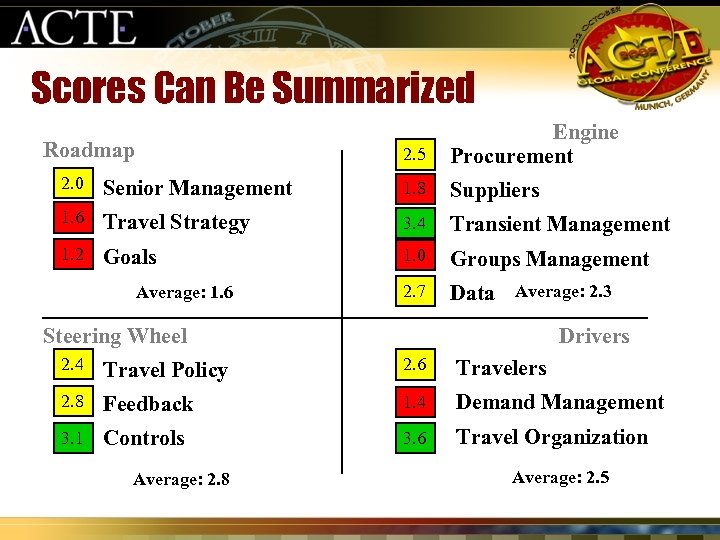 Scores Can Be Summarized 2. 5 Roadmap Engine Procurement 2. 0 Senior Management 1. 8 Suppliers 1. 6 Travel Strategy 3. 4 Transient Management 1. 2 Goals 1. 0 Groups Management 2. 7 Data Average: 2. 3 Average: 1. 6 Steering Wheel Drivers 2. 4 Travel Policy 2. 6 Travelers 2. 8 Feedback 1. 4 Demand Management 3. 1 Controls 3. 6 Travel Organization Average: 2. 8 Average: 2. 5
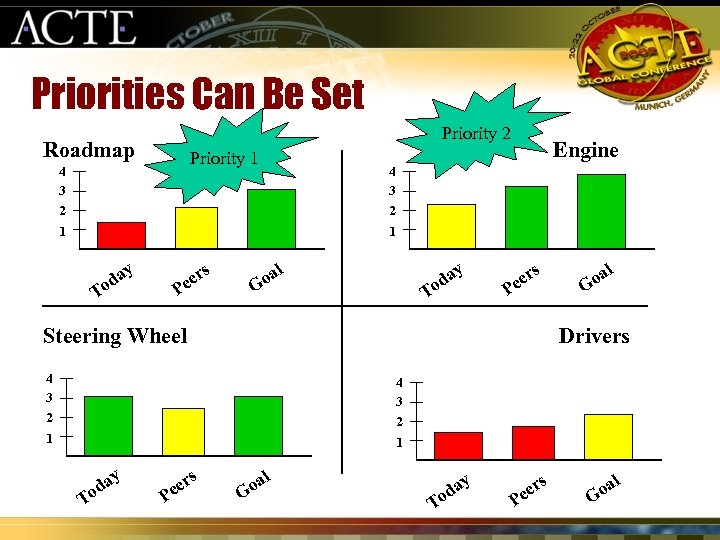 Priorities Can Be Set Priority 2 Roadmap Priority 1 4 3 2 1 Engine 4 3 2 1 y a od T s r ee P l oa G y da o T l oa G s er e P Steering Wheel Drivers 4 3 2 1 y T a od s r ee P l oa G T y da o s P r ee l oa G
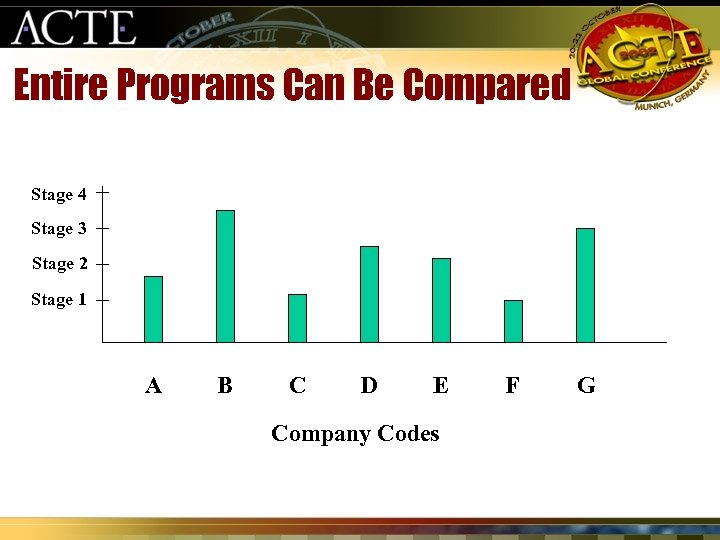 Entire Programs Can Be Compared Stage 4 Stage 3 Stage 2 Stage 1 A B C D E Company Codes F G
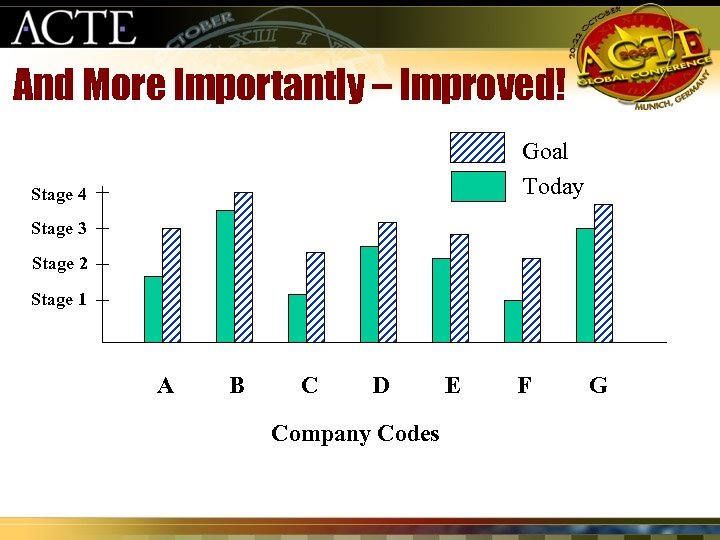 And More Importantly – Improved! Goal Today Stage 4 Stage 3 Stage 2 Stage 1 A B C D Company Codes E F G
 How Is This Different From Benchmarking? • Most benchmarking statistics are descriptive – “Our average ticket price is $375 vs. peer group’s $344” – “Our travel agency configuration is a single reservation center; 63% of our peers use on-site agencies” • Descriptive statistics are not often prescriptive – Should your average ticket price be lower? – Should you use on-site agencies? Stages of Excellence are designed to be prescriptive
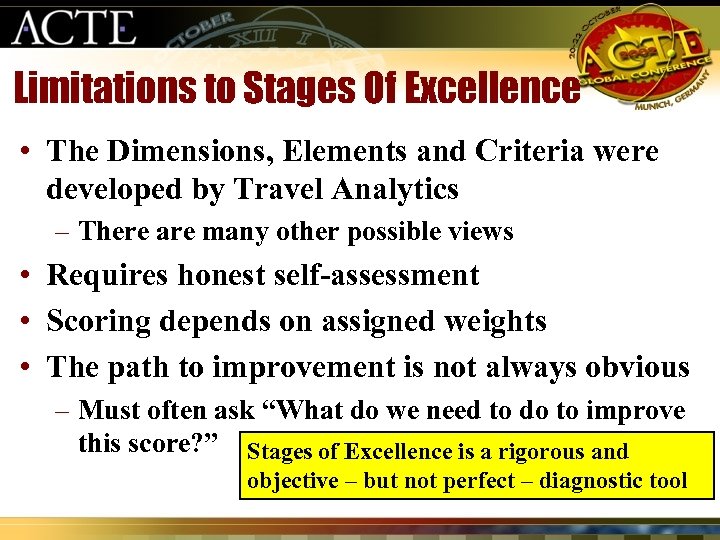 Limitations to Stages Of Excellence • The Dimensions, Elements and Criteria were developed by Travel Analytics – There are many other possible views • Requires honest self-assessment • Scoring depends on assigned weights • The path to improvement is not always obvious – Must often ask “What do we need to do to improve this score? ” Stages of Excellence is a rigorous and objective – but not perfect – diagnostic tool
 Stages of Excellence for Travel Management Elements and Criteria
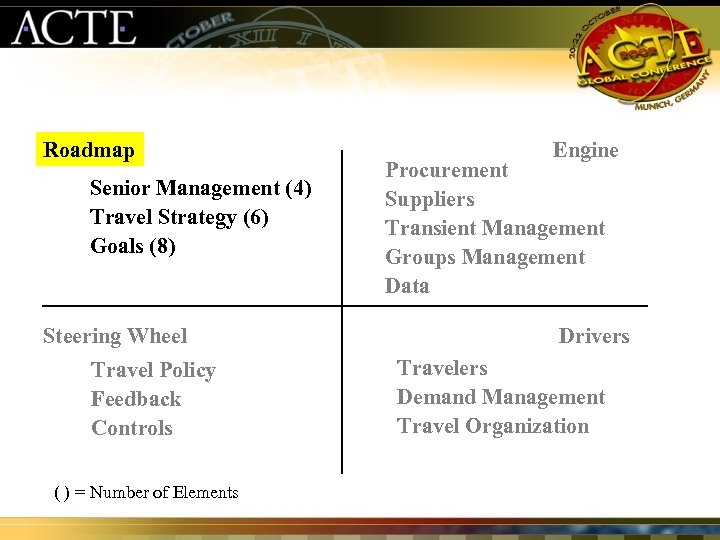 Roadmap Senior Management (4) Travel Strategy (6) Goals (8) Steering Wheel Travel Policy Feedback Controls ( ) = Number of Elements Engine Procurement Suppliers Transient Management Groups Management Data Drivers Travelers Demand Management Travel Organization
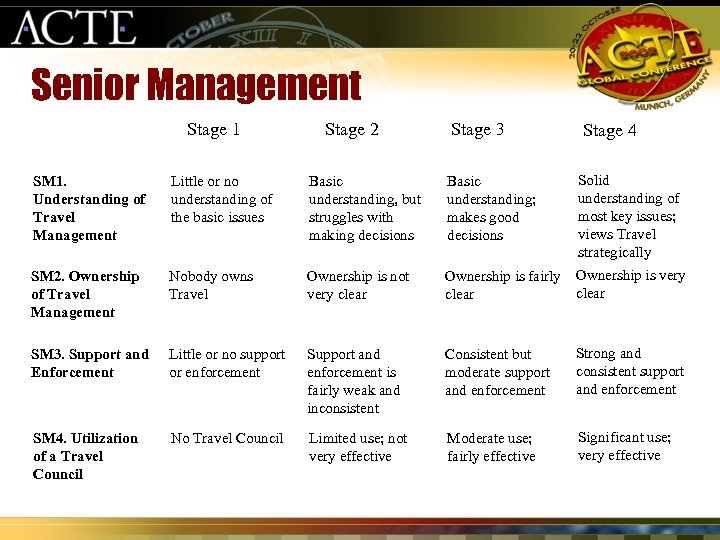 Senior Management Stage 1 Stage 2 Stage 3 Stage 4 SM 1. Understanding of Travel Management Little or no understanding of the basic issues Basic understanding, but struggles with making decisions Basic understanding; makes good decisions Solid understanding of most key issues; views Travel strategically SM 2. Ownership of Travel Management Nobody owns Travel Ownership is not very clear Ownership is fairly clear Ownership is very clear SM 3. Support and Enforcement Little or no support or enforcement Support and enforcement is fairly weak and inconsistent Consistent but moderate support and enforcement Strong and consistent support and enforcement SM 4. Utilization of a Travel Council No Travel Council Limited use; not very effective Moderate use; fairly effective Significant use; very effective
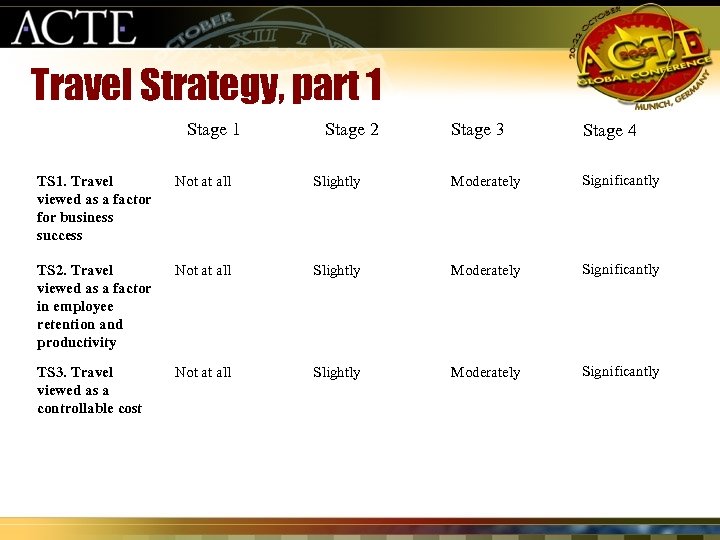 Travel Strategy, part 1 Stage 2 Stage 3 Stage 4 TS 1. Travel viewed as a factor for business success Not at all Slightly Moderately Significantly TS 2. Travel viewed as a factor in employee retention and productivity Not at all Slightly Moderately Significantly TS 3. Travel viewed as a controllable cost Not at all Slightly Moderately Significantly
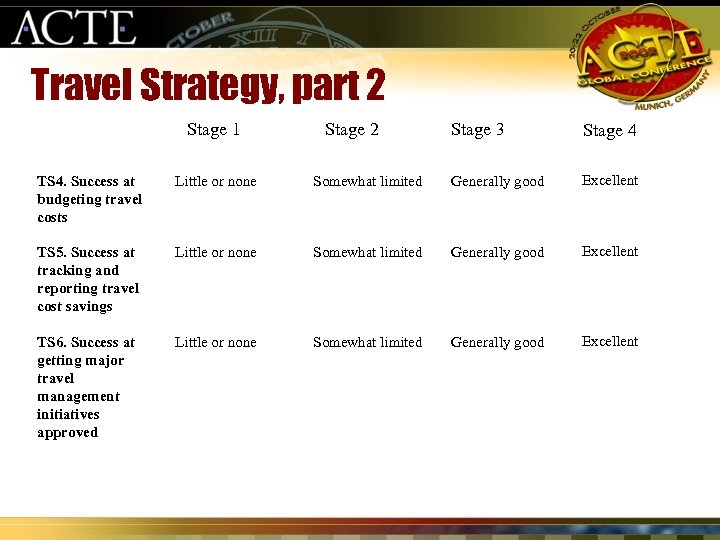 Travel Strategy, part 2 Stage 1 Stage 2 Stage 3 Stage 4 TS 4. Success at budgeting travel costs Little or none Somewhat limited Generally good Excellent TS 5. Success at tracking and reporting travel cost savings Little or none Somewhat limited Generally good Excellent TS 6. Success at getting major travel management initiatives approved Little or none Somewhat limited Generally good Excellent
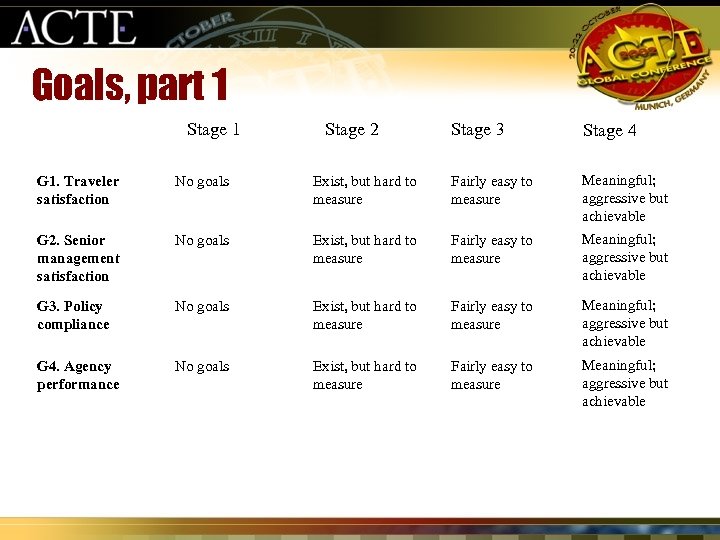 Goals, part 1 Stage 2 Stage 3 Stage 4 G 1. Traveler satisfaction No goals Exist, but hard to measure Fairly easy to measure Meaningful; aggressive but achievable G 2. Senior management satisfaction No goals Exist, but hard to measure Fairly easy to measure Meaningful; aggressive but achievable G 3. Policy compliance No goals Exist, but hard to measure Fairly easy to measure Meaningful; aggressive but achievable G 4. Agency performance No goals Exist, but hard to measure Fairly easy to measure Meaningful; aggressive but achievable
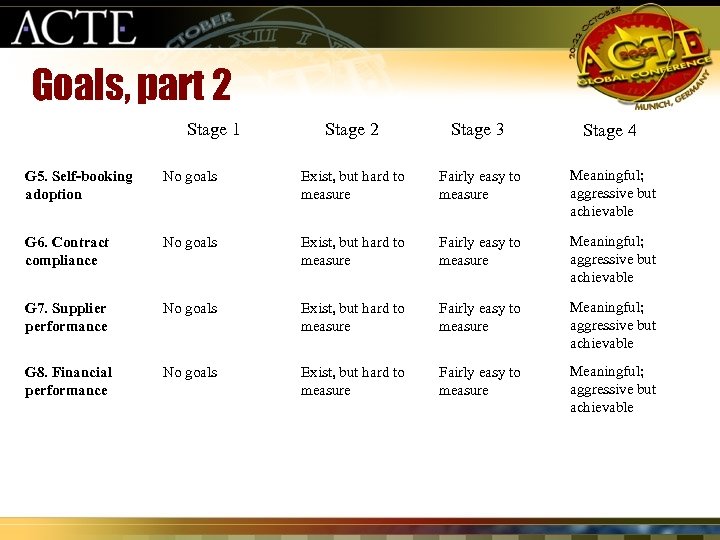 Goals, part 2 Stage 1 Stage 2 Stage 3 Stage 4 G 5. Self-booking adoption No goals Exist, but hard to measure Fairly easy to measure Meaningful; aggressive but achievable G 6. Contract compliance No goals Exist, but hard to measure Fairly easy to measure Meaningful; aggressive but achievable G 7. Supplier performance No goals Exist, but hard to measure Fairly easy to measure Meaningful; aggressive but achievable G 8. Financial performance No goals Exist, but hard to measure Fairly easy to measure Meaningful; aggressive but achievable
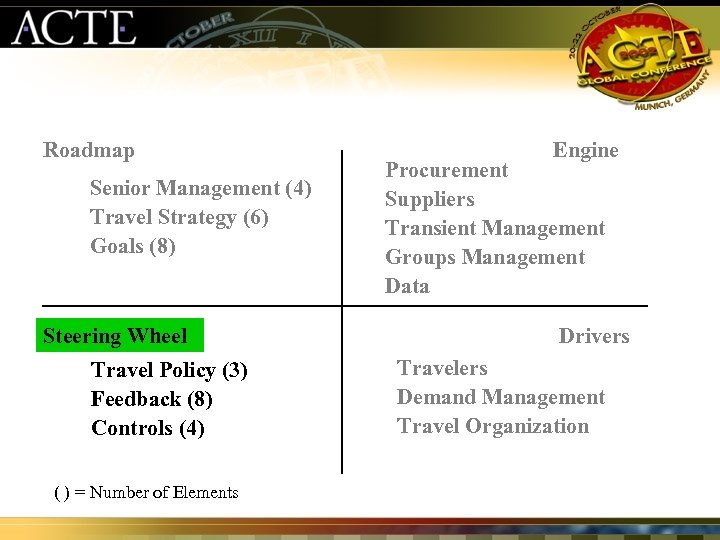 Roadmap Senior Management (4) Travel Strategy (6) Goals (8) Steering Wheel Travel Policy (3) Feedback (8) Controls (4) ( ) = Number of Elements Engine Procurement Suppliers Transient Management Groups Management Data Drivers Travelers Demand Management Travel Organization
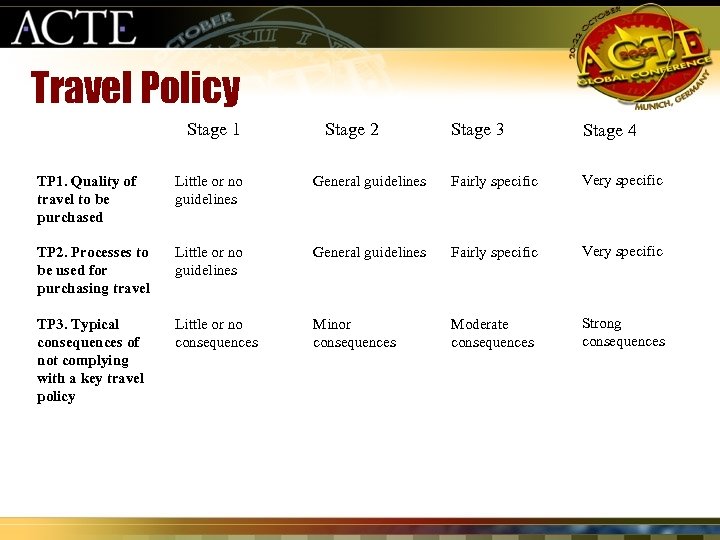 Travel Policy Stage 1 Stage 2 Stage 3 Stage 4 TP 1. Quality of travel to be purchased Little or no guidelines General guidelines Fairly specific Very specific TP 2. Processes to be used for purchasing travel Little or no guidelines General guidelines Fairly specific Very specific TP 3. Typical consequences of not complying with a key travel policy Little or no consequences Minor consequences Moderate consequences Strong consequences
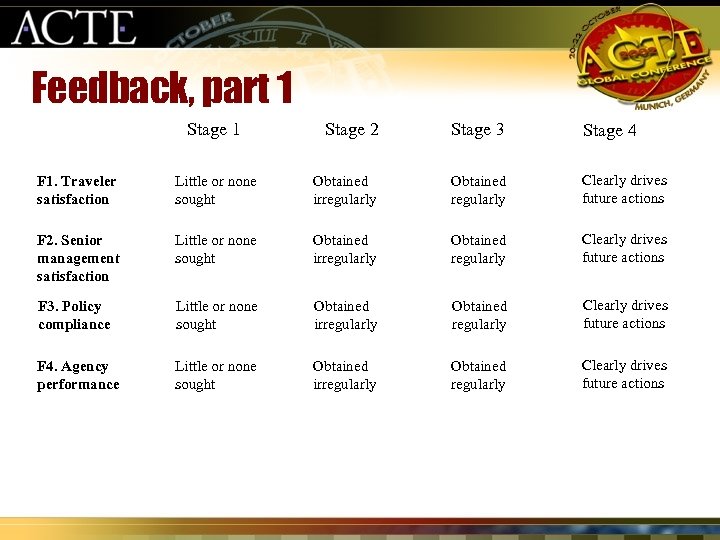 Feedback, part 1 Stage 2 Stage 3 Stage 4 F 1. Traveler satisfaction Little or none sought Obtained irregularly Obtained regularly Clearly drives future actions F 2. Senior management satisfaction Little or none sought Obtained irregularly Obtained regularly Clearly drives future actions F 3. Policy compliance Little or none sought Obtained irregularly Obtained regularly Clearly drives future actions F 4. Agency performance Little or none sought Obtained irregularly Obtained regularly Clearly drives future actions
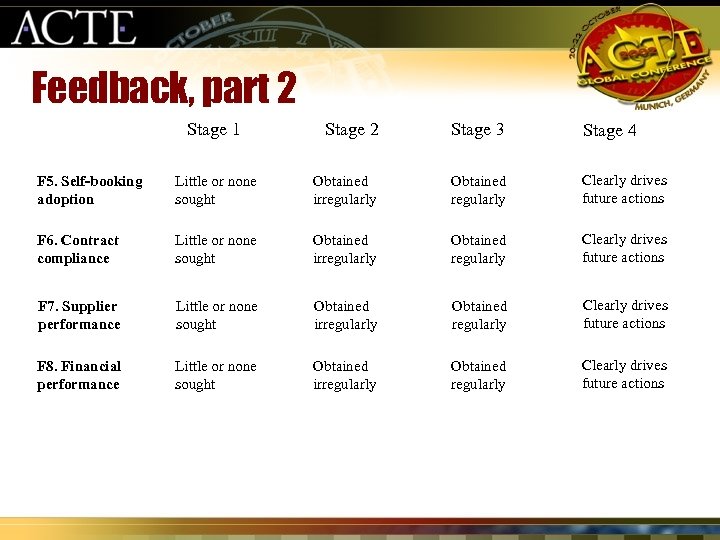 Feedback, part 2 Stage 1 Stage 2 Stage 3 Stage 4 F 5. Self-booking adoption Little or none sought Obtained irregularly Obtained regularly Clearly drives future actions F 6. Contract compliance Little or none sought Obtained irregularly Obtained regularly Clearly drives future actions F 7. Supplier performance Little or none sought Obtained irregularly Obtained regularly Clearly drives future actions F 8. Financial performance Little or none sought Obtained irregularly Obtained regularly Clearly drives future actions
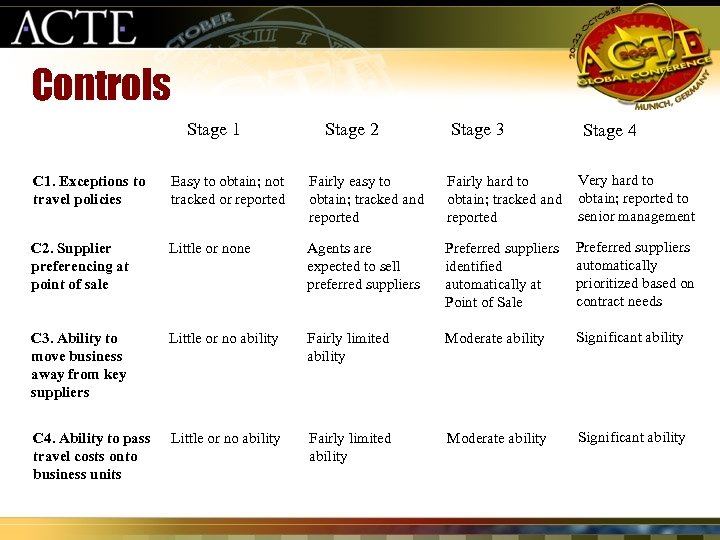 Controls Stage 1 Stage 2 Stage 3 Stage 4 C 1. Exceptions to travel policies Easy to obtain; not tracked or reported Fairly easy to obtain; tracked and reported Fairly hard to obtain; tracked and reported Very hard to obtain; reported to senior management C 2. Supplier preferencing at point of sale Little or none Agents are expected to sell preferred suppliers Preferred suppliers identified automatically at Point of Sale Preferred suppliers automatically prioritized based on contract needs C 3. Ability to move business away from key suppliers Little or no ability Fairly limited ability Moderate ability Significant ability C 4. Ability to pass travel costs onto business units Little or no ability Fairly limited ability Moderate ability Significant ability
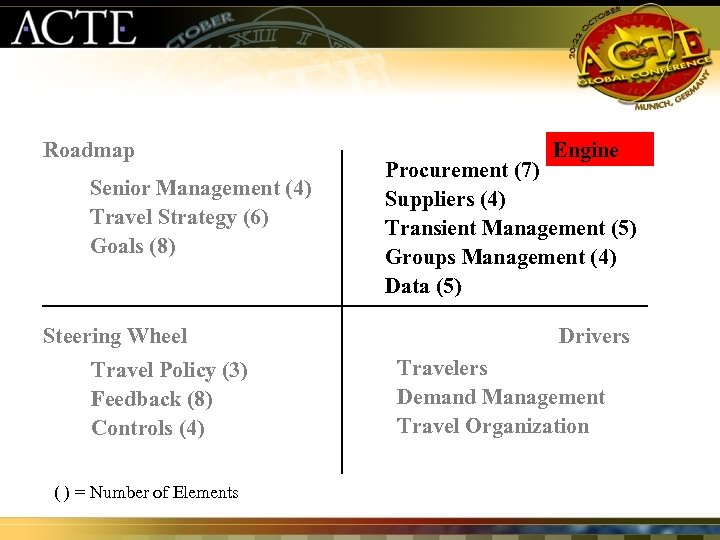 Roadmap Senior Management (4) Travel Strategy (6) Goals (8) Steering Wheel Travel Policy (3) Feedback (8) Controls (4) ( ) = Number of Elements Engine Procurement (7) Suppliers (4) Transient Management (5) Groups Management (4) Data (5) Drivers Travelers Demand Management Travel Organization
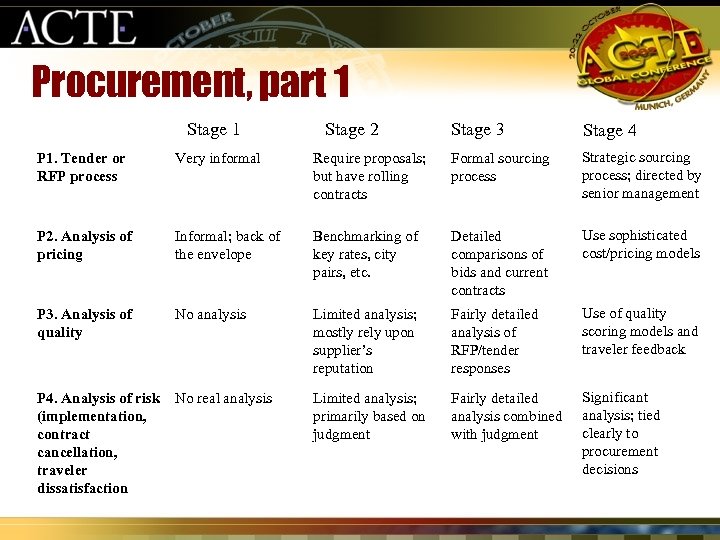 Procurement, part 1 Stage 2 Stage 3 Stage 4 P 1. Tender or RFP process Very informal Require proposals; but have rolling contracts Formal sourcing process Strategic sourcing process; directed by senior management P 2. Analysis of pricing Informal; back of the envelope Benchmarking of key rates, city pairs, etc. Detailed comparisons of bids and current contracts Use sophisticated cost/pricing models P 3. Analysis of quality No analysis Limited analysis; mostly rely upon supplier’s reputation Fairly detailed analysis of RFP/tender responses Use of quality scoring models and traveler feedback Limited analysis; primarily based on judgment Fairly detailed analysis combined with judgment Significant analysis; tied clearly to procurement decisions P 4. Analysis of risk No real analysis (implementation, contract cancellation, traveler dissatisfaction
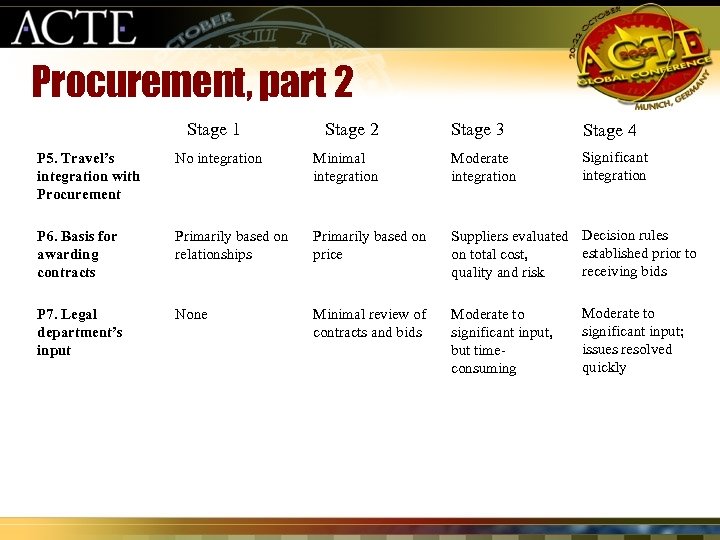 Procurement, part 2 Stage 1 Stage 2 Stage 3 Stage 4 Significant integration P 5. Travel’s integration with Procurement No integration Minimal integration Moderate integration P 6. Basis for awarding contracts Primarily based on relationships Primarily based on price Suppliers evaluated Decision rules established prior to on total cost, receiving bids quality and risk P 7. Legal department’s input None Minimal review of contracts and bids Moderate to significant input, but timeconsuming Moderate to significant input; issues resolved quickly
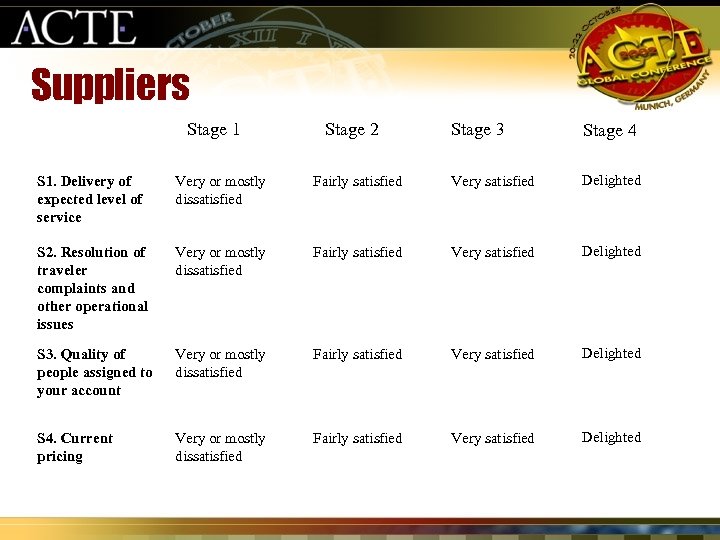 Suppliers Stage 1 Stage 2 Stage 3 Stage 4 S 1. Delivery of expected level of service Very or mostly dissatisfied Fairly satisfied Very satisfied Delighted S 2. Resolution of traveler complaints and other operational issues Very or mostly dissatisfied Fairly satisfied Very satisfied Delighted S 3. Quality of people assigned to your account Very or mostly dissatisfied Fairly satisfied Very satisfied Delighted S 4. Current pricing Very or mostly dissatisfied Fairly satisfied Very satisfied Delighted
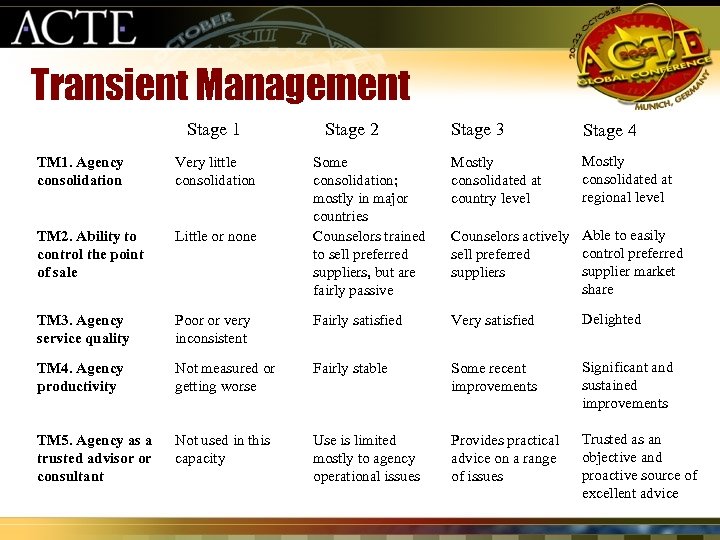 Transient Management Stage 1 Stage 2 Stage 3 Stage 4 Some consolidation; mostly in major countries Counselors trained to sell preferred suppliers, but are fairly passive Mostly consolidated at country level Mostly consolidated at regional level TM 1. Agency consolidation Very little consolidation TM 2. Ability to control the point of sale Little or none TM 3. Agency service quality Poor or very inconsistent Fairly satisfied Very satisfied Delighted TM 4. Agency productivity Not measured or getting worse Fairly stable Some recent improvements Significant and sustained improvements TM 5. Agency as a trusted advisor or consultant Not used in this capacity Use is limited mostly to agency operational issues Provides practical advice on a range of issues Trusted as an objective and proactive source of excellent advice Counselors actively Able to easily control preferred sell preferred supplier market suppliers share
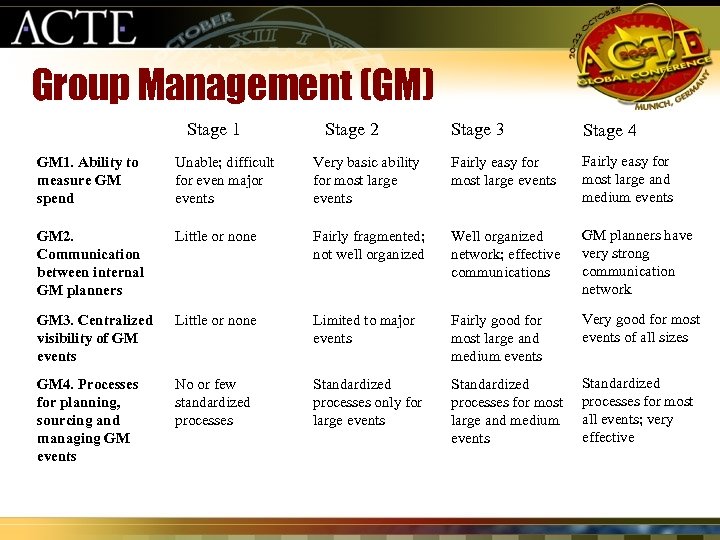 Group Management (GM) Stage 1 Stage 2 Stage 3 Stage 4 GM 1. Ability to measure GM spend Unable; difficult for even major events Very basic ability for most large events Fairly easy for most large and medium events GM 2. Communication between internal GM planners Little or none Fairly fragmented; not well organized Well organized network; effective communications GM planners have very strong communication network GM 3. Centralized visibility of GM events Little or none Limited to major events Fairly good for most large and medium events Very good for most events of all sizes GM 4. Processes for planning, sourcing and managing GM events No or few standardized processes Standardized processes only for large events Standardized processes for most large and medium events Standardized processes for most all events; very effective
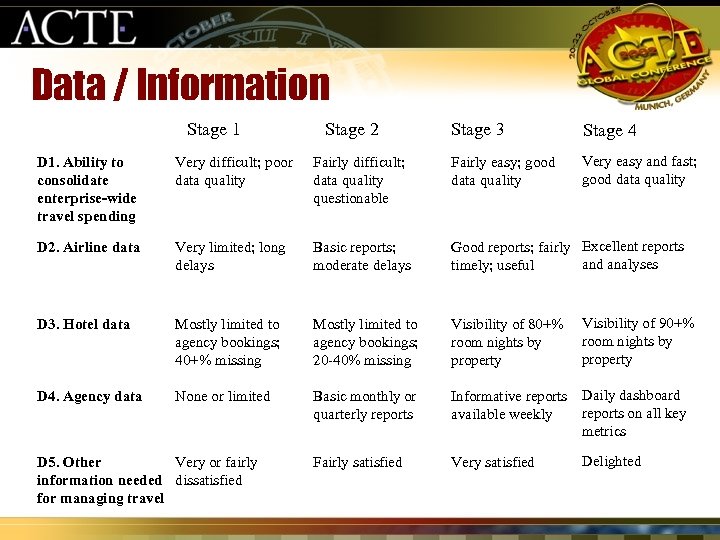 Data / Information Stage 1 Stage 2 Stage 3 Stage 4 Very easy and fast; good data quality D 1. Ability to consolidate enterprise-wide travel spending Very difficult; poor data quality Fairly difficult; data quality questionable Fairly easy; good data quality D 2. Airline data Very limited; long delays Basic reports; moderate delays Good reports; fairly Excellent reports and analyses timely; useful D 3. Hotel data Mostly limited to agency bookings; 40+% missing Mostly limited to agency bookings; 20 -40% missing Visibility of 80+% room nights by property D 4. Agency data None or limited Basic monthly or quarterly reports Informative reports Daily dashboard reports on all key available weekly metrics Fairly satisfied Very or fairly D 5. Other information needed dissatisfied for managing travel Visibility of 90+% room nights by property Delighted
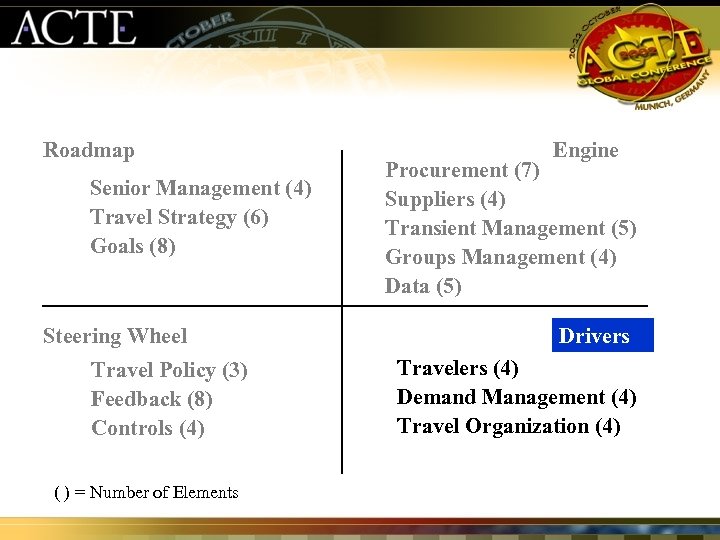 Roadmap Senior Management (4) Travel Strategy (6) Goals (8) Steering Wheel Travel Policy (3) Feedback (8) Controls (4) ( ) = Number of Elements Engine Procurement (7) Suppliers (4) Transient Management (5) Groups Management (4) Data (5) Drivers Travelers (4) Demand Management (4) Travel Organization (4)
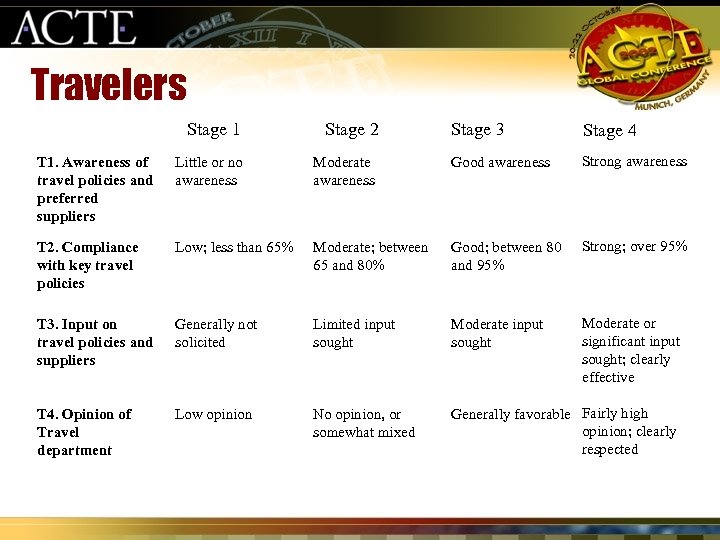 Travelers Stage 1 Stage 2 Stage 3 Stage 4 T 1. Awareness of travel policies and preferred suppliers Little or no awareness Moderate awareness Good awareness Strong awareness T 2. Compliance with key travel policies Low; less than 65% Moderate; between 65 and 80% Good; between 80 and 95% Strong; over 95% T 3. Input on travel policies and suppliers Generally not solicited Limited input sought Moderate or significant input sought; clearly effective T 4. Opinion of Travel department Low opinion No opinion, or somewhat mixed Generally favorable Fairly high opinion; clearly respected
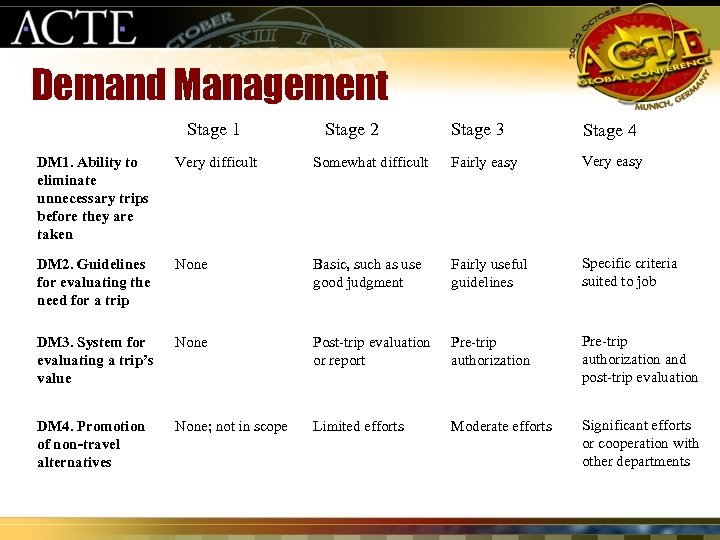 Demand Management Stage 1 Stage 2 Stage 3 Stage 4 DM 1. Ability to eliminate unnecessary trips before they are taken Very difficult Somewhat difficult Fairly easy Very easy DM 2. Guidelines for evaluating the need for a trip None Basic, such as use good judgment Fairly useful guidelines Specific criteria suited to job DM 3. System for evaluating a trip’s value None Post-trip evaluation or report Pre-trip authorization and post-trip evaluation DM 4. Promotion of non-travel alternatives None; not in scope Limited efforts Moderate efforts Significant efforts or cooperation with other departments
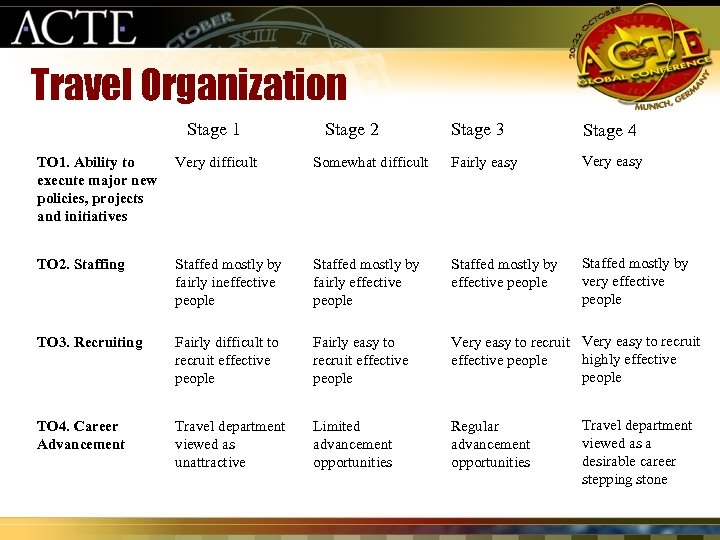 Travel Organization Stage 1 Stage 2 Stage 3 Stage 4 TO 1. Ability to execute major new policies, projects and initiatives Very difficult Somewhat difficult Fairly easy Very easy TO 2. Staffing Staffed mostly by fairly ineffective people Staffed mostly by fairly effective people Staffed mostly by very effective people TO 3. Recruiting Fairly difficult to recruit effective people Fairly easy to recruit effective people Very easy to recruit highly effective people TO 4. Career Advancement Travel department viewed as unattractive Limited advancement opportunities Regular advancement opportunities Travel department viewed as a desirable career stepping stone
 Where Do We Go From Here? • Score your program – Should generate deep discussions and frank assessments – Many companies will not like their scores • Organize confidential comparisons – Travel management companies or consultants can lead these efforts • Develop specific goals and priorities for your program • Measure results year to year
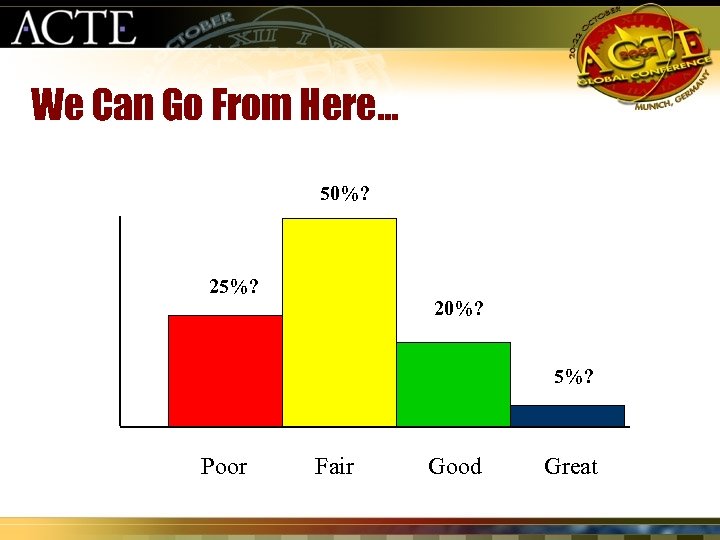 We Can Go From Here… 50%? 25%? 20%? 5%? Poor Fair Good Great
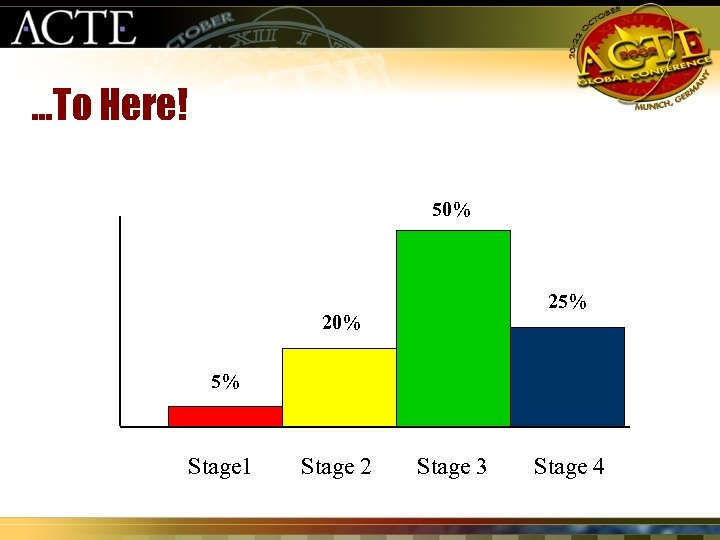 …To Here! 50% 25% 20% 5% Stage 1 Stage 2 Stage 3 Stage 4
 Thank You! For a copy of this presentation and the accompanying scoring tool, please visit our Free Tools page at www. travelanalytics. com Or send an e-mail to: Scott. Gillespie@travelanalytics. com