 Скачать презентацию Stabilizing knowledge through standards a perspective for the
48b5b1b7a512a431e36a270cbaaf1810.ppt
- Количество слайдов: 53



Stabilizing knowledge through standards a perspective for the humanities Laurent Romary INRIA Gemo & Humboldt Univ. Berlin IDSL
Overview • From scientific data to lexical databases • Standardization — TEI, ISO, etc. • Masculine, feminine, etc. • Research infrastructures, libraries, etc.
The Scientist’s (digital) ecology Scientific information workflow 16. 03. 2018 Seite 3
Working with research data • Wide variety and complexity – High Energy Physics • Particle accelerators / colliders – Meteorology • Computer simulations – Astrophysics • Observations, stellar object descriptions – Biology • Spectrographic representations – Linguistics • Corpora, grammars, lexical databases 16. 03. 2018 Seite 4
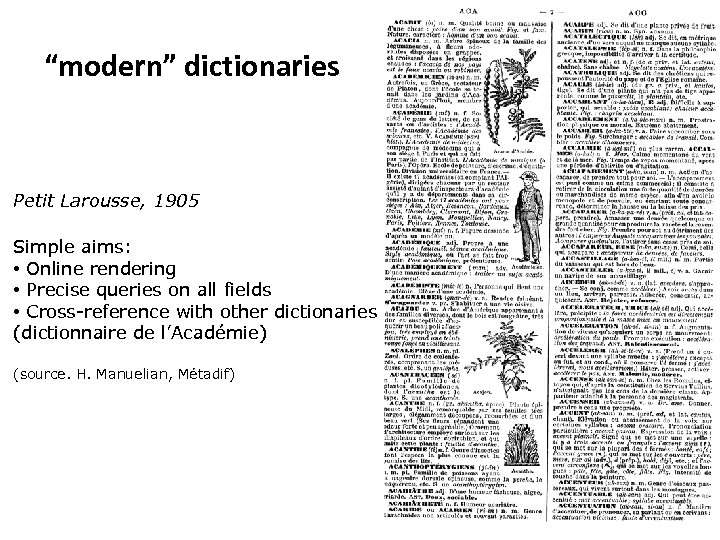
“modern” dictionaries Petit Larousse, 1905 Simple aims: • Online rendering • Precise queries on all fields • Cross-reference with other dictionaries (dictionnaire de l’Académie) (source. H. Manuelian, Métadif)
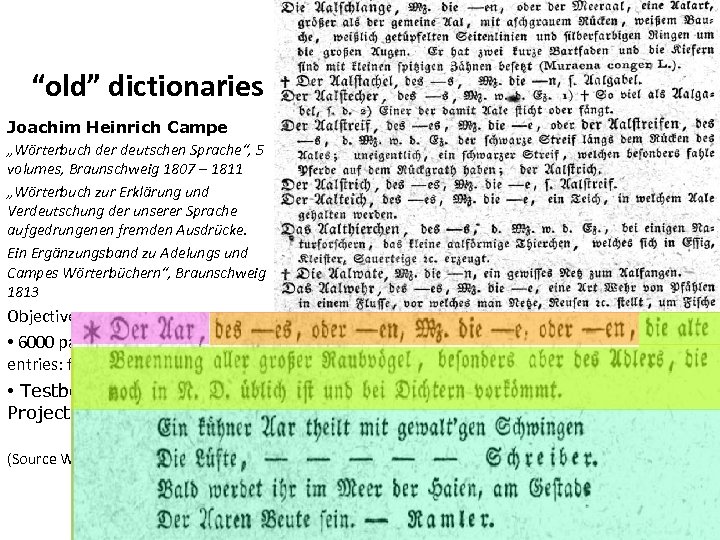
“old” dictionaries Joachim Heinrich Campe „Wörterbuch der deutschen Sprache“, 5 volumes, Braunschweig 1807 – 1811 „Wörterbuch zur Erklärung und Verdeutschung der unserer Sprache aufgedrungenen fremden Ausdrücke. Ein Ergänzungsband zu Adelungs und Campes Wörterbüchern“, Braunschweig 1813 Objectives: • 6000 pages, about 140. 000 entries: full online query • Testbed for the Text. Grid Project (Source W. Wegstein, Univ. Würzburg)
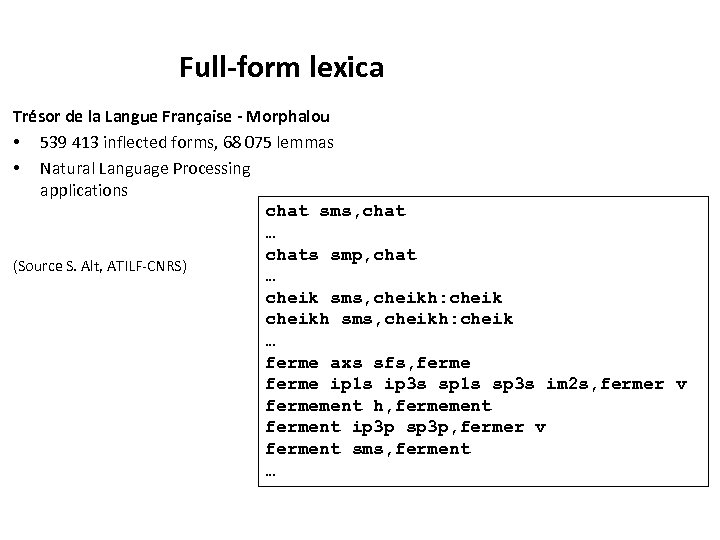
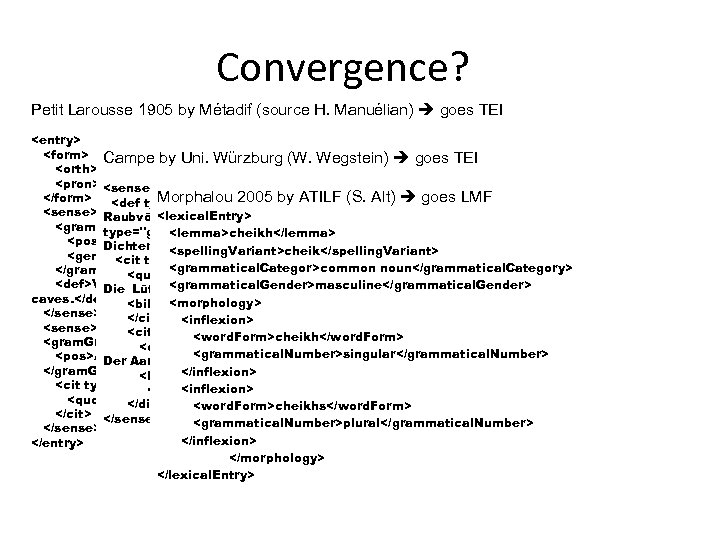
Full-form lexica Trésor de la Langue Française - Morphalou • 539 413 inflected forms, 68 075 lemmas • Natural Language Processing applications chat sms, chat … chats smp, chat (Source S. Alt, ATILF-CNRS) … cheik sms, cheikh: cheikh sms, cheikh: cheik … ferme axs sfs, ferme ip 1 s ip 3 s sp 1 s sp 3 s im 2 s, fermer v fermement h, fermement ferment ip 3 p sp 3 p, fermer v ferment sms, ferment …
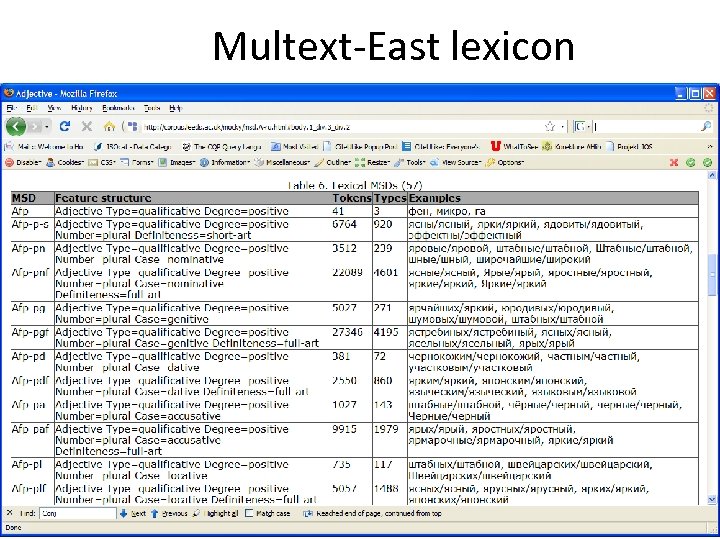
Multext-East lexicon Erjavec: MULTEXT-East Version 4 Dublin, 4. 4. 2009
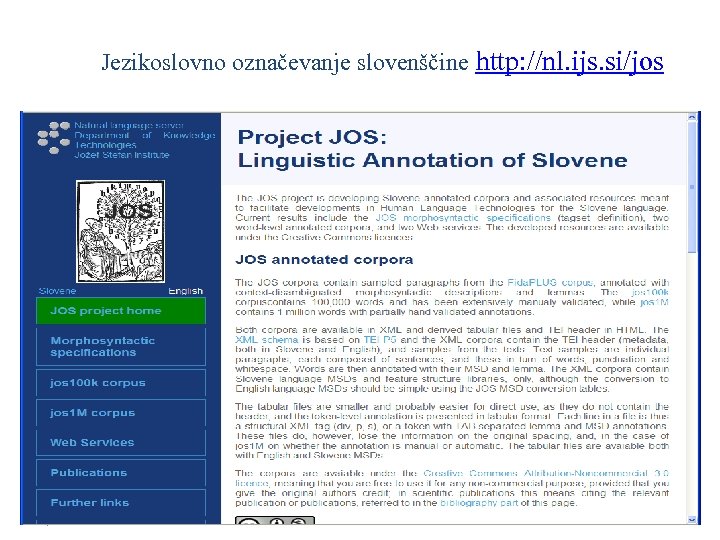
Jezikoslovno označevanje slovenščine http: //nl. ijs. si/jos Erjavec: MULTEXT-East Version 4 Dublin, 4. 4. 2009
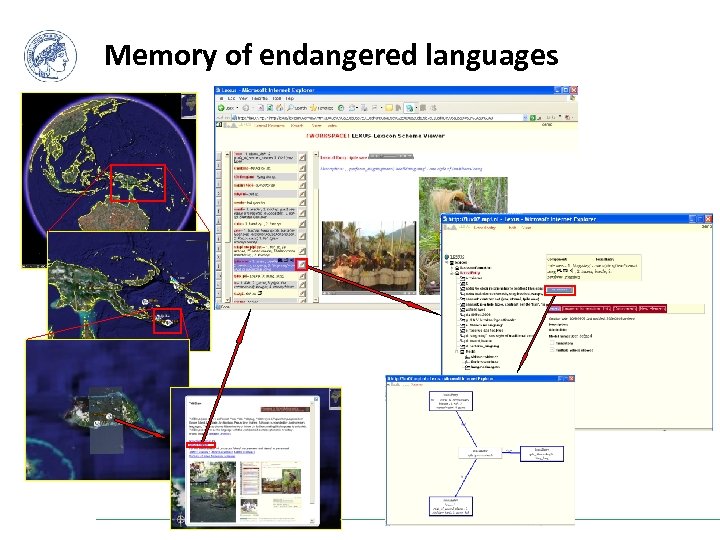
Memory of endangered languages
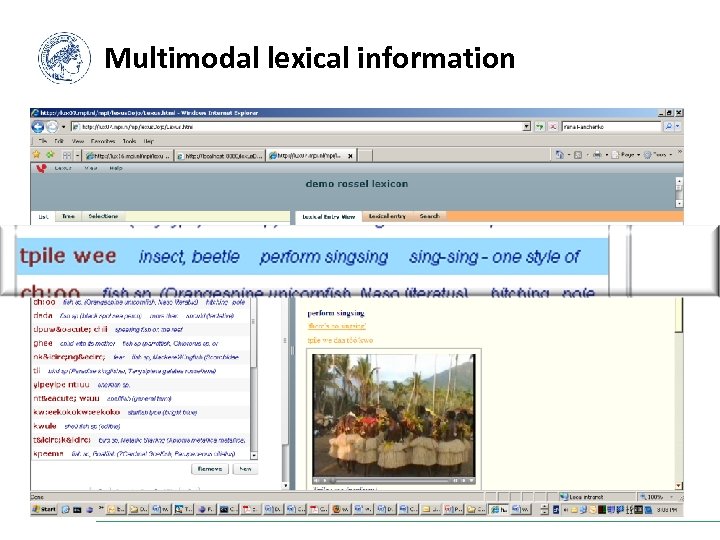
Multimodal lexical information
Why standardizing all this? • Defining methods or models to facilitate – – Exchange of data Pooling data from various origins Interoperability between software components Comparability of results • Involves – From a scientific and technological point of view • Stabilizing/documenting existing practices, knowledge • Looking ahead for potential roadblocks (generalizations) – From an organizational point of view • International consensus, long term availability and maintenance
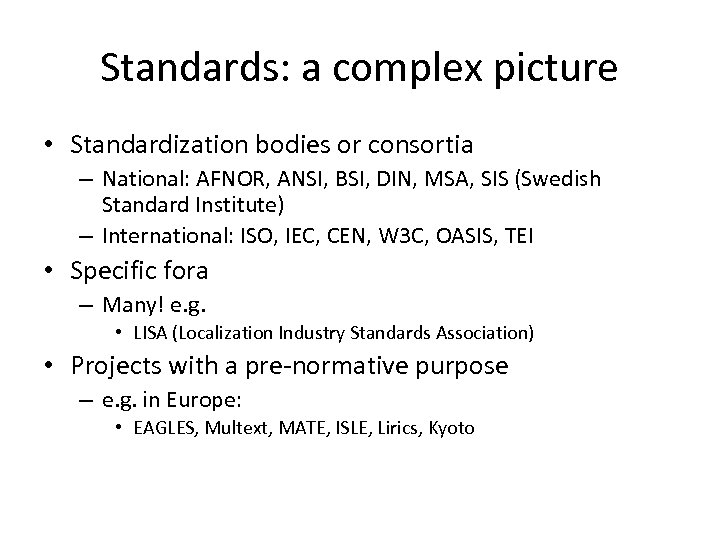
Standards: a complex picture • Standardization bodies or consortia – National: AFNOR, ANSI, BSI, DIN, MSA, SIS (Swedish Standard Institute) – International: ISO, IEC, CEN, W 3 C, OASIS, TEI • Specific fora – Many! e. g. • LISA (Localization Industry Standards Association) • Projects with a pre-normative purpose – e. g. in Europe: • EAGLES, Multext, MATE, ISLE, Lirics, Kyoto
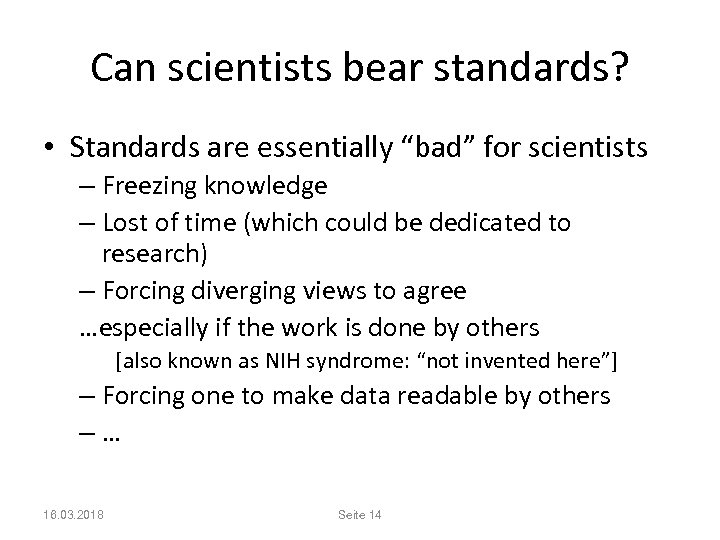
Can scientists bear standards? • Standards are essentially “bad” for scientists – Freezing knowledge – Lost of time (which could be dedicated to research) – Forcing diverging views to agree …especially if the work is done by others [also known as NIH syndrome: “not invented here”] – Forcing one to make data readable by others –… 16. 03. 2018 Seite 14
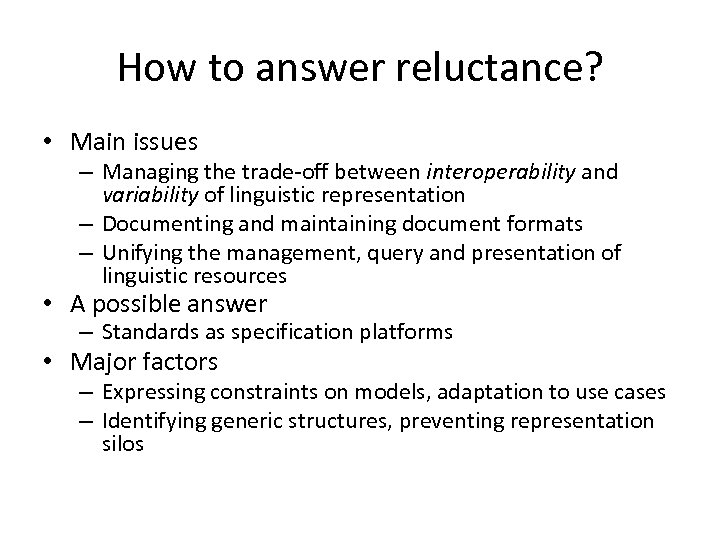
How to answer reluctance? • Main issues – Managing the trade-off between interoperability and variability of linguistic representation – Documenting and maintaining document formats – Unifying the management, query and presentation of linguistic resources • A possible answer – Standards as specification platforms • Major factors – Expressing constraints on models, adaptation to use cases – Identifying generic structures, preventing representation silos
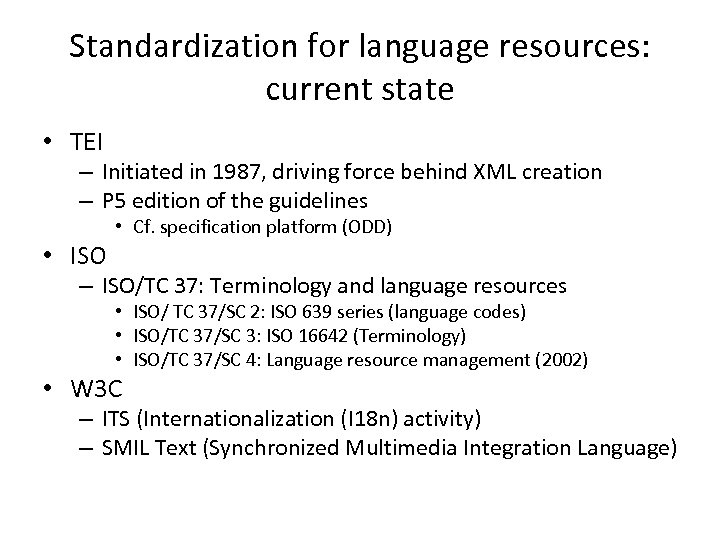
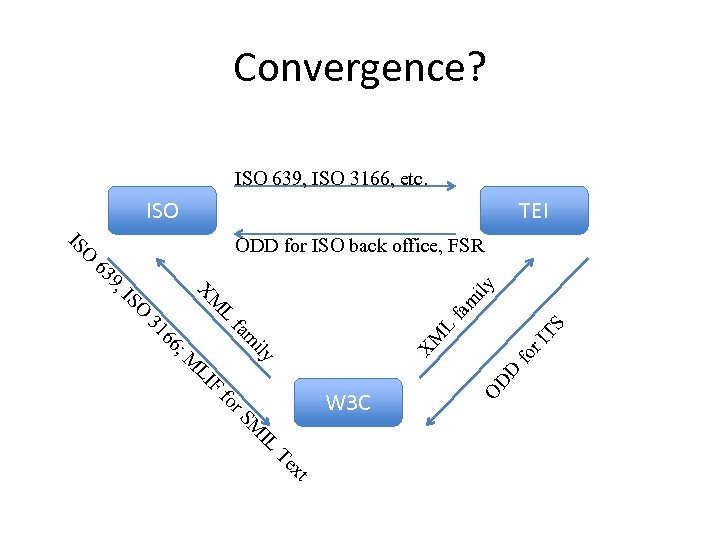
Standardization for language resources: current state • TEI – Initiated in 1987, driving force behind XML creation – P 5 edition of the guidelines • ISO • Cf. specification platform (ODD) – ISO/TC 37: Terminology and language resources • ISO/ TC 37/SC 2: ISO 639 series (language codes) • ISO/TC 37/SC 3: ISO 16642 (Terminology) • ISO/TC 37/SC 4: Language resource management (2002) • W 3 C – ITS (Internationalization (I 18 n) activity) – SMIL Text (Synchronized Multimedia Integration Language)
Intermezzo — an XML tutorial • XML is about awful angle brackets <gram. Grp> <gen>f</gen> <num>p</num> </gram. Grp> • XML is about trees • Issues – Specifying structures – Providing semantics
MODELING LEXICAL STRUCTURES WITH THE TEI
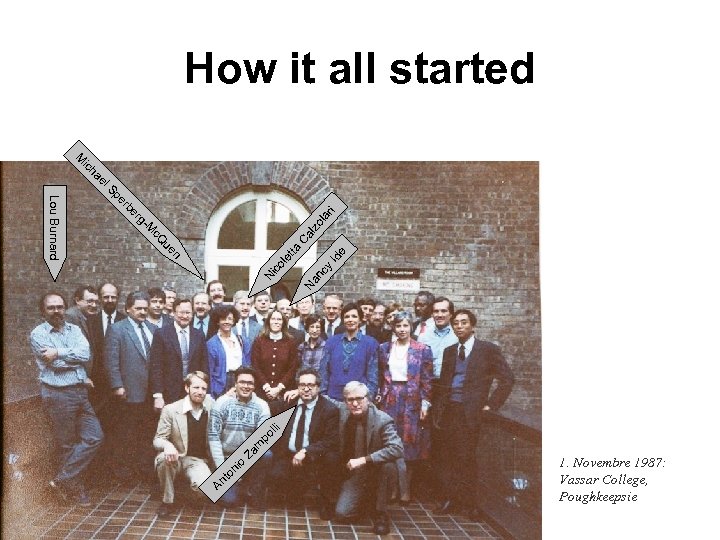
How it all started ha ic M el Sp Ca c. Q M lzo rg la ri be er y nc Na Za m po lli Ni co le Id e tta n ue Lou Burnard An to ni o 1. Novembre 1987: Vassar College, Poughkeepsie 16. 03. 2018 Seite 19
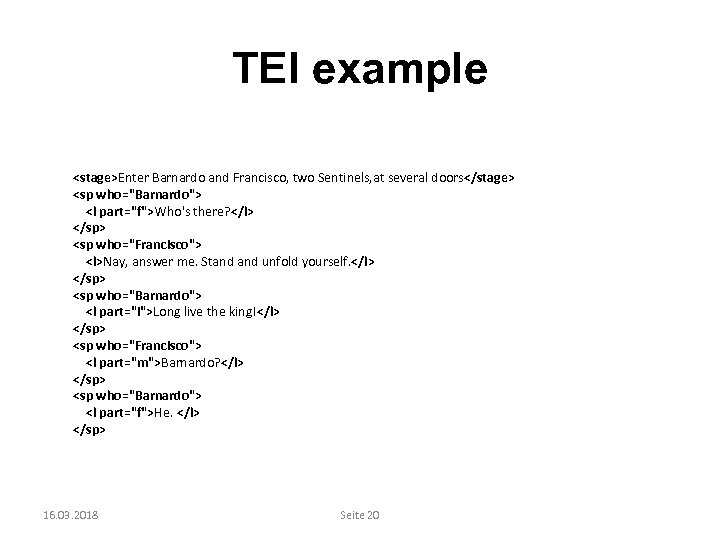
TEI example <stage>Enter Barnardo and Francisco, two Sentinels, at several doors</stage> <sp who="Barnardo"> <l part="f">Who's there? </l> </sp> <sp who="Francisco"> <l>Nay, answer me. Stand unfold yourself. </l> </sp> <sp who="Barnardo"> <l part="i">Long live the king!</l> </sp> <sp who="Francisco"> <l part="m">Barnardo? </l> </sp> <sp who="Barnardo"> <l part="f">He. </l> </sp> 16. 03. 2018 Seite 20
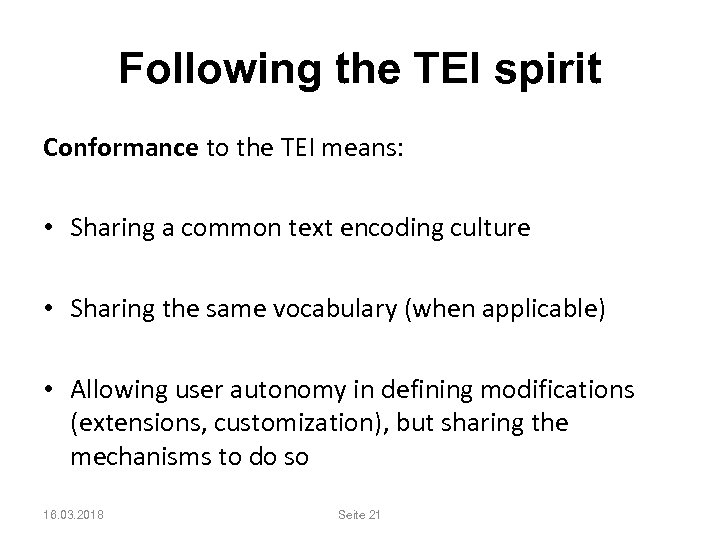
Following the TEI spirit Conformance to the TEI means: • Sharing a common text encoding culture • Sharing the same vocabulary (when applicable) • Allowing user autonomy in defining modifications (extensions, customization), but sharing the mechanisms to do so 16. 03. 2018 Seite 21
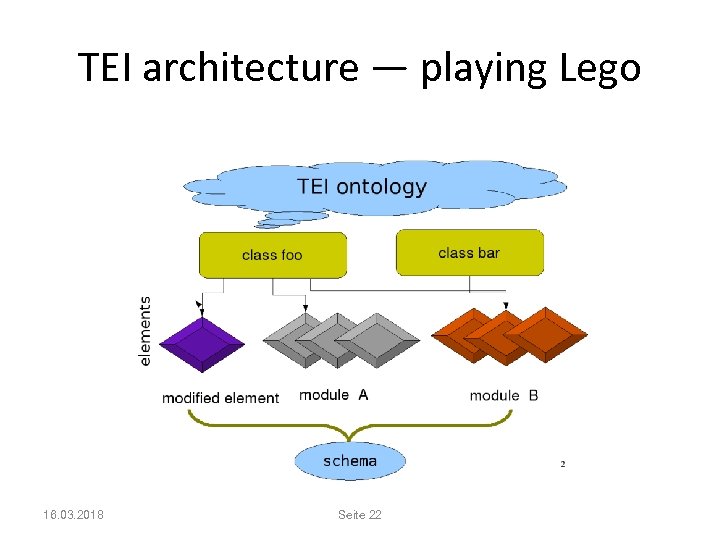
TEI architecture — playing Lego 16. 03. 2018 Seite 22
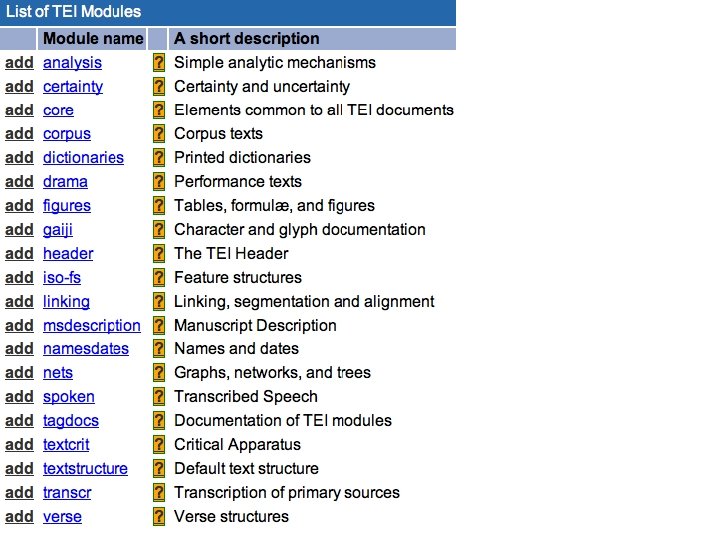
16. 03. 2018 Seite 23
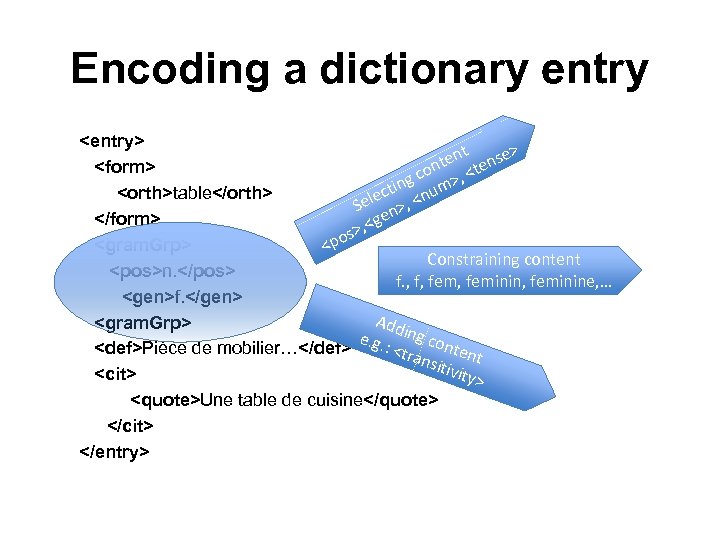
Encoding a dictionary entry <entry> > t tense <form> on g c m>, < in <orth>table</orth> ect , <nu Sel n> e </form> , <g > pos <gram. Grp> < Constraining content <pos>n. </pos> f. , f, feminin, feminine, … <gen>f. </gen> Add <gram. Grp> e. g. ing con : <tr <def>Pièce de mobilier…</def> ansi tent tivit <cit> y> <quote>Une table de cuisine</quote> </cit> </entry>
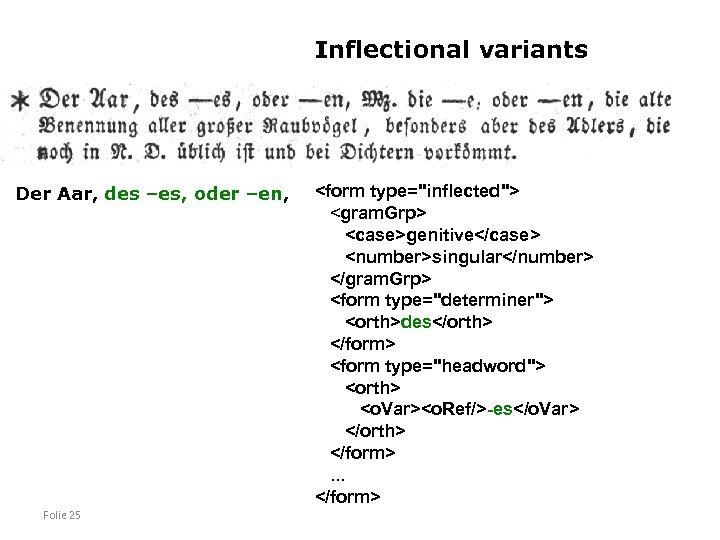
Inflectional variants Der Aar, des –es, oder –en, Folie 25 <form type="inflected"> <gram. Grp> <case>genitive</case> <number>singular</number> </gram. Grp> <form type="determiner"> <orth>des</orth> </form> <form type="headword"> <orth> <o. Var><o. Ref/>-es</o. Var> </orth> </form>. . . </form>
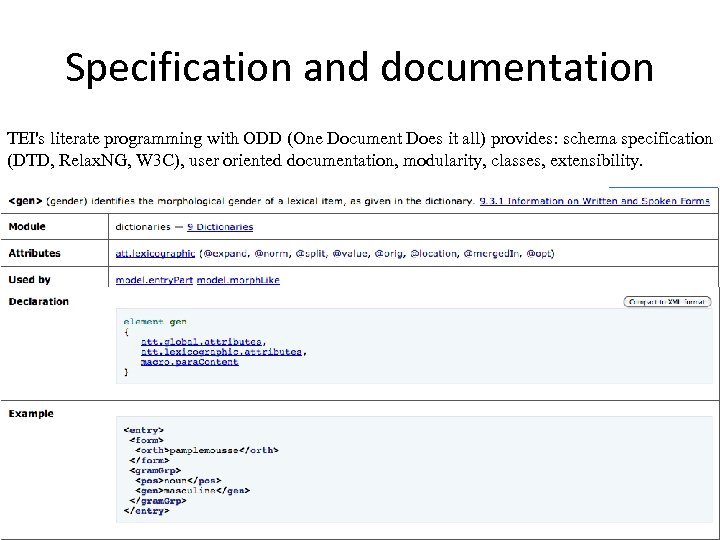
Specification and documentation TEI's literate programming with ODD (One Document Does it all) provides: schema specification (DTD, Relax. NG, W 3 C), user oriented documentation, modularity, classes, extensibility.
Before we go any further… • Which normative reference for the values of element like <gen> (grammatical gender)? – Not an issue specific to dictionary design • Cf. linguistic annotation at large (e. g. POS tagging) – Not an issue specific to the TEI community • Such values and their semantics should be defined independantly of any specific tagset • Is <gen> a self-standing notion?
MODELING LEXICAL RESOURCES WITHIN ISO/TC 37/SC 4
ISO in short • International Organization for Standardization (http: //www. iso. org) – Administrative view • Federation of national standardization bodies – Technical view • Organized in technical committee and sub-committees – ISO technical committees
ISO: a standardisation body • Providing unique references – Language (ISO 639), country (ISO 3166) and script coding (ISO 15924) • zh-SG (Chinese for Singapore) • sr-Cyrl (Serbian written with Cyrillic script) • Providing definitions and principles – Character encoding • ISO 636, ISO 8859 -x, ISO 10646/Unicode • Standard as an evolving material
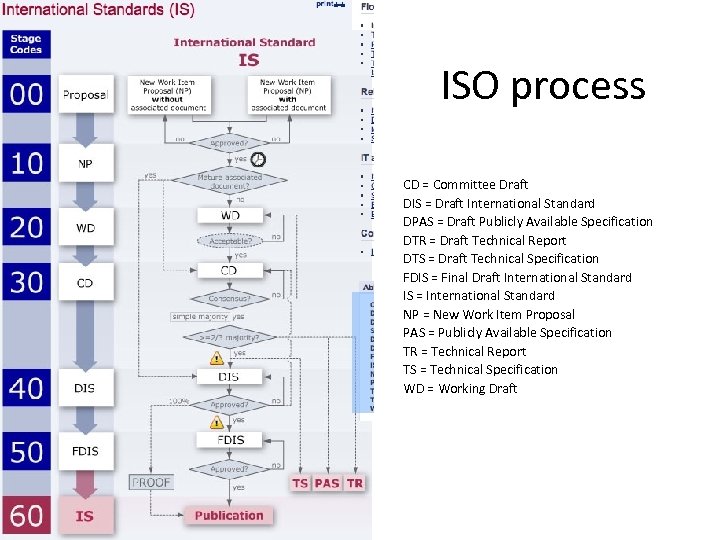
ISO process CD = Committee Draft DIS = Draft International Standard DPAS = Draft Publicly Available Specification DTR = Draft Technical Report DTS = Draft Technical Specification FDIS = Final Draft International Standard IS = International Standard NP = New Work Item Proposal PAS = Publicly Available Specification TR = Technical Report TS = Technical Specification WD = Working Draft
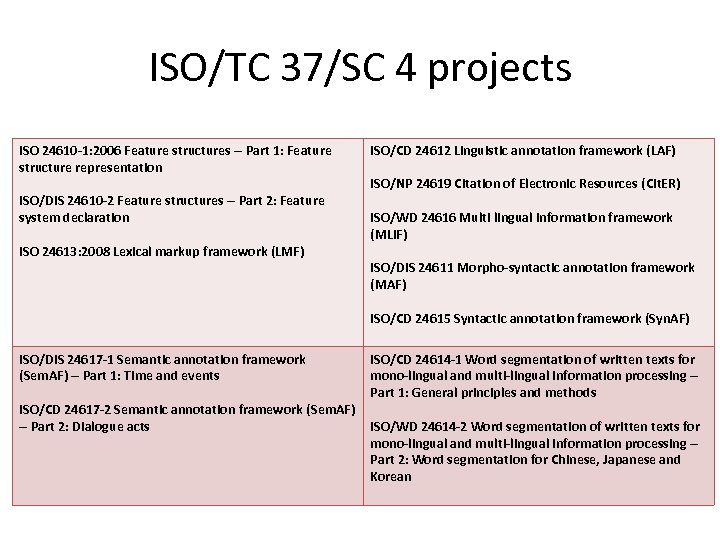
ISO/TC 37/SC 4 projects ISO 24610 -1: 2006 Feature structures -- Part 1: Feature structure representation ISO/DIS 24610 -2 Feature structures -- Part 2: Feature system declaration ISO 24613: 2008 Lexical markup framework (LMF) ISO/CD 24612 Linguistic annotation framework (LAF) ISO/NP 24619 Citation of Electronic Resources (Cit. ER) ISO/WD 24616 Multi lingual information framework (MLIF) ISO/DIS 24611 Morpho-syntactic annotation framework (MAF) ISO/CD 24615 Syntactic annotation framework (Syn. AF) ISO/DIS 24617 -1 Semantic annotation framework (Sem. AF) -- Part 1: Time and events ISO/CD 24617 -2 Semantic annotation framework (Sem. AF) -- Part 2: Dialogue acts ISO/CD 24614 -1 Word segmentation of written texts for mono-lingual and multi-lingual information processing -Part 1: General principles and methods ISO/WD 24614 -2 Word segmentation of written texts for mono-lingual and multi-lingual information processing -Part 2: Word segmentation for Chinese, Japanese and Korean
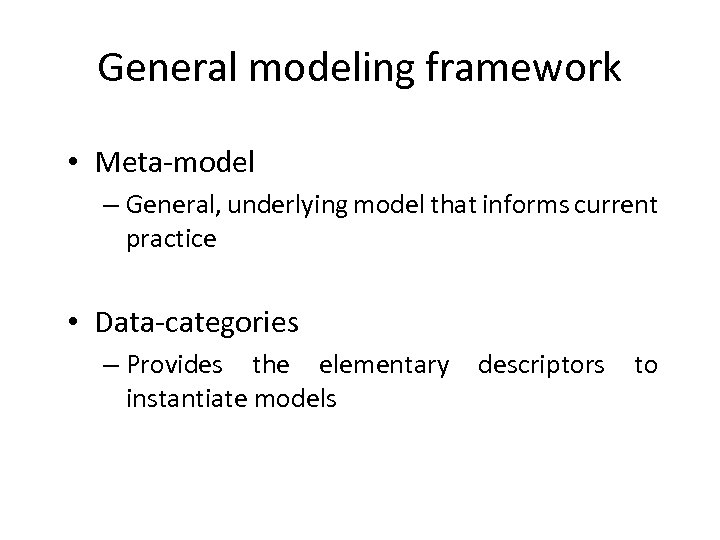
General modeling framework • Meta-model – General, underlying model that informs current practice • Data-categories – Provides the elementary descriptors to instantiate models
Application to lexical structures LMF — Lexical Markup Framework (ISO 24613)
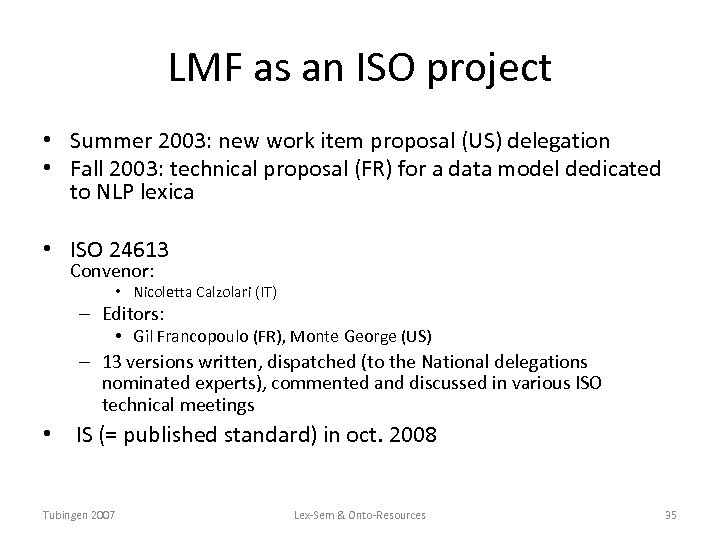
LMF as an ISO project • Summer 2003: new work item proposal (US) delegation • Fall 2003: technical proposal (FR) for a data model dedicated to NLP lexica • ISO 24613 Convenor: • Nicoletta Calzolari (IT) – Editors: • Gil Francopoulo (FR), Monte George (US) – 13 versions written, dispatched (to the National delegations nominated experts), commented and discussed in various ISO technical meetings • IS (= published standard) in oct. 2008 Tubingen 2007 Lex-Sem & Onto-Resources 35
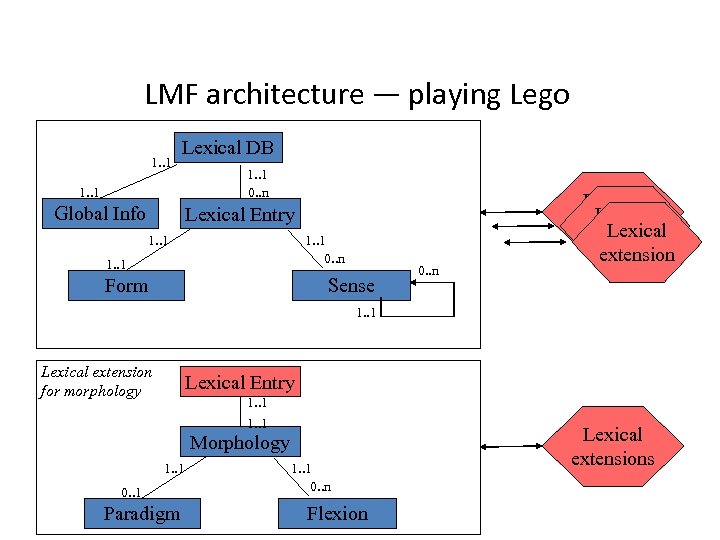
LMF architecture — playing Lego 1. . 1 Lexical DB 1. . 1 Global Info 1. . 1 0. . n Lexical Entry 1. . 1 0. . n 1. . 1 Sense Form 0. . n Lexical extensions Lexical extension 1. . 1 Lexical extension for morphology Lexical Entry 1. . 1 Morphology 1. . 1 0. . 1 Paradigm 1. . 1 0. . n Seite 36 Flexion Lexical extensions
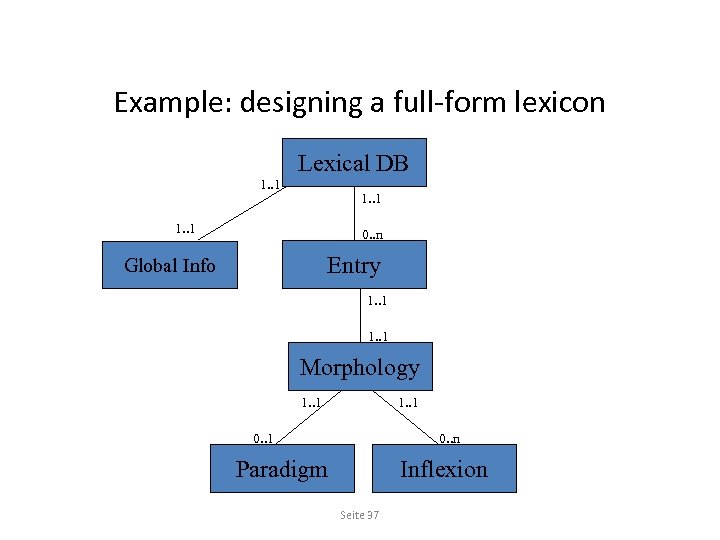
Example: designing a full-form lexicon Lexical DB 1. . 1 0. . n Entry Global Info 1. . 1 Morphology 1. . 1 0. . n Paradigm Inflexion Seite 37
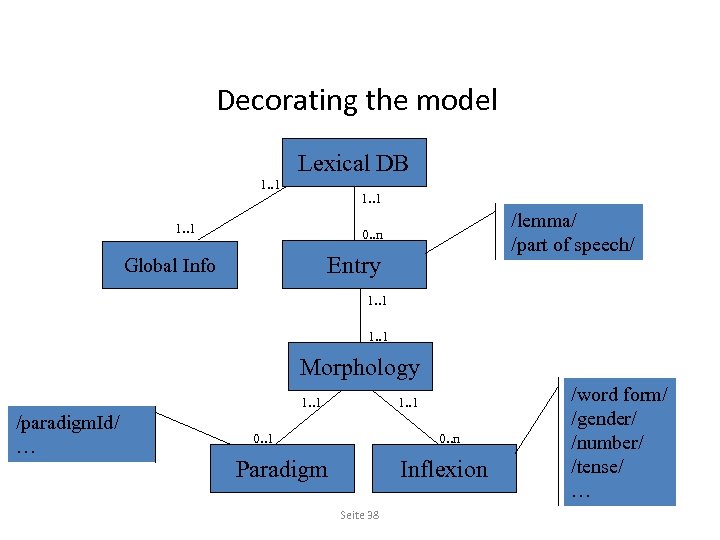
Decorating the model Lexical DB 1. . 1 /lemma/ /part of speech/ 0. . n Entry Global Info 1. . 1 Morphology 1. . 1 /paradigm. Id/ … 1. . 1 0. . n Paradigm Inflexion Seite 38 /word form/ /gender/ /number/ /tense/ …
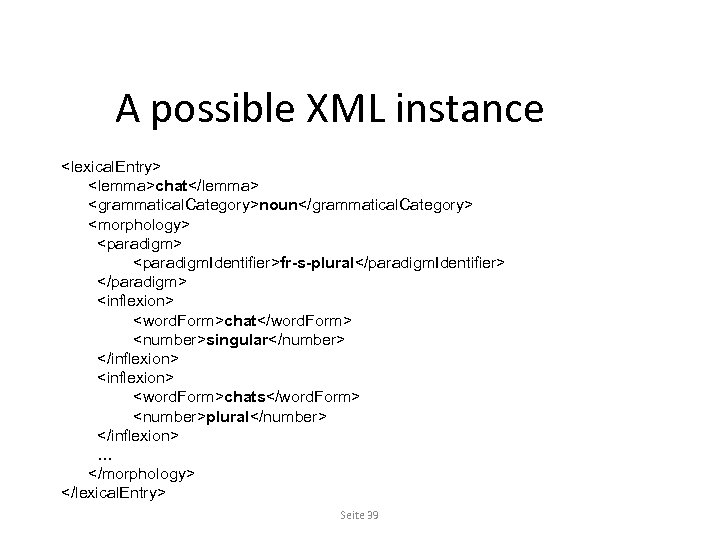
A possible XML instance <lexical. Entry> <lemma>chat</lemma> <grammatical. Category>noun</grammatical. Category> <morphology> <paradigm. Identifier>fr-s-plural</paradigm. Identifier> </paradigm> <inflexion> <word. Form>chat</word. Form> <number>singular</number> </inflexion> <word. Form>chats</word. Form> <number>plural</number> </inflexion> … </morphology> </lexical. Entry> Seite 39
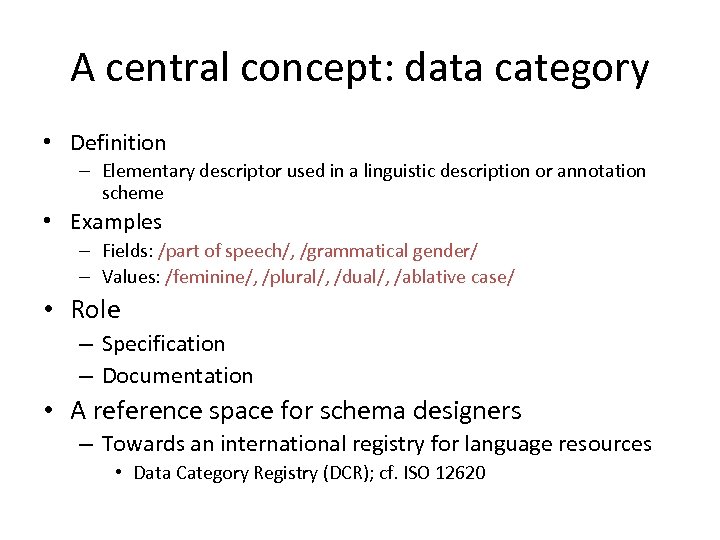
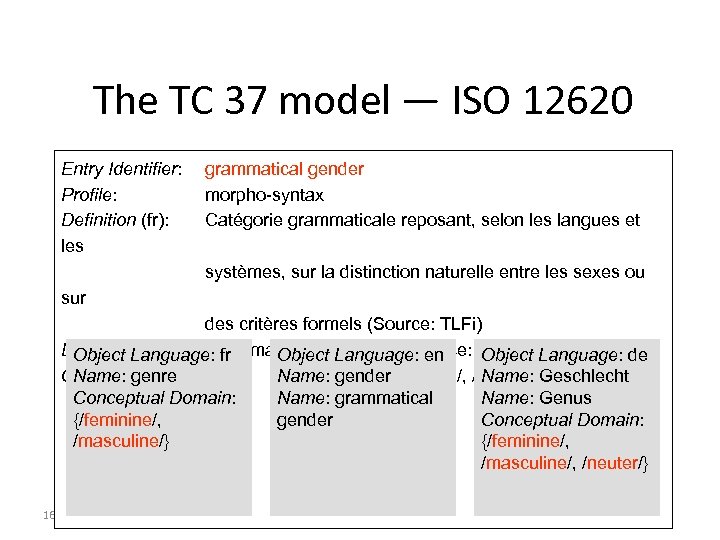
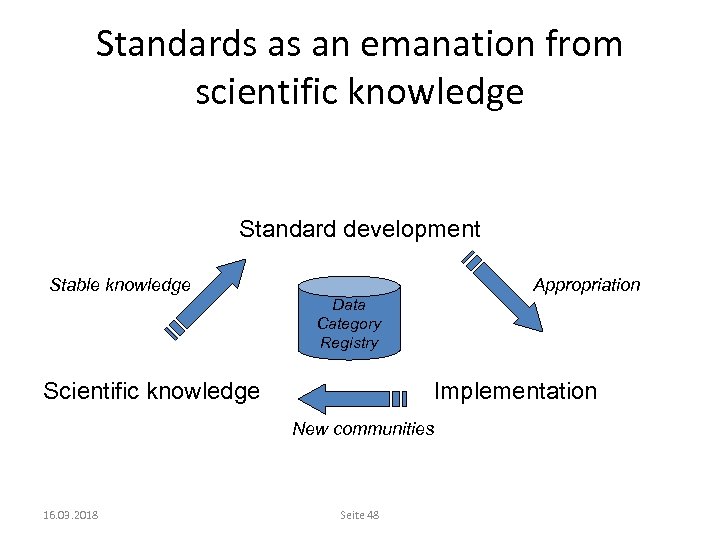
A central concept: data category • Definition – Elementary descriptor used in a linguistic description or annotation scheme • Examples – Fields: /part of speech/, /grammatical gender/ – Values: /feminine/, /plural/, /dual/, /ablative case/ • Role – Specification – Documentation • A reference space for schema designers – Towards an international registry for language resources • Data Category Registry (DCR); cf. ISO 12620
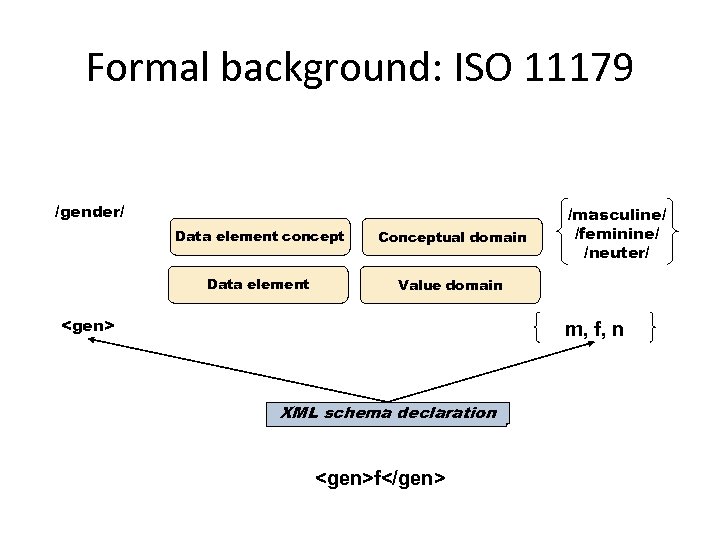
Formal background: ISO 11179 /gender/ Data element concept Conceptual domain Data element /masculine/ /feminine/ /neuter/ Value domain <gen> m, f, n XML schema declaration <gen>f</gen>
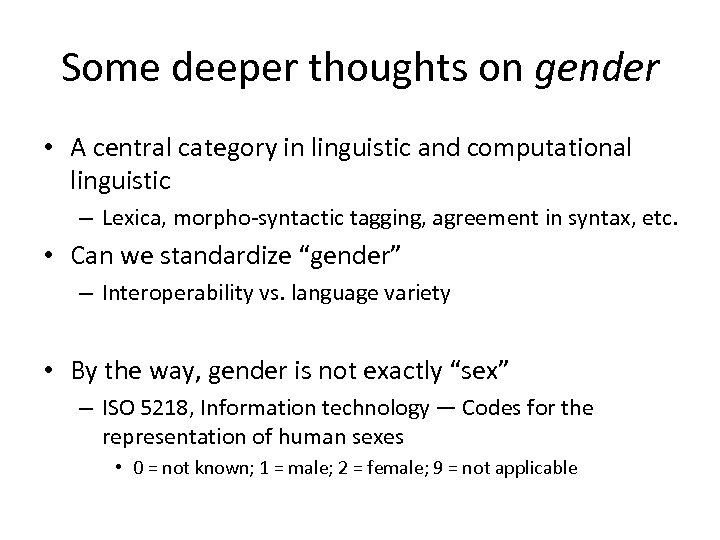
Some deeper thoughts on gender • A central category in linguistic and computational linguistic – Lexica, morpho-syntactic tagging, agreement in syntax, etc. • Can we standardize “gender” – Interoperability vs. language variety • By the way, gender is not exactly “sex” – ISO 5218, Information technology — Codes for the representation of human sexes • 0 = not known; 1 = male; 2 = female; 9 = not applicable
The linguistic view • What is gender: – “a classification of nominals, as shown by agreement” • E. g. die Katze – der Hund – Determiners, adjectives, numerals, verbs • E. g. Control by anaphoric pronouns (cf. en) – Die Katze… sie… – Not present in all languages • Number of genders (Greville G. Corbett)
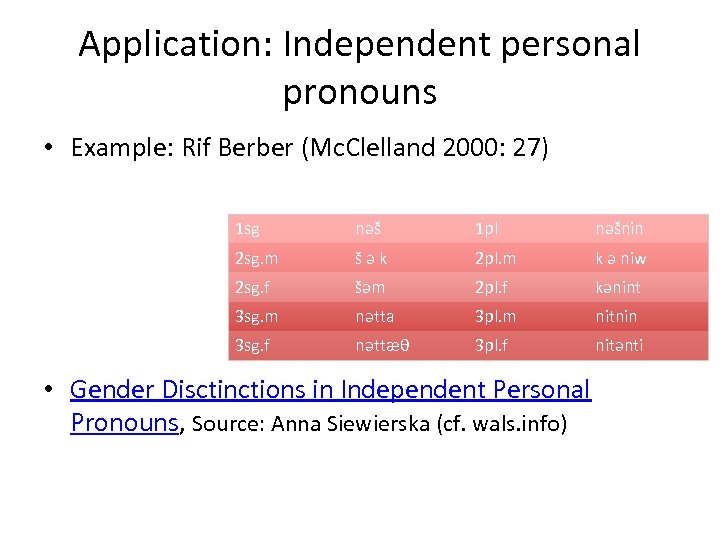
Application: Independent personal pronouns • Example: Rif Berber (Mc. Clelland 2000: 27) 1 sg nəš 1 pl nəšnin 2 sg. m š ə k 2 pl. m k ə niw 2 sg. f šəm 2 pl. f kənint 3 sg. m nətta 3 pl. m nitnin 3 sg. f nəttæθ 3 pl. f nitənti • Gender Disctinctions in Independent Personal Pronouns, Source: Anna Siewierska (cf. wals. info)
The TC 37 model — ISO 12620 Entry Identifier: Profile: Definition (fr): les grammatical gender morpho-syntax Catégorie grammaticale reposant, selon les langues et systèmes, sur la distinction naturelle entre les sexes ou sur des critères formels (Source: TLFi) Definition (en): Grammatical category… (Source: TLFi (Trad. )) Object Language: fr Object Language: en Object Language: de Conceptual Domain: {/feminine/, /masculine/, /neuter/}Geschlecht Name: genre Name: gender Name: Conceptual Domain: Name: grammatical Name: Genus {/feminine/, gender Conceptual Domain: /masculine/} {/feminine/, /masculine/, /neuter/} 16. 03. 2018 Seite 45
Convergence? Petit Larousse 1905 by Métadif (source H. Manuélian) goes TEI <entry> <form> Campe by Uni. Würzburg (W. Wegstein) goes TEI <orth>AZYGOS</orth> <pron>(ghoss)</pron> <sense> </form> Morphalou 2005 by ATILF (S. Alt) goes LMF <def type="paraphrase“>die alte<lb/> Benennung aller großer <sense> Raubvögel, besonders aber des Adlers, die<lb/> noch in <usg <lexical. Entry> <gram. Grp> type="geo">N. D. </usg> üblich ist und <usg type="domain">bei <lemma>cheikh</lemma> <pos>n. </pos> Dichtern</usg> vorkömmt. <lb/></def> <gen>f. </gen> <spelling. Variant>cheik</spelling. Variant> <cit type=“example”> <grammatical. Categor>common noun</grammatical. Category> </gram. Grp> <quote>Ein kühner Aar theilt mit gewalt'gen Schwingen<lb/> <def>Veine Lüfte, <grammatical. Gender>masculine</grammatical. Gender> Die qui établit- la communication entre les deux veines - -</quote> caves. </def> <bibl><author n="#Schreiber">Schreiber. </author><lb/></bibl> <morphology> </sense> </cit> <inflexion> <sense> <cit> <word. Form>cheikh</word. Form> <gram. Grp> <quote>Bald werdet ihr im Meer der Haien, am Gestade<lb/> <grammatical. Number>singular</grammatical. Number> <pos>Adj. </pos> Beute sein. -</quote> Der Aaren </gram. Grp> </inflexion> <bibl><author n="#Ramler">Ramler. </author><lb/></bibl> <cit type="collocation"> <inflexion> </cit> <quote>veine azygos</quote> </dicteg> <word. Form>cheikhs</word. Form> </cit> </sense> <grammatical. Number>plural</grammatical. Number> </sense> </inflexion> </entry> </morphology> </lexical. Entry>
Convergence? ISO 639, ISO 3166, etc. ISO TEI O IS ODD for ISO back office, FSR ily IT S fa m fo OD F LI D fo r XM ; M ily 66 m fa 31 L O L M IS X 9, 63 W 3 C IL M r. S x Te t
Standards as an emanation from scientific knowledge Standard development Stable knowledge Appropriation Data Category Registry Scientific knowledge Implementation New communities 16. 03. 2018 Seite 48
Epilogue RESEARCH INFRASTRUCTURES IN THE HUMANITIES
Research Infrastructures • In general: permanent and physical • Natural sciences: ice breakers for polar research, satellites, telescopes, particle accelerators, laboratories • RIs for the humanities? – Cultural heritage in all forms is the main source of humanities research – Libraries and archives are the traditional “laboratories” for the humanities • In the digital age, essential for innovative humanities research is: – Access to digitised heritage data (data bases, text corpora, speech, image collections, etc. ) – Tools to process this information 16. 03. 2018 Seite 50
Core activities • Digitise – Curate – Preserve – – Standards development and promotion Curation, preservation and digitisation services Technology platforms Legal services and advice • Discover – Access – Deliver – Authentication and authorisation, – Harvesting, aggregating, hosting – User-friendly discovery, delivery and use • Connect – Collaborate – Use – Supporting communities of practice – Facilitating new research practice – Tools and registries 16. 03. 2018 Seite 51
(conclusive) priorities • Mastering the technology – Not all scientist are technological geeks • Transparency • Answering priority needs – Strong request to provide infrastructures for simple types of data • Pragmatic sense • Preserving scientific patrimony – High amounts of research data is continuously lost • Identification, preservation 16. 03. 2018 Seite 52
Should we/you be afraid of standards? <cit> <quote>Yes you should be afraid, but you should be more afraid of not having them</quote> <author>Wendell Piez</author> </cit>
Скачать презентацию Stabilizing knowledge through standards a perspective for the
48b5b1b7a512a431e36a270cbaaf1810.ppt