


 Скачать презентацию ST TEACHING IN THE 21 CENTURY THE USE
39c8a49a8343fdd9df3a3ee41717b7b5.ppt
- Количество слайдов: 34
 ST TEACHING IN THE 21 CENTURY: THE USE OF CONTEMPORARY TECHNOLOGY IN THE K-12 CLASSROOM AND BEYOND TEACH TEC A Collaboration between University of Arizona and Arizona State University
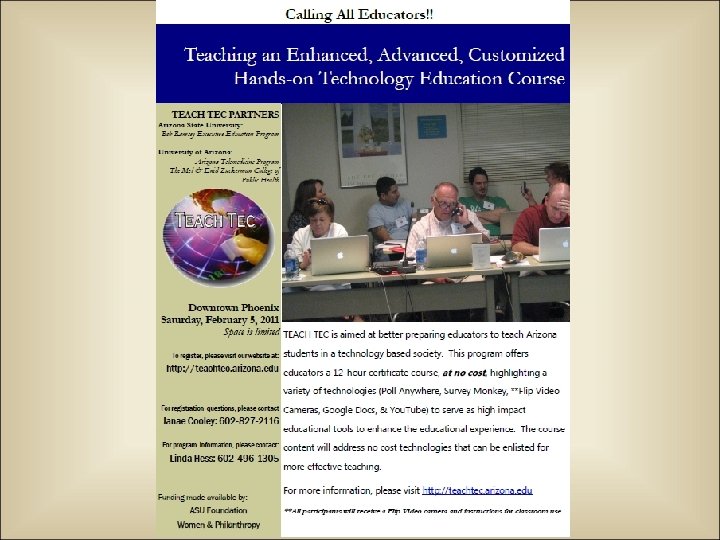
 TEACH TEC Teaching an Enhanced, Advanced, Customized Hands-On Technology Education Course
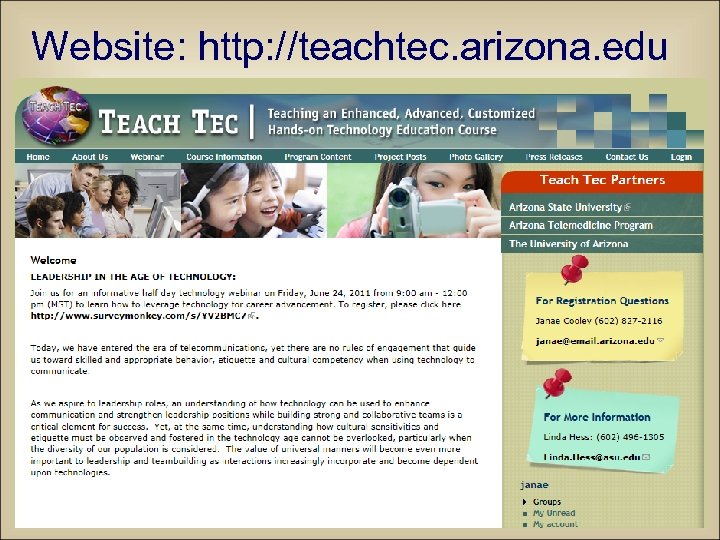 Website: http: //teachtec. arizona. edu
 TEACH TEC § Continuing education certificate program § Developed by the University of AZ & AZ State University § Teach K-12 educators § Technology in the classroom *Project sponsored by the Arizona Board of Regents, the Helios Foundation and Women in Philanthropy, ASU Foundation
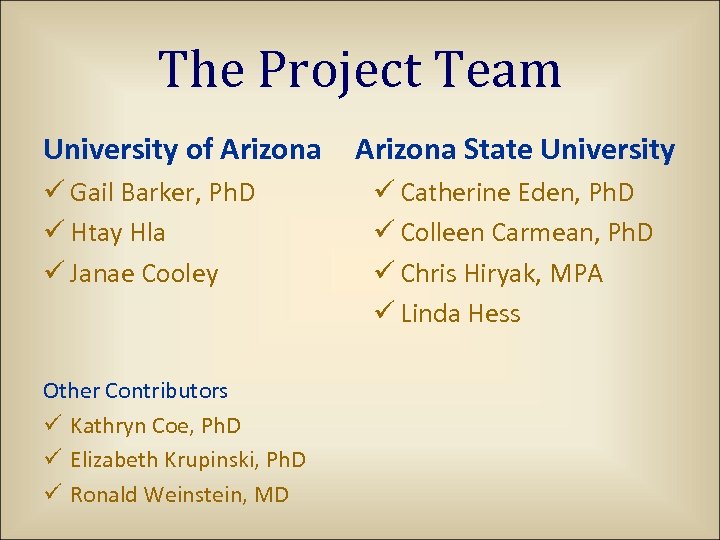 The Project Team University of Arizona ü Gail Barker, Ph. D ü Htay Hla ü Janae Cooley Other Contributors ü Kathryn Coe, Ph. D ü Elizabeth Krupinski, Ph. D ü Ronald Weinstein, MD Arizona State University ü Catherine Eden, Ph. D ü Colleen Carmean, Ph. D ü Chris Hiryak, MPA ü Linda Hess
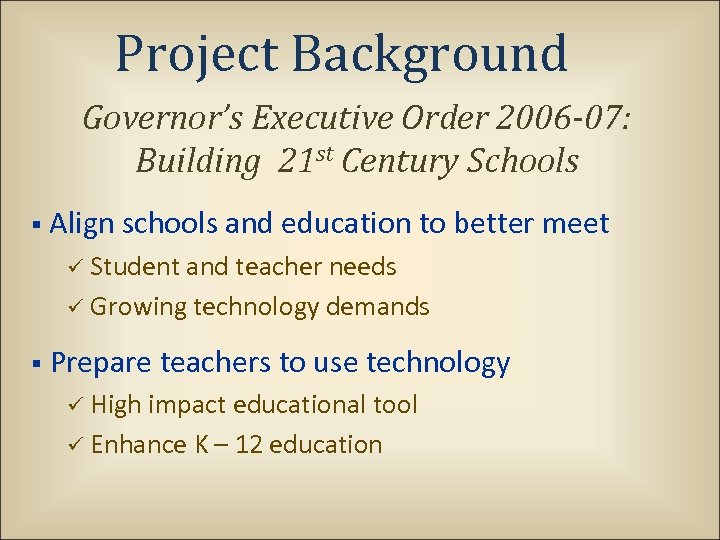 Project Background Governor’s Executive Order 2006 -07: Building 21 st Century Schools § Align schools and education to better meet ü Student and teacher needs ü Growing technology demands § Prepare teachers to use technology ü High impact educational tool ü Enhance K – 12 education
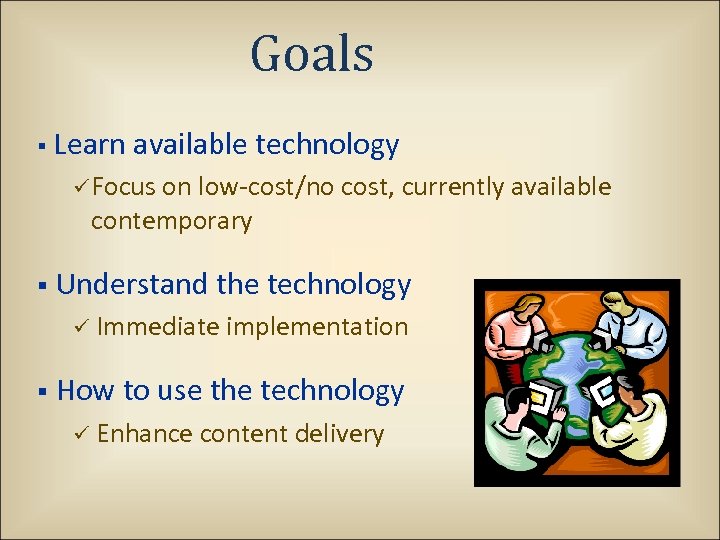 Goals § Learn available technology ü Focus on low-cost/no cost, currently available contemporary § Understand the technology ü Immediate implementation § How to use the technology ü Enhance content delivery
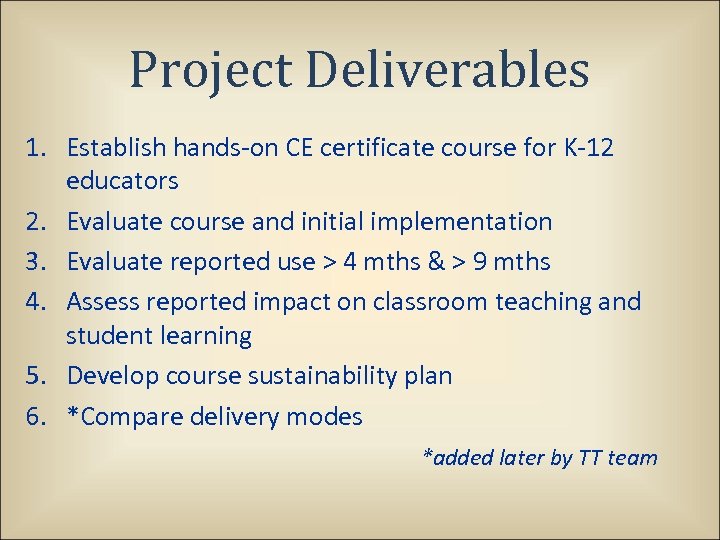 Project Deliverables 1. Establish hands-on CE certificate course for K-12 educators 2. Evaluate course and initial implementation 3. Evaluate reported use > 4 mths & > 9 mths 4. Assess reported impact on classroom teaching and student learning 5. Develop course sustainability plan 6. *Compare delivery modes *added later by TT team
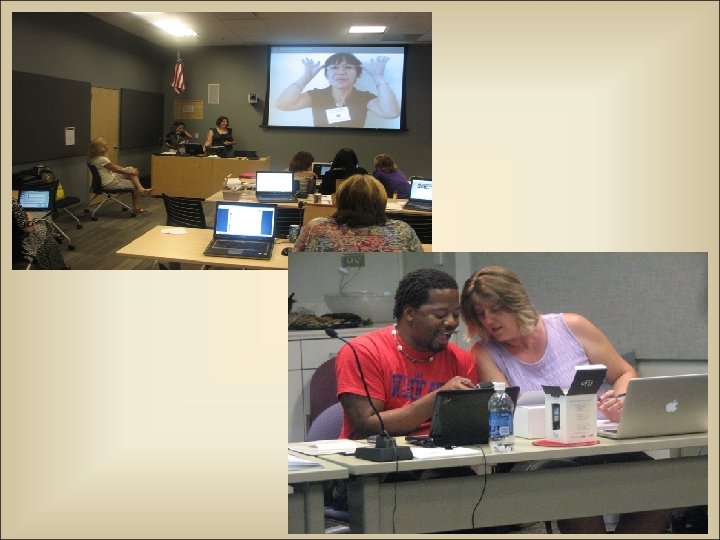
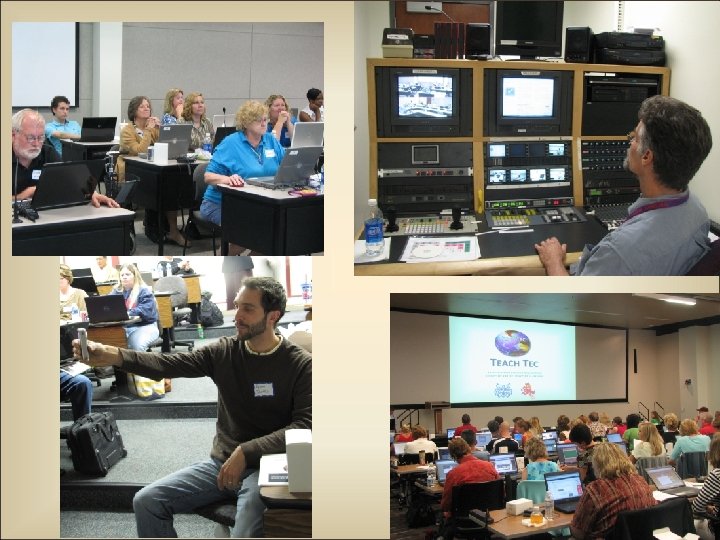
 Format § § § Technology introduction Followed by hands-on training Time to explore technologies Group activity to create classroom exercise lesson Post conference – submit individual lesson and course evaluation ü In-person ü Remote delivery ü 12 Continuing education credits
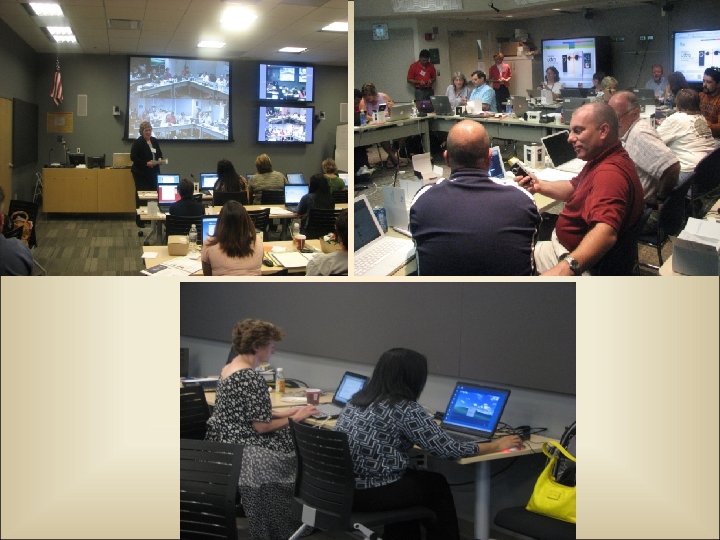
 Delivery Methods • In person • In-person with videoconferencing • Video streaming with Twitter or Neat Chat • Webinar
 Highlighted Technologies § § § Flip Videos Google Docs Survey Monkey Texting/Classroom Polls Twitter/Neat Chat You. Tube/Teacher. Tube
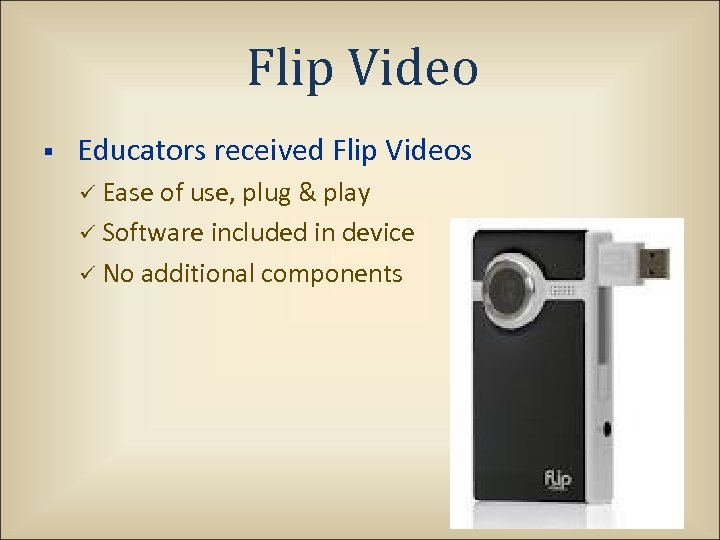 Flip Video § Educators received Flip Videos ü Ease of use, plug & play ü Software included in device ü No additional components
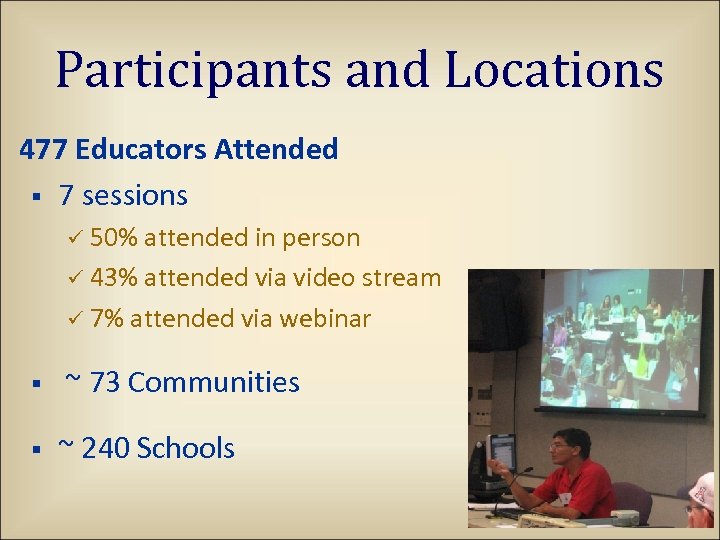 Participants and Locations 477 Educators Attended § 7 sessions ü 50% attended in person ü 43% attended via video stream ü 7% attended via webinar § ~ 73 Communities § ~ 240 Schools
 Participating Communities Ajo Albuquerque, NM Apache Junction Arizona City Avondale Benson Beverly Buckeye Cave Creek Chandler Chino Valley Concho Coolidge Cortaro Cottonwood Dateland Eagar El Mirage Flagstaff Florence Fort Defiance Fountain Hills Ganado Gilbert Glendale Goodyear Green Valley Hereford Houston, TX Joseph City Kayenta Kingman Lake Havasu City Lakeside Laveen Litchfield Park
 Participating Communities Mammoth Maricopa Mesa Nutrioso Palmdale Paulden Peoria Phoenix Pima Pinetop Prescott Valley Queen Creek Rio Rico Sahuarita Salome San Tan Valley Scottsdale Sedona Show Low Sierra Vista Somerton St. Michaels Sun City Surprise Taylor Tempe Tolleson Topock Tuba City Tucson Vail Vernon Whiteriver Wickenburg Window Rock Youngtown
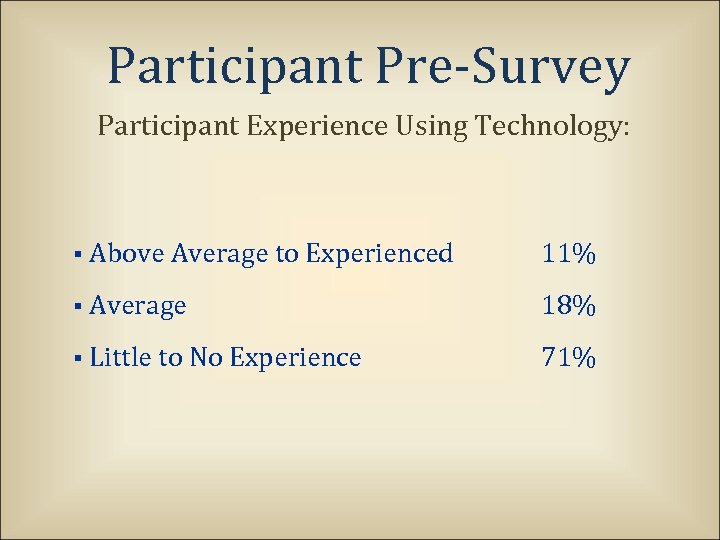 Participant Pre-Survey Participant Experience Using Technology: § Above Average to Experienced 11% § Average 18% § Little to No Experience 71%
 The Course
 Sessions • 2009 – 1 two-day session – – Tucson & Phoenix locations In person/Video conferencing and Video streaming • 2010 – 3 one-day sessions – – 2 sessions in Phoenix, 1 session in Tucson Video streaming for distance audience • 2011 – 3 one-day sessions – – 2 in person sessions in Phoenix 1 session as Webinar *4 sessions were 7 -9 grade STEM
 Initial Results n = 352
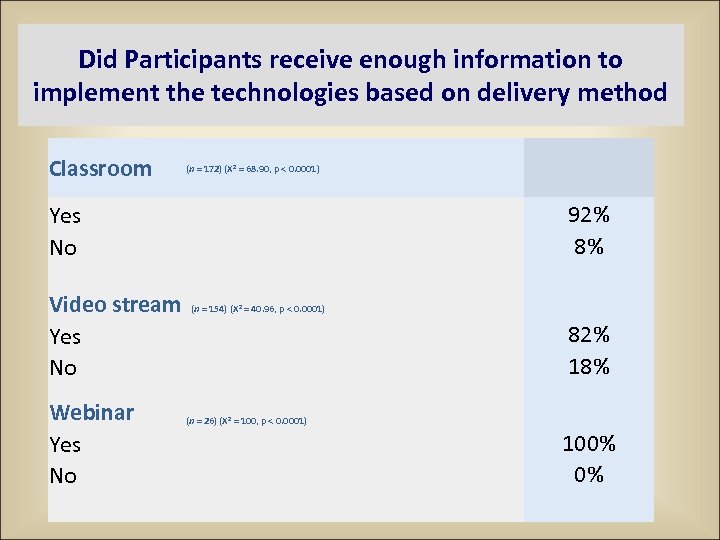 Did Participants receive enough information to implement the technologies based on delivery method Classroom (n = 172) (X 2 = 68. 90, p < 0. 0001) 92% 8% Yes No Video stream (n = 154) (X = 40. 96, p < 0. 0001) Yes No 2 Webinar Yes No (n = 26) (X 2 = 100, p < 0. 0001) 82% 18% 100% 0%
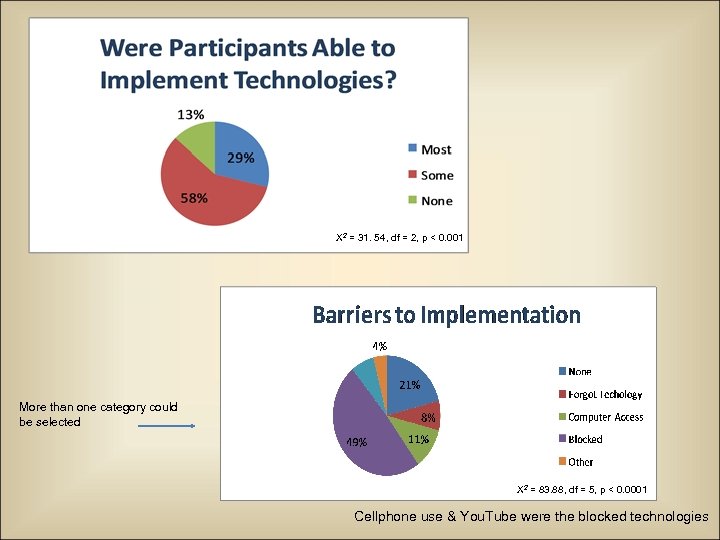 X 2 = 31. 54, df = 2, p < 0. 001 More than one category could be selected X 2 = 83. 88, df = 5, p < 0. 0001 Cellphone use & You. Tube were the blocked technologies
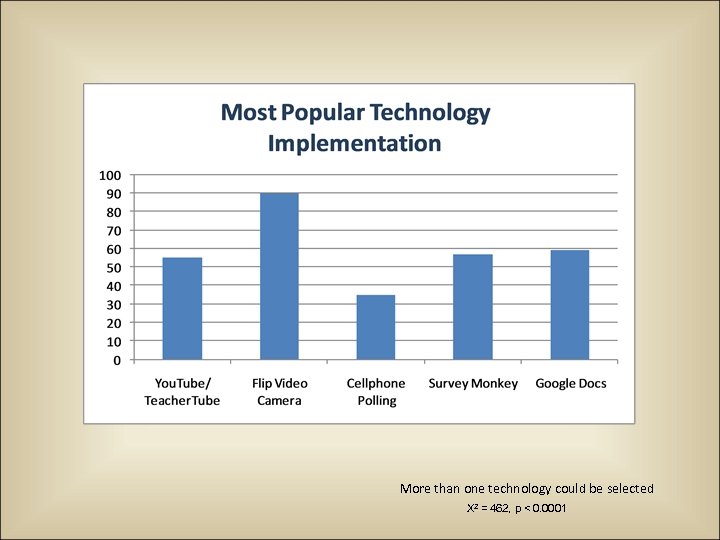 More than one technology could be selected X 2 = 462, p < 0. 0001
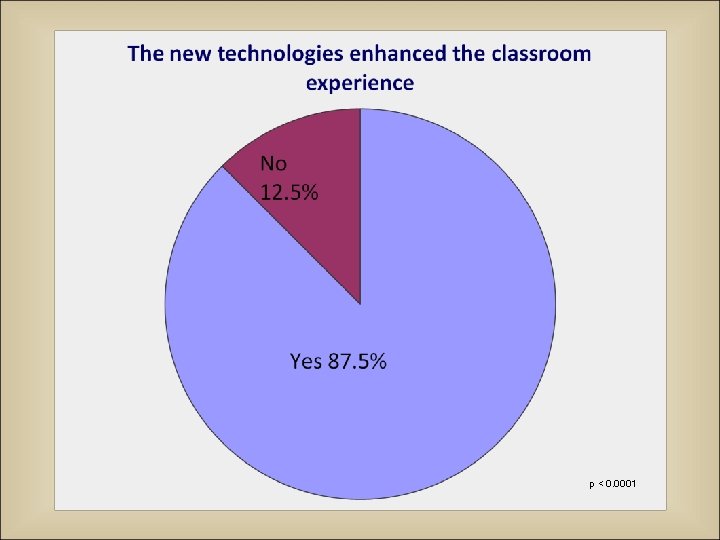 p < 0. 0001
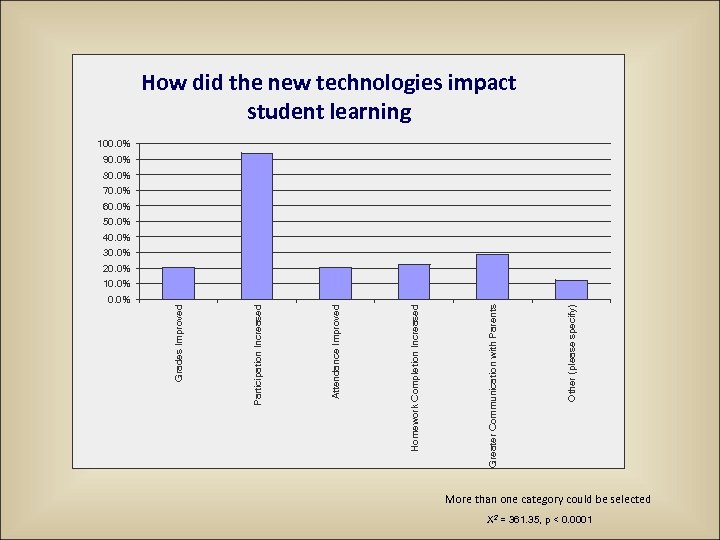 How did the new technologies impact student learning 100. 0% 90. 0% 80. 0% 70. 0% 60. 0% 50. 0% 40. 0% 30. 0% 20. 0% Other (please specify) Greater Communication with Parents Homework Completion Increased Attendance Improved Participation Increased 0. 0% Grades Improved 10. 0% More than one category could be selected X 2 = 361. 35, p < 0. 0001
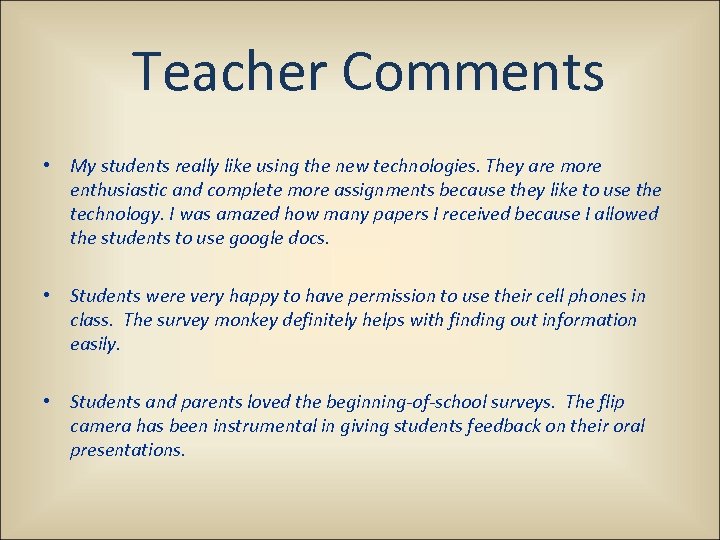 Teacher Comments • My students really like using the new technologies. They are more enthusiastic and complete more assignments because they like to use the technology. I was amazed how many papers I received because I allowed the students to use google docs. • Students were very happy to have permission to use their cell phones in class. The survey monkey definitely helps with finding out information easily. • Students and parents loved the beginning-of-school surveys. The flip camera has been instrumental in giving students feedback on their oral presentations.
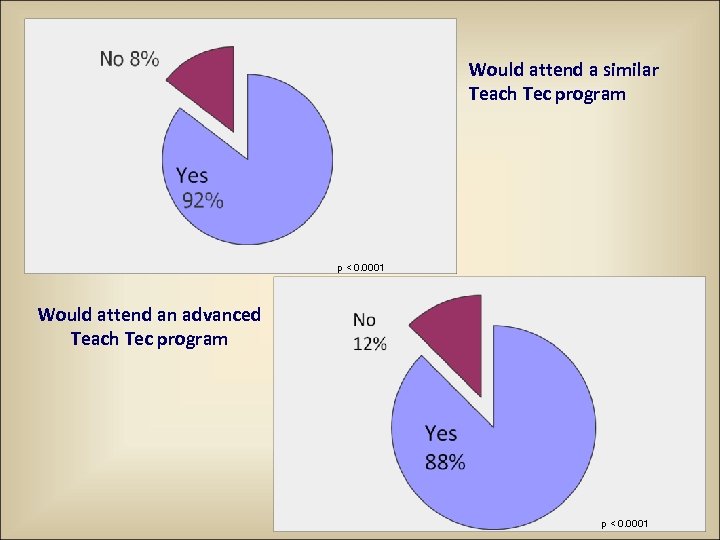 Would attend a similar Teach Tec program p < 0. 0001 Would attend an advanced Teach Tec program p < 0. 0001
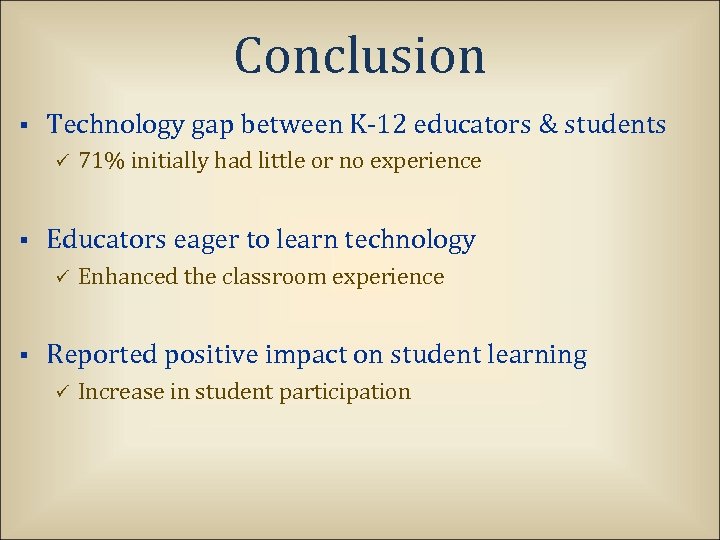 Conclusion § Technology gap between K-12 educators & students ü § Educators eager to learn technology ü § 71% initially had little or no experience Enhanced the classroom experience Reported positive impact on student learning ü Increase in student participation
 Conclusion § Barriers to implementation in some schools/districts ü You. Tube and Cellphone use § Hands on training course can be delivered over distance ü More testing using Webinar § $50 threshold for course registration
 st 21 Century Teaching for st Century Students 21 http: //teachtec. arizona. edu