 Скачать презентацию St Petersburg State University Dr Sergey Zhuravlev Chair
Lecture 3-4 Snow processes.ppt
- Количество слайдов: 53



St. Petersburg State University Dr. Sergey Zhuravlev Chair of hydrology Snow processes, its formation & distribution 1
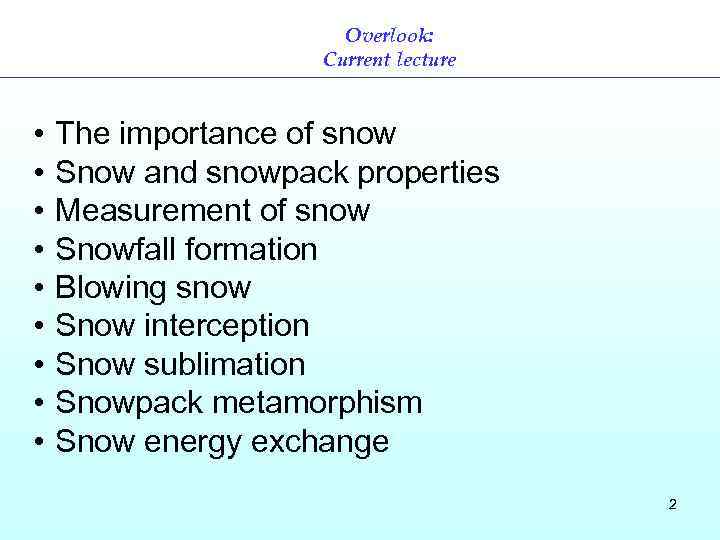
Overlook: Current lecture • • • The importance of snow Snow and snowpack properties Measurement of snow Snowfall formation Blowing snow Snow interception Snow sublimation Snowpack metamorphism Snow energy exchange 2
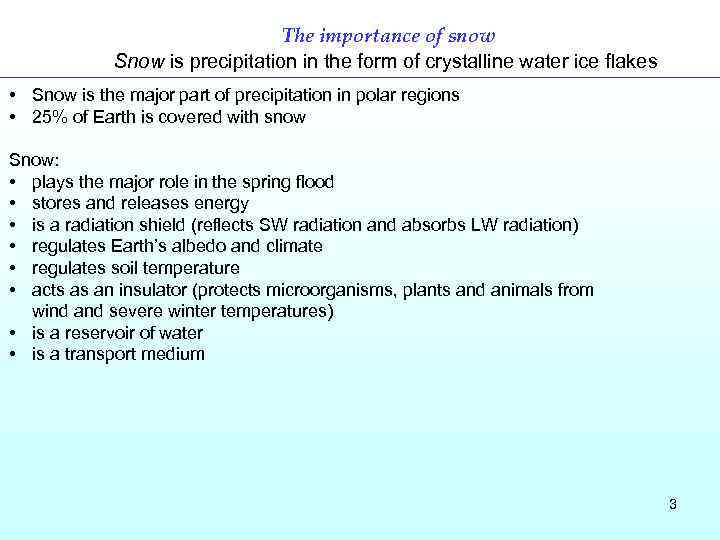
The importance of snow Snow is precipitation in the form of crystalline water ice flakes • Snow is the major part of precipitation in polar regions • 25% of Earth is covered with snow Snow: • plays the major role in the spring flood • stores and releases energy • is a radiation shield (reflects SW radiation and absorbs LW radiation) • regulates Earth’s albedo and climate • regulates soil temperature • acts as an insulator (protects microorganisms, plants and animals from wind and severe winter temperatures) • is a reservoir of water • is a transport medium 3
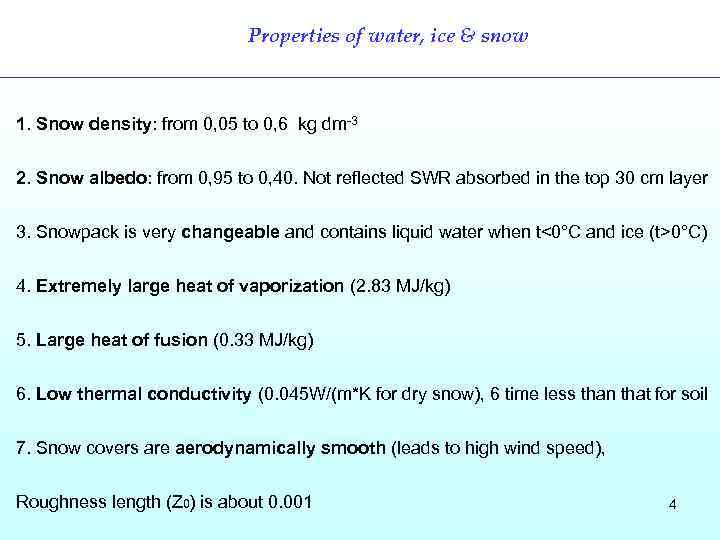
Properties of water, ice & snow 1. Snow density: from 0, 05 to 0, 6 kg dm-3 2. Snow albedo: from 0, 95 to 0, 40. Not reflected SWR absorbed in the top 30 cm layer 3. Snowpack is very changeable and contains liquid water when t<0°C and ice (t>0°C) 4. Extremely large heat of vaporization (2. 83 MJ/kg) 5. Large heat of fusion (0. 33 MJ/kg) 6. Low thermal conductivity (0. 045 W/(m*K for dry snow), 6 time less than that for soil 7. Snow covers are aerodynamically smooth (leads to high wind speed), Roughness length (Z 0) is about 0. 001 4
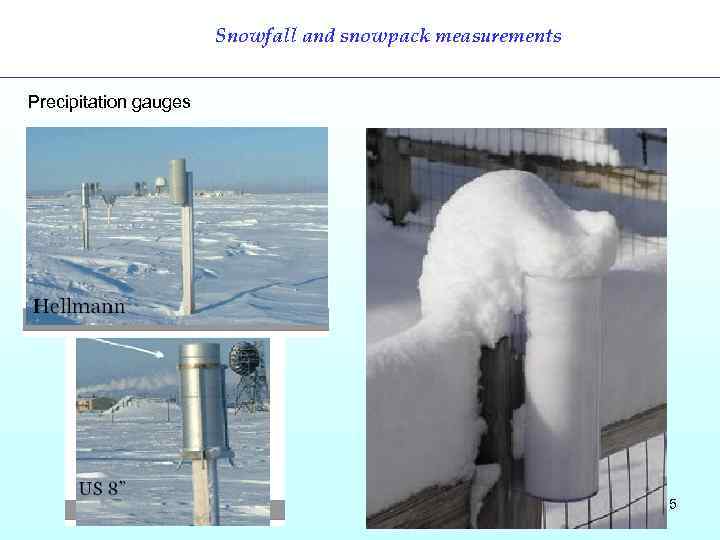
Snowfall and snowpack measurements Precipitation gauges 5
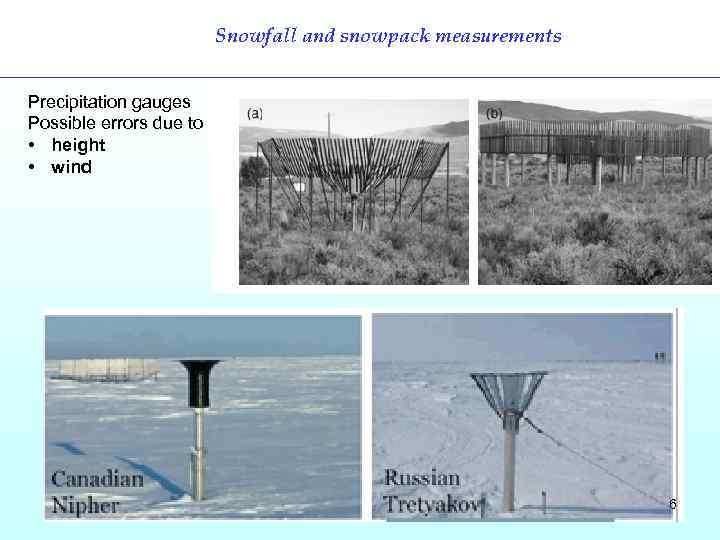
Snowfall and snowpack measurements Precipitation gauges Possible errors due to • height • wind 6
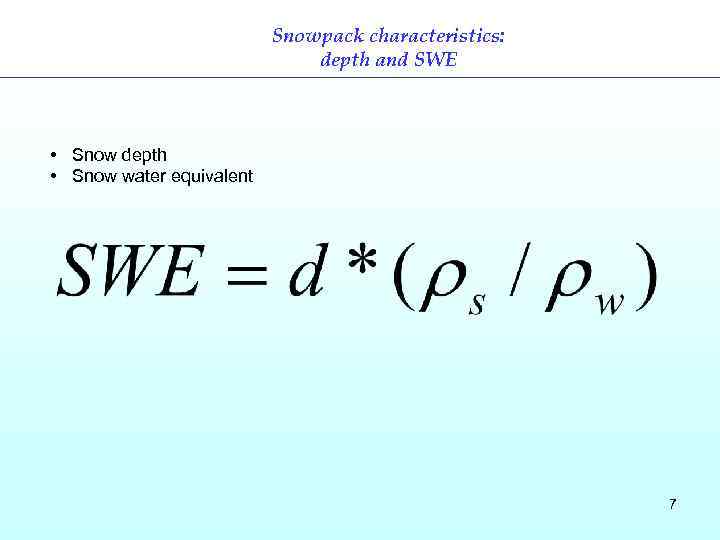
Snowpack characteristics: depth and SWE • Snow depth • Snow water equivalent 7
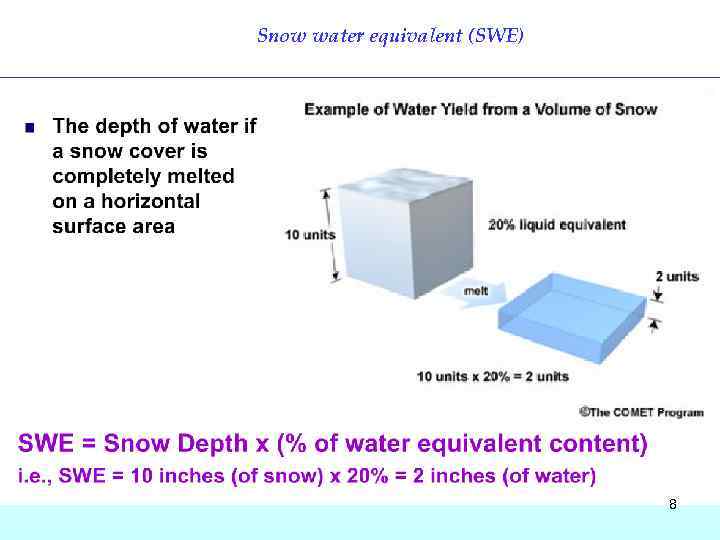
Snow water equivalent (SWE) 8
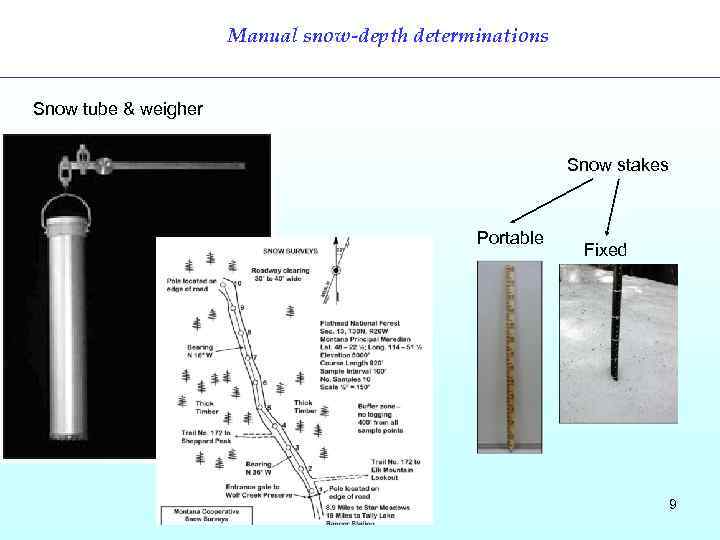
Manual snow-depth determinations Snow tube & weigher Snow stakes Portable Fixed 9
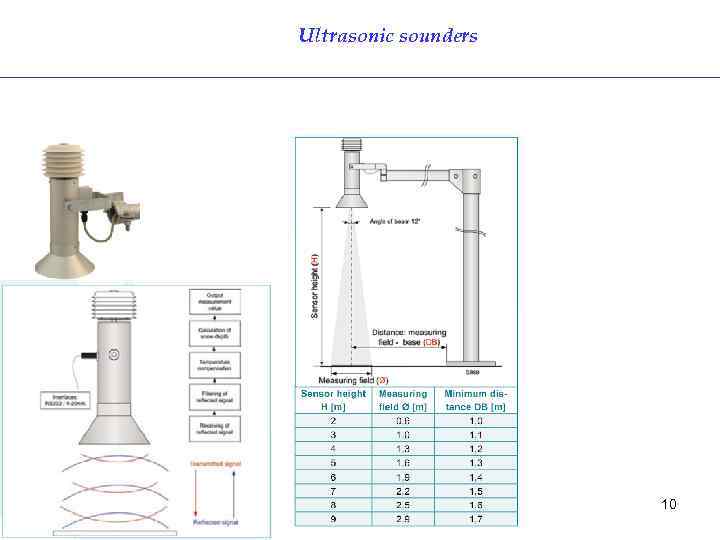
Ultrasonic sounders 10
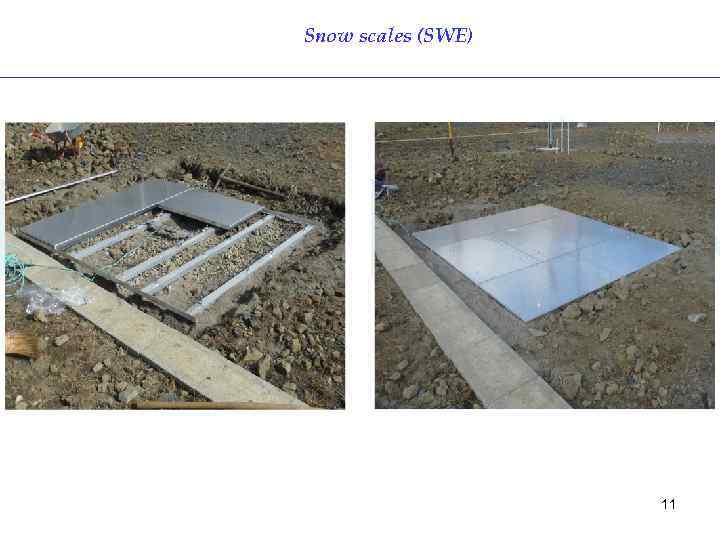
Snow scales (SWE) 11
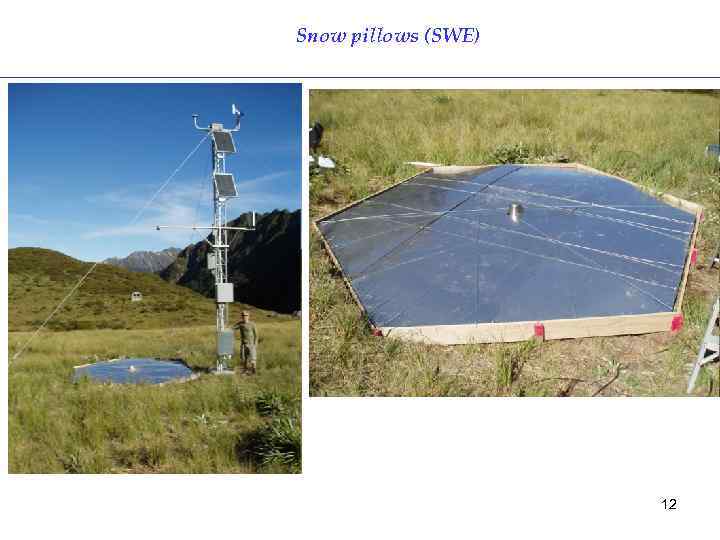
Snow pillows (SWE) 12
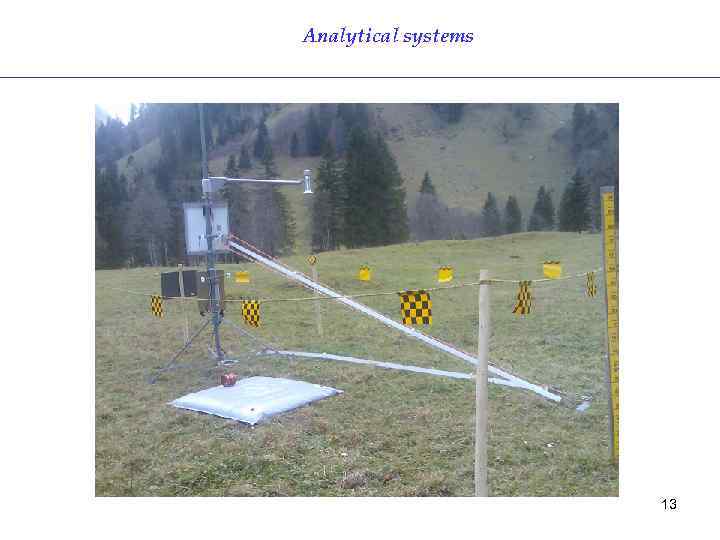
Analytical systems 13
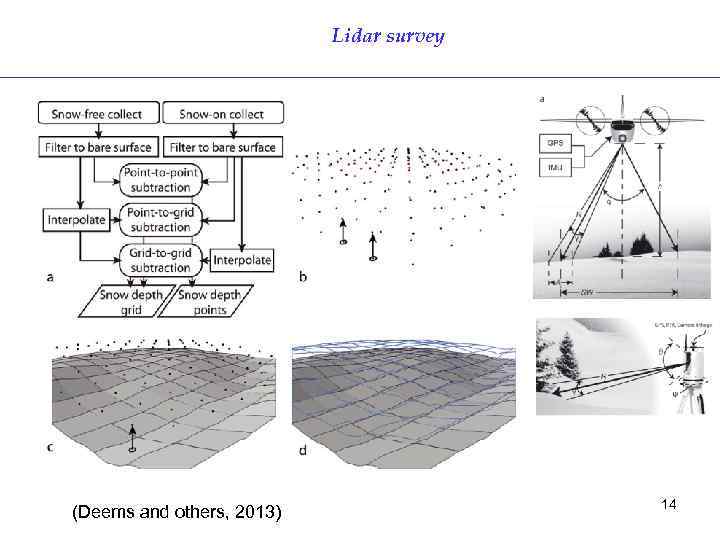
Lidar survey (Deems and others, 2013) 14
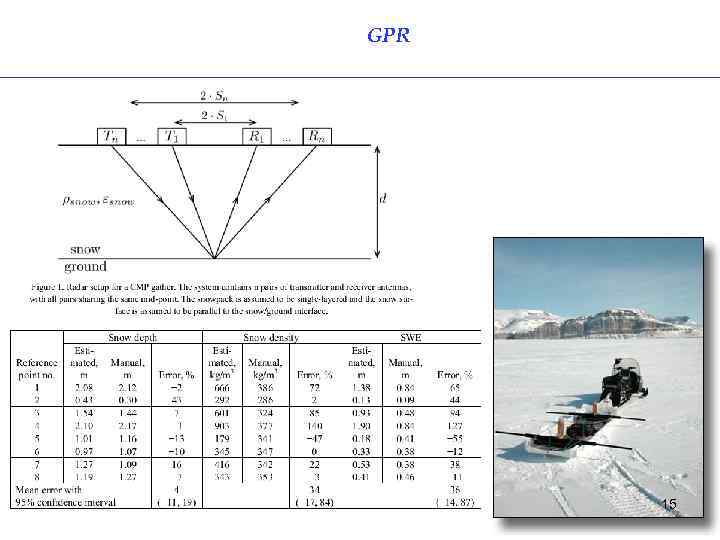
GPR 15
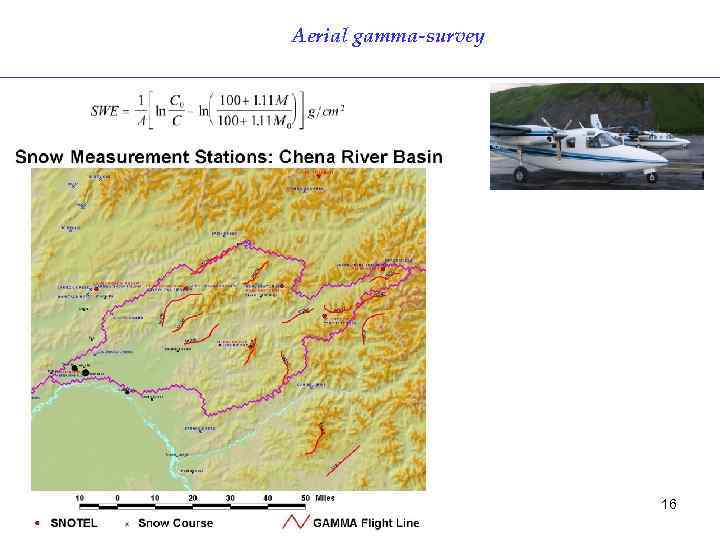
Aerial gamma-survey 16
Snowfall formation The occurrence of snowfall depends on: • Latitude • Altitude • The distance from major water bodies • The nature of regional mass circulation The major processes are: • Air saturation with water vapor • Orographic lifting • The uplifting of air masses with warm/cold fronts (frontal activity) • Convection due to contact of cold air with warm surfaces 17
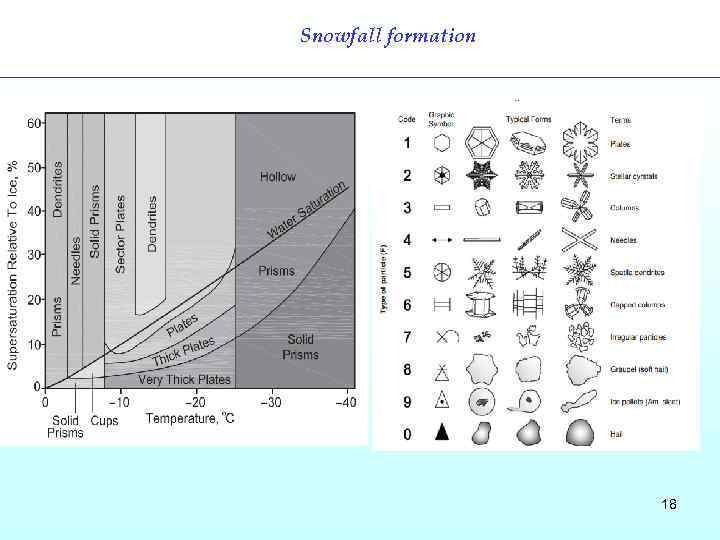
Snowfall formation 18
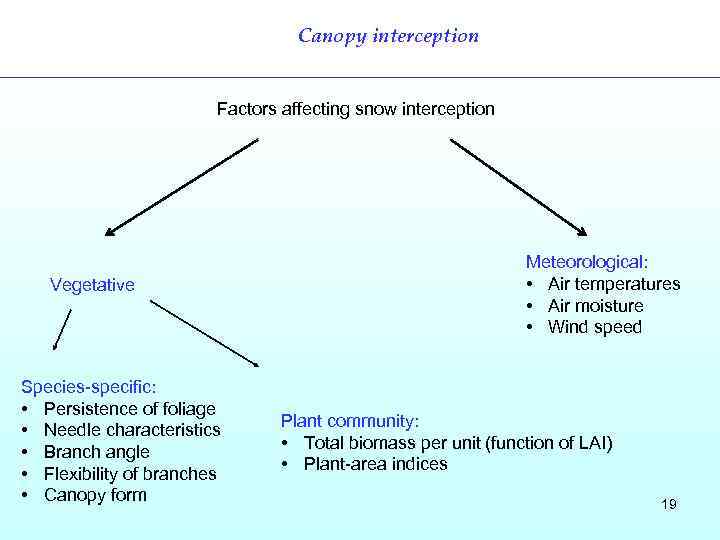
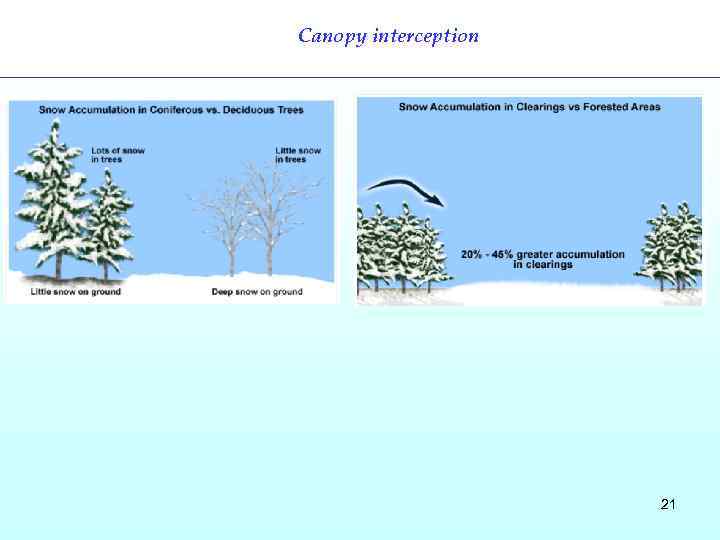
Canopy interception Factors affecting snow interception Vegetative Species-specific: • Persistence of foliage • Needle characteristics • Branch angle • Flexibility of branches • Canopy form Meteorological: • Air temperatures • Air moisture • Wind speed Plant community: • Total biomass per unit (function of LAI) • Plant-area indices 19
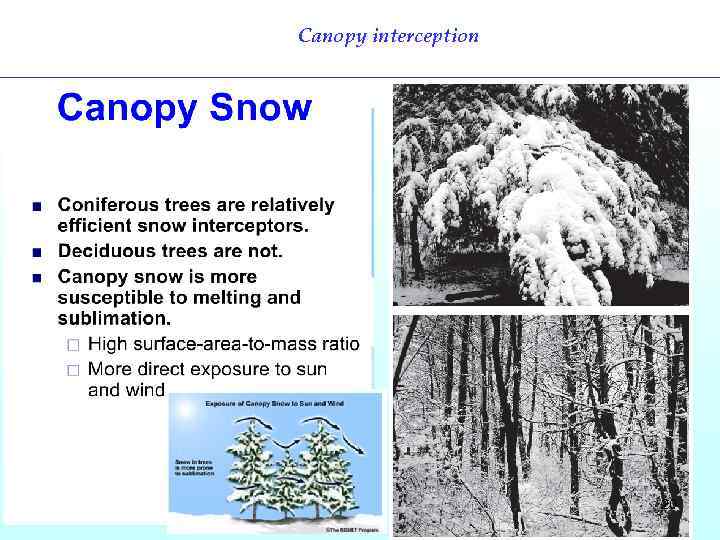
Canopy interception 20
Canopy interception 21
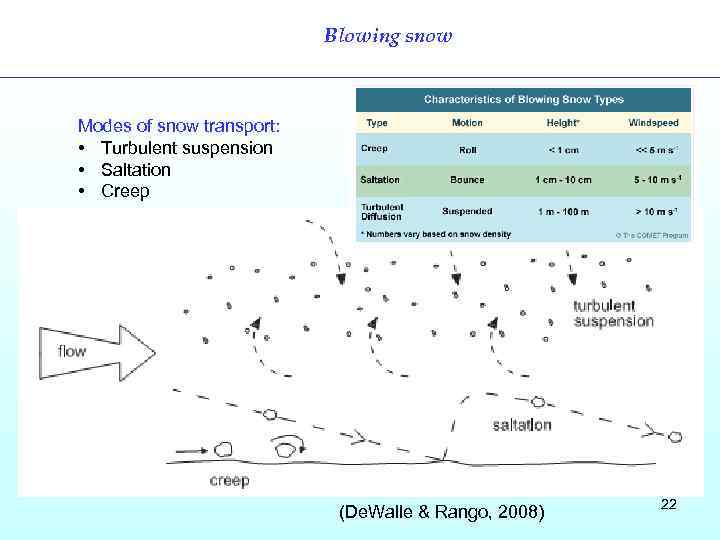
Blowing snow Modes of snow transport: • Turbulent suspension • Saltation • Creep (De. Walle & Rango, 2008) 22
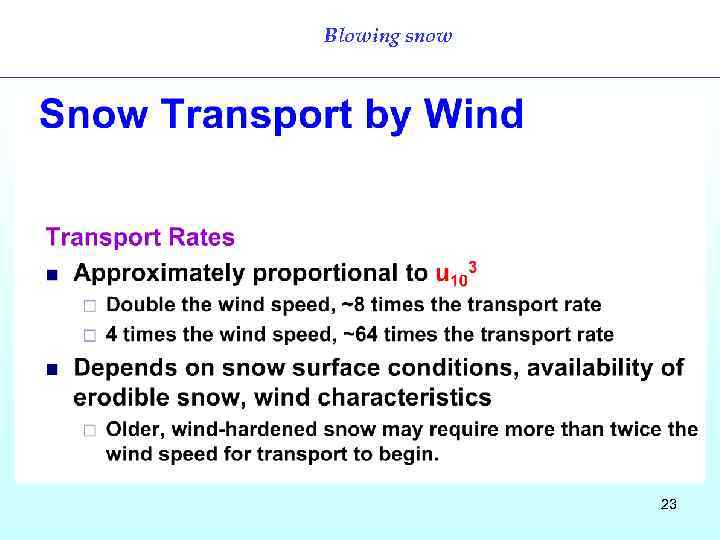
Blowing snow 23
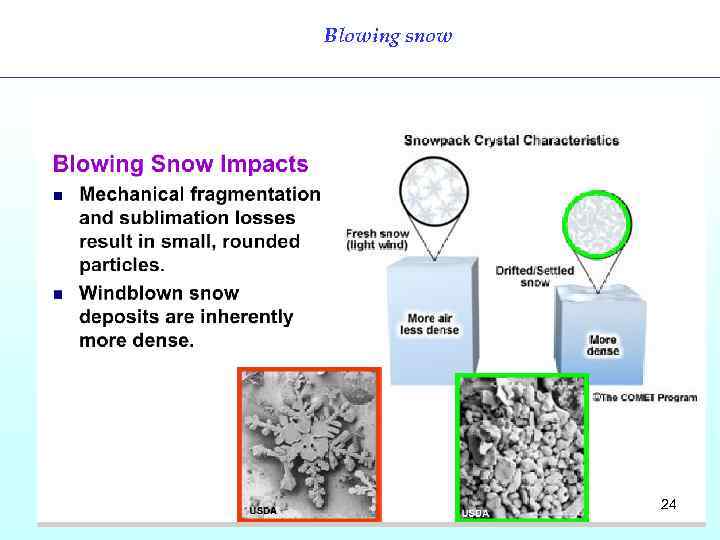
Blowing snow 24
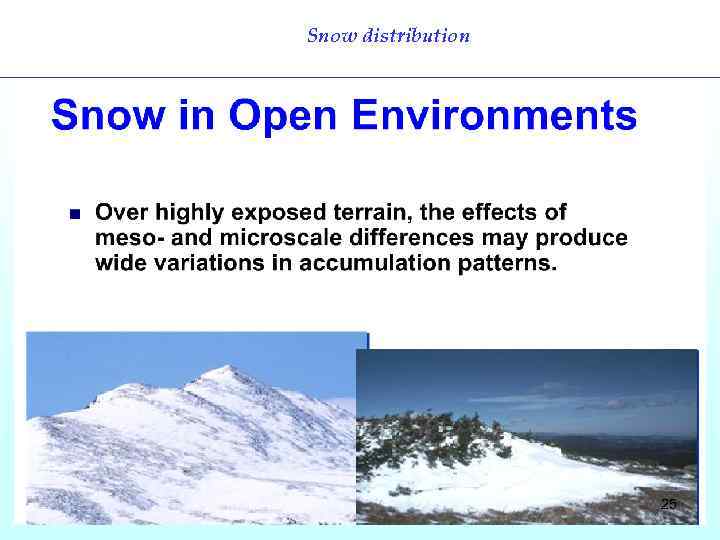
Snow distribution 25
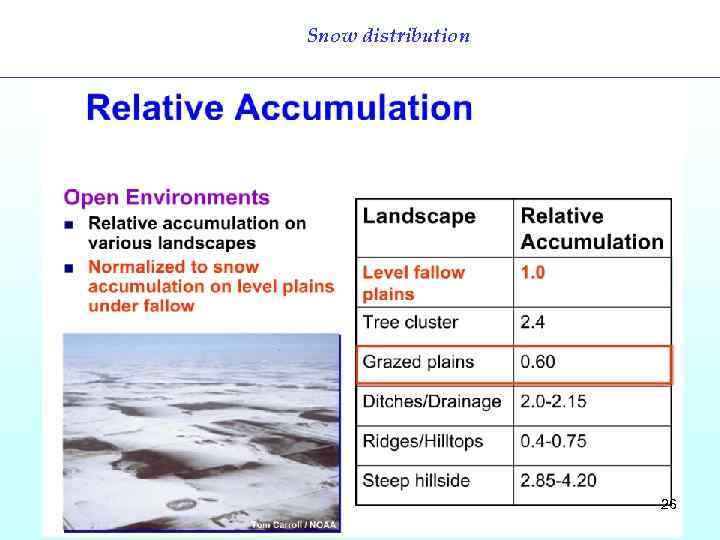
Snow distribution 26
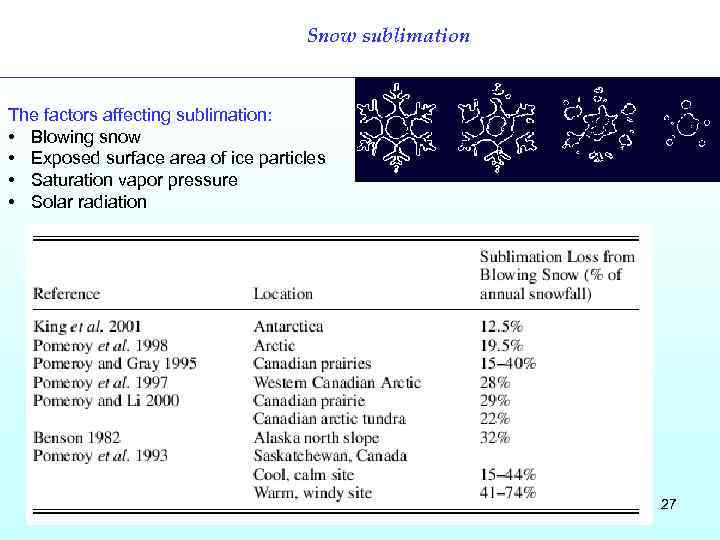
Snow sublimation The factors affecting sublimation: • Blowing snow • Exposed surface area of ice particles • Saturation vapor pressure • Solar radiation 27
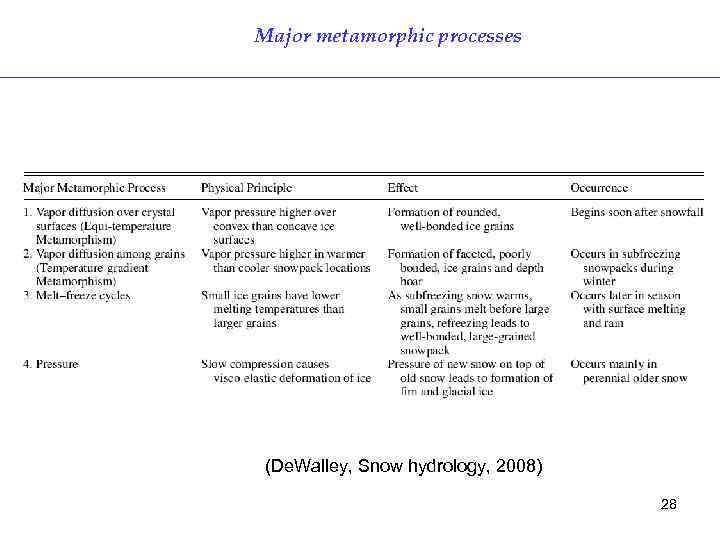
Major metamorphic processes (De. Walley, Snow hydrology, 2008) 28
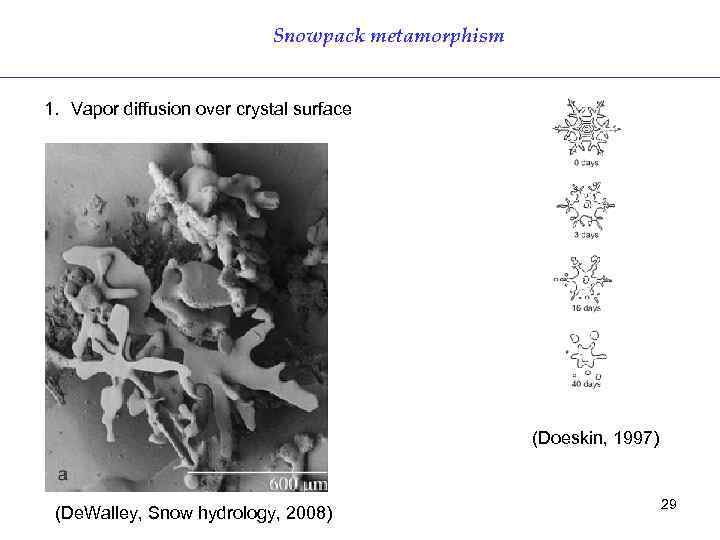
Snowpack metamorphism 1. Vapor diffusion over crystal surface (Doeskin, 1997) (De. Walley, Snow hydrology, 2008) 29
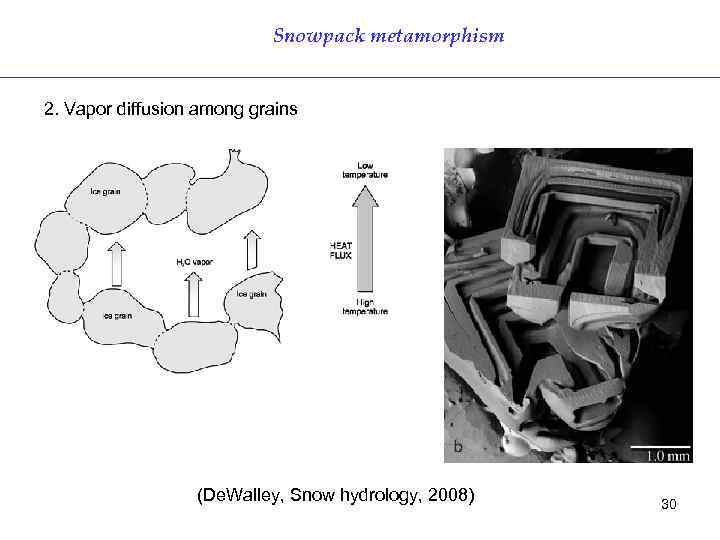
Snowpack metamorphism 2. Vapor diffusion among grains (De. Walley, Snow hydrology, 2008) 30
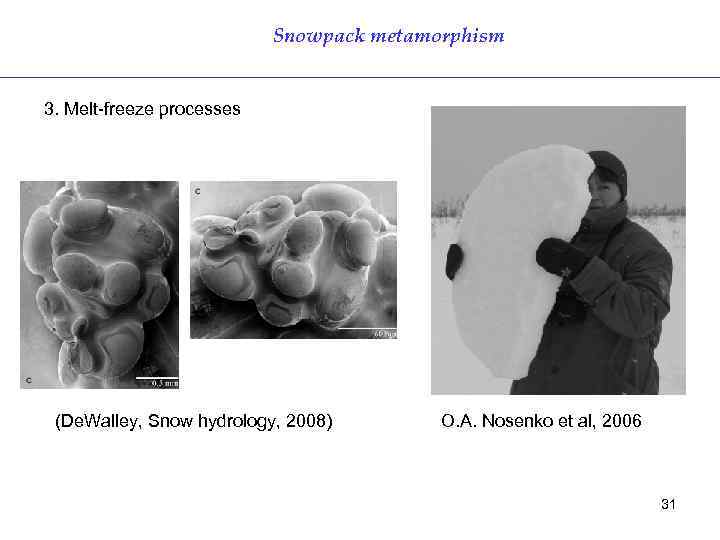
Snowpack metamorphism 3. Melt-freeze processes (De. Walley, Snow hydrology, 2008) O. A. Nosenko et al, 2006 31
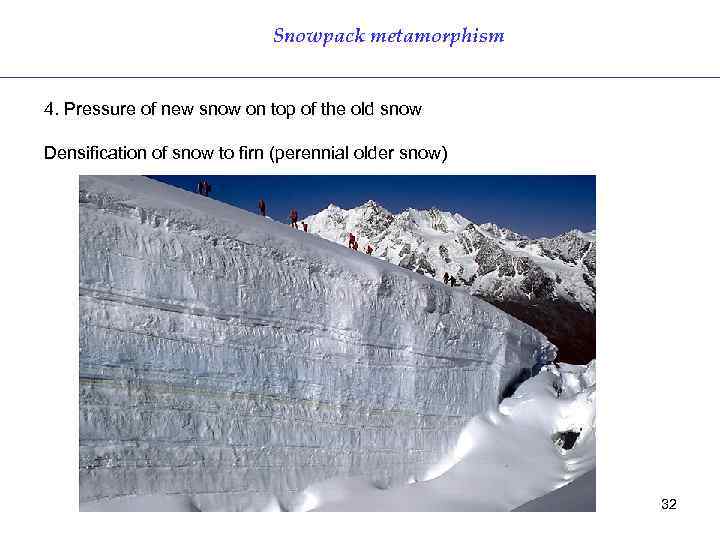
Snowpack metamorphism 4. Pressure of new snow on top of the old snow Densification of snow to firn (perennial older snow) 32
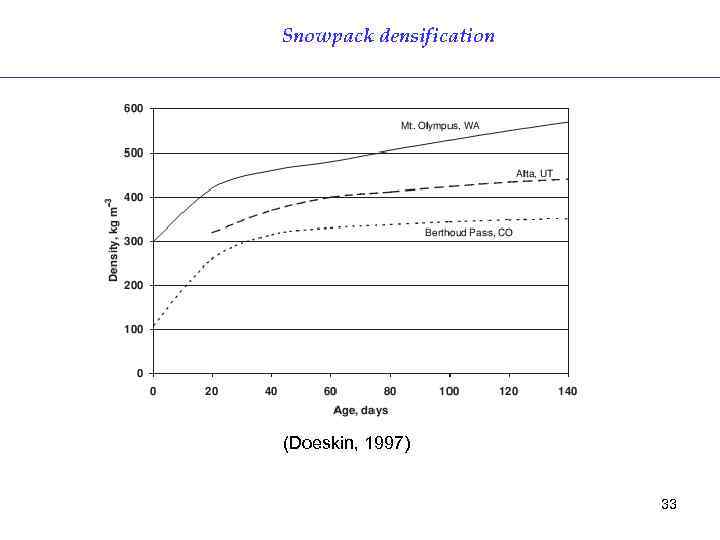
Snowpack densification (Doeskin, 1997) 33
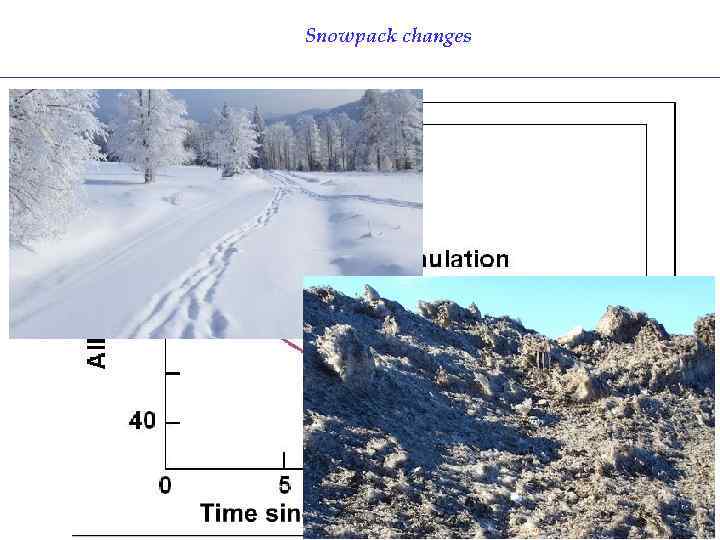
Snowpack changes 34
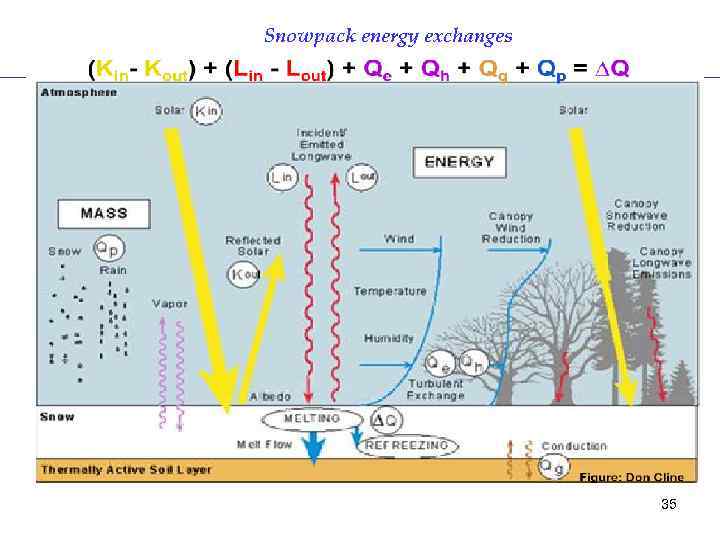
Snowpack energy exchanges 35
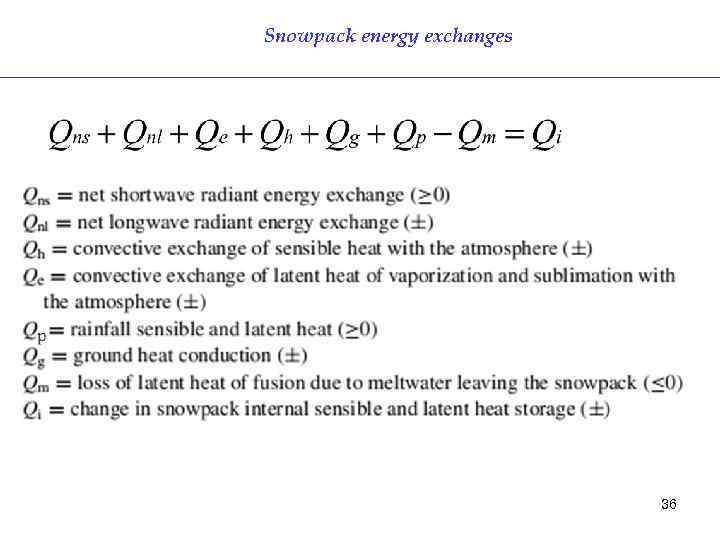
Snowpack energy exchanges 36
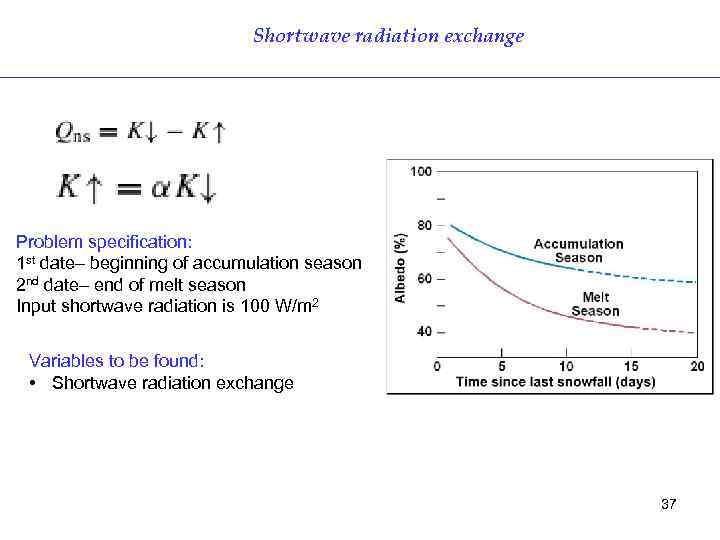
Shortwave radiation exchange Problem specification: 1 st date– beginning of accumulation season 2 nd date– end of melt season Input shortwave radiation is 100 W/m 2 Variables to be found: • Shortwave radiation exchange 37
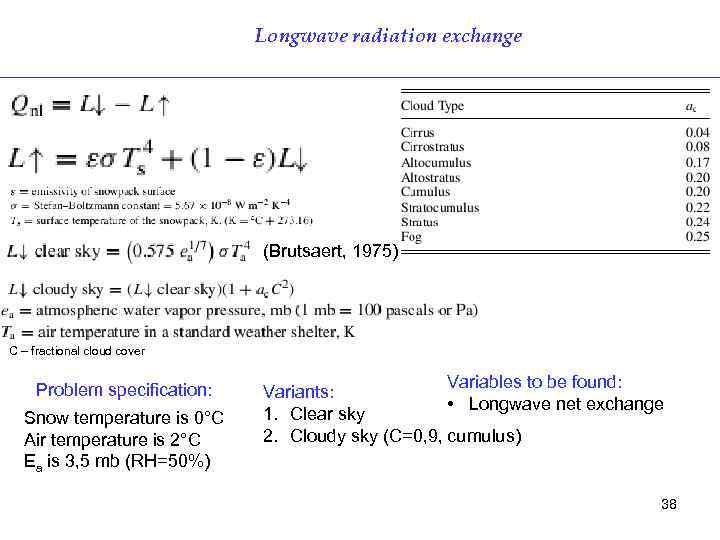
Longwave radiation exchange (Brutsaert, 1975) C – fractional cloud cover Problem specification: Snow temperature is 0°C Air temperature is 2°C Ea is 3, 5 mb (RH=50%) Variables to be found: Variants: • Longwave net exchange 1. Clear sky 2. Cloudy sky (C=0, 9, cumulus) 38
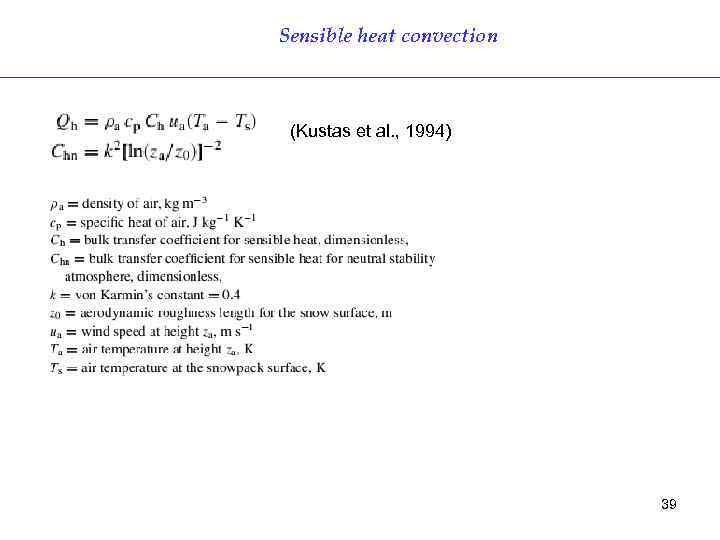
Sensible heat convection (Kustas et al. , 1994) 39
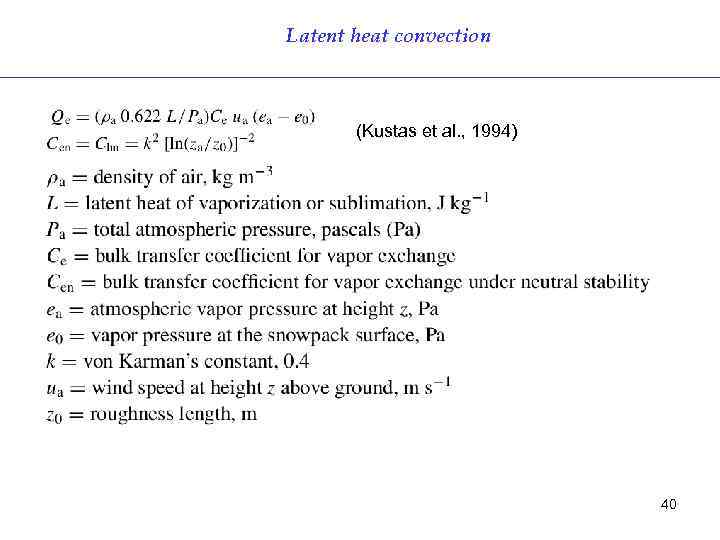
Latent heat convection (Kustas et al. , 1994) 40
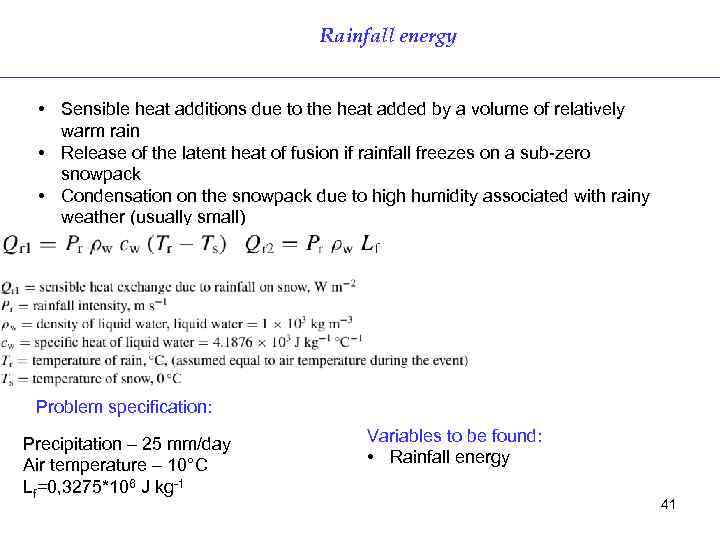
Rainfall energy • Sensible heat additions due to the heat added by a volume of relatively warm rain • Release of the latent heat of fusion if rainfall freezes on a sub-zero snowpack • Condensation on the snowpack due to high humidity associated with rainy weather (usually small) Problem specification: Precipitation – 25 mm/day Air temperature – 10°C Lf=0, 3275*106 J kg-1 Variables to be found: • Rainfall energy 41
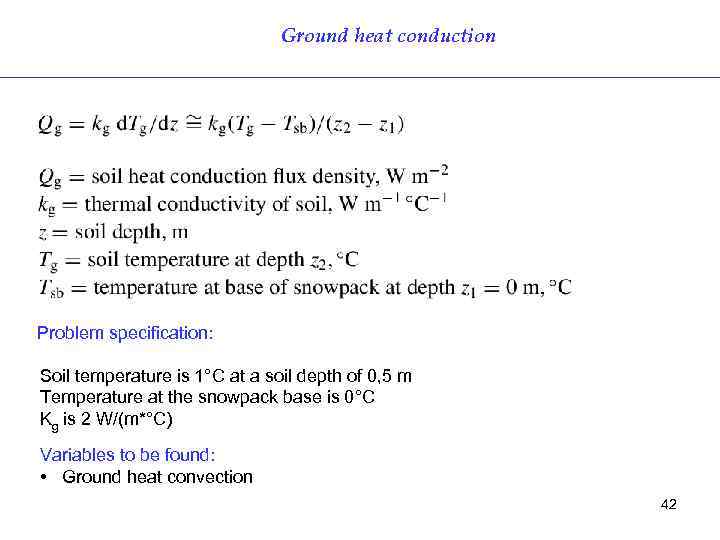
Ground heat conduction Problem specification: Soil temperature is 1°C at a soil depth of 0, 5 m Temperature at the snowpack base is 0°C Kg is 2 W/(m*°C) Variables to be found: • Ground heat convection 42
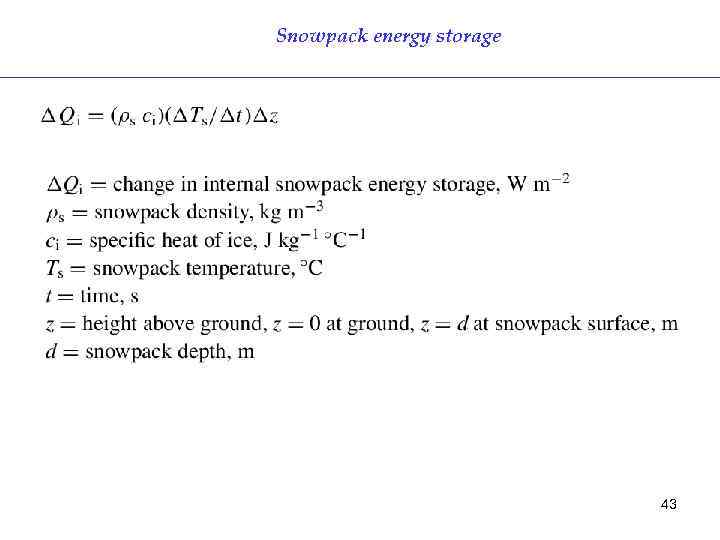
Snowpack energy storage 43
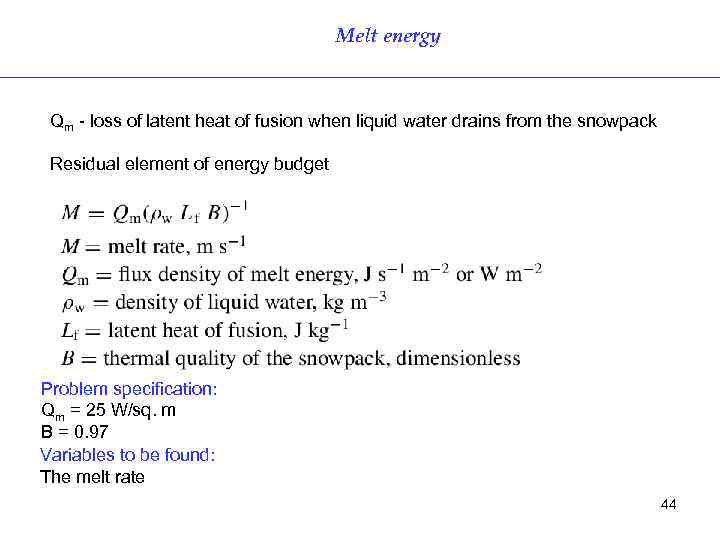
Melt energy Qm - loss of latent heat of fusion when liquid water drains from the snowpack Residual element of energy budget Problem specification: Qm = 25 W/sq. m B = 0. 97 Variables to be found: The melt rate 44
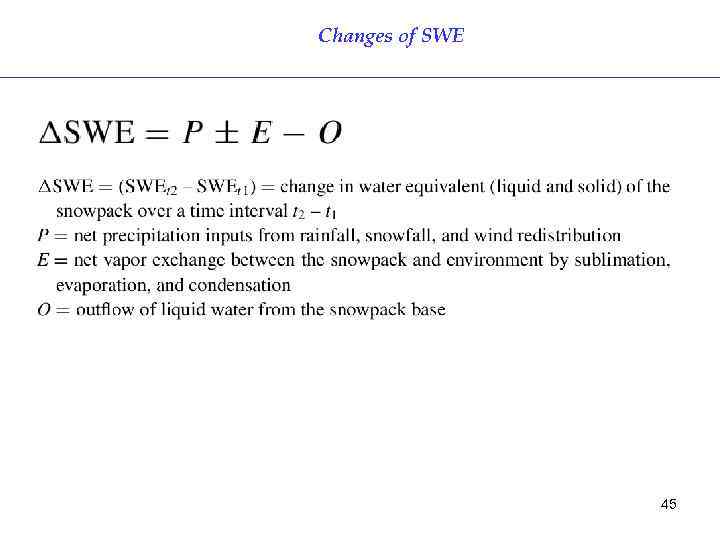
Changes of SWE 45
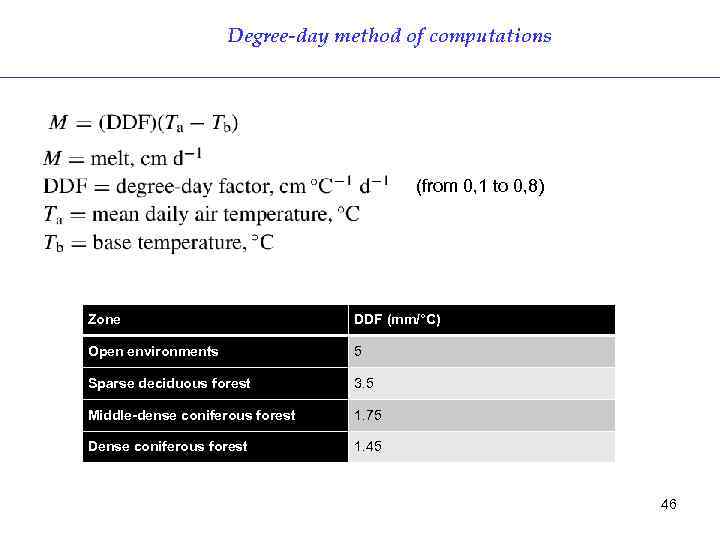
Degree-day method of computations (from 0, 1 to 0, 8) Zone DDF (mm/°C) Open environments 5 Sparse deciduous forest 3. 5 Middle-dense coniferous forest 1. 75 Dense coniferous forest 1. 45 46
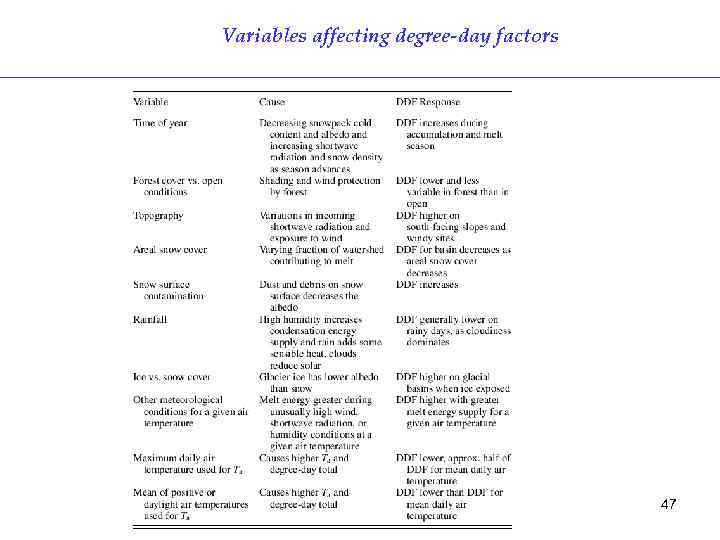
Variables affecting degree-day factors 47
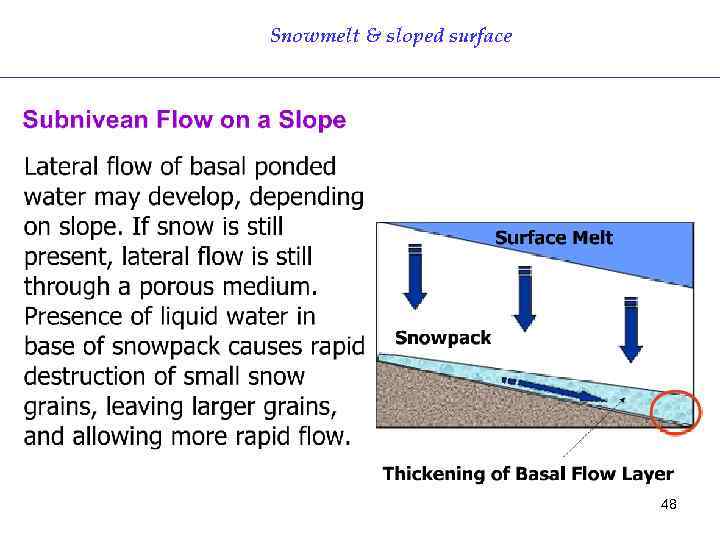
Snowmelt & sloped surface 48
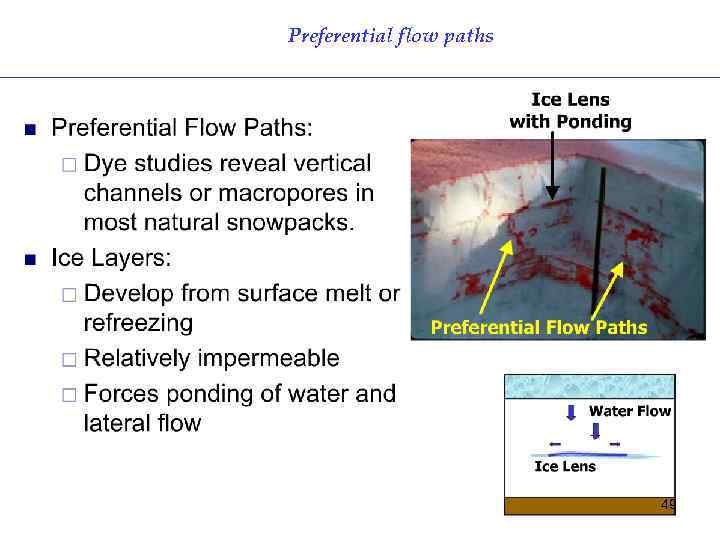
Preferential flow paths 49
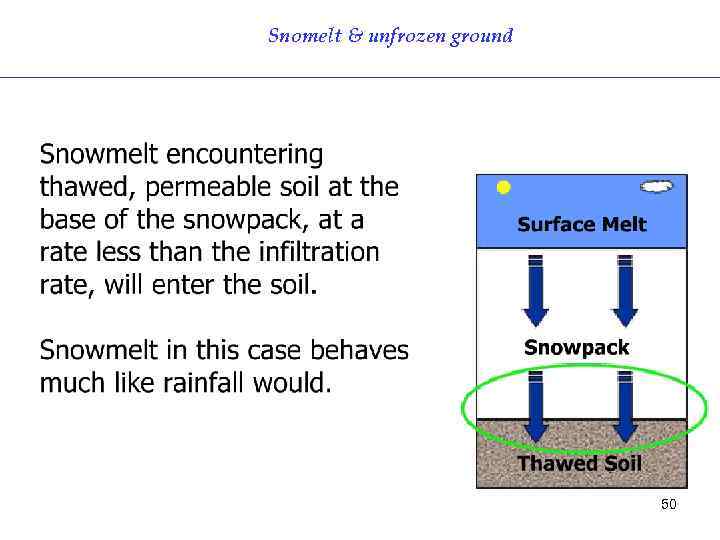
Snomelt & unfrozen ground 50
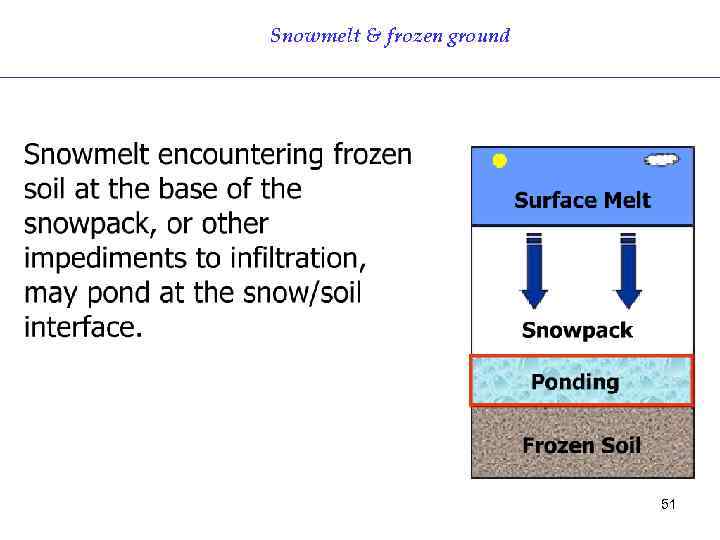
Snowmelt & frozen ground 51
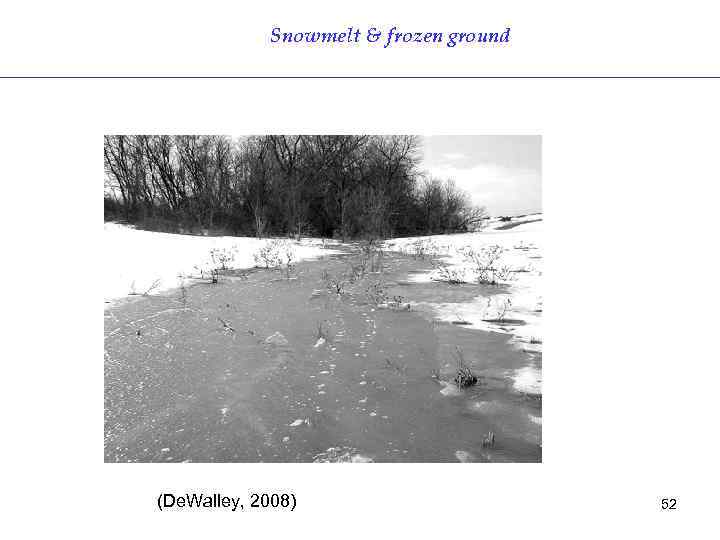
Snowmelt & frozen ground (De. Walley, 2008) 52
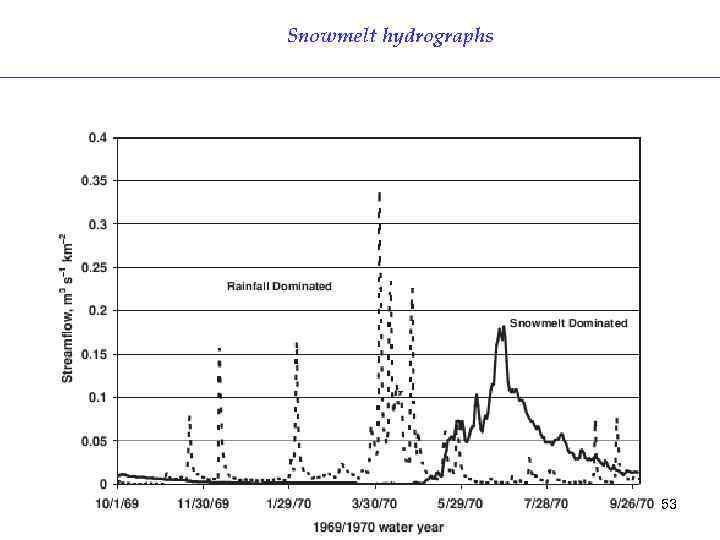
Snowmelt hydrographs 53
Скачать презентацию St Petersburg State University Dr Sergey Zhuravlev Chair
Lecture 3-4 Snow processes.ppt