 Скачать презентацию ST PAUL S Prepared by Anna Petrova grade 9
St. Paul's Cathedral.pptx
- Количество слайдов: 52



ST. PAUL’S Prepared by Anna Petrova grade 9 pupil CATHEDRAL
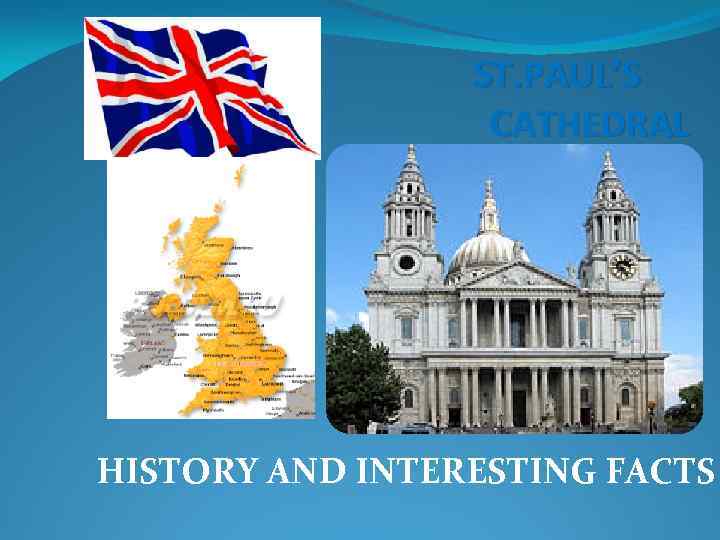
ST. PAUL’S CATHEDRAL HISTORY AND INTERESTING FACTS
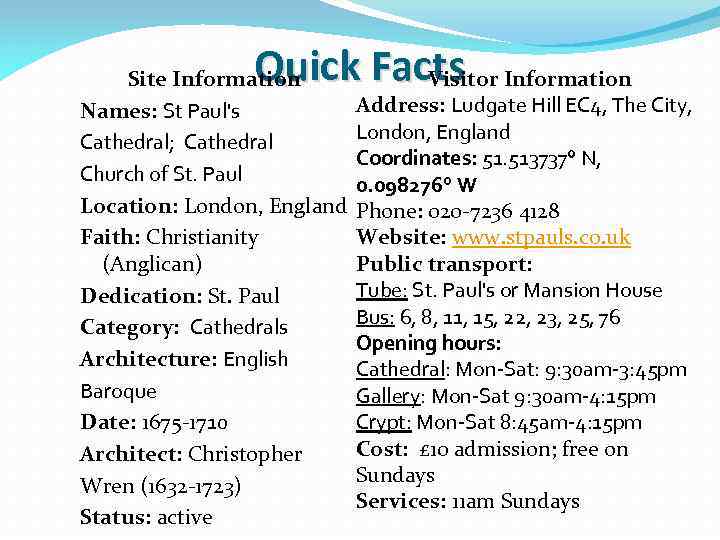
Quick Facts Information Visitor Site Information Names: St Paul's Cathedral; Cathedral Church of St. Paul Location: London, England Faith: Christianity (Anglican) Dedication: St. Paul Category: Cathedrals Architecture: English Baroque Date: 1675 -1710 Architect: Christopher Wren (1632 -1723) Status: active Address: Ludgate Hill EC 4, The City, London, England Coordinates: 51. 513737° N, 0. 098276° W Phone: 020 -7236 4128 Website: www. stpauls. co. uk Public transport: Tube: St. Paul's or Mansion House Bus: 6, 8, 11, 15, 22, 23, 25, 76 Opening hours: Cathedral: Mon-Sat: 9: 30 am-3: 45 pm Gallery: Mon-Sat 9: 30 am-4: 15 pm Crypt: Mon-Sat 8: 45 am-4: 15 pm Cost: £ 10 admission; free on Sundays Services: 11 am Sundays
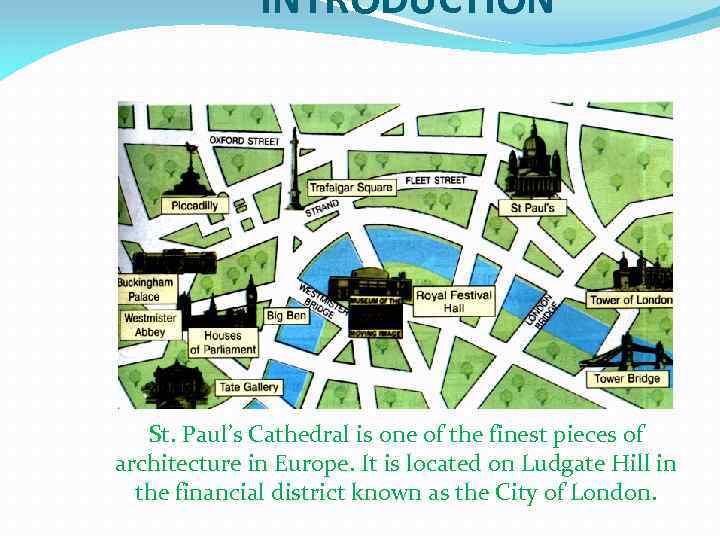
INTRODUCTION St. Paul’s Cathedral is one of the finest pieces of architecture in Europe. It is located on Ludgate Hill in the financial district known as the City of London.
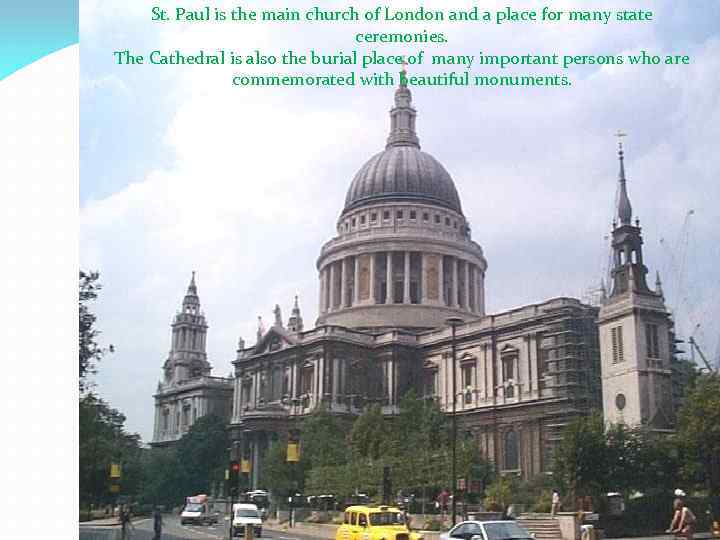
St. Paul is the main church of London and a place for many state ceremonies. The Cathedral is also the burial place of many important persons who are commemorated with beautiful monuments.
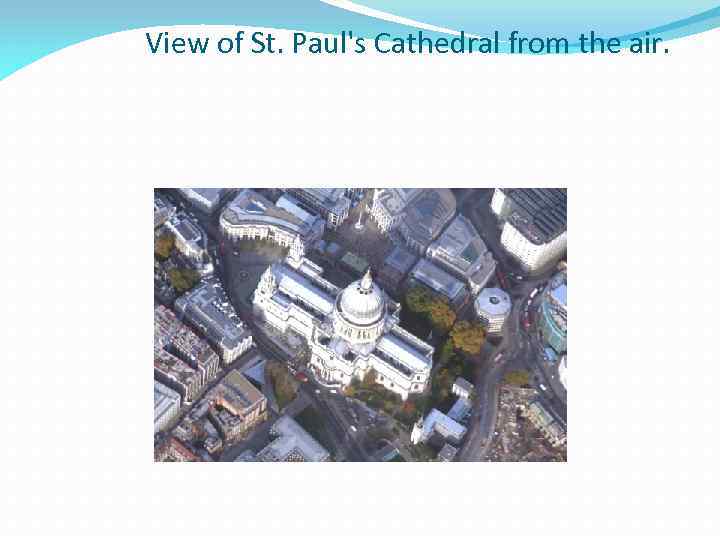
View of St. Paul's Cathedral from the air.
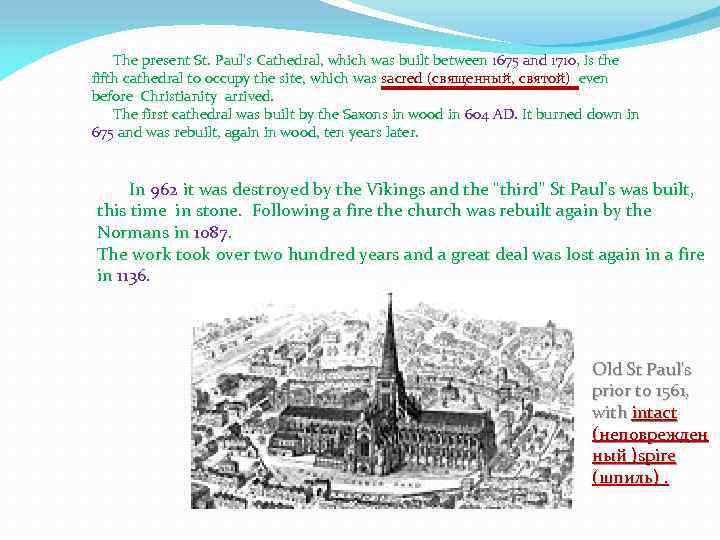
The present St. Paul's Cathedral, which was built between 1675 and 1710, is the fifth cathedral to occupy the site, which was sacred (священный, святой) even before Christianity arrived. The first cathedral was built by the Saxons in wood in 604 AD. It burned down in 675 and was rebuilt, again in wood, ten years later. In 962 it was destroyed by the Vikings and the "third" St Paul’s was built, this time in stone. Following a fire the church was rebuilt again by the Normans in 1087. The work took over two hundred years and a great deal was lost again in a fire in 1136. Old St Paul's prior to 1561, with intact (неповрежден ный )spire (шпиль).
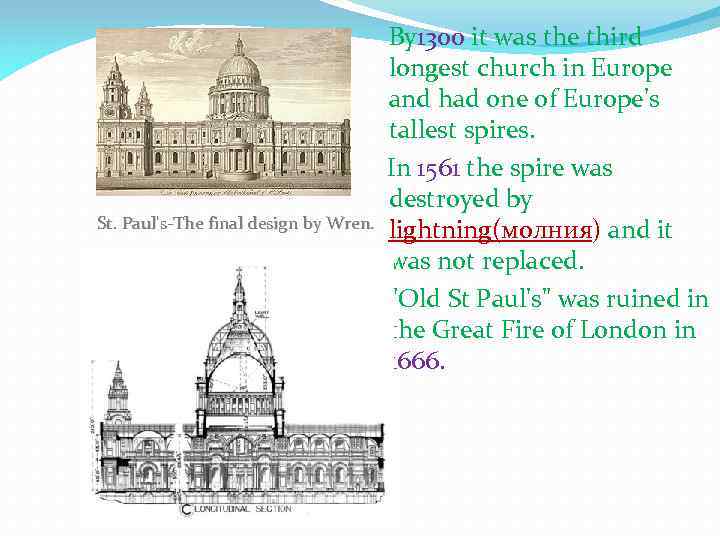
By 1300 it was the third longest church in Europe and had one of Europe's tallest spires. In 1561 the spire was destroyed by St. Paul's-The final design by Wren. lightning(молния) and it was not replaced. "Old St Paul's" was ruined in the Great Fire of London in 1666.
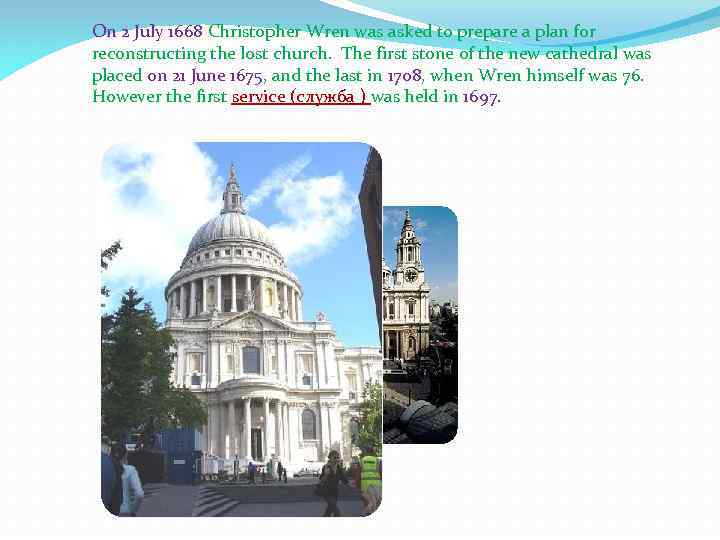
On 2 July 1668 Christopher Wren was asked to prepare a plan for reconstructing the lost church. The first stone of the new cathedral was placed on 21 June 1675, and the last in 1708, when Wren himself was 76. However the first service (служба ) was held in 1697.
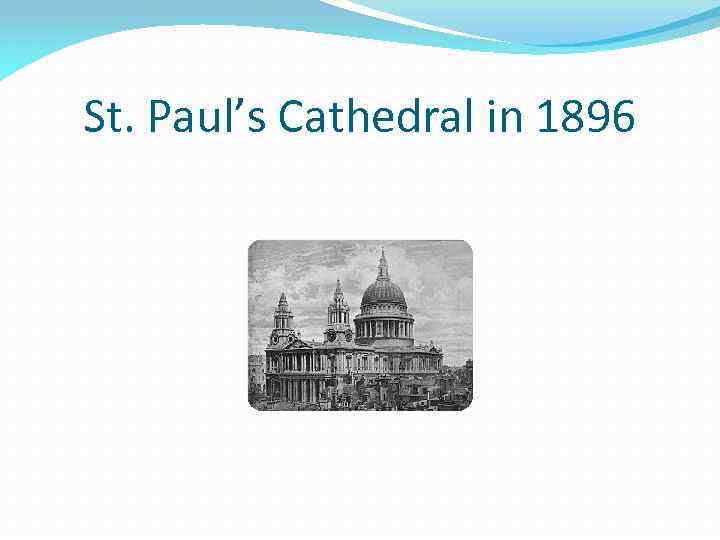
St. Paul’s Cathedral in 1896
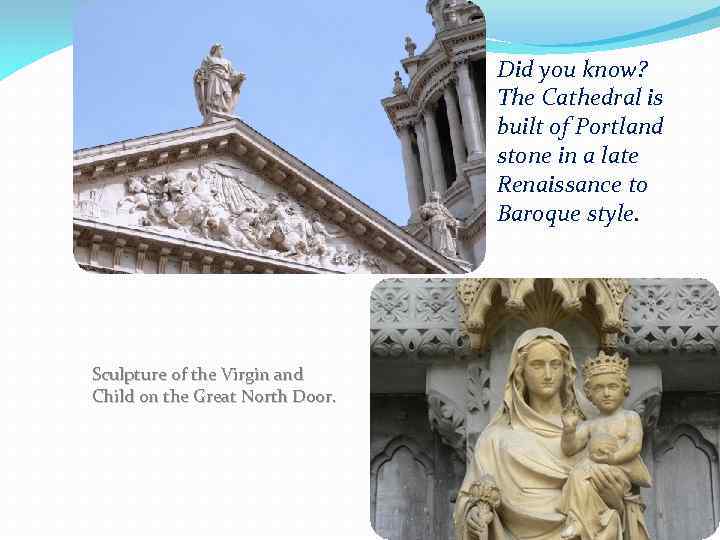
Did you know? The Cathedral is built of Portland stone in a late Renaissance to Baroque style. Sculpture of the Virgin and Child on the Great North Door.
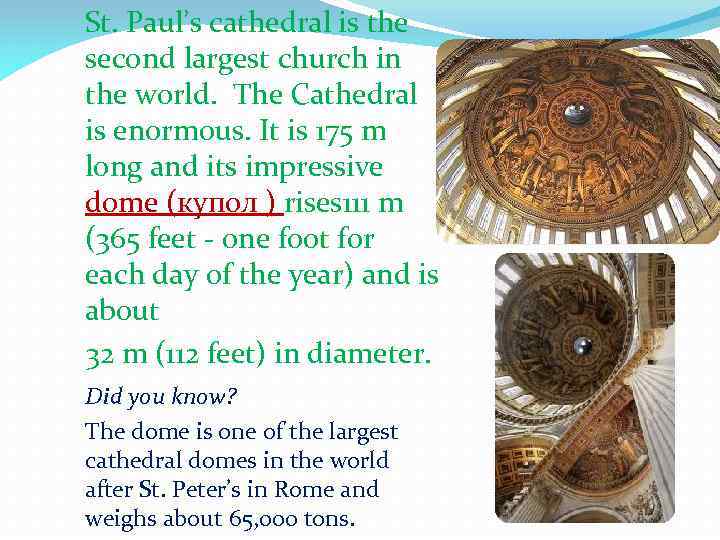
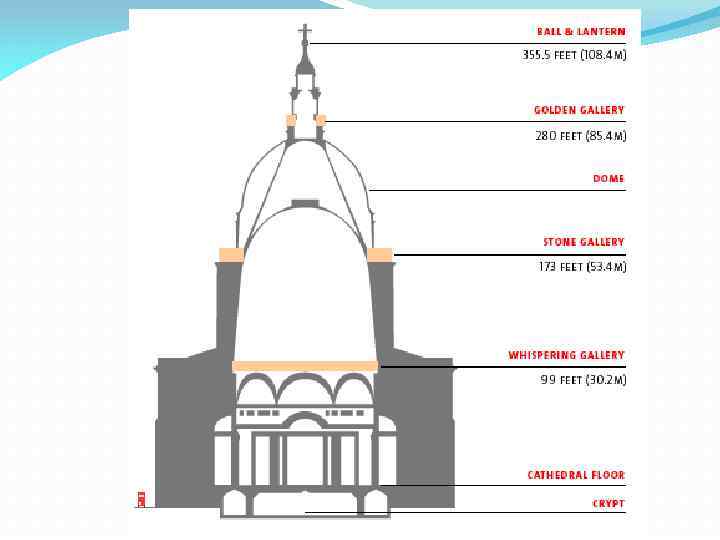
St. Paul’s cathedral is the second largest church in the world. The Cathedral is enormous. It is 175 m long and its impressive dome (купол ) rises 111 m (365 feet - one foot for each day of the year) and is about 32 m (112 feet) in diameter. Did you know? The dome is one of the largest cathedral domes in the world after St. Peter’s in Rome and weighs about 65, 000 tons.
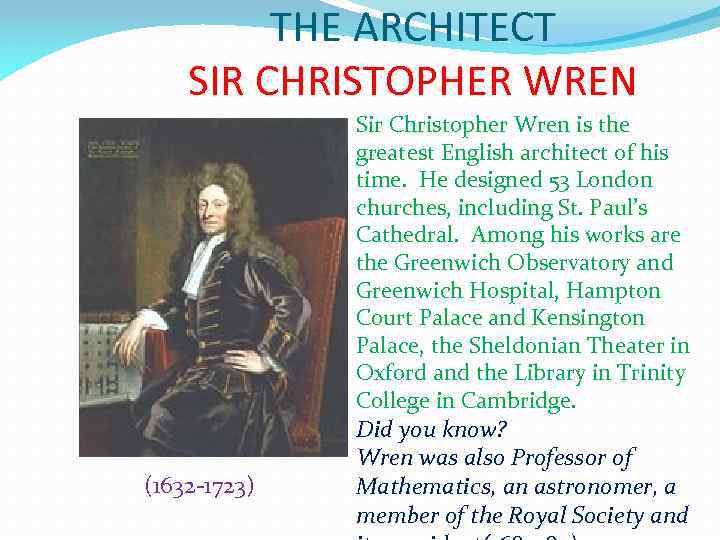
THE ARCHITECT SIR CHRISTOPHER WREN (1632 -1723) Sir Christopher Wren is the greatest English architect of his time. He designed 53 London churches, including St. Paul’s Cathedral. Among his works are the Greenwich Observatory and Greenwich Hospital, Hampton Court Palace and Kensington Palace, the Sheldonian Theater in Oxford and the Library in Trinity College in Cambridge. Did you know? Wren was also Professor of Mathematics, an astronomer, a member of the Royal Society and
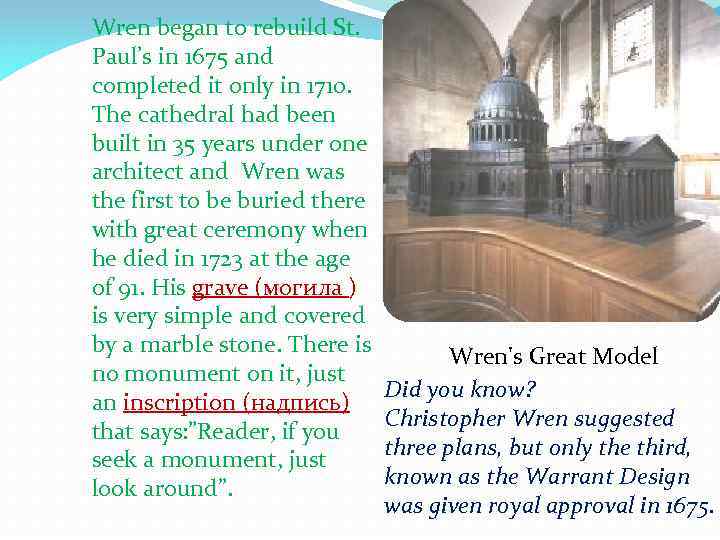
Wren began to rebuild St. Paul’s in 1675 and completed it only in 1710. The cathedral had been built in 35 years under one architect and Wren was the first to be buried there with great ceremony when he died in 1723 at the age of 91. His grave (могила ) is very simple and covered by a marble stone. There is Wren's Great Model no monument on it, just Did you know? an inscription (надпись) Christopher Wren suggested that says: ”Reader, if you three plans, but only the third, seek a monument, just known as the Warrant Design look around”. was given royal approval in 1675.
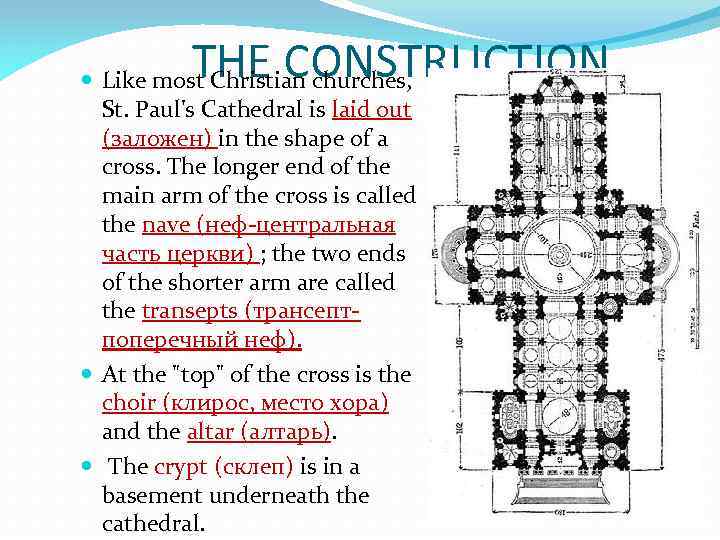
THE CONSTRUCTION. Like most Christian churches, St. Paul's Cathedral is laid out (заложен) in the shape of a cross. The longer end of the main arm of the cross is called the nave (неф-центральная часть церкви) ; the two ends of the shorter arm are called the transepts (трансепт- поперечный неф). At the "top" of the cross is the choir (клирос, место хора) and the altar (алтарь). The crypt (склеп) is in a basement underneath the cathedral.
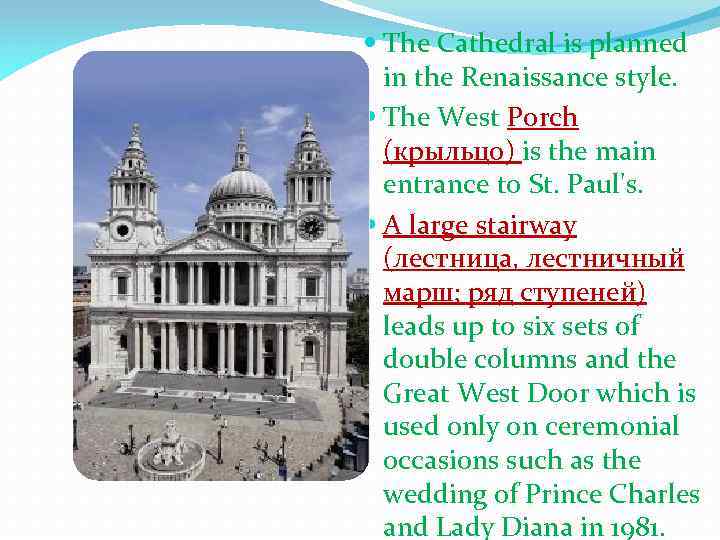
The Cathedral is planned in the Renaissance style. The West Porch (крыльцо) is the main entrance to St. Paul's. A large stairway (лестница, лестничный марш; ряд ступеней) leads up to six sets of double columns and the Great West Door which is used only on ceremonial occasions such as the wedding of Prince Charles and Lady Diana in 1981.
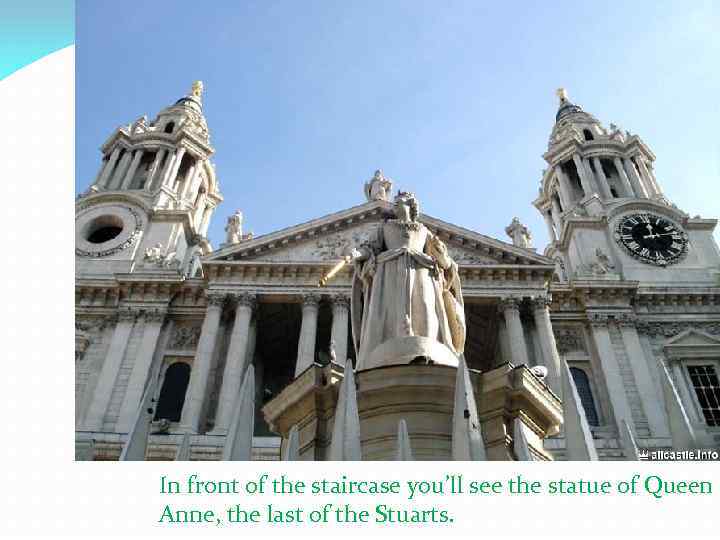
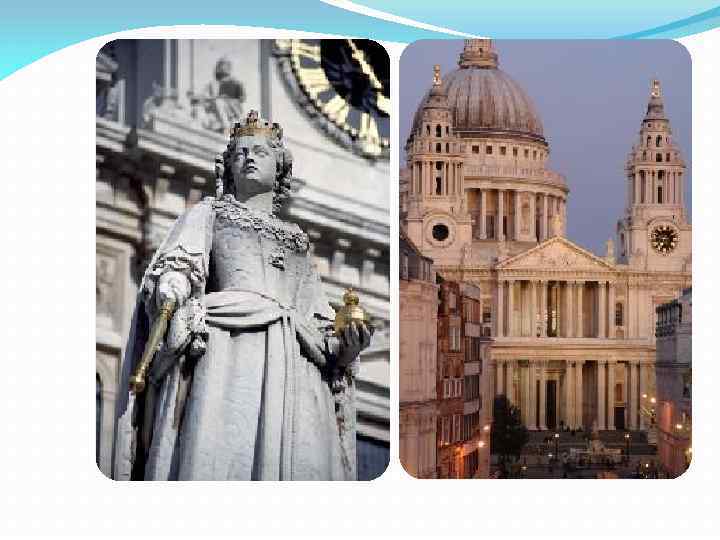
In front of the staircase you’ll see the statue of Queen Anne, the last of the Stuarts.
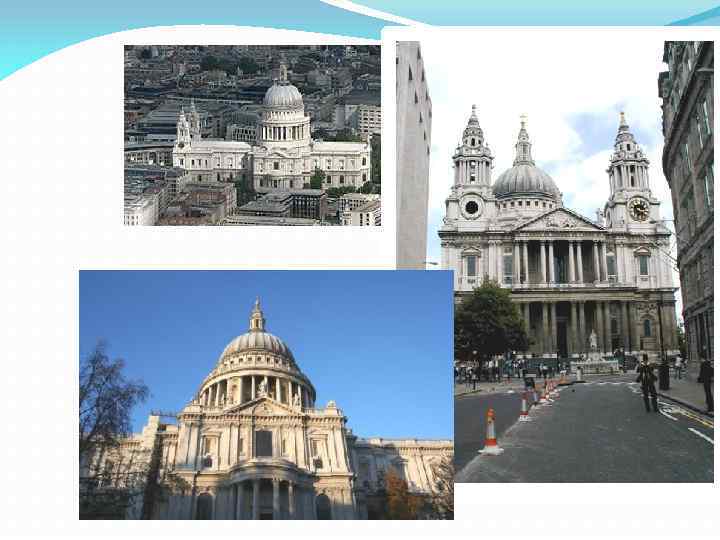
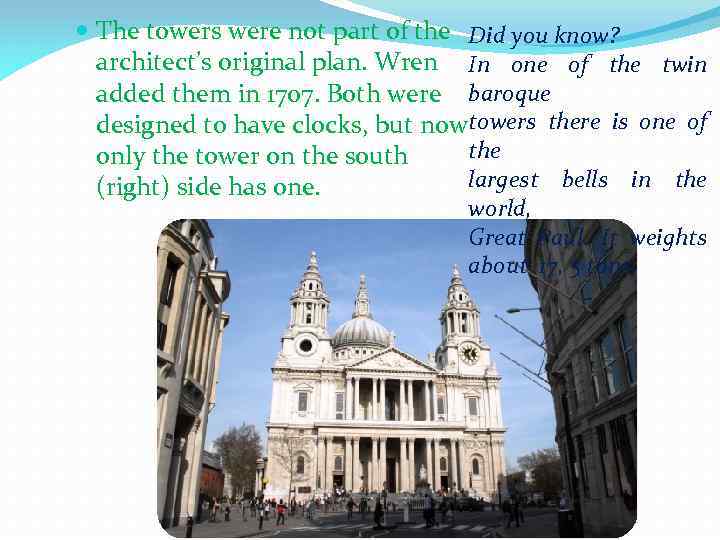
The towers were not part of the Did you know? architect’s original plan. Wren In one of the twin added them in 1707. Both were baroque towers there is one of designed to have clocks, but now the only the tower on the south largest bells in the (right) side has one. world, Great Paul. It weights about 17, 5 tons.
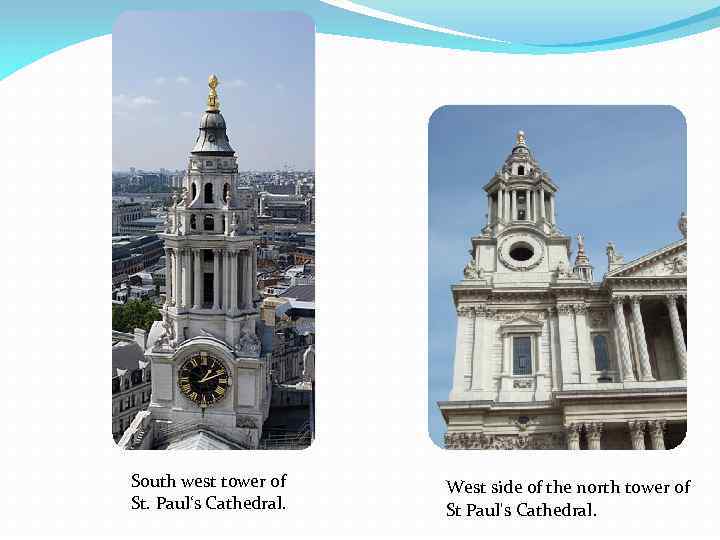
South west tower of St. Paul‘s Cathedral. West side of the north tower of St Paul's Cathedral.
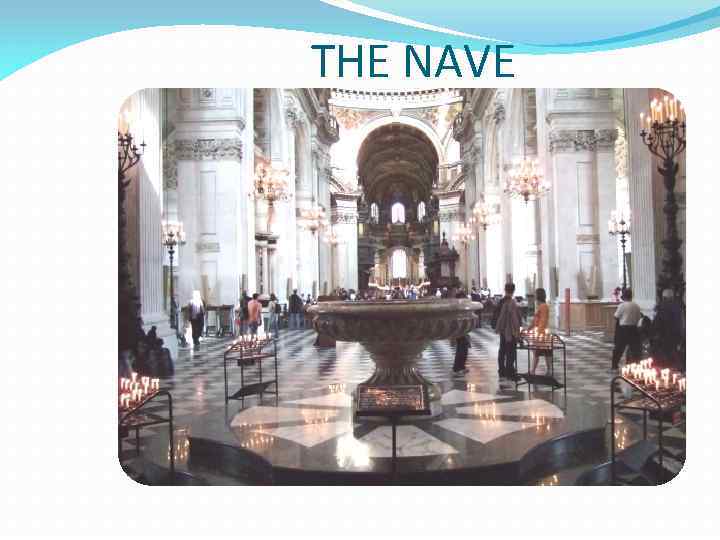
THE NAVE
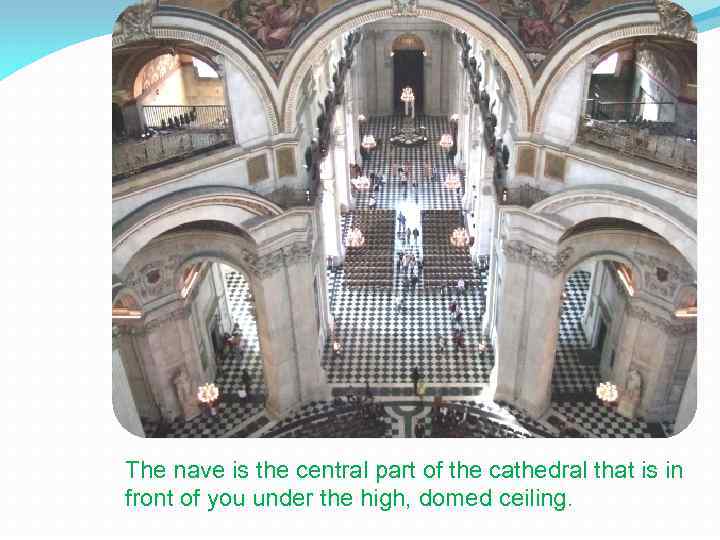
The nave is the central part of the cathedral that is in front of you under the high, domed ceiling.
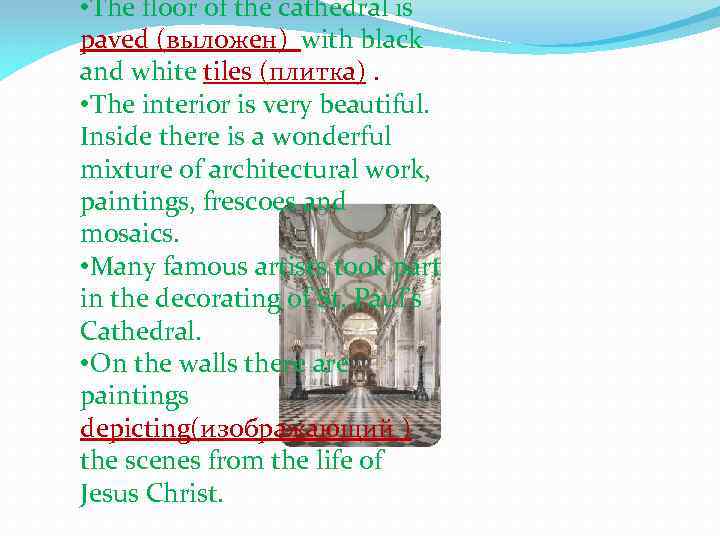
• The floor of the cathedral is paved (выложен) with black and white tiles (плитка). • The interior is very beautiful. Inside there is a wonderful mixture of architectural work, paintings, frescoes and mosaics. • Many famous artists took part in the decorating of St. Paul’s Cathedral. • On the walls there are paintings depicting(изображающий ) the scenes from the life of Jesus Christ.
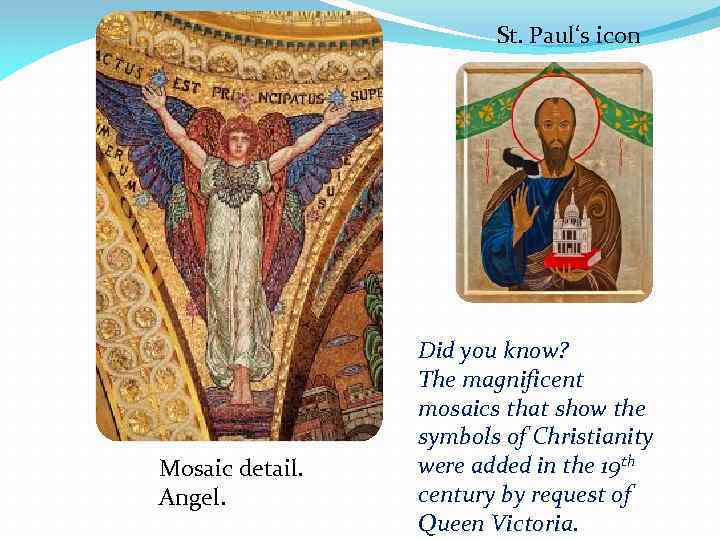
St. Paul‘s icon Mosaic detail. Angel. Did you know? The magnificent mosaics that show the symbols of Christianity were added in the 19 th century by request of Queen Victoria.
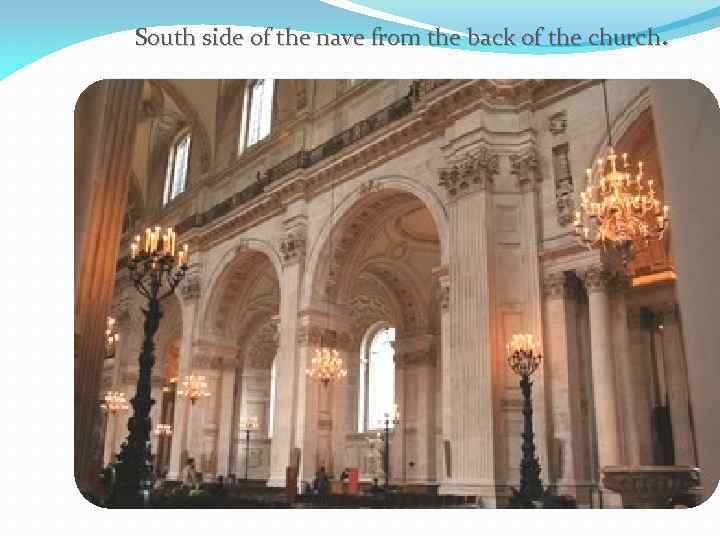
South side of the nave from the back of the church.
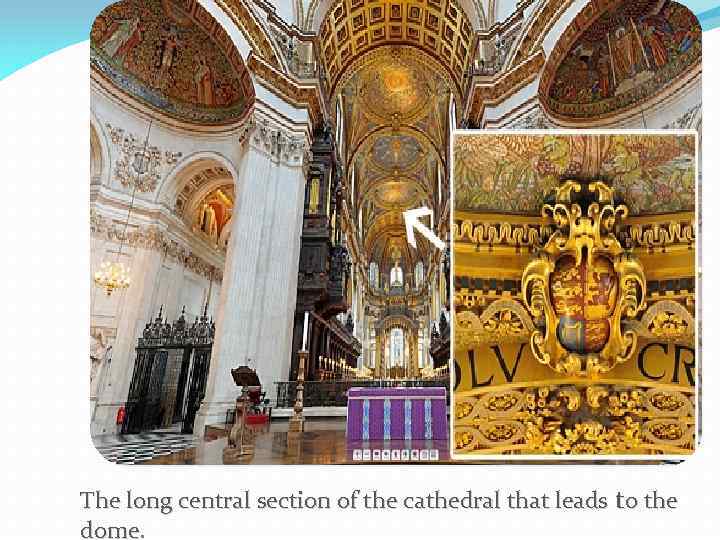
The long central section of the cathedral that leads to the dome
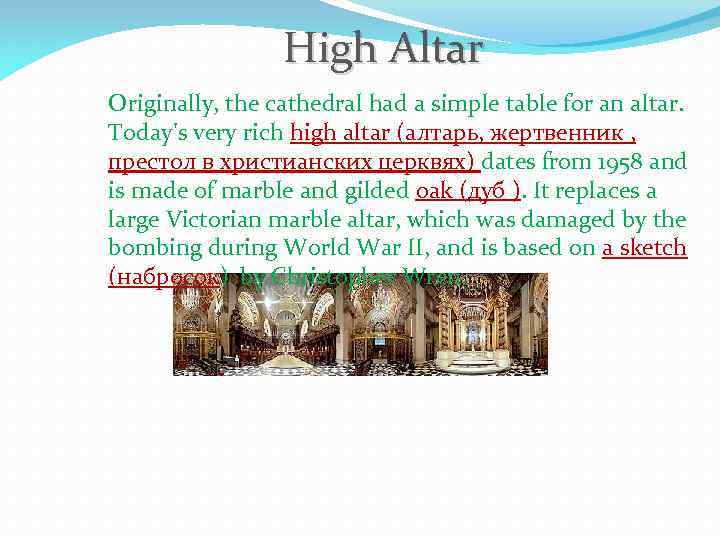
High Altar Originally, the cathedral had a simple table for an altar. Today's very rich high altar (алтарь, жертвенник , престол в христианских церквях) dates from 1958 and is made of marble and gilded oak (дуб ). It replaces a large Victorian marble altar, which was damaged by the bombing during World War II, and is based on a sketch (набросок) by Christopher Wren.
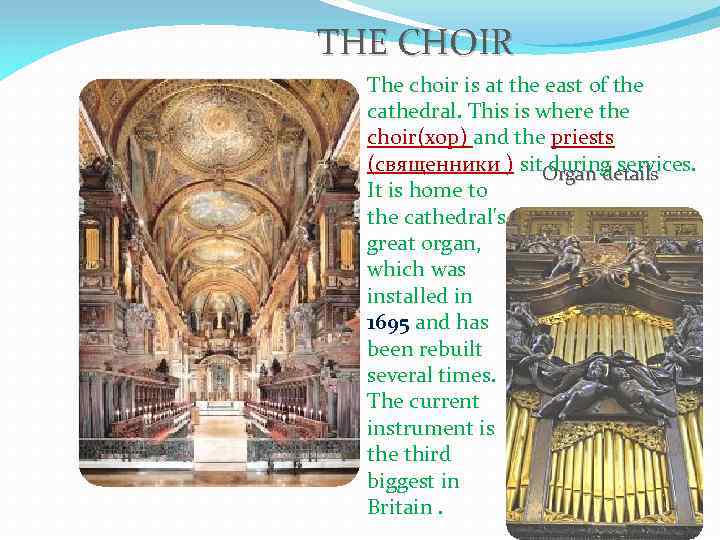
THE CHOIR The choir is at the east of the cathedral. This is where the choir(хор) and the priests (священники ) sit during services. Organ details It is home to the cathedral's great organ, which was installed in 1695 and has been rebuilt several times. The current instrument is the third biggest in Britain.
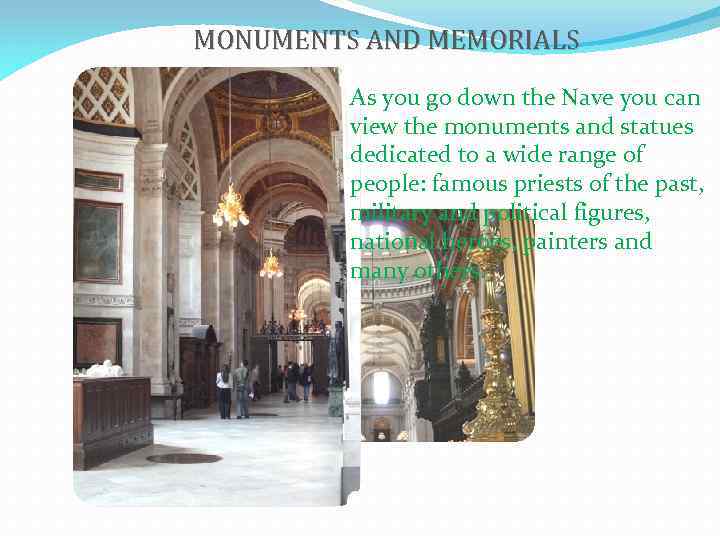
MONUMENTS AND MEMORIALS As you go down the Nave you can view the monuments and statues dedicated to a wide range of people: famous priests of the past, military and political figures, national heroes, painters and many others.
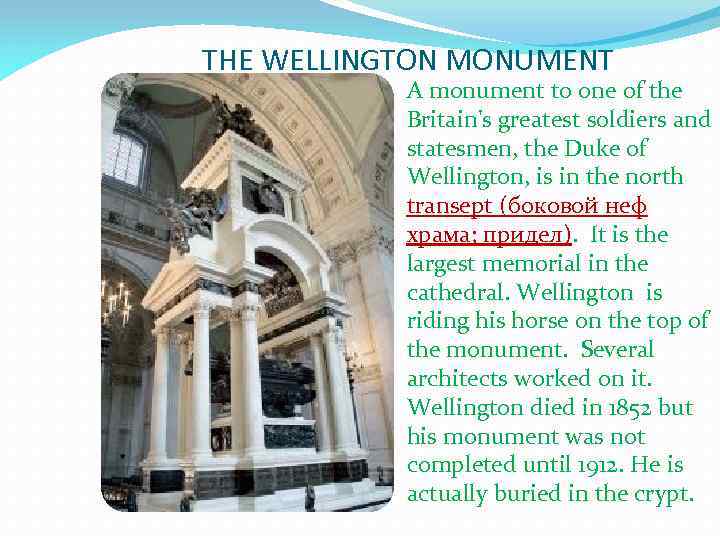
THE WELLINGTON MONUMENT A monument to one of the Britain's greatest soldiers and statesmen, the Duke of Wellington, is in the north transept (боковой неф храма; придел). It is the largest memorial in the cathedral. Wellington is riding his horse on the top of the monument. Several architects worked on it. Wellington died in 1852 but his monument was not completed until 1912. He is actually buried in the crypt.
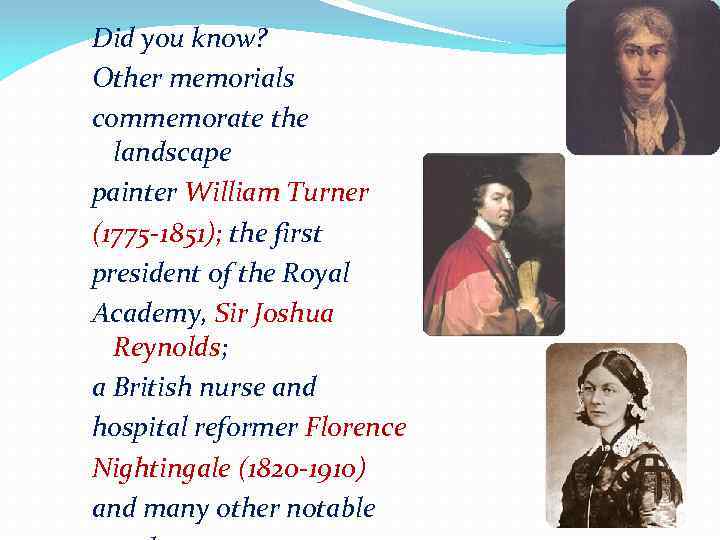
Did you know? Other memorials commemorate the landscape painter William Turner (1775 -1851); the first president of the Royal Academy, Sir Joshua Reynolds; a British nurse and hospital reformer Florence Nightingale (1820 -1910) and many other notable
THE CHAPELS The nave has several chapels ( капелла, часовня, молельняместо для проведения служб). To the left (north transept) is St. Dunstan's Chapel, which was one of the earliest parts of the cathedral to come into use. It was originally known as the Morning Chapel. In 1905 it was dedicated to St. Dunstan, who was Bishop of London and Archbishop of Canterbury over 1, 000 years ago. All Souls Chapel is further down on the left side. It is dedicated primarily to soldiers of World War I. The Chapel of the Order of St. Michael and St. George is across from St. Dunstan's on the right side (south transept). Round the corner behind the high alter is the American Memorial Chapel. It is dedicated to 28 thousand Americans based in Britain who lost their lives in World War II. It was opened in November 1958.
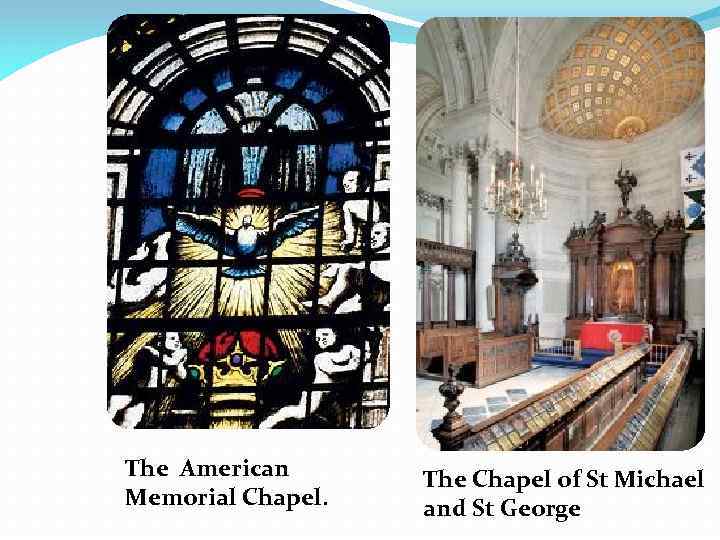
The American Memorial Chapel. The Chapel of St Michael and St George
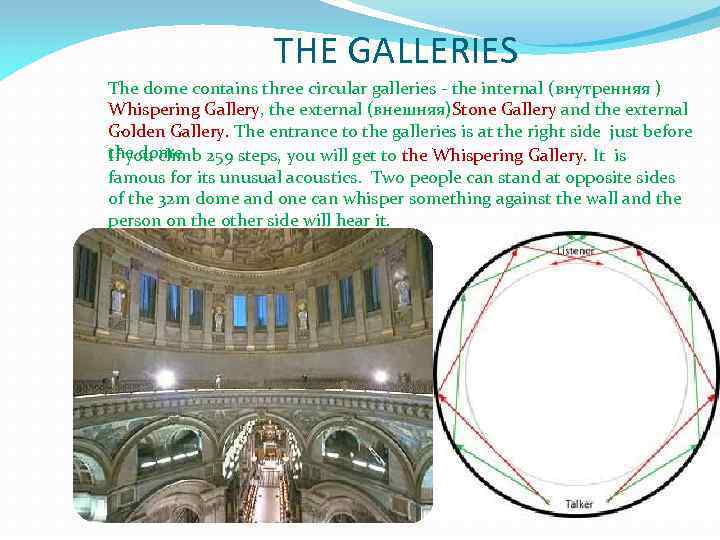
THE GALLERIES The dome contains three circular galleries - the internal (внутренняя ) Whispering Gallery, the external (внешняя)Stone Gallery and the external . Golden Gallery. The entrance to the galleries is at the right side just before the dome. If you climb 259 steps, you will get to the Whispering Gallery. It is famous for its unusual acoustics. Two people can stand at opposite sides of the 32 m dome and one can whisper something against the wall and the person on the other side will hear it.
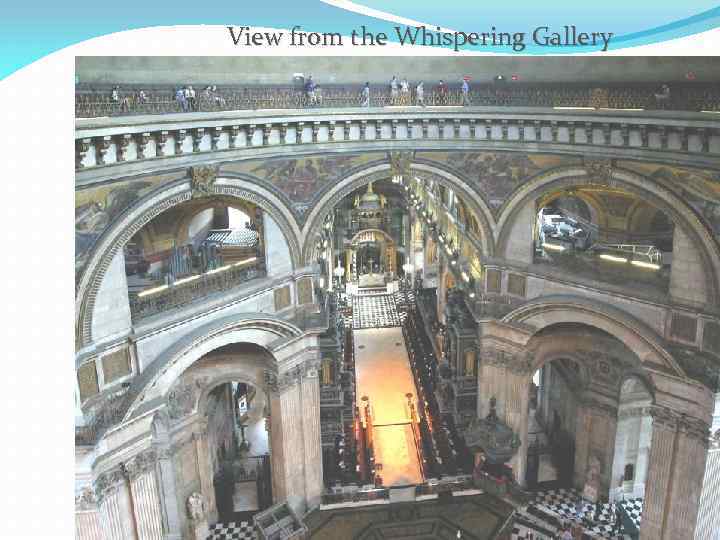
View from the Whispering Gallery
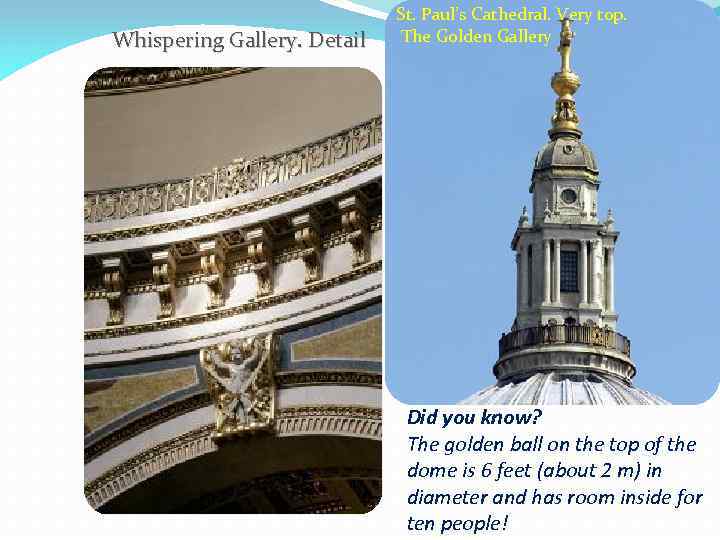
Whispering Gallery. Detail St. Paul’s Cathedral. Very top. The Golden Gallery Did you know? The golden ball on the top of the dome is 6 feet (about 2 m) in diameter and has room inside for ten people!
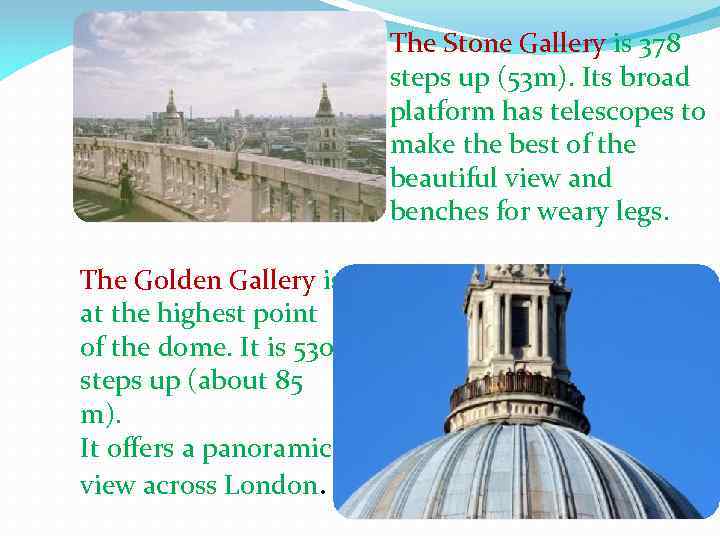
The Stone Gallery is 378 steps up (53 m). Its broad platform has telescopes to make the best of the beautiful view and benches for weary legs. The Golden Gallery is at the highest point of the dome. It is 530 steps up (about 85 m). It offers a panoramic view across London.
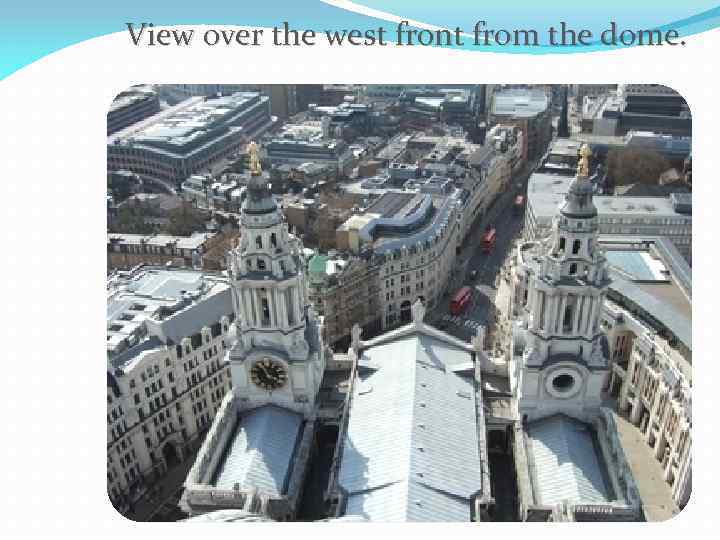
View over the west front from the dome.
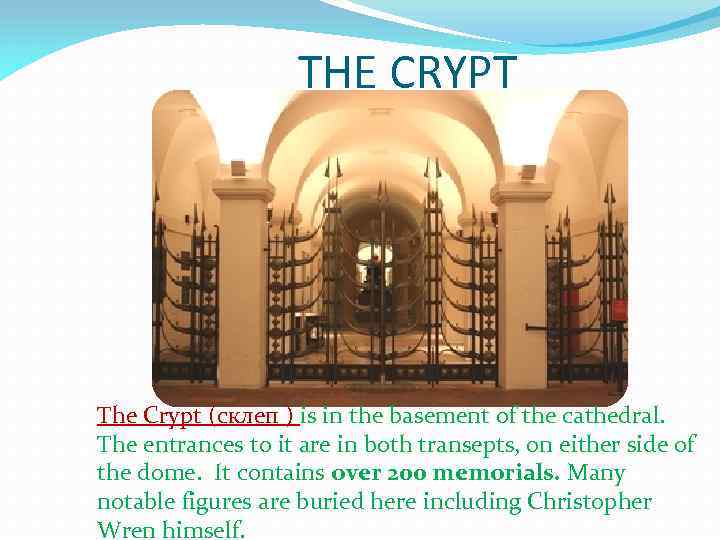
THE CRYPT The Crypt (склеп ) is in the basement of the cathedral. The entrances to it are in both transepts, on either side of the dome. It contains over 200 memorials. Many notable figures are buried here including Christopher Wren himself.
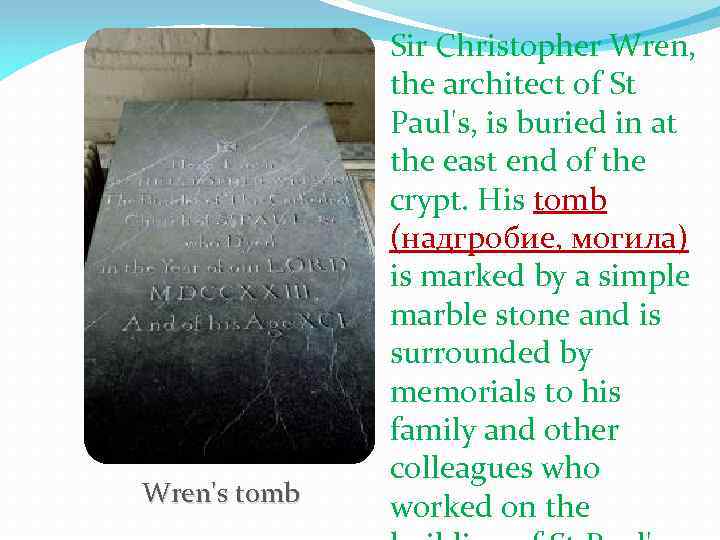
Wren's tomb Sir Christopher Wren, the architect of St Paul's, is buried in at the east end of the crypt. His tomb (надгробие, могила) is marked by a simple marble stone and is surrounded by memorials to his family and other colleagues who worked on the
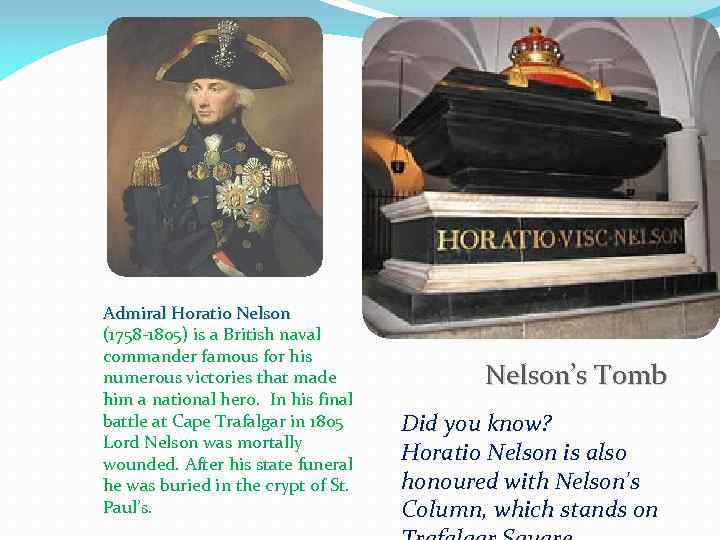
Admiral Horatio Nelson (1758 -1805) is a British naval commander famous for his numerous victories that made him a national hero. In his final battle at Cape Trafalgar in 1805 Lord Nelson was mortally wounded. After his state funeral he was buried in the crypt of St. Paul’s. Nelson’s Tomb Did you know? Horatio Nelson is also honoured with Nelson's Column, which stands on
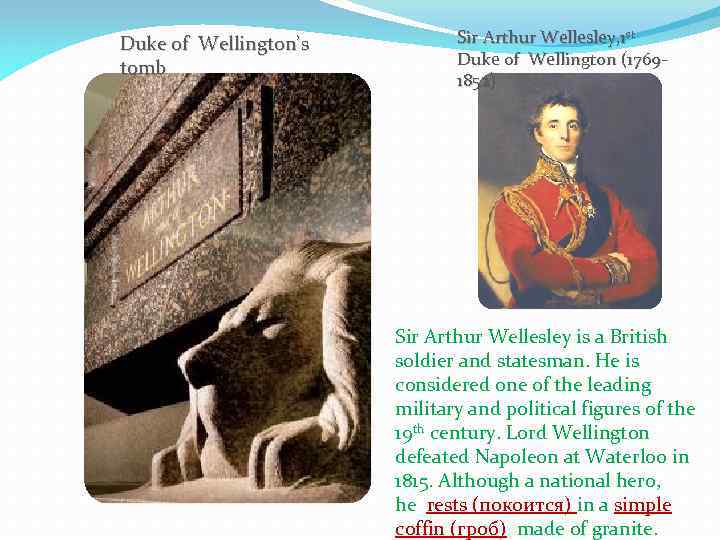
Duke of Wellington’s tomb Sir Arthur Wellesley, 1 st Duke of Wellington (17691852) Sir Arthur Wellesley is a British soldier and statesman. He is considered one of the leading military and political figures of the 19 th century. Lord Wellington defeated Napoleon at Waterloo in 1815. Although a national hero, he rests (покоится) in a simple coffin (гроб) made of granite.
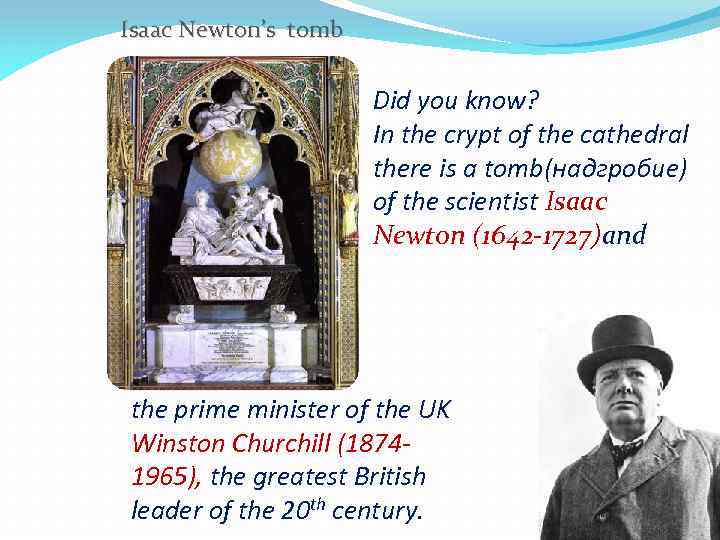
Isaac Newton’s tomb Did you know? In the crypt of the cathedral there is a tomb(надгробие) of the scientist Isaac Newton (1642 -1727)and the prime minister of the UK Winston Churchill (18741965), the greatest British leader of the 20 th century.
Throughout its history, St Paul's has been a place where the individual and the nation can express feelings of joy, gratitude and sorrow. Many important events have taken place here over the years, including: The funerals (похороны) of Lord Nelson (1806), the Duke of Wellington (1852) and Sir Winston Churchill(1965) ; Celebration for Queen Victoria Diamond Jubilee (1897)and the Silver Jubilees of King George V (1935) and the Queen (1977); Peace services marking the end of the First and Second World Wars; The Service of Remembrance and Commemoration for September 11, 2001; The 80 th and 100 th birthdays of Queen Elizabeth, the Queen Mother; The wedding of Charles, Prince of Wales, to Lady Diana Spencer; The Thanksgiving for the Golden Jubilee of Her Majesty the Queen.
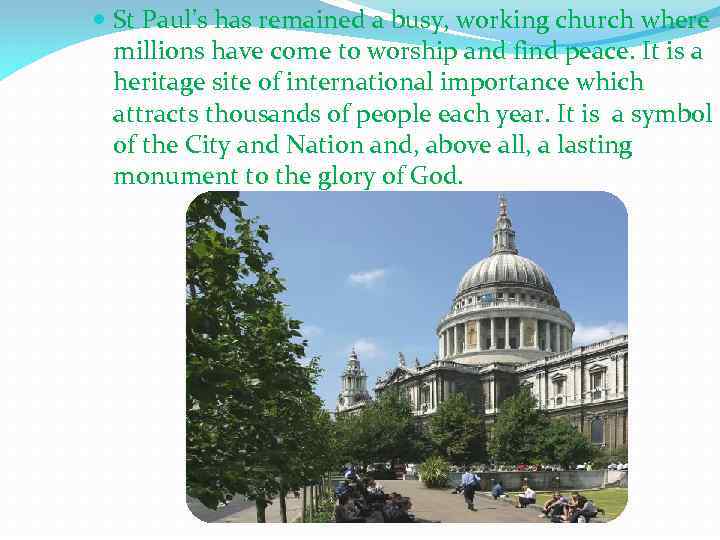
St Paul's has remained a busy, working church where millions have come to worship and find peace. It is a heritage site of international importance which attracts thousands of people each year. It is a symbol of the City and Nation and, above all, a lasting monument to the glory of God.
GLOSSARY 1. 2. 3. 4. 5. 6. 7. 8. 9. 10. 11. 12. church (церковь) cathedral (кафедральный собор) faith (религиозная вера , вероисповедование) sacred (священный, святой) spire (шпиль) service (служба , месса) dome (купол ) grave (могила ) inscription (надпись) nave (неф-центральная часть церкви) transept (трансепт- поперечный неф). choir (клирос, место хора)
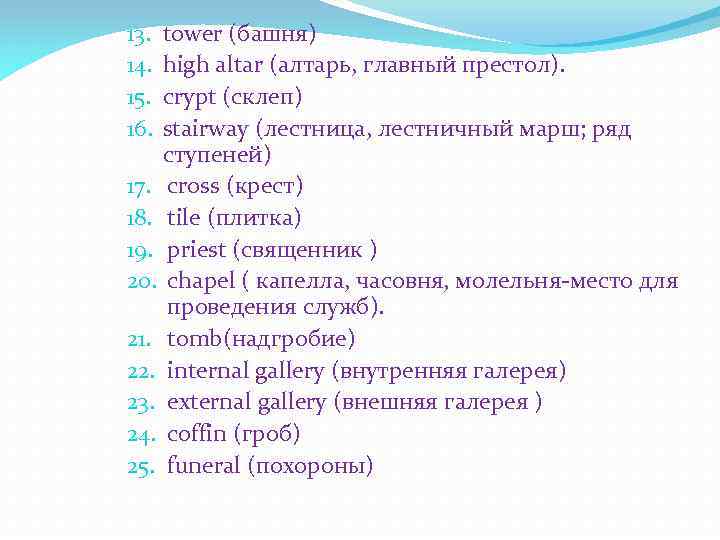
tower (башня) high altar (алтарь, главный престол). crypt (склеп) stairway (лестница, лестничный марш; ряд ступеней) 17. cross (крест) 18. tile (плитка) 19. priest (священник ) 20. chapel ( капелла, часовня, молельня-место для проведения служб). 21. tomb(надгробие) 22. internal gallery (внутренняя галерея) 23. external gallery (внешняя галерея ) 24. coffin (гроб) 25. funeral (похороны) 13. 14. 15. 16.
Literature and internet resources. Васильев М. В. Достопримечательности Лондона. – 2 -ое изд. – М. : Айрис-пресс, 2008. -64 с. 2. Васильев М. В. Достопримечательности Великобритании. – 2 ое изд. –М. : Айрис-пресс, 2008. -112 с. 3. Синельникова М. В. Это Лондон. География. История. Культура. Достопримечательности: Книга для чтения на английском языке с вопросами , заданиями и диалогами. – Спб. : КОРОНА принт, 2010. -352 с. , ил. http: //www. stpauls. co. uk/Cathedral-History http: //en. wikipedia. org/wiki/St_Paul%27 s_Cathedral 1.

ANK TH YOU
www. stpauls. co. uk http: //www. stpauls. co. uk/Cathedral-History http: //en. wikipedia. org/wiki/St_Paul%27 s_Cathedral
Скачать презентацию ST PAUL S Prepared by Anna Petrova grade 9
St. Paul's Cathedral.pptx