


 Скачать презентацию st 1 The Amendment Individual Freedoms 1
43512320225fed7b025c3942b1e11afd.ppt
- Количество слайдов: 72
 st 1 The Amendment Individual Freedoms
 1 st Amendment “Congress shall make no law respecting an establishment of religion, or prohibiting the free exercise thereof; or abridging the freedom of speech, or of the press; or the right of the people peaceably to assemble, and to petition the government for a redress of grievances. ”
 1 st Amendment Basically the Freedoms of : – Religion – Speech – Press – Assembly – Petition
 Freedom of Religion
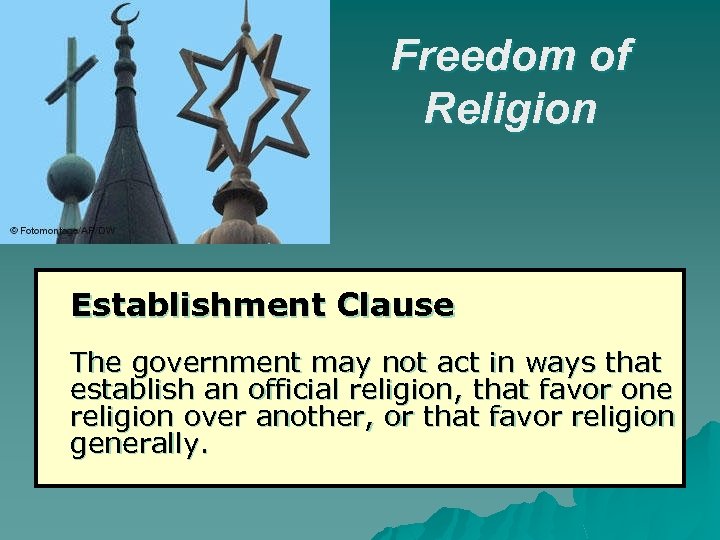 Freedom of Religion Establishment Clause The government may not act in ways that establish an official religion, that favor one religion over another, or that favor religion generally.
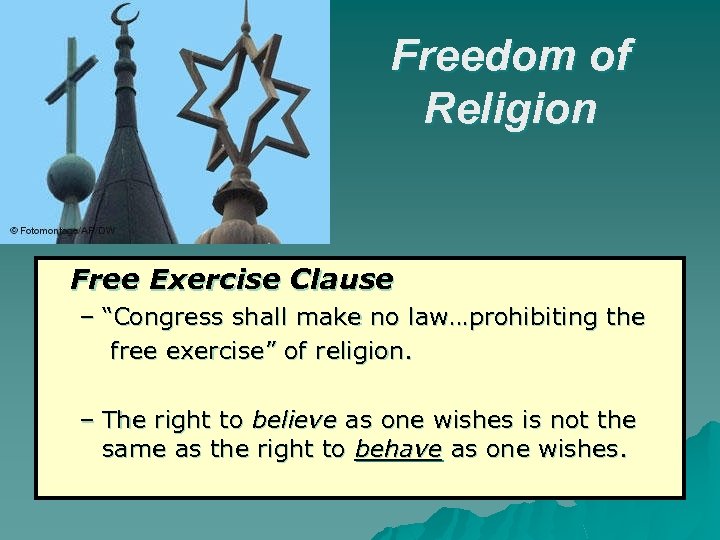 Freedom of Religion Free Exercise Clause – “Congress shall make no law…prohibiting the free exercise” of religion. – The right to believe as one wishes is not the same as the right to behave as one wishes.
 Religion in Public Schools u 1962 Engel v. Vitale – – The case was brought by the parents of public school students in New Hyde Park, New York who complained the prayer to "Almighty God" contradicted their religious beliefs. – The plaintiffs argued that opening the school day with such a prayer (even if students are not required to recite it) violates the Establishment Clause of the First Amendment to the United States Constitution
 Religion in Public Schools u u Officially sponsored prayers once were common in U. S. public schools. 1962 Engel v. Vitale – – The Supreme Court ruled that this practice violated the Establishment Clause. – Courts have not ruled against students praying on their own. – Religious works also may be used in public schools as part of literature courses and other nonreligious studies.
 Government Aid for Religion u 1971 Lemon v. Kurtzman – – Any government aid for a religious entity must: u. Have a secular, or nonreligious, purpose; u. Neither and u. Not advance nor limit religion; result in excessive government involvement with religion.
 Santa Fe Independent School District vs. Doe (2000)
 Santa Fe Ind. School District v. Doe u. Whether the state school district's policy permitting student-led, student-initiated prayer at football games violates the Establishment Clause of the First Amendment.
 Case Summary for Santa Fe Ind. School District v. Doe u In April 1993, a 7 th-grade student in Santa Fe was attending her Texas History class when her teacher began handing out flyers to advertise a Baptist religious revival. u After learning that the student was Mormon, the teacher began talking about the non-Christian, cult-like nature of Mormonism.
 Case Summary for Santa Fe Ind. School District v. Doe u u This upset the student, and two days later, the girl's mother complained to the Santa Fe school district. Because his actions had violated a written school district policy that barred distribution of religious literature in class and verbal abuse of any student, the teacher was given a written reprimand directed to apologize to the family and to the class.
 Case Summary for Santa Fe Ind. School District v. Doe u During the 1992 -93 and 1993 -94 school years, the school district permitted students to read overtly Christian prayers at graduations and at home football games. u These prayers were delivered as "invocations" or "benedictions" for the events.
 Case Summary for Santa Fe Ind. School District v. Doe u The school district maintained complete control over the programs and facilities during the reading of the prayers, including the ability to cut off the microphone. u The same 7 th-grade student attended a number of the games with her family.
 Case Summary for Santa Fe Ind. School District v. Doe u In April 1995, the girl's parents and a second family (the "Does") filed suit against the school district in federal court, claiming the district's policies and practices were violating the Establishment Clause of the First Amendment.
 Ruling : u Yes; the court voted (6 -3) that the state school district's policy does violate the Establishment Clause. U. S. Constitution : u u “Congress shall make no law respecting an establishment of religion. ” The government may not act in ways that establish an official religion, that favor one religion over another, or that favor religion generally.
 Wisconsin vs. Yoder (1972)
 Wisconsin v. Yoder (1972) u u u 3 Amish families sued the state of Wisconsin over the state law requiring students to attend school until the age of 16. Amish tradition consists of completing 8 th grade, then informal vocational training to prepare them for rural Amish life. When the parents pulled their kids out of school after 8 th grade they were convicted of breaking the law
 Wisconsin v. Yoder (1972) u High school emphasizes things that are contrary to the Amish way of life (self-distinction, competitiveness, scientific achievement, etc. ) u Attending high school deprives the community of labor.
 RULING : u u The Supreme Court agreed that Wisconsin's law violated the families' rights to free exercise of religion. By preventing parents from removing their children from school, the State is intruding into the family and preventing them from instilling their faiths in their children. U. S. Constitution : – “Congress shall make no law…prohibiting the free exercise” of religion.
 Freedom of Speech
 “Congress shall make no law abridging the freedom of speech” What does this mean exactly ? Write a couple of sentences in your notes about what you think it means:
 1 st Amendment Famous Supreme Court Cases:
 Famous Supreme Court Cases: Gitlow v. New York (June 8, 1925)
 Gitlow v. New York (June 8, 1925) Facts of the Case: u Gitlow was arrested for distributing copies of a letter that called for the establishment of socialism through strikes and class action. u Gitlow was convicted under a state criminal anarchy law, which punished advocating the overthrow of the government by force.
 Gitlow v. New York (June 8, 1925) Facts of the Case: u At his trial, Gitlow argued that since there was no resulting action flowing from the letter’s publication, the statute penalized utterences without propensity to incitement of concrete action. u The New York courts had decided that anyone who advocated the doctrine of violent revolution violated the law.
 Gitlow v. New York (June 8, 1925) Question: Does the New York law punishing the advocacy of overthrowing the government an unconstitutional violation of the free speech clause of the First Amendment?
 Gitlow v. New York (June 8, 1925) Conclusion: u. A state may forbid both speech and publication if they have a tendency to result in action dangerous to public security, even though such utterances create no clear and present danger.
 Dangerous tendency test The legislature may decide that an entire class of speech is so dangerous that it should be prohibited.
 Famous Supreme Court Cases: Tinker v. Des Moines (Independent Community School District) February 24, 1969
 Tinker v. Des Moines Ind. Comm. School District - February 24, 1969 Facts of the Case: John Tinker, (15 years old), his sister Mary Beth Tinker, (13 years old), and Christopher Echardt, (16 years old), decided to protest the Vietnam War by wearing black armbands to their Des Moines schools during the Christmas holiday season.
 Tinker v. Des Moines Ind. Comm. School District - February 24, 1969 Facts of the Case: u Upon learning of their intentions, and fearing that the armbands would provoke disturbances, the principals of the Des Moines school district resolved that all students wearing armbands be asked to remove them or face suspension. u When the Tinker siblings and Christopher wore their armbands to school, they were asked to remove them. u When they refused, they were suspended until after New Year's Day.
 Tinker v. Des Moines Ind. Comm. School District - February 24, 1969 Question: Does a prohibition against the wearing of armbands in public school, as a form of symbolic protest, violate the First Amendment's freedom of speech protections?
 Tinker v. Des Moines Ind. Comm. School District - February 24, 1969 Conclusion: u The wearing of armbands was "closely akin to 'pure speech'" and protected by the First Amendment. u u School environments imply limitations on free expression, but here the principals lacked justification for imposing any such limits. The principals had failed to show that the forbidden conduct would substantially interfere with appropriate school discipline.
 Schenck v. United States (March 3, 1919) Facts of the Case u During World War I, Schenck mailed circulars to draftees that suggested that the draft was a monstrous wrong motivated by the capitalist system. – "Do not submit to intimidation" but advised only peaceful action such as petitioning to repeal the Conscription Act. u Schenck was charged with conspiracy to violate the Espionage Act by attempting to cause insubordination in the military and to obstruct recruitment.
 Schenck v. United States (March 3, 1919) Question Are Schenck's actions (words, expression) protected by the free speech clause of the First Amendment?
 Schenck v. United States (March 3, 1919) u u u Conclusion Holmes, speaking for a unanimous Court, concluded that Schenck is not protected in this situation. The character of every act depends on the circumstances. "The question in every case is whether the words used are used in such circumstances and are of such a nature as to create a clear and present danger that they will bring about the substantive evils that Congress has a right to prevent. " During wartime, utterances tolerable in peacetime can be punished.
 Freedom of Press
 “Congress shall make no law abridging the freedom of the press” What does this mean exactly ?
 Defamation u u Taking away the good name of. Knowingly print / say something that is false. Slander: Spoken form of defamation Libel : Written form of defamation
 Famous Supreme Court Cases: Hazelwood School District v. Kuhlmeier January 13, 1988
 Hazelwood School District v. Kuhlmeier January 13, 1988 u u u Facts of the Case The Spectrum, the school-sponsored newspaper of Hazelwood East High School, was written and edited by students. In May 1983, Robert E. Reynolds, the school principal, received the pages proofs for the May 13 issue. Reynolds found two of the articles in the issue to be inappropriate, and ordered that the pages on which the articles appeared be withheld from publication. Cathy Kuhlmeier and two other former Hazelwood East students brought the case to court.
 Hazelwood School District v. Kuhlmeier January 13, 1988 Question Did the principal's deletion of the articles violate the students' rights under the First Amendment?
 Hazelwood School District v. Kuhlmeier January 13, 1988 Conclusion u The Court held that the 1 st Amendment did not require schools to affirmatively promote particular types of student speech. u The Court held that schools must be able to set high standards for student speech disseminated under their auspices, and that schools retained the right to refuse to sponsor speech that was "inconsistent with 'the shared values of a civilized social order. "
 Hazelwood School District v. Kuhlmeier January 13, 1988 Conclusion u Educators did not offend the First Amendment by exercising editorial control over the content of student speech so long as their actions were "reasonably related to legitimate pedagogical concerns. "
 Famous Supreme Court Cases: New York Times v. Sullivan (March 9, 1964)
 New York Times v. Sullivan (March 9, 1964) Facts of the Case u This case concerns a full-page ad in the New York Times which alleged that the arrest of the Rev. Martin Luther King, Jr. for perjury in Alabama was part of a campaign to destroy King's efforts to integrate public facilities and encourage blacks to vote.
 New York Times v. Sullivan (March 9, 1964) Facts of the Case u L. B. Sullivan, the Montgomery city commissioner, filed a libel action against the newspaper and four black ministers claiming that the allegations against the Montgomery police defamed him personally. u Under Alabama law, Sullivan did not have to prove that he had been harmed; and a defense claiming that the ad was truthful was unavailable since the ad contained factual errors. Sullivan won a $500, 000 judgment.
 New York Times v. Sullivan (March 9, 1964) Question Did Alabama's libel law, by not requiring Sullivan to prove that an advertisement personally harmed him and dismissing the same as untruthful due to factual errors, unconstitutionally infringe on the First Amendment's freedom of speech and freedom of press protections?
 New York Times v. Sullivan (March 9, 1964) Conclusion u The Court held that the First Amendment protects the publication of all statements, even false ones, about the conduct of public officials except when statements are made with actual malice (with knowledge that they are false or in reckless disregard of their truth or falsity). u Under this new standard, Sullivan's case collapsed.
 Freedom of Assembly
 “Congress shall make no Freedom of Assmebly law abridging the right of the people to peaceably assemble”
 Assembly u People are allowed to gather for peaceful purposes. But : u Government can forbid assemblies that promote or engage in illegal activities.
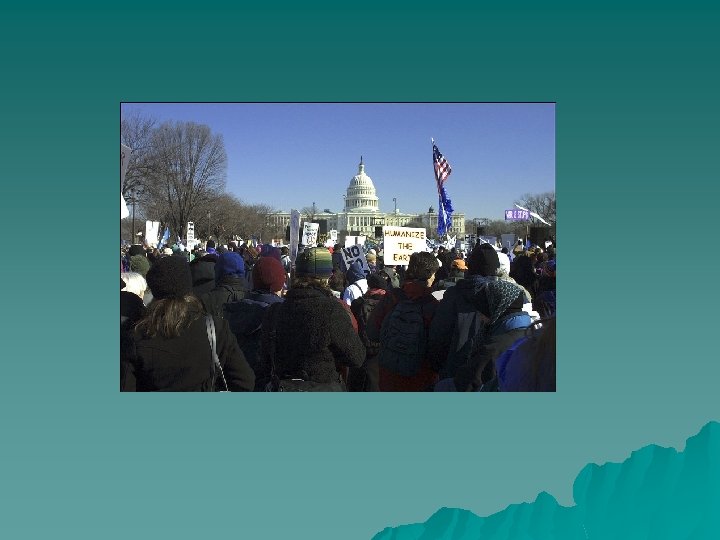
 Demonstrations & Protests u Most common example of the rights of assembly and petition: – Abortion protests, equal rights, parades, etc. u Public Property – time, place, and manner regulation - u Police can halt demonstrations on certain terms to promote safety. Private Property – cannot protest on private property or private businesses.
 Time, Place and Manner Regulation u Identifies all three factors to help authorities develop procedures for better organizing control of the assembly. u Also to see what problems may arise from the assembly. – Example: parade routes, traffic, people control, etc.
 Freedom of Assembly u Individuals can: – Protest on public property – Parade w/ permit – Chant hate slogans u Individuals cannot: - Protest on private property - Break windows, throw rocks, etc.
 Famous Supreme Court Cases: Brandenburg v. Ohio June 9, 1969
 Brandenburg v. Ohio June 9, 1969 u u Facts of the Case Brandenburg, a leader in the Ku Klux Klan, made a speech at a Klan rally and was later convicted under an Ohio criminal syndicalism law. The law made illegal advocating "crime, sabotage, violence, or unlawful methods of terrorism as a means of accomplishing industrial or political reform, " as well as assembling "with any society, group, or assemblage of persons formed to teach or advocate the doctrines of criminal syndicalism. "
 Brandenburg v. Ohio June 9, 1969 Question Did Ohio's criminal syndicalism law, prohibiting public speech that advocates various illegal activities, violate Brandenburg's right to free speech as protected by the First and Fourteenth Amendments?
 Brandenburg v. Ohio June 9, 1969 Conclusion u u The Court's Per Curiam opinion held that the Ohio law violated Brandenburg's right to free speech. The Court used a two-pronged test to evaluate speech acts: (1) speech can be prohibited if it is "directed at inciting or producing imminent lawless action" and (2) it is "likely to incite or produce such action. "
 Brandenburg v. Ohio June 9, 1969 Conclusion u u The criminal syndicalism act made illegal the advocacy and teaching of doctrines while ignoring whether or not that advocacy and teaching would actually incite imminent lawless action. The failure to make this distinction rendered the law overly broad and in violation of the Constitution.
 Corporation v. Tanner u u u In 1972, people were passing out literature against the Vietnam war on private mall property. Have to be distributed on surrounding sidewalks or in the streets. Showed the “boundaries” for petition and protest.
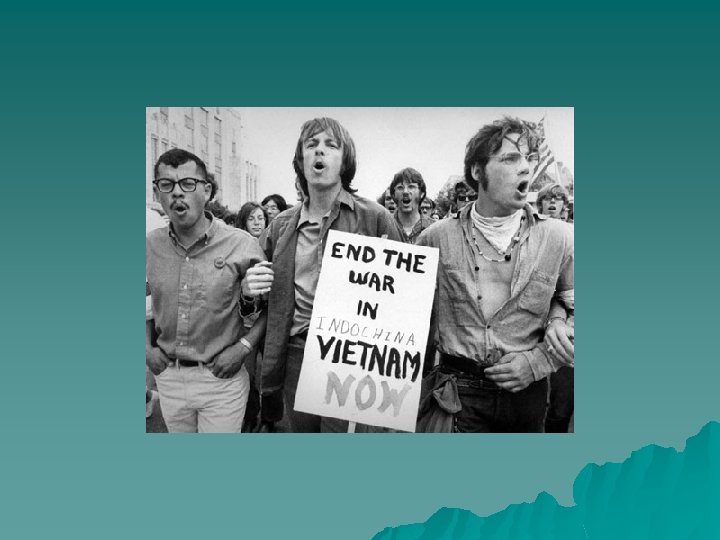
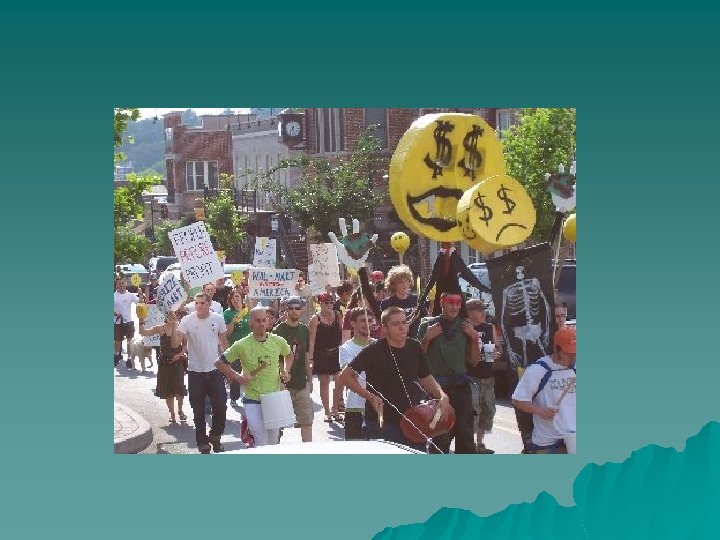
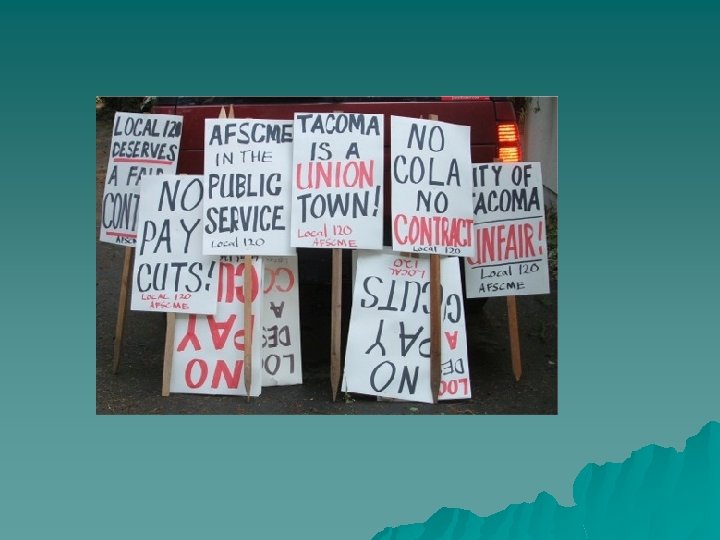
 Picketing u u Walking or standing in front of a place of business or other property, often holding signs urging others not to buy the company’s products or asking others not to cross the picket line and work for the company. Prohibited on company’s property but can be done on surrounding public property
 Freedom of Petition
 Freedom of Petition u u Allows people to ask the government to change a court decision, law, or any governmental action. Works with the right to assembly so people can come together to pursue change. You can sue the government for wrongs. You cannot be punished for exposing wrongs by the government.
 Imagine Life Without This Right u The government could reprimand you for your political views or beliefs. u You would not be able to contact your local Senator or Congressman. u The government would not have to be concerned with making the general population happy.
 Notebook assignment: Use the time remaining to write down some of your personal st thoughts regarding the 1 Amendment Protections described today.