 Скачать презентацию SSL Secure Socket Layer By Mike Weissert
931427efc78890b8f97b46cad8475050.ppt
- Количество слайдов: 15



SSL: Secure Socket Layer By: Mike Weissert
Overview • • • Definition History & Background SSL Assurances SSL Session Problems Attacks & Defenses
Definition • SSL: Short for Secure Sockets Layer, a protocol developed by Netscape for transmitting private documents via the Internet.
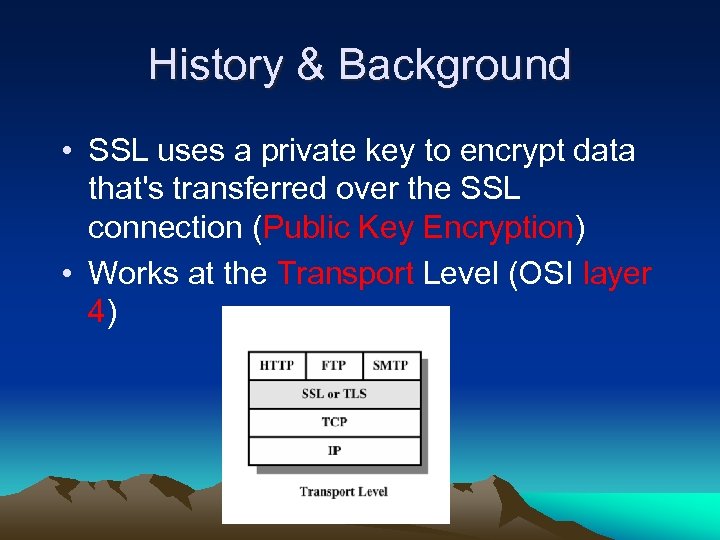
History & Background • SSL uses a private key to encrypt data that's transferred over the SSL connection (Public Key Encryption) • Works at the Transport Level (OSI layer 4)
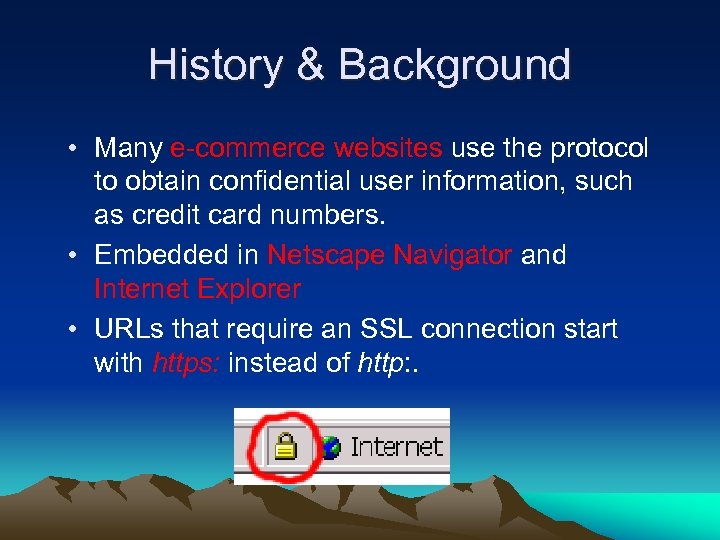
History & Background • Many e-commerce websites use the protocol to obtain confidential user information, such as credit card numbers. • Embedded in Netscape Navigator and Internet Explorer • URLs that require an SSL connection start with https: instead of http: .
SSL Assurances • • Confidentiality Authentication Integrity No Non-repudiation
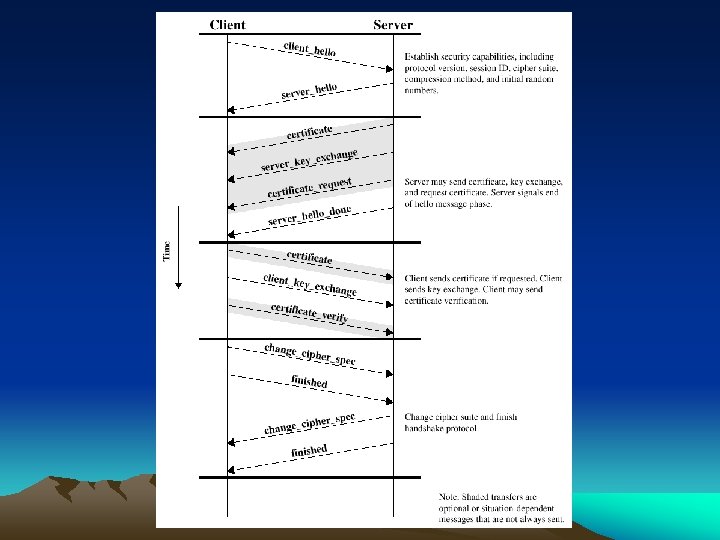
SSL Session (4 steps) 1. Negotiation of Cryptographic Parameters • Unencrypted messages sent to establish parameters to use for communication (algorithm, version, etc) 2. Key Agreement • Generation of Secret key 3. Authentication • Client authenticates to the server 4. Confidentiality and Integrity • Secret keys used to exchange private messages with integrity assurance
Problems • Short Key Length – Keys can be brute-forced • 40 bit keys have been cracked in < 1 day • SSL relies on Web browsers have a preinstalled list of top level Certificate Authorities – current browsers have no built-in mechanism for certificate revocation • Lesson: Just because you see the lock, does not mean you are secure
Attacks & Defenses • Man-In-The-Middle Attack – Someone intercepts your message en-route and masquerades as the party you are trying to connect to. • Solution: – Only accept certificates from known & valid CA’s. (Check this by clicking on the lock & verifying the CA’s site. )
Attacks & Defenses • Cipher Suite Rollback Attack – During negotiation of cryptographic parameters (done unencrypted), an attacker can modify the communication to suggest using an older (weaker) suite (SSL v 2) – This older suite, can then be attacked much easier • Solution: – Do not allow SSL to communicate with older versions (modify browser setting)
Attacks & Defenses • Timing Attacks – can extract private keys from an Open. SSLbased web server running on a machine in the local network • Solution: – Use newer crypto libraries that incorporate blinding
Works Cited • http: //www. spirit. com/Network/net 1100. txt • http: //www. webopedia. com/TERM/S/SSL. html • Mel, H. X. & Baker, Doris, Cryptography Decrypted, 2001, Addison-Wesley
Questions?
• Cryptographic Assurances: – Confidentiality: provides privacy that only the intended parties can read the transmitted message – Authentication: assurance that the person you are communicating with is actually that person – Integrity: assurance that the message has not been changed during transit – Nonrepudiation: assures that the sender of a message cannot deny having sent a file
Скачать презентацию SSL Secure Socket Layer By Mike Weissert
931427efc78890b8f97b46cad8475050.ppt