


 Скачать презентацию SRH HIV Linkages What s The Rationale Ward Cates MD
e619b078c210b62a9f52f27350aa4001.ppt
- Количество слайдов: 24
 SRH/HIV Linkages: What’s The Rationale? Ward Cates, MD, MPH Family Health International World Bank Washington, DC November 19, 2008
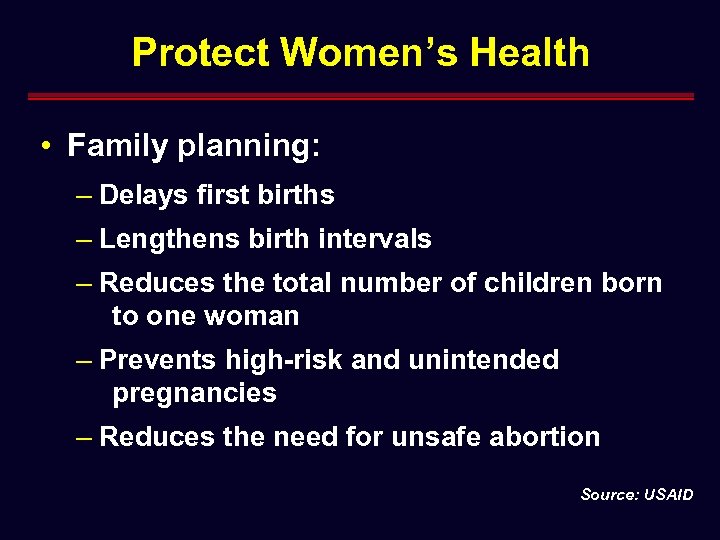 Protect Women’s Health • Family planning: – Delays first births – Lengthens birth intervals – Reduces the total number of children born to one woman – Prevents high-risk and unintended pregnancies – Reduces the need for unsafe abortion Source: USAID
 Protect Women’s Rights • All women have the right: – “To decide freely and responsibly on the number and spacing of their children and to have access to the information, education and means to enable them to exercise these rights. ” Source: Convention on the Elimination of All Discrimination against Women
 Contraception is HIV Prevention • Contraception as HIV prevention: evidence of individual-level efficacy and effectiveness • Family planning/HIV integration: evidence of population-level effectiveness • Considerations for scale-up
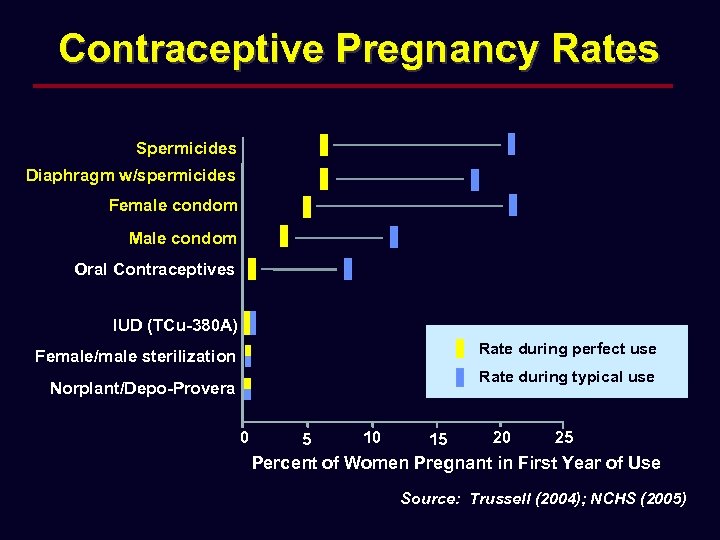 Contraceptive Pregnancy Rates Spermicides Diaphragm w/spermicides Female condom Male condom Oral Contraceptives IUD (TCu-380 A) Rate during perfect use Female/male sterilization Rate during typical use Norplant/Depo-Provera 0 5 10 15 20 25 Percent of Women Pregnant in First Year of Use Source: Trussell (2004); NCHS (2005)
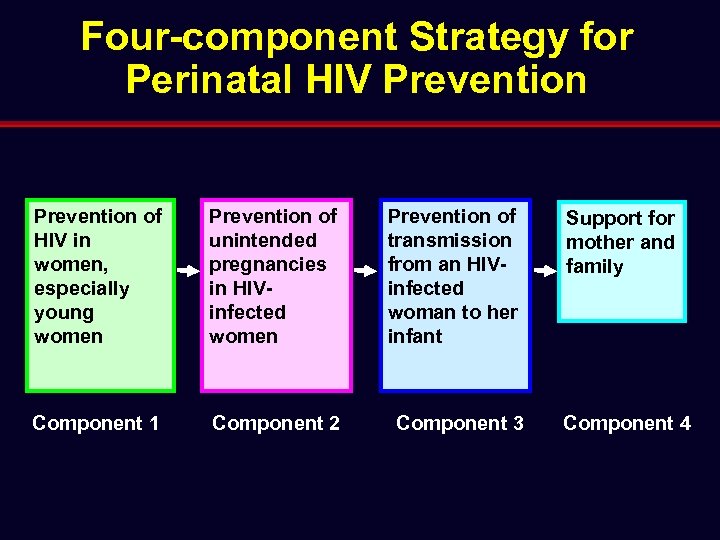 Four-component Strategy for Perinatal HIV Prevention of HIV in women, especially young women Prevention of unintended pregnancies in HIVinfected women Component 1 Component 2 Prevention of transmission from an HIVinfected woman to her infant Component 3 Support for mother and family Component 4
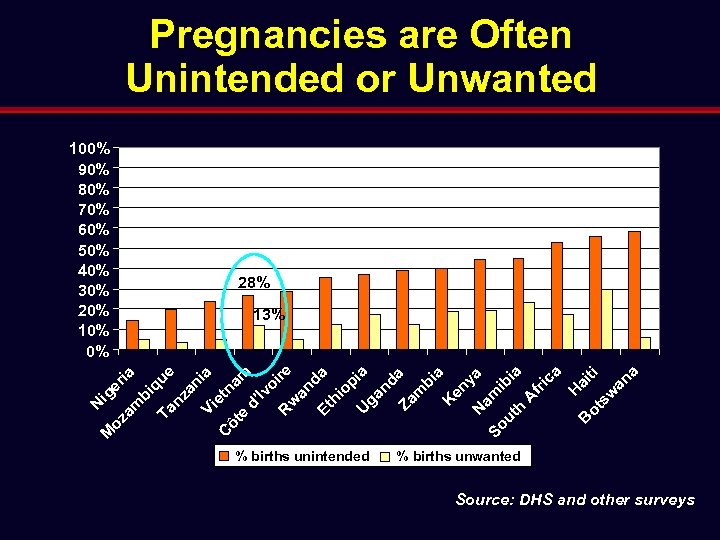 Pregnancies are Often Unintended or Unwanted 28% 13% M N i oz ger am ia bi q Ta ue nz an Vi ia et C na ôt m e d' Iv oi r R w e an da Et hi op ia U ga nd Za a m bi a K en ya N So am ut ibia h A fr ic a H a B ot iti sw an a 100% 90% 80% 70% 60% 50% 40% 30% 20% 10% 0% % births unintended % births unwanted Source: DHS and other surveys
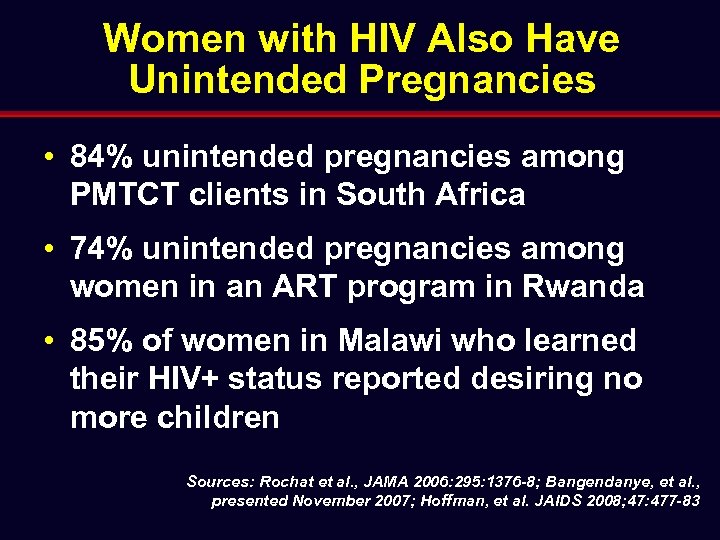 Women with HIV Also Have Unintended Pregnancies • 84% unintended pregnancies among PMTCT clients in South Africa • 74% unintended pregnancies among women in an ART program in Rwanda • 85% of women in Malawi who learned their HIV+ status reported desiring no more children Sources: Rochat et al. , JAMA 2006: 295: 1376 -8; Bangendanye, et al. , presented November 2007; Hoffman, et al. JAIDS 2008; 47: 477 -83
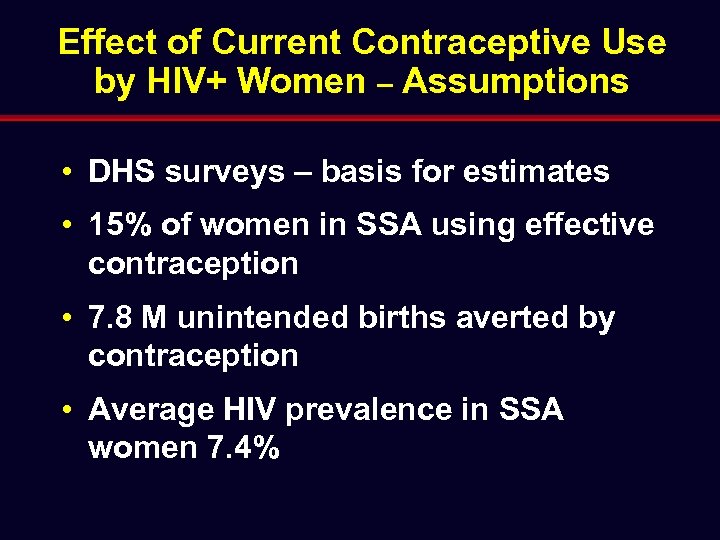 Effect of Current Contraceptive Use by HIV+ Women – Assumptions • DHS surveys – basis for estimates • 15% of women in SSA using effective contraception • 7. 8 M unintended births averted by contraception • Average HIV prevalence in SSA women 7. 4%
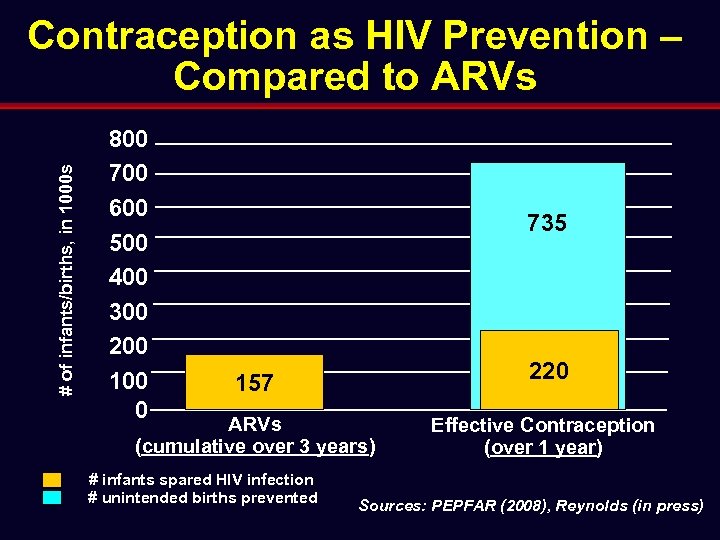 # of infants/births, in 1000 s Contraception as HIV Prevention – Compared to ARVs 800 700 600 500 400 300 200 100 0 735 220 157 ARVs (cumulative over 3 years) # infants spared HIV infection # unintended births prevented Effective Contraception (over 1 year) Sources: PEPFAR (2008), Reynolds (in press)
 Contraception – The BEST KEPT SECRET in HIV Prevention Effective contraception for HIVinfected women who do not wish to become pregnant • Prevents more infants becoming infected than ART • Decreases the number of future orphans
 From Contraception Efficacy to Family Planning/HIV Effectiveness • FP/HIV integration – the key strategy to reducing unintended pregnancies among HIV+ women • Crucial questions – what are the opportunities and challenges to translating efficacy into effectiveness?
 FP/HIV Integration: Opportunities and Challenges • International level – policies and funding trends • Country level – Ministry of Health structures and other coordinating bodies • Service delivery level – operationalizing SRH and HIV linkages
 International Level Opportunities • FP/HIV integration supports the reproductive rights of HIV+ women • Increasing international policy support for stronger RH/HIV linkages – Glion Call to Action – New York Call to Commitment – Maputo Plan of Action
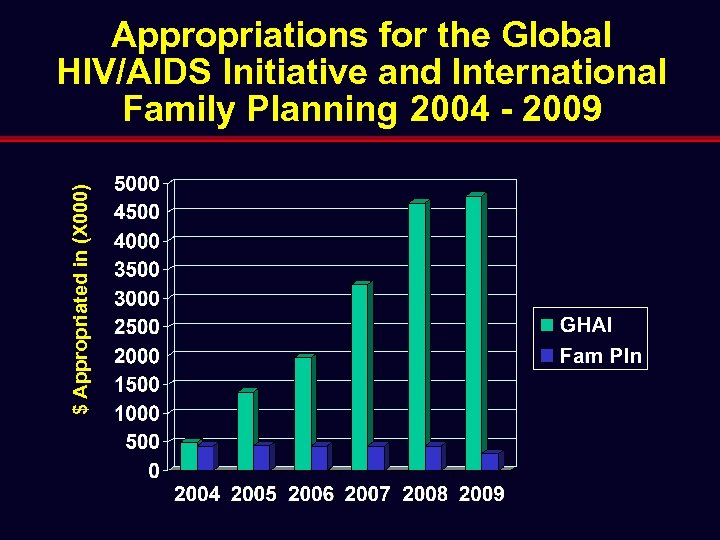 $ Appropriated in (X 000) Appropriations for the Global HIV/AIDS Initiative and International Family Planning 2004 - 2009
 Country Level Opportunities • Emerging policy support – Strategy for the Integration of FP and VCT Services (Kenya) – High priority FP strategies (Mozambique, Rwanda) • Country-specific technical working groups on RH/HIV integration • Increasing number of integrated RH/HIV bilateral programs – Kenya and Rwanda
 Service Delivery Opportunities • Unmet need for FP and high levels of unintended pregnancy among clients of HIV services is well documented • Integrated services are acceptable to HIV providers and clients • Integrated services do not appear to negatively affect the quality of the basic service – whether VCT, PMTCT, etc.
 The Interface Between HIV Programs and Health Systems Long-standing inadequacies lead to new opportunities for improved health care Inadequacies An organizational culture of service fragmentation Opportunities Integrated services in concept and in practice “The medicines [contraceptives] that we use are in this room. They can’t be put in another room [the HIV care and treatment room]. ”
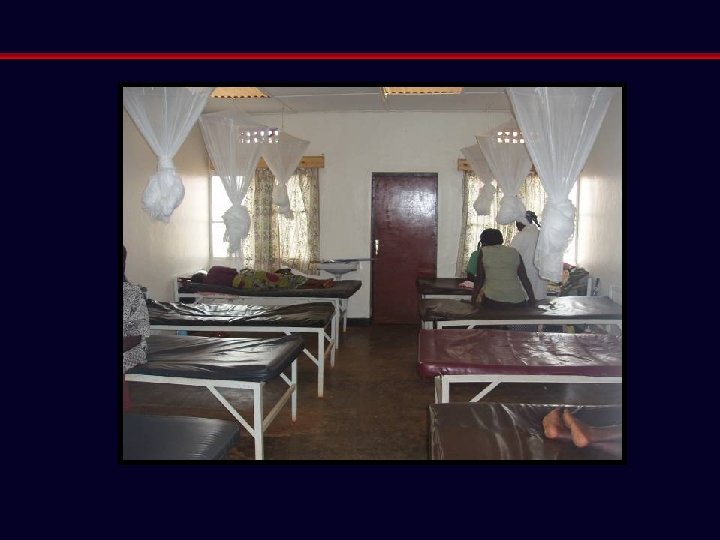
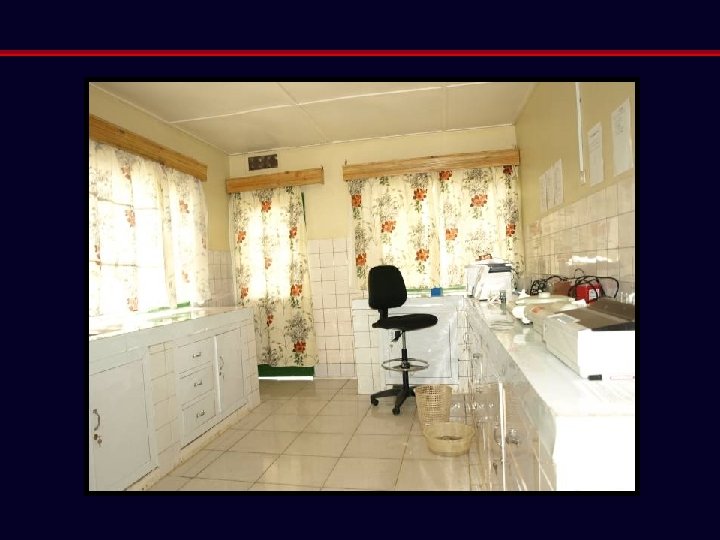
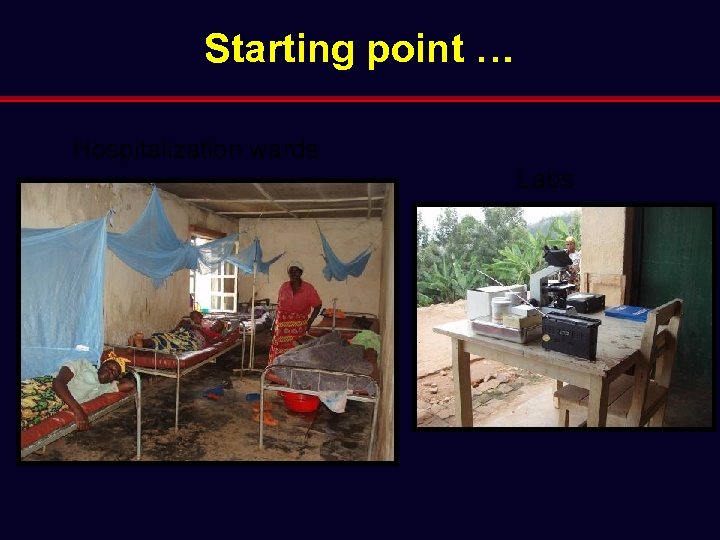 Starting point … Hospitalization wards Labs
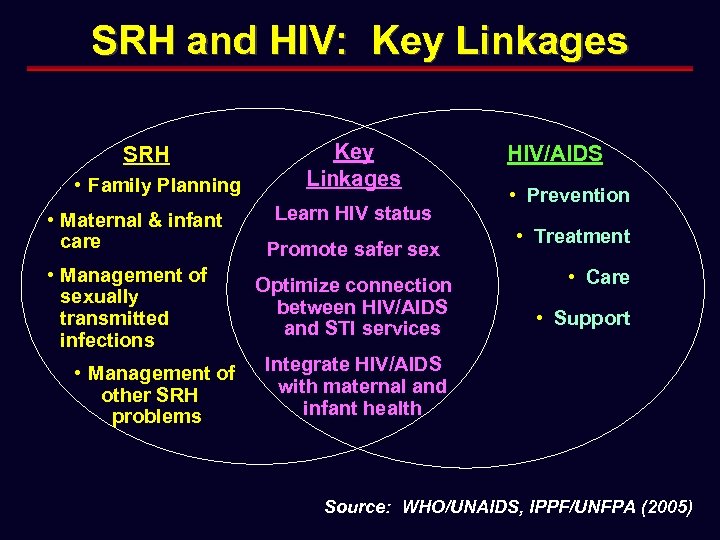 SRH and HIV: Key Linkages SRH • Family Planning • Maternal & infant care • Management of sexually transmitted infections • Management of other SRH problems Key Linkages Learn HIV status Promote safer sex Optimize connection between HIV/AIDS and STI services HIV/AIDS • Prevention • Treatment • Care • Support Integrate HIV/AIDS with maternal and infant health Source: WHO/UNAIDS, IPPF/UNFPA (2005)
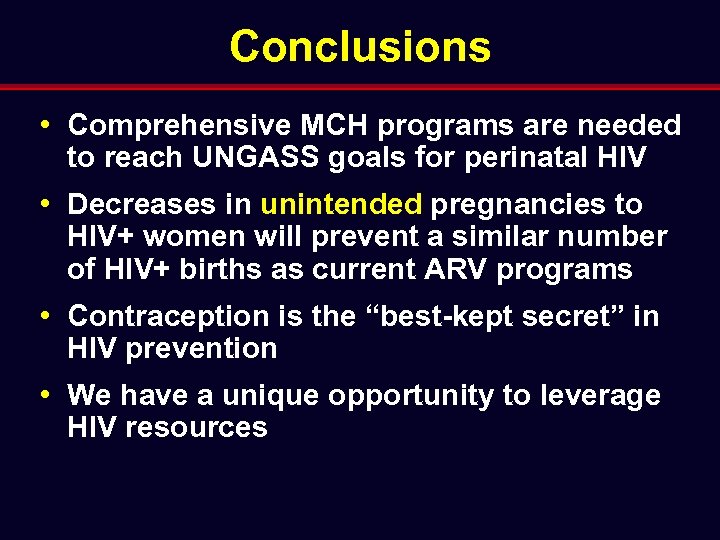 Conclusions • Comprehensive MCH programs are needed to reach UNGASS goals for perinatal HIV • Decreases in unintended pregnancies to HIV+ women will prevent a similar number of HIV+ births as current ARV programs • Contraception is the “best-kept secret” in HIV prevention • We have a unique opportunity to leverage HIV resources
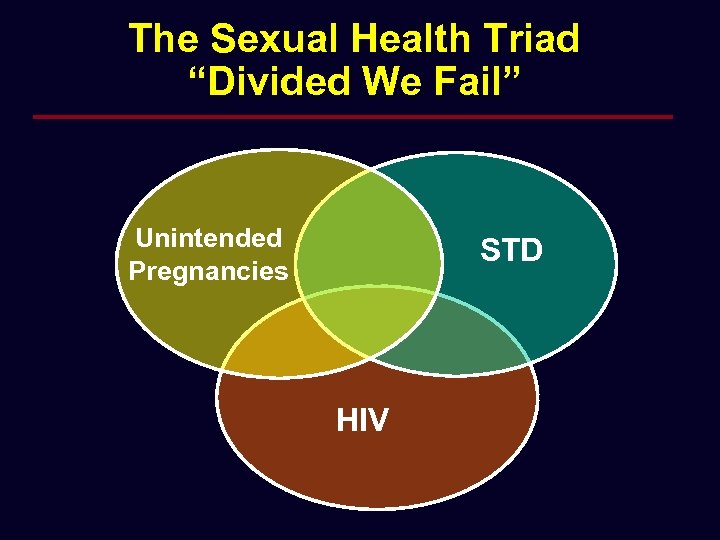 The Sexual Health Triad “Divided We Fail” Unintended Pregnancies STD HIV