 Скачать презентацию Spotlight on Jerusalem 2050 and Beyond American-Israel Demographic
ea0faa76bfa204aa975f9cc1868d9347.ppt
- Количество слайдов: 43



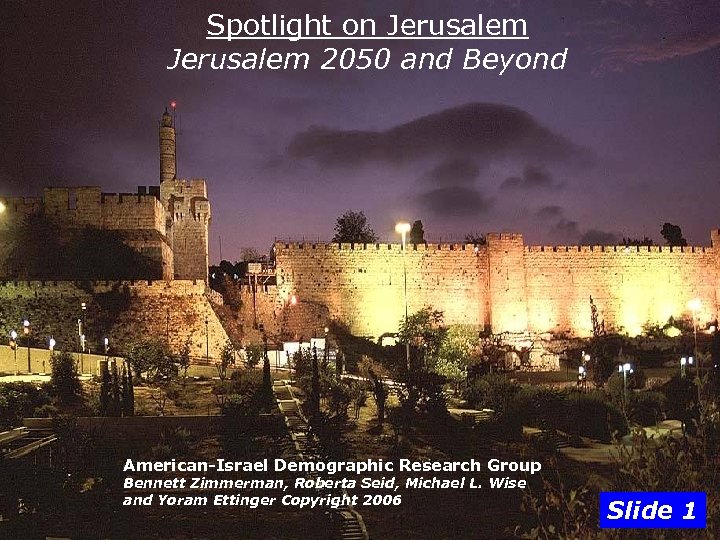
Spotlight on Jerusalem 2050 and Beyond American-Israel Demographic Research Group Bennett Zimmerman, Roberta Seid, Michael L. Wise and Yoram Ettinger Copyright 2006 Slide 1
Spotlight on Jerusalem 2050 and Beyond In Jerusalem, Jews have a housing problem, not a demographic problem. Jewish fertility has recently surpassed Arab fertility, but young Jews (over 1% annually of the Jewish population) are leaving the city for affordable housing and jobs even as Jerusalem becomes a magnet for Jerusalem Arabs who are flocking to the Israeli side of the security fence. The forecast highlights the demographic strength of Jews to maintain – or increase — their current two-thirds majority in the municipality of Jerusalem and the entire metropolitan area even while absorbing Arab residents of surrounding suburbs now excluded by the separation fence. The study examines various proposals for the city’s future including ramifications of including the security fence as a permanent border and incorporating large areas of metropolitan Jerusalem into a united city or expanded Jerusalem district. American-Israel Demographic Research Group Bennett Zimmerman, Roberta Seid, Michael L. Wise and Yoram Ettinger Copyright 2006 Slide 2
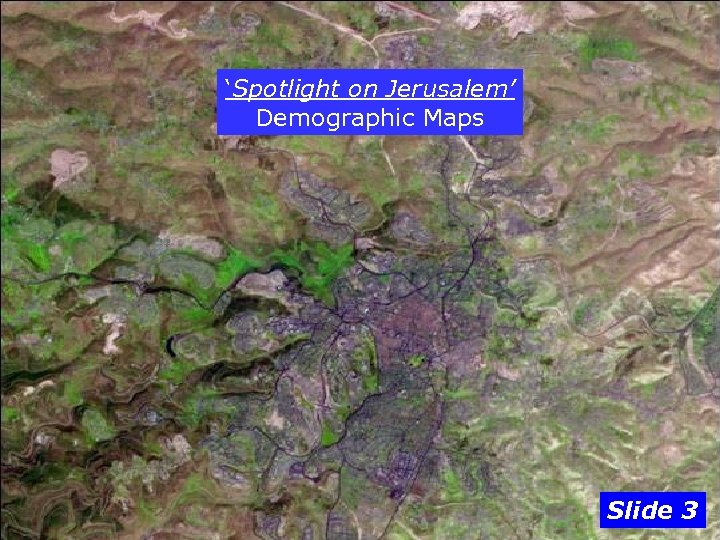
‘Spotlight on Jerusalem’ Demographic Maps Slide 3
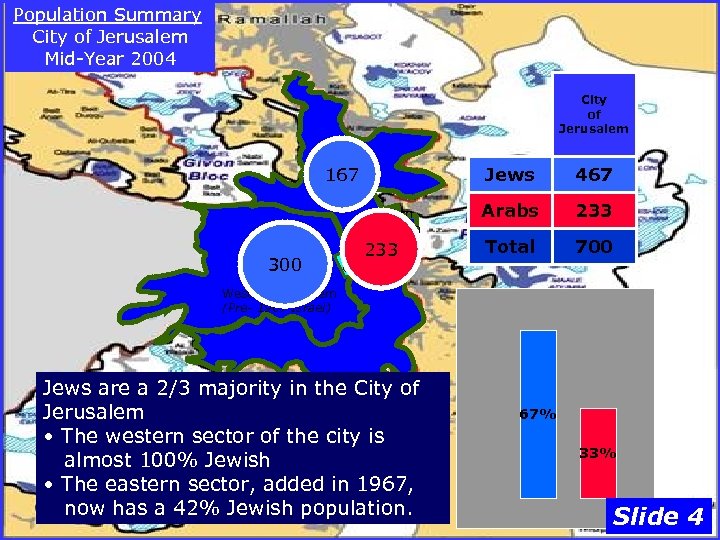
Population Summary City of Jerusalem Mid-Year 2004 City of Jerusalem 167 300 Eastern Jerusalem (added Old 233 after City 1967) Jews 467 Arabs 233 Total 700 Western Jerusalem (Pre- 1967 Israel) Jews are a 2/3 majority in the City of Jerusalem • The western sector of the city is almost 100% Jewish • The eastern sector, added in 1967, now has a 42% Jewish population. 67% 33% Slide 4
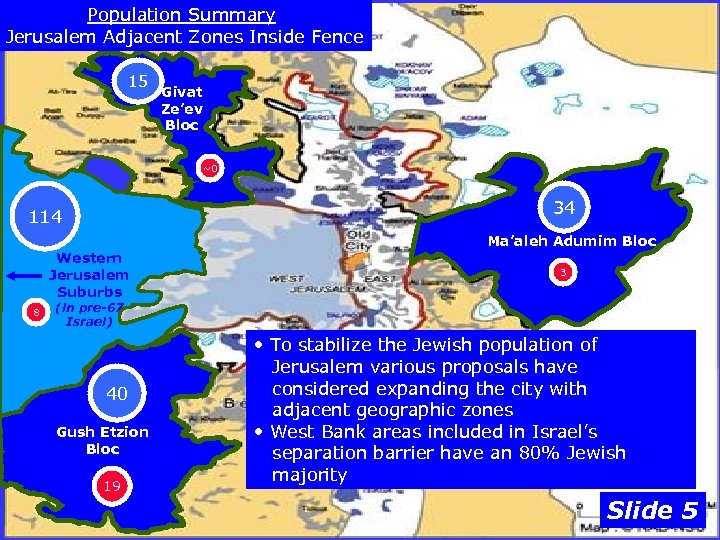
Population Summary Jerusalem Adjacent Zones Inside Fence 15 Givat Ze’ev Bloc ~0 34 114 Ma’aleh Adumim Bloc Western Jerusalem Suburbs 8 3 (in pre-67 Israel) 40 Gush Etzion Bloc 19 • To stabilize the Jewish population of Jerusalem various proposals have considered expanding the city with adjacent geographic zones • West Bank areas included in Israel’s separation barrier have an 80% Jewish majority Slide 5
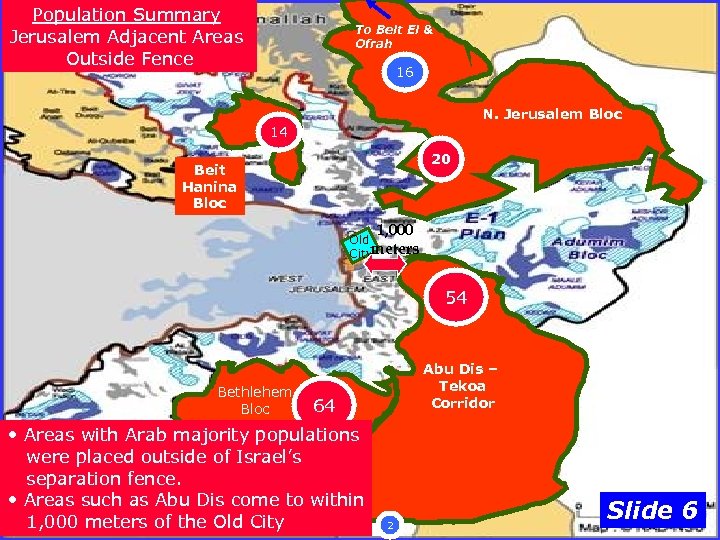
Population Summary Jerusalem Adjacent Areas Outside Fence To Beit El & Ofrah 16 N. Jerusalem Bloc 14 20 Beit Hanina Bloc 1, 000 Old Citymeters 54 Bethlehem Bloc Abu Dis – Tekoa Corridor 64 • Areas with Arab majority populations were placed outside of Israel’s separation fence. • Areas such as Abu Dis come to within 1, 000 meters of the Old City 2 Slide 6
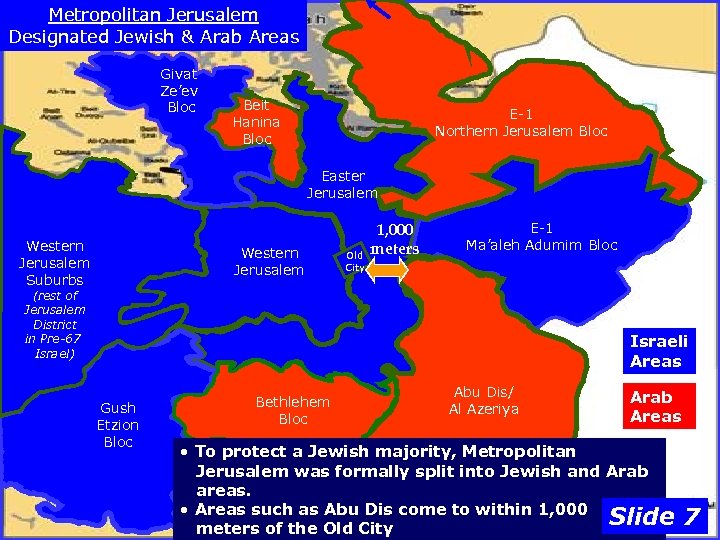
Metropolitan Jerusalem Designated Jewish & Arab Areas Givat Ze’ev Bloc Beit Hanina Bloc E-1 Northern Jerusalem Bloc Easter Jerusalem Western Jerusalem Suburbs Western Jerusalem Old City 1, 000 meters E-1 Ma’aleh Adumim Bloc (rest of Jerusalem District in Pre-67 Israel) Israeli Areas Gush Etzion Bloc Bethlehem Bloc Abu Dis/ Al Azeriya Arab Areas • To protect a Jewish majority, Metropolitan Jerusalem was formally split into Jewish and Arab areas. • Areas such as Abu Dis come to within 1, 000 Slide meters of the Old City 7
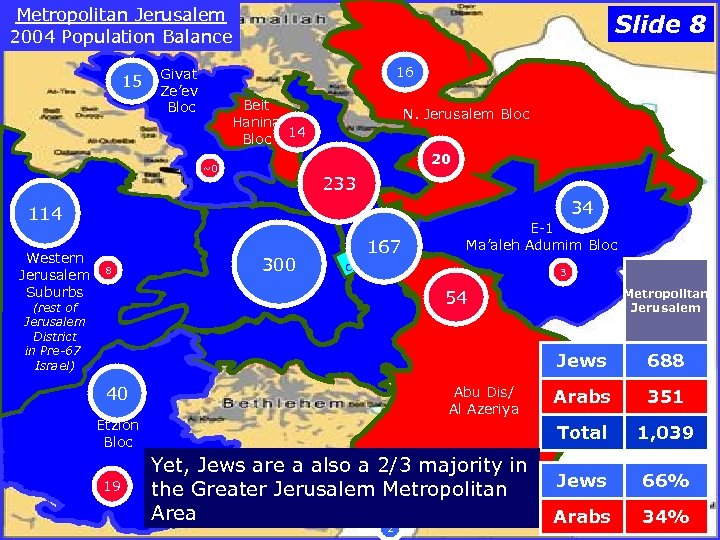
Metropolitan Jerusalem 2004 Population Balance 15 Slide 8 16 Givat Ze’ev Bloc Beit Hanina Bloc 14 ~0 N. Jerusalem Bloc 20 Easter 233 Jerusalem 34 114 Western Jerusalem Suburbs 8 Western 300 Jerusalem Old City 167 E-1 Ma’aleh Adumim Bloc 3 Metropolitan Jerusalem 54 (rest of Jerusalem District in Pre-67 Israel) Jews 40 Abu Dis/ Al Azeriya Gush Etzion Bloc 19 688 Arabs 34351 Total Yet, Jews are a also a 2/3 majority in the Greater Jerusalem Metropolitan Area 2 1, 039 Jews 66% Arabs 34%
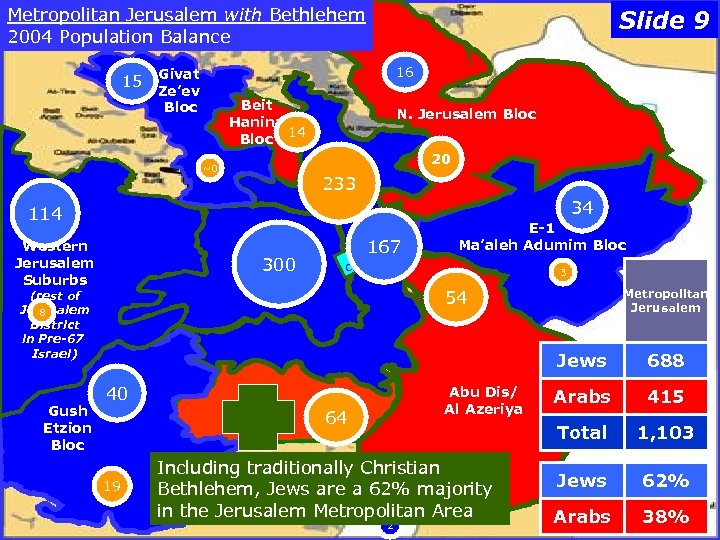
Metropolitan Jerusalem with Bethlehem 2004 Population Balance 15 Slide 9 16 Givat Ze’ev Bloc Beit Hanina Bloc 14 ~0 N. Jerusalem Bloc 20 Easter 233 Jerusalem 34 114 Western Jerusalem Suburbs Western 300 Jerusalem Old City 167 3 Metropolitan Jerusalem 54 (rest of Jerusalem 8 District in Pre-67 Israel) Gush Etzion Bloc E-1 Ma’aleh Adumim Bloc Jews 40 Abu Dis/ Al Azeriya 64 19 688 Arabs 34415 Total Including traditionally Christian Bethlehem, Jews are a 62% majority in the Jerusalem Metropolitan Area 2 1, 103 Jews 62% Arabs 38%
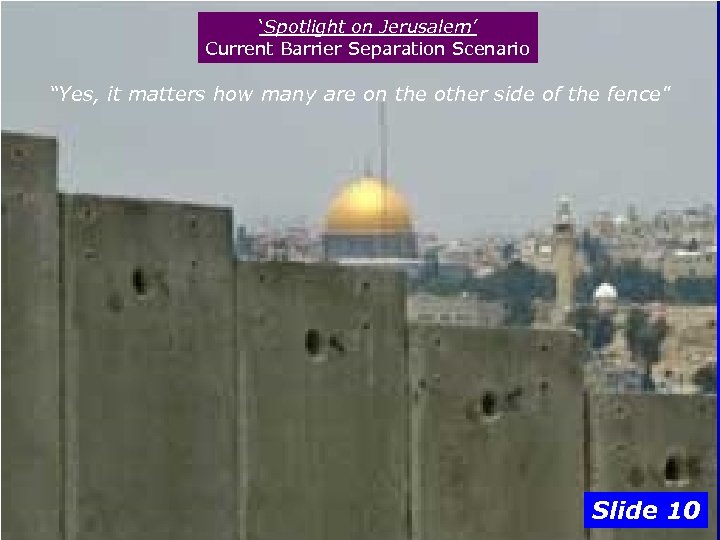
‘Spotlight on Jerusalem’ Current Barrier Separation Scenario “Yes, it matters how many are on the other side of the fence" Slide 10
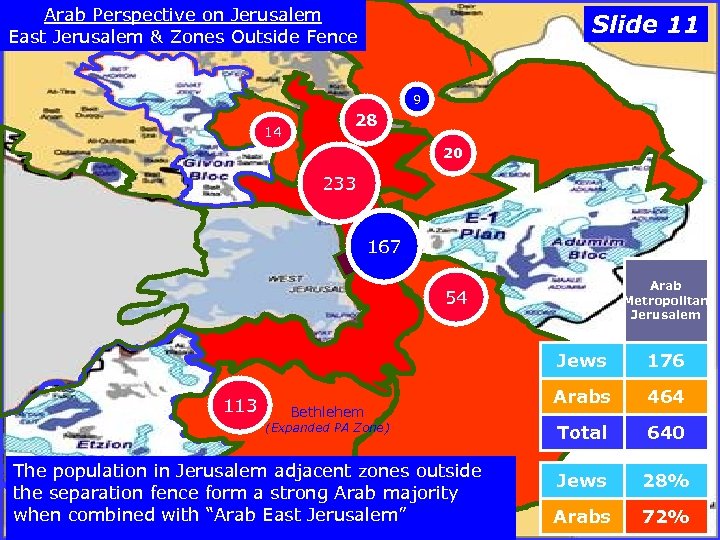
Arab Perspective on Jerusalem East Jerusalem & Zones Outside Fence Slide 11 9 14 28 20 233 167 Arab Metropolitan Jerusalem 54 Jews 113 Bethlehem (Expanded PA Zone) The population in Jerusalem adjacent zones outside the separation fence form a strong Arab majority when combined with “Arab East Jerusalem” 176 Arabs 464 Total 640 Jews 28% Arabs 72%
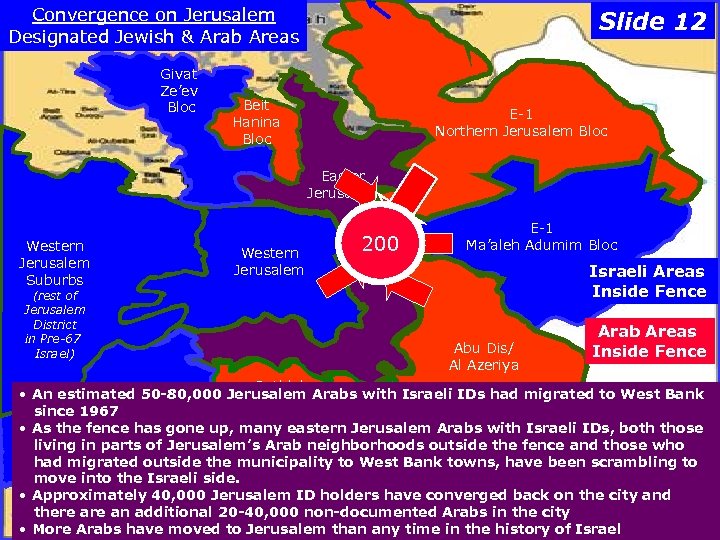
Convergence on Jerusalem Designated Jewish & Arab Areas Givat Ze’ev Bloc Slide 12 Beit Hanina Bloc E-1 Northern Jerusalem Bloc Easter Jerusalem Western Jerusalem Suburbs (rest of Jerusalem District in Pre-67 Israel) 1, 000 Western Jerusalem 160 200 meters Old E-1 Ma’aleh Adumim Bloc City Israeli Areas Inside Fence Abu Dis/ Al Azeriya Arab Areas Inside Fence Bethlehem • An estimated 50 -80, 000 Jerusalem Arabs with Israeli IDs had migrated to West Bank Bloc Gush since 1967 Etzion • As the fence has gone up, many eastern Jerusalem Arabs with Israeli IDs, both those Bloc living in parts of Jerusalem’s Arab neighborhoods outside the fence and those who had migrated outside the municipality to West Bank towns, have been scrambling to move into the Israeli side. • Approximately 40, 000 Jerusalem ID holders have converged back on the city and there an additional 20 -40, 000 non-documented Arabs in the city • More Arabs have moved to Jerusalem than any time in the history of Israel
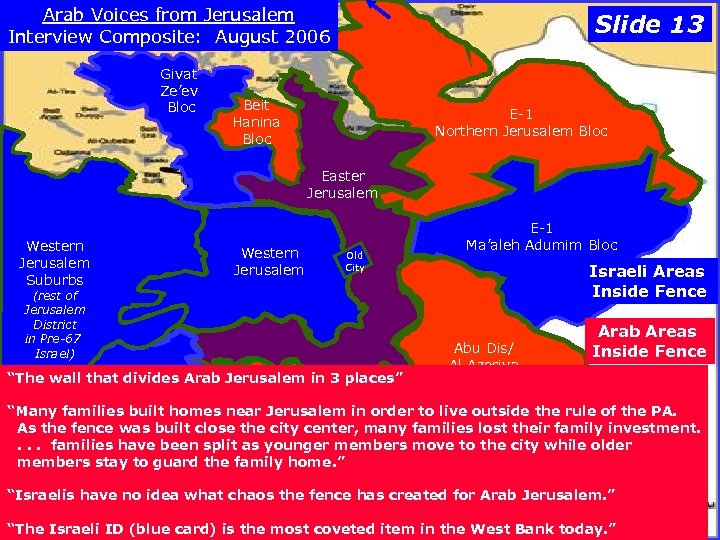
Arab Voices from Jerusalem Interview Composite: August 2006 Givat Ze’ev Bloc Slide 13 Beit Hanina Bloc E-1 Northern Jerusalem Bloc Easter Jerusalem Western Jerusalem Suburbs (rest of Jerusalem District in Pre-67 Israel) Western Jerusalem Old City E-1 Ma’aleh Adumim Bloc Israeli Areas Inside Fence Abu Dis/ Al Azeriya Arab Areas Inside Fence “The wall that divides Arab Jerusalem in 3 places” Bethlehem Bloc Gush “Many families built homes near Jerusalem in order to live outside the rule of the PA. Etzion As the fence was built close the city center, many families lost their family investment. Bloc. . . families have been split as younger members move to the city while older members stay to guard the family home. ” “Israelis have no idea what chaos the fence has created for Arab Jerusalem. ” “The Israeli ID (blue card) is the most coveted item in the West Bank today. ”
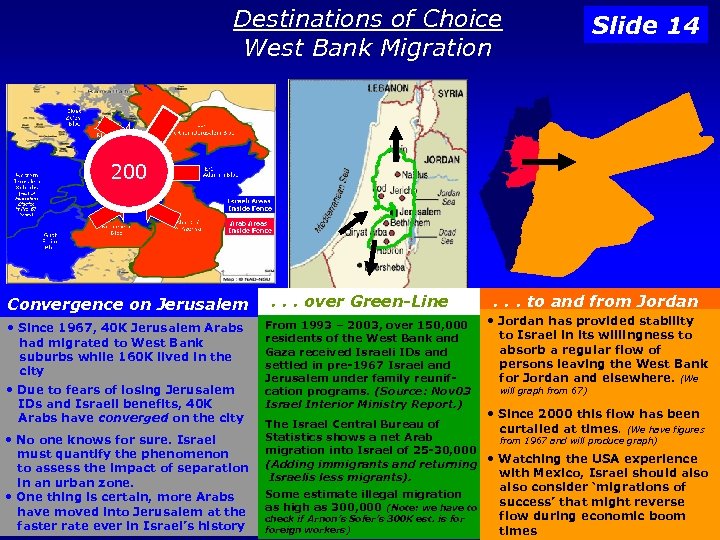
Destinations of Choice West Bank Migration Slide 14 200 160 Convergence on Jerusalem • Since 1967, 40 K Jerusalem Arabs had migrated to West Bank suburbs while 160 K lived in the city • Due to fears of losing Jerusalem IDs and Israeli benefits, 40 K Arabs have converged on the city • No one knows for sure. Israel must quantify the phenomenon to assess the impact of separation in an urban zone. • One thing is certain, more Arabs have moved into Jerusalem at the faster rate ever in Israel’s history . . . over Green-Line From 1993 – 2003, over 150, 000 residents of the West Bank and Gaza received Israeli IDs and settled in pre-1967 Israel and Jerusalem under family reunifcation programs. (Source: Nov 03 Israel Interior Ministry Report. ) . . . to Jordan and from Jordan • Jordan has provided stability to Israel in its willingness to absorb a regular flow of persons leaving the West Bank for Jordan and elsewhere. (We will graph from 67) • Since 2000 this flow has been The Israel Central Bureau of curtailed at times. (We have figures Statistics shows a net Arab from 1967 and will produce graph) migration into Israel of 25 -30, 000 (Adding immigrants and returning • Watching the USA experience with Mexico, Israel should also Israelis less migrants). Some estimate illegal migration as high as 300, 000 (Note: we have to check if Arnon’s Sofer’s 300 K est. is foreign workers) also consider ‘migrations of success’ that might reverse flow during economic boom times
‘Spotlight on Jerusalem’ Population Growth Rate Analysis Slide 15
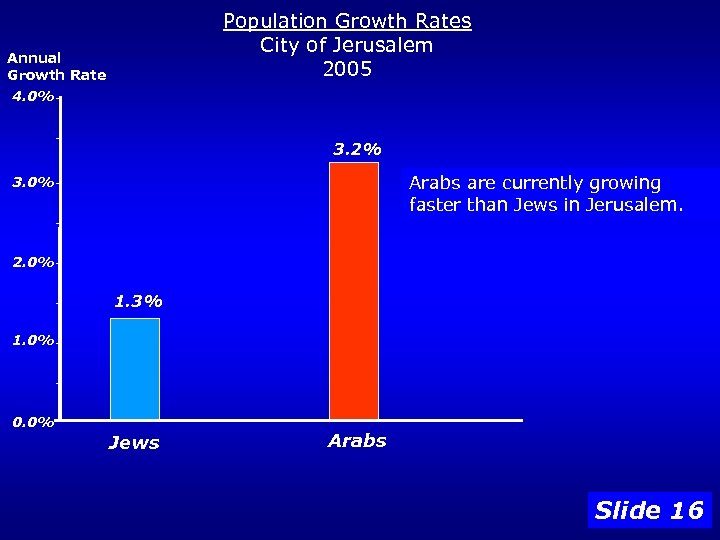
Population Growth Rates City of Jerusalem 2005 Annual Growth Rate 4. 0% 3. 2% Arabs are currently growing faster than Jews in Jerusalem. 3. 0% 2. 0% 1. 3% 1. 0% 0. 0% Jews Arabs Slide 16
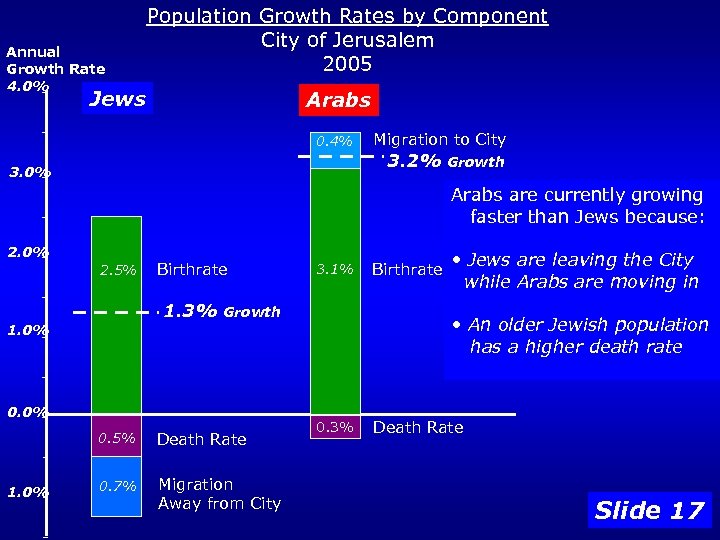
Annual Growth Rate 4. 0% Population Growth Rates by Component City of Jerusalem 2005 Jews Arabs 0. 4% Migration to City 3. 2% Growth 3. 0% Arabs are currently growing faster than Jews because: 2. 0% 2. 5% Birthrate 1. 3% Growth 1. 0% 0. 5% 1. 0% 3. 1% Death Rate 0. 7% Migration Away from City Birthrate • Jews are leaving the City while Arabs are moving in • An older Jewish population has a higher death rate 0. 3% Death Rate Slide 17
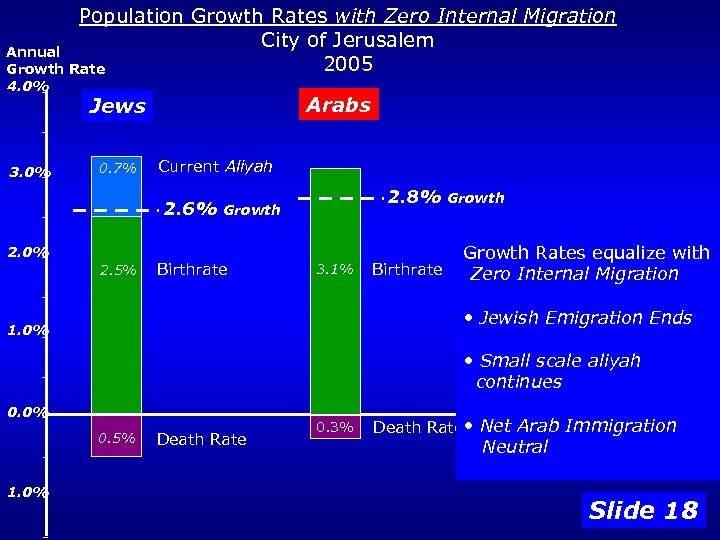
Population Growth Rates with Zero Internal Migration City of Jerusalem Annual 2005 Growth Rate 4. 0% 3. 0% Arabs Jews 0. 7% Current Aliyah 2. 8% Growth 2. 6% Growth 2. 0% 2. 5% Birthrate 3. 1% Birthrate Growth Rates equalize with Zero Internal Migration • Jewish Emigration Ends 1. 0% • Small scale aliyah continues 0. 0% 0. 5% 1. 0% Death Rate 0. 3% Death Rate • Net Arab Immigration Neutral Slide 18
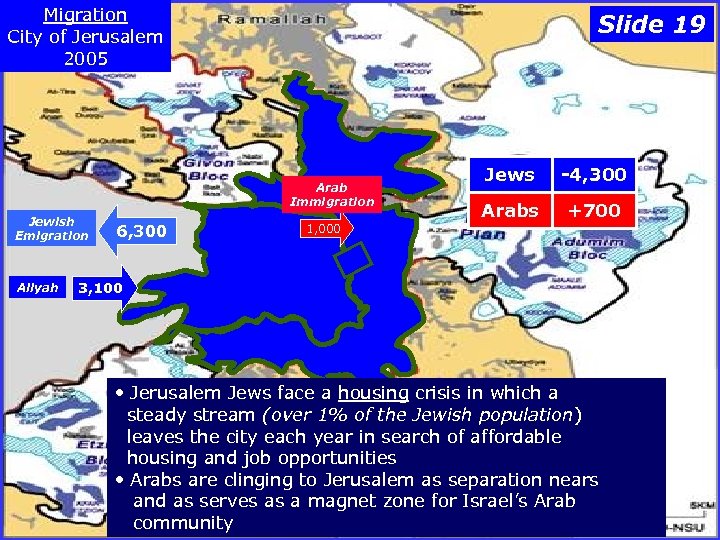
Migration City of Jerusalem 2005 Slide 19 Arab Immigration Jewish Emigration Aliyah 6, 300 1, 000 Jews -4, 300 Arabs +700 3, 100 • Jerusalem Jews face a housing crisis in which a steady stream (over 1% of the Jewish population) leaves the city each year in search of affordable housing and job opportunities • Arabs are clinging to Jerusalem as separation nears and as serves as a magnet zone for Israel’s Arab community
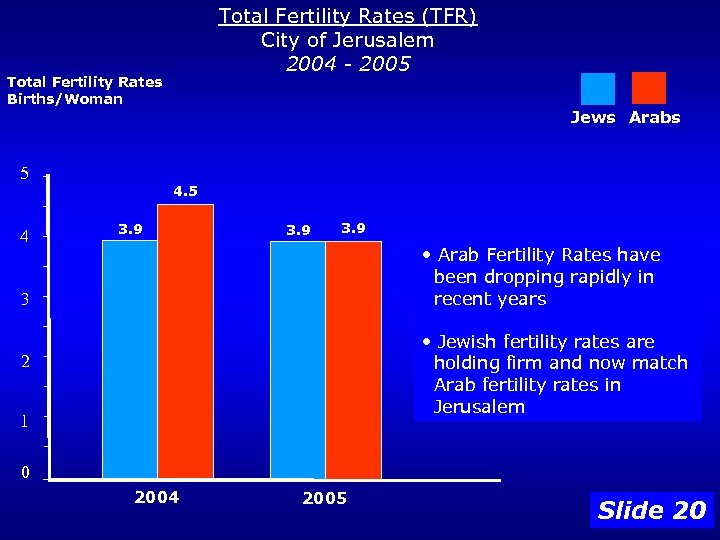
Total Fertility Rates (TFR) City of Jerusalem 2004 - 2005 Total Fertility Rates Births/Woman Jews Arabs 5 4 4. 5 3. 9 • Arab Fertility Rates have been dropping rapidly in recent years 3 • Jewish fertility rates are holding firm and now match Arab fertility rates in Jerusalem 2 1 0 2004 2005 Slide 20
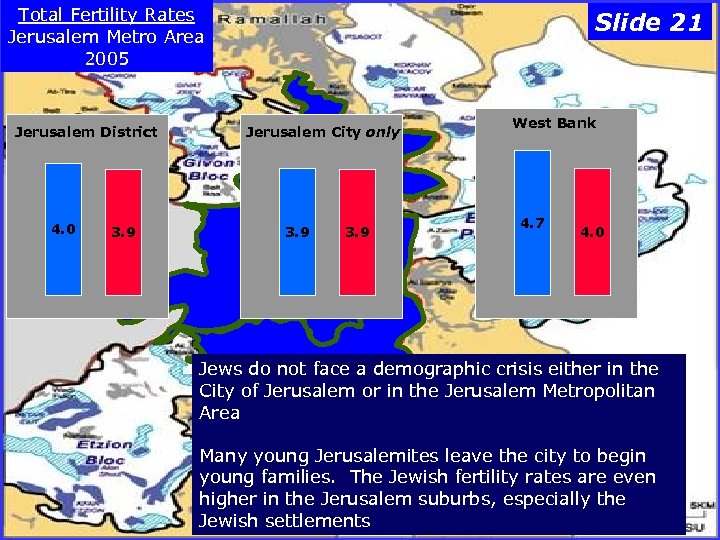
Total Fertility Rates Jerusalem Metro Area 2005 Jerusalem District 4. 0 3. 9 Slide 21 Jerusalem City only 3. 9 West Bank 4. 7 4. 0 Jews do not face a demographic crisis either in the City of Jerusalem or in the Jerusalem Metropolitan Area Many young Jerusalemites leave the city to begin young families. The Jewish fertility rates are even higher in the Jerusalem suburbs, especially the Jewish settlements
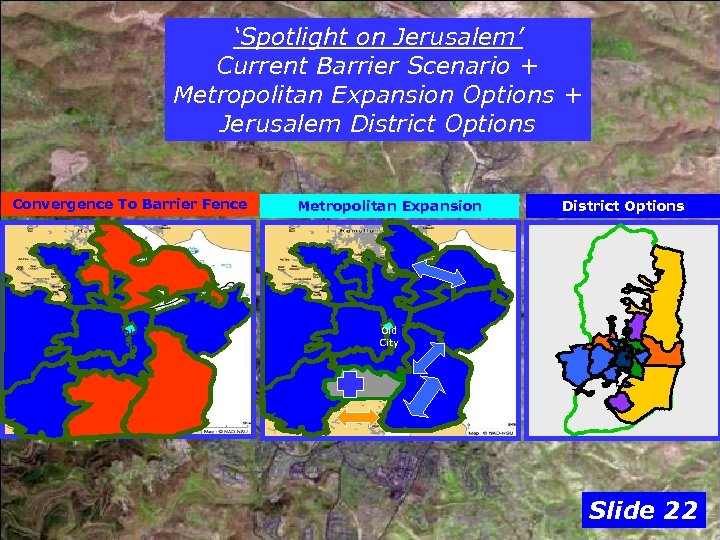
‘Spotlight on Jerusalem’ Current Barrier Scenario + Metropolitan Expansion Options + Jerusalem District Options Convergence To Barrier Fence Metropolitan Expansion Old City District Options Slide 22
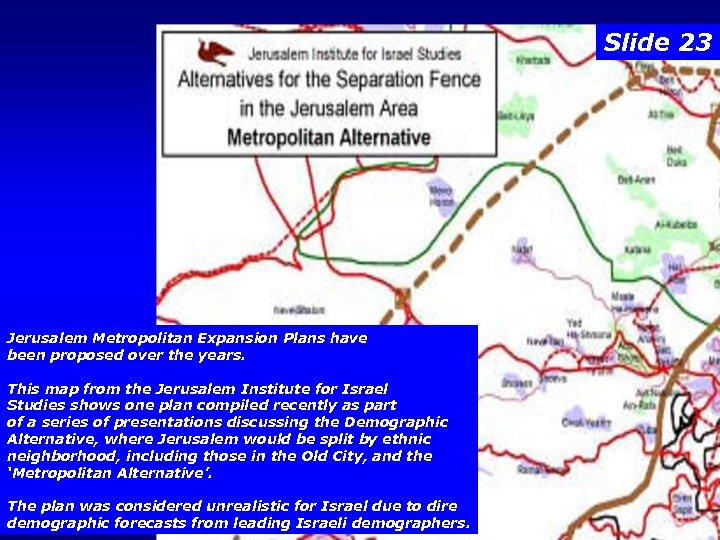
Slide 23 Jerusalem Metropolitan Expansion Plans have been proposed over the years. This map from the Jerusalem Institute for Israel Studies shows one plan compiled recently as part of a series of presentations discussing the Demographic Alternative, where Jerusalem would be split by ethnic neighborhood, including those in the Old City, and the ‘Metropolitan Alternative’. The plan was considered unrealistic for Israel due to dire demographic forecasts from leading Israeli demographers.
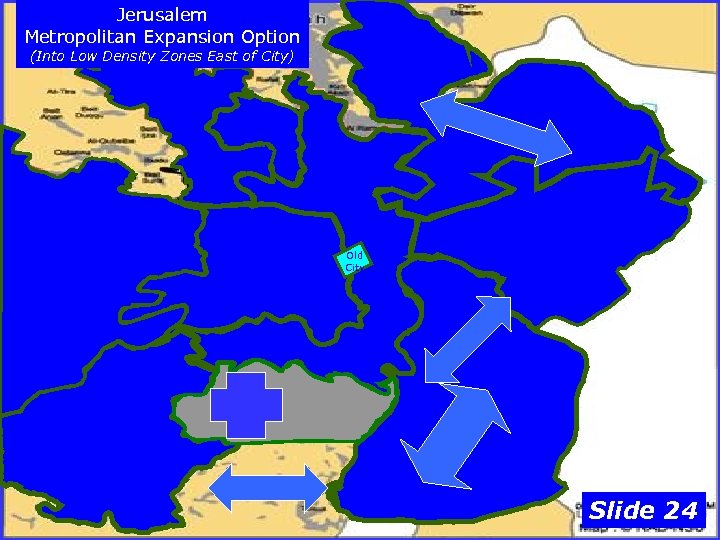
Jerusalem Metropolitan Expansion Option (Into Low Density Zones East of City) Old City Slide 24
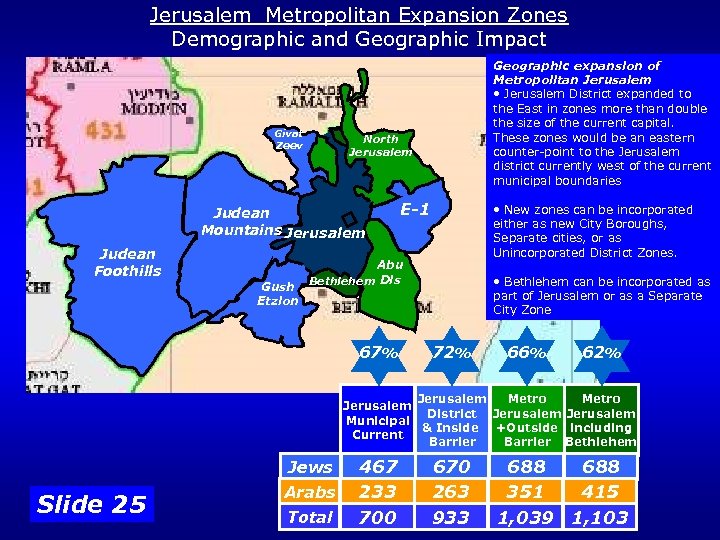
Jerusalem Metropolitan Expansion Zones Demographic and Geographic Impact Givat Zeev North Jerusalem Judean Mountains Jerusalem Judean Foothills Gush Etzion Geographic expansion of Metropolitan Jerusalem • Jerusalem District expanded to the East in zones more than double the size of the current capital. These zones would be an eastern counter-point to the Jerusalem district currently west of the current municipal boundaries E-1 • New zones can be incorporated either as new City Boroughs, Separate cities, or as Unincorporated District Zones. Abu Bethlehem Dis 67% • Bethlehem can be incorporated as part of Jerusalem or as a Separate City Zone 72% 66% 62% Jerusalem Metro Jerusalem District Jerusalem Municipal & Inside +Outside including Current Barrier Bethlehem Jews Slide 25 Arabs Total 467 233 700 670 263 933 688 351 415 1, 039 1, 103
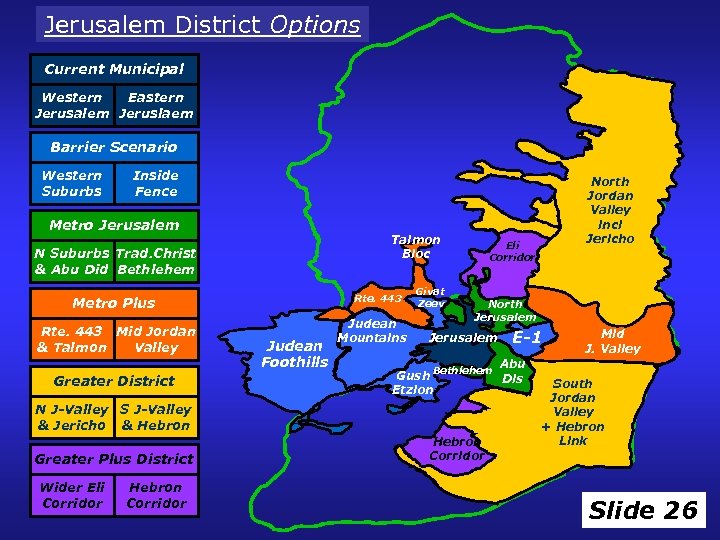
Jerusalem District Options Current Municipal Western Eastern Jerusalem Jeruslaem Barrier Scenario Western Suburbs Inside Fence Metro Jerusalem Talmon Bloc N Suburbs Trad. Christ & Abu Did Bethlehem Rte. 443 Metro Plus Rte. 443 Mid Jordan & Talmon Valley Greater District Judean Foothills Judean Mountains Givat Zeev Eli Corridor North Jerusalem Bethlehem Gush Etzion N J-Valley S J-Valley & Jericho & Hebron Greater Plus District Wider Eli Corridor Hebron Corridor North Jordan Valley incl Jericho Hebron Corridor E-1 Abu Dis Mid J. Valley South Jordan Valley + Hebron Link Slide 26
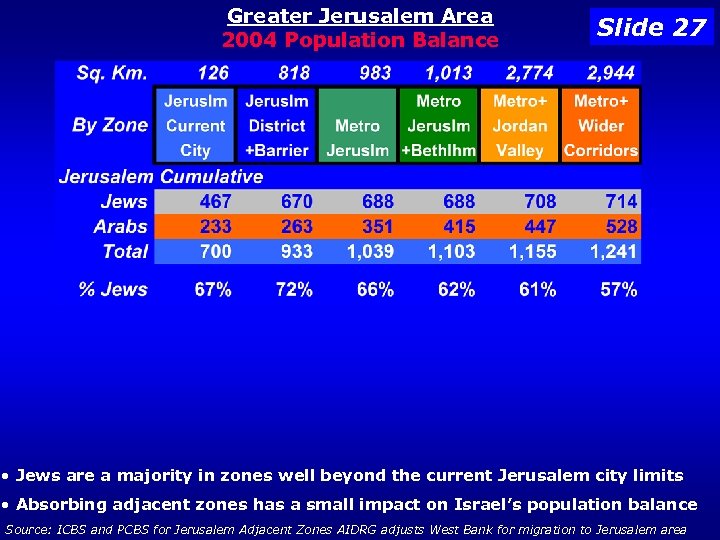
Greater Jerusalem Area 2004 Population Balance Slide 27 • Jews are a majority in zones well beyond the current Jerusalem city limits • Absorbing adjacent zones has a small impact on Israel’s population balance Source: ICBS and PCBS for Jerusalem Adjacent Zones AIDRG adjusts West Bank for migration to Jerusalem area
‘Forecast for Jerusalem 2025’ Current Barrier Scenario + Metropolitan Expansion Options + Jerusalem District Options Slide 28
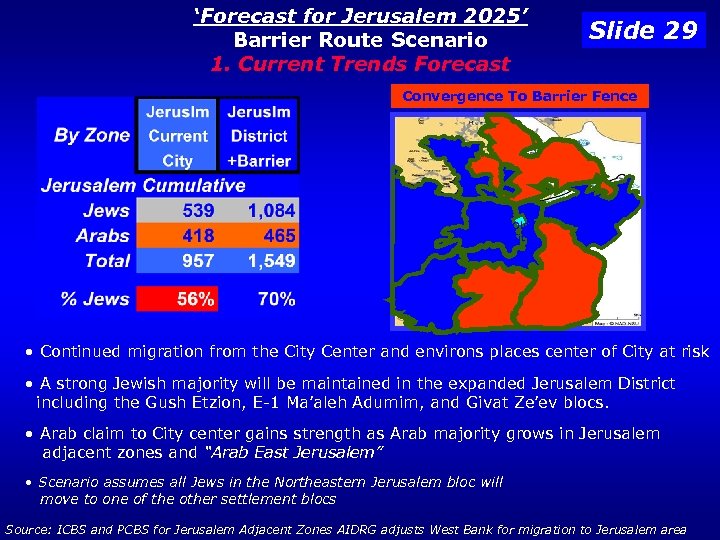
‘Forecast for Jerusalem 2025’ Barrier Route Scenario 1. Current Trends Forecast Slide 29 Convergence To Barrier Fence Old City • Continued migration from the City Center and environs places center of City at risk • A strong Jewish majority will be maintained in the expanded Jerusalem District including the Gush Etzion, E-1 Ma’aleh Adumim, and Givat Ze’ev blocs. • Arab claim to City center gains strength as Arab majority grows in Jerusalem adjacent zones and “Arab East Jerusalem” • Scenario assumes all Jews in the Northeastern Jerusalem bloc will move to one of the other settlement blocs Source: ICBS and PCBS for Jerusalem Adjacent Zones AIDRG adjusts West Bank for migration to Jerusalem area
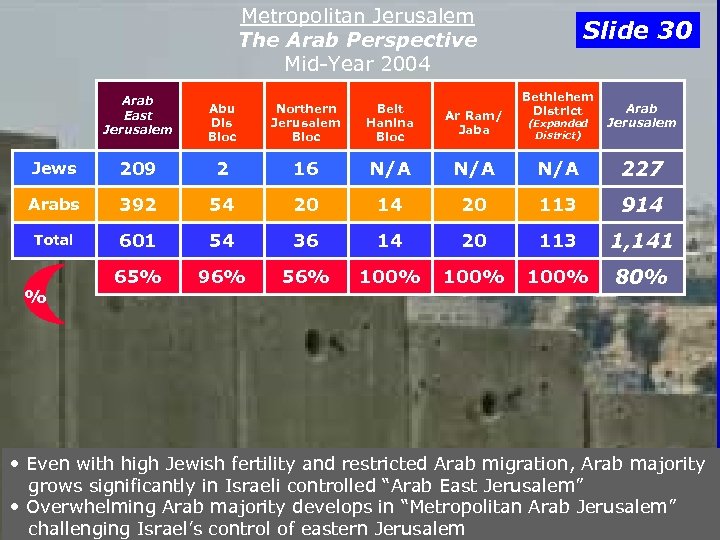
Metropolitan Jerusalem The Arab Perspective Mid-Year 2004 Arab East Jerusalem Abu Dis Bloc Northern Jerusalem Bloc Beit Hanina Bloc Ar Ram/ Jaba Slide 30 Bethlehem District (Expanded District) Arab Jerusalem Jews 209 2 16 N/A N/A 227 Arabs 392 54 20 113 914 Total 601 54 36 14 20 113 1, 141 65% 96% 56% 100% 80% % • Even with high Jewish fertility and restricted Arab migration, Arab majority grows significantly in Israeli controlled “Arab East Jerusalem” • Overwhelming Arab majority develops in “Metropolitan Arab Jerusalem” challenging Israel’s control of eastern Jerusalem
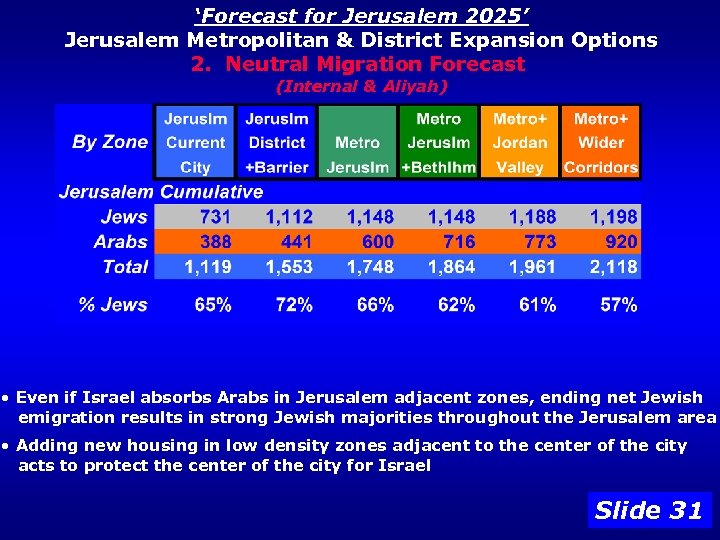
‘Forecast for Jerusalem 2025’ Jerusalem Metropolitan & District Expansion Options 2. Neutral Migration Forecast (Internal & Aliyah) • Even if Israel absorbs Arabs in Jerusalem adjacent zones, ending net Jewish emigration results in strong Jewish majorities throughout the Jerusalem area • Adding new housing in low density zones adjacent to the center of the city acts to protect the center of the city for Israel Slide 31
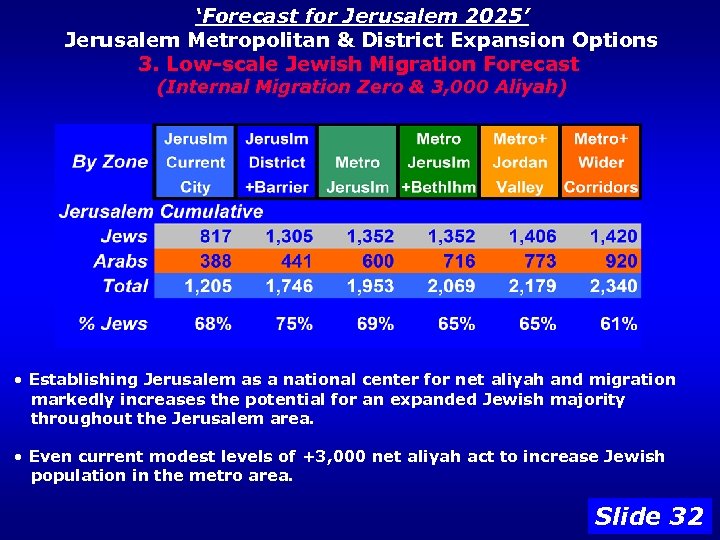
‘Forecast for Jerusalem 2025’ Jerusalem Metropolitan & District Expansion Options 3. Low-scale Jewish Migration Forecast (Internal Migration Zero & 3, 000 Aliyah) • Establishing Jerusalem as a national center for net aliyah and migration markedly increases the potential for an expanded Jewish majority throughout the Jerusalem area. • Even current modest levels of +3, 000 net aliyah act to increase Jewish population in the metro area. Slide 32
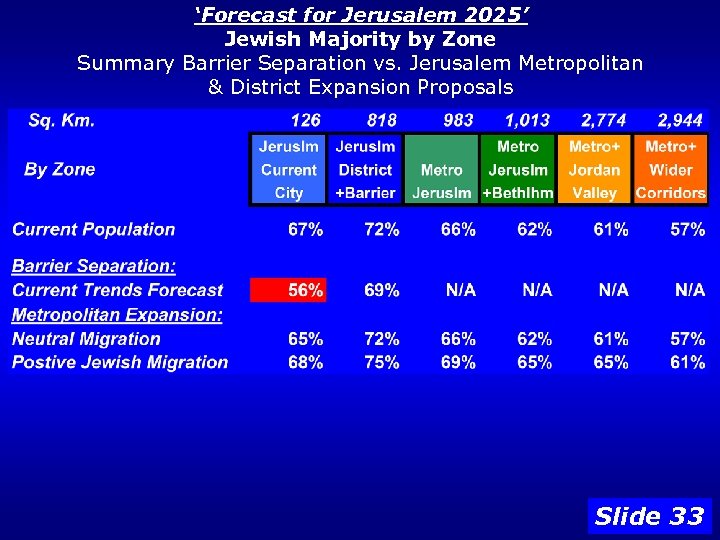
‘Forecast for Jerusalem 2025’ Jewish Majority by Zone Summary Barrier Separation vs. Jerusalem Metropolitan & District Expansion Proposals Slide 33
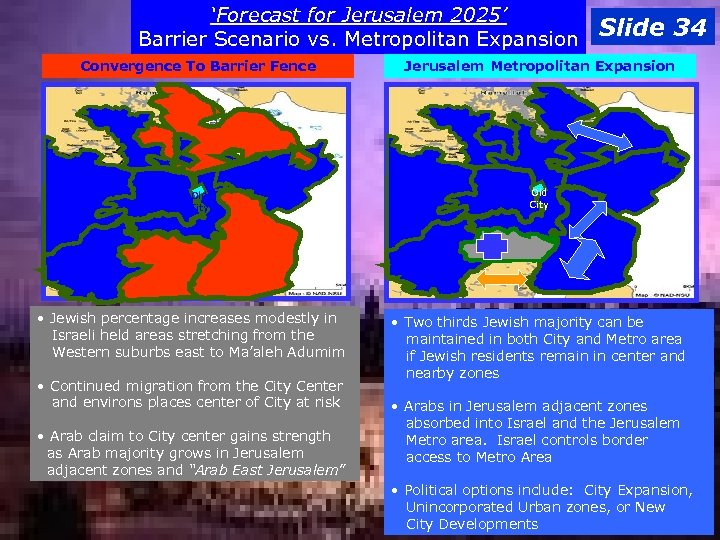
‘Forecast for Jerusalem 2025’ Barrier Scenario vs. Metropolitan Expansion Slide 34 Convergence To Barrier Fence Jerusalem Metropolitan Expansion Old City • Jewish percentage increases modestly in Israeli held areas stretching from the Western suburbs east to Ma’aleh Adumim • Continued migration from the City Center and environs places center of City at risk • Arab claim to City center gains strength as Arab majority grows in Jerusalem adjacent zones and “Arab East Jerusalem” • Two thirds Jewish majority can be maintained in both City and Metro area if Jewish residents remain in center and nearby zones • Arabs in Jerusalem adjacent zones absorbed into Israel and the Jerusalem Metro area. Israel controls border access to Metro Area • Political options include: City Expansion, Unincorporated Urban zones, or New City Developments
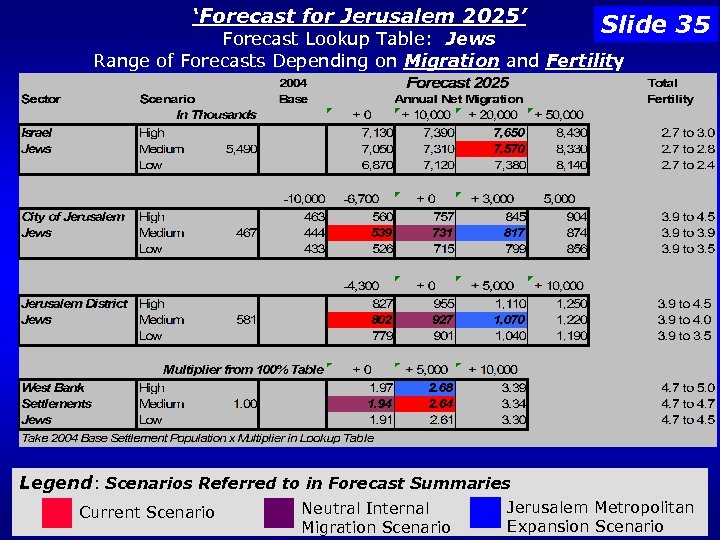
‘Forecast for Jerusalem 2025’ Slide 35 Forecast Lookup Table: Jews Range of Forecasts Depending on Migration and Fertility Legend: Scenarios Referred to in Forecast Summaries Current Scenario Neutral Internal Migration Scenario Jerusalem Metropolitan Expansion Scenario
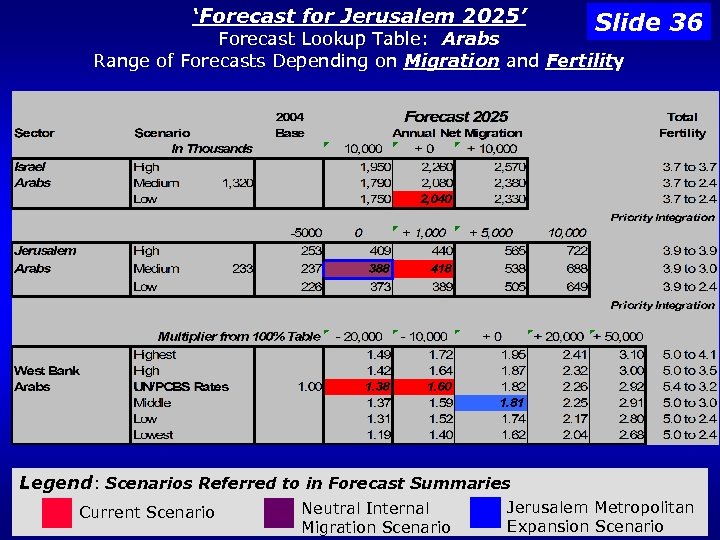
‘Forecast for Jerusalem 2025’ Slide 36 Forecast Lookup Table: Arabs Range of Forecasts Depending on Migration and Fertility Legend: Scenarios Referred to in Forecast Summaries Current Scenario Neutral Internal Migration Scenario Jerusalem Metropolitan Expansion Scenario
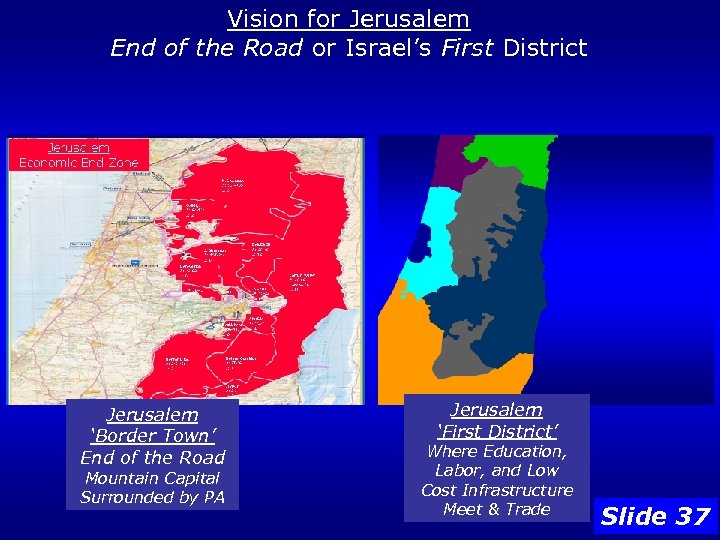
Vision for Jerusalem End of the Road or Israel’s First District Jerusalem ‘Border Town’ End of the Road Mountain Capital Surrounded by PA Jerusalem ‘First District’ Where Education, Labor, and Low Cost Infrastructure Meet & Trade Slide 37
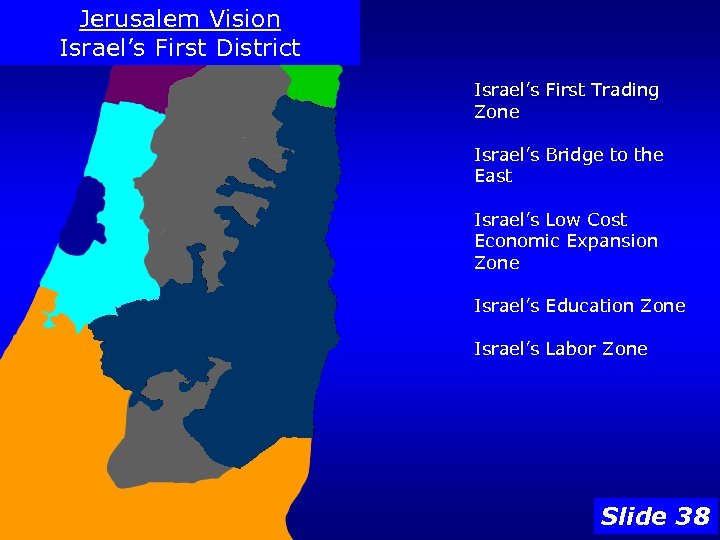
Jerusalem Vision Israel’s First District Israel’s First Trading Zone Israel’s Bridge to the East Israel’s Low Cost Economic Expansion Zone Israel’s Education Zone Israel’s Labor Zone Slide 38

Jerusalem’s Place in Israel Jerusalem Vision Future Visions Israel’s First Economic Zone Slide 39 Jerusalem needs the Jordan Valley? Why? Behind the current barrier, Jerusalem loses it’s natural economic expansion zone. No one is going to trade through Jerusalem, 2, 000 feet high, and on an unhappy border. The city will whither. Instead, Jerusalem needs to the Jordan Valley, the Dead Sea Northern Coast, and a shipping corridor to Central Israel through the Eli-Shilo-Ariel pass. Those industrial zones, in the Jordan Valley will provide many jobs for commuters from Jerusalem, and the expanded Eastern suburbs. Furthermore, because the Autonomy Zones might exist in the short intermediate or long-term, Jerusalem is given an advantage to first establish leadership in new territory while the powerful Central, Tel Aviv, and Haifa districts are unable to do so. By growing south in the Jordan Valley, Jerusalem will dominate Dead Sea industries, and be in a strong position to develop trade through future Southern routes through the Arava and beyond. Development east of the city would provide economic benefit first for Jerusalem, giving the District a much needed edge over other leading economic zones in Israel. Jerusalem needs to generate more jobs to keep the rapidly expanding population in the district.
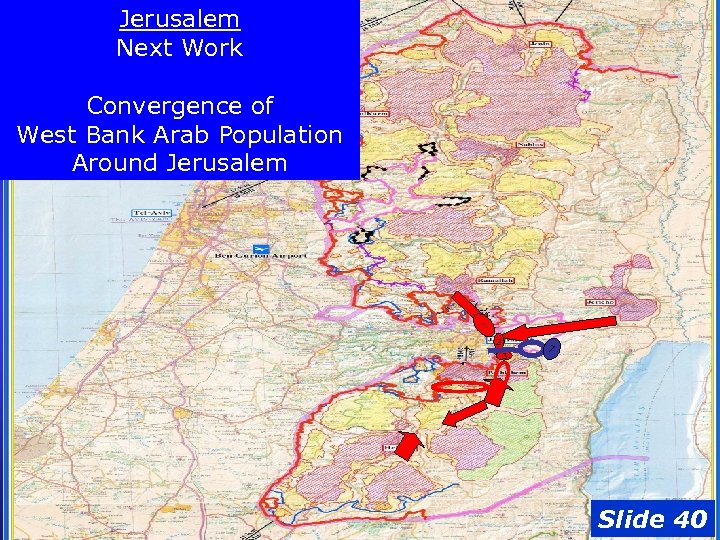
Jerusalem Next Work Analysis by West Bank Regional Population Map Bennett Zimmerman/ Roberta Seid/Michael L. Wise Convergence of West Bank Arab Population Around Jerusalem 1 2 3 7 Slide 40
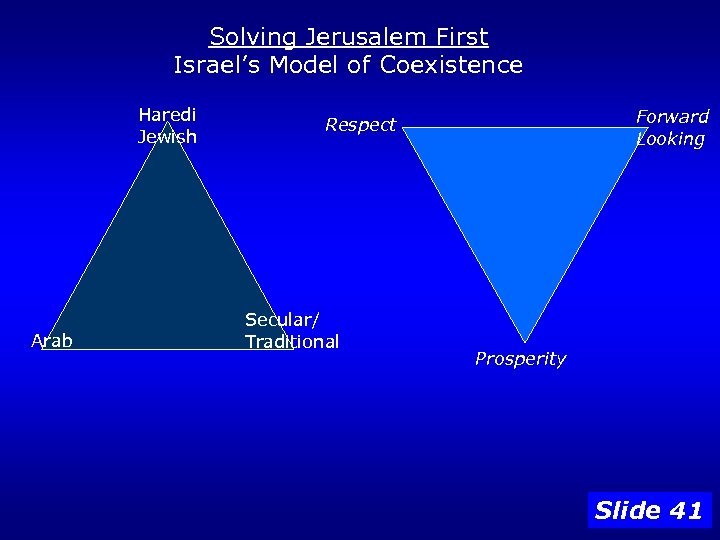
Solving Jerusalem First Israel’s Model of Coexistence Haredi Jewish Arab Forward Looking Respect Secular/ Traditional Prosperity Slide 41
Jerusalem The Eternal Capital of Israel Slide 42
Jerusalem Visions The Eternal Capital of Israel For more information and to better understand the demographics of Israel, Jerusalem and the West Bank please visit www. aidrg. com Slide 43
Скачать презентацию Spotlight on Jerusalem 2050 and Beyond American-Israel Demographic
ea0faa76bfa204aa975f9cc1868d9347.ppt