


 Скачать презентацию Sports Nutrition Research Update 2007 With Exercise Physiology
46d795f04131114a753055310c4148c8.ppt
- Количество слайдов: 105
 Sports Nutrition Research Update 2007 With Exercise Physiology and General Studies with Practical Application G. Douglas Andersen, DC, DACBSP, CCN www. anders. Enchiro. com
 Nutrient Timing Study • 17 males, aged 18 -28 with 1 to 5 years of lifting experience. • No past or current steroid history. • No supplements in 3 months prior to study. • 8 weeks prior to trial, started 4 d/wk study workout.
 Nutrient Timing Study Continued • Diets analyzed 8 -12 weeks prior and during the 10 week experiment. • Normal food patterns were established prior to and confirmed throughout. • Whole body scans, muscle biopsies and 1 rep max at the beginning and end. • Every workout done with personal trainers blinded to groups.
 Nutrient Timing Study Supplements • Protein, carbohydrates, and creatine monhydrate drink – 2 times daily on workout days. • Dosed by percent of body weight. For 80 kg (175 lb) – 270 calories - 32 gm. Protein, 34. 4 gm. Carbs, & 5. 6 gm. Creatine. • 1 group doses AM and PM on workout days. • 1 group doses Pre and Post workout days. • Both groups had the same workouts and supplements on same days, at different times.
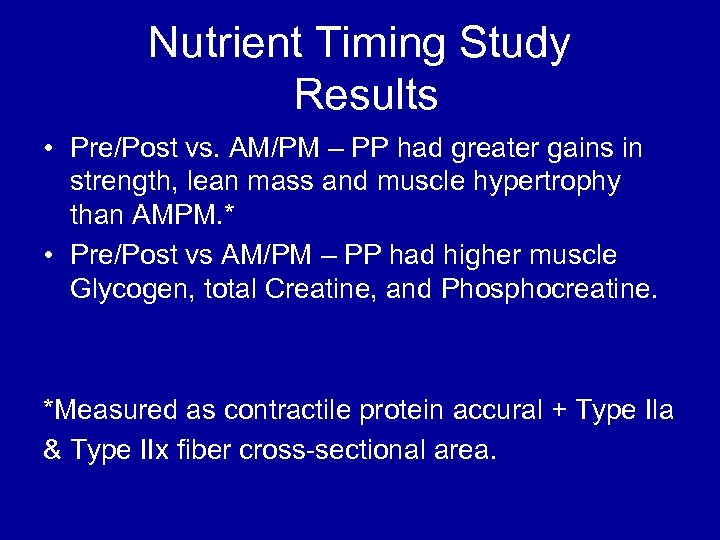 Nutrient Timing Study Results • Pre/Post vs. AM/PM – PP had greater gains in strength, lean mass and muscle hypertrophy than AMPM. * • Pre/Post vs AM/PM – PP had higher muscle Glycogen, total Creatine, and Phosphocreatine. *Measured as contractile protein accural + Type Ila & Type IIx fiber cross-sectional area.
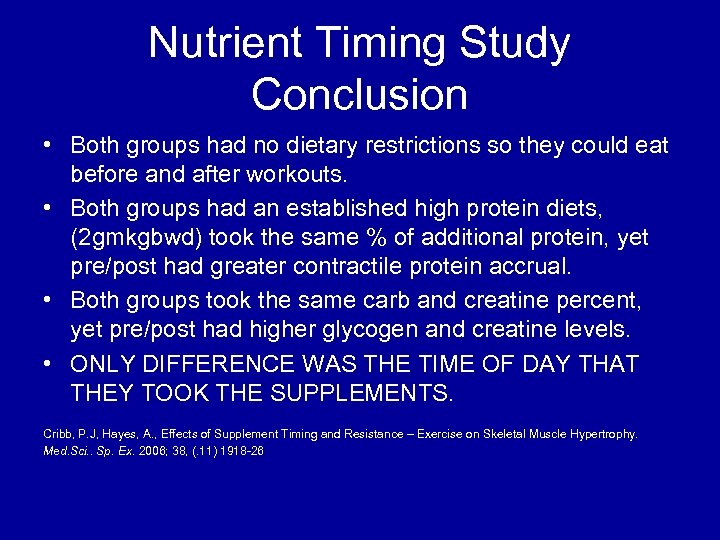 Nutrient Timing Study Conclusion • Both groups had no dietary restrictions so they could eat before and after workouts. • Both groups had an established high protein diets, (2 gmkgbwd) took the same % of additional protein, yet pre/post had greater contractile protein accrual. • Both groups took the same carb and creatine percent, yet pre/post had higher glycogen and creatine levels. • ONLY DIFFERENCE WAS THE TIME OF DAY THAT THEY TOOK THE SUPPLEMENTS. Cribb, P. J, Hayes, A. , Effects of Supplement Timing and Resistance – Exercise on Skeletal Muscle Hypertrophy. Med. Sci. . Sp. Ex. 2006; 38, (. 11) 1918 -26
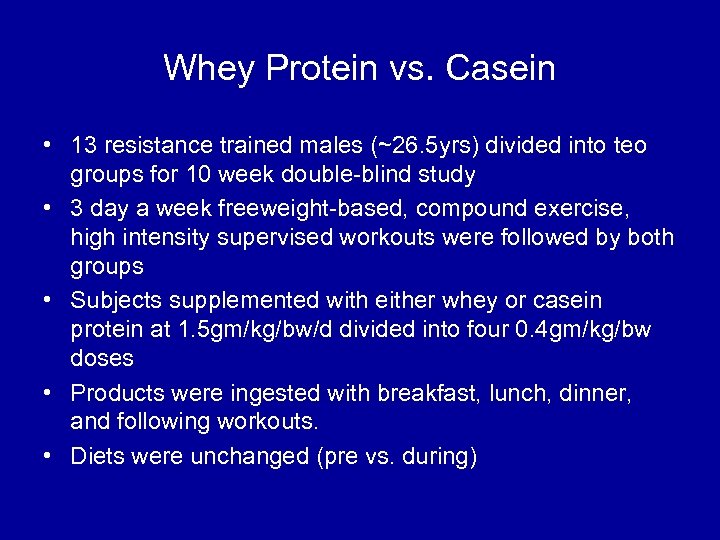 Whey Protein vs. Casein • 13 resistance trained males (~26. 5 yrs) divided into teo groups for 10 week double-blind study • 3 day a week freeweight-based, compound exercise, high intensity supervised workouts were followed by both groups • Subjects supplemented with either whey or casein protein at 1. 5 gm/kg/bw/d divided into four 0. 4 gm/kg/bw doses • Products were ingested with breakfast, lunch, dinner, and following workouts. • Diets were unchanged (pre vs. during)
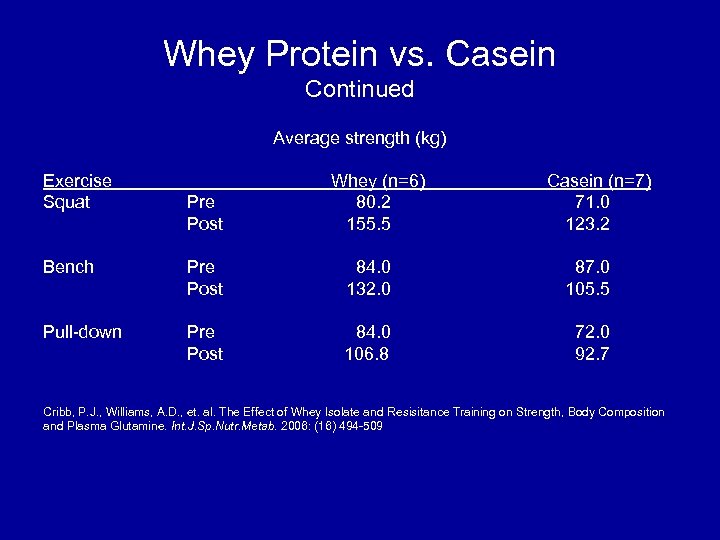 Whey Protein vs. Casein Continued Average strength (kg) Exercise Squat Pre Post Whey (n=6) 80. 2 155. 5 Casein (n=7) 71. 0 123. 2 Bench Pre Post 84. 0 132. 0 87. 0 105. 5 Pull-down Pre Post 84. 0 106. 8 72. 0 92. 7 Cribb, P. J. , Williams, A. D. , et. al. The Effect of Whey Isolate and Resisitance Training on Strength, Body Composition and Plasma Glutamine. Int. J. Sp. Nutr. Metab. 2006: (16) 494 -509
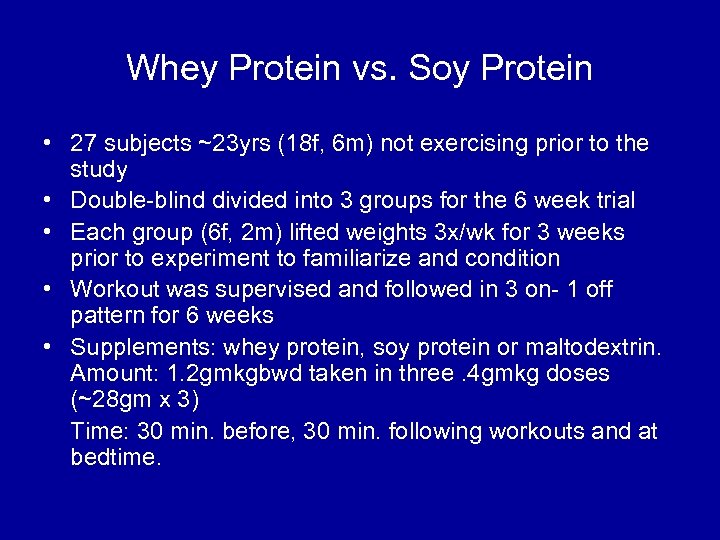 Whey Protein vs. Soy Protein • 27 subjects ~23 yrs (18 f, 6 m) not exercising prior to the study • Double-blind divided into 3 groups for the 6 week trial • Each group (6 f, 2 m) lifted weights 3 x/wk for 3 weeks prior to experiment to familiarize and condition • Workout was supervised and followed in 3 on- 1 off pattern for 6 weeks • Supplements: whey protein, soy protein or maltodextrin. Amount: 1. 2 gmkgbwd taken in three. 4 gmkg doses (~28 gm x 3) Time: 30 min. before, 30 min. following workouts and at bedtime.
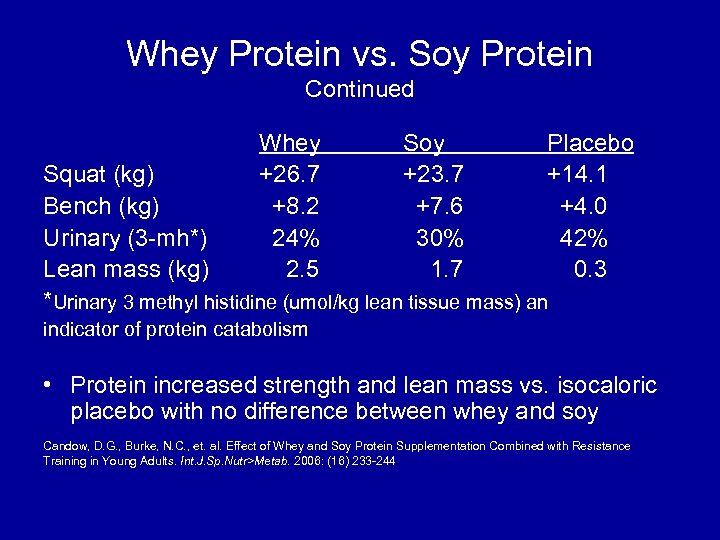 Whey Protein vs. Soy Protein Continued Whey +26. 7 +8. 2 24% 2. 5 Soy +23. 7 +7. 6 30% 1. 7 Placebo +14. 1 +4. 0 42% 0. 3 Squat (kg) Bench (kg) Urinary (3 -mh*) Lean mass (kg) *Urinary 3 methyl histidine (umol/kg lean tissue mass) an indicator of protein catabolism • Protein increased strength and lean mass vs. isocaloric placebo with no difference between whey and soy Candow, D. G. , Burke, N. C. , et. al. Effect of Whey and Soy Protein Supplementation Combined with Resistance Training in Young Adults. Int. J. Sp. Nutr>Metab. 2006: (16) 233 -244
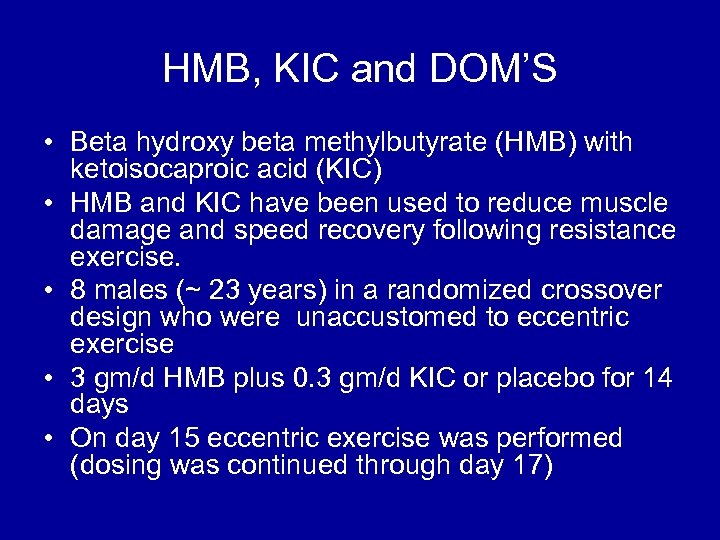 HMB, KIC and DOM’S • Beta hydroxy beta methylbutyrate (HMB) with ketoisocaproic acid (KIC) • HMB and KIC have been used to reduce muscle damage and speed recovery following resistance exercise. • 8 males (~ 23 years) in a randomized crossover design who were unaccustomed to eccentric exercise • 3 gm/d HMB plus 0. 3 gm/d KIC or placebo for 14 days • On day 15 eccentric exercise was performed (dosing was continued through day 17)
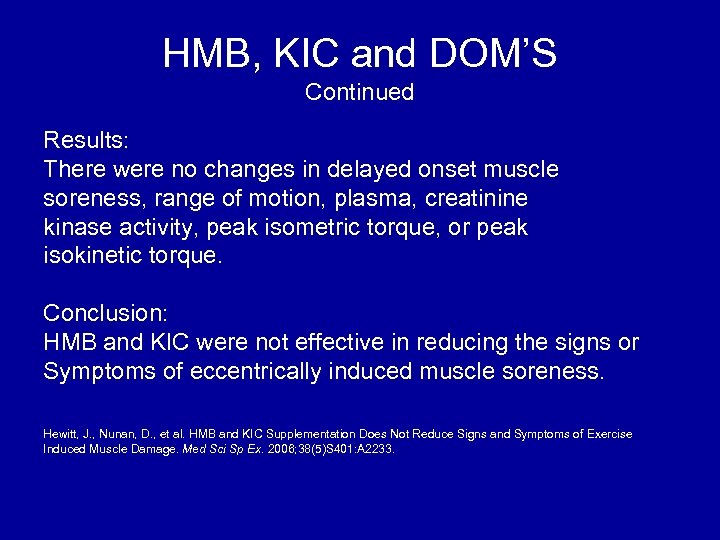 HMB, KIC and DOM’S Continued Results: There were no changes in delayed onset muscle soreness, range of motion, plasma, creatinine kinase activity, peak isometric torque, or peak isokinetic torque. Conclusion: HMB and KIC were not effective in reducing the signs or Symptoms of eccentrically induced muscle soreness. Hewitt, J. , Nunan, D. , et al. HMB and KIC Supplementation Does Not Reduce Signs and Symptoms of Exercise Induced Muscle Damage. Med Sci Sp Ex. 2006; 38(5)S 401: A 2233.
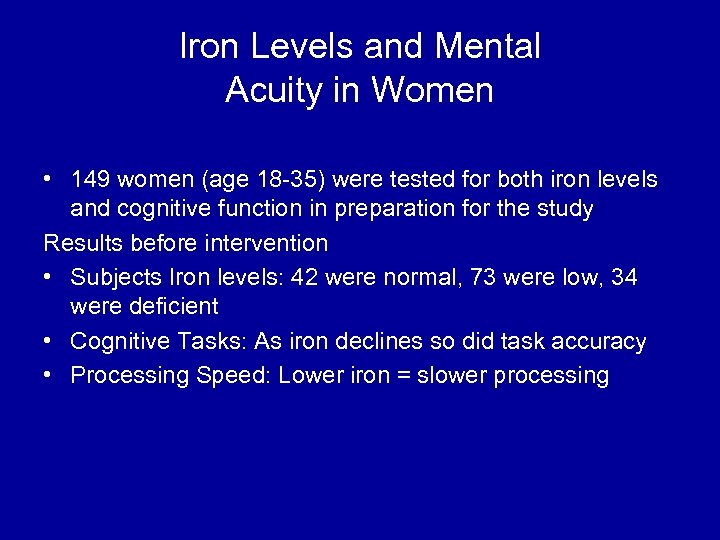 Iron Levels and Mental Acuity in Women • 149 women (age 18 -35) were tested for both iron levels and cognitive function in preparation for the study Results before intervention • Subjects Iron levels: 42 were normal, 73 were low, 34 were deficient • Cognitive Tasks: As iron declines so did task accuracy • Processing Speed: Lower iron = slower processing
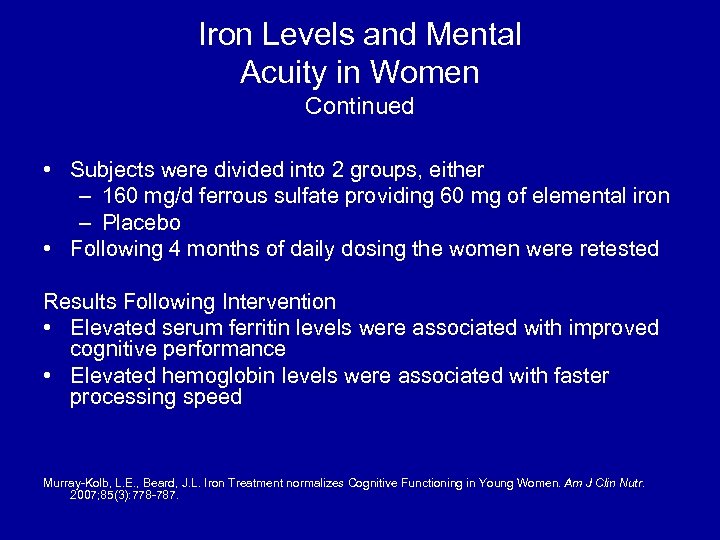 Iron Levels and Mental Acuity in Women Continued • Subjects were divided into 2 groups, either – 160 mg/d ferrous sulfate providing 60 mg of elemental iron – Placebo • Following 4 months of daily dosing the women were retested Results Following Intervention • Elevated serum ferritin levels were associated with improved cognitive performance • Elevated hemoglobin levels were associated with faster processing speed Murray-Kolb, L. E. , Beard, J. L. Iron Treatment normalizes Cognitive Functioning in Young Women. Am J Clin Nutr. 2007; 85(3): 778 -787.
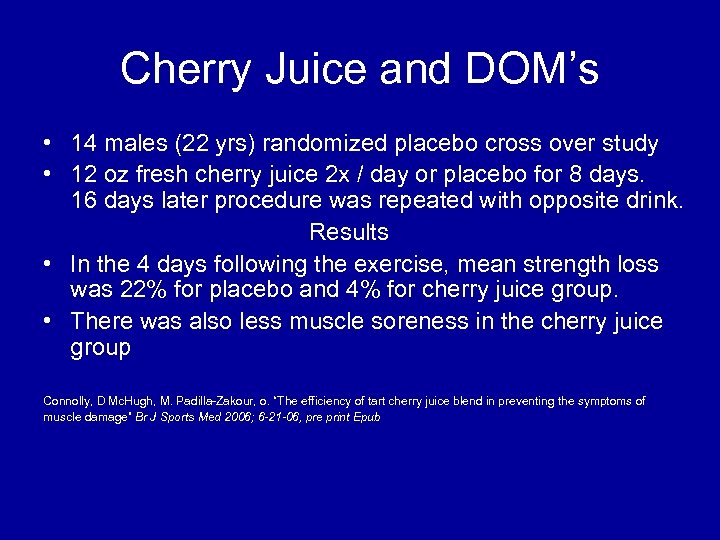 Cherry Juice and DOM’s • 14 males (22 yrs) randomized placebo cross over study • 12 oz fresh cherry juice 2 x / day or placebo for 8 days. 16 days later procedure was repeated with opposite drink. Results • In the 4 days following the exercise, mean strength loss was 22% for placebo and 4% for cherry juice group. • There was also less muscle soreness in the cherry juice group Connolly, D Mc. Hugh, M. Padilla-Zakour, o. “The efficiency of tart cherry juice blend in preventing the symptoms of muscle damage” Br J Sports Med 2006; 6 -21 -06, pre print Epub
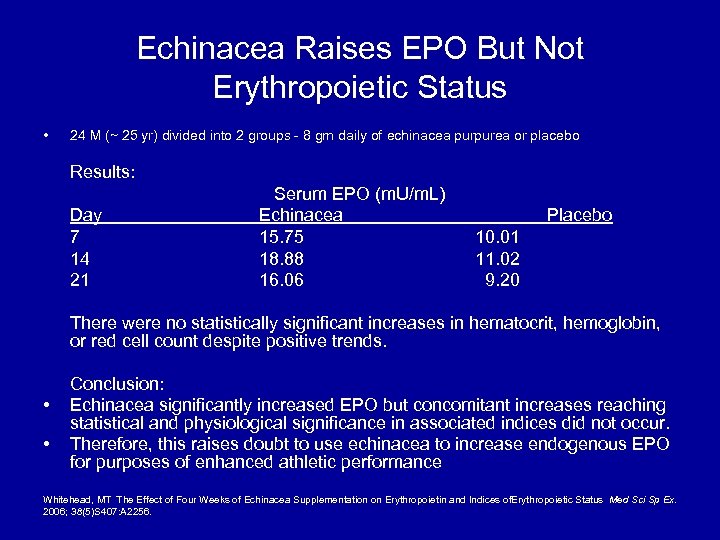 Echinacea Raises EPO But Not Erythropoietic Status • 24 M (~ 25 yr) divided into 2 groups - 8 gm daily of echinacea purpurea or placebo Results: Day 7 14 21 Serum EPO (m. U/m. L) Echinacea 15. 75 18. 88 16. 06 Placebo 10. 01 11. 02 9. 20 There were no statistically significant increases in hematocrit, hemoglobin, or red cell count despite positive trends. • • Conclusion: Echinacea significantly increased EPO but concomitant increases reaching statistical and physiological significance in associated indices did not occur. Therefore, this raises doubt to use echinacea to increase endogenous EPO for purposes of enhanced athletic performance Whitehead, MT The Effect of Four Weeks of Echinacea Supplementation on Erythropoietin and Indices of rythropoietic Status Med Sci Sp Ex. E 2006; 38(5)S 407: A 2256.
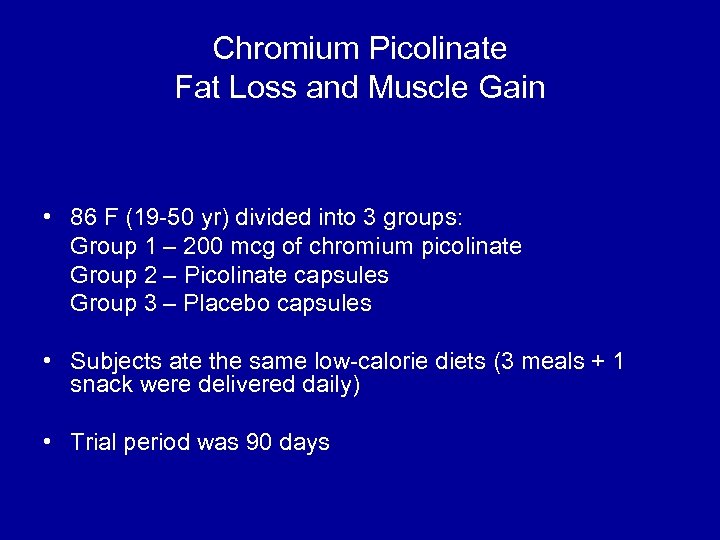 Chromium Picolinate Fat Loss and Muscle Gain • 86 F (19 -50 yr) divided into 3 groups: Group 1 – 200 mcg of chromium picolinate Group 2 – Picolinate capsules Group 3 – Placebo capsules • Subjects ate the same low-calorie diets (3 meals + 1 snack were delivered daily) • Trial period was 90 days
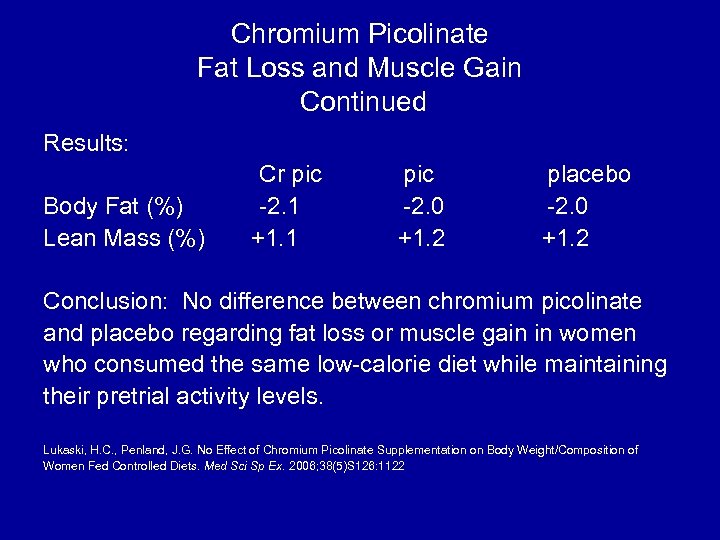 Chromium Picolinate Fat Loss and Muscle Gain Continued Results: Cr pic Body Fat (%) -2. 1 -2. 0 Lean Mass (%) +1. 1 +1. 2 placebo -2. 0 +1. 2 Conclusion: No difference between chromium picolinate and placebo regarding fat loss or muscle gain in women who consumed the same low-calorie diet while maintaining their pretrial activity levels. Lukaski, H. C. , Penland, J. G. No Effect of Chromium Picolinate Supplementation on Body Weight/Composition of Women Fed Controlled Diets. Med Sci Sp Ex. 2006; 38(5)S 126: 1122
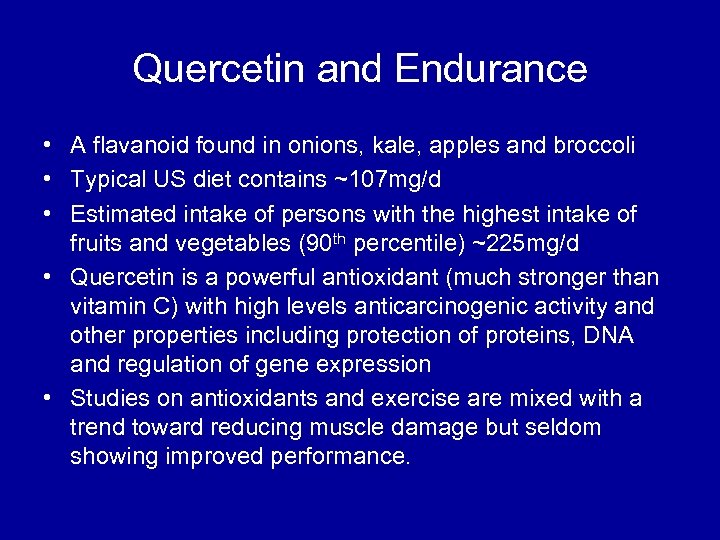 Quercetin and Endurance • A flavanoid found in onions, kale, apples and broccoli • Typical US diet contains ~107 mg/d • Estimated intake of persons with the highest intake of fruits and vegetables (90 th percentile) ~225 mg/d • Quercetin is a powerful antioxidant (much stronger than vitamin C) with high levels anticarcinogenic activity and other properties including protection of proteins, DNA and regulation of gene expression • Studies on antioxidants and exercise are mixed with a trend toward reducing muscle damage but seldom showing improved performance.
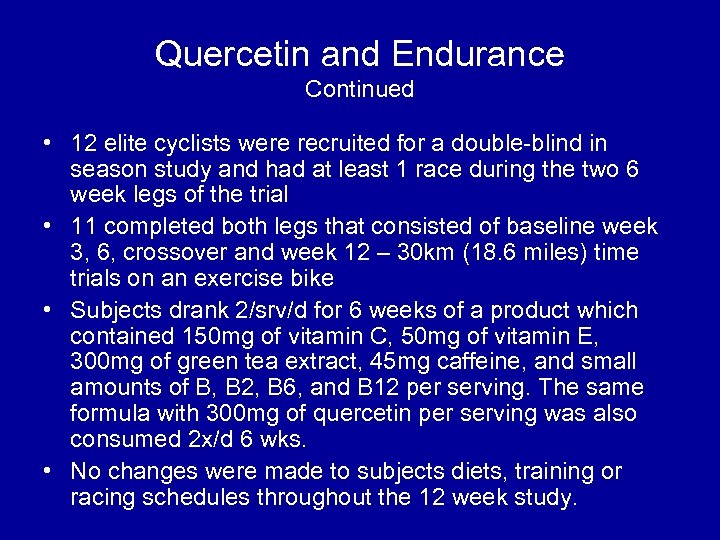 Quercetin and Endurance Continued • 12 elite cyclists were recruited for a double-blind in season study and had at least 1 race during the two 6 week legs of the trial • 11 completed both legs that consisted of baseline week 3, 6, crossover and week 12 – 30 km (18. 6 miles) time trials on an exercise bike • Subjects drank 2/srv/d for 6 weeks of a product which contained 150 mg of vitamin C, 50 mg of vitamin E, 300 mg of green tea extract, 45 mg caffeine, and small amounts of B, B 2, B 6, and B 12 per serving. The same formula with 300 mg of quercetin per serving was also consumed 2 x/d 6 wks. • No changes were made to subjects diets, training or racing schedules throughout the 12 week study.
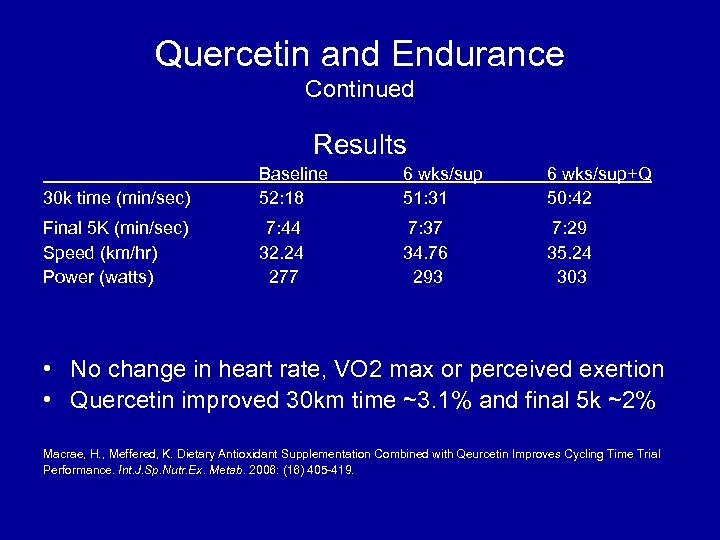 Quercetin and Endurance Continued Results 30 k time (min/sec) Final 5 K (min/sec) Speed (km/hr) Power (watts) Baseline 52: 18 6 wks/sup 51: 31 6 wks/sup+Q 50: 42 7: 44 7: 37 34. 76 293 7: 29 35. 24 303 32. 24 277 • No change in heart rate, VO 2 max or perceived exertion • Quercetin improved 30 km time ~3. 1% and final 5 k ~2% Macrae, H. , Meffered, K. Dietary Antioxidant Supplementation Combined with Qeurcetin Improves Cycling Time Trial Performance. Int. J. Sp. Nutr. Ex. Metab. 2006: (16) 405 -419.
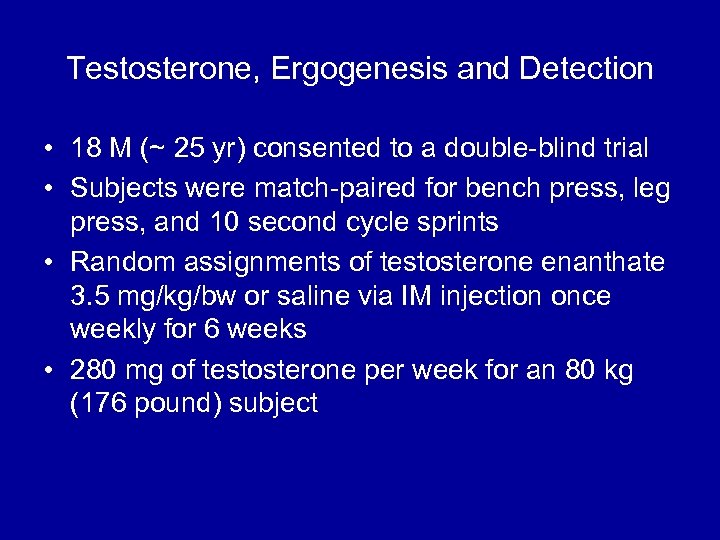 Testosterone, Ergogenesis and Detection • 18 M (~ 25 yr) consented to a double-blind trial • Subjects were match-paired for bench press, leg press, and 10 second cycle sprints • Random assignments of testosterone enanthate 3. 5 mg/kg/bw or saline via IM injection once weekly for 6 weeks • 280 mg of testosterone per week for an 80 kg (176 pound) subject
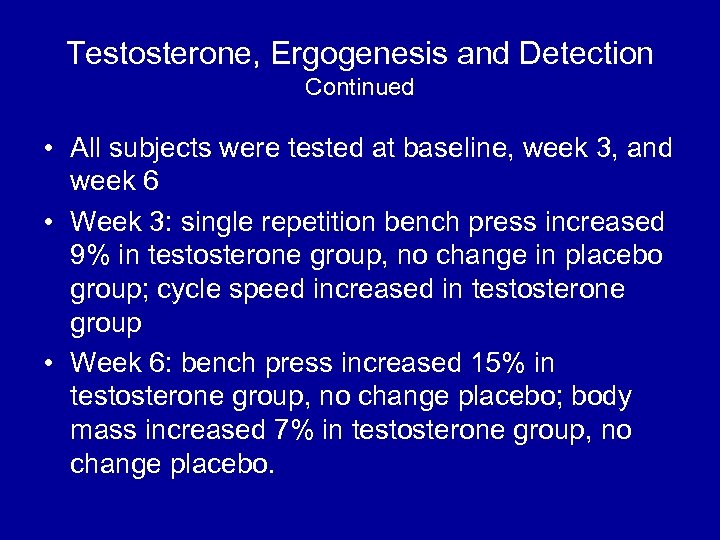 Testosterone, Ergogenesis and Detection Continued • All subjects were tested at baseline, week 3, and week 6 • Week 3: single repetition bench press increased 9% in testosterone group, no change in placebo group; cycle speed increased in testosterone group • Week 6: bench press increased 15% in testosterone group, no change placebo; body mass increased 7% in testosterone group, no change placebo.
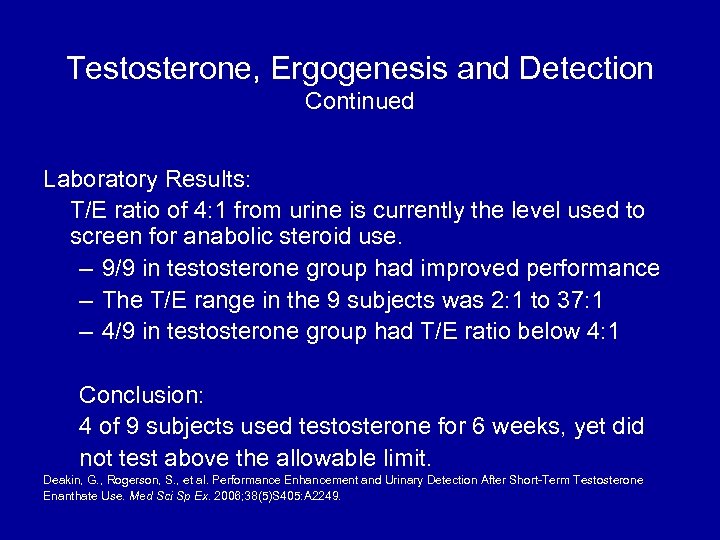 Testosterone, Ergogenesis and Detection Continued Laboratory Results: T/E ratio of 4: 1 from urine is currently the level used to screen for anabolic steroid use. – 9/9 in testosterone group had improved performance – The T/E range in the 9 subjects was 2: 1 to 37: 1 – 4/9 in testosterone group had T/E ratio below 4: 1 Conclusion: 4 of 9 subjects used testosterone for 6 weeks, yet did not test above the allowable limit. Deakin, G. , Rogerson, S. , et al. Performance Enhancement and Urinary Detection After Short-Term Testosterone Enanthate Use. Med Sci Sp Ex. 2006; 38(5)S 405: A 2249.
 Creatine Use & Free Radicals • • • 29 M (~ 17 yr) divided into 3 groups: creatine 10, placebo 10, control 9 32 days of either creatine or placebo supplementation while undergoing a resistance training program Pre and post testing included oxidative stress, total antioxidant status, uric acid, and bench press maximum Results: • Bench press increase averaged 10 kg (22 lb) in creatine group compared to placebo or control • Total antioxidant status decreased in creatine group 1. 11 vs 0. 6 mmol/l in placebo • Conclusion: Strength gains caused by creatine may tax antioxidant system by enhancing the ability to perform work thus exceeding reserves Conte, M. , Percario, S. , et al. Increase of Free Radical Production in Athletes Undergone Creatine Supplementation and Resistance Training. Med Sci Sp Ex. 2006; 38(5)S 405: A 2250
 Amino Acid Muscle Uptake • 9 seniors (5 F, 4 M; ~ 68 years) ingested 7 gm of essential amino acids • 10 seniors (3 F, 7 M; ~ 67 years) ingested 15 gm of whey protein which also contained 7 gm of essential amino acids. • Phenylalanine was measured before and 3. 5 hours following ingestion via leg muscle biopsy and femoral arteriovenous blood draw
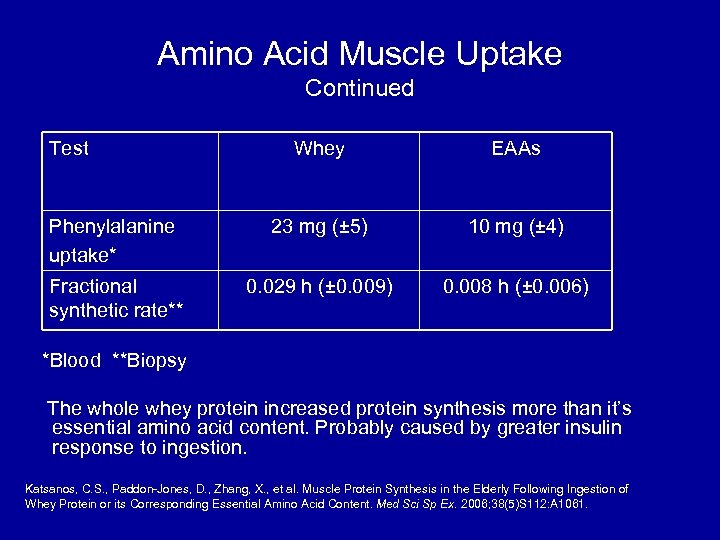 Amino Acid Muscle Uptake Continued Test Whey EAAs Phenylalanine uptake* 23 mg (± 5) 10 mg (± 4) Fractional synthetic rate** 0. 029 h (± 0. 009) 0. 008 h (± 0. 006) *Blood **Biopsy The whole whey protein increased protein synthesis more than it’s essential amino acid content. Probably caused by greater insulin response to ingestion. Katsanos, C. S. , Paddon-Jones, D. , Zhang, X. , et al. Muscle Protein Synthesis in the Elderly Following Ingestion of Whey Protein or its Corresponding Essential Amino Acid Content. Med Sci Sp Ex. 2006; 38(5)S 112: A 1061.
 Intramuscular Buffering with Beta-Alanine • Carnosine is a dipeptide synthesized from Histidine and Beta-Alanine • Beta-Alanine is the rate-limiting substrate in Carnosine synthesis • Beta-alanine ingestion will increase muscle Carnosine levels • 20 subjects (~ 25 years) took 2 weeks of Beta-Alanine or placebo • Dosed at 1. 6 gm with ~ 50 gm carbohydrate 4 x/d (6. 4 gm total) • Muscle endurance was measured by the time subjects could maintain an isometric leg extension
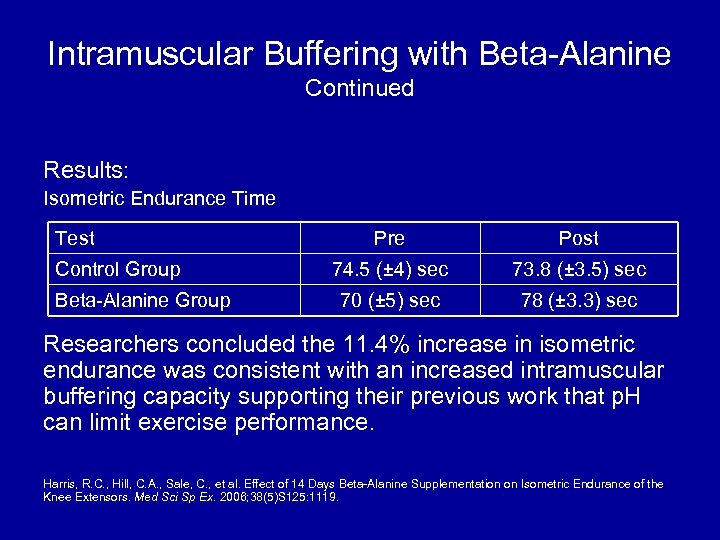 Intramuscular Buffering with Beta-Alanine Continued Results: Isometric Endurance Time Test Control Group Beta-Alanine Group Pre Post 74. 5 (± 4) sec 73. 8 (± 3. 5) sec 70 (± 5) sec 78 (± 3. 3) sec Researchers concluded the 11. 4% increase in isometric endurance was consistent with an increased intramuscular buffering capacity supporting their previous work that p. H can limit exercise performance. Harris, R. C. , Hill, C. A. , Sale, C. , et al. Effect of 14 Days Beta-Alanine Supplementation on Isometric Endurance of the Knee Extensors. Med Sci Sp Ex. 2006; 38(5)S 125: 1119.
 Taurine and Endurance • Taurine is the second most abundant free amino acid in muscle • A common ingredient in energy drinks, made from cysteine • Best understood for its role in bile formation • Possesses antioxidant, hypotensive, detoxifying capabilities • May slow the breakdown of hyaluronic acid • Small studies show improved energy in congestive heart failure patients
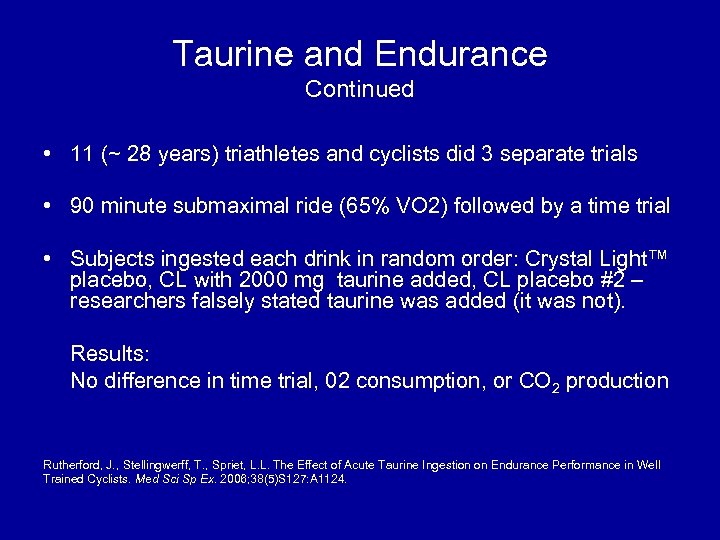 Taurine and Endurance Continued • 11 (~ 28 years) triathletes and cyclists did 3 separate trials • 90 minute submaximal ride (65% VO 2) followed by a time trial • Subjects ingested each drink in random order: Crystal Light™ placebo, CL with 2000 mg taurine added, CL placebo #2 – researchers falsely stated taurine was added (it was not). Results: No difference in time trial, 02 consumption, or CO 2 production Rutherford, J. , Stellingwerff, T. , Spriet, L. L. The Effect of Acute Taurine Ingestion on Endurance Performance in Well Trained Cyclists. Med Sci Sp Ex. 2006; 38(5)S 127: A 1124.
 Branch Chain Amino Acids and Fatigue • Central fatigue hypothesis contends that a high tryptophan to BCAA ratio can contribute to fatigue • 8 untrained men (30 -48 yr) were tested on 2 occasions • An exercise bike ride of 4 hours (or until exhaustion) at 50% VO 2 max was performed and repeated 1 month later • 8 gm of branch chain amino acids in 1 liter of fluid or a zero calorie placebo beverage was consumed throughout the ride
 Branch Chain Amino Acids and Fatigue Continued • Plasma BCAA concentration increased when BCAAs were ingested • Free tryptophan to BCAA ratio was reduced • There was no change in exercise time • Subjective fatigue was lower with BCAAs than placebo Yoshida, M. , Tanaka, H. , et al. Effects of BCAA Supplementation on Plasma Amino Acids and Subjective Fatigue and Muscle Soreness During Low-Intensity Prolonged Exercise. Med Sci Sp Ex. 2006; 38(5)S 404: A 2246
 Vitamin C and EIA • 8 subjects with exercise-induced asthma (EIA) consented to this trial • 1500 mg of vitamin C or placebo was taken for 2 weeks • Following a one-week washout, protocol was repeated with the opposite treatment • Procedure: pre and post-exercise pulmonary function was evaluated, pre and post-exercise urine samples were assayed for proinflammatory chemicals, and pre- and post-exercise exhaled breath nitric oxide was measured
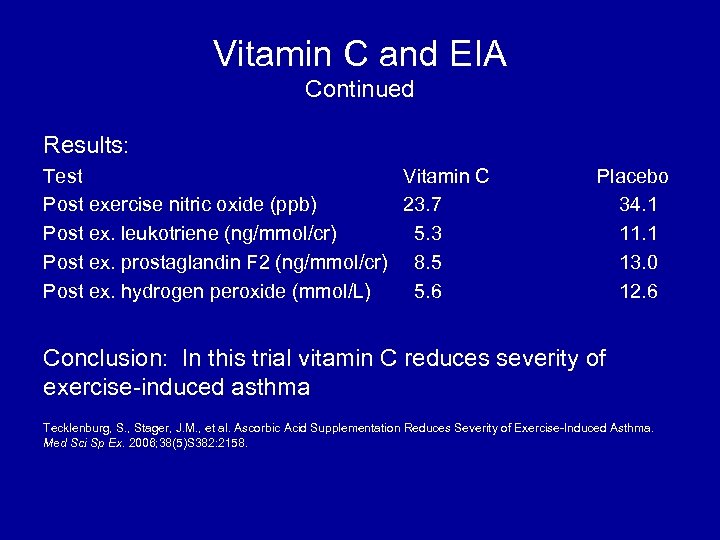 Vitamin C and EIA Continued Results: Test Post exercise nitric oxide (ppb) Post ex. leukotriene (ng/mmol/cr) Post ex. prostaglandin F 2 (ng/mmol/cr) Post ex. hydrogen peroxide (mmol/L) Vitamin C 23. 7 5. 3 8. 5 5. 6 Placebo 34. 1 11. 1 13. 0 12. 6 Conclusion: In this trial vitamin C reduces severity of exercise-induced asthma Tecklenburg, S. , Stager, J. M. , et al. Ascorbic Acid Supplementation Reduces Severity of Exercise-Induced Asthma. Med Sci Sp Ex. 2006; 38(5)S 382: 2158.
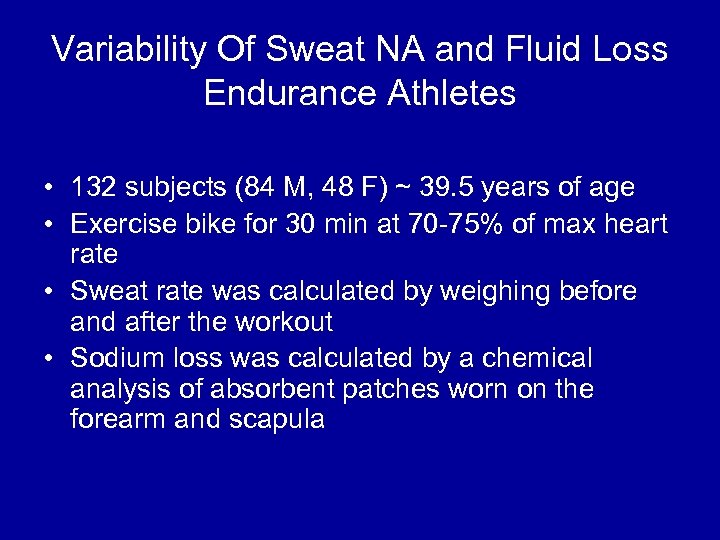 Variability Of Sweat NA and Fluid Loss Endurance Athletes • 132 subjects (84 M, 48 F) ~ 39. 5 years of age • Exercise bike for 30 min at 70 -75% of max heart rate • Sweat rate was calculated by weighing before and after the workout • Sodium loss was calculated by a chemical analysis of absorbent patches worn on the forearm and scapula
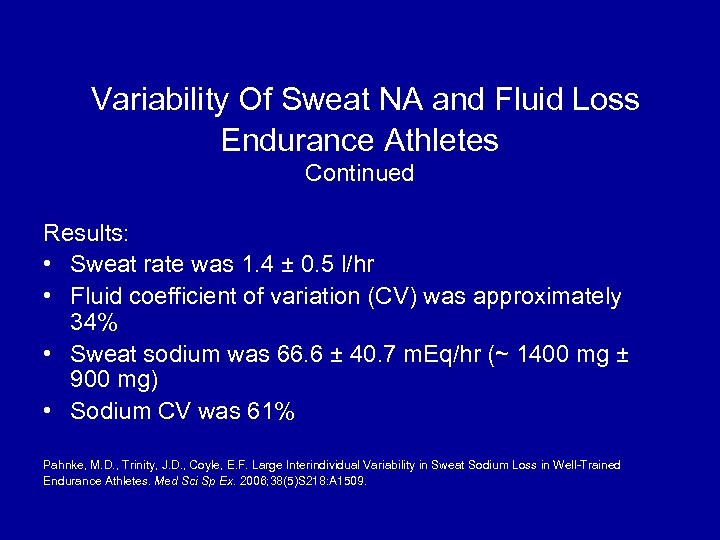 Variability Of Sweat NA and Fluid Loss Endurance Athletes Continued Results: • Sweat rate was 1. 4 ± 0. 5 l/hr • Fluid coefficient of variation (CV) was approximately 34% • Sweat sodium was 66. 6 ± 40. 7 m. Eq/hr (~ 1400 mg ± 900 mg) • Sodium CV was 61% Pahnke, M. D. , Trinity, J. D. , Coyle, E. F. Large Interindividual Variability in Sweat Sodium Loss in Well-Trained Endurance Athletes. Med Sci Sp Ex. 2006; 38(5)S 218: A 1509.
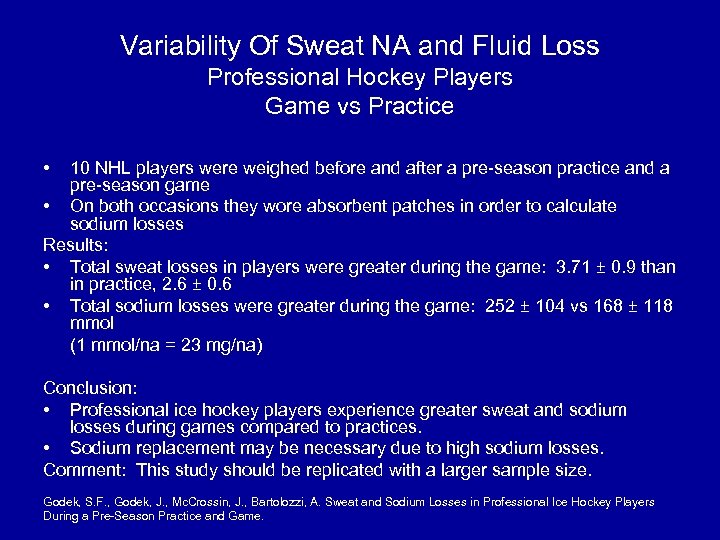 Variability Of Sweat NA and Fluid Loss Professional Hockey Players Game vs Practice • 10 NHL players were weighed before and after a pre-season practice and a pre-season game • On both occasions they wore absorbent patches in order to calculate sodium losses Results: • Total sweat losses in players were greater during the game: 3. 71 ± 0. 9 than in practice, 2. 6 ± 0. 6 • Total sodium losses were greater during the game: 252 ± 104 vs 168 ± 118 mmol (1 mmol/na = 23 mg/na) Conclusion: • Professional ice hockey players experience greater sweat and sodium losses during games compared to practices. • Sodium replacement may be necessary due to high sodium losses. Comment: This study should be replicated with a larger sample size. Godek, S. F. , Godek, J. , Mc. Crossin, J. , Bartolozzi, A. Sweat and Sodium Losses in Professional Ice Hockey Players During a Pre-Season Practice and Game.
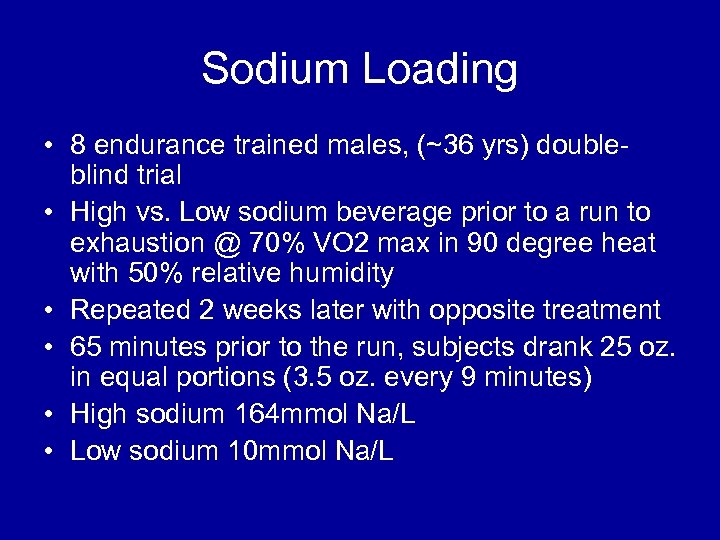 Sodium Loading • 8 endurance trained males, (~36 yrs) doubleblind trial • High vs. Low sodium beverage prior to a run to exhaustion @ 70% VO 2 max in 90 degree heat with 50% relative humidity • Repeated 2 weeks later with opposite treatment • 65 minutes prior to the run, subjects drank 25 oz. in equal portions (3. 5 oz. every 9 minutes) • High sodium 164 mmol Na/L • Low sodium 10 mmol Na/L
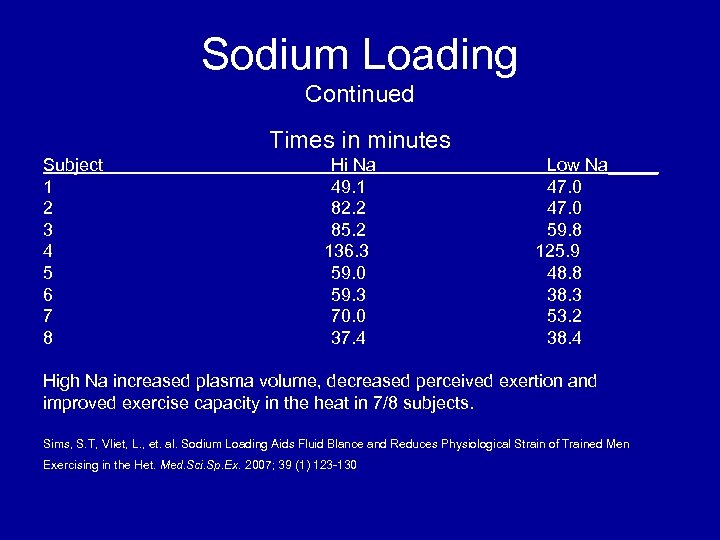 Sodium Loading Continued Times in minutes Subject 1 2 3 4 5 6 7 8 Hi Na 49. 1 82. 2 85. 2 136. 3 59. 0 59. 3 70. 0 37. 4 Low Na_____ 47. 0 59. 8 125. 9 48. 8 38. 3 53. 2 38. 4 High Na increased plasma volume, decreased perceived exertion and improved exercise capacity in the heat in 7/8 subjects. Sims, S. T, Vliet, L. , et. al. Sodium Loading Aids Fluid Blance and Reduces Physiological Strain of Trained Men Exercising in the Het. Med. Sci. Sp. Ex. 2007; 39 (1) 123 -130
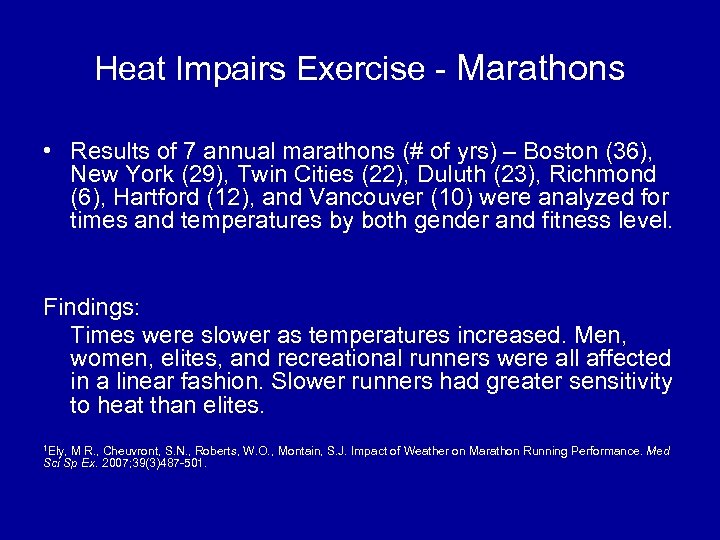 Heat Impairs Exercise - Marathons • Results of 7 annual marathons (# of yrs) – Boston (36), New York (29), Twin Cities (22), Duluth (23), Richmond (6), Hartford (12), and Vancouver (10) were analyzed for times and temperatures by both gender and fitness level. Findings: Times were slower as temperatures increased. Men, women, elites, and recreational runners were all affected in a linear fashion. Slower runners had greater sensitivity to heat than elites. 1 Ely, M R. , Cheuvront, S. N. , Roberts, W. O. , Montain, S. J. Impact of Weather on Marathon Running Performance. Med Sci Sp Ex. 2007; 39(3)487 -501.
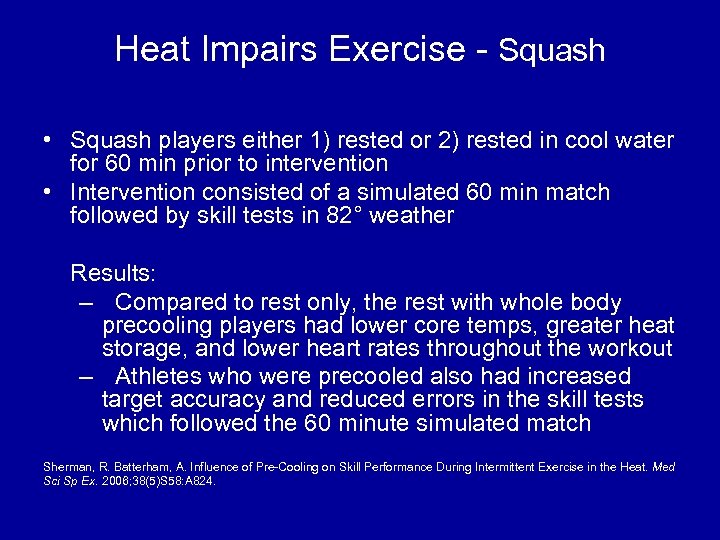 Heat Impairs Exercise - Squash • Squash players either 1) rested or 2) rested in cool water for 60 min prior to intervention • Intervention consisted of a simulated 60 min match followed by skill tests in 82° weather Results: – Compared to rest only, the rest with whole body precooling players had lower core temps, greater heat storage, and lower heart rates throughout the workout – Athletes who were precooled also had increased target accuracy and reduced errors in the skill tests which followed the 60 minute simulated match Sherman, R. Batterham, A. Influence of Pre-Cooling on Skill Performance During Intermittent Exercise in the Heat. Med Sci Sp Ex. 2006; 38(5)S 58: A 824.
 Patient Impression of Exercise Exertion • 88 subjects age 27 -30 (50 male, 38 female) were exercise tested (based on 85% age-adjusted heart rate) and then questioned about their effort • 47% overestimated, 34% underestimated, 19% were accurate when asked how hard they worked during the test. • Gender breakdown revealed: 53% F, 42% M over-estimated, 18% F, 46% M underestimated Comment: Apparent unsuccessful office-designed programs need onfield observational confirmation. Matthews III, M. L. , Aaron, D. J. , Jekal, Y. , et al. Comparison of Predicted vs. Actual Rating of Perceived Exertion (RPE) for a Submaximal Exercise Test. Med Sci Sp Ex. 2006; 38(5)S 79: A 917
 Effects of Dehydration on Basketball • 8 elite males (17 -22 yr) basketball players were tested on 5 occasions • In random order the tests performed were at 1%, 2%, 3%, and 4% dehydration and euhydrated • Compared to the euhydrated state, as the subjects’ fluid deficit increased, sprinting speed and shooting accuracy decreased in a linear fashion
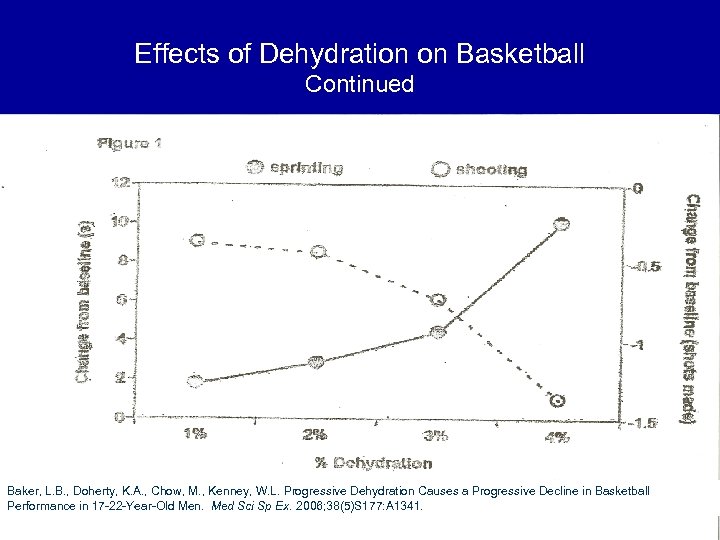 Effects of Dehydration on Basketball Continued Baker, L. B. , Doherty, K. A. , Chow, M. , Kenney, W. L. Progressive Dehydration Causes a Progressive Decline in Basketball Performance in 17 -22 -Year-Old Men. Med Sci Sp Ex. 2006; 38(5)S 177: A 1341.
 Basketball, Fluids, and Performance • 15 boys (12 -15) played basketball 2¼ hours on 3 occasions • The 3 trials were double blind and consisted of drills to simulate a 4 quarter game Each subject played: 1. Dehydrated 2% 2. Euhydrated with Gatorade 3. Euhydrated with a flavored placebo
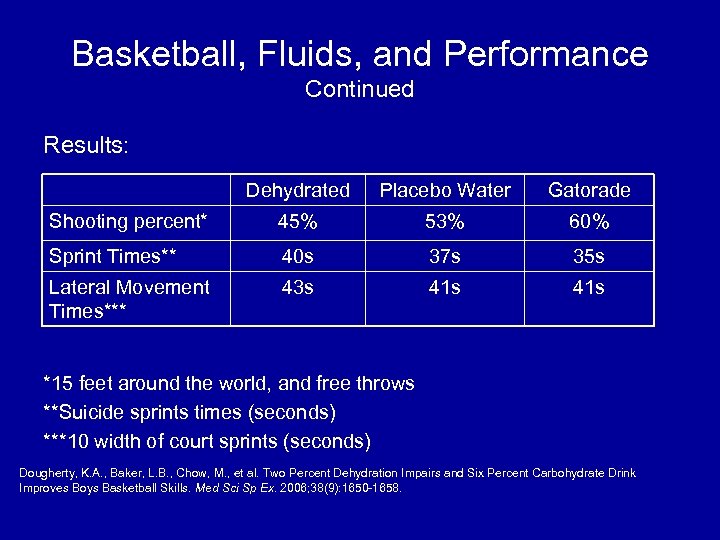 Basketball, Fluids, and Performance Continued Results: Dehydrated Placebo Water Gatorade Shooting percent* 45% 53% 60% Sprint Times** 40 s 37 s 35 s Lateral Movement Times*** 43 s 41 s *15 feet around the world, and free throws **Suicide sprints times (seconds) ***10 width of court sprints (seconds) Dougherty, K. A. , Baker, L. B. , Chow, M. , et al. Two Percent Dehydration Impairs and Six Percent Carbohydrate Drink Improves Boys Basketball Skills. Med Sci Sp Ex. 2006; 38(9): 1650 -1658.
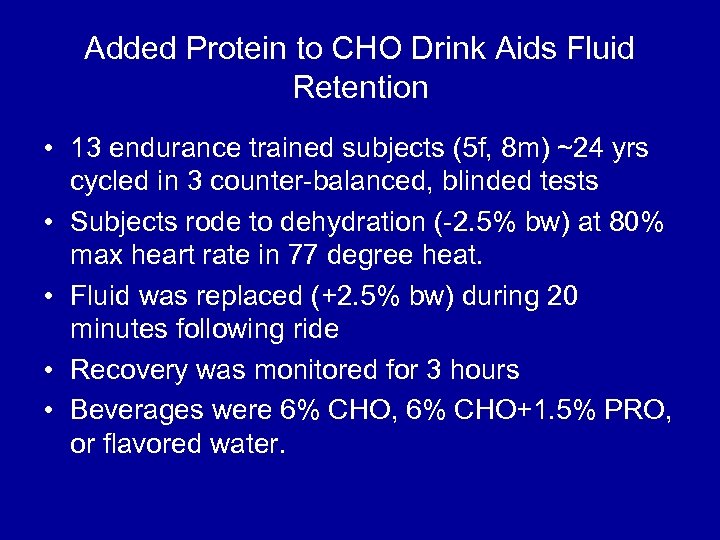 Added Protein to CHO Drink Aids Fluid Retention • 13 endurance trained subjects (5 f, 8 m) ~24 yrs cycled in 3 counter-balanced, blinded tests • Subjects rode to dehydration (-2. 5% bw) at 80% max heart rate in 77 degree heat. • Fluid was replaced (+2. 5% bw) during 20 minutes following ride • Recovery was monitored for 3 hours • Beverages were 6% CHO, 6% CHO+1. 5% PRO, or flavored water.
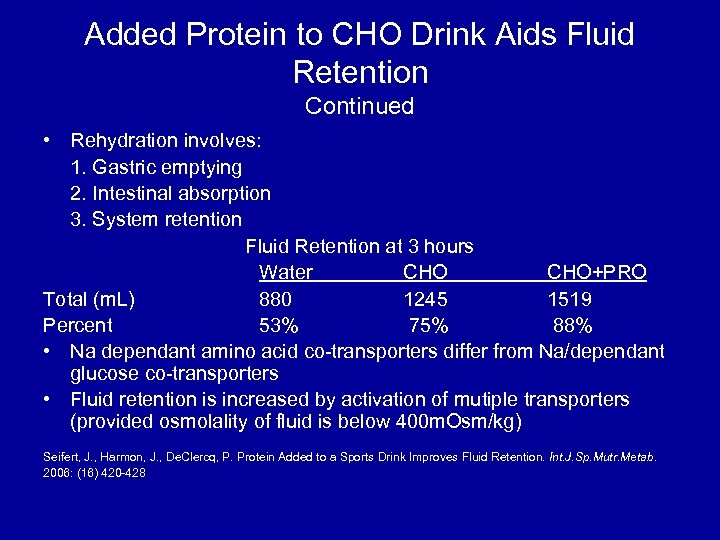 Added Protein to CHO Drink Aids Fluid Retention Continued • Rehydration involves: 1. Gastric emptying 2. Intestinal absorption 3. System retention Fluid Retention at 3 hours Water CHO+PRO Total (m. L) 880 1245 1519 Percent 53% 75% 88% • Na dependant amino acid co-transporters differ from Na/dependant glucose co-transporters • Fluid retention is increased by activation of mutiple transporters (provided osmolality of fluid is below 400 m. Osm/kg) Seifert, J. , Harmon, J. , De. Clercq, P. Protein Added to a Sports Drink Improves Fluid Retention. Int. J. Sp. Mutr. Metab. 2006: (16) 420 -428
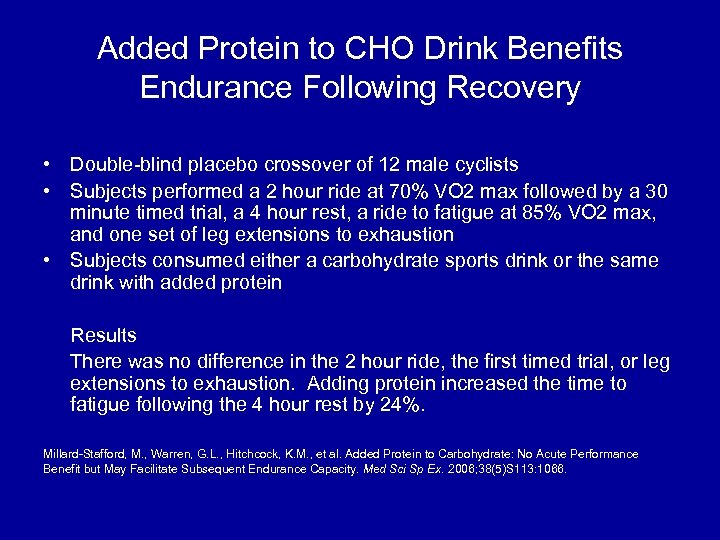 Added Protein to CHO Drink Benefits Endurance Following Recovery • Double-blind placebo crossover of 12 male cyclists • Subjects performed a 2 hour ride at 70% VO 2 max followed by a 30 minute timed trial, a 4 hour rest, a ride to fatigue at 85% VO 2 max, and one set of leg extensions to exhaustion • Subjects consumed either a carbohydrate sports drink or the same drink with added protein Results There was no difference in the 2 hour ride, the first timed trial, or leg extensions to exhaustion. Adding protein increased the time to fatigue following the 4 hour rest by 24%. Millard-Stafford, M. , Warren, G. L. , Hitchcock, K. M. , et al. Added Protein to Carbohydrate: No Acute Performance Benefit but May Facilitate Subsequent Endurance Capacity. Med Sci Sp Ex. 2006; 38(5)S 113: 1066.
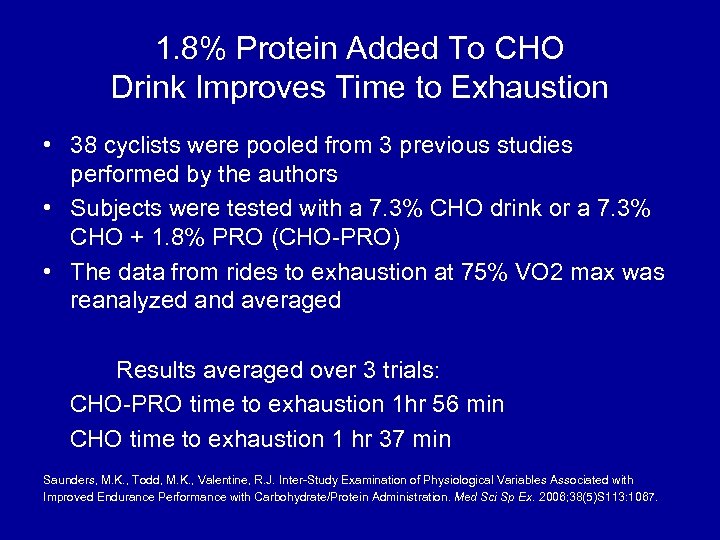 1. 8% Protein Added To CHO Drink Improves Time to Exhaustion • 38 cyclists were pooled from 3 previous studies performed by the authors • Subjects were tested with a 7. 3% CHO drink or a 7. 3% CHO + 1. 8% PRO (CHO-PRO) • The data from rides to exhaustion at 75% VO 2 max was reanalyzed and averaged Results averaged over 3 trials: CHO-PRO time to exhaustion 1 hr 56 min CHO time to exhaustion 1 hr 37 min Saunders, M. K. , Todd, M. K. , Valentine, R. J. Inter-Study Examination of Physiological Variables Associated with Improved Endurance Performance with Carbohydrate/Protein Administration. Med Sci Sp Ex. 2006; 38(5)S 113: 1067.
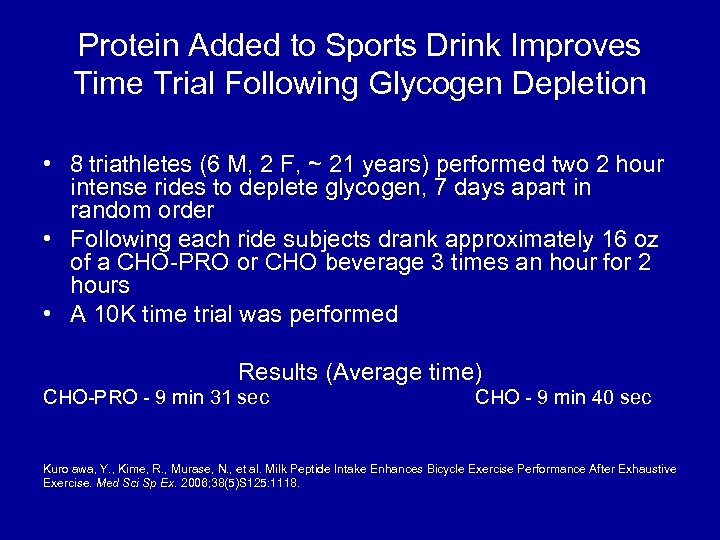 Protein Added to Sports Drink Improves Time Trial Following Glycogen Depletion • 8 triathletes (6 M, 2 F, ~ 21 years) performed two 2 hour intense rides to deplete glycogen, 7 days apart in random order • Following each ride subjects drank approximately 16 oz of a CHO-PRO or CHO beverage 3 times an hour for 2 hours • A 10 K time trial was performed Results (Average time) CHO-PRO - 9 min 31 sec CHO - 9 min 40 sec Kuro awa, Y. , Kime, R. , Murase, N. , et al. Milk Peptide Intake Enhances Bicycle Exercise Performance After Exhaustive Exercise. Med Sci Sp Ex. 2006; 38(5)S 125: 1118.
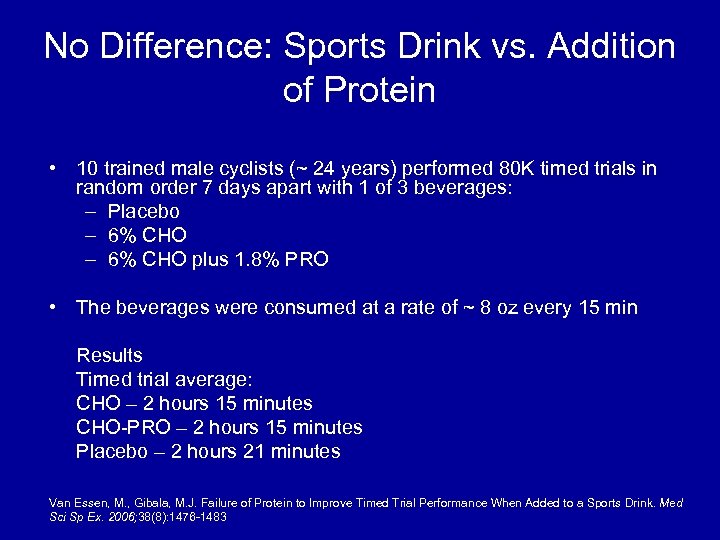 No Difference: Sports Drink vs. Addition of Protein • 10 trained male cyclists (~ 24 years) performed 80 K timed trials in random order 7 days apart with 1 of 3 beverages: – Placebo – 6% CHO plus 1. 8% PRO • The beverages were consumed at a rate of ~ 8 oz every 15 min Results Timed trial average: CHO – 2 hours 15 minutes CHO-PRO – 2 hours 15 minutes Placebo – 2 hours 21 minutes Van Essen, M. , Gibala, M. J. Failure of Protein to Improve Timed Trial Performance When Added to a Sports Drink. Med Sci Sp Ex. 2006; 38(8): 1476 -1483
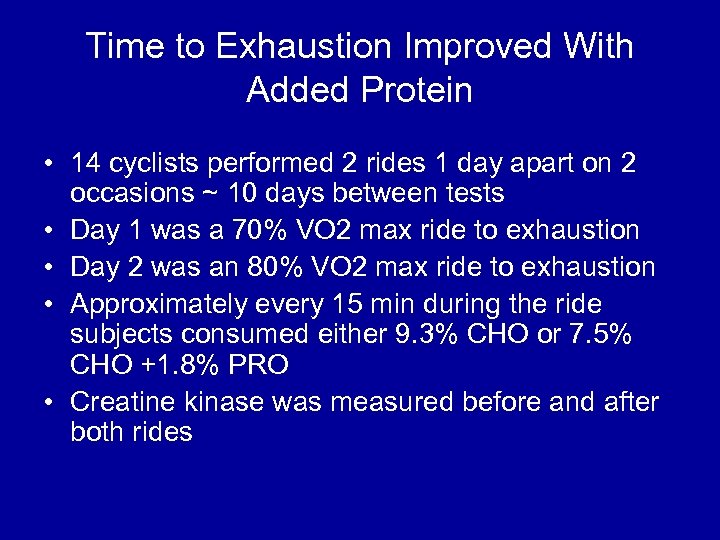 Time to Exhaustion Improved With Added Protein • 14 cyclists performed 2 rides 1 day apart on 2 occasions ~ 10 days between tests • Day 1 was a 70% VO 2 max ride to exhaustion • Day 2 was an 80% VO 2 max ride to exhaustion • Approximately every 15 min during the ride subjects consumed either 9. 3% CHO or 7. 5% CHO +1. 8% PRO • Creatine kinase was measured before and after both rides
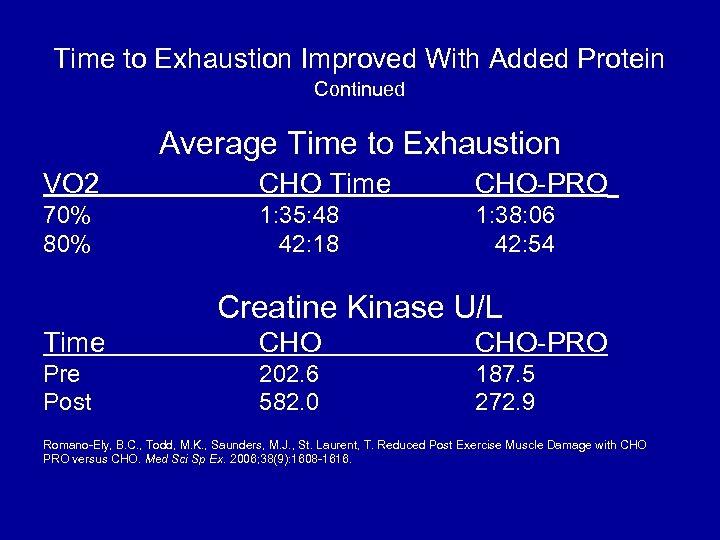 Time to Exhaustion Improved With Added Protein Continued Average Time to Exhaustion VO 2 CHO Time CHO-PRO 70% 80% 1: 35: 48 42: 18 1: 38: 06 42: 54 Creatine Kinase U/L Time CHO-PRO Pre Post 202. 6 582. 0 187. 5 272. 9 Romano-Ely, B. C. , Todd, M. K. , Saunders, M. J. , St. Laurent, T. Reduced Post Exercise Muscle Damage with CHO PRO versus CHO. Med Sci Sp Ex. 2006; 38(9): 1608 -1616.
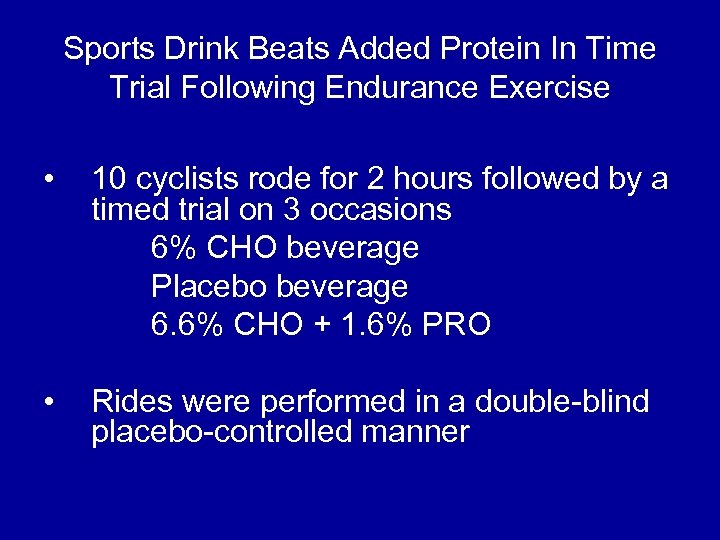 Sports Drink Beats Added Protein In Time Trial Following Endurance Exercise • 10 cyclists rode for 2 hours followed by a timed trial on 3 occasions 1. 6% CHO beverage 2. Placebo beverage 3. 6. 6% CHO + 1. 6% PRO • Rides were performed in a double-blind placebo-controlled manner
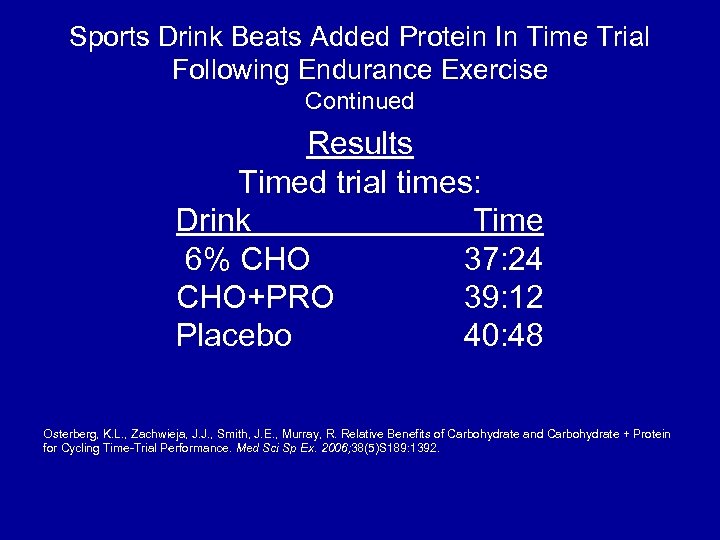 Sports Drink Beats Added Protein In Time Trial Following Endurance Exercise Continued Results Timed trial times: Drink Time 6% CHO 37: 24 CHO+PRO 39: 12 Placebo 40: 48 Osterberg, K. L. , Zachwieja, J. J. , Smith, J. E. , Murray, R. Relative Benefits of Carbohydrate and Carbohydrate + Protein for Cycling Time-Trial Performance. Med Sci Sp Ex. 2006; 38(5)S 189: 1392.
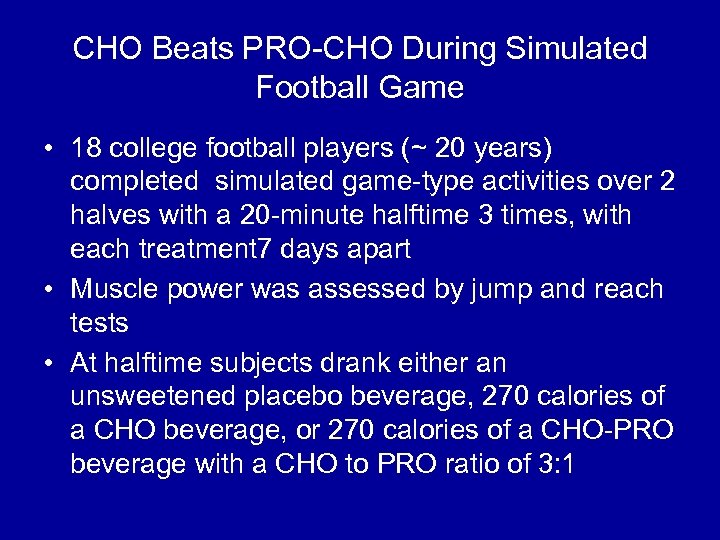 CHO Beats PRO-CHO During Simulated Football Game • 18 college football players (~ 20 years) completed simulated game-type activities over 2 halves with a 20 -minute halftime 3 times, with each treatment 7 days apart • Muscle power was assessed by jump and reach tests • At halftime subjects drank either an unsweetened placebo beverage, 270 calories of a CHO beverage, or 270 calories of a CHO-PRO beverage with a CHO to PRO ratio of 3: 1
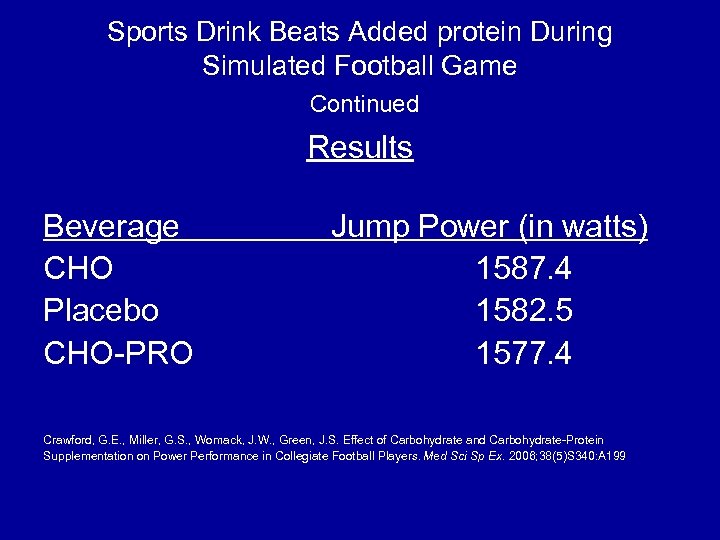 Sports Drink Beats Added protein During Simulated Football Game Continued Results Beverage CHO Placebo CHO-PRO Jump Power (in watts) 1587. 4 1582. 5 1577. 4 Crawford, G. E. , Miller, G. S. , Womack, J. W. , Green, J. S. Effect of Carbohydrate and Carbohydrate-Protein Supplementation on Power Performance in Collegiate Football Players. Med Sci Sp Ex. 2006; 38(5)S 340: A 199
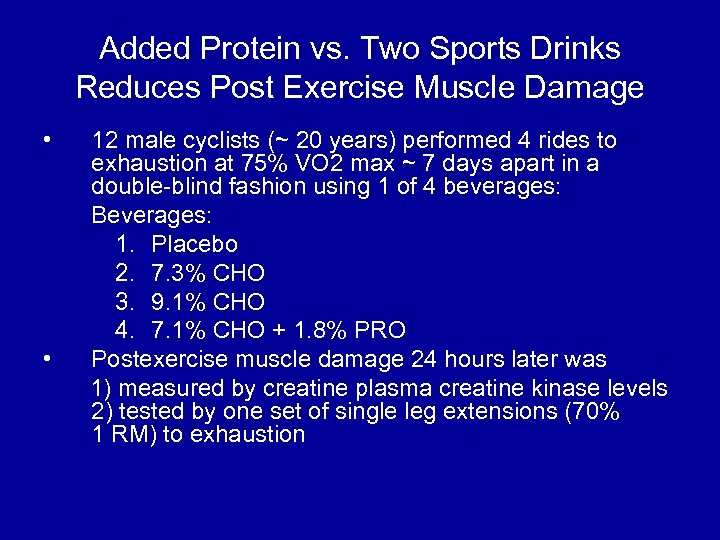 Added Protein vs. Two Sports Drinks Reduces Post Exercise Muscle Damage • 12 male cyclists (~ 20 years) performed 4 rides to exhaustion at 75% VO 2 max ~ 7 days apart in a double-blind fashion using 1 of 4 beverages: Beverages: 1. Placebo 2. 7. 3% CHO 3. 9. 1% CHO 4. 7. 1% CHO + 1. 8% PRO • Postexercise muscle damage 24 hours later was 1) measured by creatine plasma creatine kinase levels 2) tested by one set of single leg extensions (70% 1 RM) to exhaustion
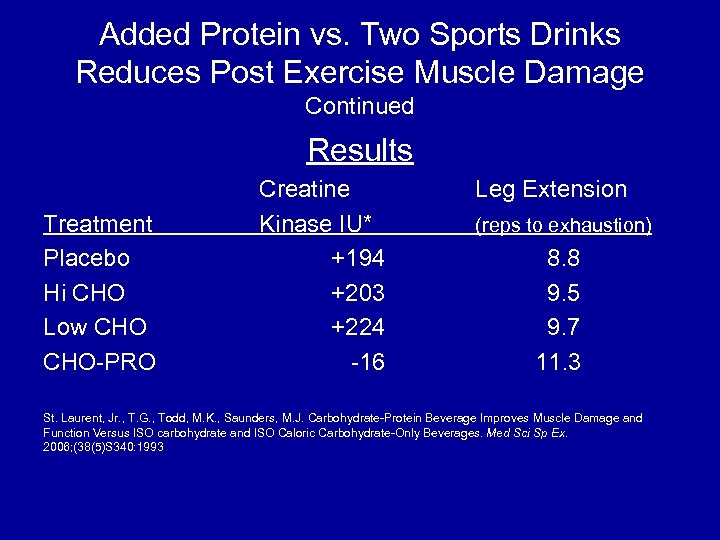 Added Protein vs. Two Sports Drinks Reduces Post Exercise Muscle Damage Continued Results Treatment Placebo Hi CHO Low CHO-PRO Creatine Kinase IU* +194 +203 +224 -16 Leg Extension (reps to exhaustion) 8. 8 9. 5 9. 7 11. 3 St. Laurent, Jr. , T. G. , Todd, M. K. , Saunders, M. J. Carbohydrate-Protein Beverage Improves Muscle Damage and Function Versus ISO carbohydrate and ISO Caloric Carbohydrate-Only Beverages. Med Sci Sp Ex. 2006; (38(5)S 340: 1993
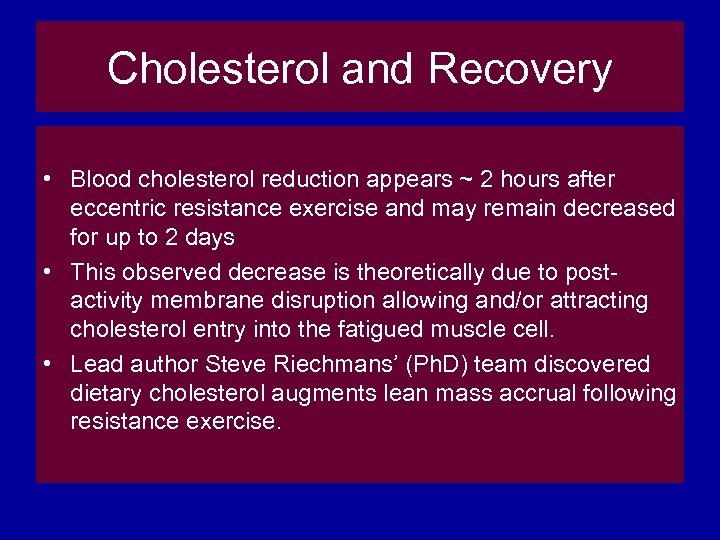 Cholesterol and Recovery • Blood cholesterol reduction appears ~ 2 hours after eccentric resistance exercise and may remain decreased for up to 2 days • This observed decrease is theoretically due to postactivity membrane disruption allowing and/or attracting cholesterol entry into the fatigued muscle cell. • Lead author Steve Riechmans’ (Ph. D) team discovered dietary cholesterol augments lean mass accrual following resistance exercise.
 Cholesterol and Recovery Continued • 8 men (~21 yrs. ) performed 2 sets of ~100 eccentric single leg extensions separated by 4 weeks • Dietary cholesterol was limited to under 200 mg/d for 4 weeks • Subjects received either 3 whole eggs or 3 egg whites mixed in a protein shake prior to the trial • Strength and delayed onset muscle soreness were measured at 1, 2 & 3 days after the eccentric exercise test. • Treatment was reversed and repeated 30 days later
 Cholesterol and Recovery Continued Results: Subjects who received the whole eggs (~900 mg cholesterol) in the first test had: • 1. Greater strength loss at 1, 2, & 3 days post-exercise • 2. More soreness at 1, 2 & 3 days post-exercise • 3. Less muscle soreness after the second test (30 days) • 4. More strength at 30 days Conclusion: Cholesterol increases the initial degree of post-exercise muscle damage and appears to enhance long term recovery. Riechman, S. , Kean, D. , et. al. Dietary Cholesterol Alters Recovery From Eccentric Muscle Damage In Humans. Med. Sci. Sp. Ex. 2006: 38 (5) 5386: A 2172
 C-Spine DJD – Who hurts? • 50 (37 m-23 f) Healthy seniors x-rayed • 52 (39 m-23 f) Seniors w/c-Spine s/s xrayed • Both groups had similar levels of significant DJD and spurring • Healthy group history of more lifetime exercise/activity than unhealthy
 C-Spine DJD – Who hurts? Continued Pain-fee group characteristics (via x-ray) • Little or no lordosis • Kyphotic and/or linear alignment • Males had 3. 5 mm canal diameters • Females had 2. 9 mm canal diameters • 60% show spontaneous fusion of vertebral bodies & anterior longitudinal lig. ossification
 C-Spine DJD – Who hurts? Continued Unhealthy characteristics (via x-ray) • Lordosis • Hyperlordosis • Smaller canal diameters Matsunaga S. et al. , The Roentgenographic Characteristics Of The Cervical Spine In Healthy Elders, Presented At The Annual Meeting Of The North American Spine Society, Seattle, 2006; as yet published.
 Body Fat and Inflammation • 444 teenagers, (13 -18 yrs) 249 males and 195 females • Tested for fitness, weighed, divided into groups: Normal weight fit, normal weight unfit, overweight fit, overweight unfit • C-reactive protein was tested Warnberg, J. , Ruiz, J. R. , Sjostrom, M. , et al. Association of Fitness and Fatness to Low-Grade Systemic Inflammation in Adolescents. The AVENA Study. Med Sci Sp Ex. 2006; 38(5)S 8: A 613.
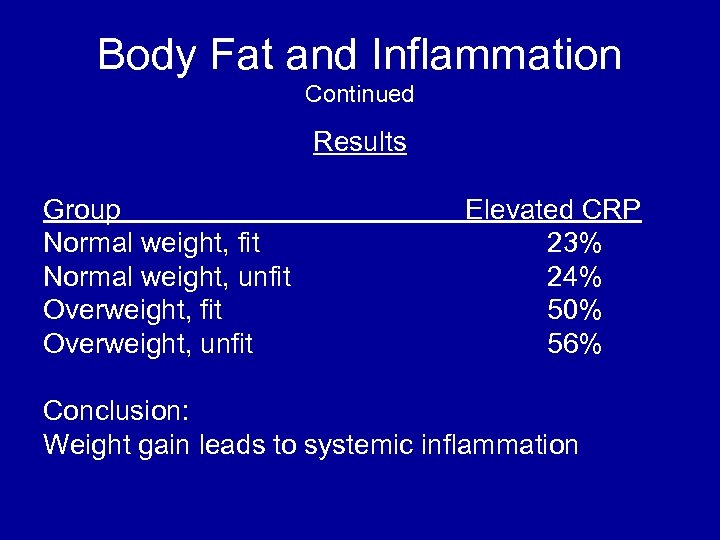 Body Fat and Inflammation Continued Results Group Normal weight, fit Normal weight, unfit Overweight, unfit Elevated CRP 23% 24% 50% 56% Conclusion: Weight gain leads to systemic inflammation
 Effect of Time of Glycogen Replacing Meals on Insulin • 6 subjects were inactive and hypercaloric 48 hours prior to each of 4 conditions to decrease insulin sensitivity Control Pre-exercise meal Post-exercise meal 3 hours post-exercise meal • Exercise was designed to deplete glycogen 30% (65 min ride + ten 30 sec sprints) • 12 hours after each meal insulin was measured via glucose infusion
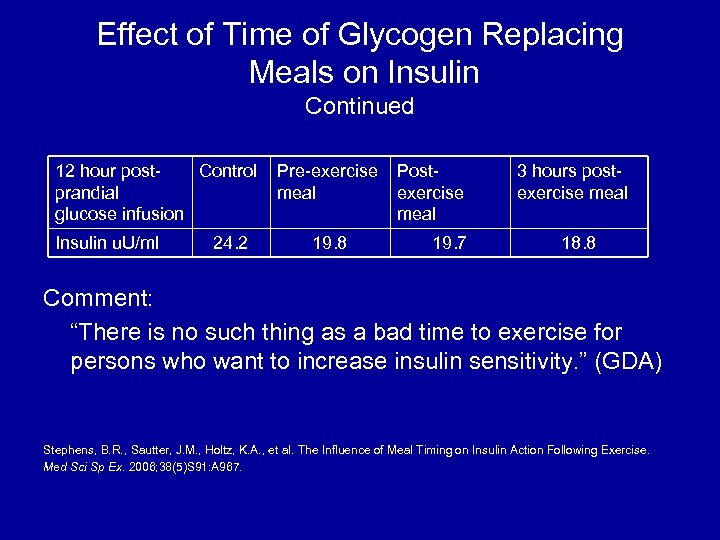 Effect of Time of Glycogen Replacing Meals on Insulin Continued 12 hour post. Control prandial glucose infusion Insulin u. U/ml 24. 2 Pre-exercise Postmeal exercise meal 19. 8 19. 7 3 hours postexercise meal 18. 8 Comment: “There is no such thing as a bad time to exercise for persons who want to increase insulin sensitivity. ” (GDA) Stephens, B. R. , Sautter, J. M. , Holtz, K. A. , et al. The Influence of Meal Timing on Insulin Action Following Exercise. Med Sci Sp Ex. 2006; 38(5)S 91: A 967.
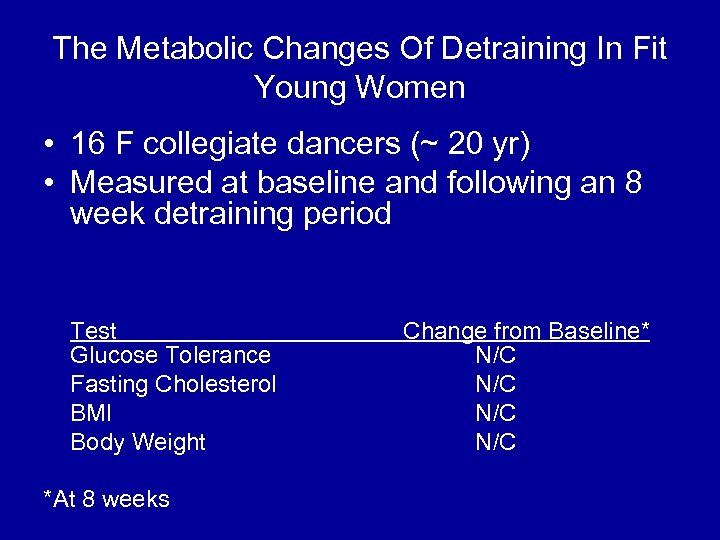 The Metabolic Changes Of Detraining In Fit Young Women • 16 F collegiate dancers (~ 20 yr) • Measured at baseline and following an 8 week detraining period Test Glucose Tolerance Fasting Cholesterol BMI Body Weight *At 8 weeks Change from Baseline* N/C N/C
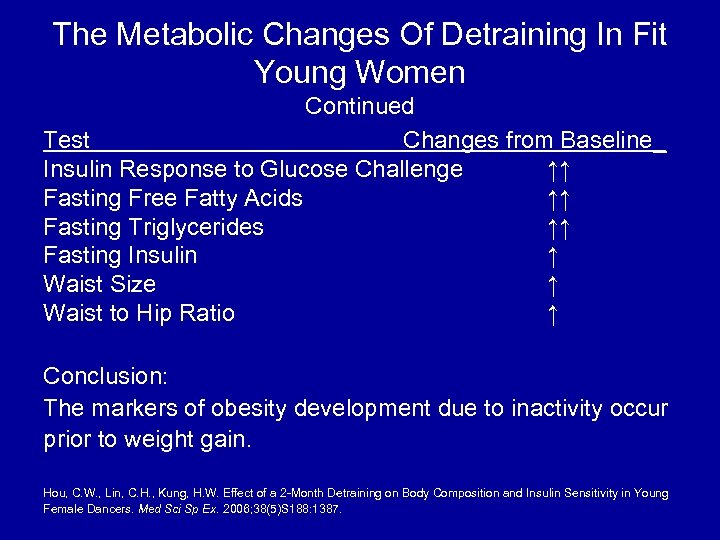 The Metabolic Changes Of Detraining In Fit Young Women Continued Test Changes from Baseline_ Insulin Response to Glucose Challenge ↑↑ Fasting Free Fatty Acids ↑↑ Fasting Triglycerides ↑↑ Fasting Insulin ↑ Waist Size ↑ Waist to Hip Ratio ↑ Conclusion: The markers of obesity development due to inactivity occur prior to weight gain. Hou, C. W. , Lin, C. H. , Kung, H. W. Effect of a 2 -Month Detraining on Body Composition and Insulin Sensitivity in Young Female Dancers. Med Sci Sp Ex. 2006; 38(5)S 188: 1387.
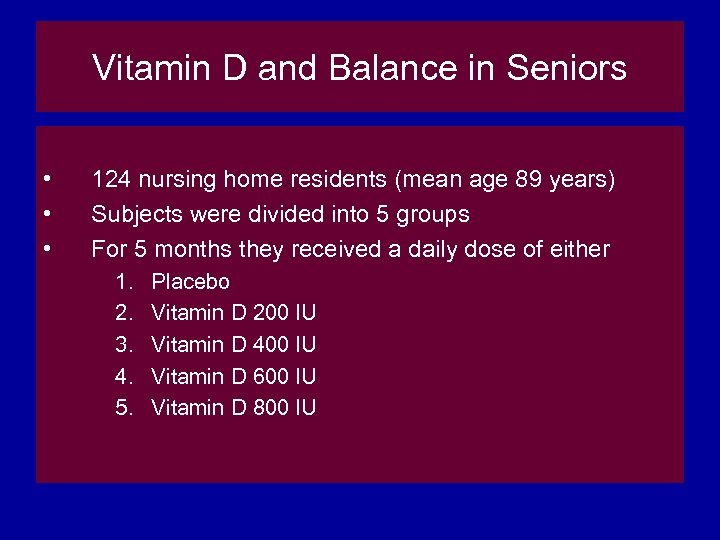 Vitamin D and Balance in Seniors • • • 124 nursing home residents (mean age 89 years) Subjects were divided into 5 groups For 5 months they received a daily dose of either 1. 2. 3. 4. 5. Placebo Vitamin D 200 IU Vitamin D 400 IU Vitamin D 600 IU Vitamin D 800 IU
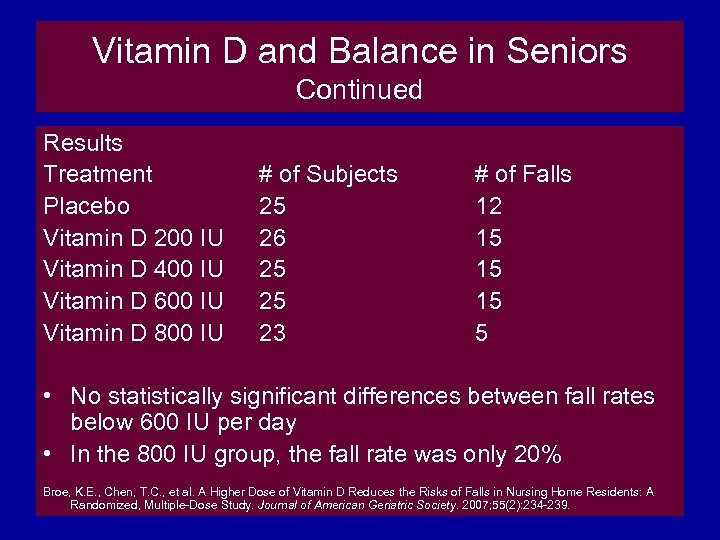 Vitamin D and Balance in Seniors Continued Results Treatment Placebo Vitamin D 200 IU Vitamin D 400 IU Vitamin D 600 IU Vitamin D 800 IU # of Subjects 25 26 25 25 23 # of Falls 12 15 15 15 5 • No statistically significant differences between fall rates below 600 IU per day • In the 800 IU group, the fall rate was only 20% Broe, K. E. , Chen, T. C. , et al. A Higher Dose of Vitamin D Reduces the Risks of Falls in Nursing Home Residents: A Randomized, Multiple-Dose Study. Journal of American Geriatric Society. 2007; 55(2): 234 -239.
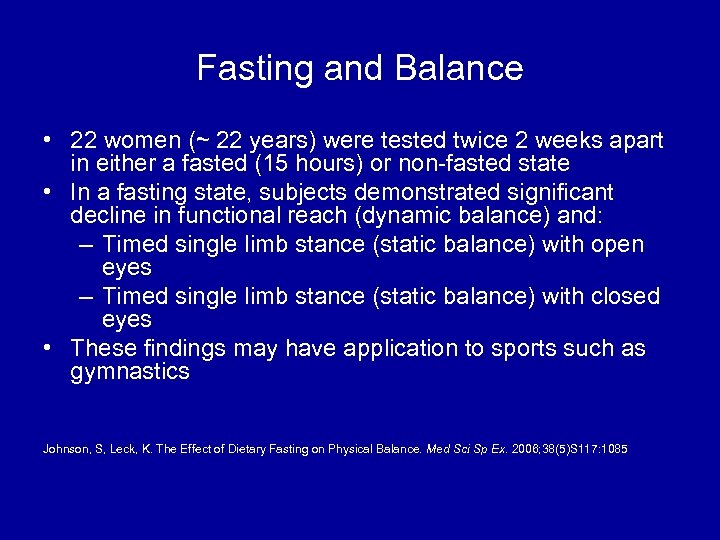 Fasting and Balance • 22 women (~ 22 years) were tested twice 2 weeks apart in either a fasted (15 hours) or non-fasted state • In a fasting state, subjects demonstrated significant decline in functional reach (dynamic balance) and: – Timed single limb stance (static balance) with open eyes – Timed single limb stance (static balance) with closed eyes • These findings may have application to sports such as gymnastics Johnson, S, Leck, K. The Effect of Dietary Fasting on Physical Balance. Med Sci Sp Ex. 2006; 38(5)S 117: 1085
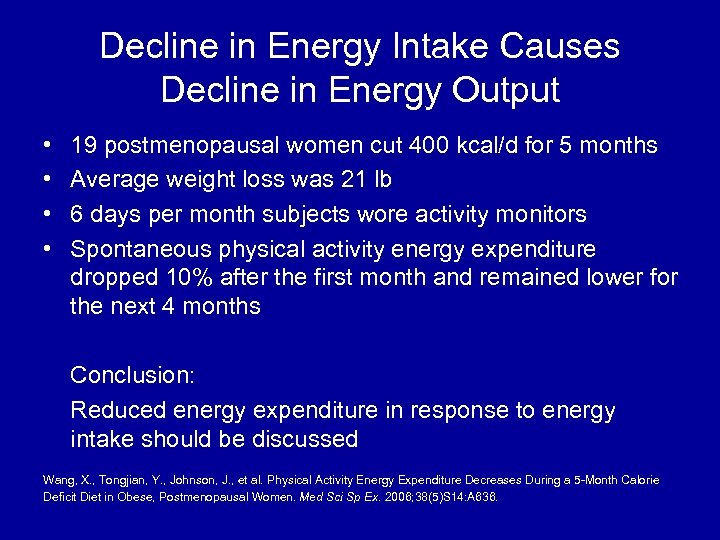 Decline in Energy Intake Causes Decline in Energy Output • • 19 postmenopausal women cut 400 kcal/d for 5 months Average weight loss was 21 lb 6 days per month subjects wore activity monitors Spontaneous physical activity energy expenditure dropped 10% after the first month and remained lower for the next 4 months Conclusion: Reduced energy expenditure in response to energy intake should be discussed Wang, X. , Tongjian, Y. , Johnson, J. , et al. Physical Activity Energy Expenditure Decreases During a 5 -Month Calorie Deficit Diet in Obese, Postmenopausal Women. Med Sci Sp Ex. 2006; 38(5)S 14: A 636.
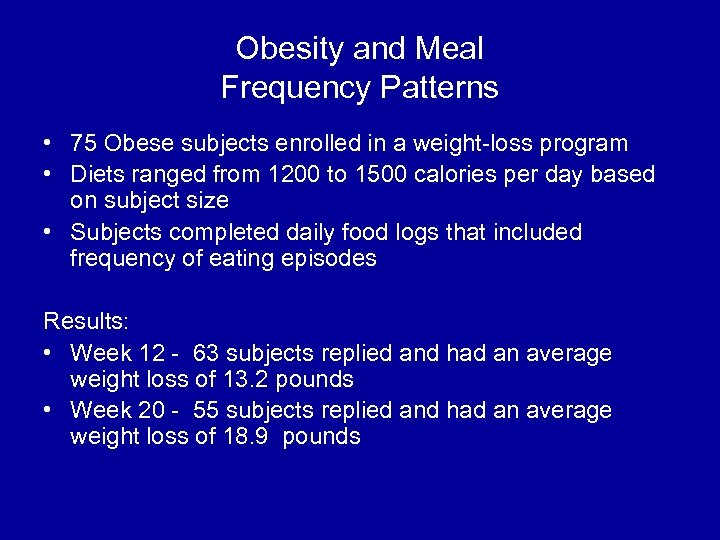 Obesity and Meal Frequency Patterns • 75 Obese subjects enrolled in a weight-loss program • Diets ranged from 1200 to 1500 calories per day based on subject size • Subjects completed daily food logs that included frequency of eating episodes Results: • Week 12 - 63 subjects replied and had an average weight loss of 13. 2 pounds • Week 20 - 55 subjects replied and had an average weight loss of 18. 9 pounds
 Obesity And Meal Frequency Patterns Continued • 1. 2. Conclusion: Number of meals was not associated with the amount of weight lost, but Number of meals WAS associated with absolute body weight The smaller participants (measured by body weight) reported eating more meals and snacks than the individuals who weighed more Mohr, C. R. , Otto, A. D. , Jakicic, J. M. Effects of Meal Periodicity on Weight Loss. Med Sci Sp Ex. 2006; 38(5)S 465: A 2490.
 Strategies of Maintaining Weight Loss • 550 people in a university-based weight-loss program were surveyed • The program was based on the participants consuming over 5 servings of fruits and vegetables a day and performing 5 hours of exercise a week. • For the first 3 months there weekly meetings followed by a maintenance program of 6 -21 weeks • 229 people responded to the survey • 50% had maintained or continued to lose weight • 50% had regained their lost weight
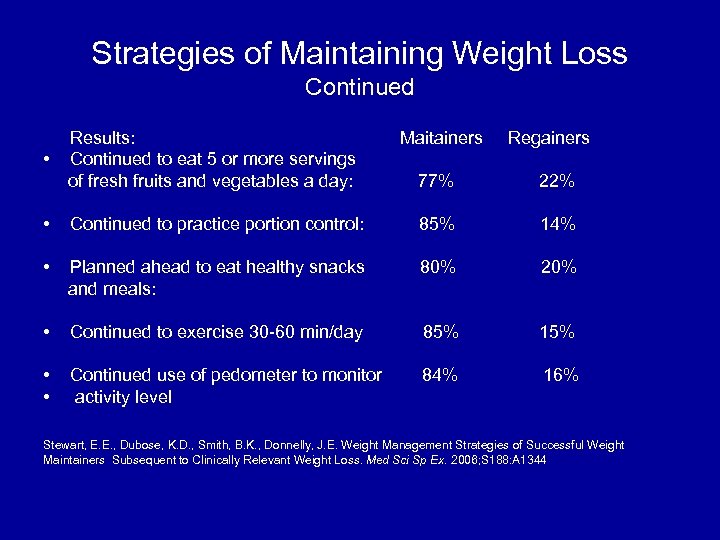 Strategies of Maintaining Weight Loss Continued Results: Maitainers Regainers • Continued to eat 5 or more servings of fresh fruits and vegetables a day: 77% 22% • Continued to practice portion control: 85% 14% • Planned ahead to eat healthy snacks 80% 20% and meals: • Continued to exercise 30 -60 min/day 85% 15% • • Continued use of pedometer to monitor 84% 16% activity level Stewart, E. E. , Dubose, K. D. , Smith, B. K. , Donnelly, J. E. Weight Management Strategies of Successful Weight Maintainers Subsequent to Clinically Relevant Weight Loss. Med Sci Sp Ex. 2006; S 188: A 1344
 Fitness Age – An Unexpected Finding In A Weight Loss Study • 23 obese females underwent a 2 -part program • Part 1 – Intervention phase, 12 weeks, consisting of water aerobics twice a week and circuit weight training on Nautilus machines twice a week • Part 2 – 12 weeks of weight maintenance consisting of 1 meeting per week • The study was designed to focus on adiponectin (an adipose-derived hormone), which increases when obese subjects lose weight • Other measurement factors included visceral adipose tissue, blood lipids, and general fitness
 Fitness Age – An Unexpected Finding In A Weight Loss Study Continued • • • Results: Average weight loss at week 12 was 10 pounds Triglyceride reduction was 55 mg/d. L LDL reduction was 19 mg/d. L Weight and lipid losses were maintained in the 12 week maintenance phase Fitness age reduced by 6. 5 years in the 12 week intervention phase and was maintained in the following 12 week maintenance phase Comment: • 12 weeks of moderate exercise resulted in a 6. 5 year reduction in fitness age • This was not the reason for the study, but was the most important finding Fukuda, R. , Nakagaichi, M. , Tahara, Y. The Effect of Exercise and Weight Loss on Adiponectin on Obese Women. Med Sci Sp Ex. 2006; 38(5)S 467: A 2498.
 Herbal Weight Loss • A nutritional supplement claimed increased energy and weight reduction by taking a unique formula in the morning, afternoon, and evening that turns your body into a “fat burning machine” • The proprietary blend of ingredients: vitamin B 12, hypercium extract, caffeine, gugglesterones, magnesium salicylate, bitter orange extract, guarana, theobromine, yohimbine extract, L-tyrosine, citrin K, psyllium husk, valerian root, ho shou wu, turkey rhubarb, cascara sagrada, senna extract, and piper nigrum. • 10 subjects took the product or a placebo morning, noon, and night in a randomized, double-blind, crossover manner
 Herbal Weight Loss Continued • Pre- and post measurements of resting metabolic rate, respiratory exchange ratio, heart rate (beats per minute), wingate, (A test for anaerobic exercise performance) and body mass were all unchanged when the placebo treatment was compared to morning, afternoon, or evening supplementation. Results: • The product did not live up to its advertised claims. • This result could be due to: 1) inadequate amounts of stimulatory substances* 2) possible ingredient antagonism *Note: As a proprietary formula, specific amounts of the ingredients were not disclosed Comment: Spend your $199 elsewhere Stahlnecker IV, A. C. , Brown, G. A. Acute Effects of a Weight-Loss Supplement on Resting Metabolic Rate and Anaerobic Exercise Performance. Med Sci Sp Ex. 2006; 38(5)S 403: A 2242.
 Ultrasound and DOM’s • 36 subjects, divided into 4 groups: 1 control, 2 eccentric exercise, 3 eccentric exercise with ultrasound, 4 eccentric exercise with sham • Treated for 4 days Results: Ultrasound group had less swelling and stiffness No difference between placebo group (sham US) and untreated groups (sham US) Plaza, P. L. , Penailillo, L. , Gurovich, A. N. Effects of Sham Therapeutic Ultrasound in a Controlled Trial. Med Sci Sp Ex. 2006; 38(5)S 25: A 685.
 Ultrasound and Fractures • Preliminary evidence has emerged that specialized ultrasound machines may accelerate fracture healing • Researchers tested how typical ultrasound machines would affect fractures • Laboratory rats sustained a limb fracture and received ultrasound therapy • At 25 days no changes noted • At 40 days showed 16. 9% increase in bone mineral content • BMC did not come from more minerals but from 25. 8% increase in bone area Warden, S. J. , Stewart, R. L. , Fuchs, R. K. , et al. Ultrasound Produced by a Conventional Therapeutic Ultrasound Unit Accelerates Fracture Repair. Med Sci Sp Ex. 2006; 38(5)S 26: A 686.
 Biomechanics of Runners with Achilles Tendinopathy • 25 runners with Achilles tendinopathy were compared to 34 healthy runners • 10 trials were done and data was collected from strain gauge force plate, 6 infrared cameras, and a telemetric EMG system Results: Runners with AT have decreased knee flexion (26. 2 vs 21. 9 degrees). AT runners EMG data showed decreased lateral gastroc, gluteus medius, and rectus femoris activity after heel strike, and decreased tibialis anterior activity before heel strike. RE: Tibialis anterior findings – researchers stated it was “. . . either a novel etiological factor, or an adaptive response to injury. ” Azevedo, L. B. , Lambert, M. , Vaughan, C. L. , Schwellnus, M. P. Lower Limb Biomechanics and EMG Activity in Runners with Achilles Tendinopathy. Med Sci Sp Ex. 2006; 28(5)S 123: A 1109.
 Pathogenesis Of Distal Iliotibial Band Syndrome • Distal iliotibial band syndrome is a common cause of lateral knee pain • It is currently believed that repetitive friction in an anterior to posterior fashion over the lateral femoral condyle is the cause of this condition • The study was to confirm anterior to posterior movement of the ITB over the lateral femoral condyle and thus, is indeed, a friction syndrome Methods: • 8 subjects underwent MRI (6 asymptomatic and 2 with ITBS) • Histological studies were performed on 15 cadavers
 Pathogenesis Of Distal Iliobial Band Syndrome Continued Results: • The ITB is anchored to the distal femur by fibrous bands. • MRI in healthy subjects demonstrates a firm insertion by fibrous bands of the iliotibial tract onto the distal femur • There is a layer of highly innervated and vascularized fat between the femur and dense fibrous tissue confirmed by dissection • MRI of healthy subjects reveals the insertion prevents anterior to posterior translation • MRI of symptomatic people displayed signal changes in the fat layer deep to the ITB • The cause appears to be a compression of the tract against the highly innervated layer of fat between the ITB and epicondyle rather than repetitive A to P frictioning. In conclusion, ITB syndrome is caused by repetitive compression rather than repetitive friction. Fairclough, J. , Hayashi, K. , Toumi, H. H. , et al. The Structure of Iliotibial Band in Relation to Iliotibial Band Friction Syndrome. Med Sci Sp Ex. 2006; 38(5)S 552: A 2837.
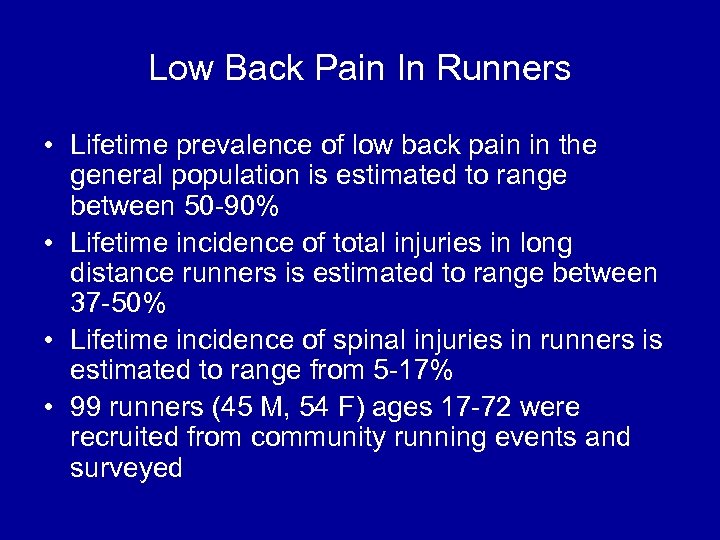 Low Back Pain In Runners • Lifetime prevalence of low back pain in the general population is estimated to range between 50 -90% • Lifetime incidence of total injuries in long distance runners is estimated to range between 37 -50% • Lifetime incidence of spinal injuries in runners is estimated to range from 5 -17% • 99 runners (45 M, 54 F) ages 17 -72 were recruited from community running events and surveyed
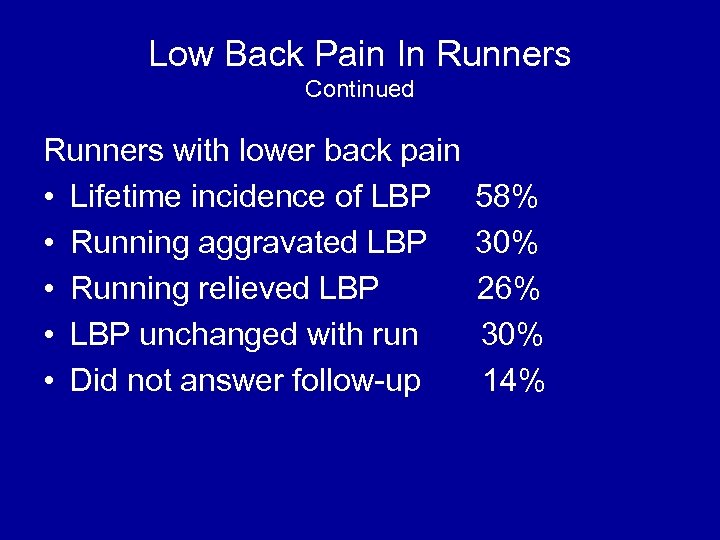 Low Back Pain In Runners Continued Runners with lower back pain • Lifetime incidence of LBP 58% • Running aggravated LBP 30% • Running relieved LBP 26% • LBP unchanged with run 30% • Did not answer follow-up 14%
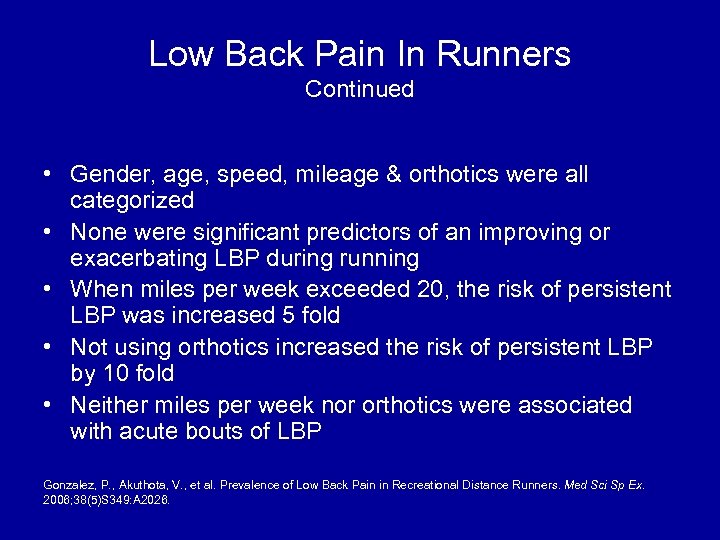 Low Back Pain In Runners Continued • Gender, age, speed, mileage & orthotics were all categorized • None were significant predictors of an improving or exacerbating LBP during running • When miles per week exceeded 20, the risk of persistent LBP was increased 5 fold • Not using orthotics increased the risk of persistent LBP by 10 fold • Neither miles per week nor orthotics were associated with acute bouts of LBP Gonzalez, P. , Akuthota, V. , et al. Prevalence of Low Back Pain in Recreational Distance Runners. Med Sci Sp Ex. 2006; 38(5)S 349: A 2026.
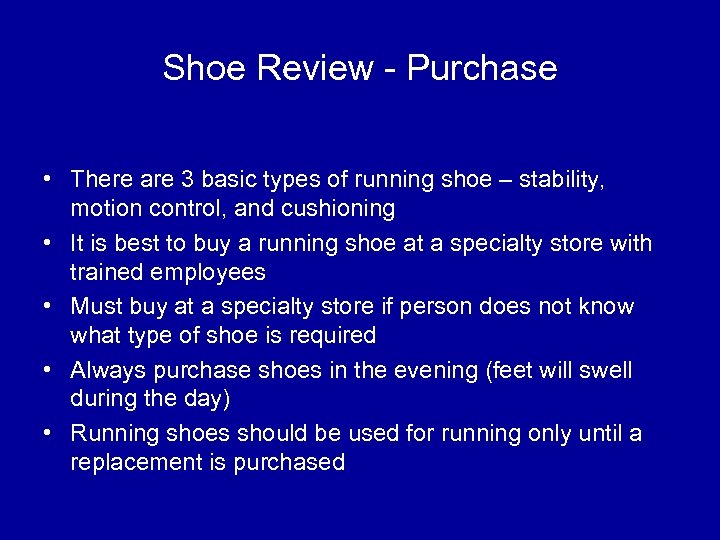 Shoe Review - Purchase • There are 3 basic types of running shoe – stability, motion control, and cushioning • It is best to buy a running shoe at a specialty store with trained employees • Must buy at a specialty store if person does not know what type of shoe is required • Always purchase shoes in the evening (feet will swell during the day) • Running shoes should be used for running only until a replacement is purchased
 Shoe Review - Breakdown • Taking shoes off while still tied accelerates breakdown of heel counter • Running in wet shoes reduces shock absorption by 50% and accelerates mid sole breakdown • Drying damp or wet shoes with high heat accelerates material aging; avoid the clothes dryer, hair dryer, or space heaters and allow shoes to dry naturally • The older the shoe, the greater the risk of injury
 Shoe Review – Shock Absorption • The mid sole is the key shock-absorbing structure of a running shoe • The upper and the sole may still pass visual inspection when the mid sole has sustained significant breakdown • Most protection is lost by 500 miles • There is a 40% decline of cushioning by 250 miles • Mid sole breakdown also occurs with age; a shoe that has sat on a shelf for 2 years will have reduction in shock absorption capability • For higher mileage/endurance runners, alternating 2 pairs (every other run) will last as long as 3 pairs worn continuously Asplund, C. A. , Brown, D. L. The Running Shoe Prescription. Physician and Sports Medicine. 2005; 33: 17 -24.
 Household Activity Reduces Breast Cancer Risk • 218, 169 women age 20 -80 were prospectively studied • Over a 6 -1/3 year followup 3423 cases of breast cancer occurred • Regression analysis adjusted for factors including age, alcohol use, tobacco use, body mass index, age at menarche, age at first pregnancy, number of pregnancies, history of oral contraceptive use, history of hormonereplacement therapy use, and education
 Household Activity Reduces Breast Cancer Risk Continued Results • Postmenopausal women in the highest quarter of household activity had a 19% reduced risk of breast cancer compared to postmenopausal women in the lower quarter of household activity. • Premenopausal women in the highest quarter of household activity had a 29% reduced risk of breast cancer compared to premenopausal women in the lowest quarter of household activity. Conclusion Increasing total activity (specifically household activity) was associated with a reduced risk of breast cancer in both pre- and postmenopausal women. Lahmann, P. H. , Friedenreich, C. , et al. Physical Activity and Breast Cancer Risk: The European Prospective. Investigation into Cancer and Nutrition. Cancer Epidemiol. Biomarkers Prev. 2006. Pre Print Epub.
 PROACTIVE STEPS YOU CAN TAKE TO REDUCE THE RISK OF BREAST CANCER IN THE WOMAN YOU LOVE It is safe to take items out of: Cabinets Closets Drawers Hampers • Just do not put anything in these structures • Let her do it if you care about her future!
 PROACTIVE STEPS YOU CAN TAKE TO REDUCE THE RISK OF BREAST CANCER IN THE WOMAN YOU LOVE Continued • It is unsafe to take anything out of: Dishwashers Dryers Bags of groceries • Nor should any decent man ever take out the trash • You want to lower her risk, not raise it!
 Proactive Steps… Continued • Household “ings” to avoid if you love her: Mopping Wiping Polishing Sweeping Scrubbing Vacuuming Painting • Should be avoided by all males who truly care about their wives and girlfriends
 PROACTIVE STEPS YOU CAN TAKE TO REDUCE THE RISK OF BREAST CANCER IN THE WOMAN YOU LOVE Continued • What about just outside the house? • Does yardwork count as housework? • Yes, it does!
 Proactive Steps… Continued • “Ings” not to do just outside your home: Raking Pruning Trimming Sweeping Mowing Edging Weeding Watering Digging • And, of course, hoeing are activities best left to the women we love • “Increasing total activity (specifically household activity) was associated with a reduced risk of breast cancer in both pre- and postmenopausal women. ”