


 Скачать презентацию Sports Mediation World Forum of Mediation Centres Frank
ddbc8d0b4a9fa004dee82bc0675bf968.ppt
- Количество слайдов: 24
 Sports Mediation World Forum of Mediation Centres Frank Fowlie Prague, Czech Republic June 7, 2013
 PLAN Sport Dispute Resolution Centre of Canada (SDRCC) q History & Corporate Overview q Services: q Dispute Resolution q Sports q Mediation Dispute Prevention
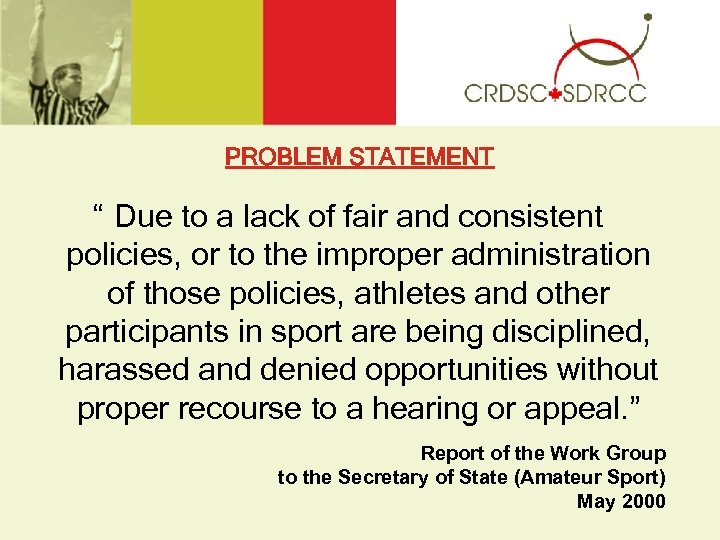 PROBLEM STATEMENT “ Due to a lack of fair and consistent policies, or to the improper administration of those policies, athletes and other participants in sport are being disciplined, harassed and denied opportunities without proper recourse to a hearing or appeal. ” Report of the Work Group to the Secretary of State (Amateur Sport) May 2000
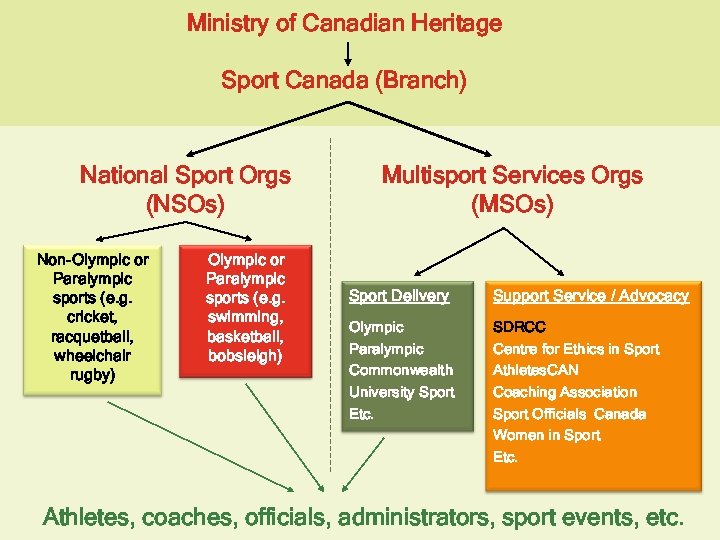 Ministry of Canadian Heritage Sport Canada (Branch) National Sport Orgs (NSOs) Non-Olympic or Paralympic sports (e. g. cricket, racquetball, wheelchair rugby) Olympic or Paralympic sports (e. g. swimming, basketball, bobsleigh) Multisport Services Orgs (MSOs) Sport Delivery Support Service / Advocacy Olympic Paralympic Commonwealth University Sport Etc. SDRCC Centre for Ethics in Sport Athletes. CAN Coaching Association Sport Officials Canada Women in Sport Etc. Athletes, coaches, officials, administrators, sport events, etc.
 CONSTITUTION (Federal Law) MISSION: “ to provide to the sport community a national alternative dispute resolution service for sport disputes and expertise and assistance regarding alternative dispute resolution ”
 WHAT IS THE SDRCC q Not-for-profit q Establish by a Federal Act in passed in 2003 q 100% Funded by the Government of Canada q Prevention & Resolution of Sport Disputes q Across Canada in both Official Languages (F & E) q Modeled after the Court of Arbitration for Sport (CAS)
 WHO IS THE SDRCC q 12 Board Members Appointed by Minister of Sport q Executive Director / CEO + 4 full-time staff q 43 Professional Arbitrators and Mediators
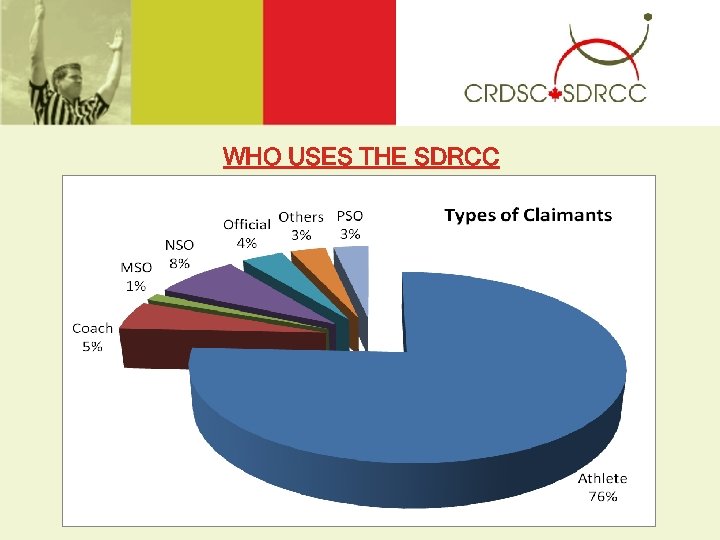 WHO USES THE SDRCC
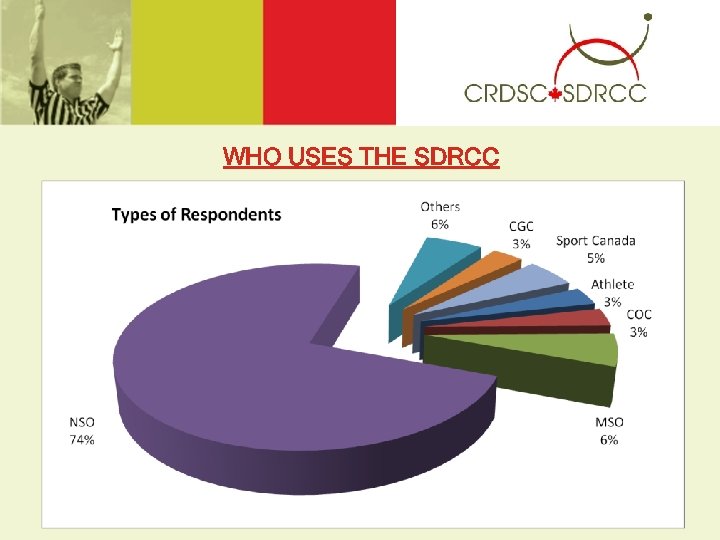 WHO USES THE SDRCC
 TRIBUNAL SERVICES q Resolution Facilitation (RF) q Preventative q Mandatory q Mediation q Med/Arb q Arbitration
 SDRCC DISPUTE RESOLUTION PRINCIPLES q Independence q Access (low-cost, time-efficient, bilingual) q Parties’ agreement is paramount q Scope of review: trial de novo q Deference to sport technical experts q Mandatory mediative process q Final and binding solutions
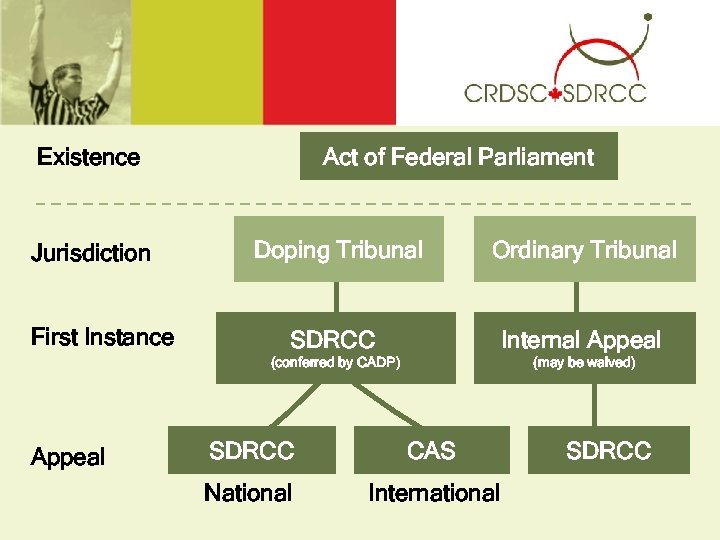 Act of Federal Parliament Existence First Instance Appeal Doping Tribunal Ordinary Tribunal SDRCC Internal Appeal (conferred by CADP) Jurisdiction (may be waived) SDRCC CAS National International SDRCC
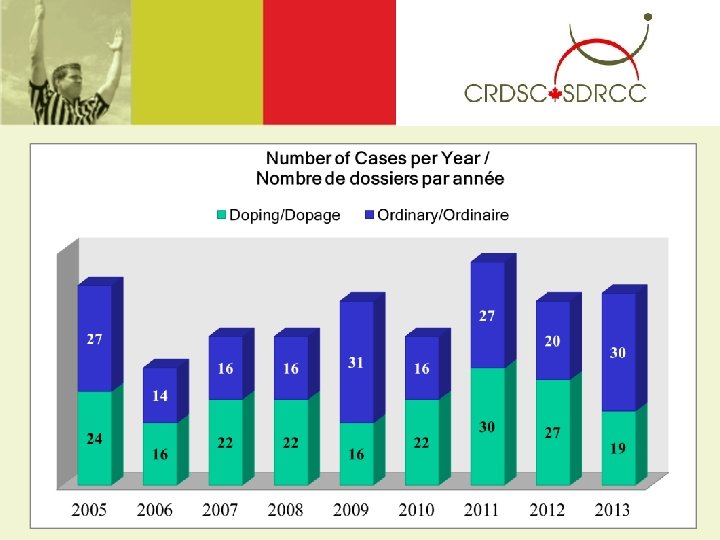
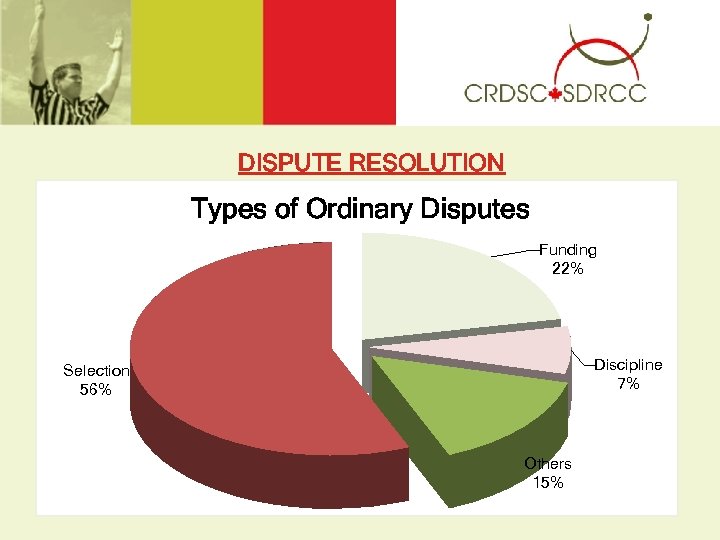 DISPUTE RESOLUTION Types of Ordinary Disputes Funding 22% Discipline 7% Selection 56% Others 15%
 Why Mandatory Mediation in Sports? q The “zero-sum” Game: Sports people are competitive in nature. q Maintaining Relationships: Parties in sports-related disputes need to be able to work together afterwards.
 Statistics Over Time (N= 192 cases) When mediation optional (2004 -2006) - 42 cases: • 5 requested mediation (12%) • of them, 4 settled (80%) Overall settlement rate: 9. 5% When mediation mandatory (2006 -2013) - 150 cases: • 19 for mediation: 13 settled (68%) • 33 for med/arb: 16 settled (48%); 14 adjudicated (42%) • 98 for arbitration; 24 settled in mandatory RF (24%) Overall settlement rate: 35%
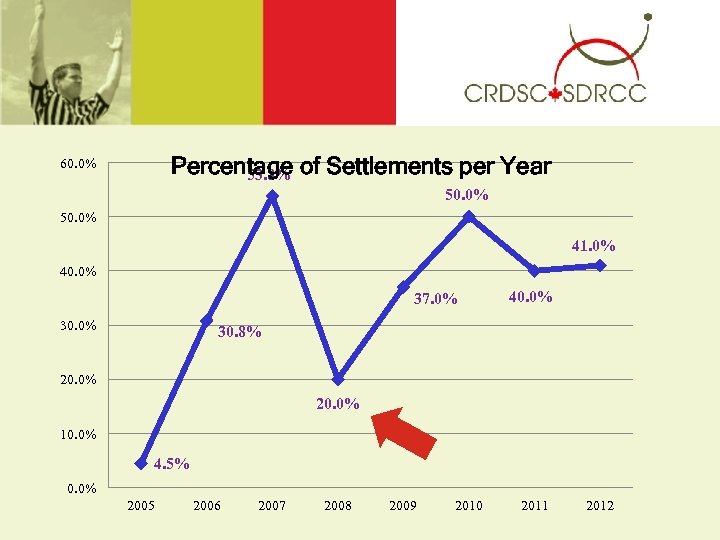 Percentage of Settlements per Year 53. 8% 60. 0% 50. 0% 41. 0% 40. 0% 37. 0% 30. 0% 40. 0% 30. 8% 20. 0% 10. 0% 4. 5% 0. 0% 2005 2006 2007 2008 2009 2010 2011 2012
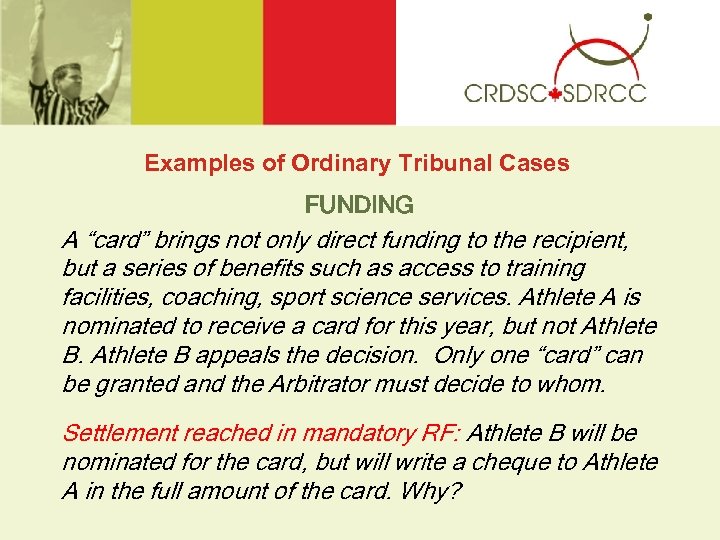 Examples of Ordinary Tribunal Cases FUNDING A “card” brings not only direct funding to the recipient, but a series of benefits such as access to training facilities, coaching, sport science services. Athlete A is nominated to receive a card for this year, but not Athlete B appeals the decision. Only one “card” can be granted and the Arbitrator must decide to whom. Settlement reached in mandatory RF: Athlete B will be nominated for the card, but will write a cheque to Athlete A in the full amount of the card. Why?
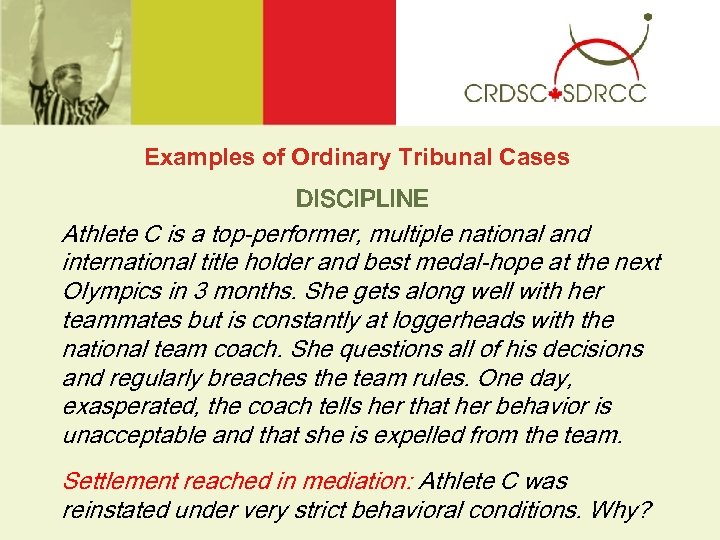 Examples of Ordinary Tribunal Cases DISCIPLINE Athlete C is a top-performer, multiple national and international title holder and best medal-hope at the next Olympics in 3 months. She gets along well with her teammates but is constantly at loggerheads with the national team coach. She questions all of his decisions and regularly breaches the team rules. One day, exasperated, the coach tells her that her behavior is unacceptable and that she is expelled from the team. Settlement reached in mediation: Athlete C was reinstated under very strict behavioral conditions. Why?
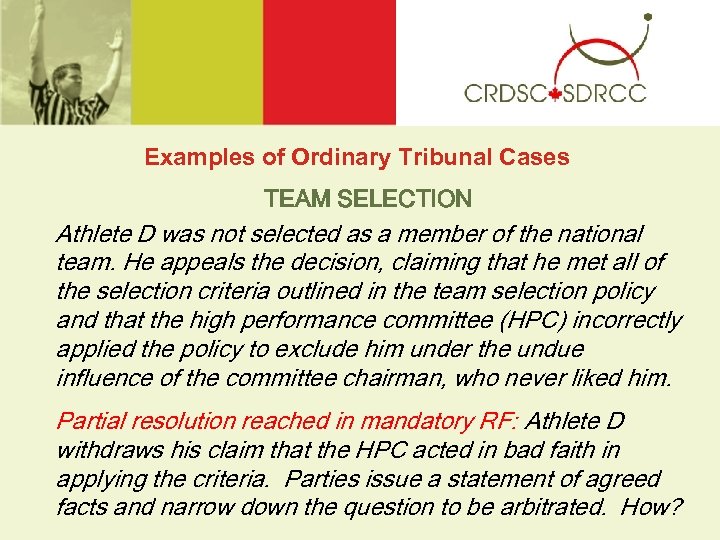 Examples of Ordinary Tribunal Cases TEAM SELECTION Athlete D was not selected as a member of the national team. He appeals the decision, claiming that he met all of the selection criteria outlined in the team selection policy and that the high performance committee (HPC) incorrectly applied the policy to exclude him under the undue influence of the committee chairman, who never liked him. Partial resolution reached in mandatory RF: Athlete D withdraws his claim that the HPC acted in bad faith in applying the criteria. Parties issue a statement of agreed facts and narrow down the question to be arbitrated. How?
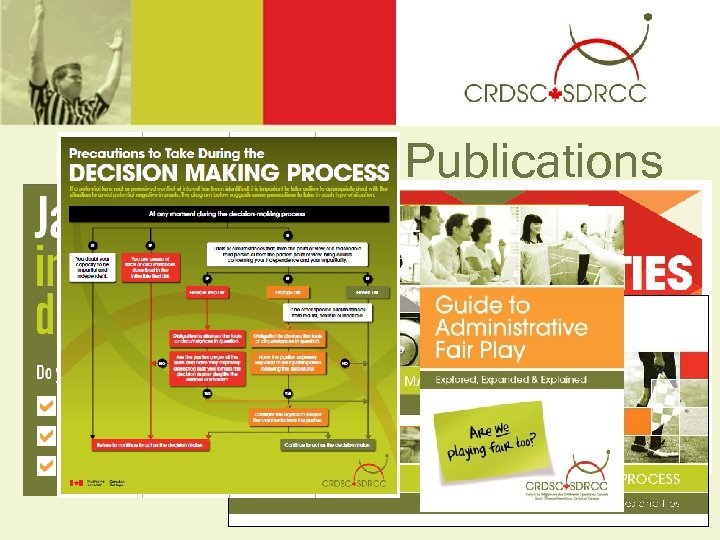 Publications
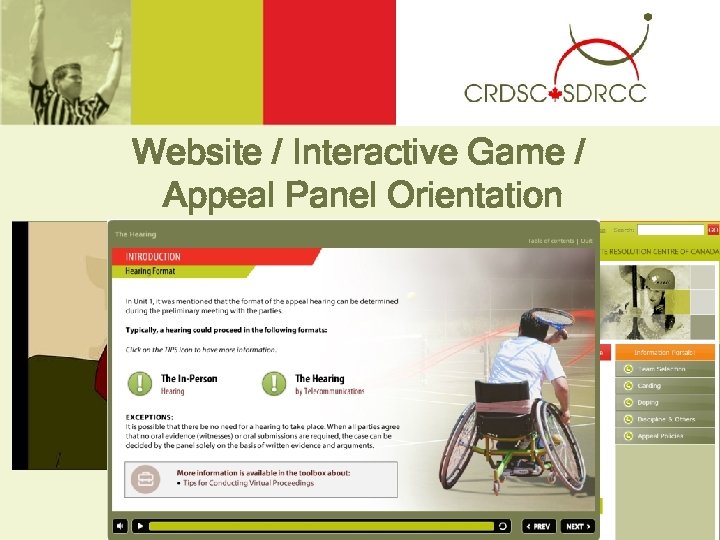 Website / Interactive Game / Appeal Panel Orientation
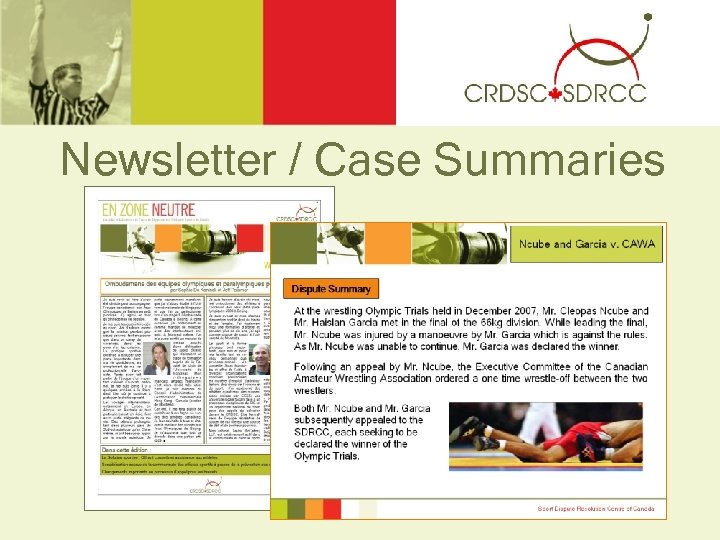 Newsletter / Case Summaries
 Questions www. crdsc-sdrcc. ca